
Everest Base Camp Elevation and Altitude Gain
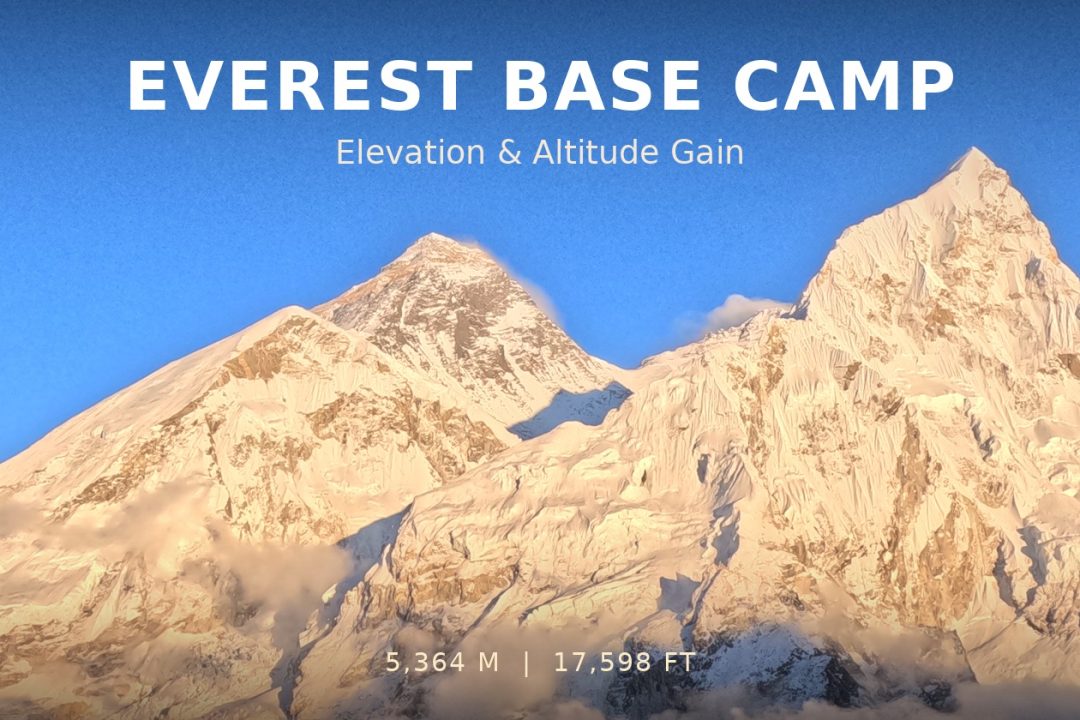
Table of Contents
Introduction
Standing at the foot of the world’s highest mountain is a dream for many. The Everest Base Camp trek turns that dream into a real, walkable journey.
But here is the truth most people miss. The biggest challenge on this trek is not the distance. It is high elevation and thin air.
Every year, thousands of trekkers underestimate the Everest Base Camp elevation. They train their legs. They forget to train for altitude.
This guide breaks down the exact Everest Base Camp elevation and altitude gain, day by day. You will learn the numbers, the risks, and how to prepare your body for thinner air.
We researched official trekking data, altitude studies, and real trail elevations to keep every figure accurate. No guesswork. No copied numbers. Just facts you can trust before you fly to Lukla Tenzing Hillary Airport.

Key Numbers at a Glance
Before the day-by-day breakdown, here are the core figures every trekker should know.
| Landmark | Elevation (meters) | Elevation (feet) |
| Kathmandu | 1,400 m | 4,593 ft |
| Lukla (starting point) | 2,860 m | 9,383 ft |
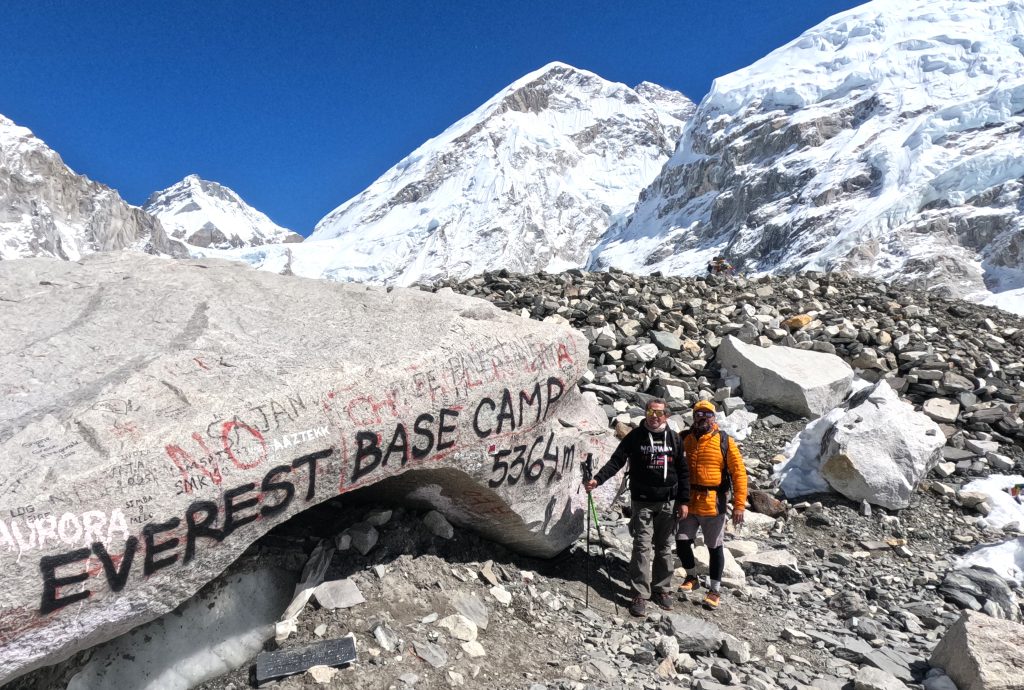
| Everest Base Camp | 5,364 m | 17,598 ft |
| Kala Patthar (highest point) | 5,644 m | 18,519 ft |
The Everest Base Camp elevation in meters is 5,364. The Everest Base Camp elevation in feet is 17,598. This is the official figure used across the trekking industry in Nepal.
Most trekkers also climb higher, to Kala Patthar, for the best mountain view. This is the Everest Base Camp highest point most visitors ever reach.
Here is the full picture in simple numbers:
- Starting Point: Lukla, 2,860 m (9,383 ft)
- Everest Base Camp Height: 5,364 m (17,598 ft)
- Highest Point Reached: Kala Patthar, 5,644 m (18,519 ft)
- Total Ascent (Elevation Gain): Over 3,500 m (11,480+ ft) from Lukla to EBC and back
- Total Trek Distance: Around 130 km (80 miles) round trip
These numbers make one thing clear. This trek is a serious test of altitude tolerance, not just fitness.
Everest Base Camp Elevation in Feet and Meters: Full Conversion Table
International trekkers often think in different units. Some plan in meters. Others plan in feet. Here is a full conversion table for every major stop on the trail.
| Location | Meters | Feet |
| Kathmandu | 1,400 m | 4,593 ft |
| Lukla | 2,860 m | 9,383 ft |
| Phakding | 2,610 m | 8,563 ft |
| Namche Bazaar | 3,440 m | 11,286 ft |
| Everest View Hotel | 3,880 m | 12,730 ft |
| Tengboche | 3,860 m | 12,664 ft |
| Dingboche | 4,410 m | 14,470 ft |
| Nagarjun Hill | 5,083 m | 16,679 ft |
| Lobuche | 4,940 m | 16,210 ft |
| Gorak Shep | 5,164 m | 16,942 ft |
| Everest Base Camp | 5,364 m | 17,598 ft |
| Kala Patthar | 5,644 m | 18,519 ft |
Keep this table saved on your phone. It becomes a handy daily reference once you are actually on the trail, far from any signal.
Everest Base Camp Height Compared to Other Famous Peaks
Numbers on a page can feel abstract. Comparing the Everest Base Camp height to other well-known mountains makes it easier to grasp.
- Everest Base Camp, at 5,364 meters, sits higher than the summit of Mont Blanc in the Alps, which tops out at 4,809 meters.
- It is also higher than Mount Kilimanjaro’s Uhuru Peak, at 5,895 meters, comes close but is still taller.
- Everest Base Camp is more than double the height of Mount Whitney, the tallest peak in the contiguous United States, at 4,421 meters.
- Commercial airplane cabins are pressurized to feel like roughly 1,800 to 2,400 meters. Everest Base Camp sits well over twice that height.
This comparison explains why so many healthy, fit trekkers still feel the effects of altitude at Base Camp. Your body simply is not built to function at this height without time to adapt.
Everest Base Camp South vs North: Elevation Differences
Most readers researching the Everest Base Camp trekking guide are heading to the Nepal side. But it helps to know there are two base camps.
The South Base Camp, in Nepal, sits at 5,364 meters. It is reached only by a multi-day trek through the Khumbu region.
The North Base Camp, in Tibet, sits slightly lower, at around 5,150 to 5,200 meters. It can be reached by vehicle on a paved road.
The Nepal route takes longer, but the gradual trek gives your body more time to acclimatize naturally. The Tibet route is faster, but rapid ascent by road raises the risk of altitude sickness.
Everest Base Camp Elevation vs Altitude: What Is the Difference?
People often use “elevation” and “altitude” as the same word. On the trail, the difference matters.
Elevation is a fixed number. It tells you how high a place sits above sea level. Everest Base Camp elevation never changes. It stays at 5,364 meters.
Altitude describes your body’s exposure to height at any given moment. Your altitude changes constantly as you climb and descend each day.
So when trekkers ask about Everest Base Camp altitude, they usually mean how their body will feel at that height. This is where oxygen levels, air pressure, and acclimatization come into play.
Understanding this difference helps you plan smarter. You are not just walking to a fixed point. You are exposing your body to a changing altitude every single day.
Everest Base Camp Trek Elevation Profile: Day by Day
This section walks you through the full Everest Base Camp trek elevation profile. Each day builds on the last. Notice how the altitude gain per day changes as you climb higher.
Day 1: Kathmandu to Lukla (2,860 m)
Your trek begins with a short, dramatic flight. You leave Kathmandu at 1,400 meters and land in Lukla at 2,860 meters.
This is an abrupt jump in height. Your body has almost no time to adjust before the trek starts.
Lukla’s airport is famous for its short runway and mountain views. From here, you walk toward Phakding, gently losing a little height before the real climb begins the next day.
Day 2: Lukla to Namche Bazaar (3,440 m)
Day two brings your first major climb. You enter Sagarmatha National Park and follow the Dudh Koshi river valley.
Namche Bazaar sits at 3,440 meters. It is the main trading hub of Sherpa people in the Khumbu region.
This single day gains close to 600 meters in height. Many trekkers feel their first mild altitude symptoms here, like a slight headache or shortness of breath.
Day 3: Acclimatization Day in Namche (3,440 m)
This is a rest day, but not a lazy one. You stay overnight at 3,440 meters, but hike up during the day.
Most groups walk up to the Everest View Hotel, at around 3,880 meters, then return to sleep in Namche.
This follows the golden rule of altitude trekking. Climb high during the day. Sleep lower at night. It helps your body build red blood cells faster.
Day 4: Namche to Tengboche (3,860 m)
From Namche, the trail offers your first clear views of Everest, Lhotse, and Ama Dablam.
Tengboche sits at 3,860 meters and is home to the region’s most famous Buddhist monastery.
The walk includes a steep drop and a steep climb, which tests your legs even though the net elevation gain looks small on paper.
Day 5: Tengboche to Dingboche (4,410 m)
This is where the landscape changes completely. Trees disappear. You enter the alpine, tree-less zone of the high Himalayas.
Dingboche sits at 4,410 meters. The air feels noticeably thinner here.
This day marks a serious jump in the Everest Base Camp elevation gain per day, and many trekkers start pacing themselves more carefully from this point.
Day 6: Acclimatization Day in Dingboche (4,410 m)
Another rest day, another active climb. Most trekkers hike up Nagarjun Hill, reaching close to 5,083 meters, before returning to Dingboche to sleep.
This acclimatization hike is not optional for most bodies. It plays a direct role in preventing altitude sickness later in the trek.
Skipping this day is one of the most common mistakes trekkers make.
Day 7: Dingboche to Lobuche (4,940 m)
The trail continues climbing toward the mountain’s shadow. You pass Thukla Pass, home to stone memorials for climbers who lost their lives on Everest.
It is a quiet, reflective stretch of the trail.
Lobuche sits at 4,940 meters. The air here holds roughly half the oxygen found at sea level.
Day 8: Lobuche to Gorak Shep and Everest Base Camp
This is the big day. You start at Lobuche and reach Gorak Shep, at 5,164 meters, then continue to Everest Base Camp itself, at 5,364 meters.
Standing at Everest Base Camp is the emotional peak of the entire trek. You are surrounded by the Khumbu Icefall and the towering walls of the world’s highest peak.
Most trekkers do not sleep at Base Camp itself. They return to Gorak Shep for the night.
Bonus Day: Gorak Shep to Kala Patthar (5,644 m)
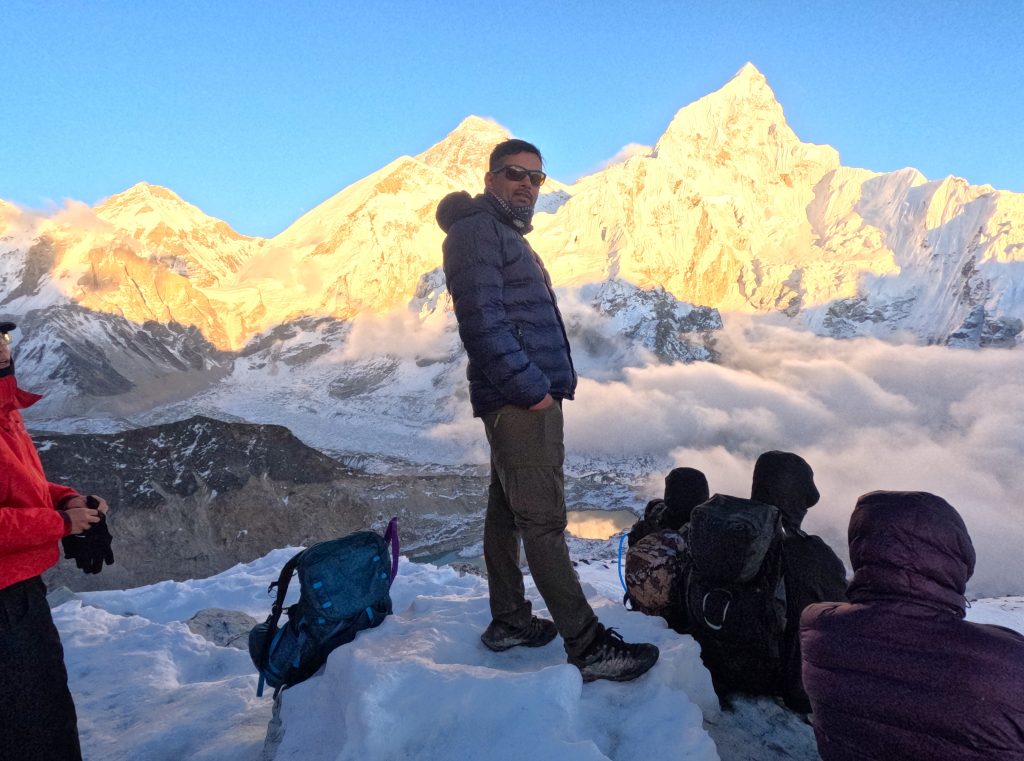
Many trekkers add one more push before heading down. Kala Patthar offers the best unobstructed view of Mount Everest on the entire route.
At 5,644 meters, this is the Everest Base Camp trek’s true summit for most visitors. No technical climbing skills are required, just strong lungs and legs.
Trekkers usually climb before sunrise, when the skies are clearest and the light hits Everest’s summit first.
Understanding Altitude Sickness (Acute Mountain Sickness)
Reaching over 5,000 meters is not just a physical challenge. It is a physiological one.
What Causes Altitude Sickness?
Many people assume there is less oxygen in the air at altitude. That is not quite accurate.
The real cause is lower barometric pressure. Each breath still contains 21 percent oxygen, but the lower pressure means fewer oxygen molecules enter your lungs per breath.
Your body responds by producing more red blood cells over time. This process, called acclimatization, takes days, not hours.
Common Symptoms of AMS
Mild altitude sickness is common on this trek, even among fit trekkers. Watch for these signs:
- Mild to moderate headaches
- Dizziness or lightheadedness
- Nausea or loss of appetite
- Fatigue beyond normal tiredness
- Trouble sleeping at higher camps
These symptoms usually appear above 3,000 meters and can worsen if you climb too fast.
HAPE and HACE: The Severe Risks
In rare but serious cases, altitude sickness progresses into two dangerous conditions.
High-Altitude Pulmonary Edema, or HAPE, causes fluid to build up in the lungs. High-Altitude Cerebral Edema, or HACE, causes swelling in the brain.
Both conditions are medical emergencies. They require immediate descent and, often, emergency evacuation.
This is exactly why safety planning matters as much as fitness training before this trek.
The Golden Rule of Altitude
Experienced guides repeat one phrase constantly on this trail: climb high, sleep low.
The idea is simple. Push your body a little higher during the day, then return to a lower altitude to sleep.
Combined with slow, steady ascent, this rule is the single best defense against altitude sickness on the entire route.
Top Tips for Managing the Everest Base Camp Altitude Gain
Preparation makes the difference between a miserable trek and a memorable one. Here is how experienced trekkers manage the climb.
Stay Hydrated
Dry mountain air and heavy breathing pull moisture from your body fast. Aim for four to five liters of water daily.
Proper hydration also helps your kidneys process the effects of altitude more efficiently.
Pace Yourself: Bistari, Bistari
Nepali guides use a simple phrase on the trail: bistari, bistari. It means “slowly, slowly.”
This is not a race. Walking slower actually gets you to Base Camp in better condition than rushing ahead.
Never Skip Acclimatization Days
The rest days built into the itinerary are not extra padding. They are essential for red blood cell production.
Skipping them to save one day often backfires, leading to worse symptoms higher up the trail.
Avoid Alcohol and Caffeine
Both substances dehydrate your body, which is the last thing you need at altitude.
Most guides recommend avoiding them entirely until you begin your descent from Base Camp.
Consider Diamox (Acetazolamide)
Many trekkers use Diamox, a medication that can help speed up acclimatization. This drug is not for everyone.
Always consult a doctor before your trip to discuss whether preventive medication makes sense for your health history.
Listen to Your Body
This is the most important tip on this list. Mild symptoms are normal. Worsening symptoms are not.
If a headache turns into confusion, or nausea turns into vomiting, descend immediately. No summit view is worth risking your health.
Everest Base Camp Elevation Gain From Lukla: The Full Picture
Many trekkers specifically search for the Everest Base Camp elevation gain from Lukla, since this marks the true start of walking altitude gain.
From Lukla at 2,860 meters to Everest Base Camp at 5,364 meters, you gain roughly 2,500 meters of net elevation.
But the real total ascent is higher. The trail rises and falls constantly, with steep drops into river valleys followed by steep climbs back up.
When you include the return trek and side hikes like Kala Patthar, total elevation gain climbs past 3,500 meters. This is why fitness alone does not guarantee success. Altitude adaptation matters just as much.
How Fitness Level Affects Your Altitude Gain Experience
Fitness helps, but it is not the full story at high altitude. Your cardiovascular strength affects your walking pace, not your risk of altitude sickness.
Even elite athletes can develop AMS at 4,500 meters. Meanwhile, some average hikers reach Everest Base Camp with barely a headache.
Genetics, hydration, sleep quality, and ascent speed matter more than raw fitness. This is why the itinerary’s built-in rest days matter for everyone, regardless of gym results back home.
That said, general fitness training in the months before your trip still helps. Stronger legs and lungs make each day’s climb feel easier, even if they do not fully protect against thin air.
Recommended Pre-Trek Training
A simple training plan for two to three months before departure can make a real difference on the trail.
- Walk or hike three to four times a week, building up to five or six hours at a stretch.
- Add stair climbing or hill repeats with a loaded daypack.
- Include two days of cardio, like running or cycling, each week.
- Practice with the boots and pack you plan to use on the trek.
This preparation will not stop altitude sickness. It will make the daily walking far more comfortable, so your body can focus its energy on adjusting to the thin air.
Best Time to Trek Based on Altitude and Weather
Season affects more than scenery. It affects how your body handles the Everest Base Camp altitude gain each day.
Spring, from March to May, and autumn, from September to November, offer the most stable weather. Clear skies and moderate daytime temperatures make acclimatization more predictable.
Winter treks, from December to February, bring extreme cold at higher camps, sometimes dropping well below freezing overnight. This adds physical stress on top of the altitude challenge.
Monsoon season, from June to August, brings rain, leech-filled lower trails, and poor mountain visibility. Most trekking agencies do not recommend this window for the Everest Base Camp trek.
What Gorak Shep and Base Camp Actually Feel Like
Numbers only tell part of the story. Here is what the final stretch of the trek actually feels like on the ground.
Gorak Shep, at 5,164 meters, sits on a dried, sandy lakebed surrounded by towering peaks. The air already feels noticeably thin here, and simple tasks like tying your bootlaces can leave you slightly breathless.
The final push from Gorak Shep to Everest Base Camp crosses rocky glacial moraine. There is no clear trail in some sections, just cairns marking the way across shifting stone.
Base Camp itself changes with the seasons. During spring climbing season, it becomes a temporary tent city for Everest expedition teams. Outside that window, it is quiet, empty, and starkly beautiful.
Many trekkers describe the moment of arrival as emotional more than triumphant. The thin air, the silence, and the scale of the surrounding icefall combine into something hard to put into words.
Why the Everest Base Camp Altitude Chart Matters
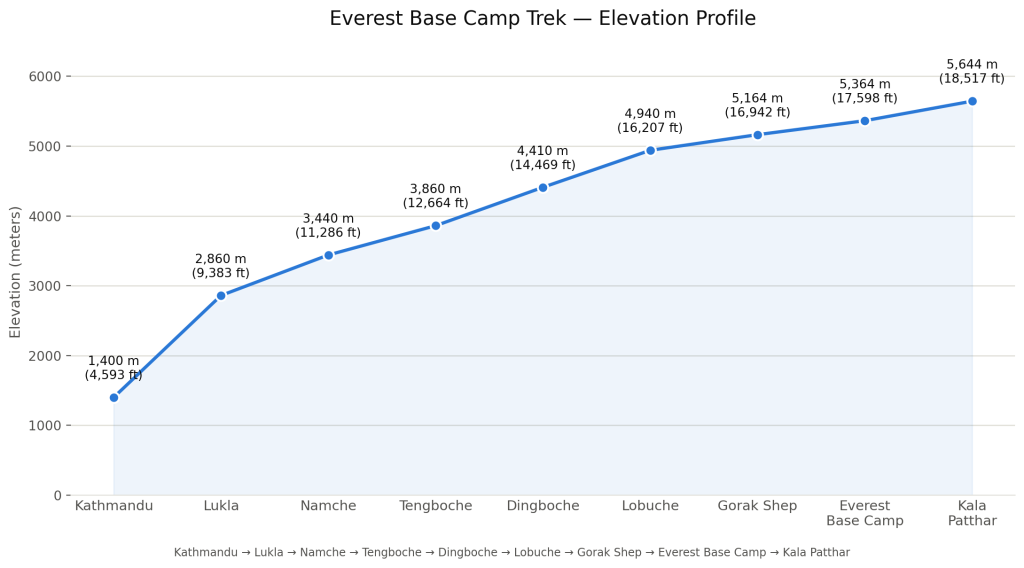
Looking at an Everest Base Camp altitude chart or Everest Base Camp altitude map before your trip helps in one big way. It shows you exactly where the sharpest gains happen.
The steepest single-day jumps occur between Lukla and Namche, and again between Tengboche and Dingboche. These are the days to walk slowest and drink the most water.
Planning around these two danger zones is one of the smartest things a first-time trekker can do.
Frequently Asked Questions
What is the elevation of Everest Base Camp? Everest Base Camp sits at 5,364 meters, or 17,598 feet, above sea level, on the Nepal side of the mountain.
How much altitude do you gain on the Everest Base Camp trek? Trekkers gain over 3,500 meters, or 11,480 feet, in total ascent between Lukla and Everest Base Camp, including the return trek.
What is the highest elevation on the Everest Base Camp trek? Kala Patthar, at 5,644 meters, or 18,519 feet, is the highest point most trekkers reach on this route.
Is Everest Base Camp elevation the same as Everest’s summit elevation? No. Everest Base Camp sits at 5,364 meters, while the summit of Everest reaches 8,849 meters, nearly 3,500 meters higher.
How can I prevent altitude sickness on the Everest Base Camp trek? Walk slowly, stay hydrated, follow the built-in acclimatization days, and descend immediately if symptoms worsen.
What is the Everest Base Camp elevation gain per day? Daily gains vary widely, from around 100 meters on rest days to over 800 meters on the steepest trekking days, like Lukla to Namche.
Do I need oxygen to reach Everest Base Camp? No. Supplemental oxygen is not required for the trek to Base Camp. It becomes necessary only for climbers attempting the summit above 8,000 meters.
How many days does full acclimatization to Everest Base Camp elevation take? Most itineraries build in two full acclimatization days, at Namche and Dingboche, spread across a 12 to 14 day trek from Kathmandu.
Final Say
The Everest Base Camp trek is often described as a walk, but that undersells it. It is a real test of endurance and physiology, not technical climbing skill.
Understanding the exact Everest Base Camp elevation and altitude gain before you go changes how you prepare. It shapes your training, your gear, and your daily pace on the trail.
With proper preparation, slow pacing, and respect for the mountain, reaching 5,364 meters is achievable for people of average fitness. Thousands do it every year.
If you have questions about your own preparation, drop them in the comments. You can also explore our related guide on what to pack for Everest Base Camp, or browse our full range of EBC trek packages.
-
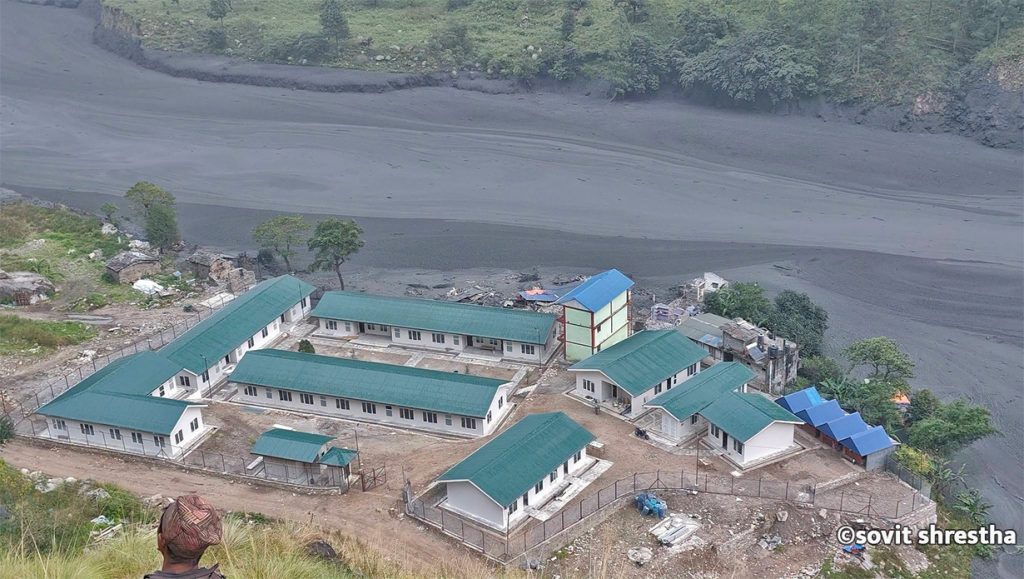
Flash Flood Sweeps Away Dozens of Homes in Gorkha, Nepal
KATHMANDU, Nepal — A sudden and severe flash flood tore through the Budhi Gandaki River basin in Gorkha district on Sunday morning, washing away approximately 35 houses and triggering widespread destruction in the mountainous Manaslu and Tsum Valley regions. According to local authorities and disaster management officials, no human casualties have been reported thus far, though…
-
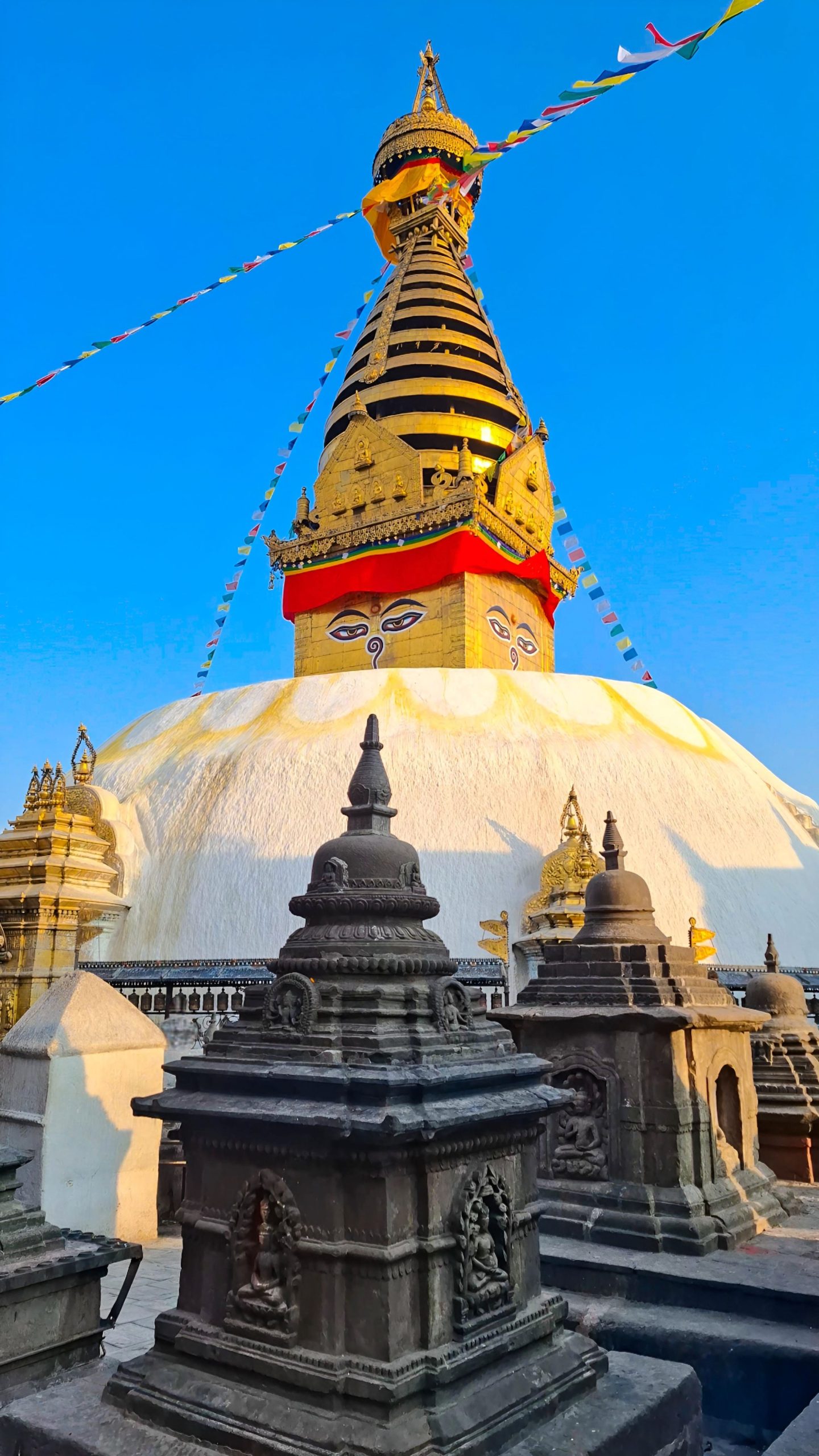
Swayambhunath Temple, Kathmandu
Imagine standing above the chaos of Kathmandu. Honking horns fade below you. A gleaming white dome rises ahead. Two enormous painted eyes gaze calmly in every direction. Prayer flags flutter in the Himalayan breeze. This is Swayambhunath, one of the most extraordinary places in Nepal. Visitors know it as the “Monkey Temple” because hundreds of…
-

North Goa vs South Goa: Which Is Better for Your Holiday?
Amongst the places that are highly popular in terms of beaches, weather, culture, and ambiance in India is Goa, which is known to possess some of the most beautiful beaches in India. The idea of Goa being famous for its beaches, which can be used by tourists for entertainment in North Goa while South Goa…