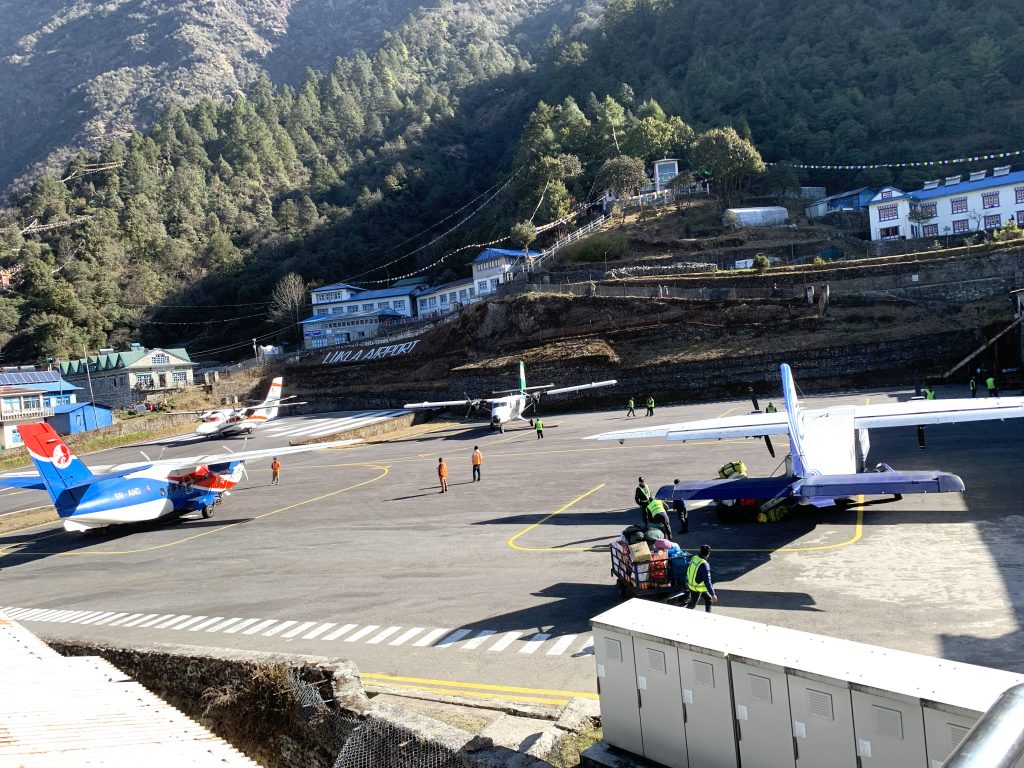
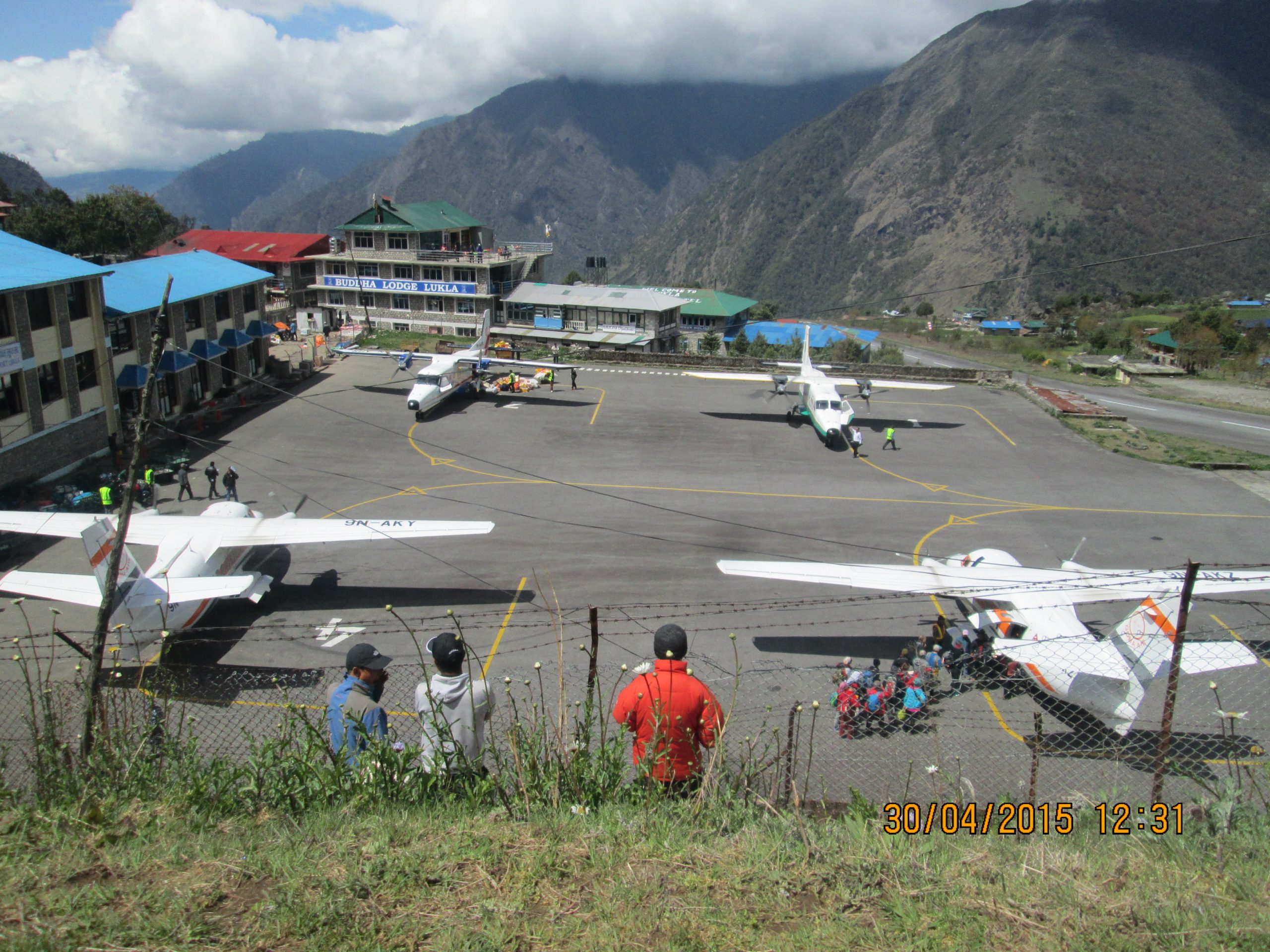
Experience the thrill of landing at Lukla Tenzing Hillary airport and breathtaking aerial views from your window seat.
Reach Breathtaking Alpine Lakes, Gokyo Lake, and Sacred Landscapes
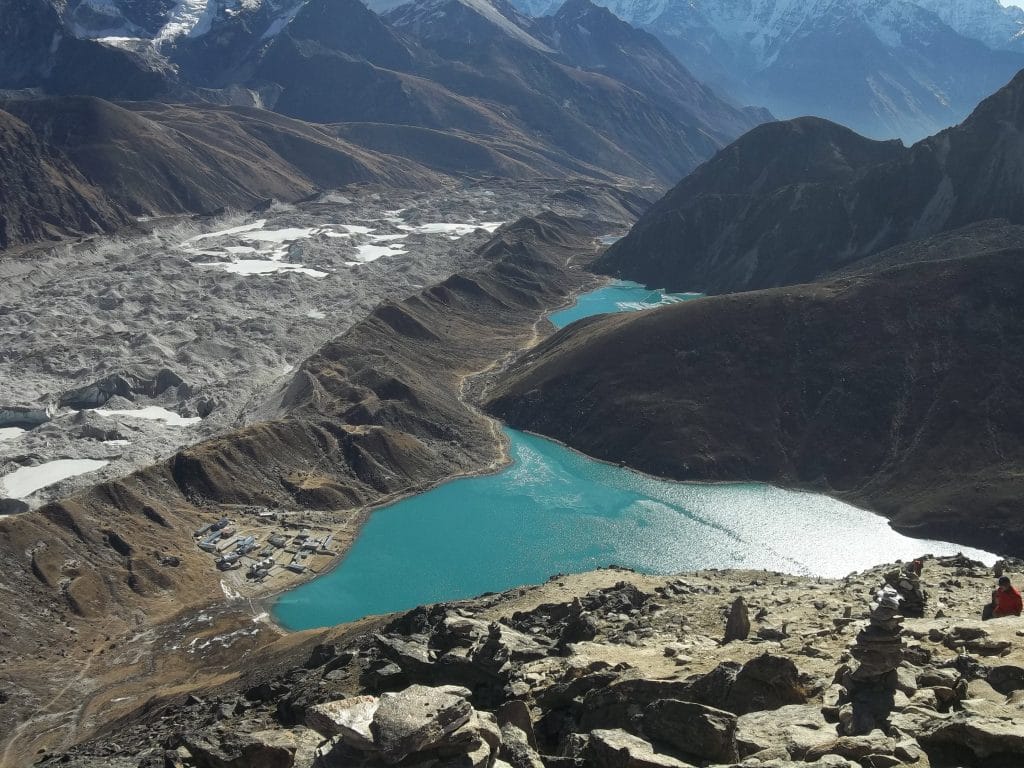
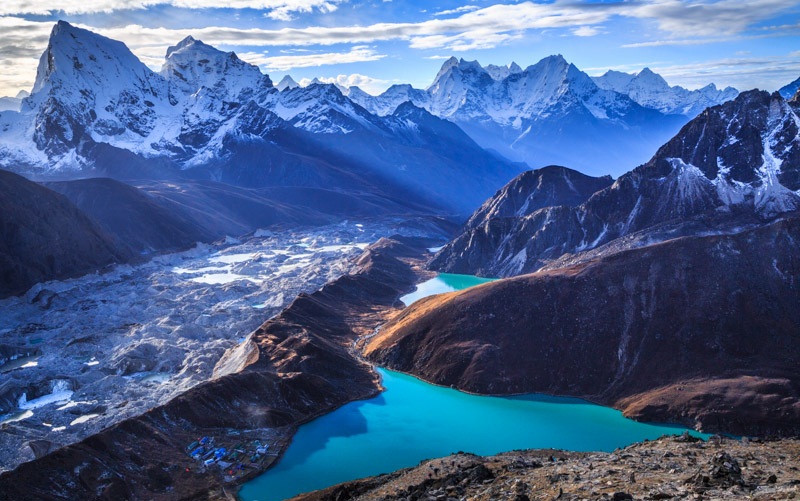
Climb to Gokyo Ri (5,357 m) for one of the most iconic vantage points in the Everest region.
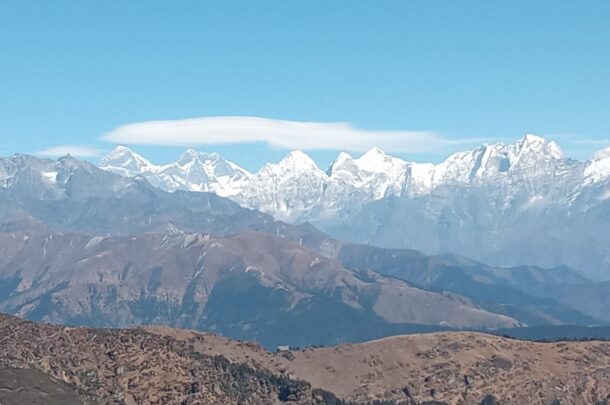
Enjoy breathtaking panoramic Views of Everest, Lhotse, Makalu and Cho Oyu, including several snow-capped mountain peaks.
Enjoy Sherpa hospitality and understand their rich culture, traditions and lifestyle.
Escape the crowd of the Everest Base Camp trail and enjoy the peaceful trekking routes of Gokyo Valley.
Trek through Sagarmatha National Park, which is home to different wildlife and species.
Enjoy a safe and guided trek with a Sherpa guide.
Lots of photography and videography opportunities from different vantage points.
Overview
Gokyo Lake Trek Overview
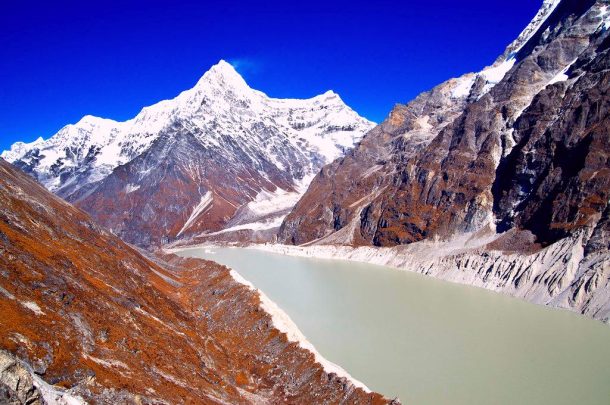
Gokyo Lake trek is a scenic adventure in the Khumbu region, which takes you to the turquoise Gokyo Lake and the summit of the Gokyo Ri(5,357 meters/17,575 feet). On this 13 Day Gokyo trek journey, you will witness the incredible view of the world’s 8,000-meter peaks – Everest, Lhotse, Makalu, and Cho Oyu.
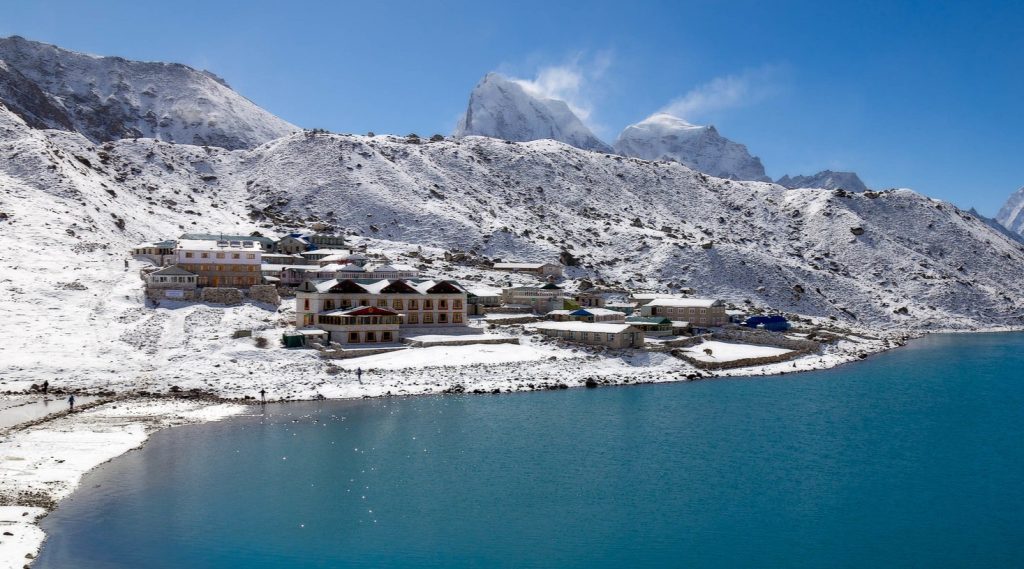
You will walk through high-altitude Sherpa villages and rugged trails that will guide you to the famous Gokyo Valley situated at an altitude of 4,750–4,790 meters (15,583–15,715 feet). This valley features the Gokyo Village and glacial lakes of Gokyo, which comprise six different lakes spread across the valley seated in the foothills of Cho Oyu (8,188 metres). Cho Oyu is the sixth-highest mountain in the world, and the Gokyo Lakes are the highest freshwater lake system in the world.
High Route Adventure has crafted this Gokyo Lake Trek itinerary to ensure comfort, safety, and enjoyment throughout the journey. Your adventure begins with a scenic 30-minute flight from Kathmandu to Lukla’s Tenzing-Hillary Airport. From Lukla, you will start trekking toward Monjo, the official entry point of the Sagarmatha National Park.
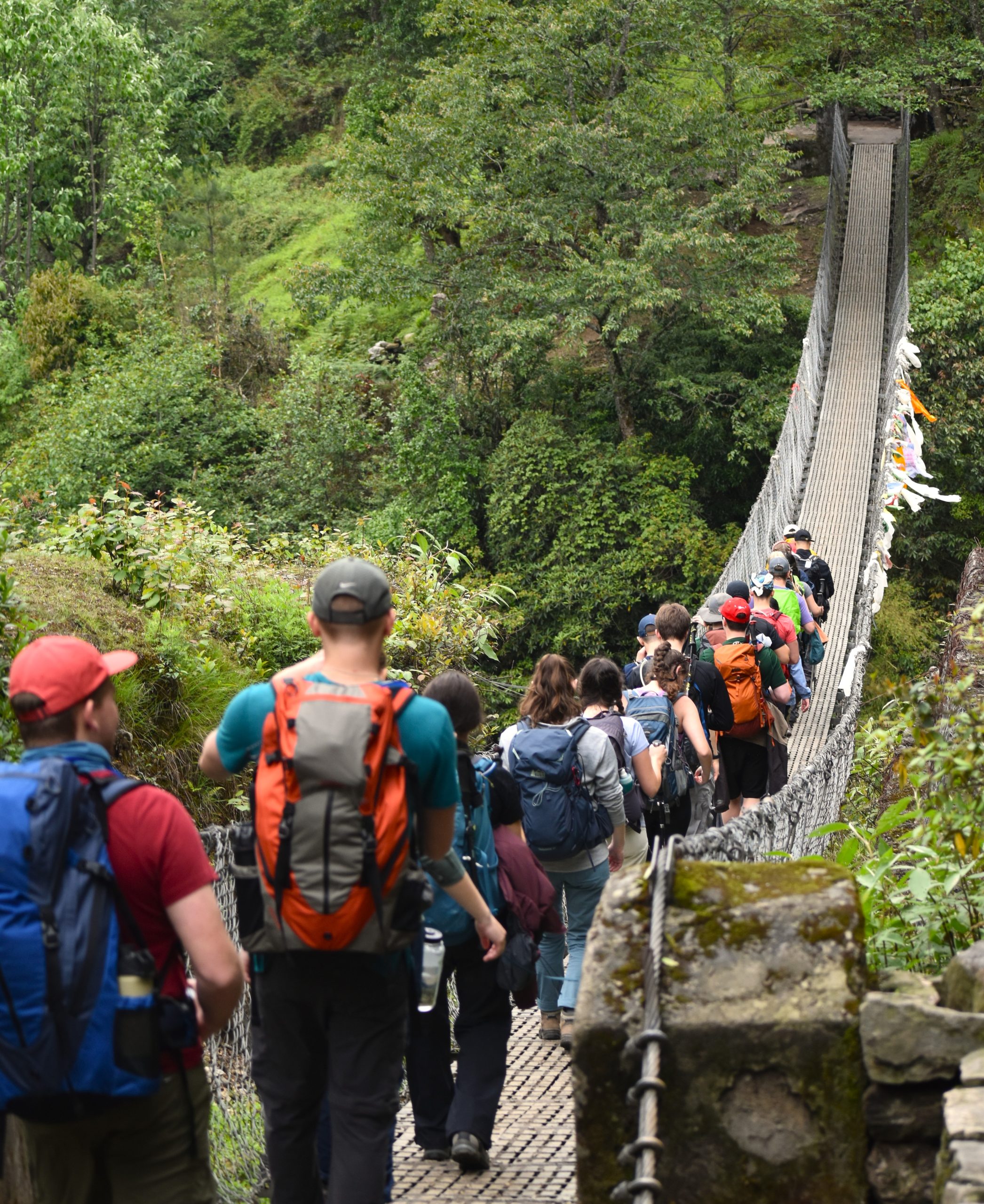
As you trek through this UNESCO Natural World Heritage Site, you will pass through lush hills and forests rich in biodiversity, and cross numerous suspension bridges, including the famous Hillary Suspension Bridge. Along the trail to Gokyo Lake, you will enjoy stunning mountain scenery, traditional culture, and the unique atmosphere of the Everest region. En route to Gokyo Lake, there are several locally established teahouses where you will stay each night after a day of trekking. While staying in the teahouse, you will experience warm hospitality, including their culture and traditions.
After several days of trekking, the trail brings you to the beautiful Gokyo Village surrounded by towering snowcapped peaks, glacial water and lakes. Then from Gokyo Village you will hike to Gokyo Ri viewpoint, which is a small peak with an altitude of 5,357 m (17,575 ft). Even though the peak is not very high, from the summit of Gokyo Ri, you can witness an incredible panoramic view of 8,000-meter peaks, 7,000-meter peaks, including massive Ngozumpa Glacier and the turquoise Gokyo Lakes.
This Gokyo Lake Trek route will cover around 75–82 kilometers. Unlike the popular Everest Base Camp route, this trek sees fewer trekkers and is slightly easier.
Contact us now for the best Gokyo 2026/2027 trekking deals, group discounts, and personalized itineraries.
Key Details of the Six Main Gokyo Lakes
Gokyo Cho (Dudh Pokhari): The sacred turquoise lake of the Everest region surrounded by Himalayan peaks
Gokyo Cho (Dudh Pokhari) – The primary and central lake near Gokyo village, considered the most sacred. Area: 42.9 ha. Distance from Gokyo village: 0 km (right at the village). Surrounded by Himalayan peaks, ideal for photography and religious rituals.
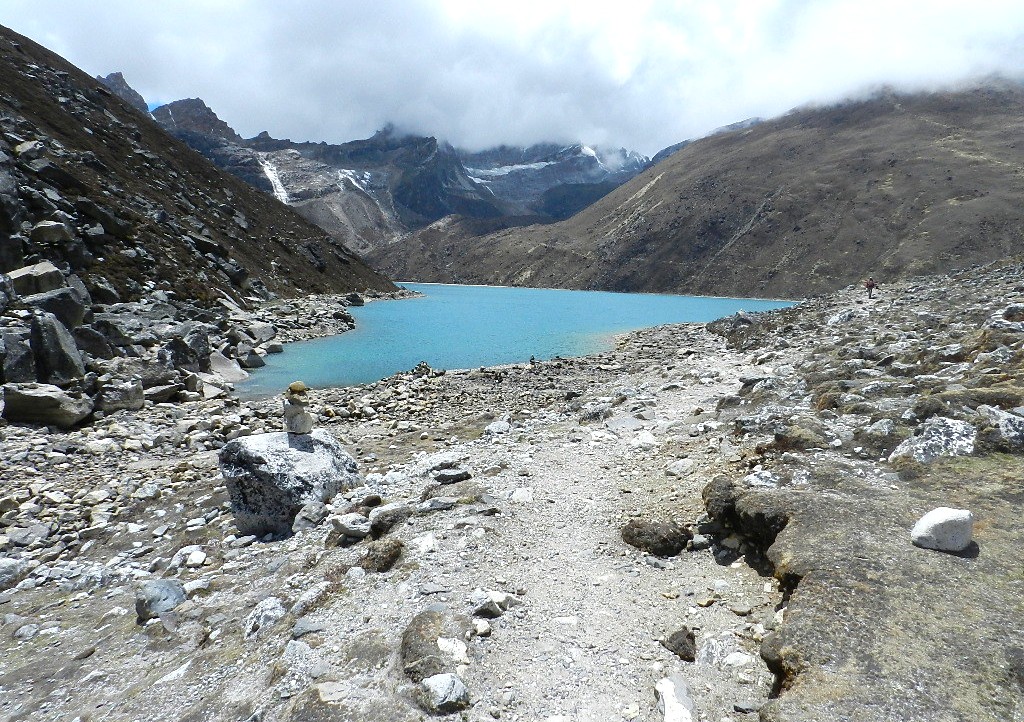
Tanjung Cho (Second Lake) – Stable and colourful, area 16.95 ha. Distance from Gokyo village: ~1 km north. A peaceful lake offering beautiful reflections of the surrounding mountains.
Gyazumpa Cho (Third Lake) – Famous for its mirror-like appearance. Distance from Gokyo village: ~2 km. Perfect for photography with calm waters reflecting the peaks.
Thonak Cho (Fourth Lake) – The largest (65.07 ha) and deepest (62.4 m) lake. Distance from Gokyo village: ~4 km. Surrounded by glaciers and high peaks, it’s a highlight for trekkers.
Ngojumba Cho (Fifth Lake) – Located near the Ngozumpa Glacier, area 14.39 ha. Distance from Gokyo village: ~6 km. Cold, pristine, and dramatic landscape close to the glacier.
Kyajumba Cho / Longpanga Tsho – One of the oldest, highest, and most biodiverse lakes. Distance from Gokyo village: ~8 km. Remote and quiet, home to unique Himalayan flora and fauna.
A typical Day in Gokyo Lake Trek
Your typical day in the Gokyo Lake trek begins early in the morning, around 6:30 AM – 7 AM, with a cup of tea/coffee in the tea house with a warm breakfast. After this, you will pack up your things and get ready to move toward your daily destination. Following the scenic marked trails after 2-3 hours of trekking, you will stop for lunch at around 11 AM-12 PM.
Then, after you reach the destination, your trekking Guide will take you to the teahouse that we have pre-booked for you. You will unpack your things and put them in your rooms. After getting refreshed and a short rest, you can relax at terrace with tea/coffee to soak in the surrounding Himalayan scenery.
You can also explore the surroundings on your own if you wish. Around 6:30 PM – 7:30 PM you dinner will be ready and served in the communal dining hall of the teahouse. After dinner, your trekking Guide will give you a brief for tomorrow’s trail, weather and important information before you head to bed.
Why Choose High Route Adventure for the Gokyo Lake Trek
➢High Route Adventure team provides certified local guides and porters with decades of alpine experience.
➢Our trekking guide has mastered the Gokyo Lake trail, and they will share with you the valuable insights into the area’s history, geology, culture and traditions.
➢We allow our clients to have a customizable itinerary if this 13-Day Gokyo Lake Trek itinerary doesn’t work for you.
➢From first aid to emergency evacuation plans, our company knows how to handle situations in a professional way.
➢We believe in responsible travel. So when trekking with us, we let our trekkers follow the sustainable tourism practise to help in preserving the beauty of Gokyo Lake and the Khumbu Region.
➢From permits, logistics, meals and accommodation, our inclusive package makes your Gokyo Lake trip hassle-free.
➢There is no hidden cost, and our price is revealed on our website.
➢As a special gift, you will receive a High Route Adventure cap, a T-shirt, and a trek completion certificate upon completing the journey.
➢For your convenience, we also provide duffel bags, sleeping bags, down jackets, and crampons. However, these items must be returned after the completion of the trek.
Gokyo Lake Trek Package Cost For 2026/2027
Our package price starts from USD 1,210 per person. However, for our clients, we provide a special discount if you are in a group. We offer special group discounts for families, friends, and trekking groups. The larger your group, the lower the per-person cost. Whether you are traveling solo or with a group, we can customize the itinerary and services to match your preferences and budget.
We believe in transparent, inclusive pricing with no hidden fees. To make it fair, below is our package price according to group size.
Group size
Price (USD)
Solo
$ 1,525 per person
2–6 people
$ 1,290 per person
7+ People
$ 1,210 per person
Itinerary
Gokyo Lake Trek Itinerary
Upon landing at Tribhuvan International Airport, you will be welcomed by our office representatives, who will guide you directly to the hotel. Freshened up after the day's journey, you will be introduced to your guide, who will brief you on the day-to-day itinerary. After wrapping up all the activities scheduled for the day, you are free to head to the local area to enjoy a pleasant evening. Overnight at the hotel in Kathmandu.
⛰ Altitude1400 meter
🍽 MealsBreakfast
🏨 StayHotel
Duration:Flight: 30 minutes, Trek: 3-4 hours
Distance:aerial ≈ 138 kilometers, trek ≈ 7.5 to 8.2 kilometers
Altitude gain: 1,260 meters
We begin our journey on the first day with a thrilling flight to the picturesque town of Lukla. Up above the lush green valleys, the 30-minute flight takes us closer to the Himalayas, offering a first glimpse of their mesmerizing beauty. Touching down at Lukla, we take a brief rest before setting off on the trail leading to Phakding. The journey continues along the banks of the stunning Dudh Koshi River, past vibrant hamlets like Koshiguan and Ghat. Finally, after 3-4 hours of walking from Lukla, you will reach Phakding village. Then you will check in tea house and stay overnight here.
⛰ Altitude2610 meter
🍽 MealsBreakfast/Lunch/Dinner
🏨 StayTeahouse
Duration:6-7 hours
Distance:≈ 11 to 12.3 kilometers
Altitude gain: 830 meters
Continuing where we left off yesterday, the trail follows the Dudh Koshi River as we head out of Phakding. Past the hamlet of Thulo Ghamela, we enter lush green forests, then reach Bengkar, followed by Monjo. The trail ahead leads to Jorsalle, marking our entry into Sagarmatha National Park. Along the forested trail lined with pine, fir, and rhododendron trees, we make a steep ascent to the town of Namche, famous for its Sherpa locals and the Himalayan panorama. Overnight in Namche Bazaar.
⛰ Altitude3440 meter
🍽 MealsBreakfast/Lunch/Dinner
🏨 StayTeahouse
An ideal spot for acclimatization, the Himalayan town of Namche is one of the most populated towns in the Everest Region. With the constant stream of trekkers, mountaineers, and locals, the town is always buzzing. After touring around the town in the morning, we set off for our acclimatization hike to the hilly village of Khumjung, the largest Sherpa village in Khumbu. The journey is a pleasant one on a hillside with the stunning Everest (8,848m) on the backdrop. Khumjung boasts the unique Yeti Skull Monastery which is said to host the skull of a real-life Yeti. Overnight in Namche.
⛰ Altitude3440 meter
🍽 MealsBreakfast/Lunch/Dinner
🏨 StayTeahouse
Duration:5-6 hours
Distance:≈ 7.5 to 9 kilometers
Altitude gain: ~350 to 400 meters
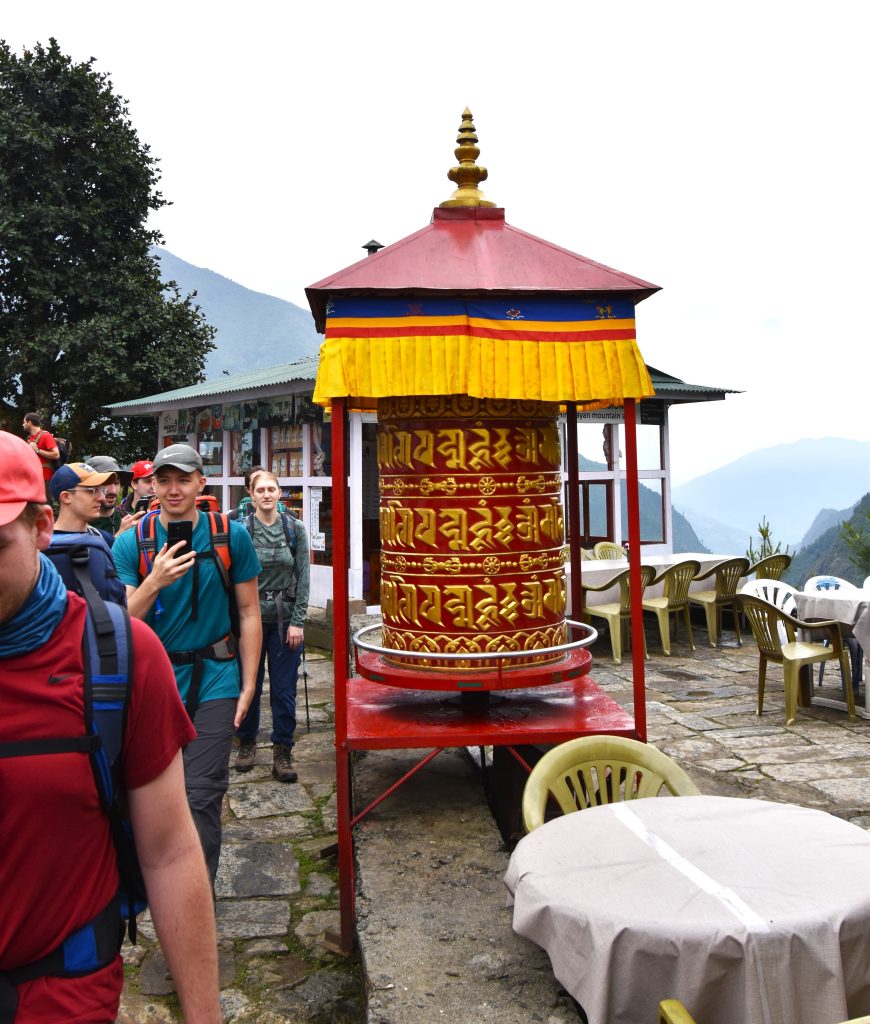
Exiting Namche, we begin our ascending hike to the hamlet of Phortse for the night. The forested trail takes us to the village of Sanasa before veering off from the classic Everest trail to ascend high above the Dudh Koshi River to reach Phortse. Along the way, we come across many Mani walls, monasteries, and Chortens that hold sacred significance for the Sherpa locals. A splendid mountain view awaits us in Phortse. Overnight stay in Phortse tea house.
⛰ Altitude3810 meter
🍽 MealsBreakfast/Lunch/Dinner
🏨 StayTeahouse
Duration:4-5 hours
Distance:≈ 7.2 to 7.5 kilometers
Altitude gain: ~500m to 650m
Two trekking routes lead from Phortse to the hamlet of Machhermo. The first involves crossing the Dudh Koshi River to its western bank and following the hilly trail to Dhole and Luza, which then leads to Machhermo. The second route involves us taking the eastern bank of the Dudh Koshi River to Throe, then crossing the river at Nha to the western bank, which leads to Machhermo. No matter which route we take, the stunning Himalayan scenery makes the challenging trek worthwhile. Spend the night in the Machhermo tea house.
⛰ Altitude4470 meter
🍽 MealsBreakfast/Lunch/Dinner
🏨 StayTeahouse
Duration:4–5 hours
Distance:≈ 7 to 8 kilometers
Altitude gain: ~300–320 meters
Today is one of the shorter days of the journey, where we make our way to the quaint settlement of Gokyo, following the trail heading north. Past Machhermo, the rugged Himalayan trail is guided by the mesmerizing beauty of the Himalayas. Climbing the ridgeline above the hamlet of Chyamtang, we continue our trek to the second of the six Gokyo Lakes. Admiring the stunning beauty of the glacial lake, we continue our journey to reach Gokyo village situated on the banks of the third Gokyo Lake. Overnight in Gokyo.
⛰ Altitude4790 meter
🍽 MealsBreakfast/Lunch/Dinner
🏨 StayTeahouse
Duration:4 to 5 hours
Distance:≈ 3 to 4 kilometers
Altitude gain: ~300–320 meters
Today we spend our time exploring Gokyo Valley and enjoying the mesmerizing beauty of the Himalayas. Ascending on a rather icy and stony path, we hike up to Gokyo Ri (5,357m) which boasts an amazing view of the Gokyo Lakes along with a stunning Himalayan panorama consisting of the snowy summits. We also make rounds around the 4th and 5th Gokyo Lakes before returning to the village of Gokyo for an overnight stay.
⛰ Altitude4790 meter
🍽 MealsBreakfast/Lunch/Dinner
🏨 StayTeahouse
Duration:5-6 hours
Distance:≈ 11.5 to 12 kilometers
Altitude loss: ~600m–712 m
At the beginning of our descending journey, we exit the beautiful Gokyo village, retracing our steps past the third and second glacial lakes. Relishing the stunning beauty of the Himalayas, we make our way down to Machhermo with the rushing Dudh Koshi River as our constant companion. Along the western banks of the river, we make our way over to Luza which then brings us to the settlement of Dole for the night.
⛰ Altitude4200 meter
🍽 MealsBreakfast/Lunch/Dinner
🏨 StayTeahouse
Duration:3-4 hours
Distance:≈ 7.9 to 8 kilometers
Altitude loss: ~roughly 1,275 meters
One of the longer days of the trek, today we make our way to the hamlet of Monjo. The descending journey takes us to Phortse crossing the suspension bridge over Dudh Koshi River to then reach the small village of Sanasa. Back in the classic Everest Base Camp Trail, the journey takes us back to the picturesque town of Namche for a brief rest. Following the lush green forests out of the valley, we exit Sagarmatha National Park at Jorsalle beyond which lies the Buddhist village of Monjo. Overnight in Monjo.
⛰ Altitude2835 meter
🍽 MealsBreakfast/Lunch/Dinner
🏨 StayTeahouse
Duration:6-7 hours
Distance:≈ 12.5 to 13 kilometers
Altitude loss: ~roughly 10-25 meters
Today is the final of our trekking days where we make our way back to Lukla. Past Monjo, the trail follows the banks of Dudh Koshi River leading to Bengkar and Thulo Ghamela before ascending to the hamlet of Phakding. From Phakding, we descend to the hamlet of Ghat and then Koshi Gaun leaving the riverbank before ascending to reach Lukla. Overnight in Lukla.
⛰ Altitude2840 meter
🍽 MealsBreakfast/Lunch/Dinner
🏨 StayTeahouse
Duration:30 minutes
Distance:≈ 138 kilometers
An early start to the day, today we make our way over to the capital city of Kathmandu, ending our travel in the Himalayas. Reliving the thrill of taking off from the Lukla airstrip, we bid goodbye to the Himalayas. Touching down at Kathmandu, we make our way directly to the hotel wrapping up all the scheduled activities for the trip. For the rest of the day, you are free to head around to the local areas to enjoy your successful trip. Overnight at the hotel in Kathmandu.
⛰ Altitude1400 meter
🍽 MealsBreakfast/Dinner
🏨 StayHotel
Our representatives will drop you back at Tribhuvan International Airport for your scheduled flight back home. We hope you had a lovely time with us and we look forward to seeing you again.
⛰ Altitude1400 meter
🍽 MealsBreakfast
Build Your Own Adventure!
Collaborate with our specialists to create a unique itinerary.
✦
Gokyo Lake Trek Booking, Payment, Cancellation Policy
Click the "Book Now" button if you are satisfied with the itinerary. Complete the booking request by filling out and submitting the booking form.
Make an advance payment of 20% of the total trip cost and send us the proof of payment.
Once we receive your payment, your booking will be confirmed. We will send you a booking confirmation via email or WhatsApp.
For Payment we accept:
Bank Transfer
Credit/Debit Card (Visa, MasterCard, and other major cards)
Wise (formerly TransferWise)
Western Union
Cash Payment (at our Kathmandu office)
Cancellation policy: To know more details please check our company terms and conditions
Cost Detail
Inclusion
What's included ?
Airport pickups and drops in a private vehicle
Two-night 3-star hotel accommodation in Kathmandu with a BB plan
Ten-night teahouse accommodation during the trek
All meals (breakfast, lunch, and dinner) during the trek
Farewell dinner after complete your mission
All ground transportation on a comfortable private vehicle as per the itinerary
Domestic flights (Kathmandu- Lukla -Kathmandu)
An experienced, English-speaking and government-licensed trek Guide
Porter service (2 trekkers: 1 porter)
Staff costs including their salary, insurance, equipment, domestic airfare, food, and accommodation
Down jacket and sleeping bag (Returned after trip completion)
All necessary paperwork
Medical kit
All government and local taxes
What's not included ?
Nepalese visa fee
Excess baggage charge(If more the 15 kg)
Extra night accommodation in Kathmandu because of early arrival, late departure, early return from mountain (due to any reason) than the scheduled itinerary
Lunch and evening meals in Kathmandu
International flights
Travel and rescue insurance
Personal expenses (phone calls, laundry, bar bills, battery recharge, extra porters, bottle or boiled water, shower, etc.)
Tips for guide and porter
Things to Know
Which Gokyo Route Should You Choose?
Gokyo Valley can be explored in three different ways, depending on how much time you have and how much of a challenge you're looking for.
This 13-day Gokyo Lake Trek is our most popular option, rated moderate in difficulty. It's built for trekkers who want the turquoise lakes, the Gokyo Ri summit, and quieter trails - without crossing a high mountain pass or visiting Everest Base Camp.
If you'd rather combine Gokyo with the classic Everest Base Camp experience, our Everest Base Camp Gokyo Trek via Cho La Pass takes 16–18 days and is rated challenging. It connects both destinations by crossing the 5,420m Cho La Pass, so you get the Gokyo Lakes and the Base Camp experience in a single trip.
For experienced high-altitude trekkers looking for the ultimate Khumbu adventure, our Everest Three Passes Trek runs 18–21 days and is rated very challenging. It covers the full circuit - Renjo La, Cho La, and Kongma La passes - along with Gokyo, Everest Base Camp, and Kala Patthar.
Special note: If you're short on time and want the highest reward-to-effort ratio, this 13-day Gokyo Lake Trek is the route most of our trekkers choose.
Notes
Best Time To visit Gokyo Lake
"The best time to visit Gokyo Lake is spring (March–May) and autumn (September–November), when the weather is consistent, the skies are clear, and the temperature is comfortable for hiking. During these seasons, you will experience superb views of Everest, Lhotse, Makalu, and Cho Oyu, along with the Ngozumpa Glacier and the turquoise Gokyo Lakes. Moreover, the likelihood of flight delays and cancellations usually declines compared to winter and monsoon.
The Gokyo trek can also be done in winter (December to February), with more peaceful routes and crystal-clear mountain views. Temperatures, however, can get quite low, and snowfall can impact trail conditions, so adequate winter gear is needed. We normally do not recommend trekking during the monsoon season (June to August) because of heavy rainfall, muddy routes, leeches, limited mountain visibility, and an increased danger of landslides and Lukla flight issues.
Gokyo Lake Weather And Temperature by Season
Gokyo Lake, Nepal, experiences varying weather and temperatures throughout the seasons. In each season, you can experience different trekking experiences.
Season
Temperature (Approx.)
Spring(March – May)
Day: 10°C to 15°C, Night: -5°C to 5°C
Summer / Monsoon(June – August)
Day: 10°C to 18°C, Night: 0°C to 8°C
Autumn(September – November)
Day: 8°C to 15°C, Night: -10°C to 5°C
Winter(December – February)
Day: -5°C to 8°C, Night: -15°C to -5°C
Note: Always check the weather forecast before heading for the trip.
Gokyo Lake Trek Permits
All foreign citizens and local Nepalese who want to visit Gokyo Lake must obtain the trekking permits. These permits are mandatory to enter the Sagarmatha National Park as per government rules. There are several checkpoints where your permit will be checked and registered, so make sure to carry it with you at all times during the trek. The main purpose of this permit rule is that the fees paid by trekkers are used to maintain trekking trails, support volunteer programs to preserve the natural beauty of the Khumbu region, and improve the local economy. The required permits for the Gokyo Lake Trek are:
Permit Type
Cost
Where to Obtain
Sagarmatha National Park Entry Permit
NPR 3,000 for foreign trekkers and NPR 1,500 for SAARC citizens and NPR 100 for Nepali citizens
Can be obtained from the Nepal Tourism Board office in Kathmandu or at the park entry checkpoint in Monjo.
Khumbu Pasang Lhamu Rural Municipality Permit
NPR 3,000 per person for all foreign trekkers
Available in Lukla upon arrival or at designated checkpoints along the Everest trekking route.
To obtain this permit for you, we will need the following documents from you:
• 2 passport size photograph
• Scanned copy of passport
Note: Once you submit this document, High Route Adventure will provide you with this permit, as it is included in the Gokyo Lake Trek package.
Gokyo Lake Trek Difficulty
The Gokyo Lake Trek is considered a moderate-to-challenging trek in Nepal. Several factors contribute to its difficulty, including high altitude, long walking hours, the risk of altitude sickness, unpredictable mountain weather, and remote Himalayan terrain. Although it sounds challenging, this trek is manageable for both first-time and beginner trekkers with proper planning and good physical preparation. Now, let’s explore the challenging factors in detail to help you understand them better.
Altitude & Thin Air: While heading for the highest point of the trek, Gokyo Ri viewpoint(5,357 metres) due to low level of oxygen presence in the air some trekkers can experience acute mountain sickness(AMS). The symptoms of AMS can be uncomfortable, difficulty in breathing and can affect trekking experience due. Therefore, proper acclimatization is essential to prevent AMS and further severe conditions such as HACE (High Altitude Cerebral Edema) and HAPE (High Altitude Pulmonary Edema), which are the advance form of AMS.
Rough Terrain: The route to Gokyo Lake includes many uphill and downhill sections, narrow trails, and challenging terrain. Before reaching the first Gokyo Lake, trekkers also pass through terminal moraine areas and rugged, debris-covered glacier landscapes, which make the journey more demanding.
Unpredictable weather: Himalayan weather can change suddenly, especially during the monsoon and winter off-seasons. If conditions turn bad during the trek, trekkers may face snow, rain, or strong winds, which can make walking more difficult. Poor visibility and extreme temperatures at high altitude can also add to the challenge.
Demand of Physical fitness: Trekking in high-altitude, thin air for around 5–6 hours daily can be physically exhausting for trekkers. This trek requires good overall health, strong leg strength, and good cardiovascular endurance to complete comfortably.
How to prepare for the Gokyo Lake Trek
We have seen hundreds of first-time and beginner trekkers successfully complete the Gokyo Lake Trek with proper preparation in advance. If you are also a first-time trekker or beginner trekker, here are the expert tips that you can follow before heading for the trip:
Build Cardiovascular Endurance:
Strong cardiovascular fitness is key to keeping up with the pace and managing fatigue. For this, you can:
Start shorter hikes carrying a loaded backpack (15–20 kg)
Do cardio workouts like running, cycling, or swimming.
Stair climbing or running in treadmill.
Strengthen Key Muscle Groups:
This trek demands strength in your legs, core, and upper body to handle steep ascents, uneven terrain, and prolonged walking. For this
Increase leg strength with exercises like squats, lunges, and other leg exercises.
Add planks, Russian twists, and leg raises for core stability.
Include push-ups, pull-ups, and resistance band exercises to reduce fatigue.
Practice Altitude Acclimatization:
High altitudes can trigger altitude sickness if unprepared. So for this
Train by hiking in high-altitude regions.
During training, practice drinking enough water and consuming high-carb, energy-rich snacks.
Pack Smart for Success:
To make your trek successful and comfortable, we suggest you pack all the essentials. For this
Focus on high-quality trekking boots and gear items.
While packing for your trek from Kathmandu, make sure your luggage meets the airline’s weight limit.
Keep extra things at the hotel or at our office.
Accommodation Option During Gokyo Lake Trek
At Kathmandu:
Upon arrival in Nepal, you will be transferred to a deluxe 3-star hotel in Thamel. The hotel is close to shops, dining, and attractions. The hotel offers the following facilities:
Comfortable suite rooms with modern amenities
Restaurant serving local and international cuisine
Bar and courtyard for relaxation
Complimentary Wi-Fi throughout the hotel
24-hour front desk and room service
Note: Hotel upgrades to 4-star and 5-star accommodations are available in Kathmandu. If you are interested, please inform us at the time of booking.
During Trek:
During the trek, High Route Adventure will provide you with the best available rooms at teahouses when you book with us. These teahouses offer essential facilities to make your stay comfortable, including:
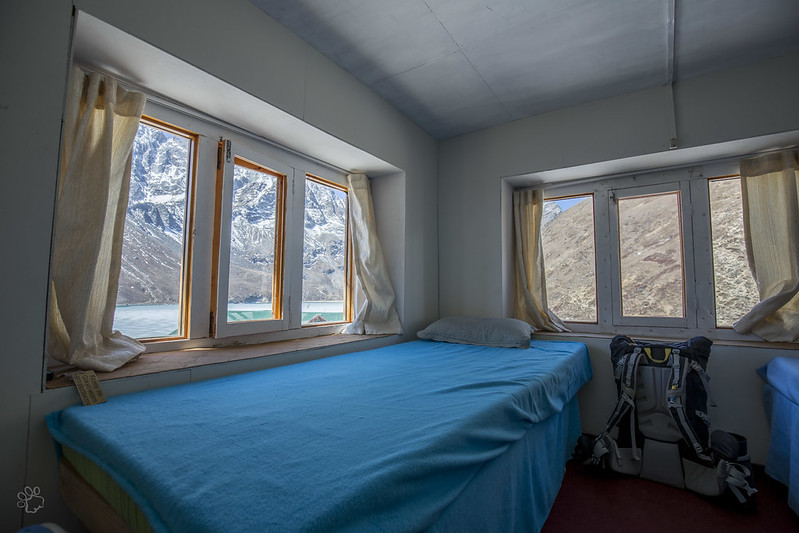
Cozy rooms: Warm blankets, pillows, twin beds, and bed sheets
Communal dining area
Wi-Fi access: Paid service (approximately NPR 200–300 per night)
Charging points: Paid service (approximately NPR 200–300 per hour)
Hot showers: Paid service (approximately NPR 500 per use)
Shared washroom facilities with running cold water
Food and Dinning Option During Gokyo Lake Trek
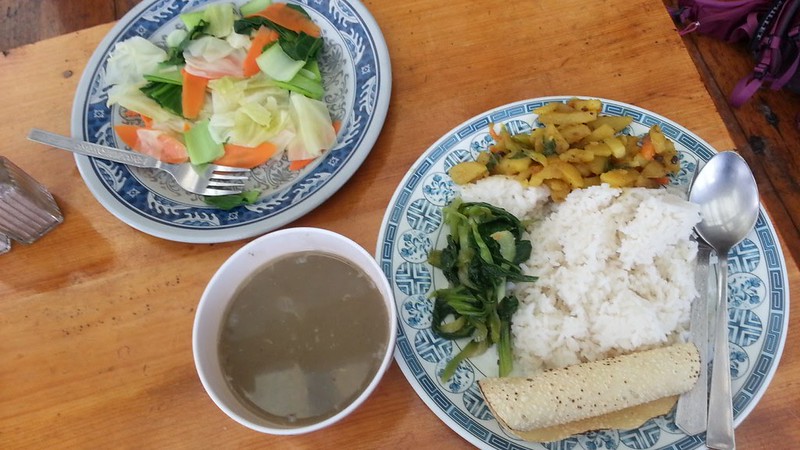
Several teahouses are located along the Gokyo Lake trekking trail. These teahouses offer simple food menu options, made with locally produced and organic ingredients. Most of the food served consists of traditional Nepali dishes, with a few international options available. Trekkers have option to choose veg and non veg option and if you have any food allergies, let us know during the booking. During the trek, High Route Adventure will provide three meals a day. Food and drink prices increase as you go higher due to limited transportation access and lack of road connections. Therefore we recommend you to carry some extra budget for snacks, drinks, and personal expenses. Here are the common food you can expect in the teahouse menu:
Breakfast
Category
Items
Porridge & Cereals
Oatmeal/Porridge, Muesli with milk, Corn flakes/rice puffs, Tsampa porridge
Eggs
Fried eggs, Scrambled eggs, Boiled eggs, Omelette
Bread & Baked Items
Toast with jam/butter/honey, Pancakes, French toast, Chapati/roti, Tibetan bread
Nepali Breakfast
Dal Bhat (breakfast portion), Aloo chura
Note: To start the trek early in the morning and avoid delays, please inform your guide in advance about your preferred breakfast options.
Lunch and Dinner
Category
Food Items
Staple Nepali / Sherpa Meals
Dal Bhat with all sides, Sherpa stew, Tsampa with butter tea, Momo (dumplings)
Apple pie, Chocolate cake/brownie, Cinnamon roll, Kheer (rice pudding)
Tip: Above 4,000 m (Machhermo, Gokyo), stick to vegetarian and avoid raw meat, fish, and dairy-heavy dishes. Your digestion slows at altitude — lighter meals aid sleep and recovery.
Drinks
Category
Items
Hot Drinks – Tea
Butter tea (po cha), Milk tea (chai), Black tea (lemon/plain), Ginger tea, Ginger lemon honey tea, Mint tea, Herbal tea (chamomile, tulsi)
Hot Drinks – Coffee & Cocoa
Instant coffee (black or milk), Hot chocolate, Milo
Cold & Room-Temperature Drinks
Bottled water (1–2L), Boiled water (refill), Lemon water/lemonade, Soft drinks (Coke, Sprite, Fanta), Lassi (sweet/salty), Juice (tetra pack)
Traditional Drinks
Tongba (millet beer), Chang (local rice beer)
Tip: Drink 3–4 litres of fluid per day on trek. Hot drinks count. Avoid alcohol above 3,500 m — it suppresses breathing during sleep and dramatically worsens altitude sickness risk.
Teahouse snacks (order & eat)
Category
Items
Warm Snacks
Dal soup with bread, Fried potatoes/chips, Spring rolls
Light Snacks
Popcorn, Biscuits & cookies (local brands), Sel roti (Nepali ring doughnut)
Packaged Snacks
Pringles/crisps
Local Specialties
Yak cheese slices
Tip: Buy your trail snacks in Kathmandu (Thamel) or Namche Bazaar — selection is best and prices are lowest there. Above Namche, snacks can cost 2–5x more. Carry at least 2 days of emergency snacks at all times.
Altitude Sickness and Acclimatization Tips
Altitude sickness, also known as Acute Mountain Sickness (AMS), is a common concern for trekkers while heading for the Gokyo Lake Trek. AMS usually occurs at altitudes above 3,000 meters and it can happen to anyone, even experienced trekkers. Therefore for the safe trekking experience it is important to learn AMS symptoms, preventive measure and what to do if you catch altitude sickness.
Common Symptoms of AMS
Mild headache
Nausea and loss of appetite
Fatigue
Poor sleep
Dehydration
Severe Altitude Illness
HACE (High Altitude Cerebral Edema): swelling of the brain
HAPE (High Altitude Pulmonary Edema): fluid in the lungs
Both conditions are life-threatening and require immediate evacuation.
How to Prevent AMS:
Take rest days at certain heights (e.g., around 2,800–3,000 m) to allow your body to acclimatize.
Do short hikes instead of long climbs on acclimatization days.
Drink plenty of fluids like water, tea, or lemonade.
Some trekkers use Diamox (Acetazolamide) under medical guidance to prevent or reduce AMS symptoms.
What to do if you catch AMS:
Inform our trekking guide immediately.
Follow the guide instructions.
Take rest and descend to a lower altitude.
If symptoms worsen, you will be evacuated to the hospital by helicopter.
Safe Drinking Water
The bottled water available for purchase during the Gokyo Lake Trek is safe to drink. You may also find natural and tap water along the trekking route; however, we do not recommend drinking untreated water due to safety and health concerns. A 1-litre bottle of water costs around NPR 50–100 in the lower Khumbu region, but the price can increase to NPR 300–600 at higher altitudes. To reduce plastic waste, you can also refill your reusable water bottle at teahouses. Additionally, you can purchase boiled hot water from teahouses and refill your bottle for safe drinking.
Wifi and Mobile Network
Wi-Fi is available in almost all teahouses where you will stay during the trek. The connection is generally smooth in lower regions; however, as you reach higher altitudes, the signal may become weak, slow, or intermittent. To use Wi-Fi in teahouses, you need to pay a fee, which varies depending on the location. Mobile network coverage is similar to Wi-Fi: it works well in lower villages such as Lukla and Namche, but as you move to higher-altitude areas like Machhermo and Gokyo, the signal becomes patchy and frequently drops.
Note: For the Gokyo Lake Trek, we recommend you use the NTC sim because it has nice coverage at high altitudes. You can use this SIM for communication as well as for mobile internet.
Travel and Medical Insurance
Before heading to the Himalayas of Nepal, it is highly recommended to have valid travel and medical insurance for your own safety. This is because trekking in high-altitude regions involves risks such as altitude sickness, injuries, flight delays, and emergency evacuations. There are small health posts in Machhermo and several clinics in Namche Bazaar that provide basic treatment for general illnesses and mild altitude sickness. However, in case of emergencies, helicopter evacuation may be required, and without insurance, the cost can be very high. Therefore, having comprehensive trekking insurance is strongly advised.
Here are the things that you insurance policy must cover :
High-altitude trekking up to at least 6,000 meters
Medical emergencies and hospitalization during the trek
Emergency evacuation, including helicopter rescue from remote areas
Trip cancellations, delays, or interruptions
Lost, stolen, or delayed baggage
Lukla Flight Information
Many travelers who have flights to Lukla Airport often worry about flight cancellations. In reality, Lukla flight cancellations are quite common in Nepal due to unpredictable mountain weather conditions, low visibility, and strong winds. These factors can cause delays or rescheduling for safety reasons. Therefore, we highly recommend keeping at least 1–2 buffer days in your itinerary in case of delays or cancellations. If your Lukla flight is canceled for several days, you can opt for a helicopter flight, which usually costs around USD 600–700 per person on a sharing basis. Additionally, during the peak season, the Civil Aviation Authority of Nepal may divert Lukla flights to Ramechhap Manthali Airport. So, it is important to check flight details and weather conditions before your journey.
Upgrade Your Gokyo Lake Trek with a Scenic Helicopter Return
Trekkers who wish to avoid the return trek from Gokyo Village to Lukla can choose a direct helicopter flight back to Kathmandu. This option significantly reduces the overall trekking duration and physical effort while allowing you to enjoy a spectacular aerial view of the Everest region, Gokyo Lakes, and the surrounding Himalayan peaks.
The helicopter return is available as a private service and is ideal for trekkers with limited time or those seeking a more comfortable travel experience. Each helicopter can accommodate up to 5 passengers. If you would like to arrange a private helicopter flight from Gokyo to Kathmandu, please contact us directly via Phone/WhatsApp at +977-9851058664 for pricing and availability.
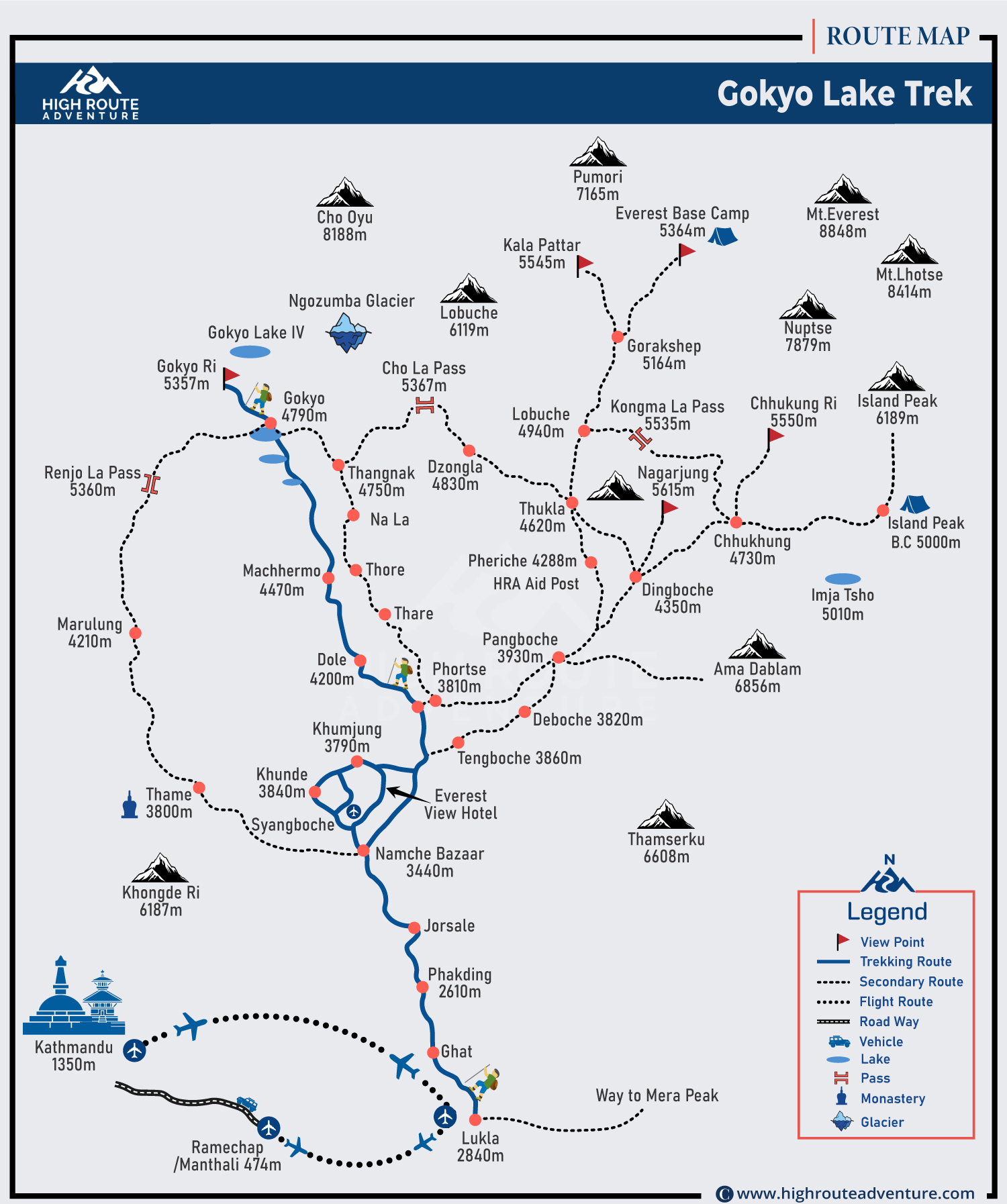
Map
Altitude Chart
Equipment
Trekking to Gokyo Lake means facing high-altitude trails, chilly mornings, and rapidly changing mountain weather. Packing the right gear ensures you're comfortable, safe, and ready for anything on the trail.
Here’s a practical and original list of what you’ll need:
👕 Clothing Layers
Base Layers (thermal tops and bottoms) – Keeps body heat in and wicks moisture out
Moisturizer & Foot Cream – Helpful in dry mountain air
💊 Health & First Aid
Altitude Sickness Medicine (Diamox) – Consult your doctor
Personal Medication – Any required prescriptions
Blister Care – Band-aids, moleskin, or blister pads
Electrolytes or Rehydration Salts – Helps after long hikes
Small First Aid Kit – With essentials like antiseptic, bandages, etc.
📱 Extras That Add Comfort
Power Bank – Limited charging options in higher villages
Camera/Phone – Capture the Gokyo Lakes and mountain views
Travel Insurance Copy – Should cover high-altitude trekking
Snacks – Energy bars, nuts, chocolate for the trail
Notebook & Pen – For journaling your adventure
🧭 Final Packing Tips
Layering is key: temperatures can vary from sunny and warm to freezing within hours.
Keep your daypack light and carry only essentials for the day's walk.
Pack items in dry bags or plastic liners to keep things dry.
Don’t overpack—porters usually carry 10–15kg max.
FAQs
FAQs of Gokyo Lake Trek
What is the Gokyo Lake Trek?
The Gokyo Lake Trek passes high-altitude freshwater lakes in the Gokyo Valley, at around 4,700–5,000 m (15,400–16,400 ft) inside Nepal’s Sagarmatha National Park.
What’s the best time to do the Gokyo Lake Trek?
Gokyo lake trek is throughout the year. But spring season ( March to May) and autumn season ( September to November) are the best time to view the mountain and to do the trek. That means you will experience the best weather and more visibility of the mountain.
Is it required to have trekking experience to Gokyo lake trek?
Gokyo valley trek is a moderate difficulty trek so you need a basic trekking and High altitude experience. You need to have a moderate level of physical fitness. You have to walk for at least 5 to 6 hours every day and at least two times need to acclimatization in Namche and further one day after the Namche bazaar. You will succeed in your mission.
Is the flight to Lukla dangerous?
The Tenzing Hillary airport at Lukla is one of the most dangerous airports in the world because of it’s geographical location and short runway. likewise, the weather conditions in the Himalayan region like Lukla change very often, to this, the to and from Lukla are often delayed or canceled. Another difficulty that travelers might face is health issues since Lukla is situated at an altitude of 2,840 meters. Since the symptoms of hypoxia start to seem above the altitude of 2,400 meters, it's essential to acknowledge the threats of hypoxia
What can I do if the Lukla flight is canceled?
The flights within the higher Himalayas are frequently delayed or canceled due to unpredictable weather conditions. In this case, you need to wait for the weather to clear before the flight can resume. This is why we recommend keeping 1–2 buffer days in your itinerary to absorb any delays without affecting the rest of your trip. If the delay continues for several days, you can also charter a helicopter to Lukla or Kathmandu.
Can I see mount Everest from Gokyo Ri?
Gokyo Valley trek is also known as the Gokyo peak which is 5,357 meters from the sea level. This trek is less popular than the Kala Patthar. The view of Mt Everest is a little bit far from Gokyo Ri but you can see more a part of it and determine that Everest is that the highest mountain. From Gokyo Ri, you can see the 360-degree view of mt Everest and other mountain peaks.
Where is the Gokyo Lake Trek located?
Gokyo Lake is located in the Everest Region. To reach it, you need to take a flight from Kathmandu to Lukla, followed by several days of trekking through the stunning Himalayan landscape to arrive at the lake.
Is the Gokyo Lake Trek difficult?
Although the Gokyo Lake trek is graded as moderate challening trek with enough plan and preparation, we have seen hundreds of trekkers sucessfully completed this trek. So it will not be so hard in your prepare physically and mentally for this trek.
Do I need permits for the Gokyo Lake Trek?
Yes. You’ll need the Sagarmatha National Park Entry Permit (NPRs 3,000/per trip) and the Khumbu Pasang Lhamu Rural Municipality Entrance Permit (NPRs 3,000/per trip).
How do I get to the starting point of Gokyo Lake Trek?
From the hotel, we will pick you up and transfer you to the domestic terminal building of TIA airport. Then you will take a 30-minute domestic flight to Lukla Airport, the starting point of this Gokyo Lake trek.
Can first time trekker can join this Gokyo lake Trek ?
Yes, with careful preparation and fitness maintenance, we have seen that first-time trekkers also complete the Gokyo Lake trek without having much trouble.
How does the Gokyo Lake Trek compare to Everest Base Camp?
The Gokyo route is quieter, less crowded, and offers better scenic variety (lakes, glaciers). Everest Base Camp (EBC) is more culturally focused but sees more crowds.
How much does the Gokyo Lake Trek cost?
The Gokyo Lake Trek package cost starts from 1,210 USD. However, if you are in a group you can special discount in the package.
Can I Skip the hike to Gokyo Ri?
Yes, if you don't like to do hike to Gokyo Ri you can avoid it also.
How long does it take to get to Gokyo Ri from Gokyo Village?
Ascent Time: 2–3 hours (up), Descent Time: 1–1.5 hours (down). The overall duration is 4-6 hours, including time spent at the summit.
What makes the Gokyo Ri Hike special?
The Gokyo Ri hike (5,357 meters) is the best place to see Everest, Lhotse, and Makalu, along with amazing views of the Gokyo Valley and the Ngozumpa Glacier
Can we swim in Gokyo Lake?
Despite pilgrims bathing there during the Janai Purnima festival, swimming in the sacred Gokyo Lakes (4,700–5,000m) is generally discouraged for religious, cultural, and safety reasons. The lakes in Sagarmatha National Park are a part of a delicate and protected environment, and the water is very cold.
What is the temperature of Gokyo Lake?
The Gokyo Lake water is very cold, ranging from about -10°C in winter to 5°C in summer.
Are there health and medical facility at the Gokyo Lake trek route?
There is a health post that provides basic medical facilities, but there are no hospitals in the area.
Real experiences shared by trekkers and travelers who joined our trips.
Sarah, USA
I’ll be honest: I was terrified. I’d never done a multi-day trek before, let alone in the Himalayas. I chose Gokyo because I wanted the Everest view without the ‘highway’ feel of the Base Camp trail. Yes, the altitude is tough, and yes, your legs will burn, but the pace is manageable if you take it slow. Reaching the lakes felt like stepping onto another planet. If a beginner like me can do it, you can too. Just pack layers, drink your water, and prepare to have your mind blown every single day
Amina, Morocco
Coming from the Atlas Mountains, I thought I knew high-altitude culture, but the Sherpa people of the Gokyo valley stole my heart. Because the Gokyo route is quieter than the main Everest trail, the interactions felt more genuine. I spent an evening inside a local teahouse, drinking yak butter tea and listening to stories about the mountains from a local family. It wasn’t just about the scenery; it was about the warmth of the people living at the edge of the world. It reminded me that even in the coldest places, human connection is the source of all warmth.
Liam, Australia
“Light. That is why I came, and that is why I stayed. The light in the Gokyo Valley is unlike anything I’ve shot in the Outback or the Great Barrier Reef. The way the glacial silt reflects in the lakes creates a color palette that feels almost alien—vibrant cyans and deep teals against the stark white of the Himalayan giants. I spent three days just in Gokyo village waiting for the perfect cloud reflection on the water. For any landscape photographer, this is the Holy Grail.”
Elena, Brazil
I’ve hiked the Andes and the Alps, but Gokyo hit different. Standing at Gokyo Ri at 5,357m, looking down at the turquoise lakes with Cho Oyu and Everest in the same frame, was worth every step of the climb. The Ngozumpa Glacier is something photos will never do justice to — it’s this vast, cracked river of ice and rock stretching for kilometers. What surprised me most was how quiet the trail was compared to what I’d heard about Everest Base Camp. Some mornings it felt like we had the whole valley to ourselves. My legs were done by day 8, but my mind was completely somewhere else.
Hiroshi, Japan
“In Japan, we value kintsugi—the beauty in imperfection and resilience. Trekking to Gokyo Ri, I found a similar beauty in the harsh, jagged landscape. Standing at the summit of Gokyo Ri at sunrise, watching the sunlight hit the face of Everest while looking down at the deep, frozen sapphire of the lakes, I felt a silence I had never experienced before. It wasn’t just a trek; it was a meditation. If you are looking for external noise, go to Base Camp. If you are looking for your inner self, come to Gokyo.”