
There is a common misconception that the Everest base camp trek is for professional mountaineers or fitness trekkers only. But if you speak with the Sherpas of the Khumbu Region, they will tell you the mountain doesn’t ask for your age or experience level. Everest base camp trek for seniors and kids is possible when you travel with patience, respect, and the right plan.
To make your Everest trek easier, we have introduced this 20-Day Everest Base Camp Trek Package, designed especially for seniors, beginners, and families. Our meticulously crafted Everest Base Camp Trek itinerary isn’t about breaking records.
We care for your safety and adventure, so it is designed to let your heart and lungs adjust to the thinning air of the Himalayas. For older trekkers, this means more time to enjoy morning tea while looking at snowy peaks. For younger trekkers, it means walking at a comfortable pace, exploring mountain trails, and experiencing Sherpa culture without feeling rushed.
In these 20 days, you will step in the footsteps of legendary Edmund Hillary and the Sherpa people. Starting your journey from Kathmandu via the Lukla flight, you will land in Lukla with a breath-catching, heart-pounding arrival into the heart of the mountains. Then, passing through the Sagarmatha National Park, you will enter the Khumbu Valley – a living museum.
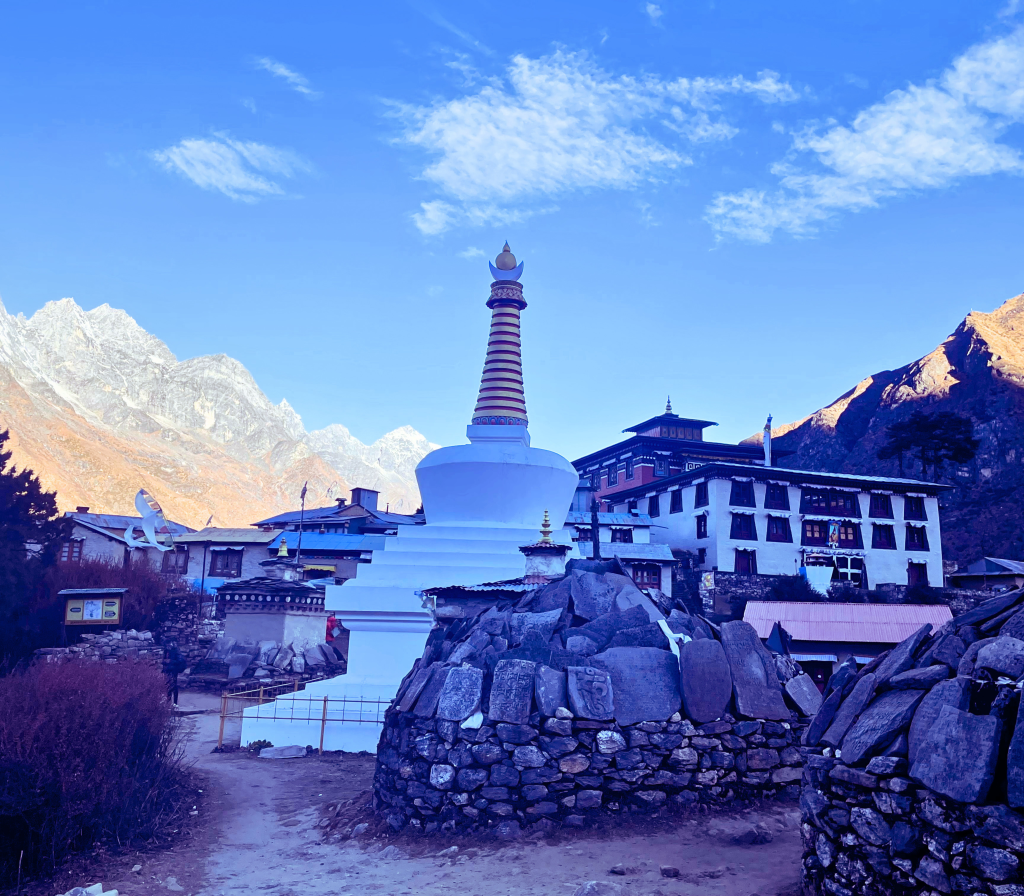
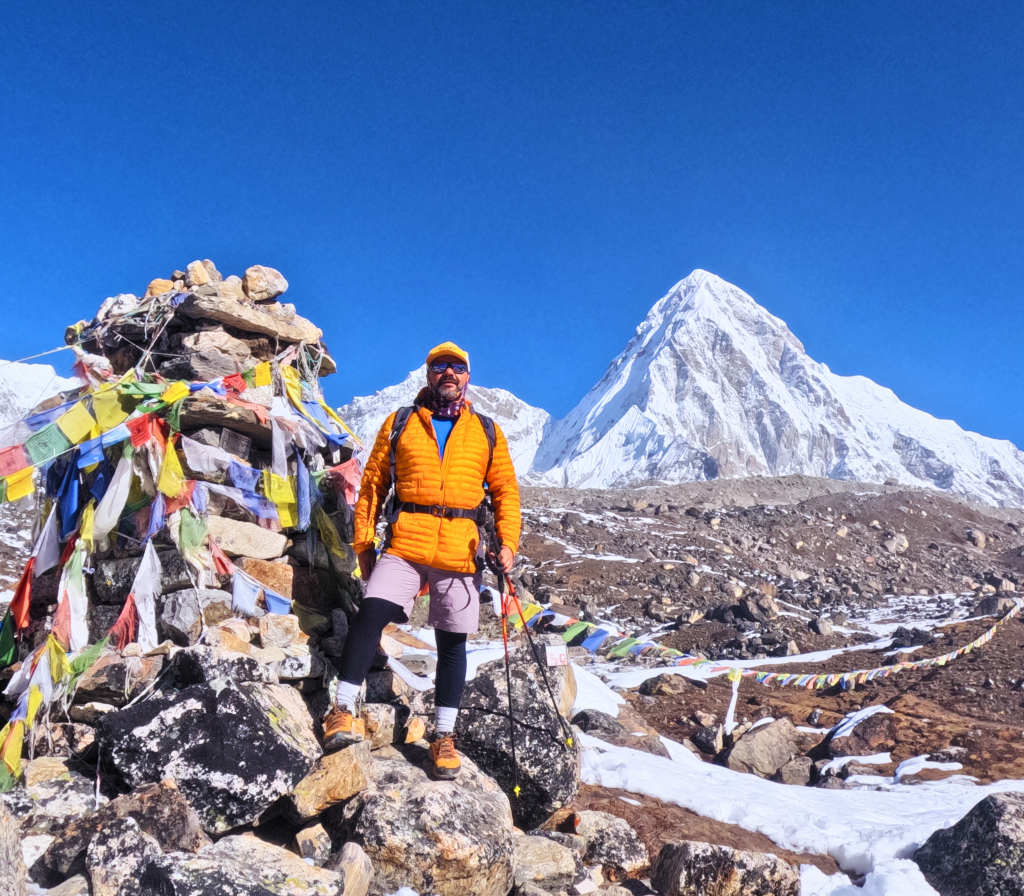
For children, the Everest base camp trekking trail is a real-life classroom. You will pass through a thrilling suspension bridge, Buddhist monastery, prayer flags, spinning prayer wheels, and ancient chortens. Kids will also learn to walk clockwise around sacred monuments, a beautiful lesson in respect and local Himalayan culture. It is a simple but meaningful experience that helps them understand tradition while enjoying the adventure.
For older people, the Sherpa culture and traditions offer a deep and meaningful reflection on life and tradition. After trekking for hours, you will stop at a tea house and enjoy warm butter tea, which offers a sense of luxury and comfort.
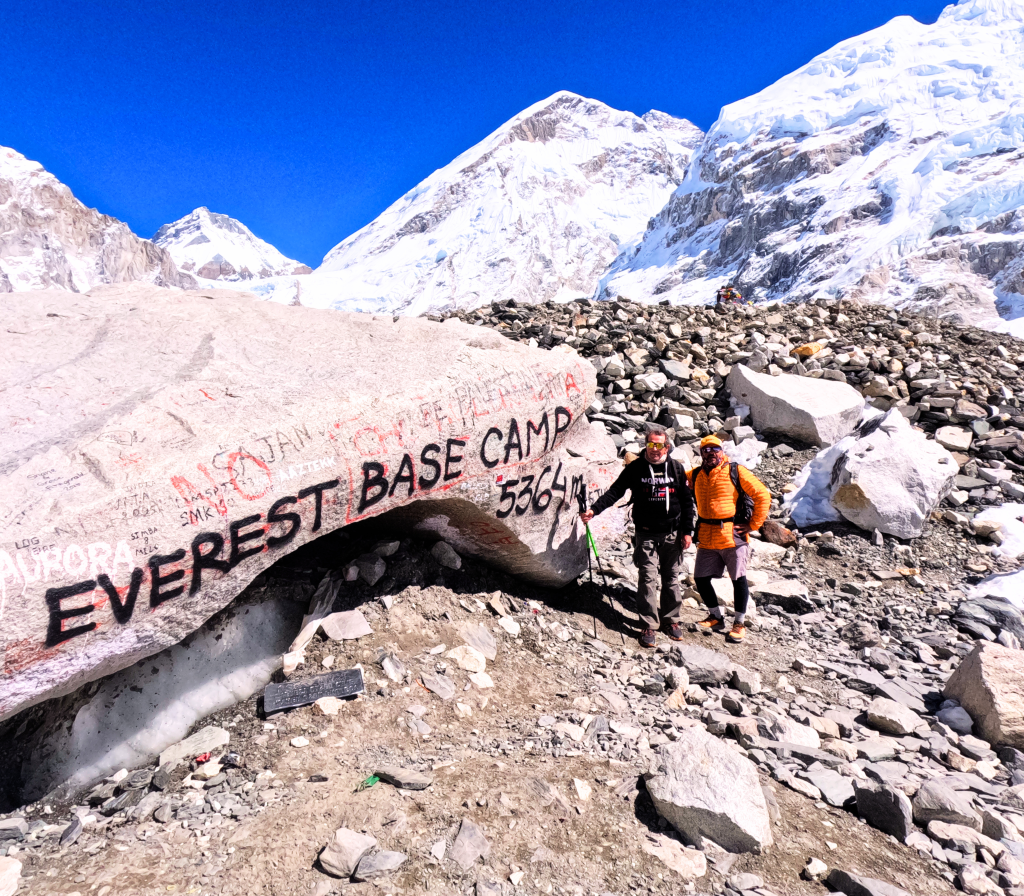
Standing at the iconic Everest Base Camp stone and taking pictures, hiking to Kala Patthar for the breathtaking sunrise view, and seeing the many sights along the way are just some of the things to do and see on this Everest trek. We guarantee that after completing the trek, you will return home with countless memories, stories to share with friends and family, and moments you will cherish for a lifetime.
During the Everest trek, you will pass through the famous Sherpa villages of Lukla, Namche Bazaar, Tengboche, Dingboche, and Lobuche. This village is the heart of the Khumbu Region, where you can experience Sherpa culture, traditions, and the Himalayan way of life.
Each village along the Everest Base Camp Trek route warmly welcomes trekkers with traditional teahouses and genuine Sherpa hospitality, along with stunning views of Mount Everest, Lhotse, Ama Dablam, and Thamserku. Here, mountain life, Buddhism, and Sherpa culture are intertwined.
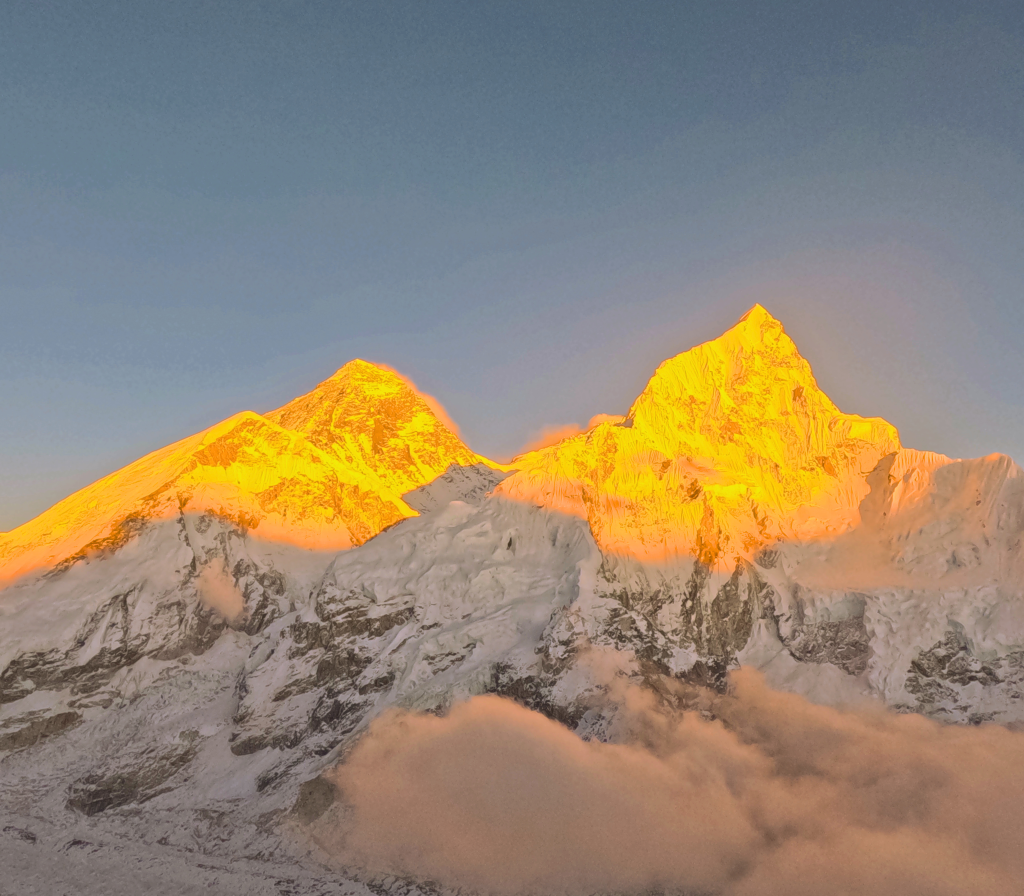
One of the main highlights of the Everest base camp trek is to enjoy the sunrise from the Kala Patthar viewpoint, situated at an altitude of 5,644m (18,519ft). Early in the morning, you will hike to Kala Patthar for around 2 – 2.5 hours to enjoy the magical sunrise. When the sunrays hit the mountains of Mount Everest, Lhotse, and Nuptse and turn golden, this moment is something truly unforgettable. Also, it is one of the best points for photography and a close view of Everest.
The Everest Base Camp trek costs a little more for older people and kids due to the extended itinerary. The more people you have in your group, the more discounts you can get on the package.
Package Types
| Group size | Standard Package Price | Deluxe Package Price |
| 1/Private | 2,000 per person | 3,500 per person |
| 2-6 | 1,800 per person | 3,200 per person |
| above 6 | 1,600 per person | 3,000 per person |
Welcome to Nepal, a peaceful land full of the Himalayas and temples. After you land at Tribhuvan International Airport (TIA), you will complete immigration and get a stamp in your passport. Then, outside the airport, our staff will be waiting to pick you up and transfer you to the hotel. Then, from the airport, you will ride in our private vehicle to Thamel. After completing check-in, you can relax or reenergize your long train.
On this day, you will make yourself ready before heading toward the Khumbu region for the Everest trek. If you have not brought trekking clothes and gear, you can walk around the streets of Thamel and visit shops that sell or rent trekking equipment. After making everything ready, you can visit Durbar Square, Pashupatinath temple, Baudha temple, or Swayambhunath. These heritage sites in Nepal are listed as UNESCO World Heritage Sites, and they're worth visiting to relax your body and mind.
Early in the morning, you will head to the domestic terminal building of TIA to catch the Lukla flight. The Lukla flight operates early in the morning because weather conditions are more stable at that time. Then, a flight to Lukla takes 30 minutes. In this short duration, you will enjoy the breathtaking view of Kathmandu, a direct view of the snow-covered peaks, and Mount Everest. After you land at Lukla airport, you will complete the check-in process and meet your porter, who will be waiting outside for you. After a short tea/coffee break, you will start your first trek in the Everest region.
Today, your destination will be Phakding village. You will follow the Dudh Koshi River (Milky River) and trek through lush pine and rhododendron forests. Trekking for around 3-4 hours downhill, with some "Nepali flat," you will arrive in Phakding. Then you will check into the teahouse and stay the night here.
Today, you hike from Phakding to Monjo. After breakfast, you will leave the tea house and follow the Dudh Koshi River. Then you will pass through small, scenic villages, including TokTok and Benkar. Also, you will cross the long suspension bridges over the Dudh Koshi to reach Monjo. Monjo has an official checkpost where your permit will be checked before you enter the Sagarmatha National Park. You will check into the teahouse and stay overnight here at Mongo.
Leaving the Monjo tea house after breakfast, you will reach the checkpoint and register your permit. Then you will descend toward the river and head toward the Jorsale Village. Then you will cross the famous Hillary Suspension Bridge, which hangs high above the Dudh Koshi River. After you cross the bridge, you will walk on a series of steep, dusty switchbacks through a pine forest. Roughly two-thirds of the climb up the hill, you’ll come across a small rest stop with public toilets. If the weather is clear, take a moment to look through the trees—you may catch your first distant glimpse of Mt. Everest.
Today you will rest in Namche Bazar to acclimatize your body before heading to Everest Base Camp. On this rest day, you have several options for spending the day hiking to nearby villages and returning to Namche for the night.
Now it's time for you to leave Namche Bazar and head toward Khumjung Village. You will pass through the Everest View Hotel and arrive at Khumnjung village. Then you can check in at the tea house, and after lunch, visit the Hillary School and the Khumjung Monastery. Inside the Khumjung Monastery, you can find the Buddhist sculpture and the famous purported Yeti scalp. Tonight you will spend the night here at Khumjung teahouse.
From Khumjung, you will now depart and head to the Pangboche village. After breakfast, you will descend through rhododendron and pine forests while carrying a day backpack. You will follow the trail, passing through Phunki Thenga and descending to the riverbank. Then you will ascend steeply through rhododendron forests for approximately 1.5–2 hours to reach the village of Tengboche. You will explore the famous Tengboche monastery, which also offers amazing views of Ama Dablam, Everest, and Lhotse. After exploration, you will make a gentle descent through forested trails to reach Deboche (3,710 m), a peaceful spot known for its small nunnery. Then, as you continue walking on the steady, more open trail, you will reach the Panboche village. You will check in at the teahouse and spend the night here in Pangboche.
Today's hike begins in Pangboche and ascends gradually through alpine terrain above the tree line. You will pass through small settlements such as Shomare and Orsho, with excellent views of Ama Dablam along the way.
As you continue, the landscape becomes more open and arid, leading into a wide valley surrounded by high peaks. After a steady climb at altitude, you will reach Dingboche (4,410 m), a scenic village known for its stone-walled fields and mountain views.
Today is another rest day on this Everest trek before heading toward the base camp. It is important to prevent altitude sickness and adjust your body to high altitude. You have a choice to hike either Nangkartshang Peak or Chhukung Valley (4,730m) and return to Dingboche for the night.
After breakfast, we will depart from Dingboche tea house and walk across the wide valley. Leaving the village, you will pass through the open terrain with sweeping mountain views. You then continue past Dusa Kharka (around 4,500 m), a seasonal yak grazing area surrounded by stunning peaks. You will reach a small bridge over a fast-flowing river, which marks the entrance to Thukla (also spelled Dughla). The village sits at the foot of the Khumbu Glacier moraine. Then you will check into the teahouse and spend the night here.
From Thukla, we will pass the steep zig-zag trail to reach the Thukla Pass (also known as Dughla Pass). At the top of the pass, you can see the memorial site with chortens (stupas) dedicated to climbers who lost their lives on Everest. After this, following the easy trail, you will be along the edge of the Khumbu Glacier.
Today is the most demanding and challenging day of this entire Everest Base Camp trek. First, you will hike from Lobuche to Gorakshep along the lateral moraine of the Khumbu Glacier. On the route, you will see dramatic views of Pumori, Nuptse, and the vast, icy expanse of the Khumbu Glacier. After 3 hours of walking, you will reach Gorakshep. Check in and leave your belongings there. Then you will enjoy your lunch and prepare to leave for Everest Base Camp. Walking for around 2–3 hours from Gorakshep, you will reach base camp and enjoy your moment. To celebrate your achievement, you can take pictures and videos and feast your eyes on them. Then, after this, you will return to the Ghoraksheep teahouse and spend the night.
Today is another rewarding day on the Everest Base Camp Trek. Early in the morning, around 4 - 4:30, we will hike to Kala Patthar to witness the sunrise. From this vantage point, you can capture stunning views of Mt Everest. Also, the close-up view of Everest and other surrounding Himalayan peaks from here is really amazing. We will return to the tea house for breakfast before heading to Thukla. The descent from Ghoraksheep to Thukla takes you approx. 3.5 hours. En route, you will cross the memorial site and the Thukla pass to reach Thukla. Then you will check into the teahouse and spend the night here.
After breakfast, you will depart from Thukla and head toward Tengboche village. The hike from Thukla to Tengboche is mostly downhill, with a steep climb at the end. En route, you will pass through Pheriche village, home to the Himalayan Rescue Association (HRA) clinic. You will have lunch in Somare and enter the Pangboche village. From Pangboche you will cross suspension bridge to reach Deboche. From here further walking for 20-30 minutes, reach Tengboche after a steep uphill climb. You will check into the Tengboche teahouse for the night.
After breakfast, you will depart from Tengboche, following a sharp descent from the Tengboche ridge down through rhododendron and pine forests. You'll cross a suspension bridge at Phunki Tenga. After the bridge, you will passing through several village to reach Namche Bazar and stay in the best teahouse.
After breakfast in Namche Bazar, it's time for you to ascend back to the Phakding village. Once again, you will cross the Hillary Suspension Bridge, pass through Jorsalle, then Monjo, and finally arrive at Phakding.
Today marks the final day of your Everest Base Camp trek in the Khumbu region. You will walk for few hours along the banks of the Dudh Koshi River, passing through lush forests and small settlements like Ghat and Thado Koshi. Near Lukla, you will see the Pasang Lhamu Memorial Gate, and after crossing it, you will check in at a tea house and stay overnight in Lukla Village.
After breakfast, you will head to the Lukla airport and take a morning flight to Kathmandu.
Fly back to your home country with full memories of Nepal and Everest. Make sure to arrive at the airport 3 hours before your departure.
The flight to Lukla operates daily, early in the morning, from 6 AM to 10 AM, departing from the domestic terminal at Kathmandu airport. This flight is operated by local airlines, including Tara Air, Summit Air, and Sita Air. Since Lukla airport is the main hub for travelers heading into the Everest region for trekking and expeditions, the flight remains busy, especially during peak season. To control air traffic, the flight is diverted to Ramechhap Airport, a 4- to 5-hour drive by road via the BP Highway. If your Lukla flight is from Ramechhap, the Everest Base Camp trek itinerary will be adjusted, and transportation will also be arranged. Read more about Kathmandu to Lukla Flight.
The Everest Base Camp trek is challenging and risky, so to stay safe and handle emergencies, insurance is essential. Having insurance helps to provide emergency rescue, medical expenses, and other unforeseen costs. Emergency helicopter rescue costs are very expensive in Nepal. So to remain financially protected and have peace of mind, your insurance must cover these things:
Continue reading: Travel Insurance for Trekking
To book the Everest Base Camp Trek with High Route Adventure, you have to click the "Book Now" button on our website and fill in the required information. Then make a 20% advance payment to confirm the booking. After making the payment, your tour will be booked as per your preferred date. If you have any queries or need further assistance, feel free to contact us.
For making a payment during booking, we accept:
Cancellation Policy: Before making a booking, we request you to check our company terms and conditions.
Several factors make the Everest Base Camp trek more difficult for seniors and children. It is a challenging task, but it is completely achievable with our extended Everest base camp trek itinerary. Below are the factors you need to focus on preparing before heading for the EBC trek in Nepal.
| Factor | Level |
| Difficulty | Challenging but achievable with proper preparation |
| Altitude Risk | High |
| Stamina Demand | High |
| Joint Strain | Moderate |
| Mental Challenge | Moderate |
| Factor | Level |
| Suitability | Not recommended under 05; cautious above 05 |
| Altitude Risk | Very High |
| Stamina Demand | Moderate |
| Cold Exposure | High |
| Mental Challenge | Lower |
Note: Everest Base Camp Trek can be challenging for seniors and children under 15, but with our specialized extended itinerary, it can be done safely and comfortably.
Bottom line: Elderly trekkers in good health can complete EBC with extended itineraries, medical clearance, and a good guide. Children under 10 should only trek under close parental supervision and with special care. Altitude sickness can escalate quickly at high altitude, so careful monitoring is required.
The best Time for the Everest base camp trek for senior people and children is during the Spring. (March – May). During this Time, trekking remains safe, especially for slower-paced trekkers, due to warm days, clear skies, and stable weather conditions most of the Time.
Another popular time to visit Everest Base Camp for elders and children is during autumn (Oct – Nov), when day and night temperatures remain moderate. Also, clear skies, the best views, and low chances of rainfall and snowfall make it the most favorable trekking season.
We don't recommend the EBC trek during Winter (Dec – Feb) and Monsoon (June – Sept) due to challenging weather conditions. The weather is unpredictable during this Time, and the risk of floods, landslides, and avalanches remains high.
The risk of altitude sickness (AMS) remains high for seniors and children during the EBC Trek. So, to prevent it, we should first understand the early symptoms of AMS and the preventive strategies. Here, we have provided guidance on how to provide special care for older people and children.
When you book an EBC trek package with us, we will provide you with a premium tea house along the Everest trekking route. Inside the tea house, you will find proper beds, blankets, and hot showers. Namche Bazaar (3,440 m) has the best facilities on the route — shops, restaurants, cafes, hot showers, WiFi, and bakeries. Tengboche and Dingboche are comfortable. Lobuche (4,940 m) and Gorak Shep (5,140 m) are basic. Family rooms are available in the lower Everest region, but they are hard to find due to limited availability. We recommend booking the package in advance to secure the best available teahouses for you.
Trekkers can choose a meal from the tea house menu and order it as they prefer. You can find the veg and non-veg menu options. Food will be mostly Nepali dishes, with some international options also available. Let's see the common meal you can expect in the tea house:
These can worsen altitude sickness or cause digestive issues at elevation:
Energy bars / protein bars
Dry fruits & nuts
Chocolate (quick energy boost)
Electrolyte drink powder