
Sherpa People and Culture: The Guardians Of Everest

Table of Contents
Introduction: More Than Just a Path
Everest Base Camp trek is a world-famous trekking destination in the world. Everest base camp, which is located in the Khumbu Region of Nepal, is situated at an altitude of 5,364 meters (17,598 feet). Most people think that the best part of the EBC Trek is reaching this incredible height to enjoy the beauty of Mt. Everest and the beautiful landscape. But if you only think about it, then you will miss the real part of the trip: the Sherpa people’s rich culture and warm hospitality.
The Sherpa People are the guardians of the Everest region, and they have been protecting this area for years. They guide tourists to reach their dream destination, EBC, and other peaks here in the Everest region. The Sherpa people’s faith and spirits help to protect the fragile environment, and this is the reason that makes the Himalaya so special. Even in the harsh mountain weather, the Sherpa people stay and help visitors stay in a warm home. Without them, visiting the Everest region is nearly impossible.
In this blog, you will find out about the Sherpa people, their history, culture, traditions, and the special way of living that makes the trip to Everest Base Camp possible and unforgettable.

Who Are the Sherpa? Identity and Origin
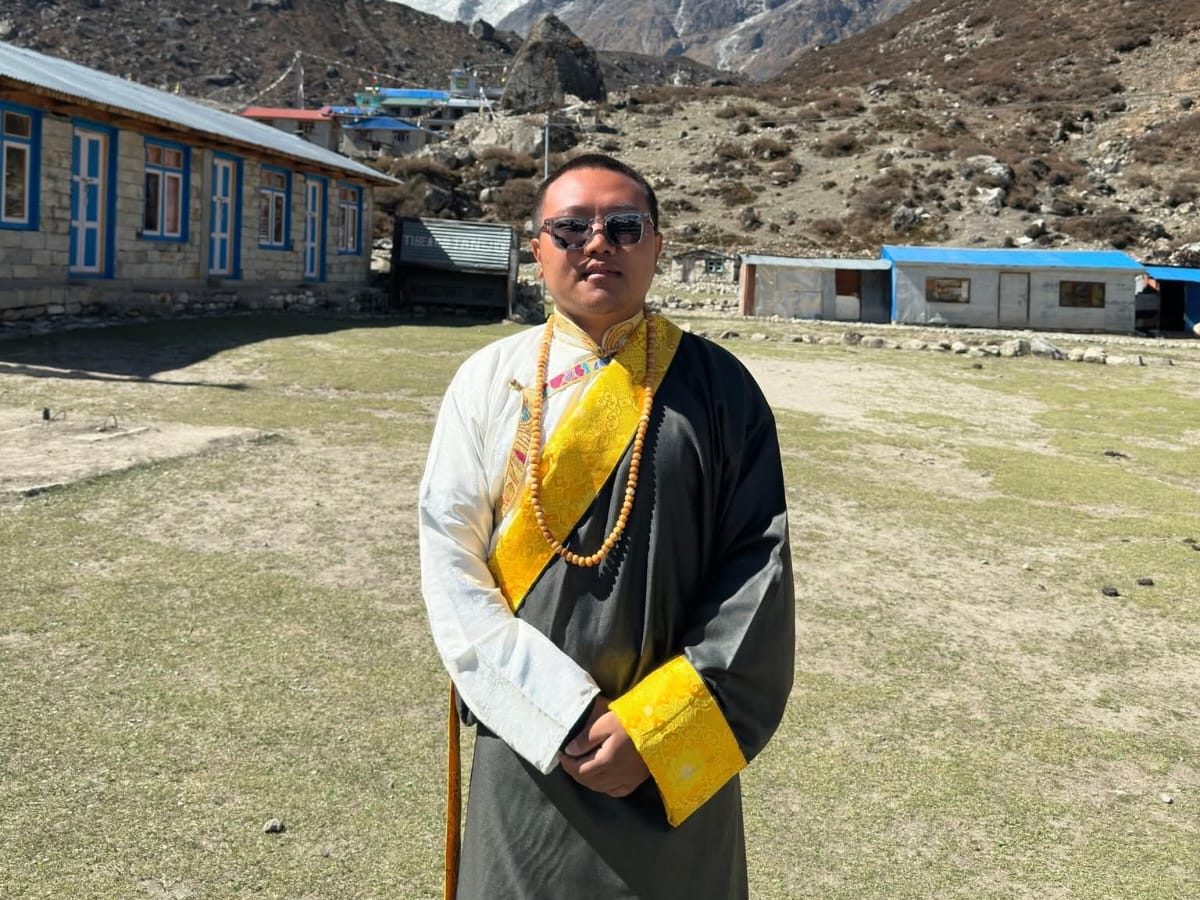
Sherpas are the local people who have been living in the mountain region of the Khumbu region for ages. Their home is a mountain, and their god is a mountain. They are born and raised in the mountains. Foreign people make the mistake that they think Sherpa means “porter” or “guide, ” but in fact, they are actually a distinct ethnic group.
A People of the East
In Tibetan, the word “Shar Pa” means “Eastern People.” The Sherpa migrated from the Kham area of Eastern Tibet to the high mountain valleys south of Mount Everest about 500 years ago. They settled in the Solu-Khumbu region of Nepal inside the Sagarmatha National Park.
An Unrivaled Adaptation
The Sherpa people are genetically built for high altitude. From birth, they live at the high altitude of 9,000 to 15,000 feet. Their strong lungs, high oxygen capacity, and natural endurance make them unique in the world. For this reason, they are the best high-altitude mountaineers in the world. Their physical advantage, knowledge of mountain terrain, and a fearless attitude allow them to guide climbers safely through some of the toughest mountain routes on Earth.
For trekkers, it will be difficult to trek in the high altitude terrain to reach the Everest base camp, but Sherpa porters can easily walk by carrying up to 20kg load. Tourists think they are not human; they are machines built in human form.
The Pillars of Sherpa Culture
The mountains are a big part of Sherpa life, which is based on strong faith, genuine hospitality, and calm strength.
1. Spiritual Life: Tibetan Buddhism
Religion is not only a formality; it is an important part of Sherpa life every day. They practice Buddhism at the Nyingma School of Tibetan Buddhism, which teaches people to have a lot of regard for nature, all living things, and the wisdom of the mountains, which are seen as holy gods.
- Monasteries (Gompas): The Khumbu region’s spiritual center is the Tengboche Monastery, which is located on the EBC route, specifically in Tengboche village. These sites are where people go to pray, learn, and meet up with each other.
- Prayer Flags and Mani Stones: You will see colorful prayer flags (which reflect prayers on the wind) and carefully carved mani stones and prayer walls (revolving prayer wheels) along every trail and mountain pass. These things remind travelers that they are passing through a sacred landscape.
- The Sacred Mountain: Sherpa people call Mount Everest, Chomolungma (Goddess Mother of the World), and those in Nepali call it Sagarmatha. They both see it as a Goddess. Before heading for the climb, they often perform rituals and pray for an apology and for a blessing so that nothing bad will happen during the journey.
2. The Spirit of Hospitality (Nangsa)
All the visitors who have stayed here in the Everest region say that Sherpa hospitality is the best in the world. Visitors are greeted with real warmth and a smiley face. They follow the path of Buddhism, where it is said that we should always be kind to all living things.
- Teahouses and Lodges: The satisfactory teahouse culture along the EBC route shows how determined Sherpas are. Lodge owners let people stay in their homes and kitchens, giving them warmth, safety, and the community they need while hiking at high altitudes.
- Sharing and Community: Living in the mountains means working together. Community support systems and the old-fashioned ethic of sharing make sure that everyone in the village stays healthy and well.
3. Language & Custom
Sherpa(bhoṭiyā) have their own native tongue, which is the Tibeto-Burman language. Due to the tourism area, many locals can speak Nepali and English well. We suggest visitors learn a few local languages so that it will be easy to greet them and show a sign of respect.
During festivals and rituals, they wear their traditional clothes, which sometimes include colorful, heavy woolen robes called the Bakhu (Nepali) or Chhuba (Tibetan/Sherpa).
Sherpa on the EBC Trail: The Essential Partnership
When you participate in the EBC trek, you will get the most capable partner on Earth. You might have heard the story of a foreign climber on Mt Everest who was saved by the Sherpa guide by risking their life. When you trek with them, you are in completely safe hands. You can blindly trust them for your journey.
Not only this they also encourage trekkers to push their limits during the hard times. They sing, dance, tell stories, motivate you, and make your EBC trek memorable, which will always remain in your memory for a lifetime. You will feel like you want to visit this palace again and again. It will be your home away from home.
Different Roles of Sherpa People In Everest
| Role | Contribution |
| Icefall Doctor | Sets and maintains ladders, ropes, and safety lines in risky ice sections, ensuring a safe route for climbers. |
| Rescue | A special Sherpa-led team trained to respond quickly and save climbers during emergencies. |
| Climbing guide | Leads climbers safely toward the peak with expert route knowledge and high-altitude skills. |
| Sirdar (Head Guide) | Manages the entire trekking team, logistics, and safety decisions; often possesses decades of experience. |
| Guides | Navigates the route, ensures proper acclimatization, shares cultural knowledge, and acts as the primary link between the trekkers and the local community. |
| Porters | Carry essential gear and supplies with incredible strength and stamina, maintaining the supply chain that supports the entire trek. |
| Lodge Owners | Provide accommodations, meals, and crucial refuge from the cold. They are the entrepreneurs and hosts of the Khumbu. |
Respectful Trekking: Cultural Etiquette for Travelers
We ask that all trekkers follow these rules when they visit the Sherpa community to make sure that your trip is good for both of you and respectful:
1. Show Reverence for Sacred Sites
- Walk Clockwise: Always go clockwise around mani stones, stupas, chortens, and prayer walls to show respect for the revered Buddhist tradition.
- Respect Monasteries: When you go to a gompa (monastery), dress modestly (cover your knees and shoulders) and ask permission before going inside the inner chambers or taking pictures.
2. Practice Responsible Photography
- Ask Before You Click: Some people in the village might not want to be in your picture and video. So, while visiting and taking pictures of villagers, especially the monk and small children, don’t take pictures without permission.
- Sherpa people are not tourist attractions. Always obtain explicit permission before taking pictures of villagers, especially children and monks. A simple nod or “Namaste” and then a gesture toward your camera is acceptable.
3. Support Local Economies
- Buy Local: Locals of the Khumbu region depend directly on the tourism business. While visiting, make sure to hire the local Sherpa guide and porter. Buy the food from the small shops, and purchase the souvenirs. Spending here benefits the Sherpa communities.
- Tipping Protocol: Even though it is not mandatory to give tips, it is like a tradition when someone completes the treks in the Everest region. Tipping shows appreciation for their hard work. Also, only trekking partners with the local tour operator in Nepal for safety reasons.
4. Engage with Kindness
- Learn the Basics: A basic “Namaste” (a respectful greeting) or “Tashi Delek” (a Sherpa greeting meaning “blessings and good luck”) goes a long way.
- Right of Way: Porters carrying heavy loads have the right of way on the narrow trails. Step aside and allow them to pass safely, especially near steep sections.

Legendary Sherpa People who make record on Everest
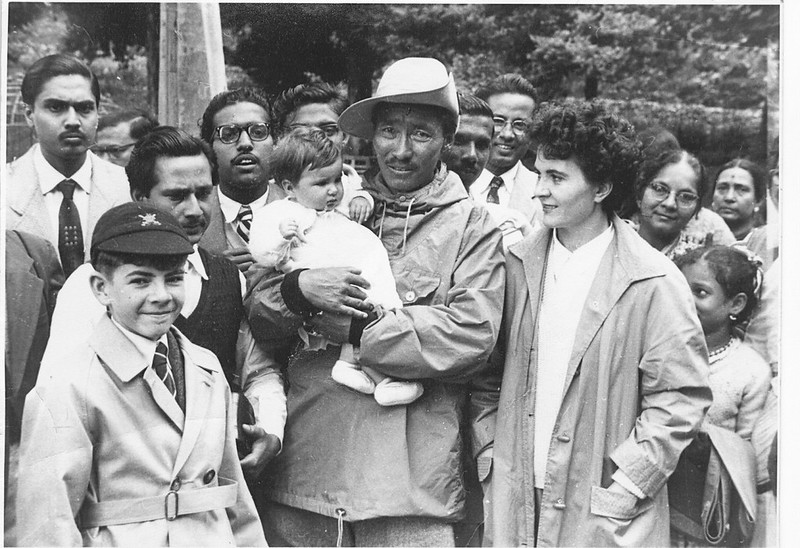
The first person in the world to climb Mount Everest: Tenzing Norgay Sherpa
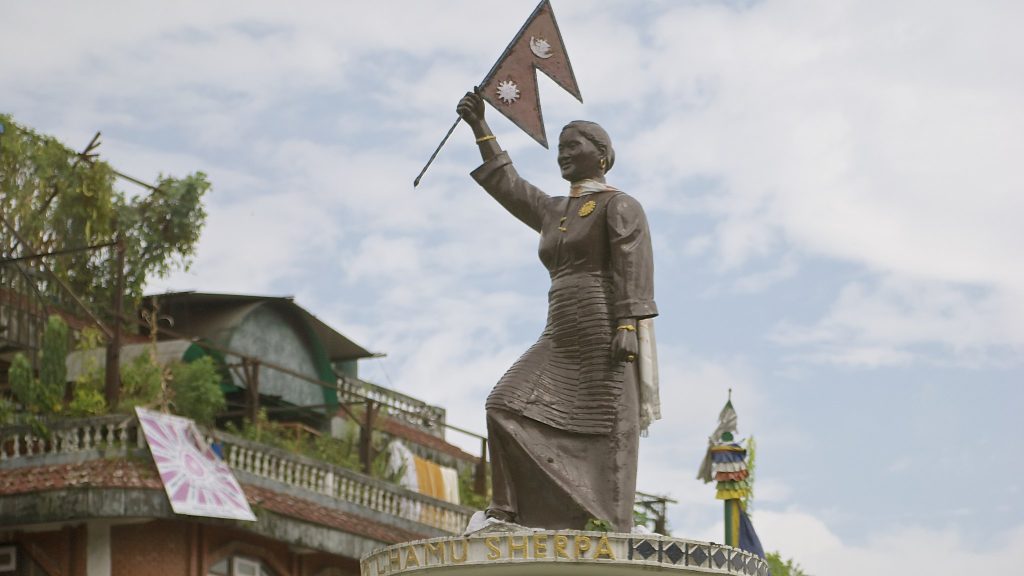
The first Nepali woman to climb Mount Everest: Pasang Lhamu Sherpa
Record Details:
Everest Records by Sherpa Climbers
| Record | Name | Nationality | Date of Ascent |
|---|---|---|---|
| Most ascents of Mount Everest (21 times) | Apa Sherpa | Nepal | May 11, 2011 |
| Phurba Tashi Sherpa | Nepal | May 19, 2013 | |
| Most ascents of Everest by a woman (7 times) | Lhakpa Sherpa | Nepal | — |
| Most ascents of Everest without supplemental oxygen (10 times) | Ang Rita Sherpa | Nepal | May 23, 1996 |
| Climbed Everest for the first time in the world with Edmund Hillary | Tenzing Norgay | Nepal | May 29, 1953 |
| First Nepali woman to climb Everest | Pasang Lhamu Sherpa | Nepal | April 22, 1993 |
| First person to climb Everest twice | Nawang Gombu | Nepal | 1963, 1965 |
| First person to climb Everest three times | Sundare Sherpa | Nepal | 1982 |
| First woman to climb Everest three times | Lhakpa Sherpa | Nepal | 2003 |
| First person to climb Everest four times | Sundare Sherpa | Nepal | 1985 |
| First woman to climb Everest four times | Lhakpa Sherpa | Nepal | 2004 |
| First person to climb Everest five times | Sundare Sherpa | Nepal | 1988 |
| First woman to climb Everest five times | Lhakpa Sherpa | Nepal | 2005 |
| First person to climb Everest six times | Ang Rita Sherpa | Nepal | 1990 |
| First woman to climb Everest six times | Lhakpa Sherpa | Nepal | 2006 |
| First person to climb Everest seven times | Ang Rita Sherpa | Nepal | 1992 |
| First woman to climb Everest seven times | Lhakpa Sherpa | Nepal | 2016 |
| First person to climb Everest eight times | Ang Rita Sherpa | Nepal | 1993 |
| First person to climb Everest nine times | Ang Rita Sherpa | Nepal | 1995 |
| First person to climb Everest ten times | Ang Rita Sherpa | Nepal | 1996 |
| First person to climb Everest eleven times | Apa Sherpa | Nepal | 2000 |
| Fastest ascent from South Base Camp with supplemental oxygen (8 hours 10 minutes) | Pemba Dorje Sherpa | Nepal | May 21, 2004 |
| Fastest ascent from South Base Camp without supplemental oxygen (20 hours 24 minutes) | Kazi Sherpa | Nepal | October 17, 1998 |
| Longest stay on the summit of Everest (21 hours) | Babu Chiri Sherpa | Nepal | May 6, 1999 |
| Youngest female to climb Everest (at age 15) | Ming Kipa Sherpa (Migmar Kyidpa) | Nepal | May 24, 2003 |
Ready to Meet the Guardians of the Himalayas?
The journey to the Everest base camp trek or other treks here, like the Three Pass trek and the Gokyo trek, is an opportunity to visit and learn about the Sherpa people. If you want to know more about them by making a trip to this beautiful destination, then Highroute Adventure will organise the guided treks for you. To know more in detail, please make sure to contact us number you can see on our website.
Posted on