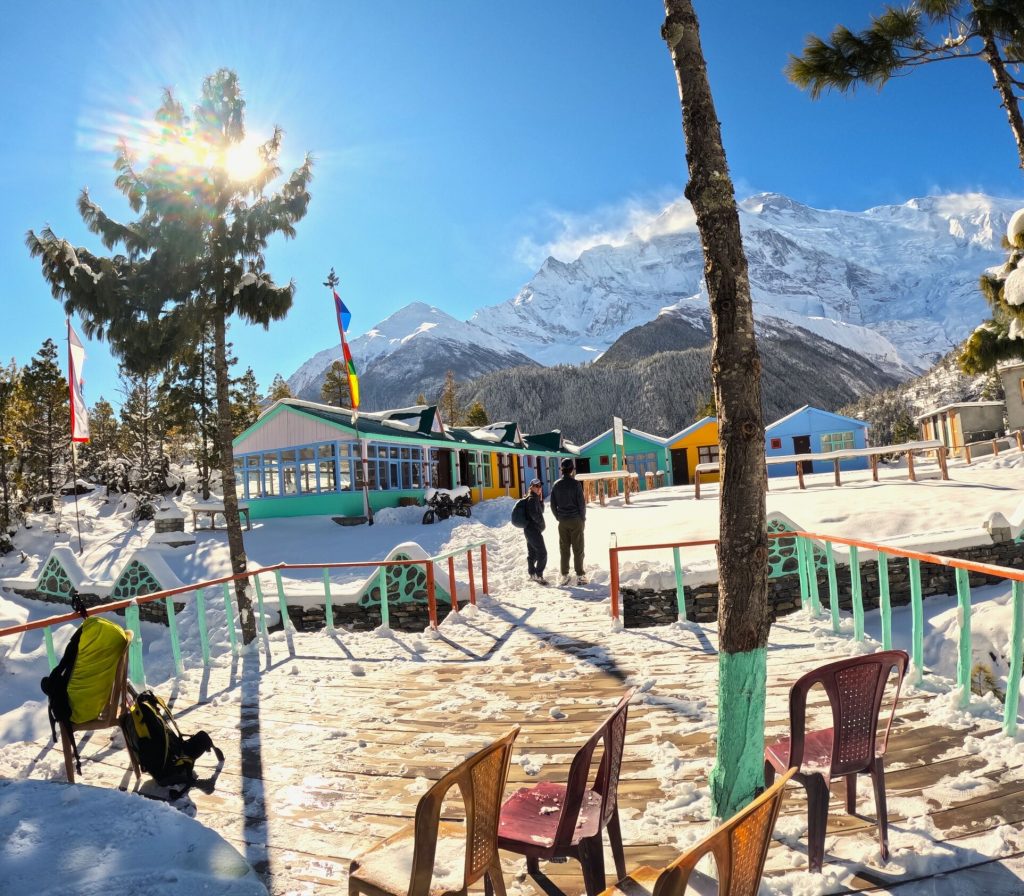
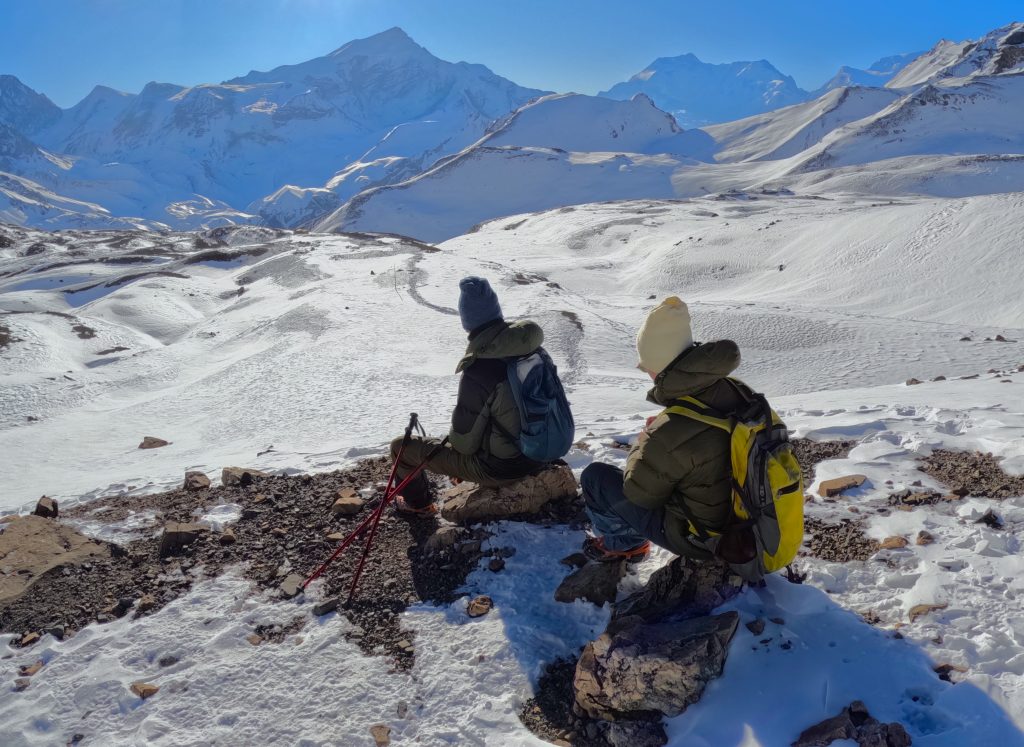
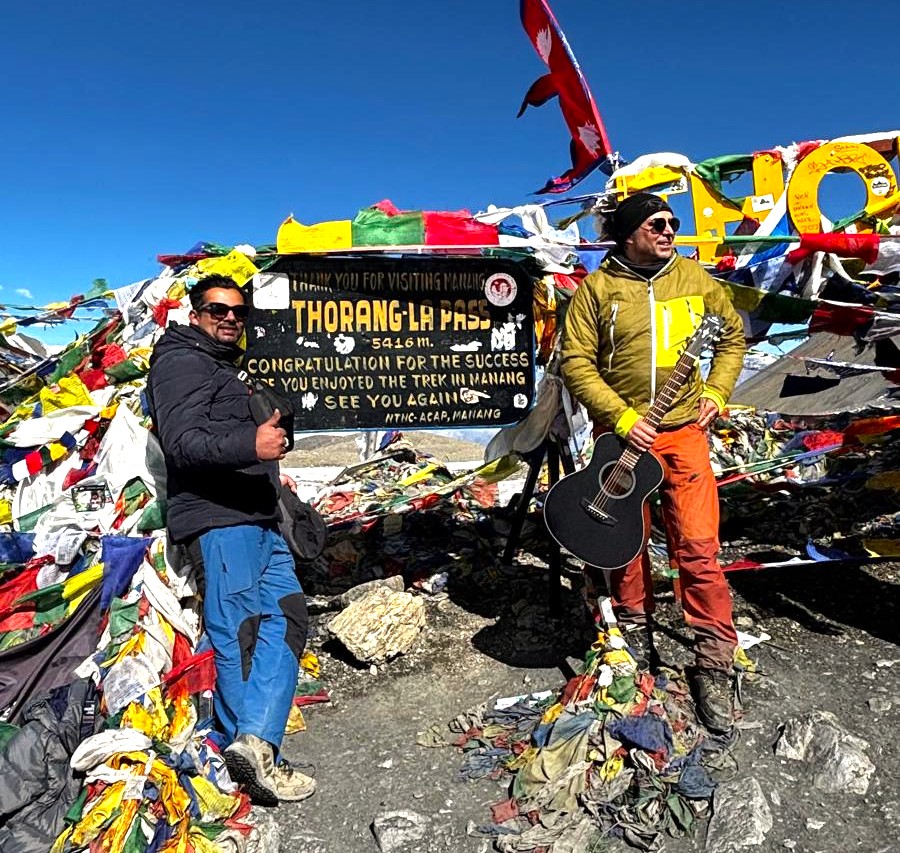
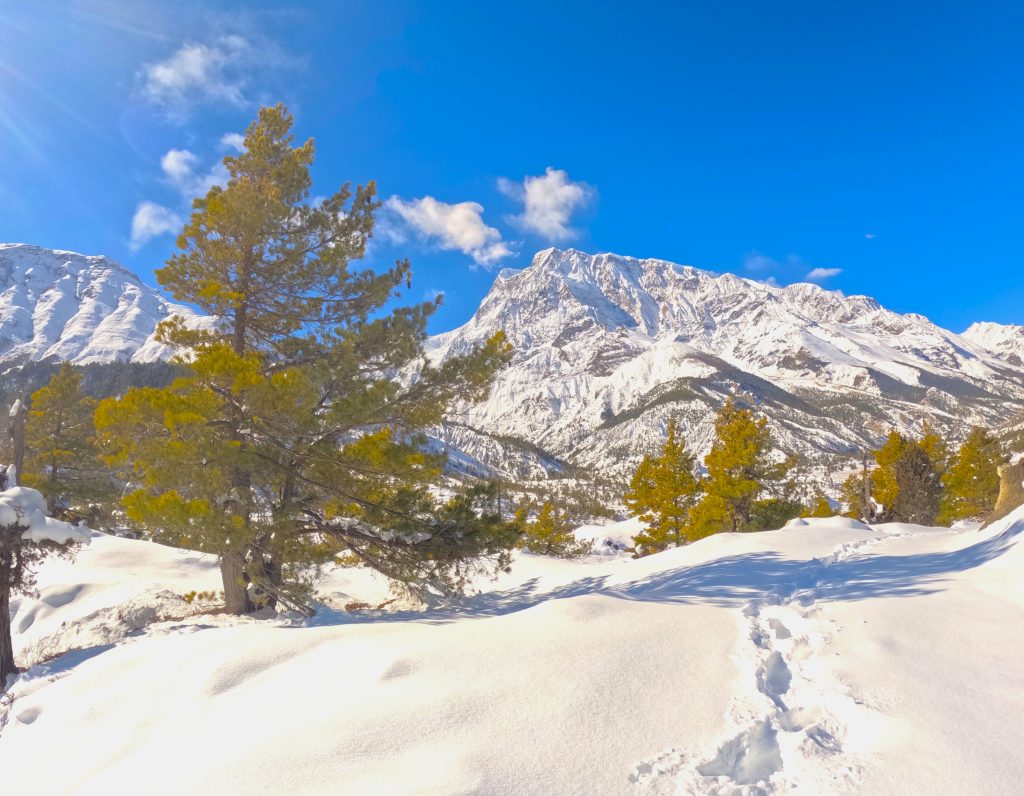
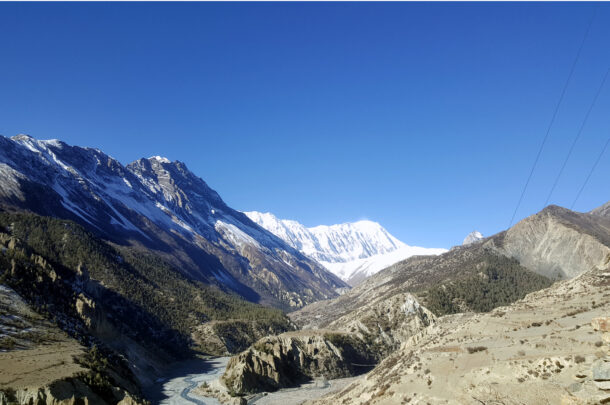
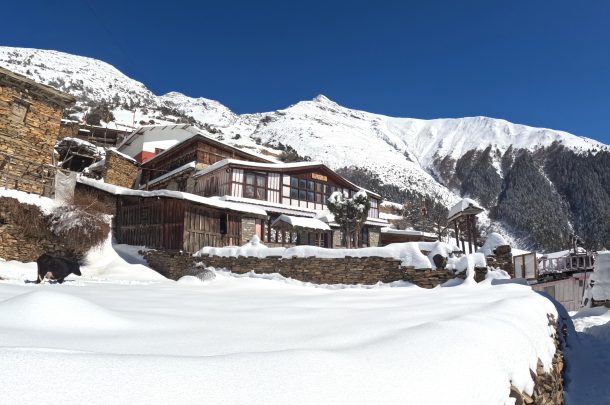
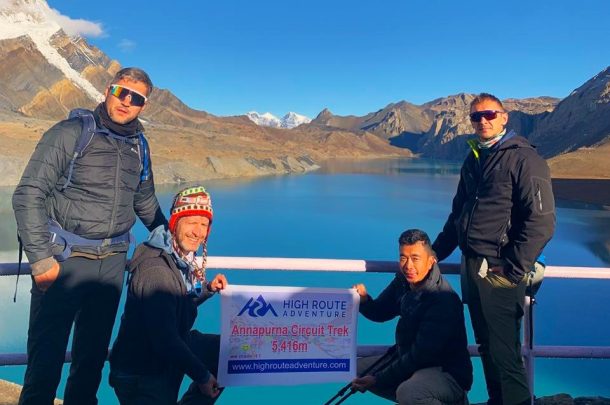
Reach Thorong La Pass (5,416 m) for breathtaking views of the Annapurna and Dhaulagiri ranges.
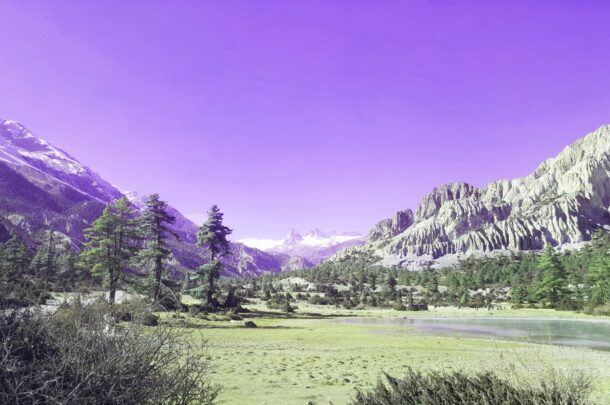
Trek through diverse landscapes, from lush green hills and forests to dry, barren high-altitude terrain.
Explore the popular Manang and Mustang Valleys.
Witness the stunning Gangapurna Lake.
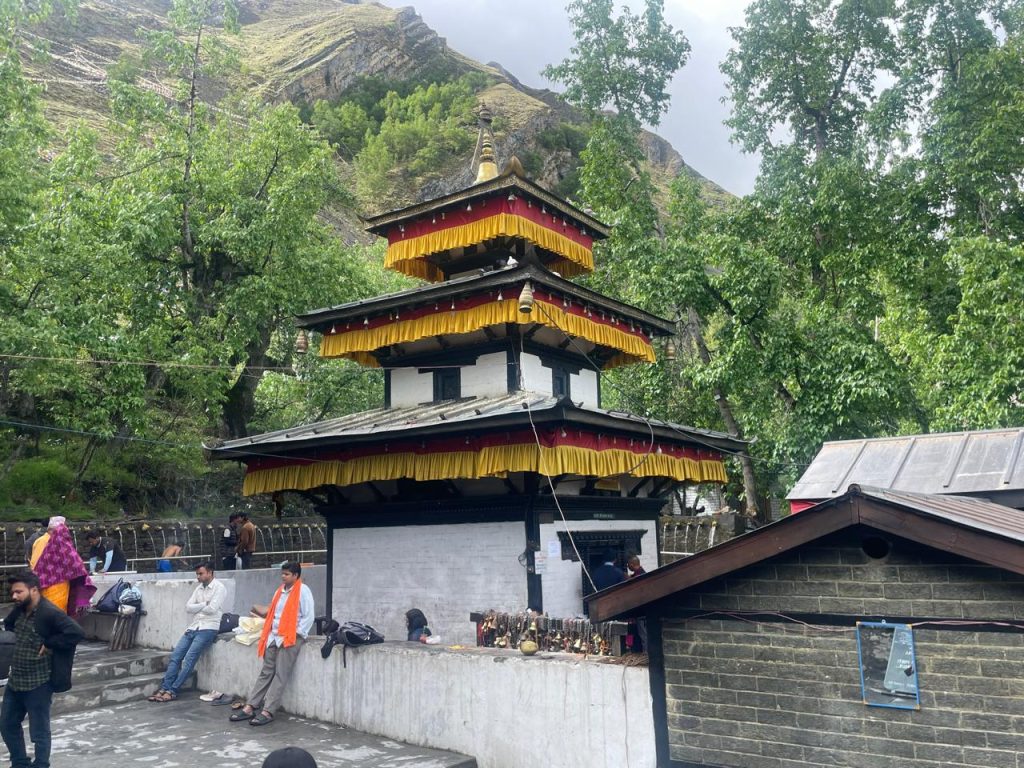
Visit Muktinath Temple, a sacred pilgrimage site for both Hindus and Buddhists.
Enjoy a breathtaking sunrise from the Poon Hill viewpoint (3,210 m).
Pass through the Kali Gandaki Gorge, the deepest gorge in the world.
Enjoy a bath in the Tatopani hot springs.
Overview
Annapurna Circuit Trek Overview
The Annapurna Circuit Trek is a world-renowned trekking destination located in the Annapurna region of north-central Nepal. The highest point on this trek is Thorong La Pass, which stands at 5,416 meters. This trek is celebrated for its diverse landscapes, stunning mountain views, and rich cultural experiences. Trekkers are rewarded with breathtaking views of the Himalayan peaks, including Manaslu, Annapurna, Dhaulagiri, and Nilgiri.
Your trekking journey begins in Kathmandu, where you will enjoy a scenic drive toward Besisahar, following the Trishuli and Marsyangdi rivers. From Besisahar, you will continue driving to Tal, where your official trek starts. As you journey, you will pass through the beautiful villages of Dharapani, Chame, and Pisang, eventually reaching Manang, where you will spend time acclimatizing.
In Manang, you will visit the beautiful Gangapurna Lake before ascending toward Thorong La Pass. After crossing this challenging pass, you’ll be treated to stunning views of snow-capped peaks, alpine valleys, and the beautiful Kali Gandaki Valley as you descend to Muktinath Temple.
After exploring this significant Hindu temple, you will drive to Tatopani, known for its natural hot springs.
From Tatopani, your trek continues toward Ghorepani. The trail offers beautiful views and takes you through traditional villages and lush mountain landscapes.
Another highlight of your journey is an early-morning hike to Poon Hill. From this viewpoint, you can witness a magical sunrise over the Annapurna and Dhaulagiri ranges.
As you travel through the Annapurna region, you will experience the warm hospitality and unique traditions of the Gurung, Thakali, and Tibetan communities. After completing the trek, you will drive back to Kathmandu with unforgettable memories of the Annapurna Himalayas.
Why Choose High Route Adventure for the Annapurna Circuit Trek?
We are a local tour operator located in Kathmandu which offer package at the best price compared to other OTA platforms such as Booking.com, Viator, Get Your Guide, and others.
We have successfully completed hundreds of treks across the Himalayas, serving trekkers worldwide with safe, well-organized, and memorable experiences.
Our guide is licensed, well-trained in high-altitude trekking and safety protocols and know how to handle emergency situation.
Our package is all-inclusive, and there are no hidden costs.
We provide a free duffle bag, trek completion certificate, HRA cap, and T-shirt included in the package.
Annapurna Circuit Trek Cost for 2027
Our 15-day Annapurna Circuit Trek Package costs start from USD 855 per person. However, if you are in a group, we offer a special discount according to the group size. Let’s look at the costs according to the different group sizes:
Our representative will greet you warmly upon arrival at Kathmandu airport and assist with your transfer to the hotel. We will have a pre-trip meeting at our office in the afternoon, where you can meet your trekking guide and discuss any questions or concerns you may have. Remember to include a copy of your travel insurance policy, two passport-sized pictures, your passport, and the required travel insurance and disclaimers. We'll make sure you're ready for the incredible journey ahead during this meeting.
⛰ Altitude1350 m
🍽 Mealswelcome Dinner
🏨 StayHotel
Duration:5 hour 30 minutes
Distance:175 km
We leave Kathmandu after having a breakfast and take a scenic drive to Besisahar, where our trekking journey begins. We drive along the banks of the Marsyangdi and Trisuli Rivers, which offer amazing vistas of rural communities, verdant mountains, and more. The 6-hour journey down the rough Marshyangdi River road increases the excitement of the journey. After arriving in Besisahar, the district headquarters of Lamjung, we get ready for the exciting trekking days ahead.
⛰ Altitude760 m
🍽 MealsBreakfast | Lunch | Dinner
🏨 StayTeahouse
Duration:Drive: 4 hours | Trek 3 hours,
Distance:8 kilometers
Our trekking adventure starts as we drive from Besisahar to the little settlement of Tal. Along the popular walking path, we pass through charming villages and securely cross deep valleys and rivers on well-built suspension bridges. Our journey leads us to Kodo, one of the largest villages in the Manang Valley, set amid fields of barley, rice, and potatoes. We eventually arrive at Dharapani after crossing yet another suspension bridge and climbing a small stone staircase. Our first trekking section ends at Dharapani.
⛰ Altitude2160 m
🍽 MealsBreakfast | Lunch | Dinner
🏨 StayTeahouse
Duration:7 hours
Distance:16 km
You will be trekking through the woods today, following a dirt-laden path that will take you to the village of Timang. From here, the views of the Annapurna and the Manaslu ranges are quite mesmerizing. Further from Timang lies the settlement of Thanchowk, connected via a relatively flat trekking trail. You can also see many chortens with prayer flags along the cobbled streets. From Thanchowk, you will then trek ahead towards Chame. Overnight stay at the guesthouse in Chame.
⛰ Altitude2670 m
🍽 MealsBreakfast | Lunch | Dinner
🏨 StayTeahouse
Duration:6 hours
Distance:15 km
Views of the north face of Lamjung Himal from Chame are especially impressive early in the morning. From Chame, you will follow the trail once again, passing under a gumba gate toward juniper hamlets that eventually open up to streams. The environment is quite serene, and the company of the mountain peaks makes the journey extremely charming. Along the way to Pisang, you will also come across the enormous Paungda Danda, a 5,000-foot sculpted rock wall. Overnight stay at a guesthouse in Pisang.
⛰ Altitude3200 m
🍽 MealsBreakfast | Lunch | Dinner
🏨 StayTeahouse
Duration:7 hours
Distance:15 km
From Pisang, the trail climbs sharply as you pass by the Dhikur Pokhari. The trail then relatively flattens out, and you will head due west, where the valley opens into a vast canyon. Along the way, you will come across the small settlement of Humde. Further ahead lies a beautiful monastery where you can enjoy a silent afternoon, taking in the Himalayan breeze that flutters the prayer fags gorgeously. Overnight stay at the guesthouse in Manang.
⛰ Altitude3540 m
🍽 MealsBreakfast | Lunch | Dinner
🏨 StayTeahouse
Duration:3-4 hours
Distance:Manang to Gangapurna Lake: approximately 2–3 km one way, Manang to Chongkor Viewpoint: approximately 3–4 km one way, Combined loop hike (Manang → Chongkor Viewpoint → Gangapurna Lake → Manang): around 8–9 km round trip
Manang is one of the largest villages in the valley. It features bakeries and espresso cafés nestled among traditional houses and Mani stone walls, along with Gumbas and chortens adorned with prayer flags. On this day, we will visit the Chongkor Viewpoint and Gangapurna Lake. The Chongkor Viewpoint is situated at an altitude of 3,750 m to 3,800 m above Gangapurna Lake, which lies at an altitude of 3,540 m. From viewpoint you can enjoy the breathtaking view of Gangapurna Glacier, the icefall, and neighboring peaks like Annapurna III, Annapurna IV, and Tilicho Peak.
Alternative option: For those who are extremely fit, there is an option to visit Ice Lake, which is approximately a 16–18 km round trip from Manang. The hike takes around 9–10 hours in total.
⛰ Altitude3540 m
🍽 MealsBreakfast | Lunch | Dinner
🏨 StayTeahouse
Duration:5 hours
Distance:10 km
Walking on a new part of the village, you will first make your way to Tengi. Here, you can find beautiful stone houses with flat roofs. Squeezing through tight alleyways, you will leave the village behind and wander uphill through the grasslands towards Gunsang, with an altitude gain of over 300 meters. The trek to Yak Kharka from Gunsang is relatively easy, albeit longer. Passing by the pastures, you will reach Yak Kharka. Overnight stay at the guesthouse at Yak Kharka.
⛰ Altitude4050 m
🍽 MealsBreakfast | Lunch | Dinner
🏨 StayTeahouse
Duration: 4.5 - 6.5 hours
Distance:Yak Kharka to Thorong Phedi 6.5 km, Thorong Phedi to High Camp: 3.5 km
The trail is often tranquil as you make your way from Yak Kharka to today's destination. Trekking through relatively flat fields, you will pass by many horses that are used for caravans by the village people. The first portion of the trail is easy, a gradual uphill climb with amazing views of the peaks. Eventually, you will arrive at Churi Ledar. Finally, you will reach the Thorong Phedi. Overnight stay at the guesthouse.
⛰ Altitude4450 m
🍽 MealsBreakfast | Lunch | Dinner
🏨 StayTeahouse
Duration:7 to 9 hours
Distance:15 km
You will wake up early in the morning to make your way uphill to reach the top of Thorong La Pass (5416m). It is a tough, rock-strewn climb, so you have to be steady and careful. After the arduous uphill trek, you will reach the top of the pass, from where spectacular views of the valley, snowy fields surrounding the foothills, and the mountain peaks are on display. After spending time at the top taking in the views, you will then steadily make your way down towards Muktinath. Overnight stay at the guesthouse at Muktinath.
⛰ Altitude3760 m
🍽 MealsBreakfast | Lunch | Dinner
🏨 StayTeahouse
Duration:5 hours
Distance:72 km
Early in the morning, we'll visit the Muktinath Temple. We will take a local bus to Tatopani after our spiritual experience at Muktinath Temple. The drive will take us past some of the deepest gorges on earth. The dry highlands will transform into lush forests as we travel through them. When we arrive in Tatopani, known for its natural hot springs, we'll enjoy a dip in the calming waters. The hot springs are well known for treating skin conditions. It's the ideal place to relax and recharge after our tough hike over the Thorong La Pass.
⛰ Altitude1190 m
🍽 MealsBreakfast | Lunch | Dinner
🏨 StayTeahouse
Duration:8 hours
Distance:18 km
From Tatopani, you will be trekking on a much verdant terrain towards one of the famous villages of the region- Ghorepani. This pathway is also one of the last trails of the Annapurna Circuit. You will pass by Ghar Khola and slowly ascend towards Ghorepani, going through smaller settlements along the way, such as Chhitre village. Finally, you will reach Ghorepani, from where breath-taking views of the Annapurna peaks greet your sight. Overnight stay at the guesthouse at Ghorepani.
⛰ Altitude2850 m
🍽 MealsBreakfast | Lunch | Dinner
🏨 StayTeahouse
Duration:Trek 5 hours, Drive: 2 hours
Distance: Hike 3 Km round trip, Ghorepani to Nayapul: 8–10 km
From Ghorepani, you will make your way to the vantage point of Poon Hill early in the morning to witness the amazing sunrise view amidst the panoramic display of Annapurna peaks. It is a fantastic phenomenon and quite mesmerizing. After enjoying the sights at Poon Hill, you will then make your way to Nayapul, from where you will have a drive to Pokhara. Overnight stay at the Hotel in Pokhara.
⛰ Altitude820 m
🍽 MealsBreakfast | Lunch
🏨 StayHotel
Duration:7-8 hours
Distance:200 km
You will bid the Annapurna Mountains goodbye for the last time today and drive back to Kathmandu via the Prithvi Highway, which winds through the countryside. Upon arriving back at the city, you will be dropped off at the Hotel. Overnight stay at the Hotel in Kathmandu.
⛰ Altitude1350 m
🍽 MealsBreakfast | Farewell Dinner
🏨 StayHotel
Approximately three hours before your scheduled flight, you will be dropped off at the airport for your departure.
⛰ Altitude1350 m
🍽 MealsBreakfast
Build Your Own Adventure!
Collaborate with our specialists to create a unique itinerary.
✦
Annapurna Circuit Trek Booking, Payment and Cancellation Policy
Booking: You can book through our website by clicking on the "Book Now" option. To confirm the booking, a 20% advance payment of the total trip cost is required.
Payment: For the payment we accept Bank transfers, Credit or Debit Cards, and Online Payments.
Cancellation policy: Please check our company terms and conditions before booking a trip ➨terms and conditions
Cost Detail
Inclusion
What's included ?
Airport Pickup and Drop-off Services
International airport pick-up service in a Private Vehicle
International airport Drop service in a private vehicle on the final departure
Accommodation Service
Two nights 3-star Hotel in Kathmandu (Twin Sharing, BB plan)
A night 3-star Hotel in Pokhara (Twin Sharing, BB plan )
Eleven nights best available clean and comfortable teahouse accommodation during the trek
Trekking Permits
Annapurna Conservation Area Project Permit (ACAP)
TIMS Card
Food Services
11 times of Breakfast (Local and Continental Choice) during the trek
12 times of Lunch (Simple and Light Lunch in Teahouse)
11 times Dinner (Veg and Non-Veg Meals from the Local Tea House)
Welcome & Farewell dinner in Kathmandu
Breakfast in Kathmandu & Pokhara
Guide & Porter Services
English- speaking government- licensed guide
Local porter for carrying Luggage (up to 20 kg Max, 2 trekkers: 1 porter)
All Meals for the guide & porter
Insurances for guide & porter
Well-paid salary as per Government rates
A first-aid kit box carried by the team leader
Transportation & Other Services
From Kathmandu to Beshisahar transport by Local Bus (A private vehicle will be arranged upon your request)
From Bishisahar to Tal transport by Local Jeep/Bus Sharing (A private vehicle will be arranged upon your request)
From Muktinath to Tatopani transport by Local Bus (A private vehicle will be arranged upon your request)
From Nayapul to Pokhara transport by private vehicle
From Pokhara to Kathmandu transport by standard tourist bus (A private vehicle will be arranged upon your request)
Down jacket and sleeping bag(to be returned after trek completion)
The HRA Brand Duffle Bag for the Trip, Campany T-shirt, and Baseball cap
Trekking Maps
Trip achievement certificate
All local and Government taxes, Administrative charges
Complimentary Includes
An hour trekkers message after completing the trip
Fresh seasonal fruit after dinner during the trek
What's not included ?
Extra night accommodation in Kathmandu and Pokhara in case of early arrival or late Departure
Dinner and lunch in Kathmandu and Pokhara
Hot and Cold drinks during the trek
Nepal visa fee
Travel and medical insurance
International flights
Personal expenses(laundry, bar bills, phone calls, internet, hot shower, etc
Tips for guide, porter, and driver (tipping is expected)
Any unseen expenses due to circumstances
Dates
Group Departures
Choose from our scheduled group trips below, or contact us to plan a private or family adventure tailored to your schedule.
Things to Know
Guest Requirements
➡️Duration: All the participants who want to participate in this trek must have 15 days' holiday. However, if you have a short vacation, you can customize by contacting our tour operator.
➡️Physical Fitness: Trekkers must be in good health and physically fit. Determined beginner trekkers can also join this Annapurna circuit trek with proper physical preparation and training. However, this trek is generally not recommended for complete first-time trekkers due to its long duration and high-altitude challenges. For first-time trekkers, we recommend you choose an easy trek such as Annapurna Base Camp or the Mardi Himal Trek.
➡️Health Condition: Trekkers should not have severe conditions, such as respiratory, heart, or lung conditions that can affect trekking. Consult with a doctor first if you have any underlying health conditions.
➡️Age Requirements: There are no age restrictions for this trek; anyone who is physically fit can join.
➡️Daily Walking Hours: Trekkers must be able to walk for an average of 6-7 hours daily.
➡️Passport: Foreign trekkers must have a valid passport with at least six months of validity.
➡️Health and Travel Insurance: Travel insurance covering high-altitude trekking, including emergency evacuation, is a must when you book through us.
Notes
How Difficult Is the Annapurna Circuit Trek
Annapurna Circuit trek is considered "moderate to challenging" in difficulty rating. However, the actual level of difficulty depends on your trekking experience, physical fitness, and how well prepared you are for the trek. Let's see in detail at the factors so that it will help you to prepare before undertaking the trek.
Altitude and Acclimatization: On this trek, the maximum altitude you will reach is 5,416 m at Thorong La Pass. At such high altitudes, the air becomes thinner, and oxygen levels are lower, increasing the risk of altitude sickness. The effects of altitude sickness, such as headaches, nausea, and fatigue, can trouble trekkers.
Length and Duration: You need to walk for 6-7 hours on average daily while carrying a daypack of around 5-7 kg. Walking for such a prolonged duration at high altitude is really tough, especially for beginner trekkers.
Terrain and Trail Conditions: The Annapurna trails consist of mixed terrain, including rocky paths, steep ascents and descents, narrow trails, and, in some sections such as Thorong La Pass, snow-covered routes. Walking on different types of terrain for several days can be physically tough and requires good balance and endurance.
Weather and Temperature: The weather in the Annapurna region changes according to the season. But sometimes, even during the best trekking season, trekkers might deal with sudden rainfall, strong winds, unexpected snowstorms, or a significant drop in temperature. These sudden weather changes can make the trek more challenging and may affect trail conditions and visibility.
Demands Physical Fitness and Mental Endurance: Good physical and mental preparation is required to participate in this trek. If either is lacking, the trek can become much more difficult.
Basic Infrastructure: Don't expect modern facilities such as an Advanced hospitals, reliable mobile networks, ATMs, and road transportation in most sections of the trek.
How to prepare
Although the Annapurna Circuit Trek sounds challenging, it is manageable when we confidently handle the physical and mental demands of this iconic Himalayan adventure. For this following this training at least 3-4 months in advance:
Cardio Training: Engage in activities such as running, cycling, swimming, or brisk walking which helps to build your stamina.
Strength Training: Focus on strengthening your leg strength. You can practise exercises such as squats, lunges, planks, and deadlifts. This exercise helps you to handle steep ascents and descents.
Endurance Training: If you are a beginner trekker, then practise long hikes by carrying a loaded backpack(6-7kg) to simulate trekking conditions.
Flexibility and Balance: Difficult terrain conditions can be handled by engaging in Yoga or stretching exercises. It helps to improve flexibility and prevent injuries on uneven trails.
The most popular time for Annapurna Circuit trekking is during the autumn season(September to November) due to clear views of the Himalayas and pleasant weather conditions. The trails remain busy this time due to peak trekking season. Crossing the Thorong La Pass also becomes safer and more accessible compared to other seasons.
Spring(March to May) is another great time to hike the Annapurna Circuit trail due to moderate temperatures, the vibrant Rhododendron forests, and extended daylight hours. The remnants of snow at the high altitude make the trip even more adventurous.
Trekking in winter (December to February) is possible but comes with challenges and risks due to harsh weather conditions. Monsoon(June to August) is off-season due to heavy rainfall and unpredictable weather conditions.
Average Weather and Temperature
The Annapurna Circuit experiences different weather and temperature conditions in each season, making the trekking experience unique depending on when you visit. Below is a table showing the average temperatures throughout the trek in various seasons:
Season
Daytime Temperature
Nighttime Temperature
Spring (Mar-May)
10°C to 20°C (50°F to 68°F)
-5°C to 5°C (23°F to 41°F)
Summer/Monsoon (Jun-Aug)
15°C to 25°C (59°F to 77°F)
5°C to 10°C (41°F to 50°F)
Autumn (Sep-Nov)
10°C to 20°C (50°F to 68°F)
-5°C to 5°C (23°F to 41°F)
Winter (Dec-Feb)
0°C to 10°C (32°F to 50°F)
-10°C to -20°C (14°F to -4°F)
Note: Temperatures vary dramatically with altitude; the figures above represent typical values at 2 500 m–3 000 m.
Annapurna Circuit Trek Permits
It is mandatory to obtain the permit to enter and trek through the Annapurna Conservation Area. Trekkers need to keep thier permits with them at all times because there are checkpoints along the Annapurna trail where you need to show and register. The required permits are:
Annapurna Conservation Area Permit(ACAP)
Trekkers' Information Management System (TIMS) Card
Note: We will handle all these required permits. You need to submit your documents, and we will handle the rest.
Accommodation On Annapurna Circuit Trek: What To Expect
High Route Adventure will reserve the best available room in the teahouse once you confirm your booking with us. This teahouse offers a warm and welcoming place to rest, with cozy accommodations. These teahouses are simply constructed, owned by local families, and provide essential facilities for trekkers. You will find teahouses located at regular intervals along the trekking trails, making it convenient to rest and replenish your energy after a long day of hiking.
The rooms inside the teahouse are basic yet comfortable, featuring twin-sharing beds, warm blankets, pillows, and clean bedsheets. Most teahouses have shared bathrooms, which are often of the squat type. Please note that there will be no air conditioning or heating inside the rooms. To stay warm at high altitudes, we recommend bringing a sleeping bag.
Let's see the common facilities you can get inside the teahouse:
Basic twin-bed rooms with a mattress, pillow, and blanket
Shared bathrooms with cold running water
Dining hall with a fireplace for warmth and meals.
Paid facilities:
Hot Shower: For using a hot shower, you need to pay roughly NPR 500 per shower. The price can differ depending on the location.
WiFi: To connect to WiFi, you need to pay around NPR 300- NPR 500 per night.
Charging: Trekkers can charge their electronic device at dinning hall by paying a small fee of around NPR 200-300 per hour.
Note:The teahouses along the Annapurna Circuit can become packed, especially during the peak seasons (spring and autumn). Therefore, booking the package at least 1–2 months in advance helps us secure the best available room.
Food and Drinks: What to Expect
The best part of the Annapurna Circuit trek is that there are enough tea houses on the trekking trails with excellent hospitality. The teahouse will serve you a variety of meals, which are often traditional Nepali dishes and a few international dishes. There will be veg and non-veg option which you can choose from the teahouse menu. In every tea house, there is a communal dining hall where trekkers gather to eat their meals and share experiences. Three meals ( breakfast, lunch and dinner) will be provided to you, but drinks, snacks, and extra meals need to be paid for by yourself.
Let’s see what you can expect in teahouse menu:
Category
Items
Breakfast (6:30 AM – 9:00 AM)
Tibetan bread, pancakes, porridge, eggs, chapati, muesli, toast with jam or honey, boiled potatoes
Dal Bhat, pizza, pasta, soup, noodles, thukpa (noodle soup), garlic soup, spring rolls, mashed potatoes
Drinks
Tea (milk, black, ginger, lemon), coffee, hot chocolate, fresh juice, soft drinks, fresh lime soda, lassi, local raksi, hot lemon, warm water
Note: If you have any dietary requirements or restrictions, please inform us at the time of booking the package so that we can make necessary arrangements as much as possible.
Risk of Altitude Sickness During Annapurna Circuit Trek
This trek takes you to high-altitude regions, reaching the highest point at Thorong La Pass (5,416 m). The thin air above 3,000 meters can lead to early symptoms of altitude sickness, such as headaches, dizziness, vomiting, and fatigue. This are the mild symptoms of AMS which can be cured by descending to lower altitude. However, if left unaddressed, AMS can escalate into more severe and life-threatening conditions known as High Altitude Cerebral Edema (HACE) and High Altitude Pulmonary Edema (HAPE).
How to prevent AMS:
Drink enough water every day during the trek to avoid dehydration.
Follow the “climb high, sleep low” acclimatization principle.
Transportation Used on this Annapurna Circuit Trek
On this 15-day journey, High Route Adventure will arrange a public bus for you to travel from Kathmandu to Besisahar. The bus ride takes approximately 6 hours. From Besisahar, you will take a shared jeep to Tal, which is the starting point of the trek. This leg of the journey takes an additional 3 to 4 hours. For a smoother and more comfortable experience, you have the option to hire a private jeep from Kathmandu; this will incur an extra cost.
High Route Adventure Team for Your Annapurna Circuit Trek
We have been operating the Annapurna circuit trekking for a long time, and when you choose us, here are the things that we will provide to you along with service.
Guide: We will provide you experience local trekking guide for you. Our government-certified guide is highly experienced, trained and specialized in the Annapurna trekking route. They know how to handle emergencies, navigate safely, share detailed cultural and mountain information and support your daily trek with care and professionalism. For know more about our guide, check here: Our Team.
Porter: Along with a guide, we will also provide you porter service for this Annapurna Circuit trek. Our trusted and reliable porter will carry your heavy luggage to make your journey more comfortable. There will be a ratio of 1 porter for every 2 trekkers, and each porter carries a maximum weight of 20 kg. While packing your back make sure to not exceed more than 10 kg to ensure ethical and responsible trekking practices.
Communication and ATM Facilities
Communication: You can use the NTC SIM during the trek, as NTC has nice network coverage compared to NCELL. Mobile network works fine in the lower village but at high-altitude places the network starts to become poor or non-existent, especially around Thorong La Pass and High Pass.
ATM: On the Annapurna Circuit trekking trail, you can find ATM services in major towns such as Besisahar, Chame, Manang, and Jomsom. Except for these places, you will not find any ATM services along the trekking trail. We recommend that trekkers carry sufficient cash from Kathmandu because ATMs are not always reliable due to technical issues, limited availability, and occasional power or network problems. You will need cash for personal use such as buying snacks, extra food, beverages, tips, and unexpected situations.
Importance of Travel and Health Insurance
As you already know, the Annapurna Circuit Trek is a challenging trek, and there are various risks during the journey. For minor injuries or illnesses, our certified guide will carry a first aid kit. However, in major cases, you may need to be transferred to a hospital in either Pokhara or Kathmandu.
There is no road connection along most of the trekking trail, so the only option during an emergency is helicopter evacuation. Helicopters will not fly until advance payment is made, and the cost can be very high, often above USD 7,000 without insurance. Therefore, trekking without insurance can be extremely expensive in case of an emergency. We highly recommend that all our trekkers have travel insurance, as it can save a lot of money during unexpected situations and also provide peace of mind.
When purchasing an insurance policy, make sure it covers the following:
Helicopter evacuation up to 6,000 meters
High-altitude trekking coverage (up to 6,000 m or above)
Emergency medical evacuation and hospitalization expenses
Accidental death and disability coverage
Emergency rescue and search operations
Coverage for medical expenses incurred abroad
24/7 emergency assistance support services
Loss of baggage and valuable items
Flight cancellation and delays
Trip cancellation
Note: If you need any consultation for the insurance make sure to contact us directly through +977-9851058664
Festival To Experience
Trekking to Annapurna Circuit is not only about witnessing the mountain and beautiful landscape but also a great opportunity to experience the local culture and traditions. If you plan your trek during festival seasons, you can enjoy vibrant local celebrations, traditional music, dances, and unique cultural rituals.
Festival
2026 Dates
2027 Dates
Main Areas
Highlights
Yartung (Horse Festival)
Aug–Sep 2026
Aug–Sep 2027
Manang, Muktinath, Jomsom
Traditional horse racing, archery, local dances, and cultural celebrations marking the end of the harvest season.
Losar (Tibetan New Year)
17 Feb 2026
6 Feb 2027
Manang, Braga, Ngawal
Buddhist New Year celebration with monastery prayers, masked dances, prayer flags, and traditional foods.
Nepal’s biggest festivals featuring family gatherings, tika blessings, lights, flowers, and cultural rituals.
Note: Festival dates may vary slightly each year depending on the lunar calendar and local community decisions. Travelers are advised to confirm exact dates before planning their trek.
Safe Trekking and Sustainable Tourism Practices Tips
Always trek during the best seasons (spring and autumn) for safe weather conditions.
Don’t trek solo, as you never know when unexpected situations may happen.
Be physically and mentally prepared for all weather conditions.
Follow all rules and regulations inside the National Park.
Avoid making loud noises or disturbing the natural environment and local communities.
Respect local culture and traditions, and ask permission before taking pictures.
While visiting monasteries or sacred sites, walk in a clockwise direction.
Avoid littering and throw waste only in designated areas.
Stay on the main trekking trails to avoid getting lost.
Support local tea houses and local shops to promote sustainable tourism.
Trip Extension
Tilicho Lake: Tilicho Lake is a famous side trek of the Annapurna Circuit trek. At an elevation of 4,919 m, this high altitude fresh water lake holds dramatic mountain landscapes. Trekkers commonly travel from Manang to the Tilicho Base Camp and then to the lake, before resuming the main circuit at Yak Kharka, before crossing Thorong Phedi(4,450 m). If you are planning to visit Tilicho Lake, then check this: Annapurna Tilicho Lake Trek Package.
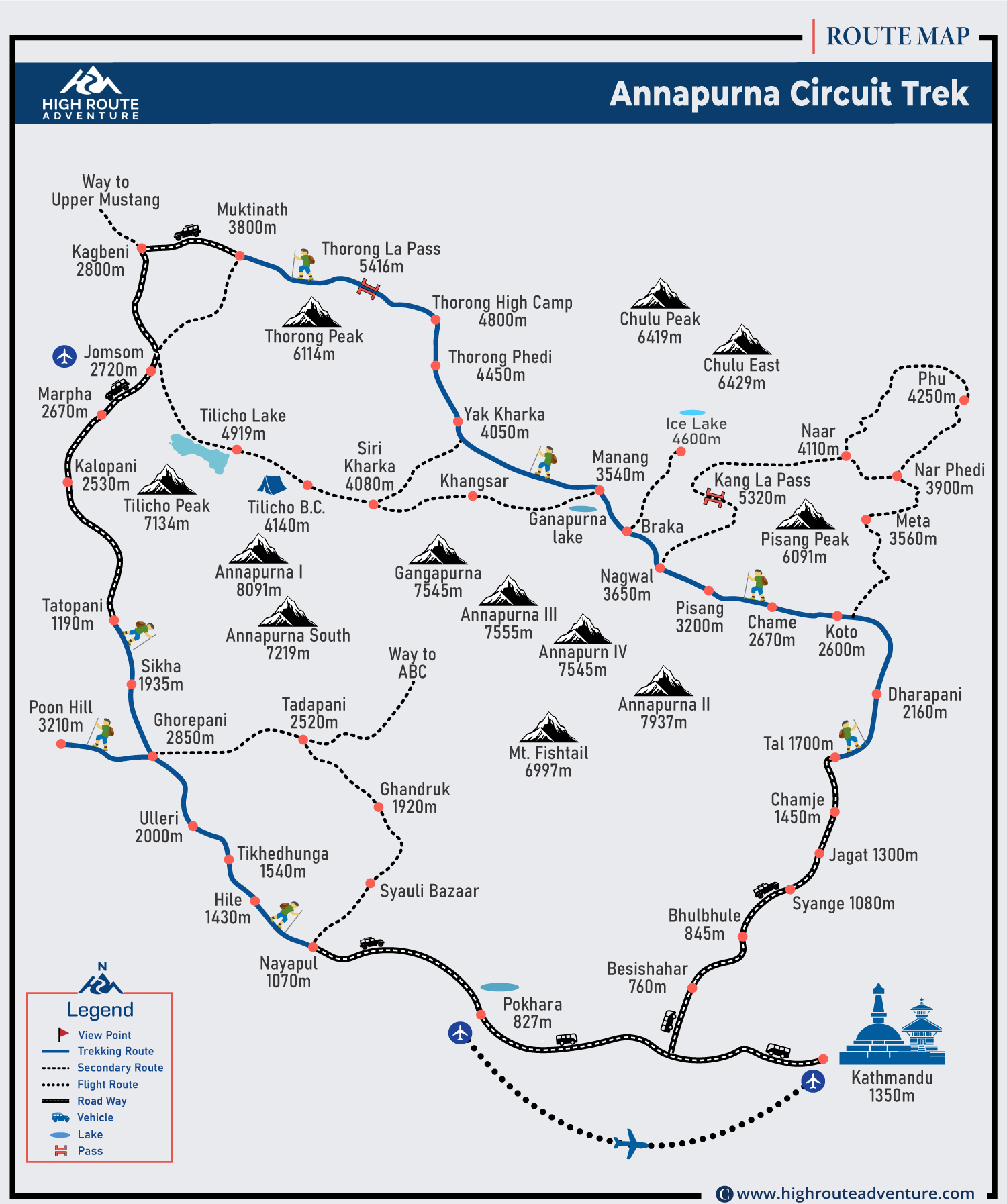
Map
Altitude Chart
Equipment
Here’s your complete packing list for the Annapurna Circuit Trk:
Clothing
Trekking T-shirts
Long-sleeve trekking shirts
Fleece jacket
Down jacket
Waterproof and windproof jacket
Trekking trousers
Thermal innerwear
Underwear
Warm trekking socks
Lightweight gloves
Warm insulated gloves
Sun hat or cap
Warm woolen hat
Buff or neck gaiter
Footwear
Comfortable trekking boots
Lightweight camp shoes or sandals
Gaiters
Extra pairs of trekking socks
Backpack and Bags
Daypack
Duffel bag
Waterproof backpack cover
Dry bags or waterproof packing bags
Small personal pouch
Sleeping Gear
Sleeping bag suitable for cold temperatures
Sleeping bag liner
Travel pillow or inflatable pillow
Trekking Accessories
Trekking poles
Headlamp with spare batteries
Sunglasses with UV protection
Water bottles or hydration bladder
Water purification tablets or filter
Trekking towel
Headlamp
Reusable water bottle
Small padlock
Personal and Toiletries
Sunscreen
Lip balm with SPF
Toothbrush and toothpaste
Biodegradable soap
Hand sanitizer
Wet wipes and tissues
Personal toiletries
Quick-drying towel
Toilet paper
Health and First Aid
Personal medications
Basic first-aid kit
Blister treatment
Pain relievers
Bandages
Antiseptic wipes
Oral rehydration salts
Altitude sickness medication as advised by your doctor
Documents and Money
Passport
Passport-size photographs
Travel insurance documents
Trekking permits and other required documents
Copies of important documents
Credit/debit card
Nepalese rupees
Emergency contact details
Electronics
Mobile phone
Camera
Power bank
Charging cables
Universal travel adapter
Spare batteries or memory cards
Optional Items
Binoculars
Book or e-reader
Snacks and energy bars
Lightweight sleeping bag liner
Earplugs
Small notebook and pen
Portable solar charger
Extra Tip: Weather on the Annapurna Circuit can be unpredictable. Pack layers so you can adjust quickly to temperature changes, especially when crossing Thorong La Pass. If trekking in winter (Dec–Feb), bring microspikes or crampons for icy trails.
FAQs
FAQs of Annapurna Circuit Trek
When is the best time to hike the Annapurna Circuit Trek?
The two main trekking seasons are pre‑monsoon (March to May) and post‑monsoon(September to November). These periods offer clear skies, moderate temperatures, and open trekking lodges. December–January is possible but very cold, and July–August brings heavy monsoon rains and frequent trail closures.
Is the Annapurna Circuit safe for solo travelers?
Yes. The trail is well‑marked, tea‑houses are plentiful, and local Gurung, Magar, and Thakali communities are welcoming. But the long duration and unpredictable weather can make it challenging if you are not a experienced trekkers. So we recommend hiring liscensed trekking guide with you. It's for your safety.
What wildlife might I see on the Annapurna Circuit Trek?
The trail traverses several distinct ecological zones, supporting a wide range of wildlife. In the lower valleys, hikers may encounter langur monkeys, Himalayan tahr, and musk deer among the forests and alpine meadows. As the route climbs into the high-altitude desert near Manang, sightings become rarer but more dramatic, with the possibility of snow leopards and Himalayan black bears. The region is also rich in birdlife, including species such as the Himalayan rubythroat, golden eagle, and snow pigeon, adding to the area’s ecological diversity.
What is the Annapurna Trail vs. Annapurna Circuit Trek?
The Annapurna Trail is a broader term that can refer to any trekking route within the Annapurna Conservation Area (e.g., Annapurna Base Camp, Ghorepani‑Poon Hill). The Annapurna Circuit Trek is a specific long-distance route that circles the Annapurna Massif, crossing the iconic Thorong La Pass (5,416 m) before descending into the Kali Gandaki Valley.
Are tea‑houses comfortable?
Tea‑houses provide basic but clean rooms (often twin‑bed with shared bathrooms). Bedding is usually a blanket and a thin pillow. Hot showers are available in limited places, and meals are cooked fresh daily.
Can I bring a pet on the Annapurna Circuit Trek?
No. Domestic animals are not allowed on the trail or in teahouses to protect the environment and local livestock health.
What is the altitude sickness risk on the Annapurna Circuit?
Moderate to high. Symptoms (headache, nausea, dizziness) can appear above 3,000 m. Proper acclimatization (rest days), staying hydrated, and descending if symptoms worsen are essential. Carry a basic altitude‑sickness medication kit (acetazolamide, ibuprofen).
Is the Annapurna Circuit suitable for families with children?
Trekking with children 12 years+ is feasible if they are in good health and accustomed to altitude. Keep daily distances short, include extra rest days, and avoid the high‑altitude pass if necessary (choose a “low‑altitude” variant).
What cultural sites can I visit on the Annapurna Circuit Trek?
Highlights of the journey include the sacred Muktinath Temple, revered by both Hindus and Buddhists, and the picturesque village of Manang, known for its ancient Tibetan-style architecture. The trail also passes through Marpha, famous for its apple orchards and locally produced Marpha brandy, while evenings in local tea-houses offer the chance to enjoy traditional Gurung and Magar cultural performances.
What is the most eco‑friendly way to trek the Annapurna Circuit Trek?
Visitors should follow Leave No Trace principles by packing out all non-biodegradable waste, including plastics and toiletries, and by using refillable water bottles to reduce environmental impact. Choosing locally owned tea-houses and hiring Nepali guides or porters supports the local economy, while respecting sacred sites and cultural customs helps preserve regional traditions. Participating in community-based tourism initiatives, such as school-support programs, further contributes to the sustainable development of the area.
Real experiences shared by trekkers and travelers who joined our trips.
Lukas M, Germany
Cultural encounters added a poetic layer to the adventure. Sharing tea with local families, listening to folklore sung around the fire, and participating in a traditional mask dance in Manang enriched my understanding of the region’s heritage. For travelers seeking an best trek in Nepal that balances physical accomplishment with cultural immersion, the Annapurna Circuit trek is truly unparalleled.
Maya L, Australia
I set out on the Annapurna Circuit trek hoping for a solo adventure that would push my limits, and the experience delivered in spades. The trail’s gradual altitude gain allowed me to acclimatise comfortably, while the supportive staff at teahouses and lodges created a welcoming community atmosphere. The safety standards on this Himalayan trek are top‑notch, giving solo trekkers confidence throughout the journey.
James H, United Kingdom
Photographing the Annapurna Circuit trek has been a highlight of my career. Each day on the trail revealed new compositions: sunrise over the Kali Gandaki River, traditional Gurung villages perched on steep terraces, and the iconic Mustang desert landscape. The trail’s accessibility and well‑maintained lodges ensured I had ample time to capture the perfect shot without compromising safety.
Emily R- United States
The Annapurna Circuit trek exceeded every expectation I had for a Himalayan adventure. From the bustling start in Besisahar to the high‑altitude serenity of Thorong La Pass, the trail offered a seamless blend of dramatic mountain scenery and authentic Nepalese culture. The well‑marked Annapurna Circuit trail, coupled with friendly local guides, made navigation effortless even for a first‑time trekker.
Robin D
Our awesome trip to Nepal was guided by the wonderful enthusiast and a self traveler Prakash, who filled colors by organizing a fantastic variety of experiences, which we couldn’t have asked for more. Owing to his honesty, happy-go-lucky nature, knowledge, and passion for travel, our trips have lots of local flavor and insights into the cultural and customs, that we never thought ever existed. Thanks, Prakash, we will always come looking for you whenever we visit your wonderful land. Namaste!
Pierre Anjou
Had an amazing experience with HRA Team. Especially thank you so much Mr Prakash, Guide Raj, and porter Umesh. The accommodations, logistics, and communication were very well done during the trek. if you want a memorable experience in Nepal, strongly recommend HRA.