Starting from
per person (in USD)
Mera Peak (6,476m) is the world’s highest trekking peak, situated in Nepal’s Solukhumbu district, as part of the Mahalangur Himalayan Range. This 17-day Mera Peak Climbing journey takes you deep in the remote Hinku Valley of the Khumbu region. Starting from Kathmandu, this trip takes you through two protected areas: Sagarmatha National Park and the Makalu Barun National Park.
Before reaching the summit, you will trek through the Dudh Koshi River, Cross suspension bridge, pass through Sherpa village, visit a Buddhist monastery, a lush forest, and a scenic high altitude landscape.
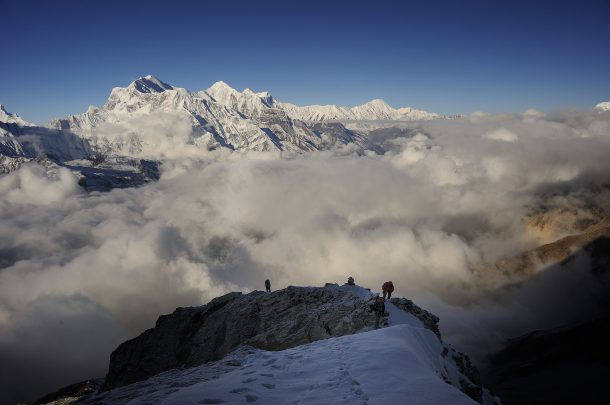
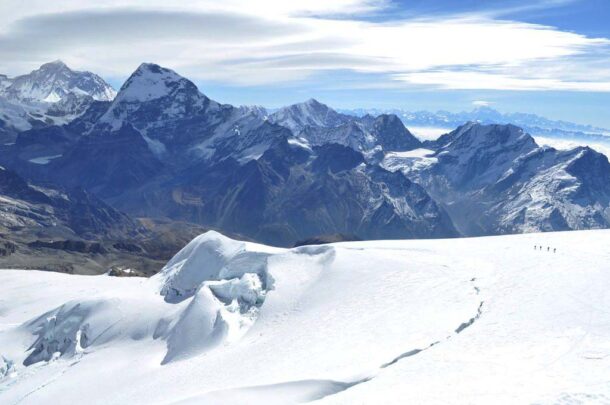
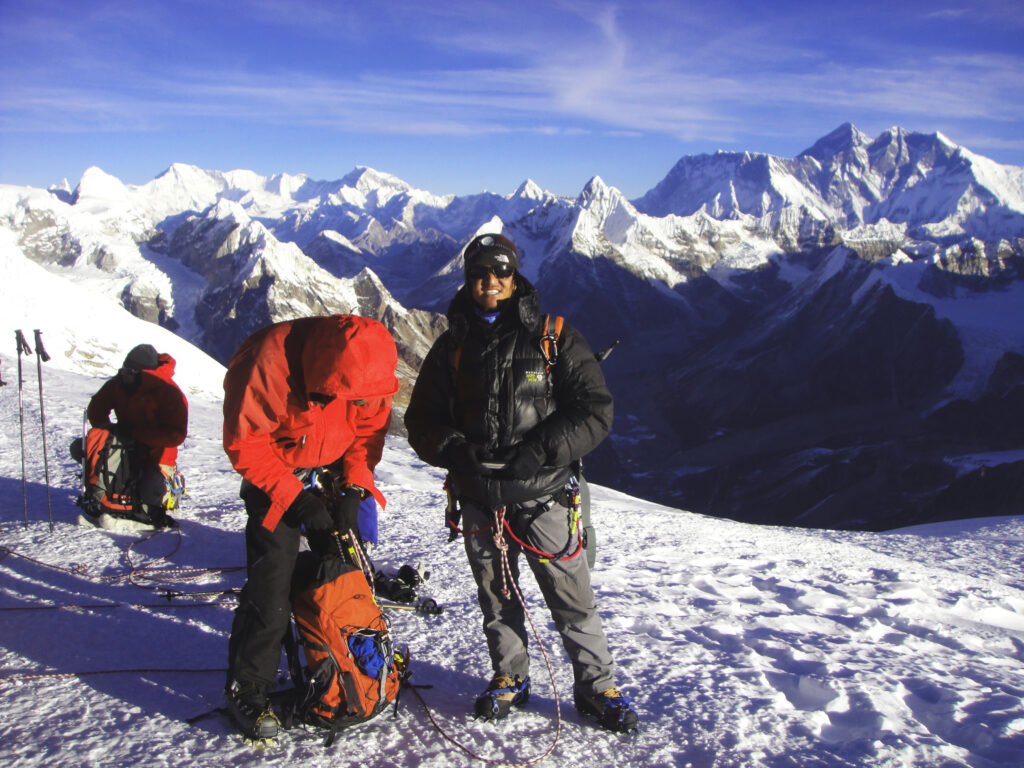
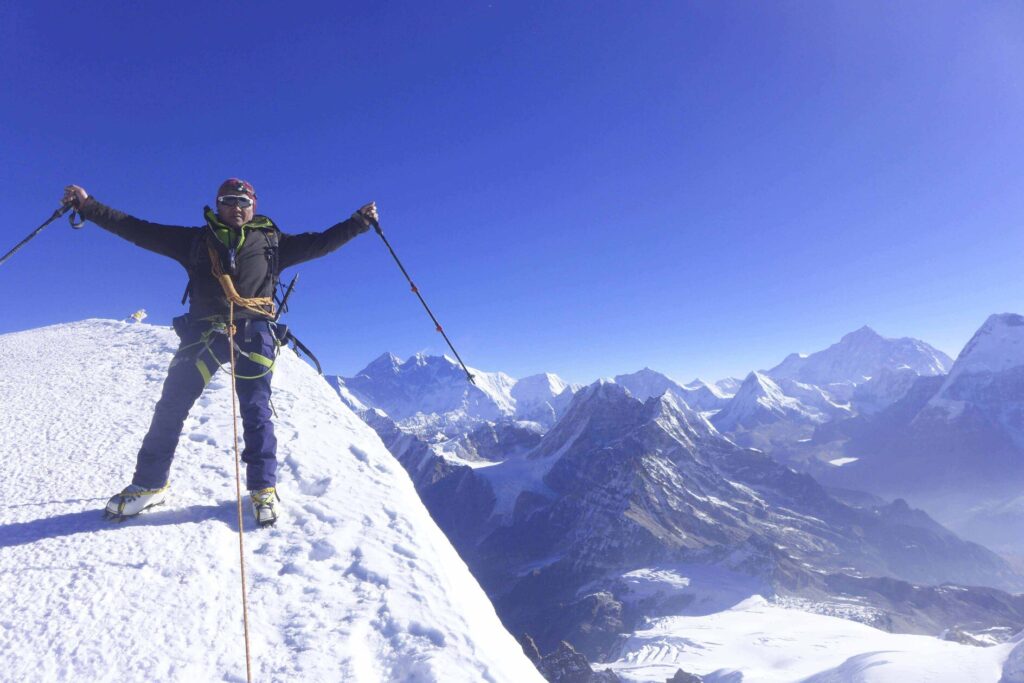
After learning basic mountaineering skills with our expert team at Khare village, you will begin a non-technical glacier ascent toward the summit of Mera Peak. Once you reach the Mera summit from the top, you can enjoy the grand view of five of the world’s tallest mountains: Everest, Lhotse, Makalu, Cho Oyu, and Kanchenjunga. Also, the view of Nuptse (7,855m), Chamlang (7,319m) and other surrounding 6,000m to 7,000m mountains, including glaciers, icefall, and Hinku valley, is really impressive to watch.
Mera Peak Climbing is the most rewarding 6,000 meters adventure in Nepal, and High Route Adventure has guided hundreds of trekkers safely to the summit. If Mera Peak is on your bucket list, book a Mera Peak Climbing Package with us to create lifetime adventures and memories.
Mera Peak Expeditions begins with a short flight to Lukla from Kathmandu. From Lukla, The initial trekking trail of the journey passes through many villages and settlements, each destination presenting breathtaking views of the Everest peaks. Moreover, the Khumbu is home to the ethnic Sherpa people of Nepal and the journey is a great way to enjoy their culture.
Likewise, the journey goes through the Hinku Valley with the trekking path winding through highland pastures, emerald alpine woods, and ravines with sharp ridges. The natural beauty of the landscape is also one of the trip’s major hallmarks besides the Himalayan ambiance. At each step of the way, you are presented with beautiful open pastures and grasslands embedded with rhododendron bushes with the skyline decorated by the Everest Himalayas.
Finally, the path then leads you to the settlement of Khare and the Mera High Camp from where you begin your ascent upwards to the Mera Peak summit. With the wide environment covered in deep snow and ice, with glacial sludge and icefalls covering the path, the summit of Mera Peak climbing is quite spectacular.
You will be following your guide ahead as you climb up the peak with your crampons and ropes, be careful to not stray, and be safe on the climbing path that is attributed to crevasses and hollow grounds. It is quite thrilling and nerve-wracking!
Thus, come join us at High Route Adventure for an extraordinary adventure. You are guaranteed the best services at each step of the way, accommodation meals, and transportation. Don’t miss out on this special opportunity.
Among the other 6,000-meter peaks in Nepal, Mera Peak has a high success rate. About 80% of climbers who attempt Mera Peak have successfully reached the summit.
| Statistic | Mera Peak |
| Overall summit success rate | ~80% |
| Spring success rate (Apr–May) | ~85% |
| Autumn success rate (Oct–Nov) | ~75% |
| Peak height | 6,476m / 21,247ft |
| First summited | 1953 — Col. Jimmy Roberts & Sen Tenzing |
| Classification (NMA) | Trekking peak (highest in Nepal) |
| Three summits | Mera North, Mera Central (main), Mera South |
The above figure shows Mera Peak accessible terrain and the importance of proper acclimatization.
Note: At high Route Adventure, we prioritize our trekkers’ safety, so we only attempt the summit when the conditions are safe. Our trekking guide monitors 24/hour weather forecast during trekking plus expedition. In 13 days, we have built a contingency day in case of delays or unfavorable conditions during summit day.
On this 17-day Mera Peak Climbing adventure, we will follow the standard route that follows the Paiya–Hinku Valley approach from Lukla, covering approximately 125 km(77.67 miles). This route is one of the safest, most accessible and scenic routes that cross several mountain passes before reaching the summit. The other routes are:
➡️Chutok La pass: The Chutok La Pass is situated at an elevation of 2,945 m / 9,662 ft. This mountain pass connects to the settlement of Paiya.
➡️Kari La Pass: The Kari La Pass is located at an elevation of 3,145m. This mountain pass connects the riverbed sections of the Hinku Drangka (Hinku River) and leads you to the settlement of Panggom.
➡️Panggom La Pass: The Panggom La Pass is located at an elevation of 3,500m. This mountain pass connects you to the Ningsow village.
➡️Zatrwa La Pass: The Zatrwa la Pass is located at an elevation of 4,600m (15,092 ft). This mountain pass separates the Lukla and Hinku Valley. Crossing the Zatrwa La Pass is challenging due to rapid elevation gain and difficult terrain conditions.
➡️Amphu Labtsa Pass: The Amphu Labtsa Pass is located at an elevation of 5,845m (19,177 ft). This mountain pass connects the Hinku Valley to the famous Khumbu Valley (close to Mt. Ama Dablam). It’s extremely challenging to cross this mountain pass because you need to have basic mountaineering skills. You need to cross the Amphu Labtsa Pass only if you combine Mera Peak Climbing with Island Peak.
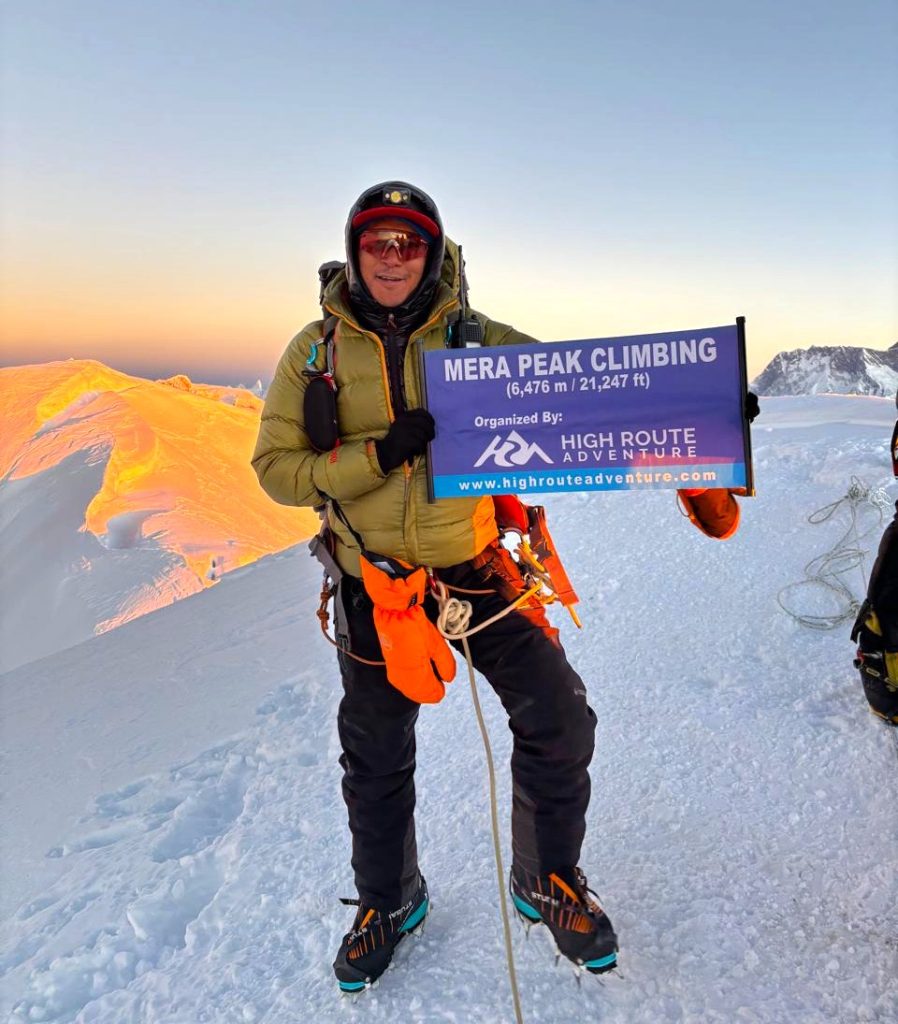
Let’s see why we are different from other local tour operators and what makes us the best:
We offer a budget-friendly price for the Mera Peak Climbing Package to our customers. We offer a special discount if you are in a group. The higher you are in a group, the higher the discount you can get on the trekking package. Our 17-day Mera Peak Expedition price starts from USD 2,195. Check the price list below according to the group size.
| No of People | Price Per Person |
| 1 – 1 | $ 2,635 USD |
| 2 – 4 | $ 2,350 USD |
| 5 – 8 | $ 2,195 USD |
Additional costs to budget for:
Our Mera Peak package is an all-inclusive package. However, here are a few things that you need to budget for yourself before heading for the trip:
This 17-day Mera Peak Climbing itinerary is our standard package for beginners and first-time climbers. However, if you are an experienced climber and want to complete the climb in a shorter amount of time, we highly recommend checking out our: Short Mera Peak Climbing Package – 13 Days
You may arrive in Kathmandu at any time. Upon your arrival, you will be welcomed by one of our airport representatives. He will help you get transferred to your Hotel. There are no planned activities for the day, thus you may check into your Hotel and relax. Overnight stay at the Hotel in Kathmandu.
You will be transferred to the airport for your Lukla Flight early in the morning. After landing at Lukla, you will begin your trek going into the Dudh Koshi River valley. Crossing a suspension bridge over the Handi Khola, you will settle in Surke. As you climb up the Chutok La pass, you can get good views of the Lukla village and the nearby mountains. Down below the pass is the small settlement of Paiya/Chutok. Overnight stay at the guesthouse at Paiya.
From Paiya, the path leads you to a small bridge over a river. After crossing the bridge, the trail gets a little slippery due to the watery mud-leveled ground. As you follow the path, you will reach the Kari La Pass. It is a steady climb up the pass and another steady descent down. Finally, you will reach the settlement of Panggom, occupied by settlers who trade and farm. Overnight stay at the guesthouse at Panggom.
After breakfast, you will leave Panggom via the Panggom La Mountain Pass. With an ascent-and-descent pathway, you will reach the Pesang Kharka Khola that flows through the valley floor. Crossing the river, you will follow the path once again to reach Peeng Kharka Danda. The trails descend to the banks of the Ningsow River to follow it to the Ningsow village. Overnight stay at the guesthouse at Ningsow.
Today, you will have a pleasant trek from Ningsow towards Chhatra Khola, following the path that descends and ascends to reach a small settlement of Ramailo Danda along the way. Further, from the Danda, the trail also enters the Makalu Barun National Park. This part of the trek is done on a path that is called the Pasang Lhamu Trail. As you trek towards Chhatra, you can also sometimes spot Red Pandas in the trees, roosting. Finally, you will reach the village. Overnight stay at the guesthouse at Chhatra Khola.
From the village, you will follow the trail that runs north from the main trail to Mera Peak. The narrow path runs alongside the Majang Khola and after merges with another trail alongside the Hinku River. The trail then leads you to the settlement of Tashing Ongma, known for its seasonal tea shops. Further from here is the Sanu Khola, which you will cross via a suspension bridge before finally reaching Kothe. Today you will get first view of Mera Peak. Overnight stay at the guesthouse at Kothe.
You will trek alongside the Hinku River, with the Mera Peak towering over you. After passing through the Gordishung village- a small herder's settlement located on the western banks of the Hinku Dragna, you will continue towards the Lungsungba Gompa, a 200-year-old Gompa where you can find an inscription in rock mentioning Mera Peak. A short trek from here takes you to Thaknak, a summer grazing area that has primitive lodges. Overnight stay at the lodge at Thaknak.
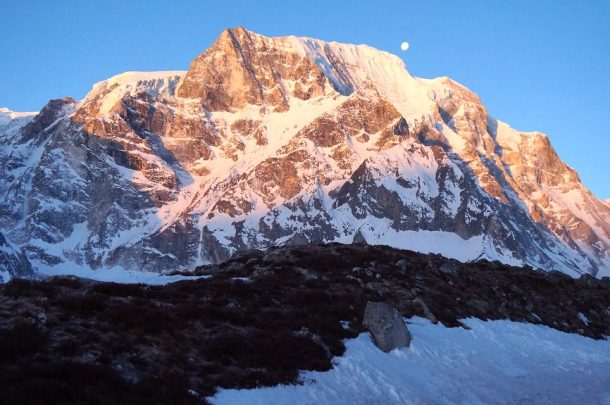
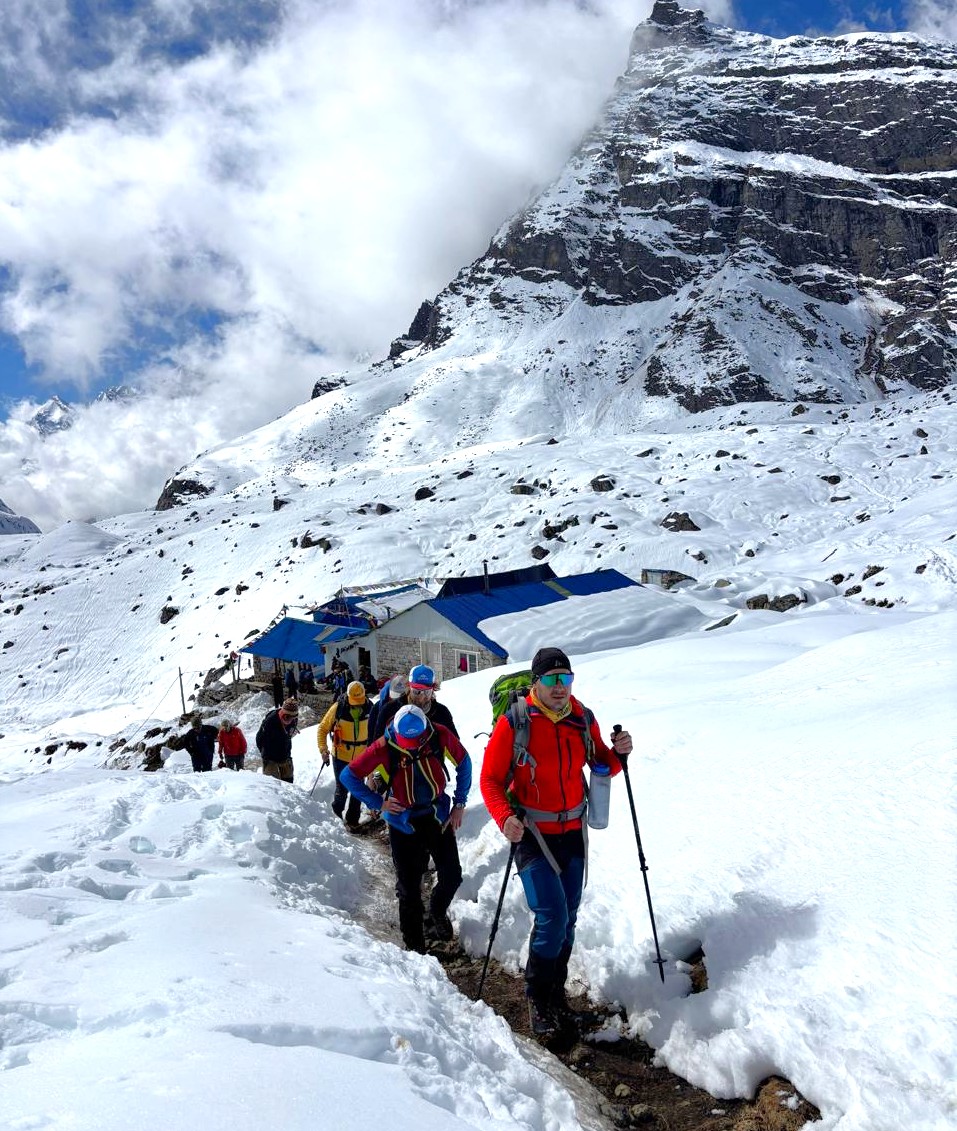
Further from Thaknak, the path follows a lateral moraine of the Dig Glacier, which presents spectacular views of the Charpate Himal. You will follow the trail that then climbs through the moraine to take you to the snout of the Hinku Nup and Shar Glaciers. From here, you will steadily climb up to the Khare village from where you can get good views of the northern face of Mera Peak (6476m). Overnight stay at the guesthouse at Khare.
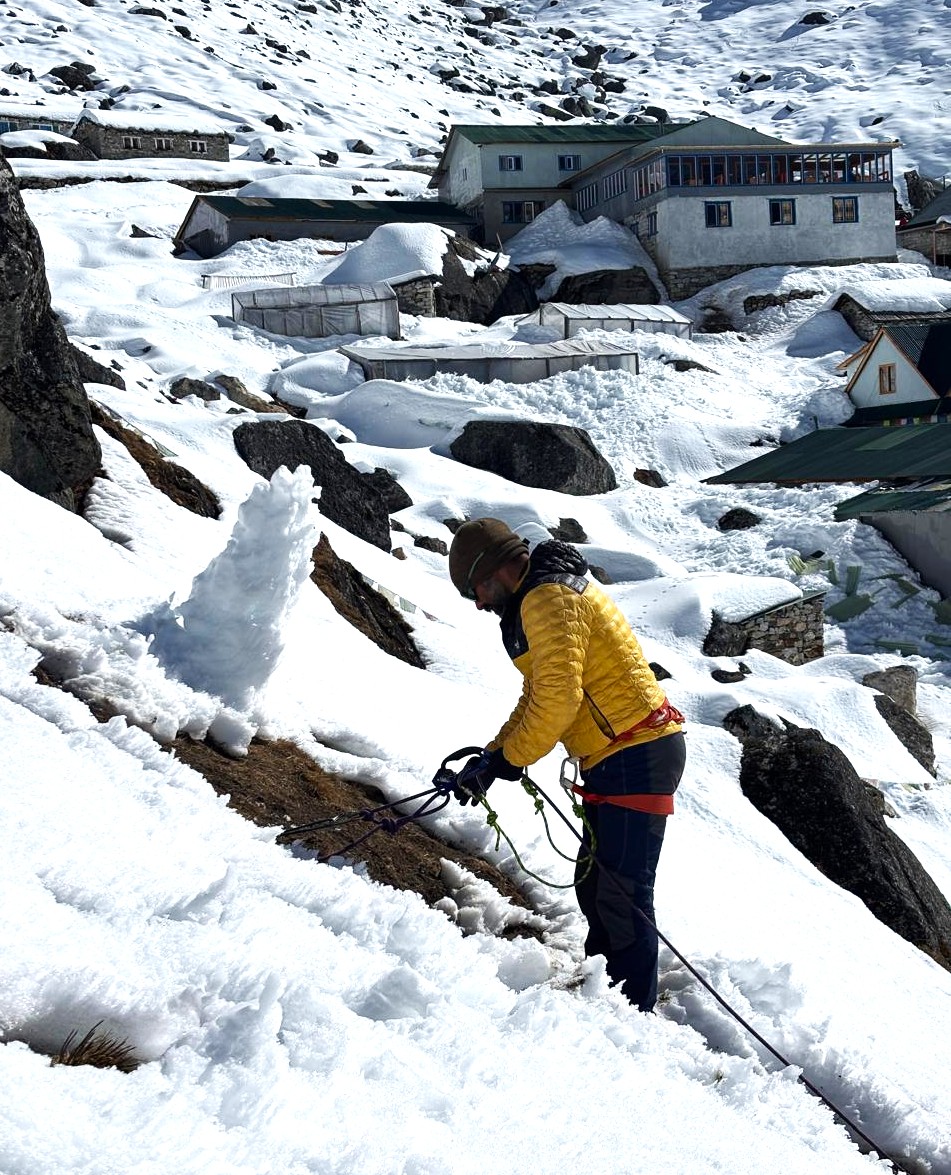
This day is reserved for acclimatization. Today, our guide will also give you some proper training on how to use climbing equipment like crampons, ropes, carabineers, and ice axes. Our guide will also give you pointers and tips on the whole climbing experience. Overnight stay at the guesthouse at Khare.
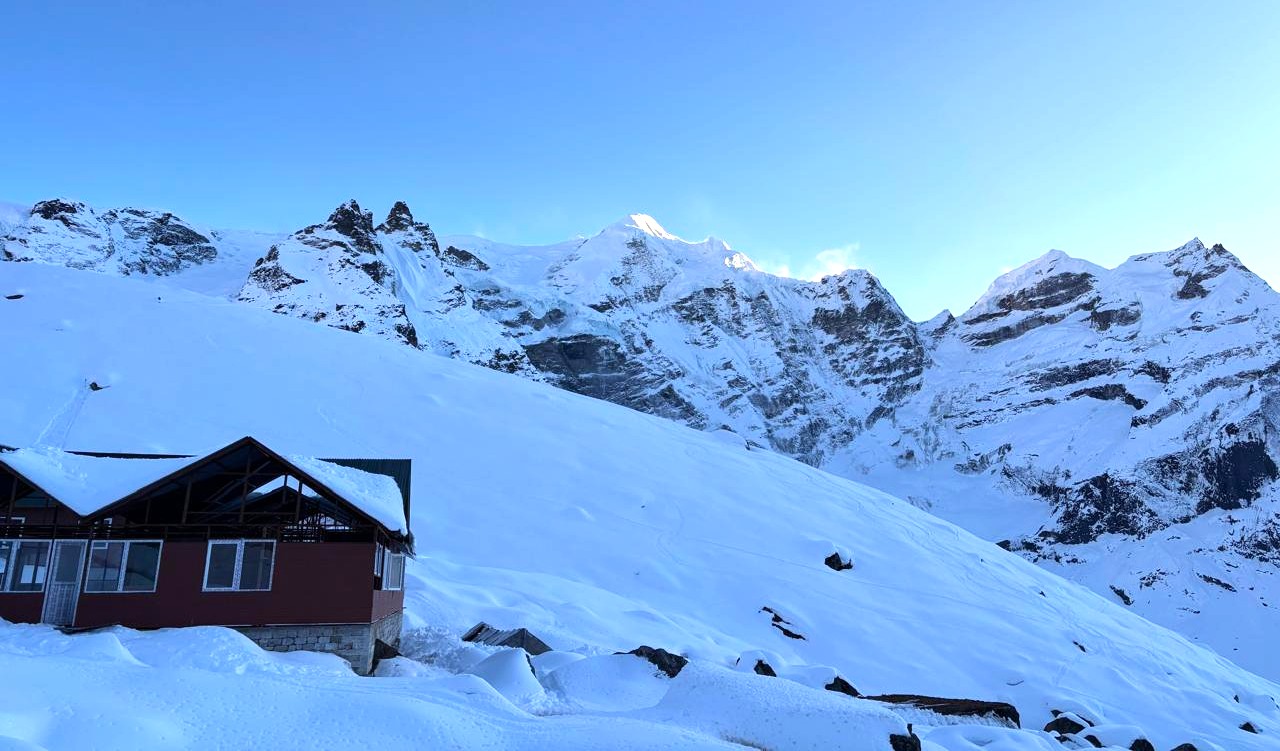
Walking through a boulder-strewn terrain, you will climb a steep hill to reach the Mera Peak Base Camp. From the camp, you will continue further ahead through the Mera La Mountain Pass to reach the Mera High Camp. Climbing to the top of the rock band, which is marked by a cairn, you will set up Camp for High Camp. Along the way, you can enjoy breath-taking views of the peaks, like Lhotse (8516m), Makalu (8485m), and Cho Oyu (8,188m). Overnight stay at Mera High Camp.
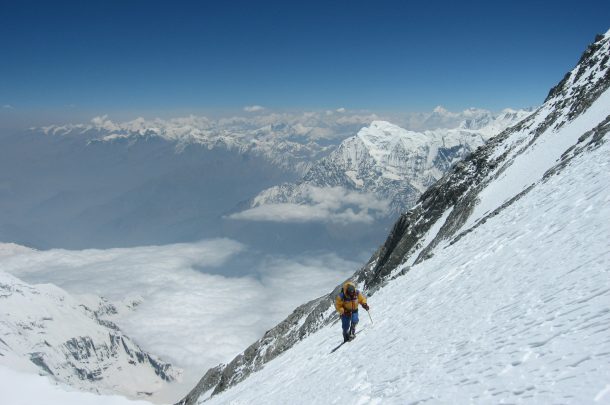
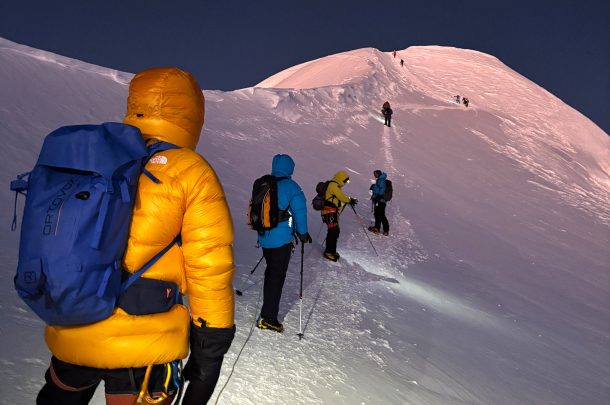
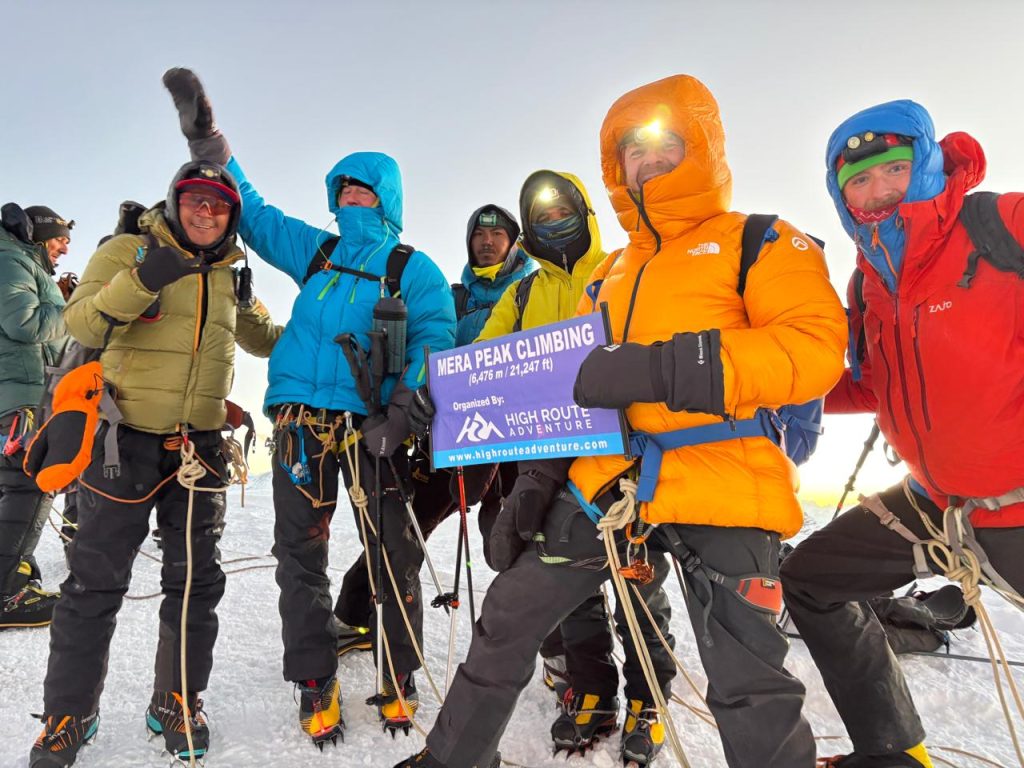
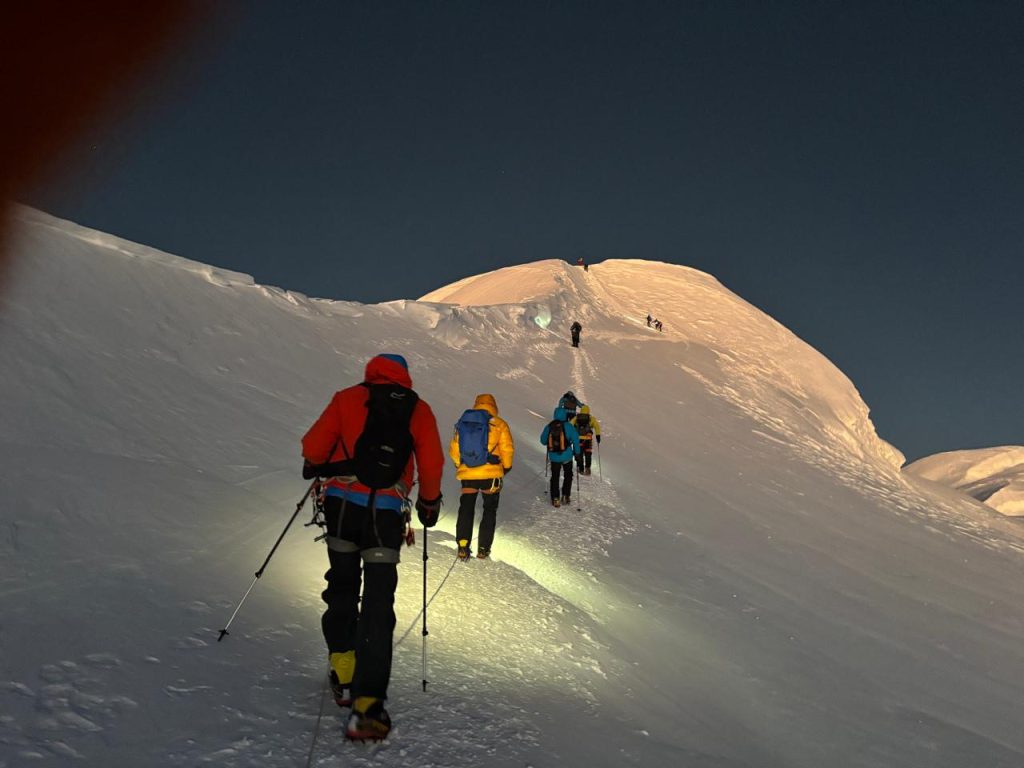
This is an important day of the entire trip. Today, you will be scaling the Mera Peak (6,476m / 21,247ft). Waking up quite early at 2 in the morning, you will make your way up the glacier and onto the ridge. As you continue, you can experience the sunrise as well, warming you up against the chilly dawn. With the help of ropes and other climbing equipment, you will begin your climb, following the Sherpa guide. Finally, as you reach the summit, you can take in mesmerizing views of the neighboring Everest peaks from the top. Finally, after enjoying the sight and the achievement, you will slowly retrace your steps back down the summit and trek back to Khare.
This day is reserved for contingency, just in case if you are unable to summit the peak on the desired day due to reasons like bad weather. This day can be skipped if the trip goes smoothly.
From Khare, you will trek back towards Kothe, retracing your steps as before. The journey is pleasant and easier as it is a descent. You will descend to the base camp and cross the Mera La Pass (5,415 meters) and head west to Kothe. Overnight stay at the guesthouse at Kothe.
After breakfast, you will begin your trek to Thuli Kharka, climbing and descending across the valley and crossing several streams of the Inkhu Khola that drain the terrain. You will pass by the settlement of Takho and also pass by many chortens. Overnight stay at the guesthouse at Thuli Kharka.
The Zatrwa La Mountain Pass is situated at an elevation of 4,600 meters. Crossing the pass, you will finally reach the Lukla village. The view of the village, as well as the peaks of Cho Oyu (8,188 m) and the Kongde Ri (6187m) among others from the top of the pass, is amazing. From the top, you will descend the pass towards Chutang and then trek to Lukla. Overnight stay at the guesthouse at Lukla.
Bidding the Everest peaks goodbye, you will have a short flight back to Kathmandu. Upon landing, you will be dropped off at the Hotel. Here, you can stroll around the city or shop gifts as you spend your final day in Nepal. Overnight stay at the Hotel in Kathmandu.
Approximately three hours before your scheduled flight, you will be dropped off at the airport for your departure.
Collaborate with our specialists to create a unique itinerary.
Choose from our scheduled group trips below, or contact us to plan a private or family adventure tailored to your schedule.
If you are a SKI lover, then High Route Adventure also offers the Mera Peak Climbing with Ski Package for you. On this package, you will get a 1:2 climbing guide and other supportive staff, as well as personalized attention and professional guidance. Our expert team will safely take you to the awe-inspiring Mera Peak (6476m) summit, and you will return down by Skying, enjoying the lifetime adventure. To know more in details please get in touch with our tour operator directly through Phone/WhatsApp(+977-9851058664).
All the climbers who are planning to summit Mera Peak must have the climbing permit and additional local permits. This permit will be checked at several checkpoints on the trekking routes. So you need to carry the permits with you all the time and even your original passport, as officials may request to inspect them.
Note: The Mera Peak permit is included in our package, so you don’t have to worry about the cost or obtaining it. We will handle these permits once you submit your documents to us.
For more information, read: Mera Peak Climbing Permit Guide
Difficulty: F (Facile) to PD+ (Peu Difficile) as per the French Alpine grading system meaning "moderately difficult"
This means the summit to Mera Peak is the most accessible 6,000m peak in Nepal, even for the first time climbers with a proper plan and preparation.
Want to learn more? Read our detailed guide on How Difficult is Mera Peak Climbing?
Mera Peak is suitable for trekkers who have already completed the high-altitude treks in Nepal, such as Everest Base Camp, Three Passes Trek, Annapurna Circuit, and Manaslu Circuit. If you want to enjoy the taste of high-mountaineering peaks, you must be physically fit and mentally prepared for the tough days.
Even if you don’t have any mountaineering skills, you can still proceed with undertaking this peak climbing because we will train you on crampons, ice axe use, and rope techniques at Khare (5,045m) before the summit push. This will build your confidence and make your summit safe.
If you are comparing Mera Peak vs Island Peak, Mera is the better first choice: it is higher, has a better success rate, and requires less technical skill. Learn more in our detailed comparison: Mera Peak vs Island Peak Climbing.
Mera Peak is a beginner-friendly peak. As per our experience, if this is your first Himalayan Peak in Nepal, then choose Mera Peak. The Hinku Valley approach is also one of the most scenic and remote treks in Nepal, far quieter than the busy Everest Base Camp trail that leads to Island Peak. If you are an experienced trekker, you can also combine the Mera Peak + Island Peak climbing itinerary via the legendary Amphu Labtsa Pass (5,845m).
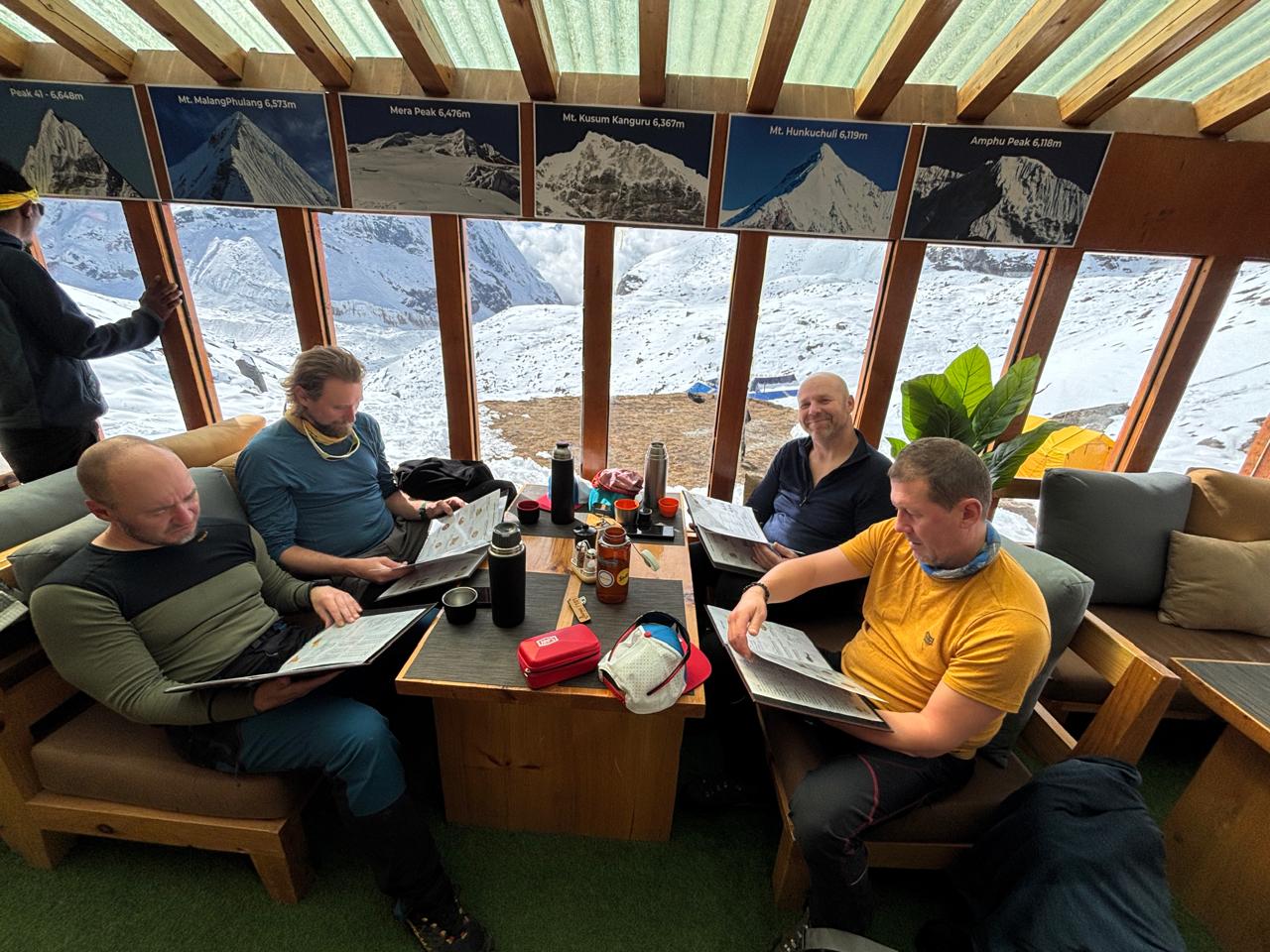
During the trek, High Route Adventure will book the mountain lodge, popularly called a teahouse. This teahouse is located along the trekking routes, which are simple, basic, and locally owned. This teahouse is built to provide a comfortable stay for trekking purposes, so you can expect very basic facilities here. There will be no luxury beds, AC, or heating system inside the room. Instead, you will get twin-sharing beds, sharing bathroom( often squat types), a communal dining hall, and a terrace with mountain views.
Teahouses also offer facilities such as Wifi, charging stations, and hot showers (limited in some locations). These services are available for an additional fee at a minimal cost. Additionally, they have their own restaurant where trekkers gather in the communal dining hall to eat and have communication with each other.
Budget tips
Related Guide: Mera Peak Climbing Cost – A Complete Budget Breakdown
Each teahouse has its own cook and chef who prepare fresh meals daily for climbers. They offer a menu from which climbers can choose their preferred dishes and enjoy their meals. Both vegetarian and non-vegetarian options are available, along with a limited selection of desserts and snacks. Most of the meals are Nepali dishes with a few options of international dishes prepared in Nepali style.
Let’s see the common meals you can expect in a teahouse:
Note: High Route Adventure will arrange three meals for you; for the snacks, drinks, and extra meals you need to budget on your own.
The best season for the Mera Peak expedition is autumn (September-November) and spring (March-May). It is considered to be the best time of the year for any kind of high-altitude Himalayan adventure in Nepal. This season is a perfect atmosphere and the temperature is cool. This autumn season is clear skies and stunning mountain views are breathtaking. In the spring season, wildflower will be blooming. The spring is flowering rhododendron blooming entire the trekking trail and hills. It is a combination of blooming rhododendron, clear skies, and the white mountain is a wonderful experience in your lifetime. In both seasons is the best time to explore any kind of mountain activity.
On this 17 Day Mera Peak summit journey, you will start your trek from Lukla(2,860 meters) and reach the impressive altitude of Mera Peak(6,476 meters). On this Hinku Valley route of Mera Peak, there will be an altitude gain average of 600m - 800m every day. There will be a specific acclimatization day at Khare to acclimatize your body to high altitude. Even though the peak is non-technical, altitude sickness is a major concern for climbers and the biggest challenge. The main reason for altitude sickness is due to the low level of oxygen in the air, which makes it harder for the body to function normally.
Due to this situation, some climbers might experience the symptoms of AMS, such as
To prevent Altitude Sickness, you can follow these acclimatization tips:
Read more: How To Prevent Altitude Sickness On Mera Peak Expedition?
Climbers are concerned about whether they can get safe drinking water on the Mera Peak journey or not. Yes, you can absolutely get safe drinking water. Teahouses sell water bottles and hot water for climbers, which are safe for drinking. They charge around NPR 200- 600 per 1-litre bottle. Water is expensive in the Himalayas due to a lack of road transportation and difficult logistical supplies.
There will be a public tap and water from the creek or spring, but we discourage drinking water from here as they are not treated. Use this only if you have carried out a water purification tablet with you. Since we encourage our climbers to participate in responsible tourism and eco-trekking, use reusable water bottles with you and refill water from teahouses to minimize the use of plastic bottles.
To reach the starting point of the trek, Lukla, we will arrange your flight ticket. Our guide will pick you up from your hotel and take you to the airport according to your flight schedule. After a scenic 35-minute flight with breathtaking aerial views of the Himalayas, you will land at Tenzing-Hillary Airport, often considered one of the most dangerous airports in the world. Lukla flights have a strict baggage allowance of 10 kg for checked luggage and 5 kg for hand luggage.
Flight cancellations to Lukla are common because flights are highly weather-dependent. Therefore, having 1–2 buffer days in your itinerary is highly recommended. During the peak trekking seasons, flights may be diverted to Ramechhap (Manthali Airport) in accordance with CAAN regulations. If your flight departs from Ramechhap, we will arrange the necessary ground transportation for you.
To obtain a climbing permit in Nepal, you need to submit proof of specialized peak climbing insurance. Travel insurance helps cover emergency evacuation costs, which can often exceed $5,000 to $10,000 if you have to pay for them yourself. Your travel insurance policy should cover:
Note: If you have not purchased travel insurance in your home country, you can also buy it in Nepal. If you need any assistance in purchasing insurance, we can recommend suitable options. Read more: Travel Insurance for Peak Climbing in Nepal
Looking for detailed information? Read our Complete Travel Guide to Mera Peak Climbing.
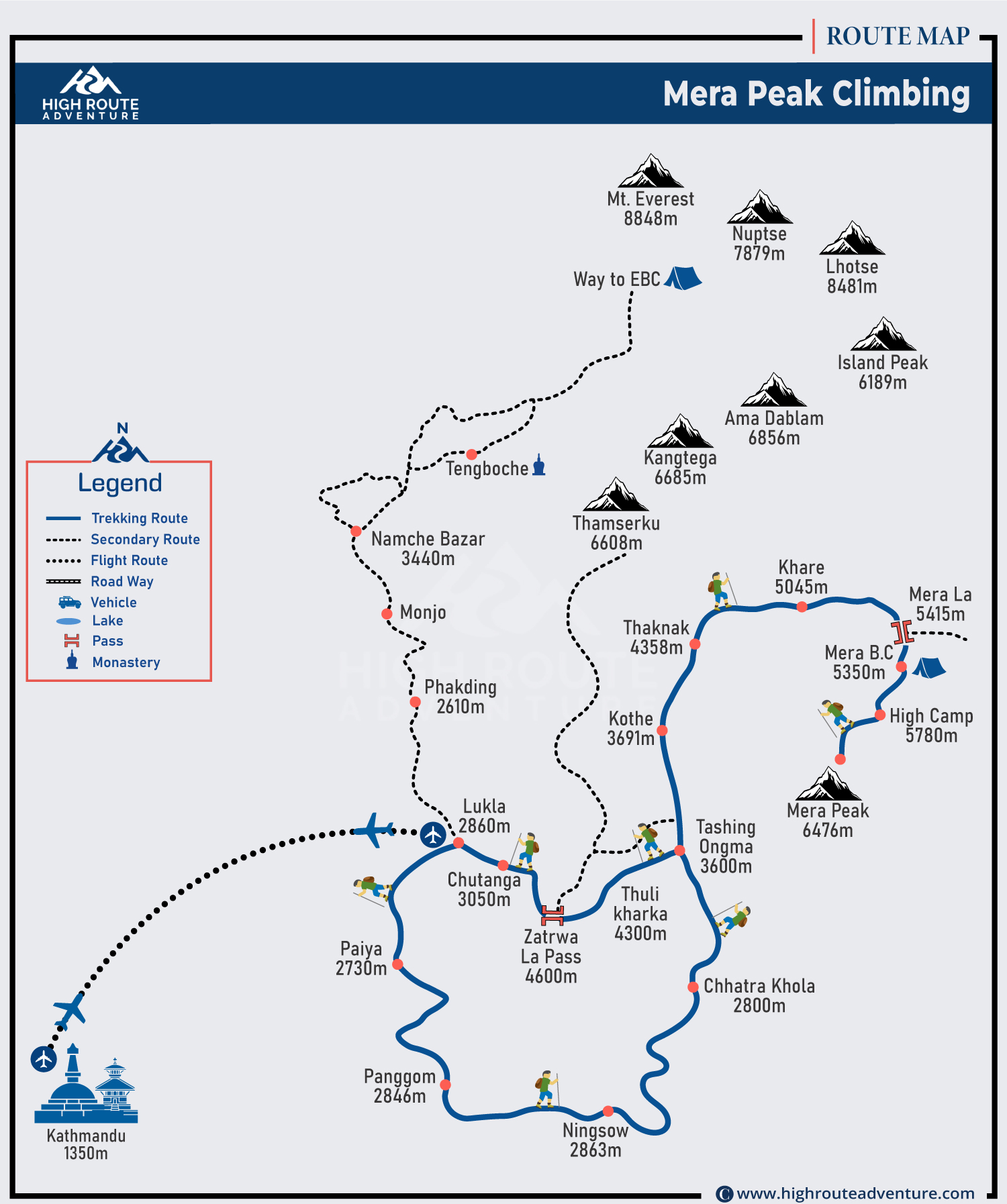
The essentials you need for a comfortable and safe Himalayan climb
Mera Peak stands tall at 6,476 meters and is one of Nepal’s most popular trekking peaks. While it doesn’t require advanced climbing skills, the altitude, cold, and terrain demand solid preparation. Here's a full list of the gear you should bring — written simply to help every trekker get ready with confidence.
You’ll face changing weather — sunny days, windy passes, and freezing summit mornings. Dress in layers to adjust as you go.
✔ For Inner Warmth
✔ For Middle Layer
✔ For Outer Protection
✔ For Higher Camps
Keeping your feet warm and dry is key on Mera Peak.
Some gear may be included in group supplies — but here’s what climbers usually carry:
Starting from
per person (in USD)
Hear directly from our happy trekkers and travelers sharing their unforgettable experiences.