Cho Oyu Expedition(8,188 meters) - 44 Days

Trip Facts
Duration 44 Days
Max Altitude 8,188 meters
Trip Grade Strenuous
Best Season spring (March to May) and autumn (late September to November)
Meals Breakfast | Lunch | Dinner
Accommodation Hotel/Ghuesthouse/Tent
Highlights

Cho Oyu Expedition(8,188 meters) Highlights

  • Explore the vibrant streets of Kathmandu before heading to Tibet.
  • Enjoy 1 hour and 20 minutes scenic flight to Lhasa with breathtaking aerial views of the Himalayas.
  • Explore Lhasa’s famous attractions, including Potala Palace, Jokhang Temple, and Barkhor Bazaar.
  • Enjoy a scenic drive across the Tibetan Plateau via Shigatse and Tingri.
  • Complete acclimatization rotations and reach the summit of Cho Oyu at 8,188 meters.
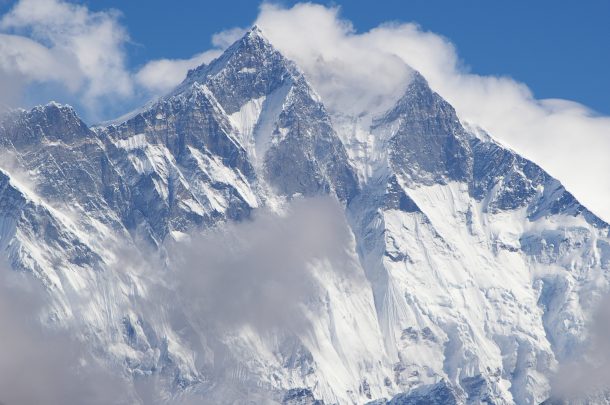
  • Stand at the top of the summit and enjoy sweeping views of Lhotse, Nuptse, Gyachung Kang, Pumori, Ngozumpa and Gyabrac glaciers, etc.
  • Experience Tibetan lifestyle, culture, tradition and warm hospitality.
  • Capture Unlimited photo and videos throughout the journey.
Overview

Cho Oyu Expedition(8,188 meters) Overview

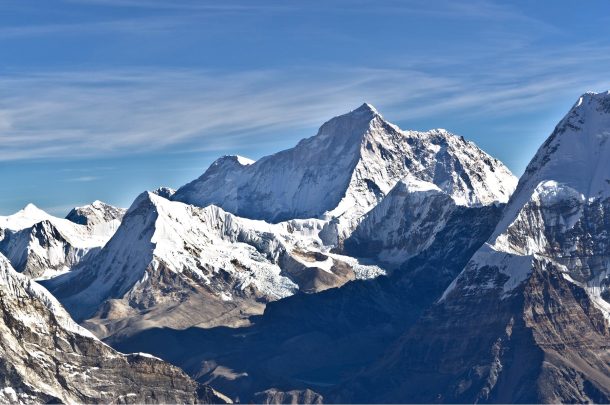
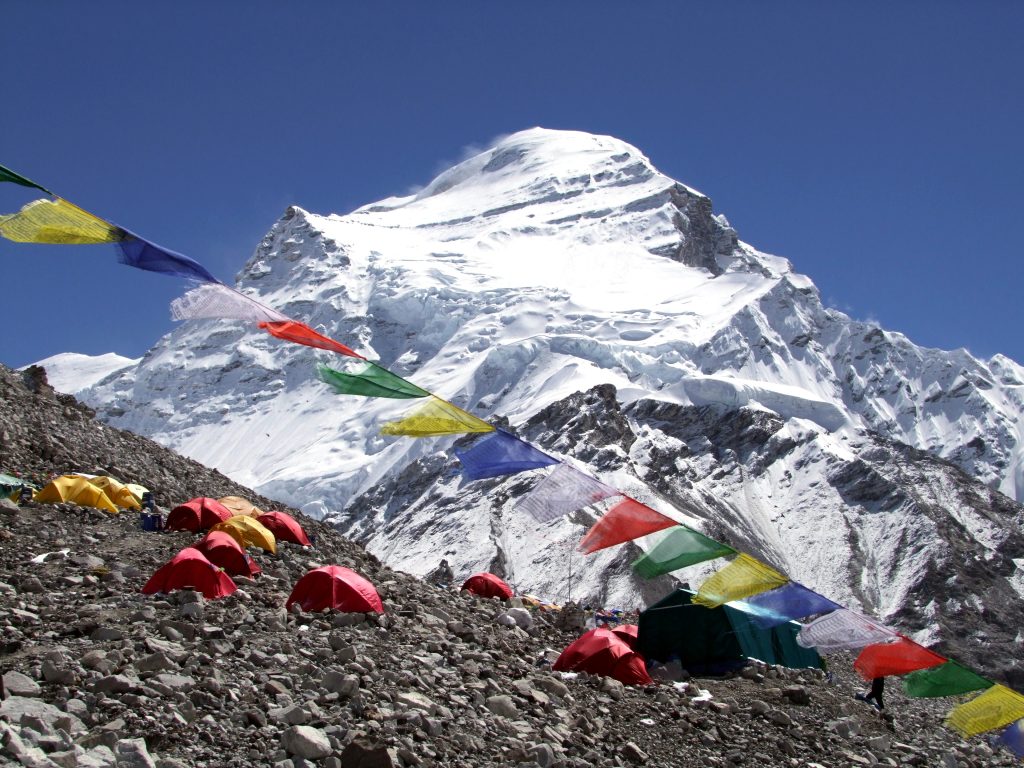
Mount Cho Oyu, which stands at an altitude of 8,188 meters (26,864 feet), is the world’s sixth-highest mountain. Cho Oyu is part of the Mahalangur Himal sub-range of the Himalayas. It sits at the border between Nepal and China, so the Cho Oyu Expedition is possible from both sides. For a safe ascent, climbers often use the Northwest Ridge route for the summit push. The Northwest Ridge is the standard route from the Tibetan side and is generally less technical than the routes on the Nepal side.

To enter Tibet, climbers can use the overland route via Kerung, but after the Bhotekoshi flood, this route is currently affected. So, for climbers who want to do the Cho Oyu Expedition, we have brought this alternative itinerary with a flight from Kathmandu to Lhasa and back. You will avoid the affected overland route by taking a flight to Lhasa from TIA airport.

Then, from Lhasa, you will spend an acclimatization day in Lhasa to explore Lhasa’s famous cultural and historical attractions. Then, taking a scenic drive in the Tibetan plateau you will reach Tingri via Shigatse. Then, from here, your climbing journey starts, passing through Base Camp and Advanced Base Camp, and reaching the summit at 8,188 meters.

From the summit, it rewards the climber with the incredible view of 8,000 meters peaks like Mount Everest, Lhotse, Makalu, and several other surrounding peaks, including a striking view of the Mahalangur Himal range.

After the summit, you will drive back to Lhasa airport for the flight back to Kathmandu. Then, after the celebration in Kathmandu with your team, you will fly back to your country.

First Ascent: The Northwest Ridge was first climbed on October 19, 1954, by Herbert Tichy, Joseph Jochler, and Pasang Dawa Lama.

Cho Oyu Expedition Cost

The total cost of the Cho Oyu Expedition package varies based on group size, travel season, supplemental oxygen requirements, and the scale of logistics. For an exact cost, please contact our tour operator directly.

Itinerary

Cho Oyu Expedition(8,188 meters) Itinerary

  • Arrive at Tribhuvan International Airport(TIA).
  • Meet our representative, who will be waiting for you at the airport with a signboard. Transfer to your hotel and check in.
  • Obtain the Tibet permit and Climbing permit.
  • Check your climbing gear and expedition equipment with our team.
  • Purchase or rent any required equipment that you may be missing.
  • Introduction with the Sherpa climbing team
  • Complete the final preparation and briefing for the Cho Oyu Expedition.
  • Spend the night in Kathmandu.
⛰ Altitude 1400 meter
🏨 Stay Hotel
  • Drive to TIA Airport from your hotel with your climbing team.
  • Board your flight to Lhasa and enjoy spectacular aerial views of the Himalayas. As you approach Tibet, you can witness breathtaking views of Mount Everest, Lhotse, Makalu, etc.
  • Land at Lhasa Gonggar International Airport(LXA) and drive to the hotel.
⛰ Altitude 3600 meter
🍽 Meals Lunch | Dinner
🏨 Stay Hotel
  • Acclimatization day in Lhasa to adjust your body to the high altitude
  • Explore: Potala Palace, Jokhang Temple, and Barkhor Bazaar
  • Spend the night in Lhasa
⛰ Altitude 3600 meter
🍽 Meals Breakfast | Lunch | Dinner
🏨 Stay Hotel
  • Drive south out of Lhasa onto S202, winding up and past Yamdrok Lake and the Karola Glacier before hitting Gyantse.
  • Connect back to G318 to enter Shigatse
  • From Shigatse, you will stay entirely on National Highway 318 (G318), heading west through Lhatse and Tingri.
  • Spent the night in Tingri.
⛰ Altitude 4348 meter
🍽 Meals Breakfast | Lunch | Dinner
🏨 Stay Guesthouse
  • Drive 2-3 hours from Tingri to reach the Cho Oyu Chinese Base Camp (also called the trailhead or initial base camp)
  • Start your trek from Base Camp up to the Intermediate Camp.
  • From Intermediate Camp, continue trekking to the Advanced Base Camp, which serves as the launch point for the Cho Oyu Expedition.
⛰ Altitude 5700 meter
🍽 Meals Breakfast | Lunch | Dinner
🏨 Stay Tent
  • Phase 1(Roughly Days 13–25): Complete two acclimatization rotations from Base Camp, touching Camp 1 during the first rotation and Camp 2 during the second. Then return to ABC for rest.
  • Phase 2Roughly Days 26–30): Spend 3–5 days at ABC for recovery and acclimatization while your expedition leader closely monitors satellite weather forecasts.
  • Phase 3(Roughly Days 31–38): When a suitable weather window opens, begin the summit push from ABC, climbing through Camps 1, 2, and 3 before making the final ascent to the Cho Oyu summit and descending to ABC.
⛰ Altitude 8188 meter
🍽 Meals Breakfast | Lunch | Dinner
🏨 Stay Tent
  • From ABC, trek back down to the Chinese Base Camp (CBC).
  • You will load your gear into waiting 4x4 vehicles or buses and begin the long drive back east on Highway G318 toward Tingri, Shigatse, and eventually Lhasa to catch your flight to Nepal.
  • Celebrate in Kathmandu for your successful Cho Oyu summit with your team.
  • Fly back to your home country full of memories.
⛰ Altitude 1400 meter

Build Your Own Adventure!

Collaborate with our specialists to create a unique itinerary.

Cho Oyu Expedition Booking, Payment and Cancellation Policy
  • Booking: Climbers can book the package directly from our website. Make sure to book the trip atleast 6 months in advance. To confirm the booking advance payment of atleast 20% is required.
  • Payment: We accept bank transfers, cards, ConnectIPS, digital wallets, and cash.
  • Cancellation: Before making a booking, we request our customers to check the " terms and conditions"
Things to Know

Notes

Cho Oyu Expedition from Tibet Northwest Ridge Difficulty

Difficulty level: PD (Peu Difficile / A little difficult) up to D+ (Difficile / Difficult) 

Climbing Cho Oyu, the sixth-highest mountain in the world, is not an easy task. Climbers need to prepare for years for this expedition. Historical climbing sources identify 13 distinct routes on Cho Oyu, but here we follow the standard standard and classic route from Tibet. This route is also known as the Tichy Route. Compared to others, it is less technical and safer, but it's not free of risk when you are in the death zone. The most difficult sections include steep snowfields, the technical crux known as the Yellow Band, and occasional ice cliffs.

Apart from the mountaineering challenge, getting the climbing permit, Tibet permit, and visa is also a complex part of the expedition. This is because of Cho Oyu's sensitive border location. 

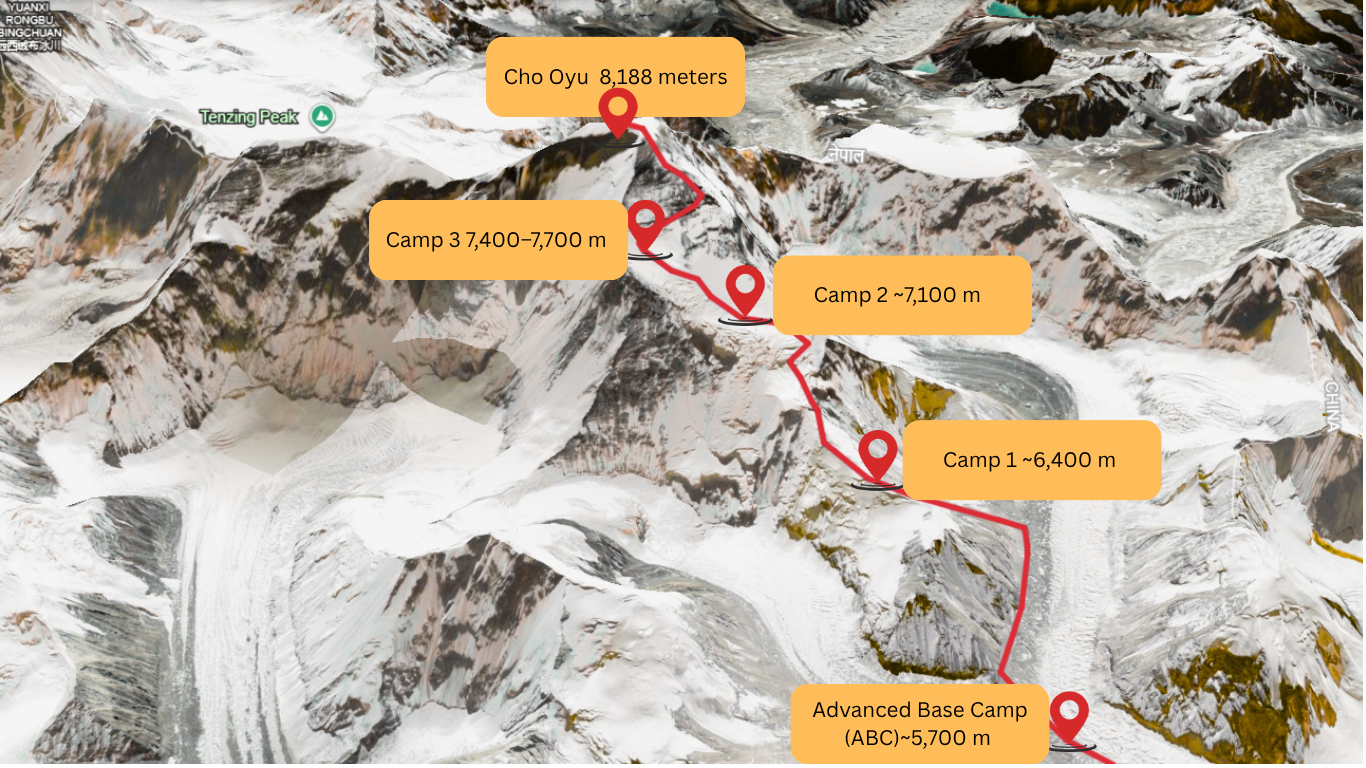
Cho Oyu Expedition Camp Altitudes

Camp Approx. Altitude Purpose
Chinese Base Camp (CBC) 4,800–5,200 m Main expedition base
Advanced Base Camp (ABC) ~5,700 m Main climbing and acclimatization base
Camp 1 ~6,400 m First high camp
Camp 2 ~7,100 m Second high camp
Camp 3 ~7,400–7,700 m Final high camp before the summit

Note: Approximate altitudes for the Tibetan-side Northwest Ridge route. Camp locations may vary based on route and conditions.

How To Prepare for Cho Oyu Expedition

There is a well-known mountaineering proverb: "The mountain will punish you if you don't prepare." You cannot deceive the mountain. Therefore, all climbers aiming to reach the summit of Cho Oyu must plan and make thorough preparations in advance. Preparation helps climbers manage challenges and build confidence.

Here are some helpful tips:

  • Physical preparation: To prepare physically, create a solid training program lasting at least 6 months to 1 year. Stay consistent and dedicated to your training. Focus primarily on building strong legs, improving cardiovascular endurance, and enhancing strength and stamina.
  • Altitude preparation: Join technical 6,000 or 7,000 meter peaks such as Mera Peak and Island Peak to develop high-altitude climbing skills and experience.
  • Mental preparation: Practice visualization and breathing techniques before the expedition. It will help you to stay calm, focused, and confident during stressful situations.
  • Technical Skills and Climbing Gear: Learn mountaineering skills and be proficient in using crampons, ice axes, fixed ropes, ascenders, descenders, and jumars.
  • Travel and Expedition Preparation: Communicate with the agency to obtain the permit and visa in time before departing from your home. 

Best Time for Cho Oyu Expedition

The best window for the summit of Cho Oyu(8,188 m) is during the spring and autumn seasons. In spring, from March to May, the warmer temperatures, stable weather windows, and longer daylight hours make climbing more favourable. The clear sky in the morning delivers excellent views of mountains and beautiful landscapes. However, clouds can build up in the afternoon, which may reduce visibility. 

In autumn, from September to October, due to clear sky it rewards climbers with sharp, bright, and stunning views of the high mountains. There is a low chance of rainfall, high winds, sudden storms, heavy rainfall, or snowfall during this time. Compared to spring, the risk of avalanches is also reduced because of the more stable temperatures.

Required permit and Documents

Climbers need to obtain several permits through the agency before heading out for the Cho Oyu expedition. Since individuals cannot acquire these permits on their own, we will manage the entire process for you. The required permits are as follows:

  1. CTMA Climbing Permit: Issued by the China Tibet Mountaineering Association
  2. Tibet Travel Permit & Chinese Group Visa: Necessary for entering the Tibet Autonomous Region (TAR).
  3. Aliens' Travel Permit: Needed for entering restricted areas within Tibet.
  4. Environmental Deposit & Liaison Officer Fees: Standard requirements enforced by CTMA

Food and Accommodation: What to Expect

During your stay in Kathmandu, High Route Adventure will book your best available 4-star hotel. When you are in Tibet (Lhasa, Tingri), we arrange the best available guest house for you on a sharing basis. From Chinese Base Camp (CBC) and above, during the summit and return, our expedition team will set up the camp for you.  You will stay in tents during both the summit period and the return trip.

In Kathmandu, you can find a variety of restaurants where you can enjoy food that suits your interests and preferences, generally at your own expense. In Tibet, at the Guesthouse you can choose the food from the menu. You can normally expect Tibetan, Sichuan-Chinese, and basic Western-style dishes. During the expedition, our professional expedition cook will prepare three meals a day for you, featuring a mix of carbohydrates and protein, as well as hot drinks available throughout the day.

Cho Oyu High-Altitude Safety and Acclimitization Tips

  1. Gradual Rotation: Complete gradual acclimatization rotations from Chinese Base Camp (CBC) to the higher camps. These rotations help your body adapt to increasing altitude and lower oxygen levels.
  2. Listen to Your Body: While you are at high altitude, check the signs of Acute Mountain Sickness (AMS), hypoxia, High-Altitude Pulmonary Edema (HAPE), and High-Altitude Cerebral Edema (HACE). If you experience any symptoms, inform your climbing guide immediately.
  3. Prioritize Rest: Take enough rest during the acclimatization and rotation day to recover and regain strength.
  4. High Fluid Intake: Sip constantly in small amounts every 10 to 15 minutes to maintain hydration. Consider using electrolyte powders or tablets to replace electrolytes lost through sweating.
  5. Nutrition: Consume small, frequent snacks every 30 to 60 minutes to maintain energy levels. Consider adding sugar or honey to hot tea, electrolyte drinks, or recovery shakes when your appetite is low.
  6. Avoid Substances: Don’t consume alcohol and avoid smoking at high altitude.
  7. Supplemental Oxygen: Most of the climbers use the supplement oxygen bottle for the Cho Oyu Expedition. Some elite climbers prefer to climb without an oxygen bottle.
  8. Gear Essentials: Carry high-quality climbing gear suitable for extreme weather and high altitude. Use well-broken-in climbing boots and make sure all essential equipment is tested before the expedition.
  9. Route Awareness: Understand the route, difficult sections, and potential hazards before the summit.
  10. Follow Guide instructions: Climb as a team and follow your expedition leader’s instructions, safety guidelines, and established rules throughout the expedition.

Travel Insurance Policy That should Cover

Cho Oyu is regarded as one of the least technically demanding 8,000-meter peaks in the world. However, emergencies can occur due to unexpected weather, injury, altitude sickness, or other unforeseen situations. Therefore, comprehensive travel and mountaineering insurance is essential, and it must cover:

  • High-Altitude Coverage: Cover climbing above 8,000m.
  • Mountaineering Coverage: Cover 8,000m Cho Oyu peak expeditions.
  • Emergency Evacuation: Include high-altitude helicopter rescue and evacuation.
  • Medical Coverage: Cover emergency treatment and hospitalization.
  • Repatriation: Cover emergency medical repatriation when required.
  • Search and Rescue: Cover search and rescue expenses.
  • Trip Interruption: Cover eligible trip cancellation or interruption.
  • Personal Accident: Include injury and accidental death coverage.
  • Baggage and Gear: Cover loss or damage to personal and climbing equipment.

Sherpa and Expedition Support

Sherpas play a crucial role in the successful ascent of any Himalayan peak expedition, including Cho Oyu. They assist climbers by safely navigating technical areas, carrying loads at high altitudes, setting up camps, and arranging necessary medical care during emergencies.

Those who book the expedition package with us will be provided with a professional Sherpa guide to you. They are licensed from IFMGA and the Ministry/Department of Tourism.

Map

Cho Oyu Expedition Route Map

Altitude Chart

Equipment

Here is the comprehensive packing list for gear and clothing for this expedition:

Climbing and Technical Gear

  • Mountaineering boots suitable for 8,000m peaks
  • Crampons compatible with your climbing boots
  • Mountaineering ice axe
  • Climbing harness
  • Ascender or jumar
  • Descender
  • Locking and non-locking carabiners
  • Prusik loops
  • Climbing helmet
  • Climbing slings
  • Climbing tape
  • Personal climbing rope, if required
  • Trekking poles
  • Headlamp with spare batteries
  • Goggles and glacier sunglasses

High-Altitude Clothing

  • Base-layer thermal top and bottom
  • Fleece jacket
  • Lightweight insulated jacket
  • Down jacket
  • Expedition down suit
  • Waterproof and windproof shell jacket
  • Waterproof shell trousers
  • Softshell trousers
  • Warm trekking trousers
  • Expedition mittens
  • Inner gloves
  • Warm wool or synthetic socks
  • Balaclava
  • Neck gaiter or buff
  • Warm beanie
  • Sun hat

High-Altitude Sleeping Gear

  • Expedition sleeping bag rated for extreme cold
  • Sleeping bag liner
  • Sleeping mattress or insulated sleeping pad
  • Personal pillow or inflatable pillow
  • Small thermal blanket, if preferred

Personal and Travel Essentials

  • Duffel bag
  • Daypack
  • Waterproof backpack cover
  • Dry bags
  • Packing cubes
  • Water bottles
  • Insulated water bottle
  • Thermos flask
  • Water purification tablets or filter
  • Personal toiletries
  • Quick-drying towel
  • Sunscreen with high SPF
  • Lip balm with UV protection
  • Moisturizer
  • Wet wipes
  • Hand sanitizer
  • Toilet paper
  • Sunglasses case
  • Small personal repair kit

Electronics and Communication

  • Mobile phone
  • Power bank
  • Universal travel adapter
  • Spare batteries
  • Charging cables
  • Camera and spare batteries
  • Headlamp
  • Satellite communication device, if required
  • Memory cards
  • Waterproof electronics pouch

Personal Medical Kit

  • Personal prescription medicines
  • Basic first-aid supplies
  • Blister treatment
  • Pain relief medicine
  • Personal medical supplies
  • Oral rehydration salts
  • Electrolyte tablets or powder
  • High-altitude medication prescribed by your doctor

Documents and Money

  • Valid passport
  • Tibet travel documents
  • Climbing permits and expedition documents
  • Travel insurance documents
  • Emergency contact details
  • Flight and hotel information
  • Passport-size photographs
  • Copies of important documents
  • Credit card
  • Some local currency
  • Small waterproof document pouch

Recommended High-Altitude Extras

  • Hand warmers
  • Foot warmers
  • Spare gloves and socks
  • Extra goggles
  • Spare headlamp
  • Small sewing and repair kit
  • Duct tape
  • Multi-tool
  • Lightweight personal snacks
  • Energy bars
  • Chocolate or other high-calorie snacks
FAQs

FAQs of Cho Oyu Expedition(8,188 meters)

  • Is Cho Oyu located in Nepal or China?

    The mountain is located at 28°05′39″N latitude and 86°39′39″E longitude, and it shares the border between Nepal and China. Due to the shared border, Cho Oyu can be approached from Nepal and Tibet; however, the standard climbing route and most commercial expeditions approach Cho Oyu from the Tibetan side.
  • How many routes are there for the Cho Oyu Peak Climbing?

    To date, 13 distinct climbing routes have been established on Cho Oyu.
  • Which is the best and easiest route for Cho Oyu?

    The Classic Northwest Ridge route is the best and easiest route for Cho Oyu.
  • How to communicate and use the internet during expeditions?

    At lower elevation climbers can use the local SIM for the internet and for communication. Above Base Camp, the network and Wifi signals don't work. So, during the expedition journey, your team will carry a satellite phone for emergencies.
  • Is safe drinking water available?

    Yes, during the expedition, our team will provide you with boiled water, which is completely safe for drinking. However, for extra safety, you can add a water purification tablet.
  • How are emergency rescue and evacuation done?

    Our team will cooperate with locals and the local government, and in case of emergency, helicopter arrangements will be made depending on the location and weather conditions.
  • Do I need to carry an oxygen bottle?

    Supplement oxygen is not mandatory; however, average climbers need oxygen and a regulator mask set. 
  • What is the summit success rate of Cho Oyu?

    The success rate of Cho Oyu ranges from 60% to 75%, making it one of the peaks with the highest summit success rates among the 8,000-meter mountains.
  • Do I need previous 7,000-meter climbing experience?

    There is no general legal requirement to have previous 7,000-meter climbing experience to climb Cho Oyu. However, it is strongly recommended because of the extreme altitude and technical demands.
Traveler Reviews

What Our Customers Say

Real experiences shared by trekkers and travelers who joined our trips.

Matteo, Italy

Climbing Cho Oyu from the Tibet side had been a dream of mine for many years. The entire Cho Oyu Expedition was challenging, rewarding, and very well organized. From the Tibetan Base Camp to the higher camps, every stage required patience, physical strength, and careful acclimatization.

The Northwest Ridge route offered incredible Himalayan scenery and a serious high-altitude climbing experience. The gradual acclimatization schedule helped me adjust to the extreme altitude before the summit push. Our climbing team received good support with logistics, camp arrangements, meals, and safety throughout the expedition.

The summit day was the toughest part of the climb. The high altitude and long hours tested my endurance, but reaching the summit of Cho Oyu at 8,188 meters was an unforgettable achievement. I am grateful to the entire team for their professional support and careful planning. This Cho Oyu Expedition from Tibet was truly one of the most remarkable experiences of my mountaineering journey.

Hiroshi, Japan

The Cho Oyu expedition was a demanding but rewarding adventure. I especially appreciated the gradual acclimatization schedule and the team’s attention to safety. It was an experience I will never forget.

Jean, France

Cho Oyu had been a long-term goal for me. From base camp to the summit push, the expedition was well managed. The Tibetan side provided a fantastic climbing environment and unforgettable views.

Lukas, Switzerland

As an experienced mountaineer, I appreciated the careful planning of our Cho Oyu expedition. The Tibetan route offered a serious high-altitude challenge with excellent Himalayan scenery. The guides were experienced and supportive.

Thomas, United Kingdom

I have climbed several major peaks, but Cho Oyu remains one of my most memorable expeditions. The Northwest Ridge route from Tibet was challenging and rewarding. The team handled logistics and camp arrangements very professionally.

Michael , United States

Cho Oyu was my first 8,000-meter expedition, and the Tibetan route was an incredible experience. The acclimatization plan was well organized, and the climbing team gave me strong support throughout the expedition.

Related Packages

You may like these packages too !
Manaslu Expedition 2026
Expedition

Manaslu Expedition(8,163 meters)

Mount Makalu Expedition in Nepal
Expedition

Mt. Makalu Expedition(8,485 meters)

Dhaulagiri Expedition
Expedition

Dhaulagiri Expedition(8,167 m)

Chat via WhatsApp +977 9851058664

Our Partners

We are associated with

High Route Adventure TripAvisor Award 2025 High Route Adventure TripAvisor Award 2025