
Swayambhunath Temple, Kathmandu
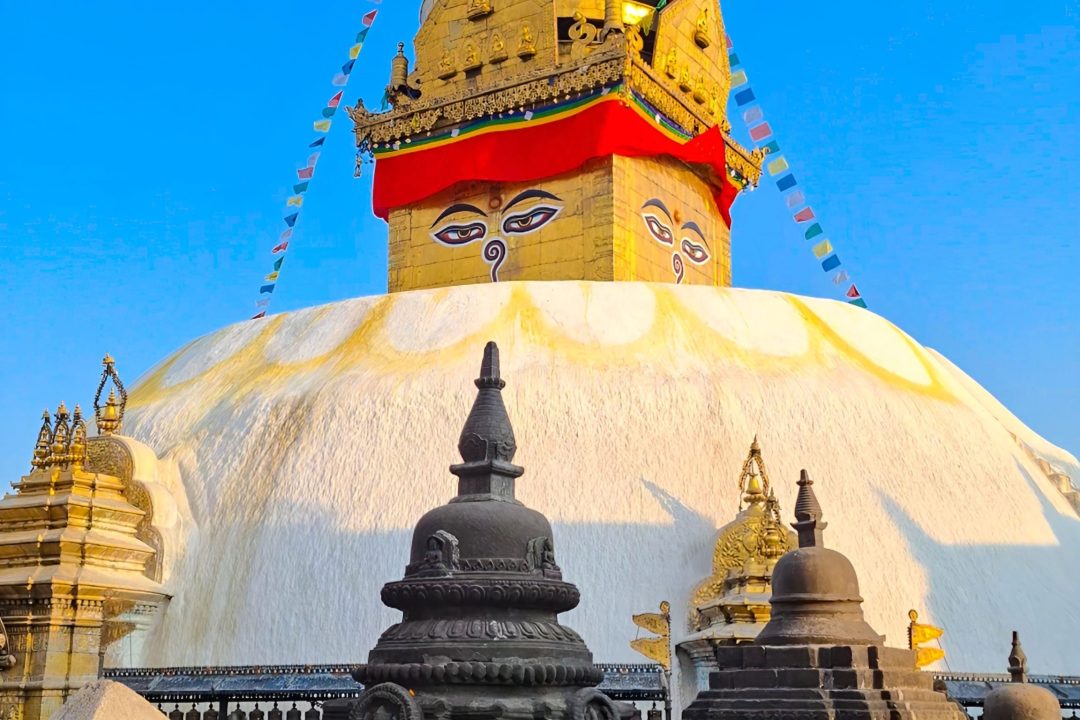
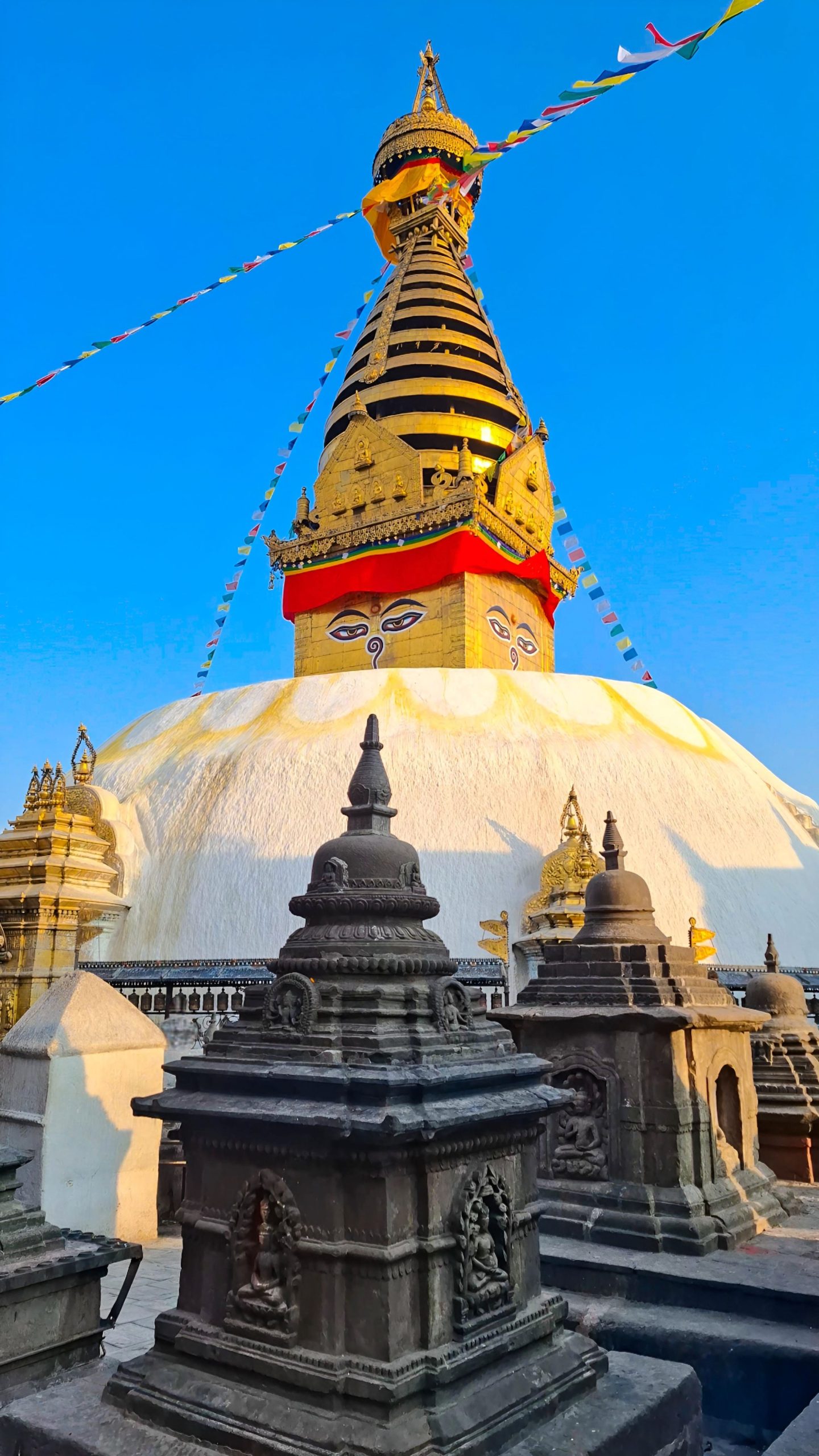
Imagine standing above the chaos of Kathmandu. Honking horns fade below you. A gleaming white dome rises ahead. Two enormous painted eyes gaze calmly in every direction. Prayer flags flutter in the Himalayan breeze.
This is Swayambhunath, one of the most extraordinary places in Nepal. Visitors know it as the “Monkey Temple” because hundreds of rhesus macaques live on its hill. The name is affectionate, but it hides a much deeper story.
The site is more than 2,000 years old by local tradition. It is part of the Kathmandu Valley UNESCO World Heritage Site, inscribed in 1979. It is also among the holiest Buddhist sites on earth. Hindus revere it too, and that shared devotion is the heart of its charm.
Whether you seek spiritual calm, architectural wonder, or a sweeping view of the valley, Swayambhunath delivers. This guide covers its legend, history, structures, wildlife, and practical visiting tips. I have kept the advice simple and honest so you can plan with confidence.
Quick answers for travelers:
- What is Swayambhunath? It is an ancient hilltop Buddhist stupa complex in western Kathmandu.
- Why is it called the Monkey Temple? Many holy rhesus macaques live freely around the shrines.
- How many steps are there? The eastern stairway has about 365 stone steps, though counts vary slightly.
- How long does a visit take? Plan on two to three hours for a relaxed exploration.
- Is it free? Foreign visitors pay a modest entrance fee that supports preservation.
Table of Contents
The Meaning, the Legend, and the History
The name “Swayambhunath” comes from Sanskrit. It roughly means “Lord of the Self-Existent.” Buddhists believe the stupa was not built by human hands. They say it arose by itself from a divine light.
Nepali legend explains how. Long ago, the Kathmandu Valley was a vast, deep lake. No people could live there. Then a single lotus flower bloomed at the center of the water. It glowed with a brilliant light. Devotees call this light the self-created flame.
The bodhisattva Manjushri, the embodiment of wisdom, saw this light from afar. He traveled to the lake and was deeply moved. He decided the sacred lotus should be reached by pilgrims. To do that, the lake had to go.
Legend says Manjushri cut a gorge in the southern hills with his sword. The place is now called Chobhar. The water poured out and the valley floor appeared. The lotus settled on a hilltop, and the shrine arose around it.
Geologists support part of this story. Studies of the valley’s soil and fossils suggest an ancient lake did exist. Scientists believe it drained thousands of years ago. The legend may therefore preserve a very old memory of that landscape.
The recorded history is more modest but still impressive. Historical sources tie the early shrine to the fifth century. That was the era of the Licchavi kings, who ruled the valley. A famous stone inscription links King Manadeva’s era with the site. Tradition also credits his ancestor King Vrisadeva with early construction.
Later rulers kept adding to the complex. Malla kings expanded shrines and made repairs in the medieval period. In the seventeenth century, King Pratap Malla added the stairway and the pair of small peaks on the hilltop. Over the centuries, Buddhist and Hindu devotees both contributed.
Time has not always been kind to the hill. Invaders damaged parts of it during several periods of conflict. Earthquakes also took their toll. The 2015 earthquake damaged some structures around the stupa. Skilled craftspeople and the local community worked for years on repairs. The main dome remains a living, working place of worship.
This long story matters when you visit. You are not entering a museum. You are stepping into a place that people have honored for centuries and still honor daily.
Architecture: What You Will See
The first thing you notice is the Great Stupa itself. Its whitewashed dome rises from the hilltop like a calm, solid heartbeat. Buddhists say the dome represents the universe. Its simple curve suggests wholeness and peace.
Above the dome sits a square block called the harmika. On each of its four sides, a pair of Buddha eyes looks outward. These eyes see in every direction. They represent wisdom and compassion watching over the world at once.
Look closely between the eyes. You will see a curly mark that resembles a question mark. It is actually the Nepali numeral for the number one. It symbolizes unity and the single path to enlightenment. Above the eyes, a painted dot marks the third eye, a symbol of deeper insight.
Above the harmika rise thirteen tapering golden tiers. They stack upward like a spire. Each tier represents a stage on the path to enlightenment. The thirteenth leads to the summit, which stands for nirvana. A gilded canopy and a small pinnacle crown the top.
Many travelers ask about the colorful lines of flags. Those are prayer flags, and they carry printed mantras and prayers. Tradition says the wind spreads their blessings across the land. They are never meant to be burned or treated carelessly.
The Famous Stone Steps
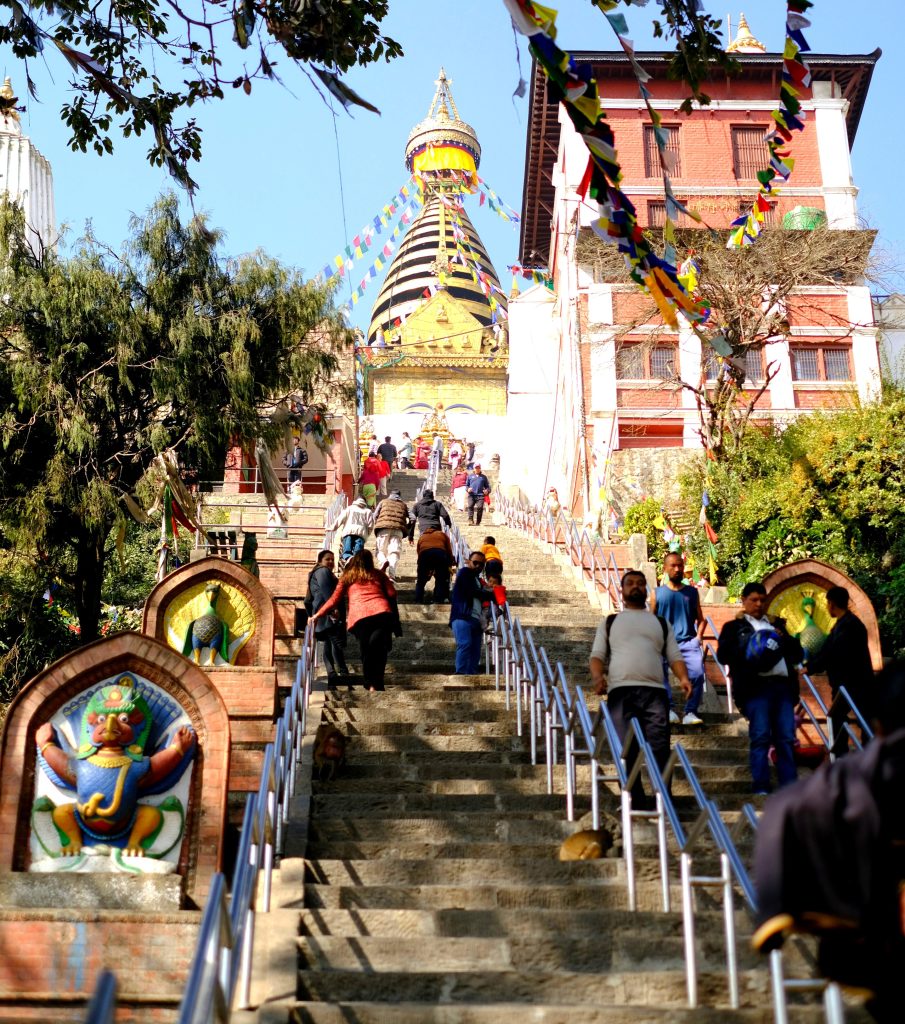
Most visitors approach by the main eastern stairway. It is a steep climb of roughly 365 stone steps. Moss-covered lions, statues, and carved figures line the route. Prayer wheels sit along the way, and shrines appear beside the path.
Take your time on this climb. It is a minor workout, especially at about 1,400 meters above sea level. Pause for breath and enjoy the photos. The staircase is among the most atmospheric entrances in Kathmandu.
Shrines, Temples, and Monasteries
The complex is much more than one stupa. Around its base you will find many smaller shrines and statues. Tibetan Buddhist monasteries sit nearby. Monks and nuns often chant or study here, and the sound can feel timeless.
One shrine deserves special attention. The Harati Temple honors the goddess Harati, also called Ajima. Devotees consider her a protector of children. Tradition once linked her to protection from smallpox. Families still come to ask for the health of their little ones.
You will also see ancient inscriptions, old stone sculptures, and a large golden vajra. The vajra is a ritual thunderbolt symbol representing indestructible truth. Several Hindu shrines stand beside Buddhist ones. This closeness reflects Nepal’s famous religious harmony. Many local worshippers honor both traditions without any sense of conflict.
How to Use the Prayer Wheels
Rows of metal prayer wheels circle the base of the stupa. Each is filled with mantras written on paper. Spinning the wheel is a way of sending those prayers outward.
Use your right hand and spin the wheels clockwise. Walk along the line and keep a steady rhythm. Many people quietly repeat the mantra “Om Mani Padme Hum” as they go. You do not need to be Buddhist to take part respectfully. Simply be gentle and mindful.
Meet the Locals: The Monkeys of Swayambhunath
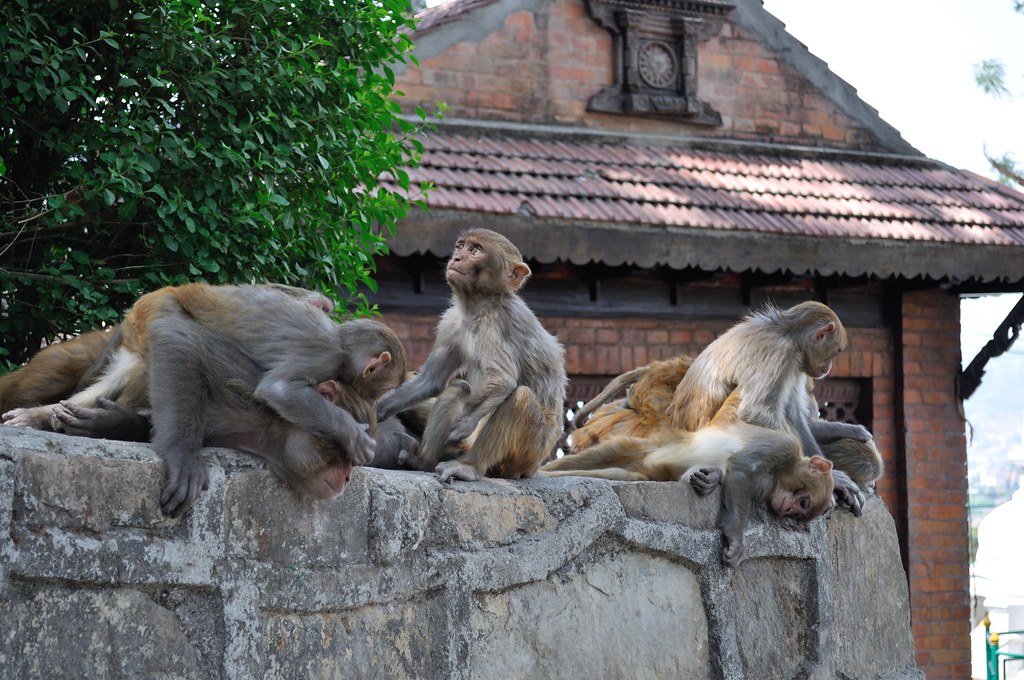
Now to the creatures that gave the site its nickname. Hundreds of rhesus macaques live on this hill. They climb the stupa, sit on rooftops, and wander the stairs. They seem completely at home.
The monkeys are considered holy here. A well-known legend explains why. When Manjushri first came to the valley, he had long hair. He let it grow while he meditated. Head lice lived in that hair. According to the story, the lice transformed into monkeys. Locals therefore view the macaques as sacred residents of the hill.
Some visitors are surprised by how bold the animals are. They have grown used to people. They are clever, quick, and sometimes cheeky. With a few simple habits, you can enjoy them safely.
Practical monkey tips:
- Never feed them. Feeding encourages aggressive behavior.
- Keep food and drinks hidden inside your bag.
- Hold sunglasses, phones, and water bottles securely.
- Avoid direct eye contact and never show your teeth.
- Do not try to touch or pet a monkey.
- Keep a calm distance from mothers with babies.
If a monkey grabs something, do not chase it. Let it go. Most items are not worth a bite. Rhesus macaques can carry diseases, so see a doctor promptly if you are bitten or scratched. Local clinics can advise you on rabies precautions.
Watch the monkeys from a respectful distance. They play, groom each other, and tumble across the old stones. Many travelers say these moments become their favorite memories of the visit.
Practical Visitor’s Guide
Best Time to Visit
The best time of day depends on your goal. Early morning offers the most spiritual atmosphere. Arrive near sunrise if you can. Local worshippers circle the stupa in a practice called kora. Butter lamps flicker, incense drifts through the air, and the crowds are small.
Late afternoon offers a different magic. The hill glows in golden light as the sun sinks. The valley spreads out below, and on clear days you can see distant peaks. Sunset is also popular, so expect more people.
Think about the season as well. October to November brings clear skies and mild weather. These months usually offer the best views. March and April are pleasant and also colorful. The monsoon, from June to August, brings rain and clouds. Winter mornings can be chilly but often have crisp, bright views.
Festivals add extra color. Buddha Jayanti, which celebrates the Buddha’s birth, brings large crowds and joyful ceremonies. Losar, the Tibetan New Year, is another lively time. Visit during these events if you enjoy energy and devotion. Choose a quiet weekday morning if you prefer calm.
How to Get There
Swayambhunath stands about three kilometers west of central Kathmandu. It is easy to reach from the tourist district of Thamel. Many travelers simply take a taxi, and the ride is short. Agree on the fare before you begin, or use a ride-hailing app such as Pathao, Indrive and Yango.
Walking is also possible. The route from Thamel takes about thirty to forty minutes on foot. It passes local streets and neighborhoods, so it can be dusty and busy. Wear comfortable shoes.
Most people arrive by the eastern stairway. A second approach from the west lets vehicles reach near the top. This route is easier for those who cannot manage the steps. You can then descend by the main stairway if you wish.
| Starting Point | Approx. Distance | By Taxi/Car | Walking Time |
|---|---|---|---|
| Thamel | 2.5–3 km | 10–15 min | 30–45 min |
| Kathmandu Durbar Square | 3 km | 10–15 min | 25–40 min |
| Ason | 3 km | 10–15 min | 35–45 min |
| Boudhanath Stupa | 7–8 km | 25–35 min | Not recommended |
| Pashupatinath Temple | 7–8 km | 25–35 min | Not recommended |
| Patan Durbar Square | 8–9 km | 30–40 min | Not recommended |
| Tribhuvan International Airport | 8–11 km | 30–60 min | Not recommended |
Entrance Fees and Opening Hours
- Entry Fee: NPR 200 for foreign tourists and NPR 50 for SAARC nationals
Foreign tourists pay an entrance fee at the ticket counter. The fee is modest, and it helps pay for preservation and upkeep. Prices and rules can change, so check the current rate locally or with your hotel. Carry some cash in Nepali rupees to be safe.
The complex is open daily, usually from early morning until evening. Hours can vary by season. Individual shrines and monasteries may close at midday. Visit in the morning or late afternoon to avoid surprises.
You may be approached by guides near the entrance. A good local guide can enrich your visit with history and stories. Agree on a price beforehand. Choose someone who is licensed and friendly.
Etiquette and Dress Code
Swayambhunath is an active place of worship. Please treat it that way. A few simple customs will make your visit more respectful.
- Dress modestly. Cover your shoulders and knees.
- Remove your shoes before entering temples and monastery halls.
- Always walk clockwise around the stupa and shrines.
- Speak softly near people who are praying.
- Ask permission before photographing monks or worshippers.
- Do not touch sacred objects or climb on statues.
- Use your right hand when giving or receiving offerings.
Remember that some prayer areas restrict photography. Look for posted signs and follow them. Dispose of trash properly, and never leave plastic near the shrines.
A Few Final Practical Tips
Bring water, sunscreen, and a hat. The hill is exposed, and the sun can be strong at altitude. Wear shoes with good grip, as the stone steps can be slippery after rain. Keep your valuables secure, not only from monkeys but from pickpockets in crowded places.
If you plan to stay longer, explore the small cafes and craft shops near the top. You can buy singing bowls, prayer beads, thangka paintings, and souvenirs. Compare prices and bargain politely. Buying from local artisans supports the community around the temple.
Final Say: A Place That Stays With You
Swayambhunath combines spirituality, history, and vibrant daily life in a rare way. You can learn a legend about a lotus and a lake. You can spin prayer wheels beside monks. You can laugh at a monkey stealing a banana, then fall silent at the view.
It is also a place of quiet lessons. Hindu and Buddhist devotees share the same hilltop. Ancient stones sit beside modern mobile phones. Ordinary neighborhoods stretch beneath a timeless dome. The site reminds us that tradition can live comfortably in the present.
When you leave, you will probably glance back. The Buddha’s eyes will still be watching over the valley. They gaze with patience and compassion on locals, pilgrims, monkeys, and travelers alike. Many visitors describe feeling a gentle calm as they go down the steps. That feeling is perhaps the temple’s greatest gift.
Have you ever visited a sacred stupa, in Nepal or elsewhere? Which part of Swayambhunath are you most excited to see? Share your thoughts in the comments below.
-
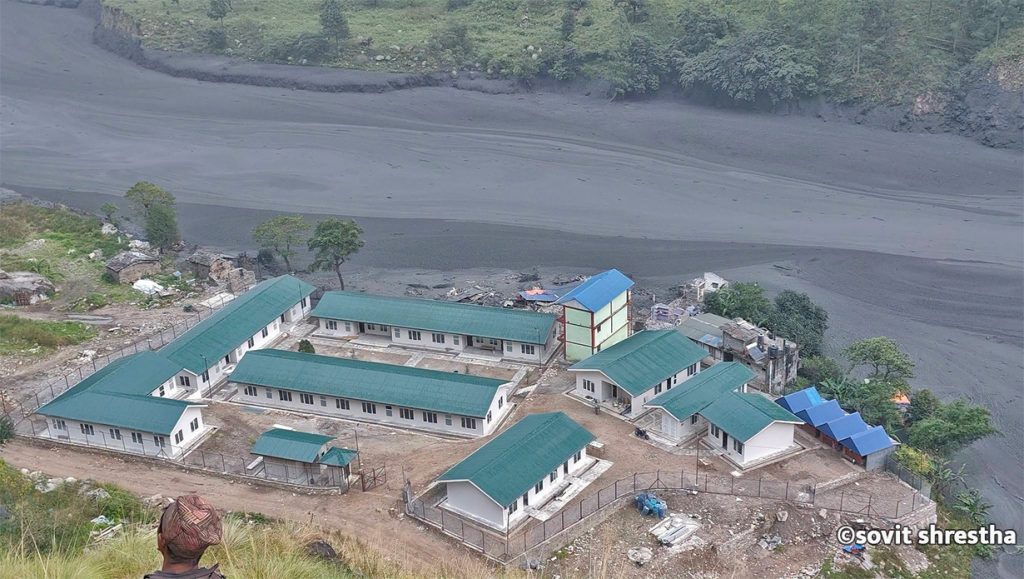
Flash Flood Sweeps Away Dozens of Homes in Gorkha, Nepal
KATHMANDU, Nepal — A sudden and severe flash flood tore through the Budhi Gandaki River basin in Gorkha district on Sunday morning, washing away approximately 35 houses and triggering widespread destruction in the mountainous Manaslu and Tsum Valley regions. According to local authorities and disaster management officials, no human casualties have been reported thus far, though…
-
Swayambhunath Temple, Kathmandu
Imagine standing above the chaos of Kathmandu. Honking horns fade below you. A gleaming white dome rises ahead. Two enormous painted eyes gaze calmly in every direction. Prayer flags flutter in the Himalayan breeze. This is Swayambhunath, one of the most extraordinary places in Nepal. Visitors know it as the “Monkey Temple” because hundreds of…
-

North Goa vs South Goa: Which Is Better for Your Holiday?
Amongst the places that are highly popular in terms of beaches, weather, culture, and ambiance in India is Goa, which is known to possess some of the most beautiful beaches in India. The idea of Goa being famous for its beaches, which can be used by tourists for entertainment in North Goa while South Goa…