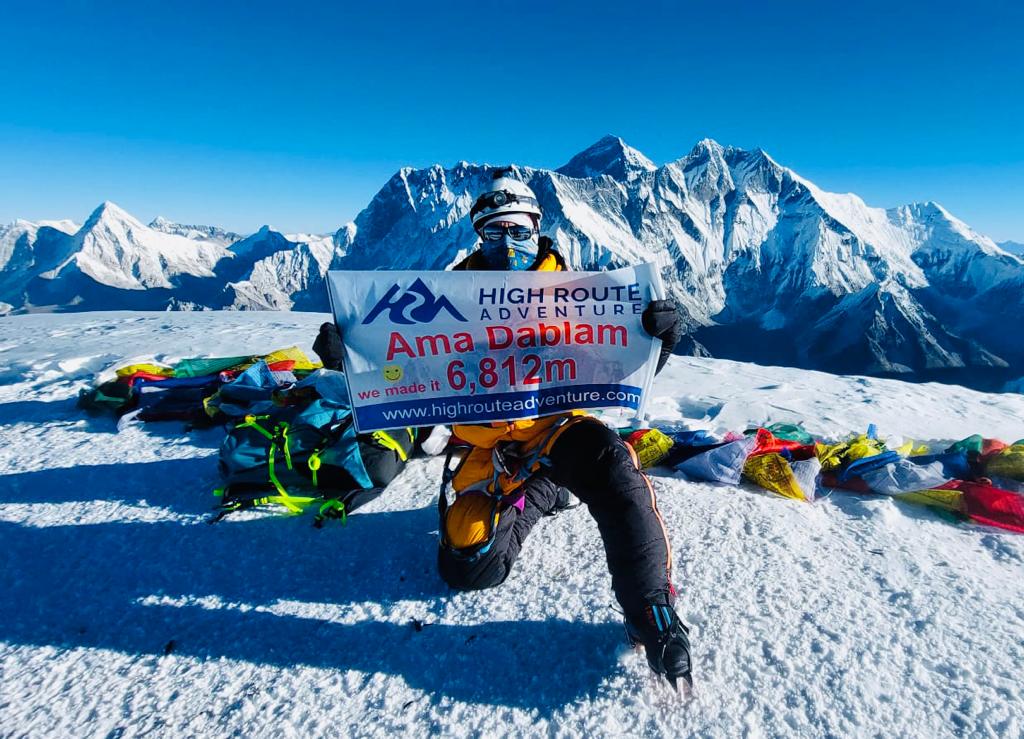
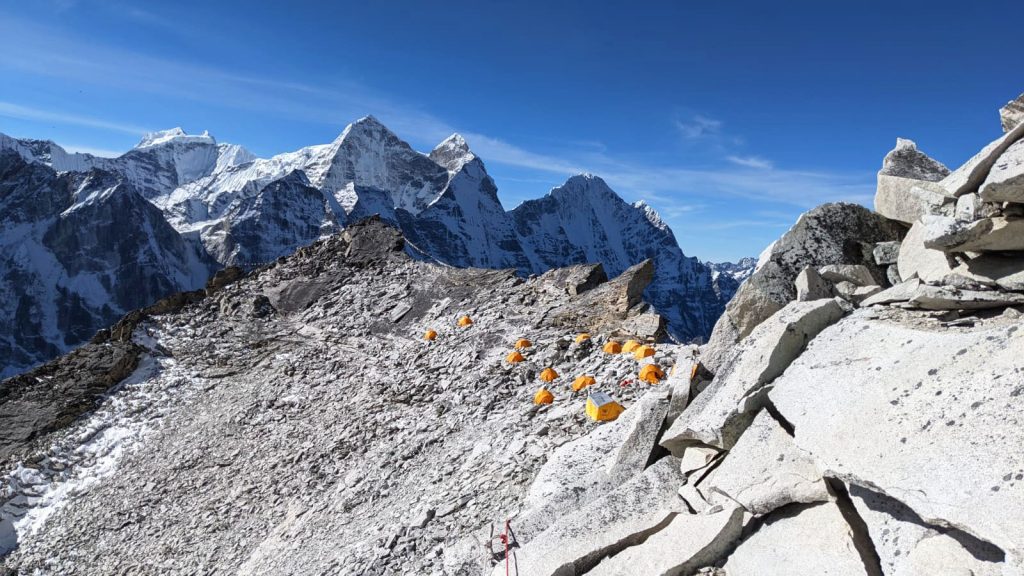
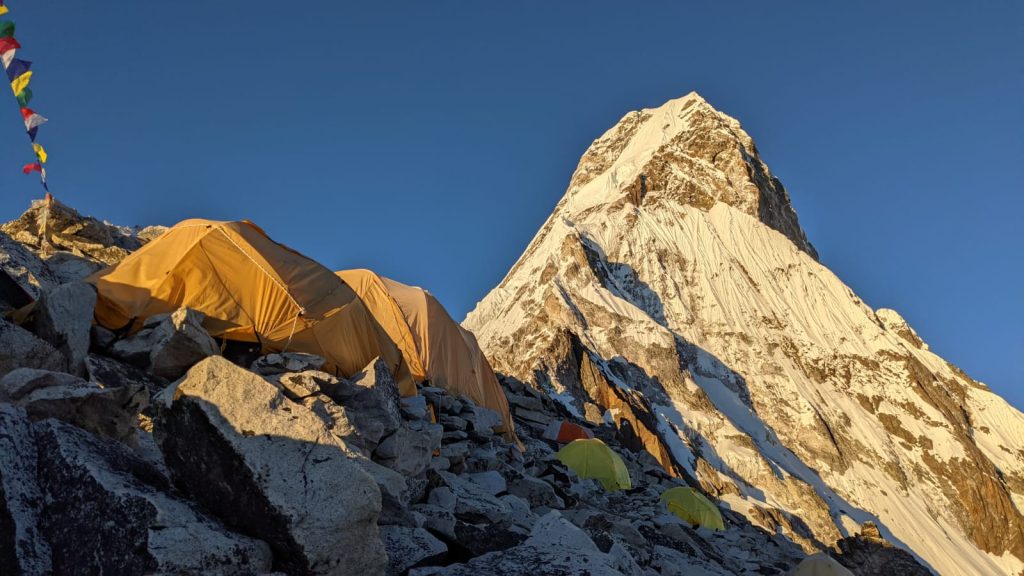
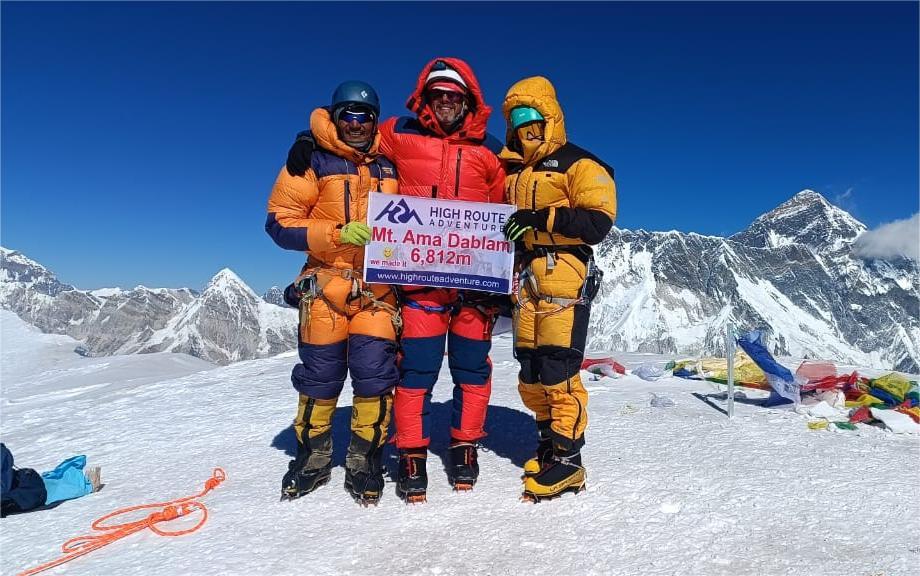
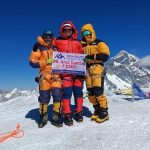
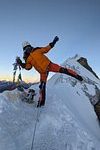
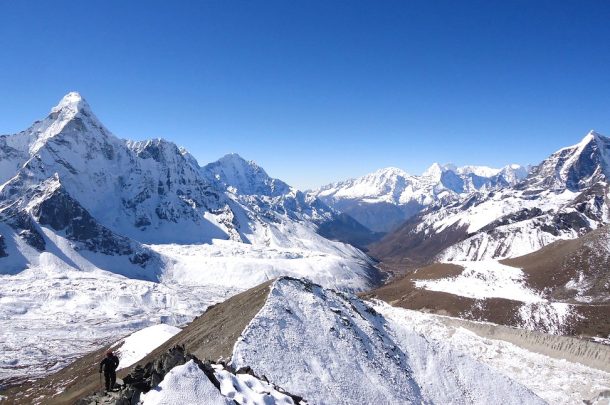
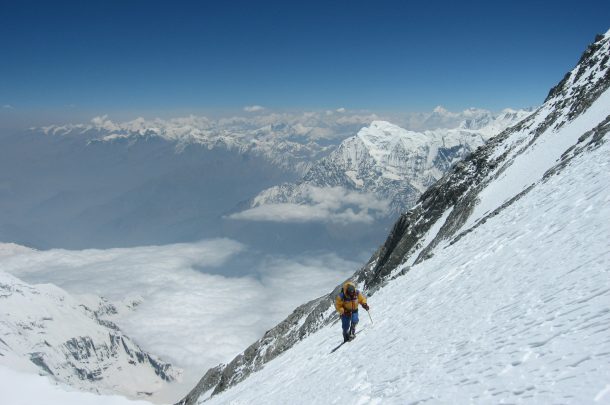
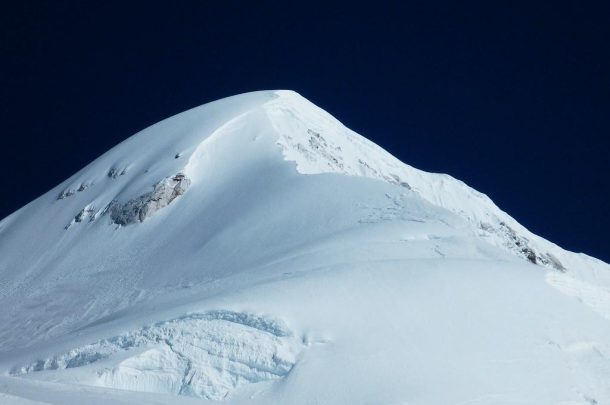
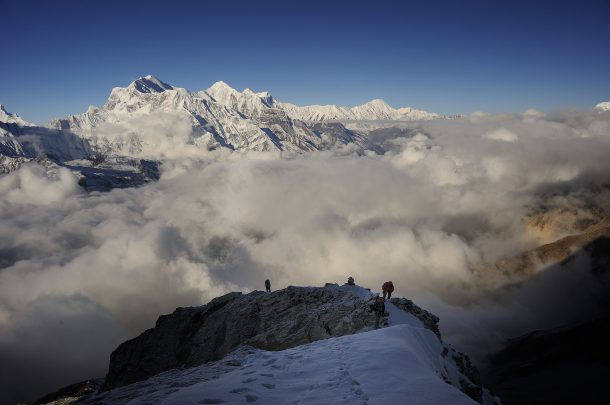
Summit Ama Dablam (6,812m), often called the “Matterhorn of the Himalayas”, is renowned for its stunning, sculptural beauty.
Experienced high-altitude technical ascent involving rock, ice, snow, and exposed ridgelines.
Follow the standard and most aesthetic route.
Well-organised ascent through Base Camp, Camp I, Camp II (the Dablam), and Camp III, supported by a professional climbing guide and experienced expedition team.
Enjoy breathtaking views of Everest, Lhotse, Makalu, Nuptse, and Cho Oyu from high camps and the summit.
Trek through the Khumbu Valley, visiting Sherpa villages like Namche Bazaar and Pangboche, with rich culture and monasteries.
Experience an actual alpine climb combining rock climbing (up to 5.6/5.7), ice climbing, and steep snow slopes.
Overview
Ama Dablam Expedition Overview
The Ama Dablam Expedition with High Route Adventure is an exciting climbing adventure in the heart of the Himalayas. Known as the “Matterhorn of the Himalayas” for its beautiful pyramid shape, Ama Dablam is one of Nepal’s most beautiful mountains.
The climb is challenging and involves rock climbing, ice climbing, and steep snow slopes. It requires good physical fitness, previous mountaineering experience, and proper acclimatization. Reaching the summit is a rewarding achievement with breathtaking views of Everest, Lhotse, and the surrounding Himalayan peaks. Are you ready for the adventure of a lifetime?
The climb begins at Base Camp, nestled in the shadow of Ama Dablam, at an elevation of approximately 4,600 meters (15,092 feet). From here, climbers begins on an arduous journey that takes them through a series of high-altitude camps. The Advanced Base Camp (ABC), situated at around 5,400m (17,716 ft), serves as the launching point for the expedition’s higher reaches.
As climbers ascend, they traverse rocky terrains, negotiate steep ridges, and face the challenges of snow and ice. Camp I, also known as “The Yak Camp,” at about 5,700 meters (18,700 feet), offers the first significant rest stop! From there, they advance to Camp II, or “The Advanced Camp,” perched at approximately 6,000 meters (19,685 feet) on a narrow snow ridge. It’s here that climbers intensify their acclimatisation efforts and prepare for the more demanding sections ahead.
Our expert climbing guides continue with you to Camp III, known as “The Summit Camp,” at around 6,480 meters (21,260 feet). This camp is strategically placed just below Ama Dablam’ssouthwest ridge, making it the final camp before the summit push!
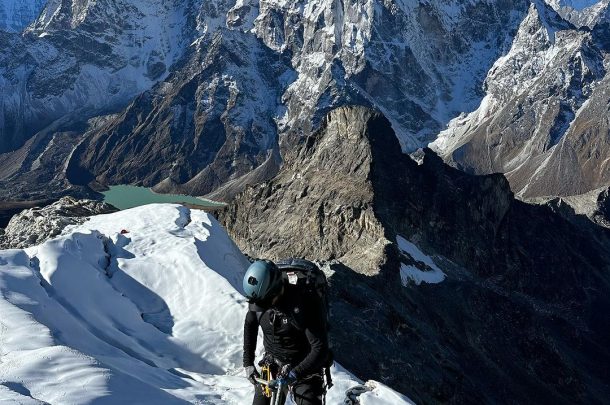
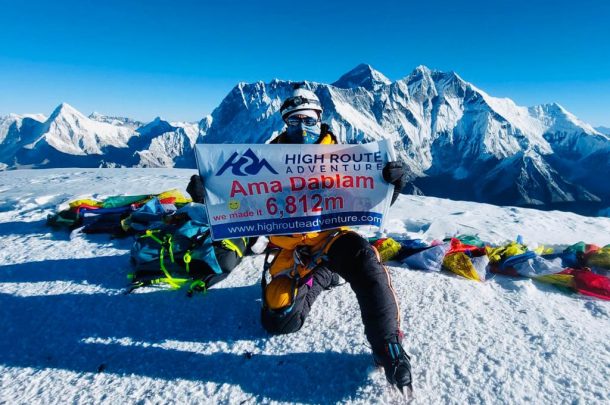
The ascent to the summit, standing tall at 6,812 meters (22,349 feet), is a significant highlight of the Ama Dablam expedition. Climbers must navigate technical rock and ice sections, employing their skills and determination to reach the pinnacle of Ama Dablam’s majestic Himalayan pyramid!
A few things you should know before climbing Mt Ama Dablam
To conquer Ama Dablam, one must be equipped with a comprehensive arsenal of gear and equipment tailored to the requirements of high-altitude mountaineering in Nepal! In contrast to standard hiking gear, this expedition demands specialised tools and gear.
Crampons with precision-engineered spikes provide essential traction on icy surfaces, while harnesses with safety features offer peace of mind on tricky rock faces. Ice axes, designed for balance and power, are indispensable for navigating steep slopes and ice formations. Furthermore, altitude-resistant clothing, constructed with cutting-edge materials, ensures climbers remain warm and safe in the ever-changing Himalayan weather.
These tools are not mere accessories; they are lifelines, enabling climbers to conquer the unforgiving terrain of Ama Dablam. Climbers who embark on this expedition are advised to have some prior experience. Proficiency in rock and ice climbing is a benefit, as is the ability to utilise ropes and anchors!
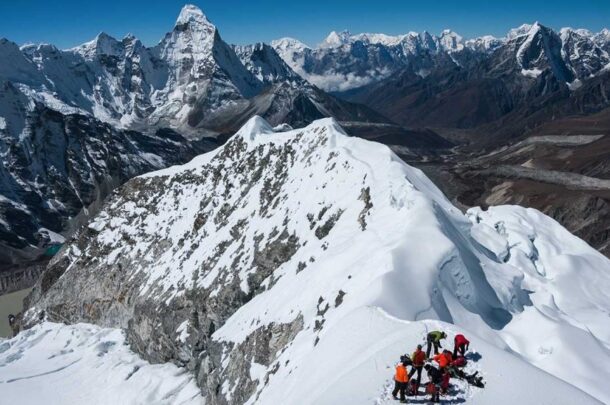
Mt Ama Dablam is renowned for its formidable challenges. Its distinctive pyramid shape presents a complex medley of rock, snow, and ice obstacles. The exposed ridges and sheer rock faces demand a level of technical skill. With the help of High Route Adventure, you’ll navigate steep sections with finesse, employing a blend of rock and ice climbing techniques.
The thin air at high altitudes adds another layer of complexity, requiring climbers to acclimatise gradually and make calculated decisions to ensure their safety and success.
Ama Dablam Expedition: Camp-by-Camp Breakdown to the Summit
Ama Dablam Base Camp:
The journey begins at the Ama Dablam Base Camp(4,600 meters/15,092 feet) the starting point of the expedition. Here climbers organize equipment, spent time for acclimatization, attend pre-climb briefings, and complete training before heading to higher Camp. Our team sets up our main camp here. From here climbers can enjoy the sunning views of Ama Dablam’s pyramid-shaped peak.
Advanced Base Camp (ABC):
After training at Base Camp, climbers ascend to the Advanced Base Camp, located at around 5,400 meters (17,716 feet). This Camp is strategically positioned closer to the mountain and serves as a launch pad for further ascents. Climbers typically spend several days here, acclimatizing to the increasing altitude and preparing for the more challenging sections ahead.
Camp I (“The Yak Camp”):
Often referred to as “The Yak Camp,” it is situated at approximately 5,700 meters (18,700 feet) above sea level. It is the first high camp along the route, marking a significant step in the ascent. Climbers establish this camp on a rocky terrace and use it as a resting point during their summit. From here, the route becomes steeper and more technical.
Camp II (“The Advanced Camp”):
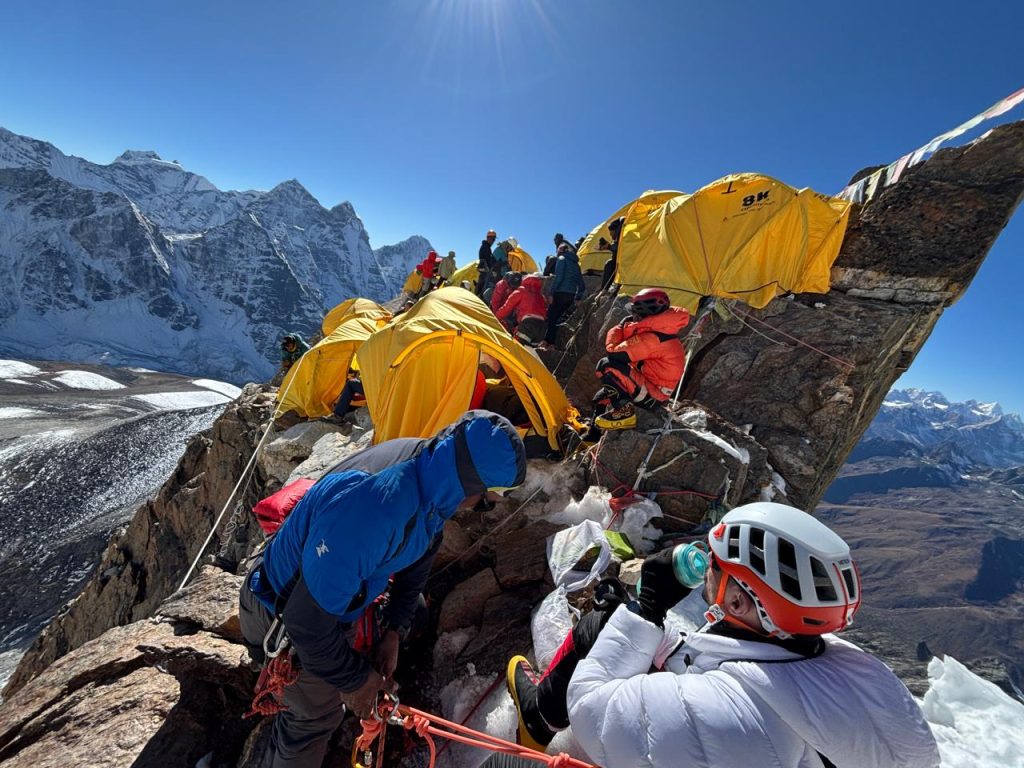
Camp II, known as “The Advanced Camp,” is situated at an elevation of about 6,000 meters (19,685 feet). It is a critical waypoint in the climb and is located on a narrow snow ridge. Climbers spends several nights here, adjusting their body to the high-altitude and preparing for the challenging sections ahead. Camp II offers breathtaking views of the surrounding Himalayan Peaks.
Camp III (“The Summit Camp”):
Also known as “The Summit Camp,” it is situated at around 6,480 meters (21,260 feet) above sea level. This camp is strategically located just below the mountain’s southwest ridge. It is the final camp before the summit push and requires technical climbing skills to reach it. Climbers typically set off from here in the early hours of the morning for their summit attempt.
Ama Dablam Summit:
The ultimate goal of the expedition is to reach the summit of Ama Dablam, which stands at an impressive height of 6,812 meters (22,349 feet). The summit push is the most challenging part of the climb, often involving technical rock and ice sections. Reaching the summit successfully reflects the climber’s skill, determination, and preparation.
What You Will Love In this Ama Dablam Expedition
Summiting a classic and stunning 6,812m peak like Ama Dablam provides a massive sense of personal achievement and pride after a demanding climb. The incredible views are the reward.
Attempting steep rock pitches on the southwest ridge using ropes, gear, and technical ability is an adventurous challenge for experienced climbers.
Learning to handle difficult sections requires mountaineering skill development. This benefits future extreme altitude climbs.
Being fully self-sufficient for weeks while camping across varying terrains from base camp to summit pushes your resilience and wilderness skills.
Trekking in the Khumbu Valley offers stunning high-mountain scenery, Buddhist culture, and charming Sherpa villages to discover along the way.
Crossing high passes before attempting Ama Dablam is very rewarding yet gruelling, underscoring the remoteness.
Overcoming adversity together with your expedition team when tackling such a serious peak forms a lasting friendship.
If successful, landing atop such an iconic summit with jaw-dropping Himalayan views all around is a moment you’ll never forget.
Our team eagerly awaits your arrival at the airport in Kathmandu
Drive to Thamel, hotel check-in
Stay overnight at your hotel in Kathmandu
Traveler’s note: Thamel houses most trekking shops, restaurants, hotels, and boutique handicraft shops. Here you’ll find anything and everything you need for a successful summit climb up Mt Ama a Dablam!
⛰ Altitude1400 meter
🏨 StayHotel
Enjoy breakfast at your hotel
Our High Route Adventure’s tour guide will pick you up at the reception
Before dinner we hold a detailed safety and trip briefing
Stay overnight at your booked hotel in Kathmandu
Traveler’s note: For dinner options, we recommend one of the local restaurants, a staple dish of Nepal is the traditional dumpling called MoMo, absolutely delicious. Thamel has also a lot of options for international cuisine for you to choose from. For any recommendations, we’ll be happy to provide you.
⛰ Altitude1400 meter
🍽 MealsBreakfast
🏨 StayHotel
Hotel breakfast and check-out
Shuttle to the domestic airport
Make an exhilarating flight to Lukla airport
After landing we meet up with our Porter team
Final gear check
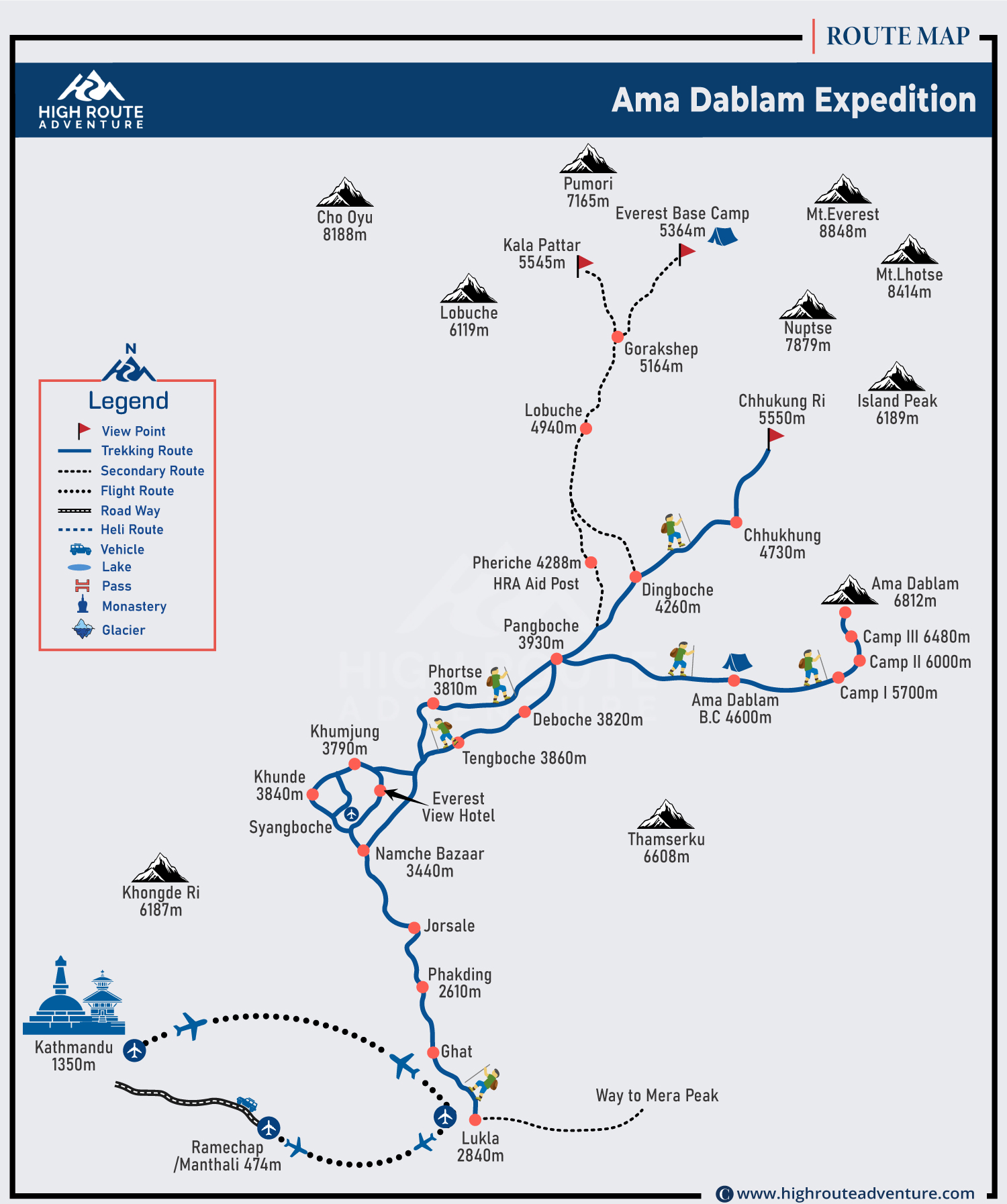
Start the trek
Follow the trail towards Phakding
Descend towards the Dudh Khusi River
Follow the River upstream
Finally, we cross the suspension bridge and head into Phakding village
Take dinner and stay overnight at the local guesthouse
Traveler’s note: Also known as one of the most dangerous airports in the world, the landings and takeoffs from Tenzing Hillary Airport are heart-racing!
⛰ Altitude2780 meter
🍽 MealsBreakfast/Lunch/Dinner
🏨 StayTeahouse
Enjoy your first Himalayan breakfast
Start to trek
The trail leads further along the River
Make way to Monjo by crossing the Dudh Khosi a few times
Make sure to check your permits at the check post
Ascend further to Jorsalle and ultimately Namche Bazaar
Have dinner and stay overnight at the local guesthouse
Traveler’s note: The Sagarmatha National Park entry point is Monjo village, hence the permit check post! While traversing around Larja Dobhan you’ll have a chance to see your first views of Mt Everest from the viewpoint!
Hike up to the Everest View Hotel in Syanboche (first views of Ama Dablam)
(Optional) Hike further to Khumjung, to visit the Khumjung Monastery
Depending on the time you can further explore around Namche Bazaar
Have dinner and stay overnight at the local guesthouse
Traveler’s note: Did you know that Namche Bazaar from a distance looks like a horseshoe? Here you can find many restaurants, pharmacies, and even luxury resorts! If you're here on a Saturday, don't miss to visit Namche Saturday Market
⛰ Altitude3440 meter
🍽 MealsBreakfast/Lunch/Dinner
🏨 StayTeahouse
Enjoy breakfast at the guesthouse
Start to trek
Retrace yesterday’s steps toward Khumjung
Head north to Phortse Thanga
Cross the Dudh Khosi Nadi River
Continue now to the east until Phortse village
Dinner and overnight stay at the guesthouse
Traveler’s note: Also used to trek towards the Lakes of Gokyo in the western region of Everest Phortse also serves as a crossroad for trekkers.
⛰ Altitude3850 meter
🍽 MealsBreakfast/Lunch/Dinner
🏨 StayTeahouse
Enjoy your breakfast at the guesthouse
Start to trek
Take the trail east to Pangboche
More eastwards the trail leads towards Somare
Cross the Imja River to Debuche
Head on to Dingboche
Take dinner and stay overnight at the guesthouse
Traveler’s note: While entering the Imja Valley today it is common to see lots of yak herds. The next day we have our second acclimatization day.
⛰ Altitude4350 meter
🍽 MealsBreakfast/Lunch/Dinner
🏨 StayTeahouse
Enjoy your breakfast at the guesthouse
2nd Acclimatization day
Day hike up to Chukung Ri
Enjoy incredible views of Ama Dablam, Lhotse, & Makalu
Hike back to Dingboche
Have dinner and stay overnight at the same guesthouse
Traveler’s note: Did you know that from tomorrow we veer off the Everest Base Camp trail, and head east towards the foot of Mt Ama Dablam? It officially marks the last day of trekking and the start of the expedition. The views from Chukung Ri are incredible, on clear days you get to see a great part of the entire Everest region’s mountain peaks such as Island Peak, Nuptse, etc!
⛰ Altitude4350 meter
🍽 MealsBreakfast/Lunch/Dinner
🏨 StayTeahouse
Take breakfast at the guesthouse
Start the trek by heading back south towards Somare
From here we go further south to Pangboche
Here we hold a final gear and supply check before heading east
The trail follows the Cholulungche Khola River
Head north on the path leading up to Ama Dablam Base Camp
Settle in at our High Route Adventure Camp
Depending on the time we’ll hold a climbing class as well
Dinner and overnight stay at Ama Dablam Base Camp
Traveler’s note: Pay good attention during the climbing class, the next day we’ll hold a practice climb towards the Advance Base Camp and back. Take a good rest as tomorrow you’ll set your first steps on the massif Mt Ama Dablam!
⛰ Altitude4600 meter
🍽 MealsBreakfast/Lunch/Dinner
🏨 StayTent
Enjoy your first camp breakfast at the foot of Mt Ama Dablam
Climbing training
Head towards Advance Base Camp
Navigate crevasses, some steep sections, and rocky outcrops
Take a rest at Advance Base Camp
Climb back down to Base Camp
Have dinner and stay overnight at Base Camp
Traveler’s note: Today’s section is more about acclimatization and getting a feel for the route and technical sections. Take your time with today’s climb and take in the view as you ascend higher up the mountain.
⛰ Altitude4600 meter
🍽 MealsBreakfast/Lunch/Dinner
🏨 StayTent
Enjoy breakfast at Base Camp
Today we rest and hold a few practice climbs to Advance Camp and back down
We’ll also go over safety protocols, ice pick climbing and rope techniques
Dinner and overnight stay at Base Camp
Traveler’s note: Our expert High Route Adventure climbing team takes the day to teach you invaluable techniques, pay attention as these can greatly help you overcome the obstacles lying in wait as we try to reach further up the mountain! During this day our team will also set up camp in Advance Base Camp anticipating your arrival.
⛰ Altitude4600 meter
🍽 MealsBreakfast/Lunch/Dinner
🏨 StayTent
Enjoy breakfast at Base Camp
Follow the pre-practiced route up to Advance Base Camp
Dinner and overnight stay at the camp
⛰ Altitude5400 meter
🍽 MealsBreakfast/Lunch/Dinner
🏨 StayTent Camp
Breakfast at Advance Base Camp
Climb up to Camp I
Use the newly learned climbing techniques to cross the Yellow Tower section
Navigate further up until reaching our pre-set tents
Dinner and overnight stay at Camp I
⛰ Altitude5700 meter
🍽 MealsBreakfast/Lunch/Dinner
🏨 StayTent Camp
Breakfast at Camp I
Today we practice the climb to Camp II and head back to Camp I
During this day’s climb you’ll have to pass 2 sections:
The Grey Tower
The Mushroom Bridge
Once reaching Camp II we take a rest
Climb back down to Camp I
Dinner and overnight stay back at Camp I
⛰ Altitude5700 meter
🍽 MealsBreakfast/Lunch/Dinner
🏨 StayTent Camp
Breakfast at Camp I
Retrace your climbing steps back to Base Camp
The rest of the day is free
Dinner and overnight stay back at Ama Dablam Base Camp
⛰ Altitude4600 meter
🍽 MealsBreakfast/Lunch/Dinner
🏨 StayTent Camp
Breakfast at Base Camp
Make your way back to Camp I
Having done this part multiple times makes it easier to reach back
Dinner and overnight stay at Camp I
⛰ Altitude5700 meter
🍽 MealsBreakfast/Lunch/Dinner
🏨 StayTent Camp
Breakfast at Camp I
Head for Camp II by traversing the climbing sections again
Break and lunch
Climb further to Camp III below the summit
Dinner and overnight stay at Camp III
⛰ Altitude6480 meter
🍽 MealsBreakfast/Lunch/Dinner
🏨 StayTent Camp
Early breakfast at Camp III
Today is the big day
Start the climb at sunrise
Traverse the technical parts
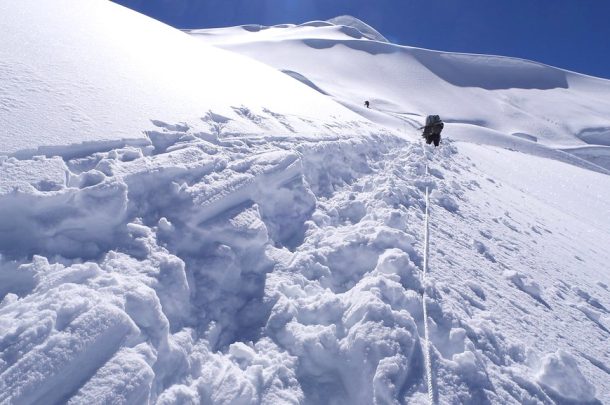
Make your way along the ropes over the icy surface
Reach the summit of Ama Dablam Base Camp
Take in the 360° views from the top of the mountain
Climb back down to Camp III
Dinner and overnight stay back at Camp III
⛰ Altitude6480 meter
🍽 MealsBreakfast/Lunch/Dinner
🏨 StayTent Camp
Breakfast at Camp III
Descend back to Camp II, and Camp I
Rest for lunch
Enjoy some of the last views as you descend the mountain
Reach back at Base Camp
A small party to celebrate your successful summit climb
Dinner and last overnight stay at Ama Dablam Base Camp
⛰ Altitude4600 meter
🍽 MealsBreakfast/Lunch/Dinner
🏨 StayTent Camp
This day is reserved as a contingency in case of bad weather or unforeseen delays
⛰ Altitude4600 meter
🍽 MealsBreakfast/Lunch/Dinner
🏨 StayTent Camp
Enjoy your last breakfast at Ama Dablam Base Camp
Today we trek back to Dingboche
From here we head back on the EBC trail
Exit the Imja Valley and follow the trail back
Retrace your steps back via Tengboche
Continue on the trail until reaching back at the Sherpa village
Have dinner and stay overnight at Namche Bazaar
⛰ Altitude3440 meter
🍽 MealsBreakfast/Lunch/Dinner
🏨 StayTeahouse
Have breakfast at the guesthouse
Head back down in to the tree line via Jorsalle
Continue descending back to Monjo
Follow the trail back to Phakding along the Dudh Khosi River
Make your way further downstream then ascend back up to Lukla
Dinner and overnight stay at Lukla
⛰ Altitude2860 meter
🍽 MealsBreakfast/Lunch/Dinner
🏨 StayTeahouse
Breakfast at the guesthouse
Short scenic flight back to Kathmandu
Pick up by our team at the airport
Transfer back to your booked hotel in Kathmandu
Enjoy a special and complimentary farewell dinner
Overnight stay at your hotel
⛰ Altitude1400 meter
🍽 MealsBreakfast
🏨 StayHotel
This day is reserved as a contingency in case of bad weather
⛰ Altitude1400 meter
🍽 MealsBreakfast/Dinner
🏨 StayHotel
Hotel Breakfast + Check-out
Our team will transfer you to the airport approx. 3hrs before departure
We hope you enjoyed the Ama Dablam Expedition and look forward to organizing another trip for you
⛰ Altitude1400 meter
🍽 MealsBreakfast
Build Your Own Adventure!
Collaborate with our specialists to create a unique itinerary.
✦
Ama Dablam Expedition Booking, Payment and Cancellation Policy
Booking Process: To book the Ama Dablam Expedition with us, please visit our website and click on the "Book Now" button. A 20% advance payment of the total trip cost is required to confirm your booking. If you have any requests for customization, additional services, or special arrangements, please contact our tour operator directly.
Payment Process: We accept payments via debit and credit cards, Mastercard, ConnectIPS, bank transfers, mobile wallets, and other available payment methods.
Cancellation: We request our clients to review our terms and conditions before finalizing payment.
Cost Detail
Inclusion
What's included ?
Airport Pick-up & Drop Services:
International Airport arrival pick-up
International Airport drop-off on your final departure day
Domestic Airport drop-off from the hotel
Domestic Airport pick-up & transfer to the hotel
If your Ama Dablam expedition starts from Ramechhap Airport instead of Kathmandu Airport, transportation between Kathmandu and Ramechhap will be arranged via shared vehicle.
Accommodation & Food Services
Four nights in Kathmandu in a 3-star category hotel (Twin Sharing)
Best available local lodge/ teahouse during the trek (Twin Sharing)
Tented camp during the climb (Above Base Camp)
All standard meals [Breakfast, Lunch, and Dinner] throughout the trek and climb
Available seasonal fruits throughout the trek/climb
Breakfast in Kathmandu
Welcome and farewell dinner at one of the finest Nepalese Restaurants with traditional ethnic music and Cultural Performance
Permit & Taxes
Sagarmatha National Park Permit
Local Government Entry Permit
Mt Ama Dablam Expedition Climbing Permit
All other government, local taxes, and official expenses
Local Sherpa for carrying Luggage (up to 25 kg Max )
All Meals for the guide, porter & All Staff for the trekking & climbing period
Insurances for guide & porter All Staff for the trekking & climbing period
Well-paid salary as per Government rates
A first-aid kit box carried by the team leader
Other Services
Surface transportation will only be included during the trekking and in major cities for members, per the scheduled itinerary.
Clean, nutritious, and fresh food at the advanced base camp and camp two in the Amadblam Expedition. We provide you with nutrition, high-altitude package food, essential EPI cooking gas, stoves, and warm pocket food above the advanced base camp of the Aama Dablam Expedition.
Assistance in arranging rescue operations in case of complicated health conditions (funded by travel insurance)
Rope rope-fixing team of experienced Sherpas will fix the rope and the route.
Good quality tents and kitchen utensils for camping during your Climbing period
1-hour trekker's massage / Yoga Retreat after the trip completion.
High Route Adventure's duffel bag, t-shirt, and trekking map.
Climbing certificate issued by HRA, MoCTCA, and NTB (after climbing successfully).
Weather forecast report during the entire expedition.
If you need any assistance with departure information, flight ticket reconfirmation, or Visa extension procedure services, HRA fully supports you without any charges.
What's not included ?
Cost for additional trips.
The cost incurred during the tour around the city.
Extra hot showers, wifi & battery charging on a trek, and Climbing Period
Extra porter charge
Meals in the city except for breakfast and other mentioned special dinners.
Nepal arrival visa.
Personal trekking & climbing equipment items
Personal expenses (phone calls, internet, laundry, bar bills, snacks, battery recharge, bottled or boiled water, souvenirs, hot showers, Extra porter, etc.)
Any extra expenses arising out of various/ unforeseen situations like natural disasters, landslides, political disturbances, strikes, or changes in government regulations costs are not included in the package cost.
Summit Bonus for USD 800/- for each climbing guide, and your approbation to Guide, Herpas, and crew Members.
Travel insurance covers emergency rescue and evacuation.
Dates
Group Departures
Choose from our scheduled group trips below, or contact us to plan a private or family adventure tailored to your schedule.
Things to Know
Notes
Ama Dablam Climbing Difficulty, Skills & Requirements Explained
Grade: TD (Très Difficile) as per Alpine Climbing Scale which means "Very Difficult"
Ama Dablam is a more challenging peak at 6,812m. Prior high-altitude mountaineering experience and excellent fitness levels are required. It's not for newer climbers.
The climb requires ascending steep, exposed ridges and climbing on rock. Excellent technical skills in ropes, rappelling, anchors, etc., are essential.
The summit bid involves difficult sections like the Yellow Tower. This requires strong mental stamina, in addition to physical capability.
Weather conditions on summit day can be extremely harsh - low temperatures with strong winds. Make sure you have top-grade cold-weather gear to withstand that.
Camping for weeks around 5,000- 6,000 m means fundamental tent conditions and below-freezing temps. Prepare mentally and with gear for sleeping in such environments.
Due to tricky logistics, unstable weather issues, etc., summit attempts tend to be tough. Be mentally ready to turn around if needed.
Limited summit days per season mean securing a permit many months in advance. It gets booked out quickly by experienced climbers only.
Ama Dablam's difficulty requires technical skills. It's suited for intermediate-advanced climbers pursuing a major Himalayan challenge with proper prior extreme altitude experience.
Best Time to Climb Ama Dablam in Nepal | Expert Mountaineering Advice
The timing of the expedition is an important consideration! The optimal seasons for the Mt Ama Dablam expedition are autumn/fall (October-November) and spring (April-May). During these months, the weather tends to be more stable, with clear skies and manageable temperatures.
The summit push during other times of the year exposes climbers to harsh and unpredictable weather conditions, significantly increasing the risk associated with the ascent. Choosing the right season can make the difference between reaching the summit and turning back due to bad weather.
Autumn Season: The autumn season is considered the best time for climbing the Ama Dablam Expedition due to moderate temperatures, clear skies, and stable weather conditions. During this season, you can enjoy perfect views of the landscape and surrounding mountains, making it an ideal time for the climb. Additionally, some of Nepal’s biggest festivals, such as Dashain and Tihar, coincide with this season, giving you a chance to immerse yourself in the local culture.
Spring Season: Spring is also a popular season, often referred to as the blooming season. During this time, beautiful flowers bloom everywhere, including the national flower of Nepal, the rhododendron, which decorates the high-altitude forest areas along the trek. Stable weather conditions and a lower chance of rainfall make spring another excellent time to climb the Ama Dablam Expedition.
Altitude Sickness and Acclimatization in The Ama Dablam Expedition
During the Ama Dablam ascent, you will be spending extended time above an altitude of 3,500 meters. Due to the reduced level of oxygen in the air at high altitude, the risk of altitude sickness remains significant.
The early symptoms of altitude sickness(AMS), such as Headache, Nausea, Vomiting, Dizziness or lightheadedness can be cured by can usually be relieved by resting and descending to a lower altitude.
However, if symptoms become severe, immediate descent and medical attention are essential. We should recognize the early symptoms of altitude sickness and treat it in time without being negligence. The advance form of altitude sickness, which are HACE and HAPE, can be life-threatening.
Essential tips to reduce altitude sickness on the Ama Dablam Expedition:
Ascend gradually and follow a proper acclimatization schedule.
Take enough rest and sleep well during acclimatization days.
Stay well hydrated; drink plenty of fluids.
Eat high-energy, carbohydrate-rich meals.
Avoid alcohol, smoking, and sleeping pills at high altitude.
Climb high, sleep low whenever possible.
Keep a steady pace and avoid overexertion.
Pay close attention to your body and report symptoms early.
While staying in tea houses along the trekking route, High Route Adventure will provide three meals a day-breakfast, lunch, and dinner-ensuring you are well-fueled for the climb. Once at Ama Dablam Base Camp and higher camps, there are no tea houses, so you will stay in expedition tents. Our dedicated expedition cook will prepare all meals, providing nutritious and high-energy food to support your climb.
Here are the meals that you can expect on the Ama Dablam Expedition
Breakfast items: Porridge or oatmeal, Eggs (boiled, fried, or scrambled), Toast or chapati, Tea, coffee, or hot chocolate, Fresh fruit (when available)
Lunch and Dinner: Rice, noodles, or pasta, Dal (lentils) or vegetable curry, Meat dishes (chicken, yak, or buffalo), Soups, Fresh or steamed vegetables, Bread or chapati, Dessert (occasionally)
Beverage: Tea (black, milk, or herbal), Coffee, Hot chocolate, Bottled water or boiled water, soft drinks, cold drinks and local alcoholic beverages
Accommodation during Expedition: What to Expect
You will spend your night in the tea house and the tent during the Ama Dablam Expedition. Here are what features you can get in the tea house and tent:
Tea house:
Shared room
Clean blanket
Pillow
Matress
hot showers (where available)
Communal dinning
Simple facilities such as shared toilets, charging, and Wifi
Tent:
Expedition-style tent
Sleeping mat and warm blanket
Pillow
Dining tent for meals
Safe and sheltered location
Facilities managed by the expedition team
High Route Adventure Team for Ama Dablam Expedition
During your Ama Dablam Expedition, High Route Adventure will provide a dedicated team to ensure your climb is safe, well-organized, and enjoyable:
Sherpa Climbing Guide: Pasang Ngima Sherpa is our expert climbing guide, with extensive experience summiting many of the world’s highest peaks, including K2, Lhotse, Manaslu, Dhaulagiri, and Ama Dablam. He will lead your team during the Ama Dablam Expedition.
Assistance Climbing Guide: Ngima Sherpa is our experienced trekking and expedition guide, with years of high-altitude climbing expertise. He will accompany and support you throughout your Ama Dablam Expedition.
Cook: We will also provide you dedicated expedition cook who will prepare nutritious, high-energy meals at Base Camp and higher camps
Supportive staff: Our supportive staff includes porters and logistics personnel who assist with carrying equipment, setting up camps, and managing the Ama Dablam Expedition
Wifi and Electricity Availability
WIFI: You can use the Wifi in the teahouse by paying a small fee of around USD 1-3. Wifi connectivity might be poor at high altitude. Above Chukkung, the Wifi facility is not available.
Electricity: You can easily charge your electronic device at the teahouse by paying small fees of around USD 1-2 per night. During the climbing journey, our team will use the generator where you can charge, as there will be no electricity above Base Camp. We recommend our climbers to carry a good quality Powerbank of above 10,000 MAH.
Ama Dablam Expedition Travel Insurance: What You Need to Know
Climbing in the high-altitude area of Mount Ama Dablam means there are certain types of risks associated with it. You need to deal with high-altitude areas, rugged landscapes, walking in the technical area of the Base Camp, weather changes, and some unpredictable natural disasters that can occur. So, to prepare for emergency medical evacuation, health safety, and to be secure and tension-free, having travel insurance is mandatory for every climber. Before purchasing travel insurance, make sure it covers essential things such as emergency helicopter evacuation, medical, flight cancellation, etc. Climbers can also obtain the insurance from Kathmandu, and if you need any assistance, we are here to assist you.
Climbing Permit for Ama Dablam Expedition
To begin your Ama Dablam Expedition, every climber must obtain a climbing permit, which is issued by the Nepal Mountaineering Association (NMA). This Climbing permit cannot be obtained individually, so we will handle the process and secure it for you, ensuring all official requirements are met before your climb.
Here is the list of permits you will need for this Expedition:
Ama Dablam Climbing Permit
Sagarmatha National Park Entry Permit
Khumbu Pasang Lhamu Rural Municipality Permit
TIMS Card (Trekkers' Information Management System)
Arrival and Departure Info
After arriving at Tribhuvan International Airport (TIA) in Nepal, you will be warmly welcomed by a High Route Adventure representative. You will then be transferred to your hotel in a private vehicle. For departure, our staff will ensure you reach the airport three hours before your scheduled flight. All ground transportation mentioned in the Ama Dablam Expedition itinerary is included in the package, providing a comfortable and hassle-free experience from start to finish.
Lukla Flight Cancellation and Alternatives
Lukla is the gateway of the Everest Region, from where the trek and climb journey to the summit of Ama Dablam starts. To reach Lukla, we will arrange round-trip flight tickets for you. The Lukla flight operates mostly early in the morning as weather and visibility remain good at this time. The flight duration will be around 30 minutes. The Lukla flight is weather-dependent and operates only during safe weather conditions. Flight cancellation is common, so we recommend having an extra 2-3 buffer days so that you won't miss your international flight.
If your flight is canceled due to bad weather, you can choose a shared helicopter flight between Kathmandu and Lukla (or Lukla to Kathmandu), subject to availability. The cost is approximately USD 500–800 per person, depending on the number of passengers sharing the helicopter. For more details check here: Lukla flight Guide
Map
Altitude Chart
Equipment
Bring the right gear for a safe, comfortable, and successful climb. This checklist covers the essential equipment you'll need from Base Camp to the Ama Dablam summit.
🧥 Clothing
Base Layers
2–3 moisture-wicking thermal tops (synthetic or merino wool)
2 thermal bottoms
Mid Layers
1 lightweight fleece or softshell jacket
1 insulated down or synthetic jacket
1 insulated pant or fleece pant
Outer Layers
Waterproof jacket with hood (Gore-Tex or equivalent)
Waterproof over-pants (full-zip preferred)
High-Altitude Gear
Expedition down jacket (rated to -20°C or lower)
Down suit or heavy insulated down trousers
👟 Footwear
Insulated double mountaineering boots (e.g., La Sportiva or Scarpa)
Several pairs of liner socks
2–3 pairs of thick wool or mountaineering socks
Camp shoes or sandals
Gaiters
🧤 Gloves
Lightweight liner gloves
Insulated climbing gloves
Heavy-duty down or synthetic mittens
🧢 Head & Eye Protection
Warm beanie
Buff or neck gaiter
UV-protection sunglasses (Category 3 or 4)
Glacier goggles
Climbing helmet
Headlamp with spare batteries
⛏️ Technical Climbing Gear
Climbing harness
Ice axe
Crampons
Ascender (Jumar)
Belay/rappel device (ATC or similar)
2 locking carabiners
2 non-locking carabiners
Prusik cords or personal anchor system
Slings (60 cm and 120 cm)
🎒 Bags
60–75L expedition backpack
30–40L daypack or summit pack
80–100L duffel bag
Waterproof stuff sacks or dry bags
🏕️ Sleeping Gear
Sleeping bag rated to -20°C to -30°C
Sleeping bag liner
Inflatable sleeping pad
Foam sleeping mat
🍽️ Personal Items
Two 1-liter water bottles or hydration system
Insulated flask
Energy bars and snacks
Lightweight towel
Sunscreen (SPF 50+)
Lip balm
Toiletries
Hand sanitizer
Pee bottle (optional)
🧰 Medical Kit
Personal first-aid kit
Diamox (only with your doctor's advice)
Water purification tablets or filter
Blister treatment supplies
📄 Documents & Electronics
Passport and photocopies
Expedition permit copies
Cash (small denominations)
Power bank and charging cables
Camera or GoPro (optional)
Journal, book, or playing cards
Important Tips
Test all your gear before the expedition.
Pack light but don't compromise on warmth or safety.
Note: If you don't own all the required climbing gear, you can rent most equipment in Kathmandu before the expedition.
FAQs
FAQs of Ama Dablam Expedition
How difficult is the Ama Dablam Expedition?
Ama Dablam Peak climbing is considered a challenging but achievable high-altitude expedition. It requires good physical fitness, prior mountaineering experience, and proper acclimatization.on.
Is Ama Dablam a Trekking Peak?
Mount Ama Dablam is officially recognized as a climbable trekking peak in Nepal. Adventurous mountaineers can attempt to reach the summit of this iconic mountain, which stands at 6,812 meters (22,349 feet). It is regarded as one of the most breathtaking peaks in the Himalayas.
Is Ama Dablam Expedition is harder than Everest Expediton?
Climbing the summit of Ama Dablam requires considerably less time and effort compared to ascending Mt. Everest. Since Ama Dablam is at a lower altitude and involves fewer camps, it is generally regarded as a slightly easier and more accessible high-altitude climb for experienced mountaineers.
What is included in the Ama Dablam Expedition package?
When you book the Ama Dablam Expedition package with High Route Adventure, it includes climbing guides, porters, a cook, supportive staff, meals, tent accommodation at high camps, teahouse stays on the trek, and ground transportation. Expedition package with High Route Adventure, our package includes climbing guides, porters, a cook, supportive staff, meals, tent accommodation at high camps, tea house stays on the trek, and ground transportation.
What are the risks of climbing Ama Dablam Expedition?
The main risks associated with the Ama Dablam Expedition include altitude sickness, extreme weather conditions, and technical climbing challenges. While these factors may seem daunting, proper planning and preparation can help minimize the risks, ensuring a successful trip with our expert climbing team.
Real experiences shared by trekkers and travelers who joined our trips.
Monika
Fantastický zážitok na Ama Dablam a Island peak s High Route Adventure! Dokonalá organizácia. Od začiatku bola komunikácia s Prakashom bezproblémová, všetko splnil na čom sme sa dohodli, skvelý vyber sprievodcov Ngima a Ngimanuru a aj nosičov Bonula a Sunila. Starali sa o nás a o hladký priebeh expedície. Boli spoľahliví a profesionálni. Ubytovania v lodgach výborné.
Absolútne odporúčam a dúfam, ze sa do Himalájí vrátim presne s touto agentúrou!
Stefan Boeck
Freundschaftliche Beratung durch sehr erfahrene Bergführer. Preis Leistung optimal. Präzise Planung und exakte Ausführung machten den Urlaub zu einem unvergesslichen Erlebnis. Vielen Dank, gerne wieder!!!!
Real Experiences
Watch Our Clients’ Video Reviews
Hear directly from our happy trekkers and travelers
sharing their unforgettable experiences.