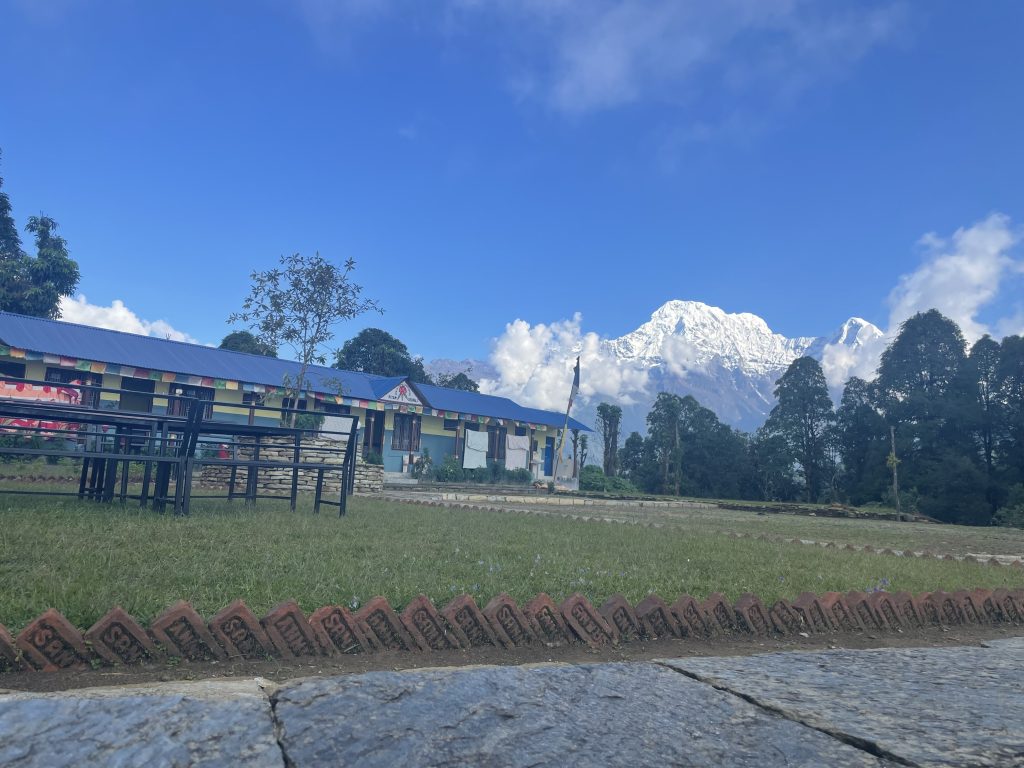
Scenic drive from Kathmandu to Pokhara with the view of the rushing Trishuli River, an ancient village, lush hills, and more
Trekking inside the Annapurna Conservation Area, which is home to various species of flora and fauna
Experience the tea house trek and enjoy warm hospitality from local people.
Experience the Gurung Culture, tradition, and local lifestyle.
Enjoy the quaint and peaceful surroundings of the Mardi Himal Trail.
A moderate trek suitable for all age groups and most fitness levels
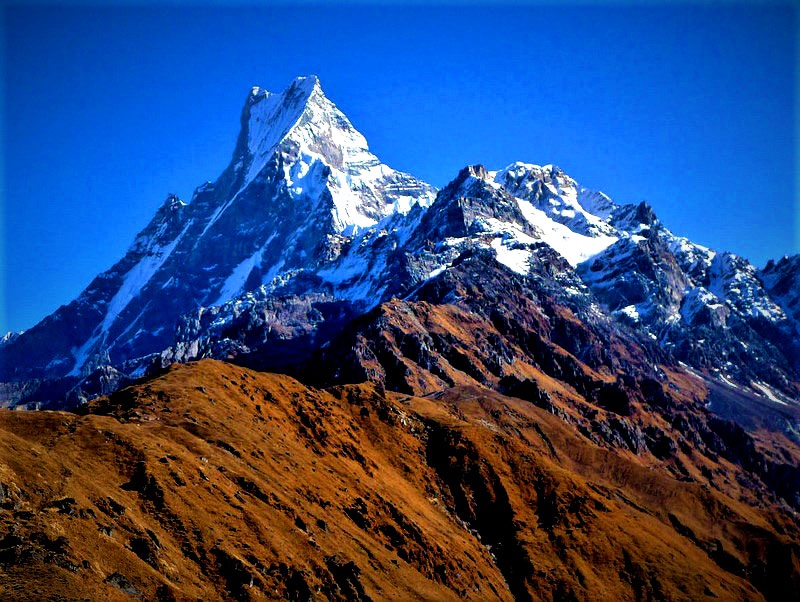
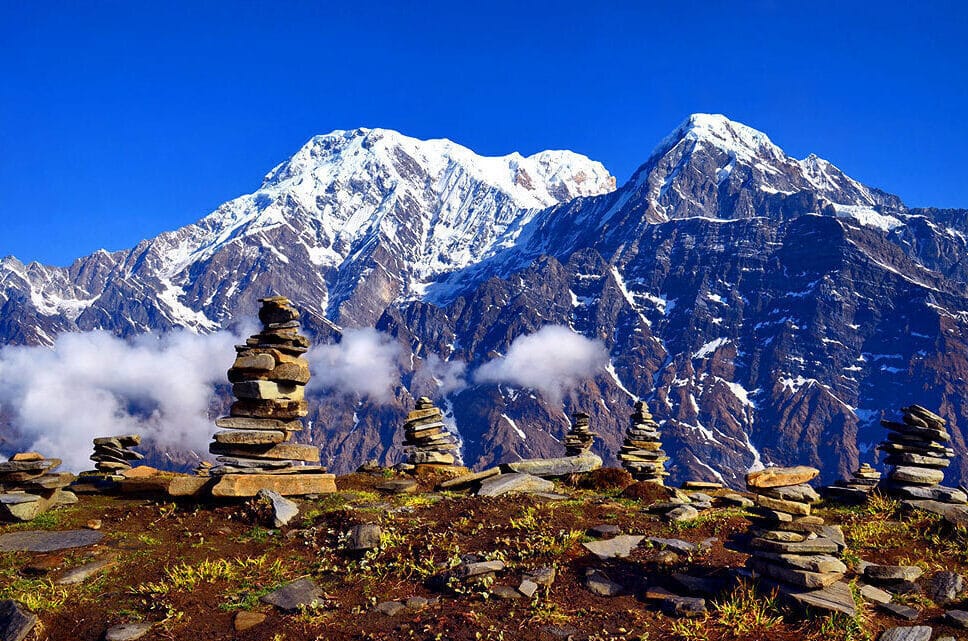
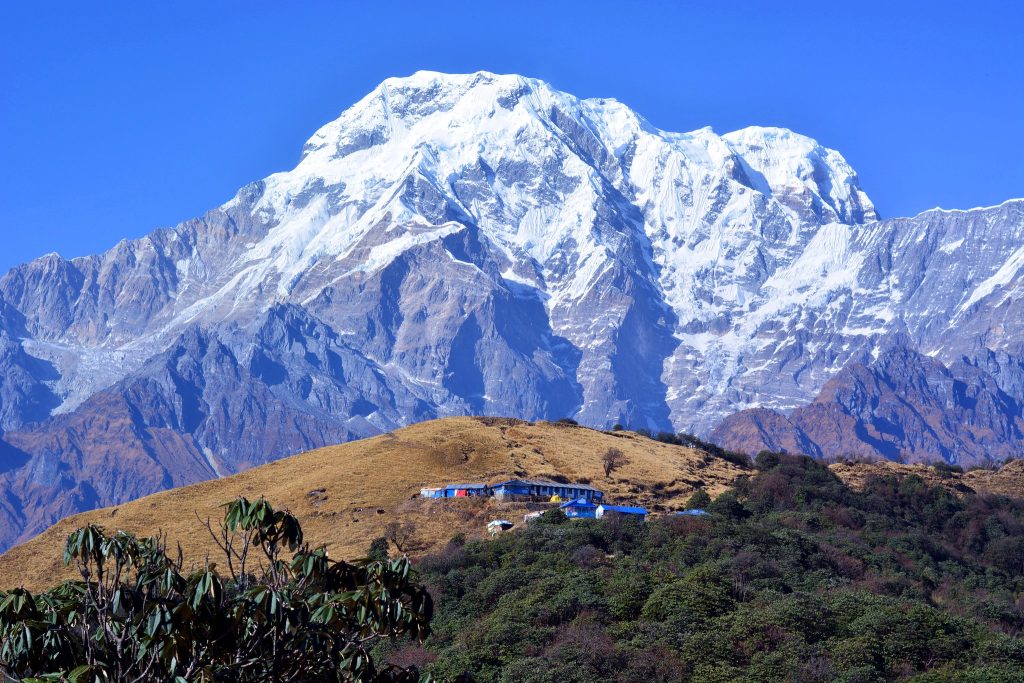
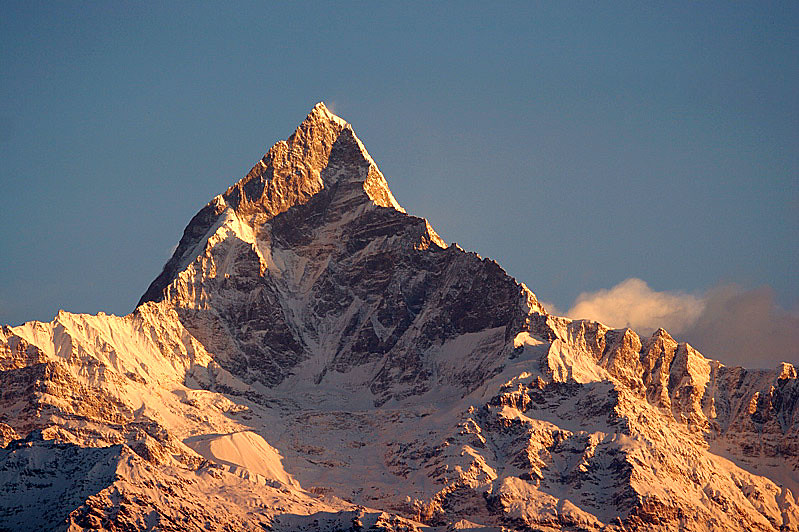
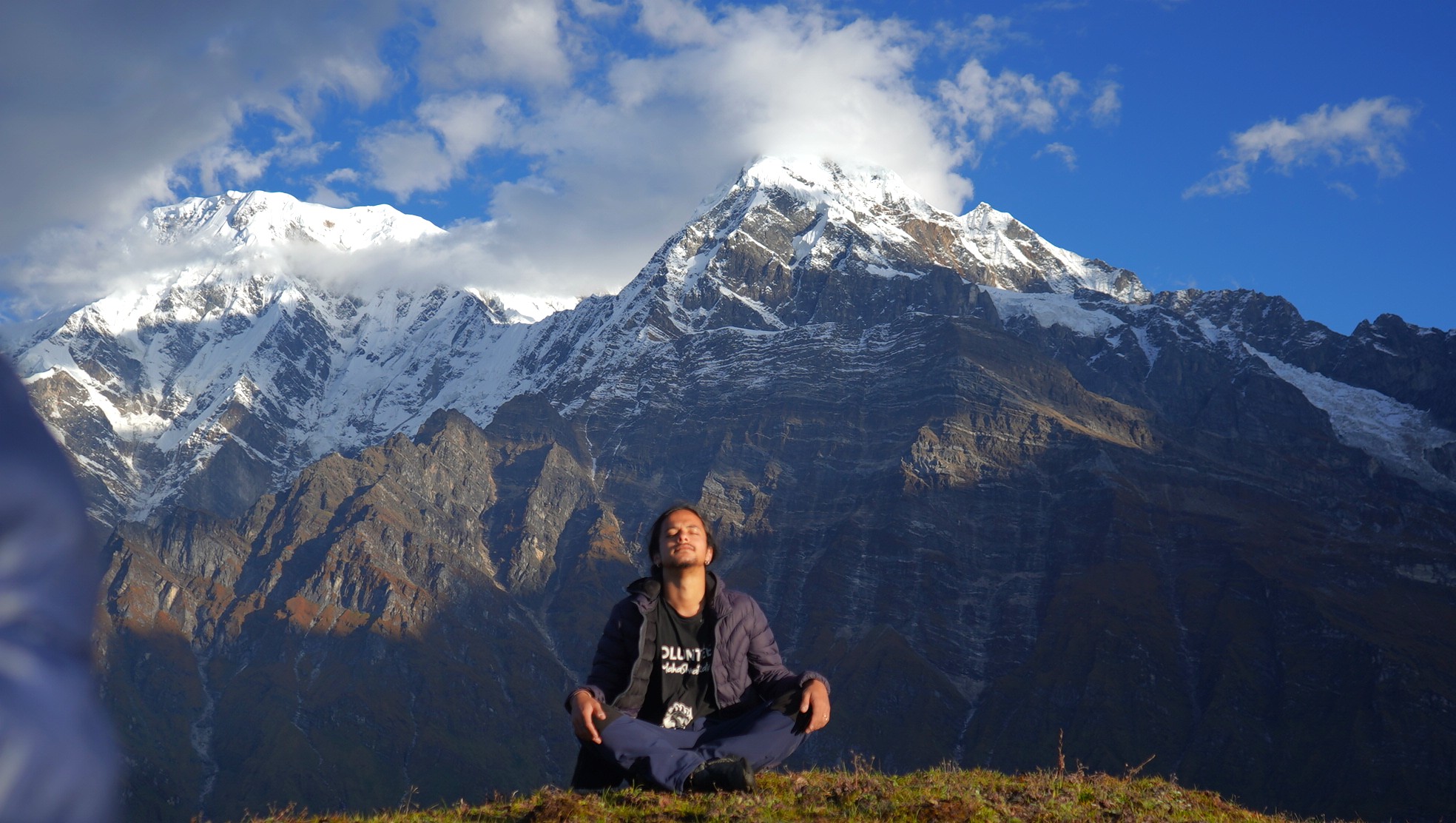
Enjoy the beautiful sights of the Annapurna massif, Machhapuchhre, Hiunchuli, and Mardi Himal.
Peaceful and scenic trail that passes through lush forests filled with rhododendron, pine, and oak trees.
Overview
Mardi Himal Trek Overview
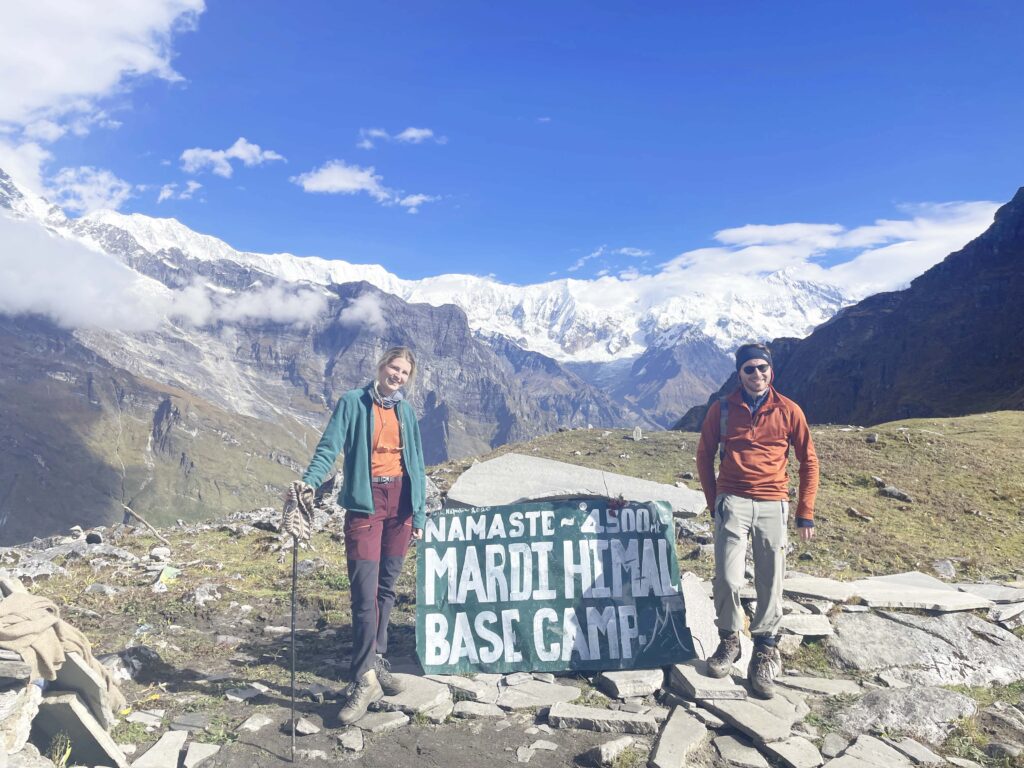
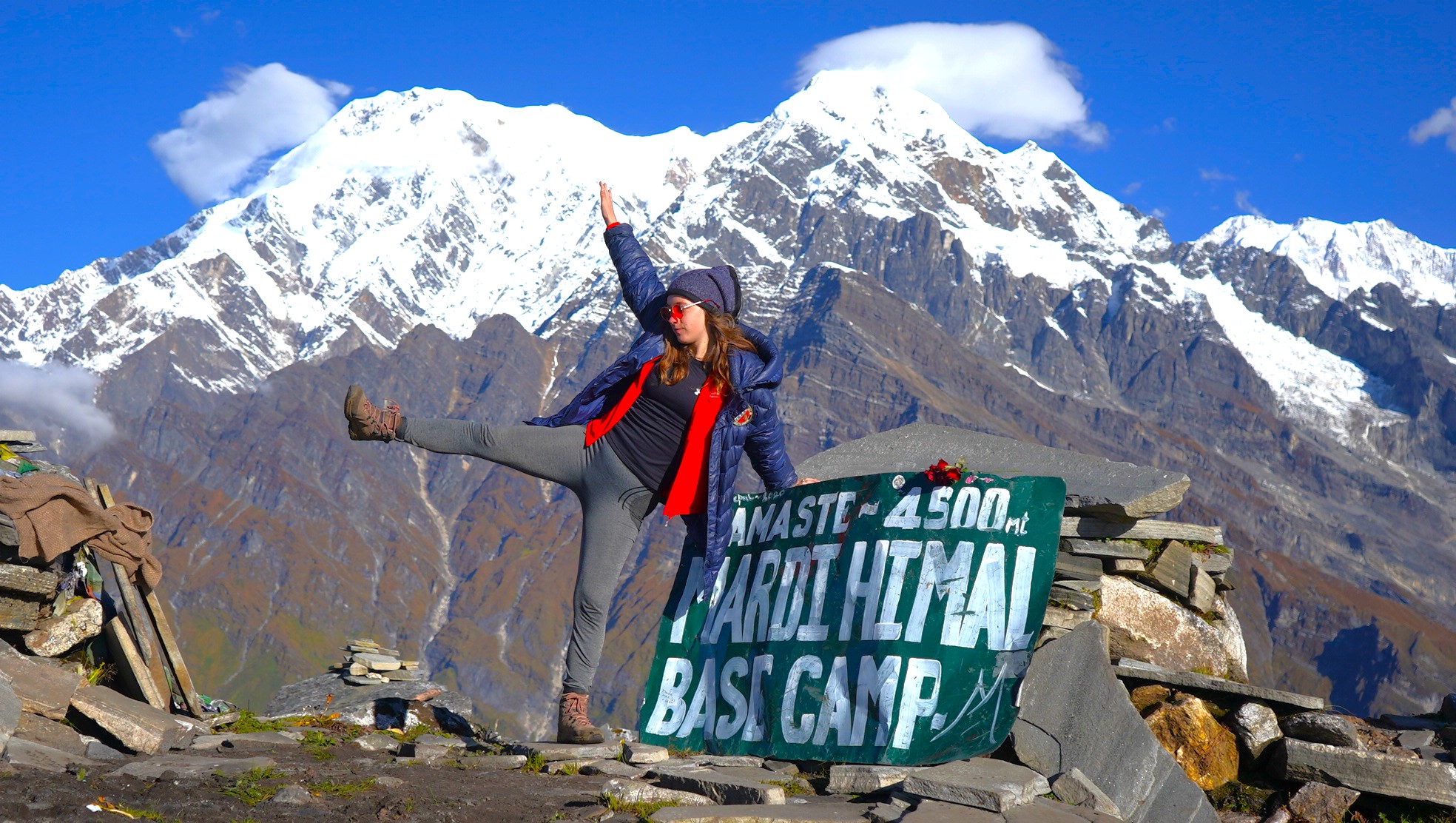
Mardi Himal Trek is one of the best short treks in the Annapurna Region, which provides you with the best close-up views of Machhapuchhre (Fishtail), Mardi Himal, and the towering Annapurna massif. Our 9-Day Mardi Himal Base Camp Trek takes you to an altitude of 4,500 meters, reaching the spectacular Mardi Himal Base Camp.
Mardi Himal Base Camp is located on a scenic eastern ridge of the Annapurna Massif, offering views of Annapurna Sanctuary, home to the famous Annapurna Base Camp (4,130 m). On this trek, you will pass through beautiful Gurung and Magar villages, peaceful forest trails, alpine landscapes, and dramatic Himalayan panoramas. The trail and teahouses here are not crowded, offering you a peaceful trekking experience.
This carefully designed 9-day Mardi Himal base camp trek itinerary from Kathmandu is suitable for trekkers with good stamina and average fitness. This trek welcomes you to enjoy the Himalayan adventure, whether you are a beginner or an experienced hiker.
What To Expect on the Mardi Himal Trek – 9 Days
9 Days Mardi Himal Trek through beautiful forest trails and Himalayan landscapes in Nepal.
Your Mardi Trek 9 Days begins in Kathmandu with a scenic drive fromKathmandu to Pokhara. From Pokhara, you will take a short drive to Kande and start your trek inside the Annapurna Conservation Area. The trail gradually ascends from warm lowlands into cooler mountain environments, offering changing landscapes every day.
Each trekking day begins early, usually between 7:00 AM and 8:00 AM, after having a delicious breakfast at the teahouse. You will trek for a few hours through beautiful trails before stopping for lunch at a local tea house or scenic resting point along the route. In the afternoon, you will continue your walk to reach the destination of the day, where your trekking guide will assist you with the check-in at the teahouse.
In the evening, you will relax in the mountain tea house, enjoying a warm, freshly prepared meal with beautiful mountain scenery.
Accommodation is simple here, but comfortable, as they are run by the local families. You will enjoy the warm hospitality and authentic Nepali dishes. As you gain altitude, the air becomes thinner, and trekking may feel more challenging, especially on the final ascent to Mardi Himal Base Camp (4,500 m), but the views are highly rewarding.
Weather changes rapidly in the mountain region, so expect both sunny and cold conditions. Weather changes rapidly in the mountain region, so expect both sunny and cold conditions. Be ready for both rain and snow by bringing essential clothing and gear. Overall, the trek is moderate in difficulty and suitable for trekkers with reasonable fitness and a positive spirit for adventure.
Why Choose HRA For Mardi Himal Base Camp Trek
➡️Experienced Local Guides – We provide local licensed guides to you who knows well Mardi Himal trail well, the culture, and mountain safety.
➡️Small Group Experience – We run private Mari trips and small group trek programs to make our clients’ trekking experience
➡️Responsible Tourism – We promote and follow eco-friendly trekking practices. Our leave-no-trace policy ensures that we minimize our impact on the environment.
➡️Complimentary Trek Completion Certificate – Celebrate your successful Mardi Himal Base Camp Trek by receiving a personalized certificate after the end of the trek.
➡️Special Souvenir Gift – Receive a complimentary High Route Adventure cap and Tshirt as a memorable keepsake from your Himalayan adventure.
➡️Positive feedback: Over 15 years of service, we have earned hundreds of positive reviews and the trust of trekkers from around the world.
Note: Interested trekkers can participate in community volunteering projects through Creative Youth Awareness Forum Nepal (CAF Nepal). Contact us before your trek if you’d like to combine your adventure with giving back to local communities.
Major Attractions of the Mardi Himal Base Camp Trek
The Mardi Himal Trek is famous for its stunning mountain views, peaceful trails, and rich cultural experiences. Here you will experience:
Peaceful Nature Experience:
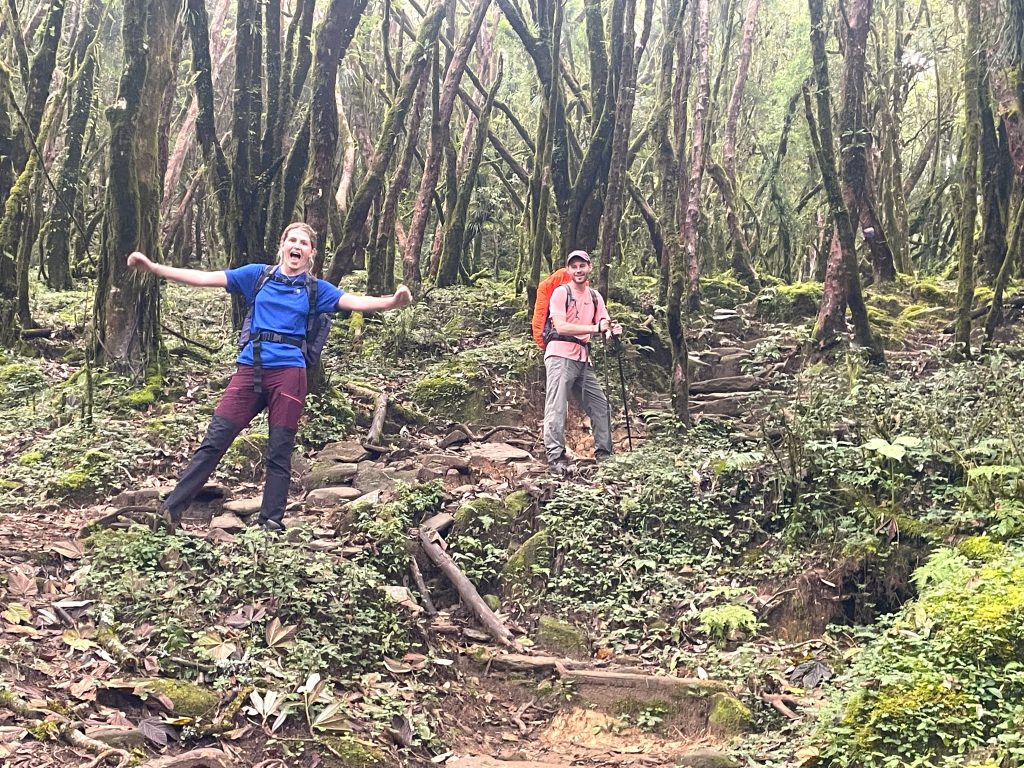
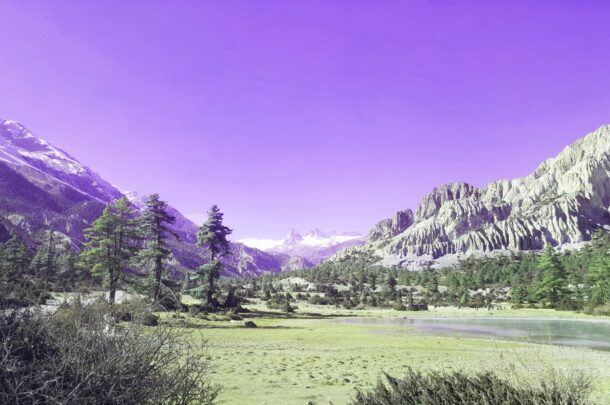
Peaceful Nature Experience on the Mardi Himal Forest Trail surrounded by lush green forests
The Trek to Mardi Himal Base Camp is less crowded than other treks, which is perfect for individuals who yearn for time to themselves. You trek through beautiful Rhododendron forests, serene groves of bamboo, and grasslands covered in wildflowers. Fresh air, birdsong, waterfalls, and the swaying of the breeze in the trees make you feel as if you have bid farewell to the stress of everyday life. It is the perfect way to relax and be one with nature.
Breathtaking Mountain Scenery:
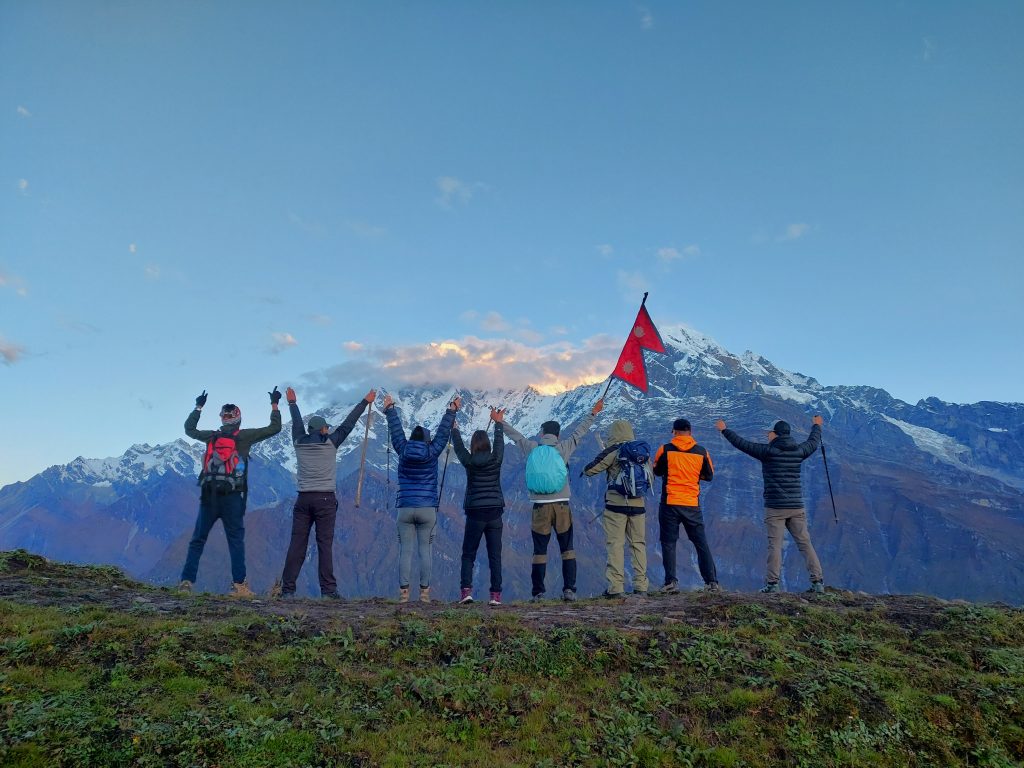
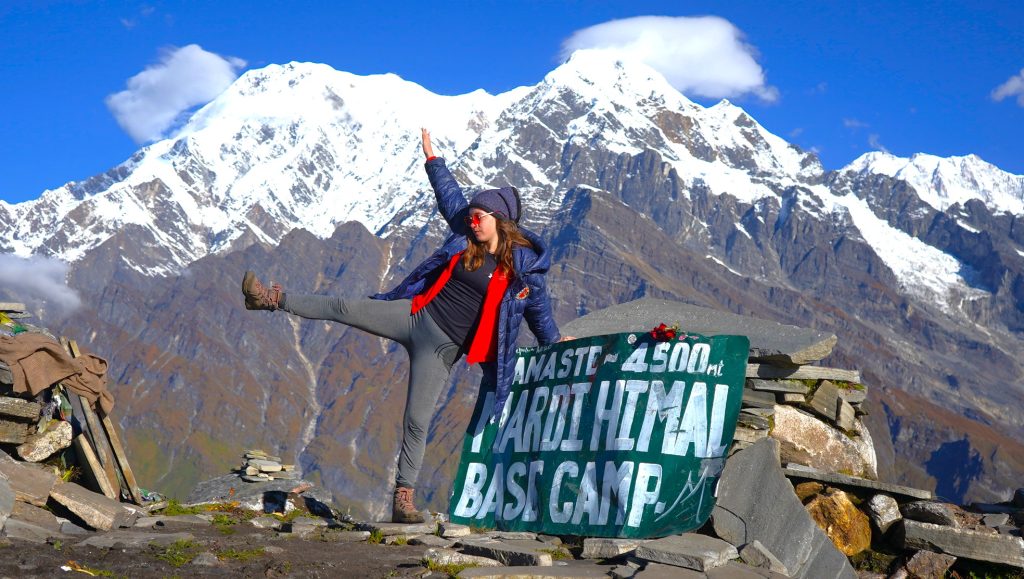
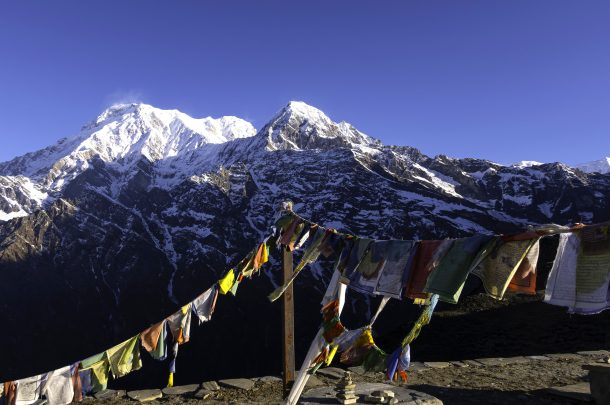
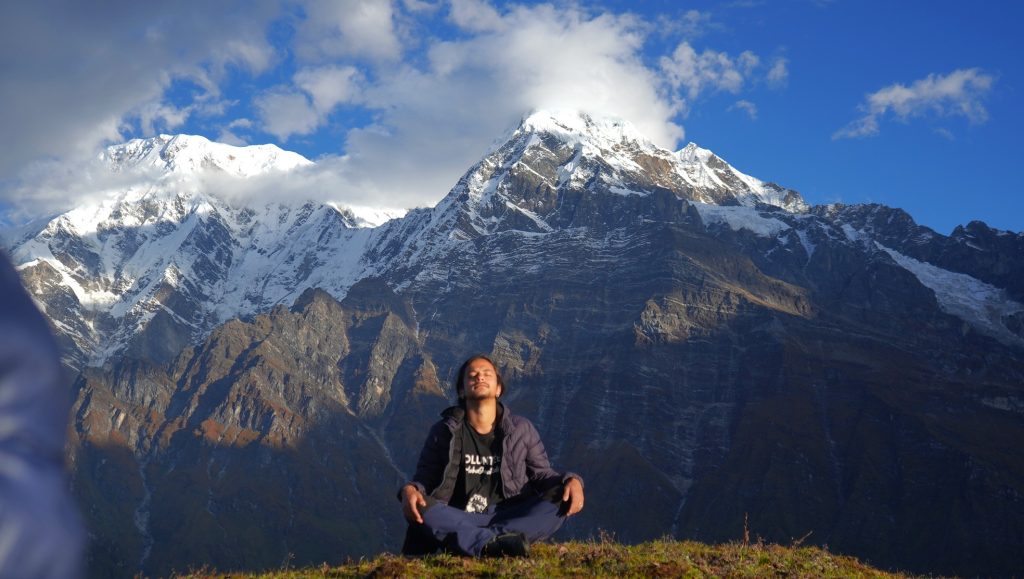
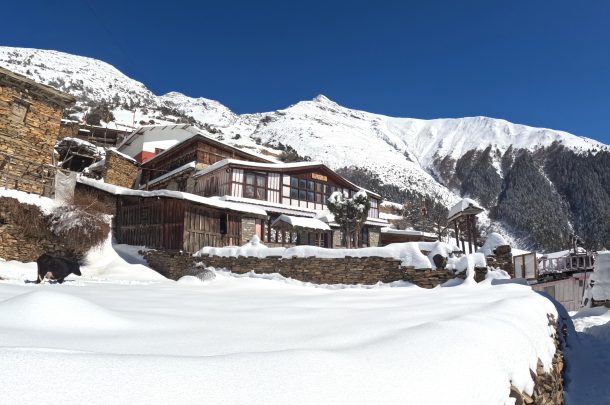
Spectacular mountain views seen from Mardi Himal Base Camp
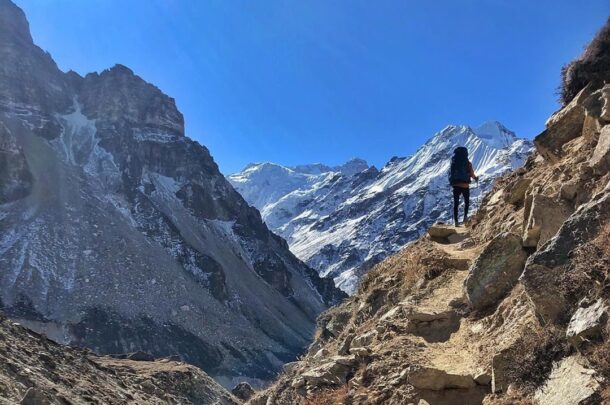
The Mardi trek takes you to the base camp at about 4,500 meters (14,764 feet). Reaching this height feels like a big achievement. The walk is tough in some parts, with rocky, steep paths, but the view from the top is worth it. You’ll see stunning mountains like Annapurna South, Hiunchuli, and Machhapuchhre (also known as Fishtail). It’s a moment that boosts your confidence and gives you a feeling of success.
Local Culture Experience:
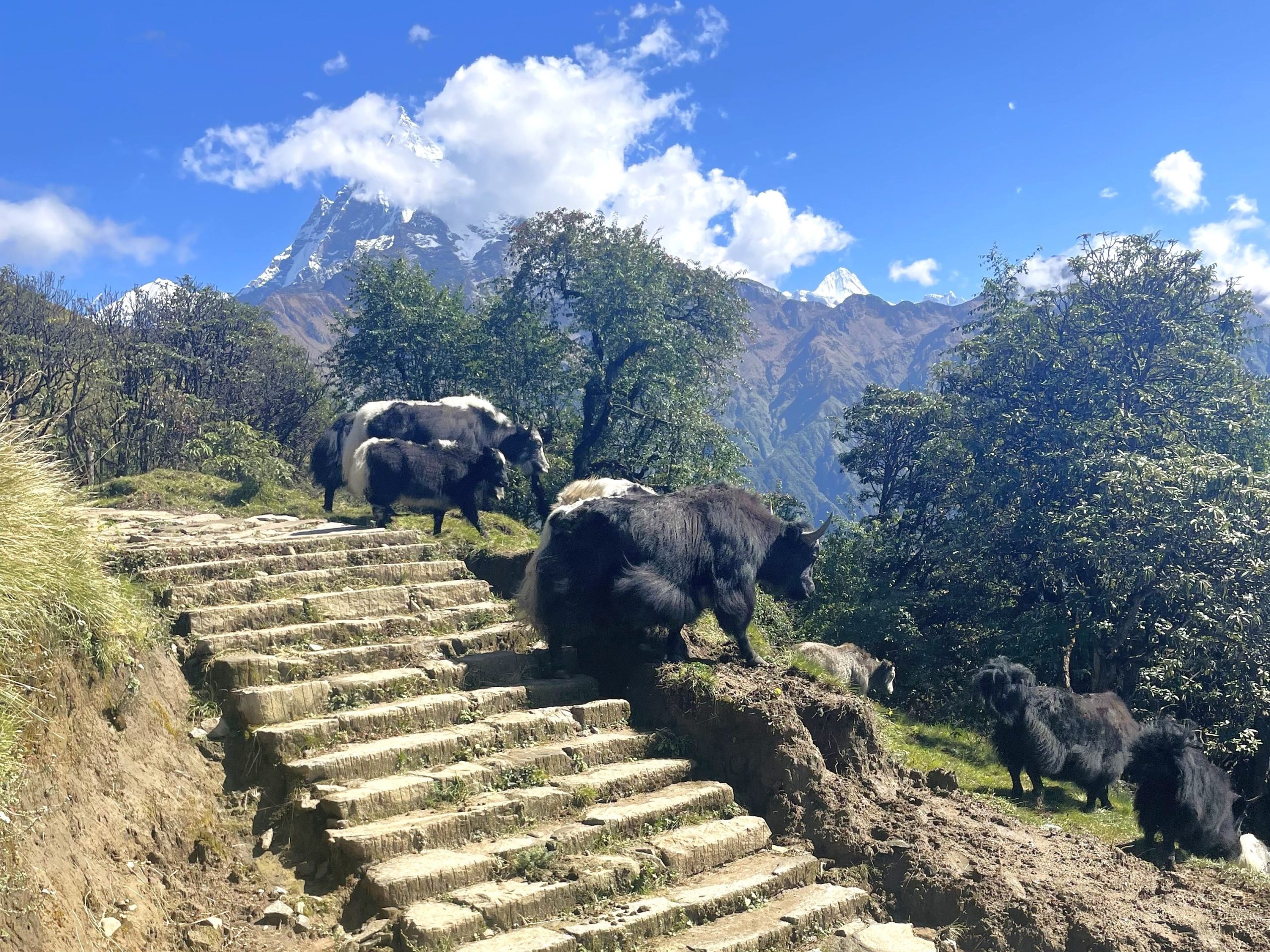
Yaks grazing along Mardi Himal trails in Nepal
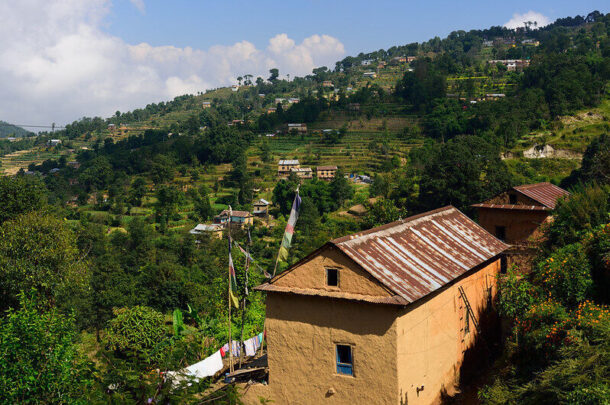
Along the trek to Mardi Himal, you will pass through Gurung villages. They are very friendly and generous. You will have the option to have tea at their homes and see them doing everyday chores. It is the best way to experience Nepali culture and traditions.
Simple Living on the Trail:
Simple living experience at a traditional tea house during the Mardi Himal Trek in Nepal
On the trek to Mardi Himal, you will stay overnight in small villages in teahouses. They provide basic accommodation and meals, but it is genuine and homey. You’ll dine with fellow hikers, huddle over the fire, and share tales. There will be no luxuries so that you will enjoy the little things, such as an open sky full of stars.
Best suited for beginners:
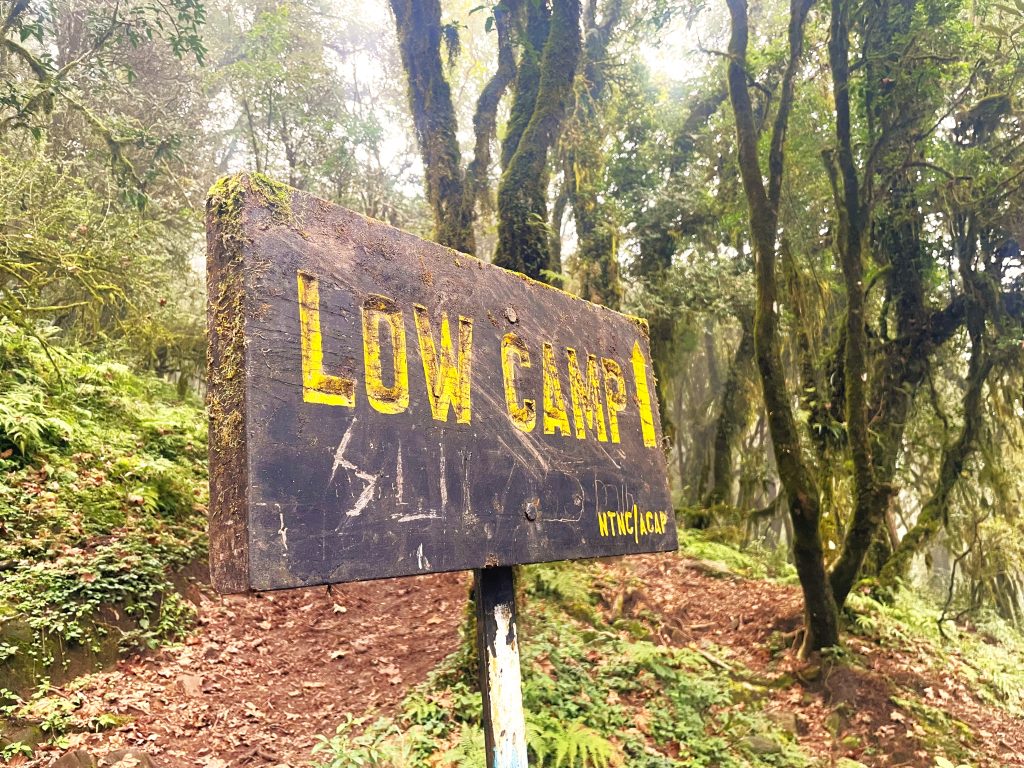
Low Camp Signboard on the Mardi Himal Trekking route
This trek is neither too challenging nor too demanding. It is suitable for the majority, even if you’re inexperienced at trekking. No climbing skills or special gear are needed. With a bit of exercise and some time to get used to the altitude, many novices complete the trek and have fun.
Mardi Himal Trek Cost For 2026/2027
The cost of the 9-day Mardi Himal Trek package with High Route Adventure depends on the group size. The larger the group, the more discounts you can receive per person. Let’s take a look at the cost of the Mardi Himal trek package per person.
Below is the Mardi Himal Trek package Cost per person
Welcome to Kathmandu! Upon your arrival, our representative will warmly welcome you at the airport and escort you to your hotel in the heart of the city. In the evening, a short briefing about the Mardi Himal Trek itinerary will be provided by your guide.
⛰ Altitude1400 m
🍽 MealsBreakfast
🏨 StayHotel
Duration:Drive 6 - 7 hours
Distance:200km
After an early breakfast at the hotel, you'll embark on a commute and drive towards Pokhara, located almost 200km west of Kathmandu City. Along with being a popular tourist destination, Pokhara serves as the gateway to many major and minor trekking destinations, including Upper Mustang, Annapurna, Ghorepani, Sikles, and Mardi Himal. The scenic road journey may last 6-7 hours and will offer a unique perspective on the lifestyle of hilly inhabitants. Upon arrival in Pokhara, you'll be escorted to your hotel.
⛰ Altitude822 meter
🍽 MealsBreakfast
🏨 StayHotel
Duration:4 - 5 hours
Distance:6km
Drive Duration: 45 Minutes Drive Distance: 25km
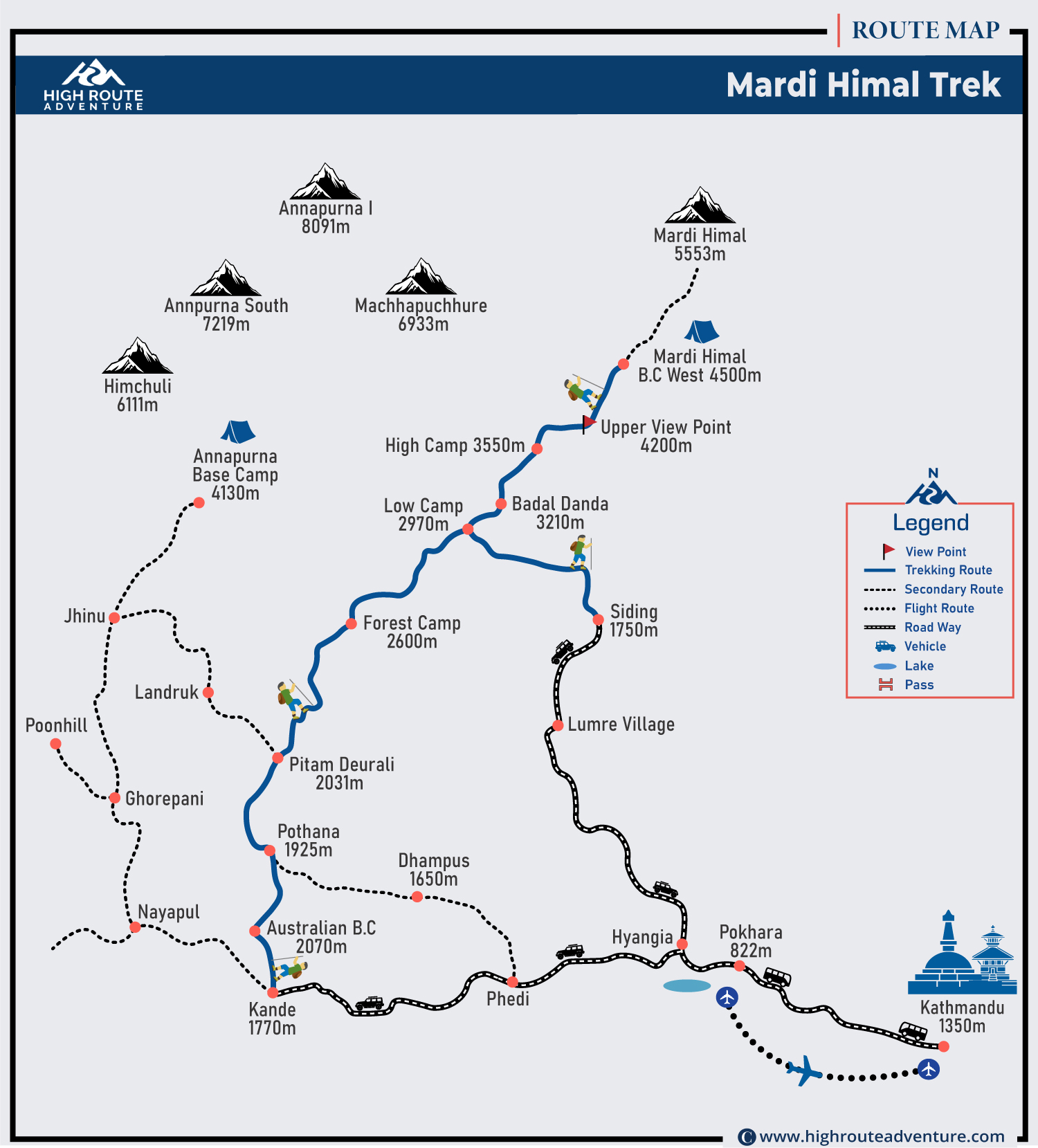
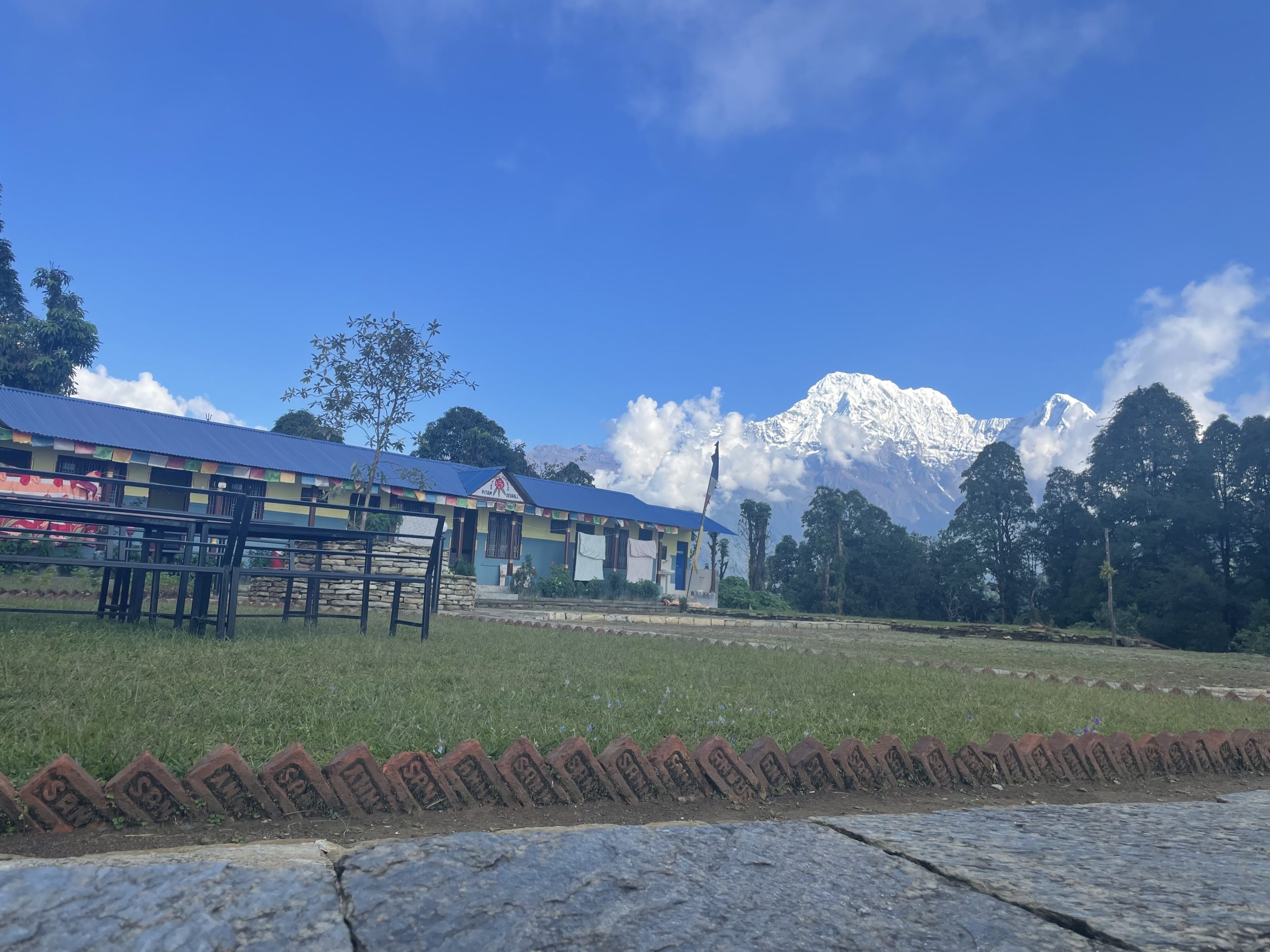
After an early morning breakfast at the hotel, you'll start your day with a scenic 40min drive northwest of Pokhara. You'll drive for almost an hour along the Baglung Highway to arrive at the quaint Kande village. From here, you'll begin traversing along the forest's path toward Mardi Himal. Passing through small Gurung villages, you'll arrive at the Australian camp from where you can catch the magnificent sights of the Annapurna massif. The trail continues along the lushly decorated rhododendron forest towards Pothana village. At Gurung village, you stop for lunch. You'll find a forested ridge that leads directly to Pitam Deurali. It lies between the Annapurna South, Mardi Himal, and Machhapuchhre peaks. Stay overnight at Deurali.
⛰ Altitude2031meter
🍽 MealsBreakfast | Lunch | Dinner
🏨 StayTeahouse
Duration:5 to 6 hours
Distance:12 km
Leaving Pitam Deurali, you'll continue trekking through the forested path toward the forest camp. The trail passes through the beautiful rhododendron forests. You won't find mountains visible in this section. Rising above the forests, you'll make your way towards Low Camp with only a handful of lodges. Once at Low Camp, you'll find the pristine views of Machhapuchhre and Mardi Himal up close. You can choose to hike for an additional hour to Badal Danda for a clearer view of the surrounding mountains.
⛰ Altitude2970 meter
🍽 MealsBreakfast/Lunch/Dinner
🏨 StayTeahouse
Duration:5 to 6 hours
Distance:5 km
The trail leaves the forested path and heads towards rugged, sparsely vegetated terrain. You'll walk above the rhododendron forest and arrive in the shrubby alpine zone. Close to High Camp, you can catch the first close sight of snow-capped Annapurna South, Hiunchuli, and Machhapuchhre peaks. A short uphill trek from here will bring you to High Camp. Overnight stay at High Camp.
⛰ Altitude3550 meter
🍽 MealsBreakfast/Lunch/Dinner
🏨 StayTeahouse
Duration:7 to 8 hours
Distance: 7 km
You'll make the final ascent of the trek and climb toward Upper View Point. You'll continue along the steeper trail that approaches Mardi Himal. Almost two hours of trekking will bring you to Mardi Himal Base Camp, from where you can catch the pristine sight of Mardi Himal's summit. Almost two hours of the additional hike will bring you to Upper View Point. You can catch a close view of the Mardi Himal summit along with Machhapuchhre, Annapurna I, Gangapurna, and Annapurna III peaks from here. Afterward, you'll begin descending towards Badal Danda.
⛰ Altitude3210 meter
🍽 MealsBreakfast/Lunch/Dinner
🏨 StayTeahouse
Duration:Trek 5 hours, Drive 3 hours
Distance:12 km
Leaving Badal Danda, you'll begin descending through the Rhododendron forested trail towards the Magar settlements. You'll take a detour and climb down towards Siding village, which lies close to Low Camp. Unlike other villages in the region, Siding remains a traditional Magar village located amidst the lush forests on the foothills of Mardi Himal. From Siding, you'll catch a commute back to Pokhara City. It may take almost 1:30 hr to reach Pokhara. Overnight stay at Pokhara.
⛰ Altitude822 meter
🍽 MealsBreakfast/Lunch
🏨 StayHotel
Duration:8 hours
Distance:200 km
Today, you'll bid farewell to Pokhara city and head back to Kathmandu. The beautiful sight of Machhapuchhre and Annapurna I will be visible while you depart. It may take 6-7 hours to reach Kathmandu via the Trishuli Highway. Once in Kathmandu, you will be escorted to your hotel.
⛰ Altitude1400 meter
🍽 MealsBreakfast/Dinner
🏨 StayHotel
You'll leave for the airport. Our representative will drive you back to the airport approximately 2 hours early to avoid delays caused by traffic congestion.
⛰ Altitude1400 meter
🍽 MealsBreakfast
Build Your Own Adventure!
Collaborate with our specialists to create a unique itinerary.
✦
Mardi Himal Trek Booking, Payment And Cancellation Policy
Booking: To book the Mardi Himal Trek with High Route Adventure, please review the package details first. After that, you can book the trip with us according to your preferred date based on your interest and schedule. To confirm the booking, you need to make an advance payment of 20% of the total cost listed on the website.
Payment: You can make a payment using a credit card, bank transfer, or other secure online payment methods accepted by High Route Adventure. We will not cover the bank charge. For the Online Payment, please click here: Bank Details for Payment.
Cancellation Policy: For detail about cancellation policy check our company terms and conditions
Cost Detail
Inclusion
What's included ?
Private vehicle service for pick-up and drop-off at the international airport.
Two nights 3-star accommodation in Kathmandu with a B/B plan.
Two nights 3-star accommodation in Pokhara with a B/B plan.
Four-night best available clean and comfortable Teahouse accommodation during the trek.
Kathmandu to Pokhara to Kathmandu by comfortable tourist bus.
All ground transportation as per your itinerary(Pokhara to Kande, Lumle to Pokhara by comfortable private vehicle).
All meals like breakfast, lunch, and dinner during the trek.
Porter service to carry your main luggage (2 trekkers: 1 porter).
Staff costs including their food, accommodation, salary, insurance, equipment, etc.
First Aid kit.
All Local and Government taxes, and administrative charges.
Complimentary Includes
Seasonal fruits after dinner during the trek
Farewell dinner with cultural program in Kathmandu
A cup of tea/coffee with Breakfast/Lunch/Dinner
Route Map
Down jacket and sleeping bag (Returned after trek completion)
Complimentary Includes
Seasonal fruits after dinner during the trek
Farewell dinner with cultural program in Kathmandu
A cup of tea/coffee with Breakfast/Lunch/Dinner
Route Map
Down jacket and sleeping bag (Returned after trek completion)
What's not included ?
Lunch and dinner in Kathmandu
Nepal Visa fee
Travel and medical insurance
International flights
Personal expenses (phone calls, internet, laundry, bar bills, snacks, battery recharge, bottled or boiled water, souvenirs, hot showers, extra porter, etc.)
Personal trekking gear and equipment
Tips for guide, porter (tipping is expected)
Any unseen expenses due to circumstances beyond our control
Dates
Group Departures
Choose from our scheduled group trips below, or contact us to plan a private or family adventure tailored to your schedule.
Things to Know
Nepal Tourist Visa:
All foreign citizens who want to enter Nepal for the Mardi Himal Base Camp Trek must obtain a Nepal tourist visa. Obtaining the visa is easy. You can obtain it either in advance from your home country or upon arrival at Tribhuvan International Airport (TIA) as an arrival visa. The visa cost depends on how much you want to spend in Nepal. For the short Mardi Himal Trek, you can obtain a 15-day visa. For the Mardi Himal trek with extra days, we suggest you have a 30-day visa.
While trekking to Mardi Himal Base Camp, teahouses, local shops, and restaurants accept only cash payments in Nepali currency (NPR). There are no ATMs along the trekking route, so you should exchange money in Kathmanduor Pokhara before starting the trek.
We recommend carrying around NPR 10,000 – 20,000, which is usually sufficient for snacks, hot water, device charging, tips, and any unexpected expenses such as weather delays or emergencies. In some places, QR payment may be available in lower regions, but cash is still the most reliable option throughout the trek.
Getting a local SIM (NTC or Ncell) for the Mardi Trek:
For tourists, a local SIM (Ncell or NTC) is a convenient option for communication and mobile internet. You can use this SIM during the Mardi Himal trek as the mobile network works fine.
Where to get the SIM?
From Tribhuvan International Airport.
You can purchase from authorized shops in Kathmandu or Pokhara.
Required documents to obtain the SIM?
Your original passport with a valid visa.
2 recent passport-size photographs.
Please fill out the form and pay a fee of around USD 1.
Photography and Drone rules during the Mardi Himal Base Camp Trek
The Mardi Himal trek is the best destination for stunning views of mountain peaks and beautiful landscapes. You can take photos and videos with your mobile or camera without any issues. But if you are using a drone, you must obtain a permit from the Civil Aviation Authority of Nepal. This is because Mardi Himal is located within the Annapurna Conservation Area Project (ACAP). Flying a drone within the conservation area requires a permit, which will cost around USD 1,800. If you are caught flying a drone without a permit, you will face legal consequences. Read more: Drone Permit in Nepal.
Why is it important to Have Travel Insurance
Although it is not mandatory to submit travel and health insurance for the Mardi Himal trek, we strongly suggest that you have it. You never know what situations may arise during the trek, so insurance is important for your safety and peace of mind. Therefore, you should have travel and health insurance that covers trekking risks, including emergency medical and helicopter evacuation.
If you purchase the travel and health insurance, it must cover these things:
Here is the list of permits and their costs for the Mardi Himal Trek in the table below:
Permit Name
Cost
Annapurna Conservation Area Permit (ACAP)
NPR 3,000 per person
To get the Mardi Himal Trek permits, you need to provide us with the following documents and information:
Copy of your passport
2 Passport-sized photos
Note: When you book with us, you don’t have to worry about getting these permits. We will arrange this for you to make your trip smooth and hassle-free.
Oxygen Levels by Altitude During Mardi Himal Trek
Altitude
Oxygen Level
1000m/3281ft
88%
2500m/8201ft
73%
3000m/9843ft
68%
3500m/11483ft
64%
4000m/13123ft
60%
4500m/14764ft
57%
Note: The oxygen percentages shown are approximate and are compared to sea-level oxygen availability. Above 3,500 meters, proper acclimatization, adequate hydration, and a gradual ascent are essential to minimize the risk of altitude sickness.
Mardi Himal Trek Best Time
The Mardi Himal trek is possible year-round, but the best seasons to experience this excellent trail are spring and autumn. The two seasons have been chosen as the most suitable due to the following reasons.
Spring Season (March-May):
It is warm during the day and cool in the evening, perfect for hiking.
It is flanked by Rhododendrons in bloom as well as multicolored wildflowers.
During the early part of the spring season, the high areas may still have snow patches, which will add to the scenery.
There is little or no rainfall, so roads are dry and safe.
One can also see Himalayan birds and animals that migrate more often in these months.
Autumn Season (September – November):
The ideal season to hike to Mardi Himal is autumn, as it offers clear weather and stable conditions.
You will enjoy the spectacular mountain scenery, especially that of Machhapuchhre (Fishtail) and Annapurna South.
This is also the time of festive celebration in Nepal. The villages along the way have celebrations such as Dashain and Tihar.
The route is dry and safe, with crossing the higher altitudes less difficult as less snow is encountered.
You will encounter hospitable trekkers who share your own experience at the tea houses on the route.
Note: Off-seasons for the trek to Mardi Himal are December to February (winter) and from June to August (monsoon season). Winter is a season of freezing temperatures and snow, especially at higher altitudes, which can render hiking difficult. The monsoon season comes with heavy rainfall, muddy trails, and the danger of landslides. So if you are trekking in off season you need to be extra careful.
Mardi Himal Temperature And Weather
The weather on the Mardi Himal Trek varies depending on season and altitude. Lower elevations are generally warmer, while higher areas such as High Camp and Mardi Himal Base Camp can be cold, especially at night.
Season
Daytime Temperature
Nighttime Temperature
Spring(March - May)
10°C to 25°C (50°F to 77°F) at lower altitudes 5°C to 10°C (41°F to 50°F) at higher altitudes
0°C to 15°C (32°F to 59°F) at lower altitudes-5°C to 0°C (23°F to 32°F) at higher altitudes
Summer/Monsoon(June - August)
20°C to 30°C (68°F to 86°F) at lower altitudes10°C to 15°C (50°F to 59°F) at higher altitudes
15°C to 20°C (59°F to 68°F) at lower altitudes5°C to 10°C (41°F to 50°F) at higher altitudes
Autumn(September - November)
15°C to 25°C (59°F to 77°F) at lower altitudes5°C to 10°C (41°F to 50°F) at higher altitudes
5°C to 10°C (41°F to 50°F) at lower altitudes0°C to 5°C (32°F to 41°F) at higher altitudes
Winter(December- January)
3°C to 10°C (37°F to 50°F) at lower altitudes -5°C to -10°C (23°F to 14°F) at higher altitudes
-5°C to -12°C (23°F to 10°F) at lower altitudes-5°C to -15°C (23°F to 5°F) at higher altitudes
Note: Always check the weather forecast before travelling and during the trek.
Mardi Himal Trek Difficulty and Preparation Tips
The Mardi Himal Trek is graded as an easy to moderate trek in terms of difficulty. If you have previous trekking experience, the trek will be easy for you. For first-time trekkers, it can be a little challenging due to the new terrain, continuous uphill sections, and higher altitude. However, if you maintain a reasonable fitness level, you can have a wonderful time in Mardi Himal Base Camp, no matter if you are a beginner or first first-time trekker. Here are the common risks you will face. Knowing this will help you prepare for the trek.
Altitude: On these 9 Days, the Mardi Himal trek starts from Kande, at an altitude of 1770 meters (5,807 feet), and takes you to the base camp, which is 4500 meters (14,764 feet). While reaching such altitudes, some trekkers may experience symptoms of altitude sickness, including headache, Dizziness or light-headedness, Nausea or vomiting, Loss of appetite, Fatigue or weakness, Shortness of breath, and Trouble sleeping (insomnia). To avoid altitude sickness during the Mardi Himal Trek, follow acclimatization plans such as walking slowly, avoiding alcohol, drinking enough water, and taking proper rest.
Difficult Terrain: The Mardi Himal Trek routes take you through diverse landscapes, including lush forests, steep inclines, and rocky paths. Walking in such terrain can be tough for first-time trekkers. To deal with rugged terrain, use good trekking shoes, carry trekking poles, and maintain good leg strength.
Weather: The weather in Mardi Himal is sometimes unpredictable, with the potential for rain, snow, or bright sunshine in a single day. Pack layering clothing, waterproof clothing, and rain gear.
Remoteness: The Mardi Himal Trek route is less developed than the Annapurna Base Camp Trek and the Everest Base Camp Trek. You can expect basic teahouse accommodations and limited medical facilities. Carry essentials like a first-aid kit and travel insurance for emergencies.
Mental Resilience: Long trekking days, especially during the Mardi Base Camp summit, are tough and demand mental fortitude. Stay positive and focus on your dream of reaching Base Camp.
Accommodation On Mardi Himal Trail: What To Expect
When you choose the Mardi Himal Trek Package with High Route Adventure, your comfort and convenience are our priorities. As part of your trekking experience, we will thoughtfully arrange your stay at reputable tea houses or mountain lodges along the trail. These accommodations are designed to give trekkers a cozy, immersive Himalayan experience and to ensure they have what they need for a restful night's stay.
Your Room at the Tea House/Mountain Lodge:
Comfortable yet straightforward lodging: Enjoy a clean, warm room in a communal mountain setting.
Essentials included: Each room features a soft twin bed with a cozy warm blanket, a bedsheet, a pillow, and a small table for convenience.
Shared facilities: Rest assured that shared toilet facilities are available and maintained for hygiene and functionality.
Local hospitality: Tea houses also offer warm meals prepared from local ingredients, ensuring you're nourished after a day of trekking.
These mountain lodges are strategically located along the Mardi Himal trail, balancing accessibility with the authentic charm of off-grid trekking in the Annapurna region. While accommodations are basic, they reflect the rugged beauty of the Himalayas and the friendly, welcoming nature of the local communities.
By choosing our Mardi Himal package, you gain not only a seamless journey but also the peace of mind that your stay will be handled with care and professionalism. For more details or to secure your trekking experience, contact High Route Adventure today.
Food On Mardi Himal Trail: What To Expect
While on the Mardi Himal Trek, High Route Adventure will arrange three meals for you. You will have a veg and non-veg option, and if you have any special dietary requirements, you can let us know during booking. Mostly, you will get simple Nepali traditional dishes and a few other international dishes made in a Nepali style. Let's see the common dishes you can expect on the menu in the tea house.
Breakfast:Tibetan bread with jam or honey, Boiled eggs or omelette, Pancakes (plain, apple, or banana), Porridge or muesli with milk
Lunch and dinner:Dal Bhat (rice, lentil soup, vegetables, and pickles), Fried rice or noodles with vegetables, egg, or chicken, Pasta with tomato or cheese sauce, Mo: Mo (Nepali dumplings), Noodles, Potato curry or vegetable curry with rice or chapati
Drinks: Black tea, milk tea, or masala tea, Coffee (instant or brewed), Hot lemon with honey, Bottled water or boiled/filtered water, Soft drinks, Alcoholic beverage
Note: Drinks will not be included in the Mardi Himal Trek Package.
Facilities On Mardi Trek
ATM: There are no ATM facilities in the Mardi Himal trekking trail. So carry local currency before heading for the trek.
Drinking water:You can buy a water bottle or use a hot water bottle to refill it from the tea house. A water bottle will cost you around NPR 200-300 per liter.
Wifi: All the tea houses you will stay at provide wifi at an extra cost. They will charge you around USD 1-3 to use the wifi service.
Hot Shower: A hot shower facility is also available at the tea house, but it's not free, and water is limited. You will need to pay around USD 2-3 for access to the hot shower facility.
Electricity: You will find the charging station in the tea house, where you can charge all your electronic devices. This service is not free. You need to pay around USD 1-3 per hour.
Transportation For Mardi Himal Trek
On this Mardi Himal Trek Package, we will arrange a tourist bus from Kathmandu for you. You will reach Pokhara in about 6-7 hours, and from Pokhara, we will arrange a private jeep or taxi to Kande. After completing the trek, you will take a tourist bus and return to Kathmandu. For those who want to avoid the road, they can take a flight. If you would like to use a flight, please add the extra cost for this service.
Kathmandu to Pokhara flight cost for foreigners: USD 105( for one way)
Kathmandu to Pokhara flight cost for Indians: INR 3000( for one way)
Kathmandu to Pokhara flight cost for Nepali: NPR 4200( for one way)
Note: Flight fares may change depending on the peak season, availability, and other factors. Worth reading: Kathmandu to Pokhara Transportation.
High Route Adventure Team For Mardi Himal Trek
Here are the teams you will get when you book the Mardi Himal Trek Package with High Route Adventure.
Private Vehicle with Driver: We will arrange a private vehicle with a driver for airport pickup and drop-off.
Trekking Guide: We will provide you with a licensed, experienced, and well-trained guide. Our guide speaks good English and will ensure your safety while giving proper instructions throughout the trip. If you are in a large group, then we will also provide you with an assistance trekking guide.
Porter: High Route Adventure will provide you with porter service for your Mardi Himal Trek, and one porter will be assigned to two trekkers. One porter will carry a load of up to 20kg.
Learn About Altitude Sickness
Your primary purpose is to visit the Mardi Himal Base Camp at 4,500 meters above sea level, to enjoy close views of Mardi Peak (5,587m), Fishtail Peak (6,993m), and other 7,000- and 8,000-meter peaks. While reaching such a high altitude as Mardi Himal Base Camp, the risk of altitude sickness remains high due to the low level of oxygen in the air. At high altitudes, trekkers may experience altitude sickness symptoms such as breathlessness, fatigue, and dizziness, but being aware can help ensure a safe journey.
These AMS symptoms can occur in anyone above an altitude of 3,000m. If you or someone on your team experiences AMS, they must immediately inform the trekking guide before it turns into a deadly form of AMS, such as HACE or HAPE.
How to Prevent altitude sickness during Mardi Himal Trek
Avoid walking too fast during the trek, as gaining altitude too quickly increases the risk of altitude sickness.
Take enough rest whenever your body wants and walk at your own pace.
Carry a water bottle and drink plenty of water throughout the day.
Avoid alcohol and limit caffeine intake.
Please avoid shortcut itineraries and follow only the standard itinerary, which includes proper acclimatisation days.
Consume a balanced, high-carbohydrate diet to maintain energy levels.
If you experience AMS symptoms, descend to a lower altitude immediately.
If AMS symptoms worsen, seek immediate medical attention
Take Diamox by consulting with your doctor before heading for the Mardi Himal Base Camp trek
Mardi Himal Trek Cost for Nepali?
Mardi Himal Trek is one of the top choices for Nepali citizen begin close to Pokhara, and can be finished within a week. A Nepali citizen can take a tourist bus from Gongabu station and take an 8-9-hour drive to Pokhara. From Pokhara, you will head to the Baglung bus park to catch the bus and drive to Kande, and start your trek toward Mardi Himal Base Camp. After completing the trek, you will follow the same route back to Pokhara.
Let's see the Mardi Himal trek cost for Nepali
The cost for a one-way ticket from Kathmandu to Pokhara by tourist bus is NPR 1,700 per person.
The cost of a hotel stay in Pokhara ranges from NPR 1,500 to NPR 3,000 per person.
The bus fare from Pokhara to Kande ranges from NPR 200 to NPR 300 per person.
Tea house stay package: NPR 1200 to 1800 per day sharing a bed, which includes dinner and breakfast.
In total, Mardi Himal Trek from Kathmandu for Nepali, it will cost around 20,000 per person.
Side Trips and Extensions from the Mardi Himal Base Camp Trek
For those who have time, they can do a side trip or extend the trip with other popular trekking routes in the Annapurna region.
Mardi Himal and Khopra Danda Trek: You can extend your trip after you reach Mardi Himal Base Camp and enter the Khopra Ridge. To complete the Mardi and Khopra trek, it takes around 12 to 15 days.
Mardi Himal and Poon Hill Trek: Many trekkers combine the Mardi Himal Trek with a visit to the famous Poon Hill viewpoint (3,210 m). The sunrise view over the Annapurna and Dhaulagiri ranges is absolutely breathtaking, while the trek through colorful rhododendron forests adds to the beauty of the journey.
Mardi Himal and Annapurna Base Camp (ABC) Trek: One of the most Short trek in Pokhara is the Annapurna Base Camp trek. It takes you to the Machhapuchhre Base Camp(3,700 m) and Annapurna Base Camp(4,130 m) with close-up views of Annapurna I, Machhapuchhre, and Hiunchuli.
Mardi Himal and Ghandruk Village: For those who want to enjoy the traditional Gurung culture with mountain views, they can extend their trip to Ghandruk Village(2,012 m). If you want to visit this cultural village, you need to add an extra 2-3 days to your itinerary.
Responsible Trekking on the Mardi Himal Base Camp Trek
To protect the fragile ecosystem of the Annapurna region during the Mardi Trek, please avoid littering and dispose of waste only in designated areas.
Use a reusable water bottle to help reduce plastic waste and try to avoid using single-use plastic items.Hire a local guide and porter and purchase meals from local teahouses to support the local economy.
Follow local people's culture and traditions. Remove your shoes and walk clockwise while entering the sacred sites.
The forest you pass during the trek is home to Himalayan birds, langur monkeys, and various other wildlife.
Trek through only marked trails, avoid shortcuts and follow the guide's instructions all the time.
Photography is permitted, but please ask for permission before taking pictures of locals and in sacred places.
Express your gratitude by tipping your guide and porter for their dedication, expertise, and support throughout the trek.
Short Mardi Himal Trek - 5 Days
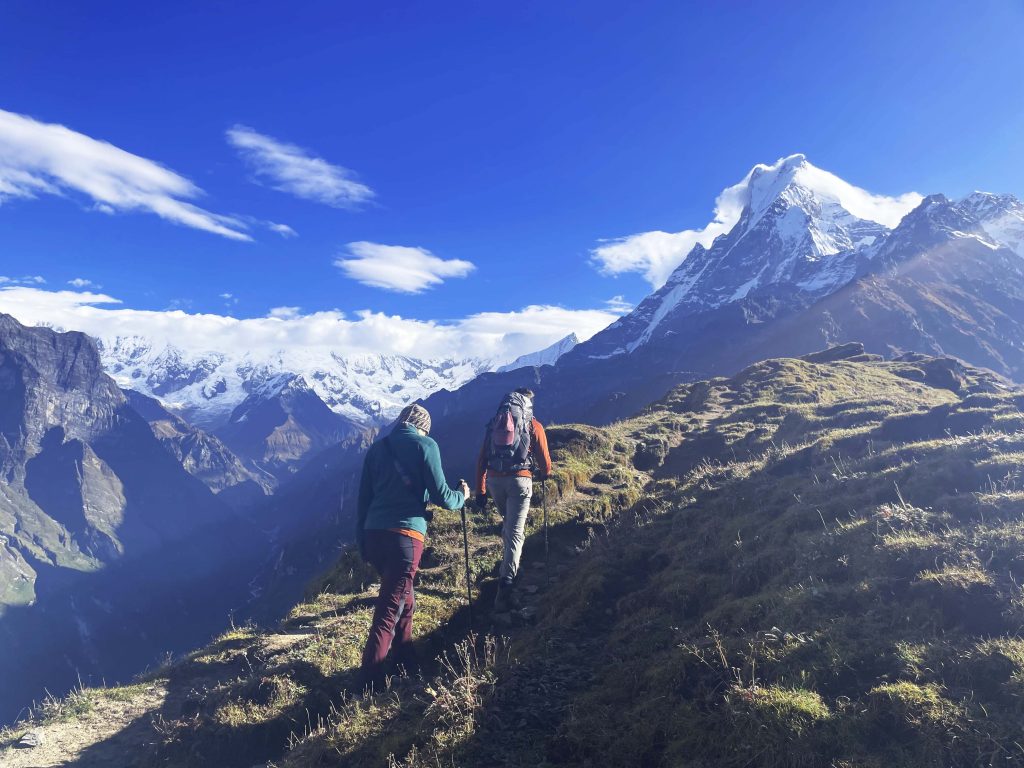
Trekkers enjoying during Mardi Himal Trek - 5 Days in Nepal
Are you searching for a short Mardi trek that can be completed in under a week? We offer the 5-Day Mardi Himal Base Camp Trek from Pokhara, which costs approximately USD 350 to 450 per person, depending on the group size. This itinerary is ideal for both Nepali and foreign tourists who wish to explore Mardi Himal from Pokhara. Below is an outline of the itinerary:
5 Day Mardi Himal Trek Itinerary Outline
Day 1: Drive to Kande from Pokhara & trek to Forest Camp(2,550m)
Day 2: Trek to Badal Danda(3,210m)
Day 3: Trek to High Camp (3,700m)
Day 4: Trek to Mardi Himal Base Camp (4,500m) and descend to Siding (1,885m)
Day 5: Drive back to Pokhara
For more information about pricing and packages, please contact us at +977-9851058664.
Map
Altitude Chart
Equipment
When you are heading for the Mardi Himal trek, you will pass through warm subtropical forest on the lower sections to the high-altitude open Himalayan landscape where temperatures can plummet to –10°C overnight. While packing, you need to pack for the fast-changing Himalayan weather from forest heat, mountain wind, and freezing temperatures. The layering system is everything for this trek, so below we have prepared the list that will help for all weather conditions:
While packing, you need to understand that our porter will carry a High Route Adventure Duffle bag where you can keep your clothes, sleeping bag, extras items. Our porter will be divided among two trekkers, and each porter carries a maximum of 20kg. So for the main bag porter carries, don't exceed more than 10kg for the ethical limit. For the daypack, which you will carry, keep the weight limit to a maximum of 7 kg. Keep the essential things like water, snacks, camera and layer items.
To make it easier for you while packing, we have prepared this list category-wise. You can follow this:
🥾Footwear
Waterproof trekking boots
3–4 pairs Wool or synthetic trekking socks
Lightweight camp sandals or flip-flops for teahouse evening
Gaiters highly used during winter or in early spring
Sock liners (thin inner socks) to reduce friction and blister risk
🧥Clothing Layers
Base Layer
Moisture-wicking base layer top(Merino wool or synthetic - never cotton at altitude)
Thermal base layer bottoms(Essential for High Camp nights)
Mid Layer
Fleece jacket or mid-layer top
Down or synthetic insulated jacket
Outer/Shell Layer
Waterproof shell jacket
Waterproof shell trousers/rain pants
General Clothing
Trekking trousers - 2 pairs
Trekking shirts (long & short sleeve) - 2–3 shirts; quick-dry fabric only
Warm hat/beanie
Sun hat or baseball cap
Lightweight gloves
Heavyweight gloves or mittens
Neck gaiter or buff
3–4 pairs Underwear
🎒Packs & Bags
Duffle Bag - Provided by HRA
Daypack (20-30L) with rain cover
Small dry bags or zip-lock bags for electronic, documents, and clothing
Stuff sack for separating dirty clothes from clean
🛏️Sleeping Gear
Sleeping bag rated to -5°C or lower
Sleeping bag liner
Earplugs
🧭Trekking Equipment
Trekking poles (pair)
Headlamp with spare batteries
Water bottles
Hydration bladder (optional)
Water purification tablets
Trekking map or downloaded offline map
💊Health & First Aid
Personal first aid kit( Blister plasters, bandages, antiseptic wipes, medical tape, safety pins )
Diamox (Acetazolamide)
Pain relief (Ibuprofen or Paracetamol)
Oral rehydration salts (ORS packets)
Antihistamine (allergy tablets)
Antidiarrheal medication
Antibiotics (broad-spectrum)
Sunscreen SPF 50+
Lip balm with SPF
Knee support braces
Blister kit (Compeed or similar)
🕶️Sun & Eye Protection
Wraparound sunglasses (UV400)
Glacier glasses or goggles
🧴Hygiene & Toiletries
Biodegradable soap/shampoo
Microfiber towel
Toothbrush and toothpaste
Wet wipes/body wipes
Hand sanitizers
Toilet paper and lighter
Feminine hygiene products
📱Electronics & Power
Smartphone with offline maps downloaded
Portable power bank (20,000+ mAh)
Universal charging cables
📄Documents & Money
Original passport
Trekking permits
Travel insurance documents (digital + print)
Emergency contact card
Nepali Rupees (cash)
🍫Snacks & Nutrition
Energy bars or granola bars
Nuts and dried fruit mix
Electrolyte powder sachets
Dark chocolate(optional)
Instant coffee or tea sachets( optional)
Buy or Rent in Kathmandu or Pokhara: You can buy trekking clothing or rent gear easily in Kathmandu and Pokhara. Both cities have many trekking shops offering everything from jackets and sleeping bags to trekking poles and boots. Renting gear is a popular and affordable option for trekkers who do not want to carry heavy equipment from home.
The Weight Rule: For every item you pack, ask: "Will I use this every day?" If no, leave it. Every extra kilogram you carry becomes a real cost at altitude. Many trekkers return wishing they'd brought half as much clothing. You can leave your spare luggage in your hotel’s storage room. It is completely safe and free. But do make sure to lock your luggage before leaving it in storage.
FAQs
FAQs of Mardi Himal Trek
What kind of shoes should I have to go on the Mardi Himal Base Camp trek?
Good quality hiking and trekking boots will take you a long way while trekking in the Mardi Himal trek. Make sure to get yourself a pair of good trekking boots with good ankle support and a comfortable sole. It is better to avoid heavy boots which will only weigh you down, quite literally. It should help you to stay away from leather shoes that have slippery soles with no grip and are too heavy to handle.
How many liters of water should I be carrying in our day pack during the day hike?
You are traveling to the Mardi Himal trek where water resources are rare, you can carry more than one liter. But, be aware to keep your travel baggage light so that it is not a nuisance during the Mardi Himal trek. Also, make sure the water is boiled or filtered properly. On the Way to the Mardi Himal Base Camp, you will get three types of bottle water, boiled water, and tap water. You can also carry portable water purifiers and other purifying tablets to make sure that you can consume safe drinking water.
Can we charge our electronic gadgets, cellphone, laptop, and batteries?
All tea house that you will stay at during the Mardi Himal trek provides the facilities of charging facilities, but you need to pay certain fees for that (around NPR 200-300).
Do we need guides and porters on the Mardi Himal Base Camp Trek?
On this 9 Days Mardi Himal Base Camp trek package we provide guide and porter service at free of cost so don't about hiring the guide and porter when you are trekking with High Route Adventure.
Can we do Mardi Himal Base Camp Trek solo?
Yes, it is possible to do a solo Mardi Himal Base Camp Trek if you are an experienced trekker, but if you are here in Nepal trekking for the first time, then we suggest you to hire a trekking guide with you.
How much is the price for the Mardi Himal Trek?
Mardi Himal Trek price depends upon the several factors such as group size, trekking season, transportation you choose, itinerary days and level of service you want during the trek. On average, it will cost you around USD 550 - 900 per person.
Can we complete the Mardi Himal Trek in a week?
Yes, the Mardi Himal Trek can be completed within a week, making it one of the best short treks near Pokhara.
I am a female solo trekker. Is it safe for me?
Yes, Mardi Himal Trek is generally safe for female solo trekkers, especially on the main route with teahouses and regular trekking traffic. For extra safety, it is recommended to trek with a guide or in a group.
Can I do this Mardi Himal trek with children?
Yes it is absolutely possible to do the Mardi Himal trek with your family and children. We can customize itinerary itinerary for this and to know more in details you can contact us.
How does your company handle emergencies during the trip?
We are operating the trekking and peak climbing over a long period. First, we don’t want this to happen, but if an emergency occurs during the trek, we will take immediate response so that you will remain safe and secure. We will keep you updated 24 hours when you are with us because your safety matters to us.
Can the Mardi Himal Trek itinerary be customized?
Yes, it is possible to have a customizable Mardi Himal Base Camp Trek itinerary by contacting our tour operator.
I'm trekking for the first time. Can I do this Mardi Himal Base Camp trek?
Many first-time trekkers have successfully completed the Mardi Himal Trek. As a beginner, the key is to prepare your body for walking 5–6 hours a day. Regular training for at least 2–3 months in advance will help build the strength and endurance needed for the trek.
Is there a risk of altitude sickness on Mardi Himal Trek?
Yes, there is a risk of altitude sickness on the Mardi Himal Trek due to the high altitude, especially as you reach Mardi Himal Base Camp (4,500m). However, the risk is manageable if you follow a proper acclimatization plan and take preventive measures.
Can we see wild animals during the Mardi Himal Trek?
Seeing wildlife on the Mardi Himal Trek is rare, but you may still spot various species such as birds, monkeys, Himalayan thar, and other small mountain animals along the forest trails.
Real experiences shared by trekkers and travelers who joined our trips.
Maria, Spain
I just returned from the Mardi Himal trek and it was an unforgettable experience. The scenery was impressive, with majestic mountains and picturesque villages. The trek was moderately difficult, but the views from the top were worth it. Our guide, Tenzing, was very knowledgeable and taught us a lot about the culture and history of the region. I highly recommend this trek to anyone looking for an authentic Himalayan experience
Raj, India
I recently did the Mardi Himal Trek with my friends and it was an amazing experience. The trek was well-organized and our guide, Ramesh, was very helpful and supportive. The scenery was stunning, with beautiful forests and towering mountains. We saw many different types of flora and fauna, and the views from the top were breathtaking. I would definitely recommend this trek to anyone looking for a challenging and rewarding experience in the Himalayas.
Julien, France
I just finished the Mardi Himal trek and it was incredible. The scenery was breathtaking, with majestic mountains and picturesque villages. The trek was moderately difficult, but the views from the top were worth it. Our guide, Kumar, was very knowledgeable and taught us a lot about the culture and history of the region. I highly recommend this trek to anyone looking for an authentic Himalayan experience.
Emily, Australia
I recently completed the Mardi Himal Trek and it was an incredible experience. The scenery was stunning, with towering mountains and picturesque villages. The trek was moderately challenging, but the views from the top were well worth it. Our guide, Ganesh, was knowledgeable and friendly, and made sure we were safe and happy throughout the trek. I would highly recommend this trek to anyone looking for a unique and authentic Himalayan experience.
Charina F
I did a 5-day trek to Mardi Himal Base Camp and it was one of my most fulfilling trek yet reaching 4,500 meters above sea level. My guide, Pramod was very helpful from the start checking if I am bringing the appropriate gears, making sure that I am comfortable in my accommodation, or just making sure that I’m enjoying the trek itself.
Ivo B
This company is very flexible – they enabled us to change the trail by combining multiple usual tracks so that we could see more in less time. Also adjustments during the track were possible.
All questions were answered – all problems solved, including the change of our flight back (which was originally purchased by us privately) without additional charges.
Our porter Parbat is an extremely tough guy being able to go very fast for long distances and accepting our request to even go further any day.
Also ours guide Bhumi’s services were far beyond the usual standard. Sometimes, he was more a personal butler than just a guide.