Chulu Far East Peak Climbing - 14 Days

Trip Facts
Duration 14 Days
Max Altitude 6,059 meter
Trip Grade Strenuous
Best Season spring (March to May) and autumn (late September to November)
Meals Breakfast | Lunch | Dinner
Accommodation Teahouse/Tent
Highlights

Chulu Far East Peak Climbing Highlights

  • Stand at the 6,059 meters of Chulu Far East summit and enjoy the breathtaking views of the Annapurna Range, surrounding peaks and beautiful landscape.
  • Visit a high-altitude glacial lake.
  • Experience teahouse stay and warm hospitality from local people.
  • Explore traditional villages, monasteries, and dramatic Himalayan scenery.
  • Cross the famous Thorong La Pass(5,416 meters)
  • Visit sacred Muktinath Temple and witness 108 sprouts, Jwala Mai Temple, eternal burning flame.
  • Cross the thrilling suspension bridge, rivers, beautiful forest, yak pasture, glaciers, snow-covered slopes, and alpine landscapes.
  • Relax by Phewa Lake in Pokhara and spend a wonderful time in a peaceful atmosphere.
Overview

Chulu Far East Peak Climbing Overview

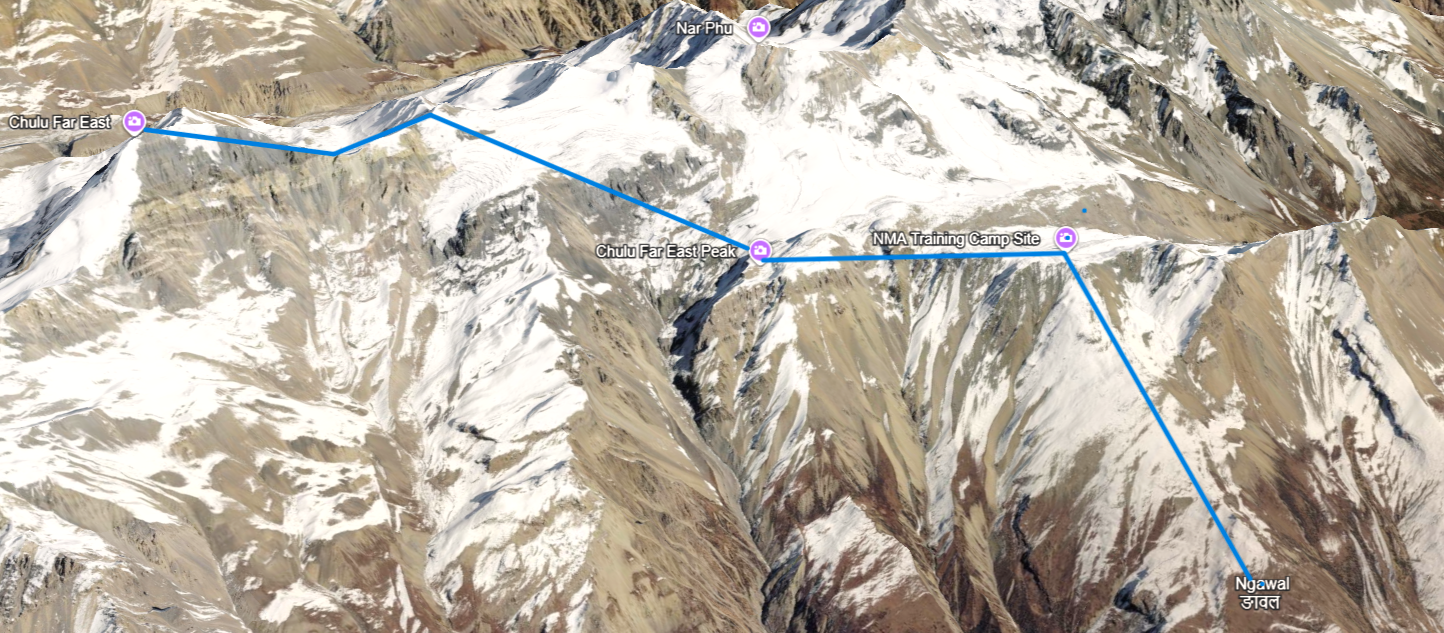
Chulu Far East Peak is a 6,059 meters (19,879 feet) altitude climbing peak located in the Manang District of Gandaki Province, Nepal. This high-altitude adventure is a combination of the Annapurna Circuit trekking route, beautiful mountain scenery, and peak climbing. 

On this 14-day journey in the Annapurna Region covers approximately 109 to 116 km. On average,climbers need to walk for 5 to 6 hours each day, with some extended hours during the summit and while crossing Thorong La Pass.

The journey starts with a scenic drive from Kathmandu to Chame. From Chame, your official trekking journey begins. Before heading for the summit push we have acclimatisation days in Manang to adjust the body to high altitude. From there, the climb leads to the summit of Chulu Far East Peak.

The summit reveals the breathtaking view of Annapurna range, Gangapurna, Manaslu, Tilicho Peak. Also, the summit of surrounding mountain peaks and bird eye view of beautiful valleys, the Tibetan Plateau, ridges, glaciers, and glacial lakes can be seen.

After a successful summit the journey takes you to the Thorong La Pass(5,416 meters), which is the highest point of Annapurna Circuit Trek. Beyond this pass there lies a sacred Muktinath Temple. This temple shows the Nepalese culture, traditions, beliefs, and the importance of religion.

On your final part of the journey you will trek to Jomsom to enjoy the beautiful scenery, dramatic landscape and traditional Thakali culture. Then driving via the Beni Jomsom Highway it takes you to Pokhara. After spending the night near the peaceful shores of Phewa Lake, the journey concludes the following day with a scenic drive from Pokhara back to Kathmandu.

Why Climb Chulu Far East Peak With High Route Adventure

  • Licensed Local Tour Operator: We are a licensed local tour operator in Nepal, authorized by the Ministry of Culture, Tourism and Civil Aviation. We are committed to safe and responsible expeditions while operating within Nepal’s legal framework.
  • Experienced Climbing Guides: Our Chulu Far East Peak Expedition is led by a certified licensed climbing guide with 10 + years of experience. They know well about trail, terrain, weather, technical challenges, and local insight.
  • Well-planned itinerary: Our team has carefully crafted this 14-day itinerary with sufficient acclimatization. We allow a flexible itinerary in case of weather delays, trail conditions, and the group’s pace.
  • 24 hour/ assistance: We provide 24-hour support and assistance service whenever needed.
  • Certification: All our participants will receive the certificate after successfully summiting Chulu Far East Peak.
  • Complimentary services: We will provide a duffle bag, down jacket, T-shirt, and sleeping bag, which you must return at the end of the journey. One hour of complimentary foot massage is also included.

Chulu Far East Peak Climb Cost For 2027/2028

Our 14-day Chulu Far East Peak Climb starts from USD XXX. The final price depends on the group size, so let’s check the price based on your group size.

No. of Group Price in USD 
1$ XXX per person
2 to 4$ XXX per person
5  to9$ XXX per person
10 plus $ XXX per person

Itinerary

Chulu Far East Peak Climbing Itinerary

Early in the morning, we will pick you up from your hotel doorstep for the scenic drive toward Chame. The driving journey will be around 8 to 9 hours through Prithvi Highway. The vehicle will be stopped in the middle of the ride for a short break and lunch. The road conditions till Besisahar are fine, but after that expect rough and bumpy roads. We request you to wear comfortable clothes and carry a water bottle for the journey.

After you reach Chame, you will check in at the teahouse and spend the night.

⛰ Altitude 2650 meter
🍽 Meals Dinner
🏨 Stay Teahouse

Today, after breakfast in the teahouse, we will start our first day of trekking. Walking on a wide dirt road or side trails for about 2 hours, we will enter the deep pine forest. Walking through the forest with distant views of the peak, we will reach Bhratang. After this, we will cross the suspension bridge and climb steep terrain where the landscape turns into alpine terrain. After we reach Dudh Pokhari, we will rest for a while for lunch with the views of Pisang Peak and Chulu East. Crossing the suspension bridge over the Marsyangdi River of the scenic upper route, we will finally arrive at Upper Pisang.

⛰ Altitude 3300 meter
🍽 Meals Breakfast | Lunch | Dinner
🏨 Stay Teahouse

After breakfast, we follow the trail that climbs gently through pine forests into drier alpine landscapes. Within 2.5 to 3 hours of walking, we will arrive at Ghyaru. From here you can enjoy massive views of the Annapurna range, including Ghyaru Stupa.

Then, from Ghyaru, walking on a gentle and peaceful trail, after about 2 to 3 hours, we will reach Ngawal. Here you will witness a Tibetan-style village with local teahouses. Now we will follow the descend trail that leads us to Braga, which is home of centuries-old multi-tiered monastery.

From Braga, further walking for around 1 hour, we will arrive at Manang Village. Tonight we will spend time here in the Manang teahouse.

⛰ Altitude 3519 meter
🍽 Meals Breakfast | Lunch | Dinner
🏨 Stay Teahouse

Today we will follow the acclimatization golden rule "climb high, sleep low" to adjust the body to high altitude before heading even higher. Today you will hike to Gangapurna. It takes an easy 30-minute walk from Manang village. The round trip to Gangapurna Lake for exploration and nearby Gangapurna Glacier takes around 2 to 3 hours.

Alternatively, trekkers can also choose to visit the Ice Lake, which takes 5 to 6 hours to reach. It is physically tough due to the long walking hours and rapid elevation gain. 

After exploring any one of these places, you will return to the teahouse. Take enough rest, sleep well and monitor your health conditions all the time.

⛰ Altitude 3519 meter
🍽 Meals Breakfast | Lunch | Dinner
🏨 Stay Teahouse

After breakfast, we leave Manang and hike toward Yak Kharka. Following the steady climb above the Marshyandgi River Valley, we will reach Tenki. Passing Gunsang while enjoying the views of Annapurna II, Annapurna III, Gangapurna, and Tilicho Peak, we will arrive at Yak Kharka. Here you can see the Yaks graze freely on the surrounding hillsides. Tonight you will spend time here in Yak Kharka. From here, the trail separates from the main Annapurna Circuit toward Chulu Far East. We rest here for the night at a local teahouse.

⛰ Altitude 4020 meter
🍽 Meals Breakfast | Lunch | Dinner
🏨 Stay Teahouse

Leaving Yak Kharka after breakfast, we will hike toward the Base Camp. Today's trail is demanding and takes us in remote terrain. For 5 to 6 hours, we will walk through rugged ridgelines and glacial moraines. 

You will notice the vegetation thinning as we move higher. But the panoramic views of Chulu peaks standing high above you inspire you to keep moving.

By late afternoon, we will arrive at Chulu Far East Base Camp. Our team will set up the tent and prepare dinner. Take a rest, enjoy dinner and a breathtaking night view under the open sky.

⛰ Altitude 4600 meter
🍽 Meals Breakfast | Lunch | Dinner
🏨 Stay Tent

After having simple and energy snacks, we will begin our walk toward the High Camp. The hike is steep and demanding. The ascent is 3 to 4 hours with significant gain in elevation. Once you reach the High Camp, the sweeping views of surrounding peaks, including Chulu West and the Annapurna range, welcome you. Our team will set up a tent where we rest and prepare equipment for the summit attempt.

⛰ Altitude 5400 meter
🍽 Meals Breakfast | Lunch | Dinner
🏨 Stay Tent

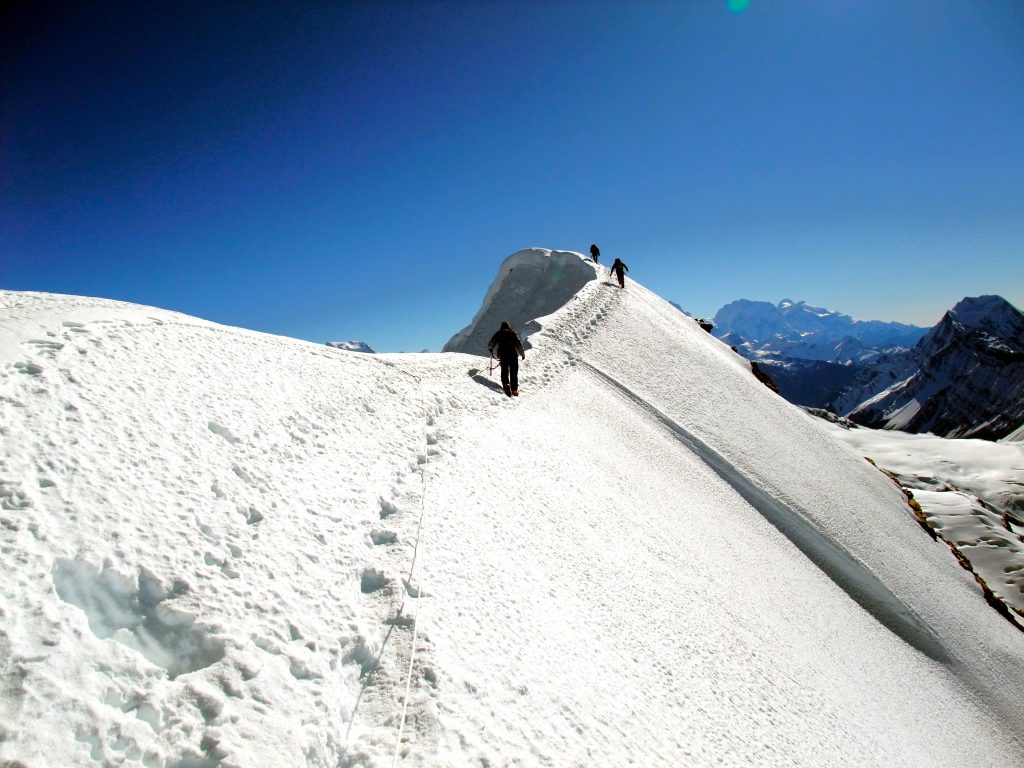
Today will be both a challenging and rewarding day of this entire journey. We will walk up around 1:30 and get ready for the summit push. Putting the headlamp on, we start hiking around 2:00 AM from High Camp. It is necessary to reach the summit before 11 AM and to avoid the strong and snow-melting conditions.

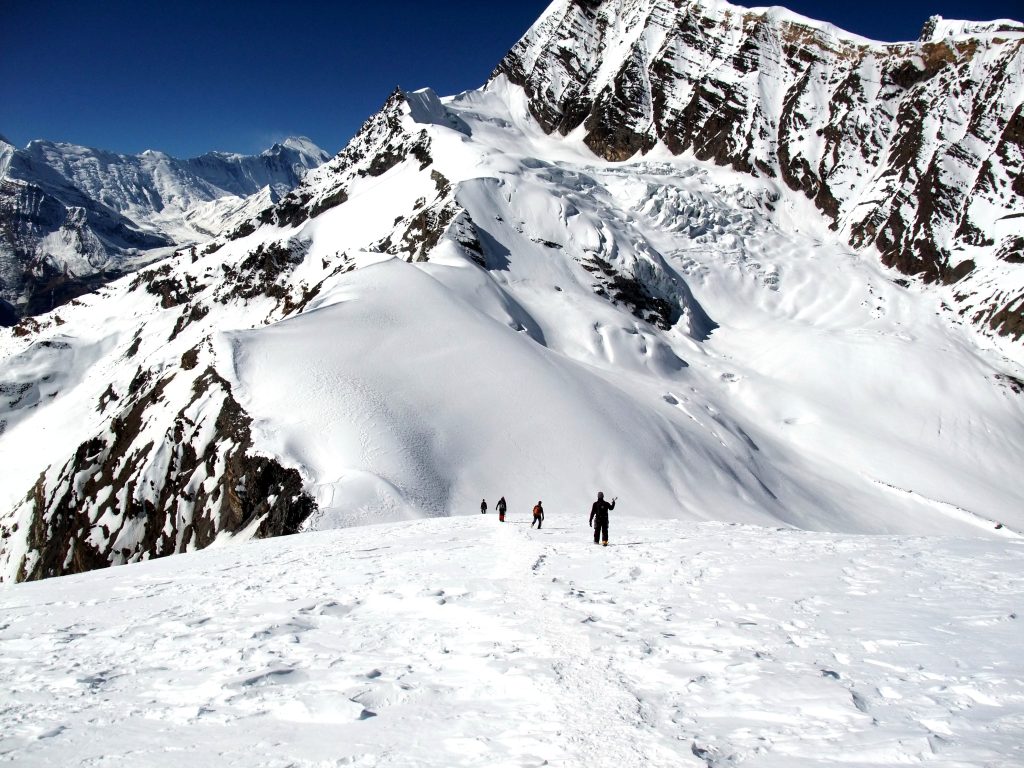
We carefully pass through the glaciated terrain using crampons and ropes with our Guides. After 5 to 6 hours of ascent, we will reach the top of the Chulu Far East. Standing proudly at the top, we will witness the magical view of the Annapurna range, Manang valley, and distant Himalayan peaks. Take a moment to feel the achievement, celebrate the journey, and capture this unforgettable experience with plenty of photos and videos. Then we will safely descend to the Base Camp for an overnight stay.

⛰ Altitude 4600 meter
🍽 Meals Breakfast | Lunch | Dinner
🏨 Stay Tent

Leaving Chulu after breakfast, we will descend toward Ledar. Now the trail connects to the main Annapurna Circuit trekking route. From the glacial landscape, we will return to the gentler valley. Once again we pass through Yak Kharka before continuing to Ledar. We rest here for the night.

⛰ Altitude 4250 meter
🍽 Meals Breakfast | Lunch | Dinner
🏨 Stay Teahouse

After breakfast, we start walking on the main Annapurna Circuit Trail. Today's walk will be short, but we should be careful about the steep and rocky path, especially above the Jarsang Khola river valley.

We cross the small suspension bridge and follow the narrow trail along the Marsyangdi Valley. After a few hours of walking, we will arrive at Thorong Phedi in the afternoon. Here at a teahouse, we will rest, hydrate, and mentally prepare. 

⛰ Altitude 4450 meter
🍽 Meals Breakfast | Lunch | Dinner
🏨 Stay Teahouse

Today we will wake up early around 4 or 5 AM and then cross the challenging and physically demanding Thorong La Pass. Walking for 1 hour, we will reach High Camp, and further walking for around 2.5 to 3 hours, we will reach the Thorong La Pass. From the pass, you can enjoy beautiful scenery of surrounding peaks and distant views of the dry Mustang region.

From the top, we will descend to Muktinath Temple by walking for around 3 to 4 hours. As we approach the temple, the rich spirituality can be experienced. Thousands of devotees and pilgrims visit for blessings and pray at this revered pilgrimage site.After exploring the temple, we will check into the hotel nearby and stay overnight here.

⛰ Altitude 3800 meter
🍽 Meals Breakfast | Lunch | Dinner
🏨 Stay Teahouse

With the sounds of the ringing bell in the temple, you will wake up and get refreshed. After a quick visit to the temple, we will return to the hotel for breakfast and prepare to leave for Jomsom. Walking through the dramatic Kali Gandaki gorge and passing through Kagbeni, we will arrive at Jomsom. This windy village sits at the riverbank from where you can enjoy an impressive view of Mt. Nilgiri and the dramatic landscape of Mustang valley. Overnight stay in the Jomsom hotel.

⛰ Altitude 2700 meter
🍽 Meals Breakfast | Lunch | Dinner
🏨 Stay Teahouse

After breakfast, we begin a scenic drive from Jomsom toward Pokhara. The journey takes approximately 6–7 hours. The landscape gradually becomes greener as you approach Pokhara. Upon arriving in Pokhara, you will check into a hotel and celebrate with your team. In the evening, you can walk around Phewa Lake and explore the nightlife. Here, you can find numerous restaurants, cafés, spas, nightclubs, bars, souvenir shops, and many more.

⛰ Altitude 822 meter
🍽 Meals Breakfast
🏨 Stay Hotel

After breakfast in the hotel, you will reach the Pokhara bus station to catch the tourist bus. Then, riding for around 6 to 7 hours, you will arrive in Kathmandu. Then, from Gongabu bus station, we will transfer you to the hotel.

⛰ Altitude 1400 meter

Build Your Own Adventure!

Collaborate with our specialists to create a unique itinerary.

Chulu Far East Peak Booking, Payment and Cancellation Policy
  • Booking: To confirm the booking, please fill out the form through the website and make a 20% advance payment. Booking confirmation will be sent to you once we receive the payment.
  • Payment: We accept different kinds of payment options such as Debit/Credit Card, Bank transfer, Online transfer, and other convenient payment methods.
  • Cancellation: To know about our cancellation policy, read in detail here: Terms and Conditions
Cost Detail

Inclusion

What's included ?

  • Private transportation from Kathmandu to Chame and Tourist Bus from Pokhara to Kathmandu
  • Breakfast, lunch and dinner during stay at teahouse
  • Certified Climbing Guide and porter(1:2 ratio)
  • NMA permit, ACAP, TIMS Card
  • Tent setup

What's not included ?

  • International Flight
  • Nepal Visa
  • Accommodation and meals at Kathmandu/Pokhara
  • Nepal Visa
  • Insurance
  • Personal Expense( Tips, Wifi, hot shower, drinks)
Things to Know

Guest Requirements for Chulu Far East Peak

  • Participants must be able to walk for an average of 5 to 6 hours per day, with some days requiring 8 to 10 hours.
  • Beginners climbers are accepted, but they must have previous high-altitude trekking experience with strong stamina.
  • Should have basic knowledge of mountain gear, such as using crampons, ropes, and other climbing equipment.
  • Participants must prepare mentally for challenging days and unseen situations like sudden weather changes. 
  • A positive attitude, patience, and determination are required for a successful summit.
  • Climbers must be in good physical shape and in good health.
  • They should bring their own trekking clothing and personal climbing gear.
  • Participants should cooperate with the team, follow the guide’s instructions, and practice responsible and sustainable tourism throughout the journey.

Notes

How Difficult is Climbing Chulu Far East Peak?

Chulu Far is listed in Group “B” Trekking Peak by the Nepal Mountaineering Association (NMA). It is “moderate” in terms of difficulty level. Compared to Chulu East(6584m), Chulu West(6,419m), this Chulu Far East(6,059 m) is non-technical or low-technical. This means this trekking peak is straightforward and beginner-friendly.

However, climbers should not underestimate it due to various risk factors like:

  • High altitude and Thin air: Reaching the summit at 6,059 m is the main challenge. Here, the air pressure and oxygen level in the air are lower than at sea level. Less oxygen means poor performance, and the risk of altitude sickness remains extremely high.
  • Steep terrain: While approaching the summit, climbers need to walk on approximately a 40–45 ° slope. Careful footing, proper balancing and basic mountaineering skills are required.
  • Long summit day: During summit day, it takes 4 to 6 hours to reach the 6,059 and descending takes another 3 to 4 hours. Walking for such long hours in a single day and at high altitude is physically and mentally exhausting.
  • Unpredictable Weather: In the Himalayas, things don’t go as planned; the weather can shift dramatically even in the best climbing season. Bad weather results in snowfall, strong winds, low visibility, and falling temperatures. Summit delays and risk remain significantly higher in such conditions.
  • Remote isolation: This journey takes you to a remote landscape where it will be difficult to find medical facilities, roads and modern facilities. During an emergency, it can take time depending upon the location and weather conditions.
  • Terrain Challenges: Climbers need to navigate through a variety of landscapes like glaciers, crevassed areas, rocky sections, scree, moraine, and snow-covered slopes.

What Training Programme is Best For Chulu Far East Peak?

No matter if you are a beginner climber or an experienced climber, training plays an important role. Before joining this climbing adventure, we suggest you follow the training programme for at least 8–12 weeks. Focus on these things: 

  • Cardiovascular Training: Improve your cardiovascular endurance through activities such as running, cycling, swimming, stair climbing, and brisk uphill walking.
  • Uphill Hiking: Practise hiking carrying a 5 to10 kg backpack that you will need for this trip.
  • Strength Training: Do exercises such as squats, lunges, step-ups, calf raises, planks, and push-ups to increase your leg and upper body strength.
  • Endurance & Back-to-Back Training: To build endurance, it takes time, so invest 1 to hours daily. Also take rest to recover after heavy exercise and focus on building a healthy body by taking nutritious and healthy food.
  • Mountaineering Skills: Learning the basic mountaineering skills helps to build confidence. Please learn these skills by joining the course or by taking practical lessons from an experienced climbing instructor.
  • Altitude Preparation: When you are heading for high altitude, not only physical fitness is sufficient. Learn breathing techniques, acclimatization tips, pacing and hydration habits.
  • Technical and Safety Skills: Learn how to manage risk and make safe decisions during difficult situations. 

Best Time to Climb Chulu Far East Peak

The best time to climb Chulu Far East Peak is during spring (March to May) and autumn (September to November). This season offers favourable climbing weather conditions, the best views of mountain peaks, and the summit success rate is high.

In spring, the colorful blossom of rhododendron in the forest trail adds to the beauty of lower sections of the route. Also, the warmer temperatures, longer daylight hours and less chance of rainfall make it favorable for the summit attempt.

In autumn, the clear sky and excellent visibility make it a popular season for climbing. The best view of the Annapurna range is from the summit, and you can enjoy breathtaking surrounding Himalayan Peaks.

Summer(June–August) and Winter (December–February) are off-season. During this time, climbing is possible but risky due to harsh weather conditions and unpredictable weather.

Required Climbing Permits and Documents

To participate in this adventure, all our climber needs:

  • NMA Peak Permit
  • Annapurna Conservation Area Permit (ACAP)
  • Trekkers' Information Management System (TIMS) Card

All these required permits will be obtained by us, and for the permit process, we need these documents from you:

  • A valid passport (with six months' validity),
  • passport-sized photos
  • Travel insurance covering high-altitude helicopter rescue

Accommodation during Trek and Climb: What To Expect

Accommodation in the Chulu Far East Peak journey depends upon location. From Chame to the Yak Kharka, you will stay in the teahouse. At Base Camp and High Camp, you will stay in a tent which is set up by us.

  • Teahouse facilities: Inside the teahouse, you will find a twin-sharing bed, blanket and pillow. Wifi, hot shower, and charging are available, but you need to pay a small fee.
  • Tent: There will be a separate tent for the kitchen, sleeping and toilets. You won’t get any facilities like wifi, hot shower and charging while staying in a tent. 

Food during Trek and Climb: What To Expect

While staying in the teahouse, our climbers can choose the food items from the menu. Food items are mostly Nepali dishes with a few other international dishes. Veg and non-veg items are available. Remember, the higher you go, the more basic the food items become. During the camping section, breakfast, lunch and dinner will be a simple and limited choice. 

Let’s see the food menu items at the teahouse:

Breakfast

  • Porridge
  • Tibetan bread
  • Pancakes
  • Toast with butter, jam, or honey
  • Eggs – boiled, fried, scrambled, or omelet
  • Muesli or cornflakes
  • Chapati
  • Tea, coffee, and hot chocolate

Lunch

  • Dal Bhat
  • Momo
  • Thukpa
  • Fried rice
  • Fried noodles
  • Pasta
  • Sherpa stew
  • Sandwiches
  • Soup
  • Vegetable or egg dishes

Dinner

  • Dal Bhat
  • Momo
  • Thukpa
  • Sherpa stew
  • Fried rice
  • Fried noodles
  • Pasta
  • Soup
  • Vegetable, egg, or meat dishes

Drinks & Beverages

  • Tea
  • Milk Tea
  • Black Tea
  • Ginger Tea
  • Lemon Tea
  • Mint Tea
  • Coffee
  • Black Coffee
  • Hot Chocolate
  • Hot Lemon
  • Hot Milk
  • Fresh Juice (where available)
  • Bottled Water
  • Boiled/Filtered Water
  • Soft Drinks (where available)

Risk of Altitude Sickness and How to Minimize

The risk of Acute Mountain Sickness (AMS) starts from 3,000 metres above sea level. At Chulu Far East Peak, you will reach an altitude of 6,059 m, where the risk of altitude sickness becomes significantly higher. No medicine can cure AMS once you catch symptoms, but we can definitely prevent it. These are the precautions that you should follow, which will help to minimise the risk of altitude sickness:

  • Ascend gradually and avoid walking too fast above 3,000 meters.
  • Take enough rest whenever you feel tired
  • Give your body enough time to adjust to the decreasing oxygen levels.
  • Drink water regularly at several-hour intervals to keep your body hydrated
  • Avoid doing heavy exercise at high altitude.
  • Skip alcohol, caffeine, and sleeping pills.
  • Eat fresh food which is high in carbs and easy to digest.
  • You can take medicine for altitude sickness(acetazolamide) by consulting with a doctor. 
  • Avoid shortcut itineraries and follow the golden rule” climb high, sleep low”.

Travel Insurance: Why It Matters & How to Choose the Right One

Insurance is mandatory to obtain the NMA permit in Nepal. Therefore, to obtain the permit as well as for your safety, you must obtain insurance that covers these common things:

  • Trekking and climbing activities up to 6,100 meters
  • Helicopter evacuation policy must explicitly validate coverage above 6,000 meters.
  • Trip delay and cancellation 
  • Coverage for emergency medical treatment
  • Coverage for search-and-rescue operations if required.
  • Coverage for emergency hospitalization and treatment.
  • Coverage for transportation back to your home country if medically necessary.

Note: If you are looking for the right insurance company with the best policy, then we can assist you. Contact our tour operator to learn more in detail.
Equipment

Climbers are responsible for arranging their own clothing, gear, and equipment required for the Chulu Far East Peak climb. Rental options for climbing gear are also available at rental shops in Thamel. If you have not brought the necessary items, you can also purchase them in Thamel at affordable prices.

Let’s see what you need to pack:

🧥 Clothing

  • Base-layer thermal top and bottom
  • Fleece jacket
  • Down jacket
  • Waterproof and windproof jacket
  • Trekking shirts and T-shirts
  • Trekking trousers
  • Waterproof trousers
  • Warm trekking pants
  • Underwear
  • Warm hat/beanie
  • Sun hat/cap
  • Neck gaiter or buff
  • Trekking gloves
  • Warm insulated gloves
  • Wool or thermal socks
  • Gaiters

🥾 Best Gear for hiking Chulu Far East Peak

  • Trekking boots
  • Camp shoes/sandals
  • Backpack (30–40 L)
  • Duffel bag
  • Trekking poles
  • Headlamp with spare batteries
  • Water bottles or hydration bladder
  • Sunglasses
  • Sleeping bag suitable for cold temperatures
  • Waterproof backpack cover
  • Dry bags or waterproof packing bags

🧗 Mountaineering Equipment

  • Crampons
  • Mountaineering ice axe
  • Climbing harness
  • Climbing helmet
  • Carabiners
  • Ascender/Jumar
  • Belay/rappel device
  • Mountaineering rope/cords, if required
  • Mountaineering gaiters

🧴 Personal & Health Items

  • Sunscreen (SPF 30–50+)
  • Lip balm with SPF
  • Personal medication
  • Basic first-aid supplies
  • Hand sanitizer
  • Wet wipes and tissues
  • Toiletries
  • Quick-drying towel
  • Water purification tablets or filter

📱 Electronics & Essentials

  • Mobile phone
  • Power bank
  • Camera
  • Charging cables
  • Universal travel adapter
  • Headphones, if needed
  • Small waterproof pouch for valuables
  • Passport and required documents
  • Travel insurance details
  • Some Nepalese rupees for personal expenses
FAQs

FAQs of Chulu Far East Peak Climbing

  • Where Is Chulu Far East Peak Located?

    Chulu Far East Peak is located northwest of Kathmandu in the Manang District, within the Annapurna region of Nepal. It is part of the Chulu mountain group in the Manang Himal and lies in the broader Damodar Himalayan range. The peak is situated along the Annapurna Circuit trekking route, making it accessible through the Manang region.
  • Is Chulu East Peak and Chulu Far East Peak the same?

    No. Chulu East Peak and Chulu Far East Peak are different peaks, although both belong to the Chulu group in the Annapurna/Manang region. Chulu East Peak has a summit altitude of 6,584 meters (21,601 feet), while Chulu Far East Peak stands at 6,059 meters (19,878 feet). The climbing routes and characteristics of each peak differ from one another.
  • Which is harder to climb, Chulu East or Chulu Far East?

    Chulu East is more challenging than Chulu Far East due to its higher technical demands, greater altitude, and steeper, more technical sections. Climbers attempting Chulu East are required to have prior mountaineering experience, while Chulu Far East allows beginner climbers to join.
  • Which is harder to climb, Chulu Far East or Chulu West?

    Chulu West is more challenging than Chulu Far East due to its higher altitude and the nature of the demanding alpine terrain and technical climbing involved.
  • How to book porter and guide service for the Chulu East Peak?

    We offer an all-inclusive package that includes both guide and porter services, so you don’t need to hire them separately.

Related Packages

You may like these packages too !
Chat via WhatsApp +977 9851058664

Our Partners

We are associated with

High Route Adventure TripAvisor Award 2025 High Route Adventure TripAvisor Award 2025