Bhutan Visa Requirements
Foreign citizens must obtain a visa before traveling to Bhutan. All travelers are welcome to visit and experience Bhutan; however, it is necessary to book a trip with a registered tour operator. Independent travel is not permitted, and by law, visitors must be accompanied by a licensed Bhutanese guide. High Route Adventure will assist you in applying for your Bhutan visa and will cover the Sustainable Development Fee (SDF), which is included in the Package.
To obtain a Bhutan visa, please provide us with the following:
- Date and time of your visit as per your interest
- A scanned copy of your passport
- A recent passport-sized photograph.
How to Book Bhutan Tour Package
To book the Bhutan tour package, you can book through our website by clicking on the Book Now button inside the package. After clicking, you need to enter your details and submit them. Once we receive your request, our tour operator will contact you to confirm your travel plans, answer any questions, and customize the itinerary if needed.
Then, to confirm the booking, you need to make a payment of 20% of the total trip cost. Then you need to send us the payment slip through email or whatsapp. The rest of the payment you can pay after you land here in Nepal.
Don't hesitate to contact us with any inquiries while booking - our dedicated team is eager to help you! We're here to support you every step of the way.
For Payment we accept:
- Bank / Wire Transfers (SWIFT)
- Credit Cards
- Online Payment Gateways
- Nepali wallets like eSewa or Khalti
- Cash: major foreign currencies (USD, EUR, GBP, AUD) or Nepali Rupees (NPR)
Tour cancellation policy: We advise our customers to thoroughly review our company's terms and conditions prior to booking a trip.
Notes
Best Time to Visit Bhutan
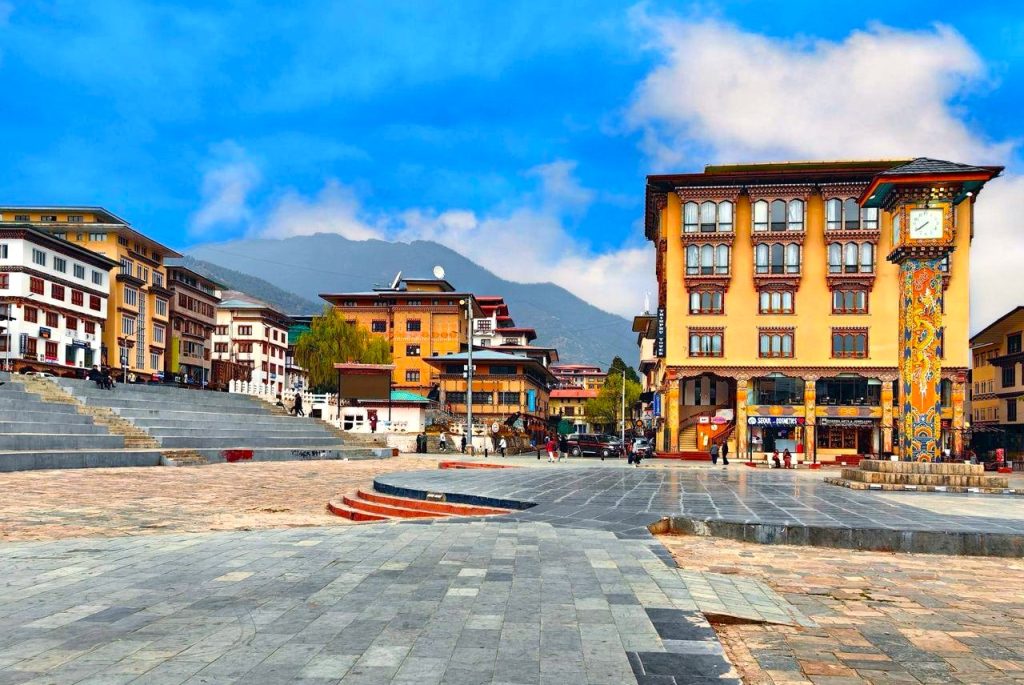
Bhutan is stunning in every season, making it a great destination regardless of when you plan to visit. However, if you want the best experience for touring and trekking, choosing the right season is important. The best times for travelers are spring (March to May) and autumn (September to November). During these months, you can enjoy clear views of the Himalayas, moderate temperatures, and the chance to experience vibrant festivals, such as the spectacular Thimphu Tshechu Festival in October.
Bhutan sees few tourists in the summer season due to rainfall. The landscape turns into green landscapes, but the hiking trail remains muddy. Winter (December to February) is cold in Bhutan, especially in the higher elevations. Even so, it is a rewarding time to visit. The black-necked cranes arrive in Gangtey, and the Losar (New Year) festival fills monasteries with colorful celebrations.
Bhutan Tour Difficulty
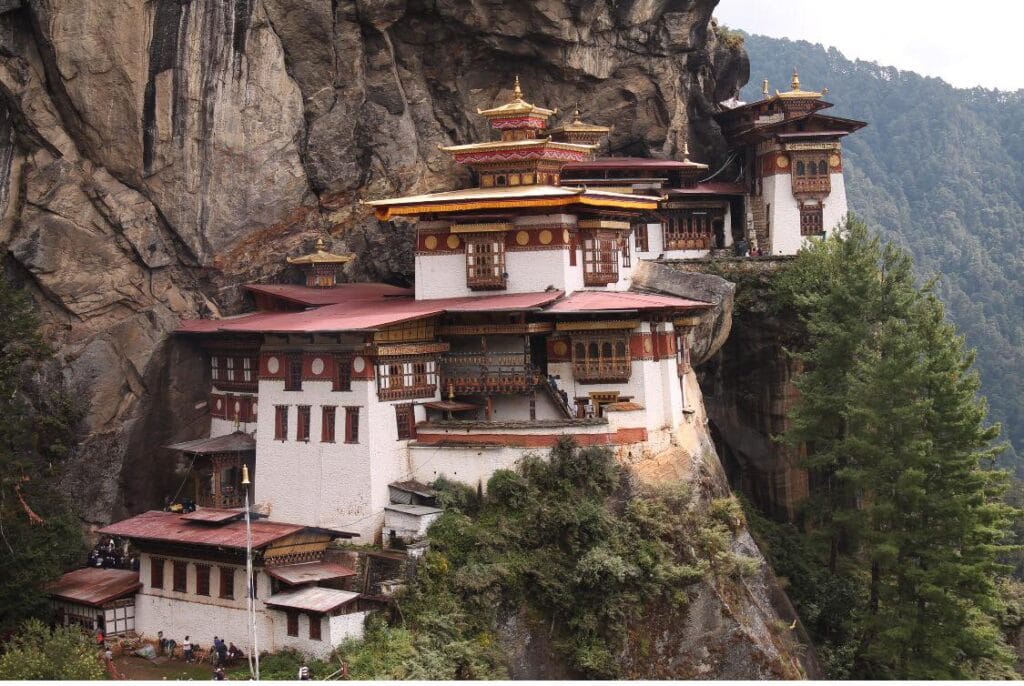
The Bhutan tour is generally easy, but hiking to the Tiger's Nest Monastery (Paro Taktsang) is the most challenging part of the journey. Tiger's Nest Monastery is a 20-30-minute drive from Paro town to the starting hiking point/parking lot near Ramthangka (2597 meters/8520 feet). It takes 2–3 hours to reach the Tiger's Nest monastery. This Tiger Nest monastery is situated at an altitude of 3,120 meters/10,240 feet) above sea level. During the hike, you will gain an elevation of around 520–600 m metres(1700-1968ft). The total hike duration is 4-5 hours, plus 1 hour for touring the monastery. The hike from the base to the cafeteria is a steep 2 km uphill trail through a pine forest, taking 1 - 1.5 hours, while the 1.1 km trail from the cafeteria to the viewpoint is gentler and takes about 40 minutes.
The oxygen level at Tiger's Nest Monastery (Paro Taktsang) is about 70% of sea level. So, during the hike, although the risk of altitude sickness is low, we still need to walk at our own pace. This hike can be physically tough for those who are not physically active. You should have a moderate level of fitness to enjoy the Tiger Nest Monastery hike.
| Detail |
Information |
| Starting Point |
Ramthangka Trailhead / Parking Area (2,600 m / 8,530 ft) |
| Monastery Altitude |
3,120 m / 10,240 ft |
| Elevation Gain |
Approximately 520–600 m |
| Distance (One Way) |
Approximately 3.2–3.5 km (2–2.2 miles) |
| Total Hiking Time |
4–5 hours round trip, plus about 1 hour at the monastery |
| Difficulty Level |
Moderate (well-maintained trail with some steep sections) |
| Oxygen Level |
Approximately 70% of sea-level oxygen—hike at a comfortable pace |
| Recommended Start Time |
Around 8:00 AM to avoid crowds and afternoon heat |
| Horse Ride Option |
Available from the trailhead to the cafeteria (halfway); approximately USD 15 (one way) |
Note: You can skip the hike if you don't want to.
How to Prepare for the Tiger's Nest Monastery Hike
Although the Tiger Nest Monastery hike can be done with normal fitness, with proper preparation, it can be enjoyable and less tiring. Here is how to get ready for the hike:
- Wear comfortable trekking shoes.
- Carry water and light snacks.
- Dress in layers for changing weather.
- Start early to avoid crowds and heat.
- Take breaks as needed to pace yourself.
Discover the fascinating details about the Tiger's Nest Monastery that you won’t want to miss: Tiger's Nest Monastery of Bhutan.
Accommodation and Meals in Bhutan Tour
On this 10-day Bhutan tour package from Kathmandu, all accommodation and meals in Bhutan are included. High Route Adventure will select the best available room for you during your stay in a 3-star hotel, with the option to upgrade to a higher class of accommodation for an additional cost. The hotels provide clean rooms, modern amenities, and warm Bhutanese hospitality. You will have access to Wi-Fi and charging facilities. For your convenience, we recommend purchasing a local SIM card (such as TashiCell or B-Mobile) for communication and mobile internet.
The hotels typically offer Type C, Type D, Type F, and Type G sockets for charging devices. If your chargers are not compatible, please bring a travel adapter. Additionally, carrying a power bank is a great idea.
During your stay in Bhutan, we will provide you with three meals each day: breakfast, lunch, and dinner. Meals will be served at hotels or local restaurants, offering a variety of authentic Bhutanese, Indian, Chinese, and Continental cuisine. Vegetarian options are also available for those who prefer them.
Here are some popular Bhutanese dishes you may enjoy:
- Ema Datshi (chili and cheese)
- Kewa Datshi (potato and cheese)
- Shamu Datshi (mushroom and cheese)
- Phaksha Paa (pork with red chilies)
- Jasha Maru (Bhutanese chicken curry)
- Red Bhutanese rice
- Momos (dumplings)
- Noodle dishes
- Fried rice
- Soups
Please be aware that for drinks, alcohol, and additional meals, you will need to handle the budget independently. Your cooperation is appreciated.
Currency Used in Bhutan
Travelers with Indian currency or USD can use it throughout Bhutan. However, if you have other currencies, you can exchange them at Paro International Airport. Visa and Mastercard are only accepted in larger hotels. For your convenience, we recommend exchanging your currency for the local Bhutanese Ngultrum (BTN) and carrying that around.
- 1 BTN = USD 0.011 (as of June 30, 2026)
Bhutan Festivals Calendar 2026–2027
For those who want to experience the festival of Bhutan while on a tour, you can match your travel date with the Bhutan festival. Below are some of the top Bhutan festivals that are well worth experiencing
| Festival |
Location |
Dates (Approx.) |
Significance |
| Paro Tsechu |
Paro |
March–April |
Bhutan's most famous festival, featuring sacred mask dances and the unfurling of the giant Thongdrel (Thangka) on the final morning. |
| Ura Yakchoe |
Bumthang |
April–May |
A unique five-day festival featuring the sacred Yakchoe relic, traditional mask dances, and local cultural celebrations. |
| Thimphu Tsechu |
Thimphu |
September–October |
Bhutan's largest festival, known for colorful mask dances, religious ceremonies, and thousands of local participants dressed in traditional attire. |
| Wangdue Tsechu |
Wangdue Phodrang |
September–October |
Bhutan's largest festival, known for colorful mask dances, religious ceremonies, and thousands of local participants dressed in traditional attire. |
| Black-Necked Crane Festival |
Phobjikha |
November 11 |
Celebrates the arrival of the endangered Black-necked Cranes with traditional dances, cultural performances, and conservation awareness programs. |
| Punakha Drubchen |
Punakha |
February–March |
A historic festival featuring dramatic reenactments of Bhutan's victory over Tibetan invaders, followed by the colorful Punakha Tsechu. |
Note: For the accurate date check the Bhutan festival calendar.
Responsible and Eco-Friendly Travel Tips for Bhutan
- For the best weather conditions, plan to travel in the spring or autumn season.
- Respect Bhutan local culture and traditions during the tour.
- Greet locals with a smile and respect.
- Carry your reusable water bottle with you all the time.
- Don’t litter or throw waste randomly. Dispose of waste only in designated areas.
- Follow your Bhutanese tour guide instructions all the time.
- Do not disturb wildlife or pick flowers and plants.
- Respect Bhutan's smoke-free policies and avoid smoking in restricted areas to help maintain a healthy environment for everyone.
- Please keep noise levels to a minimum to help maintain the peaceful atmosphere that monasteries and villages offer.
- Taking photos and videos is allowed during tour but be sure to ask for permission before taking photos of people or capturing images within religious sites.