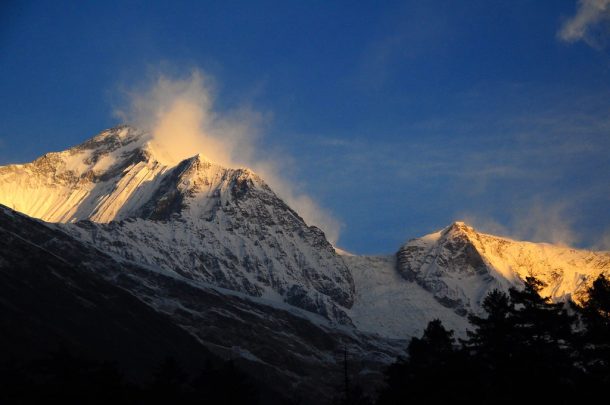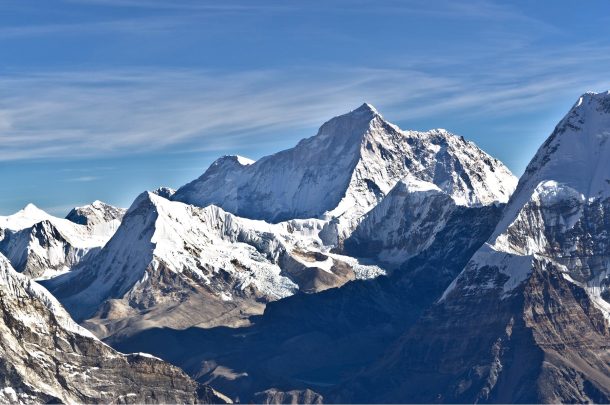
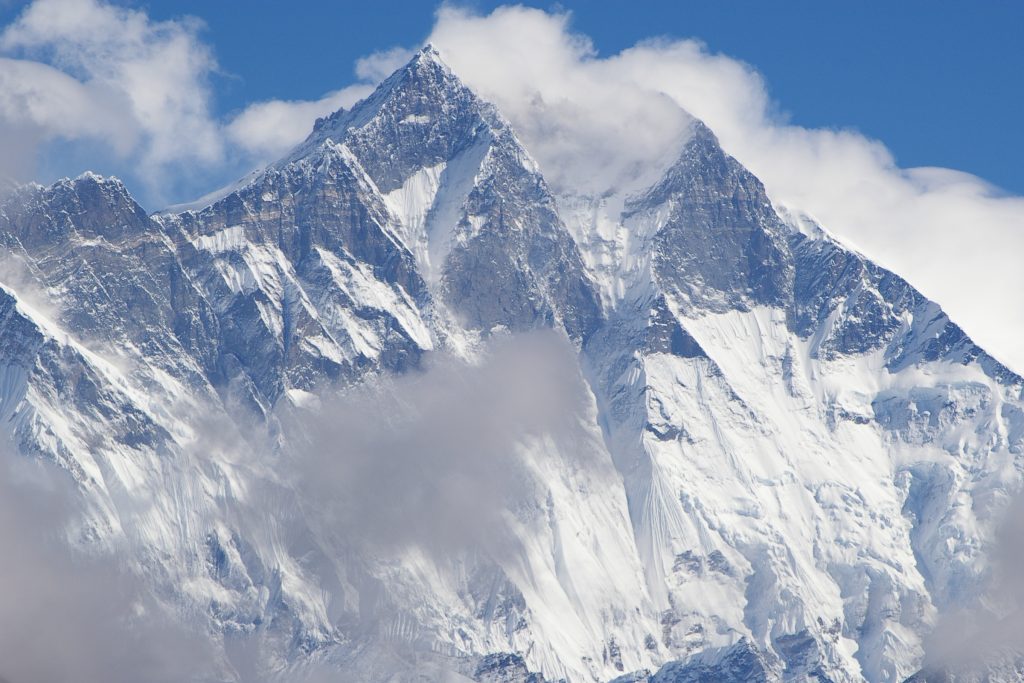
Lhotse Peak is the world’s 4th-highest peak, located in the Solukhumbu Region of Nepal. It is a neighbouring peak to Mt. Everest (8,848.86 m). Lhotse shares the border between Tibet, China and Nepal, and the standard climbing route is from Nepal.
On this Lhotse Expedition, we follow the Everest Base Camp trekking trail and reach up to Base Camp (5,364 m). Then, before starting our climbing journey, we perform puja by following the local Sherpa tradition. Sherpas consider mountains their home, and puja helps, so it is performed to seek blessings and spiritual protection.
From Base Camp, we will do an acclimatization rotation for several weeks before making the summit push. It allows our bodies to adapt to the lower oxygen levels, understand the route, challenge, and prepare for the demanding climb.
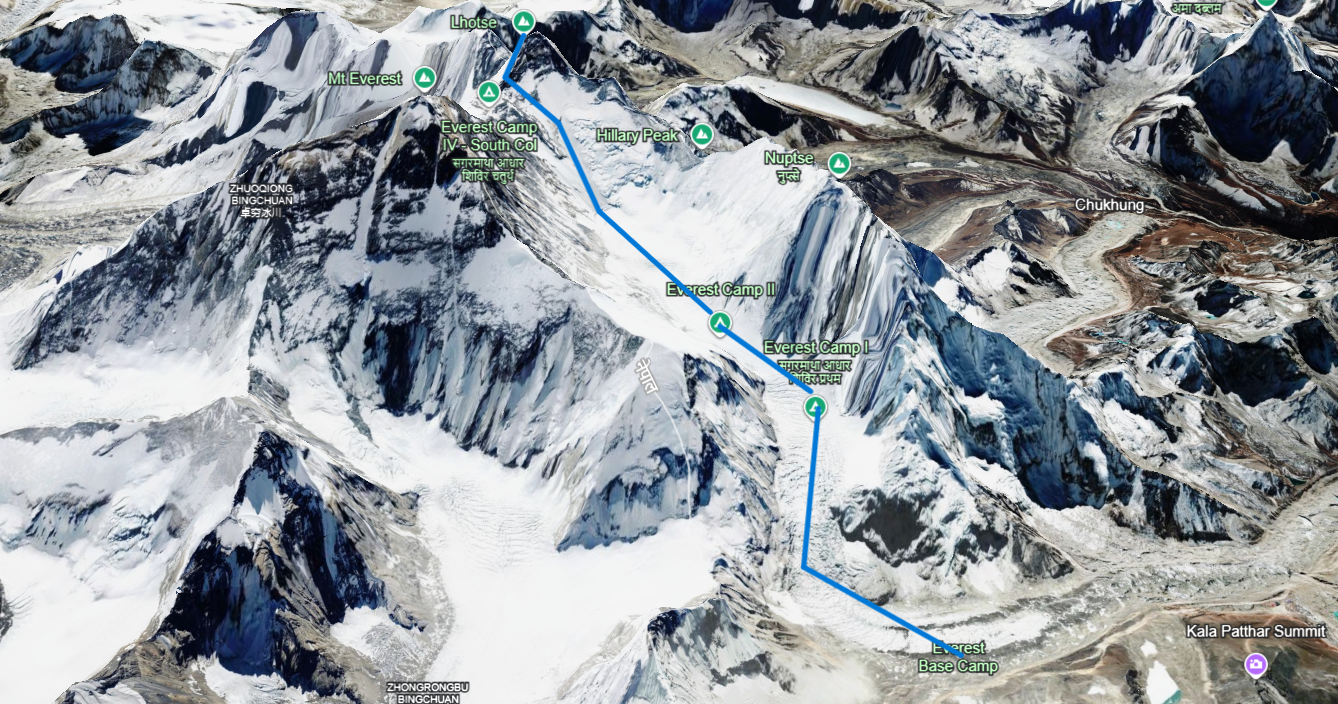
When our expert Sherpa guide identifies a suitable weather window, we commence our summit push. Starting from Base Camp (5,364–5,400 meters), we ascend through several camps: Camp I (5,900–5,943 meters), Camp II (6,400–6,500 meters), and Camp III (7,100–7,300 meters) before finally reaching Camp IV (7,800–7,920 meters).
Above the Yellow Band, a prominent section of golden limestone on the upper Lhotse Face, the routes to Everest and Lhotse diverge. Everest climbers head toward the South Col, while we continue along the Lhotse route toward Camp IV and tackle the steep upper Lhotse Couloir. We navigate through this challenging section as we make our way to the summit of Lhotse, which stands at 8,516 meters.
From the top of Lhotse, it rewards climbers with a breathtaking close view of mighty Mount Everest Sagarmatha). Also, a panoramic view of surrounding peaks like Nuptse, Makalu, Cho Oyu, and Ama Dablam is visible. When you look below, a bird’s-eye view of Khumbu Glacier, Western Cwm, and surrounding high-altitude valleys also surrounds you.
Then, you will safely descend back to Base Camp, trek to Lukla Airport, fly to Kathmandu, and conclude your Lhotse Peak Expedition.
First ascent: On May 18, 1956, Swiss climbers Ernst Reiss and Fritz Luchsinger became the first people to summit Lhotse Peak.
The final price of the expedition depends on several factors, such as group size, climbing season, and personalized services. To know the price quotation, please contact us at +977-9851058664.
The tour operator from High Route Adventure meets you at the airport to welcome you. After the meeting, you will ride in our private vehicle and drive through the busy KTM road. After passing through the Pashupatinath Temple and riding for a short 25 minutes, you will reach Thamel. Here you will check into hotels and spend a few days before heading toward the Everest region.
We will arrange the climbing permits for you. If you need to buy any gear, clothing items, or anything, you can buy it here. Our tour operator arranges the meeting with your assigned Sherpa Guide. They will give a briefing about the summit route, plan, and safety.
You can also visit several UNESCO Heritage Sites or explore the city at your own pace.
Now it's time to begin our journey to the Everest Region. We will take a short and scenic 35-minute flight to Tenzing-Hillary Airport. Enjoying the thrilling experience, you will land at a world-famous airport. From here, your trekking journey begins. After passing through several villages, you will enter the Sagarmatha National Park. It is famous for exclusive and endangered wildlife like snow leopards, red pandas, musk deer, and Himalayan tahr.
On the trekking route, you will stay in a teahouse operated by local Sherpa people, where you can enjoy fresh Himalayan cuisine. Each day's journey is filled with fun, and along the way, you'll cross a suspension bridge, navigate forest trails, explore terraced farmland, and admire waterfalls.
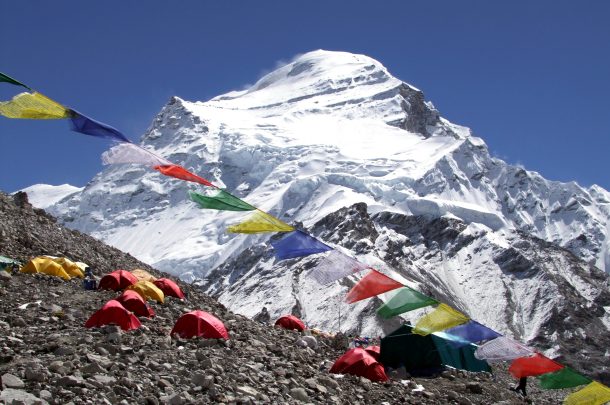
Gorakshep is the last place where you can find a teahouse. Above here, there are no teahouses. From Gorakshep, walking for 2 to 3 hours, you will reach the iconic Everest Base Camp. Here, your expedition team sets up the camp for you. During the climbing season, the colorful tent creates a lively atmosphere.
The Buddhist monk/Lama was often invited from the Tengboche monastery to perform the rituals before beginning the expedition journey. They perform the rituals to offer the mountain god by making a temporary temple. Mantra is chanted, and your climbing gears are also blessed by the Lama.
On this day, you will also hike to Kala Patthar for the magical sunrise view of Everest. Due to the iconic close view of Everest, trekkers often call it the balcony of Everest.
Every day, you will spend the night in a tent throughout the expedition. Although the camp is located near the teahouses, facilities are more basic, and meals are prepared and served at the expedition camp. You will have time to rest, hydrate, check your equipment, and prepare physically and mentally for the demanding climbs ahead.
Icefall training is provided by the expedition team and includes the use of proper climbing gear and rope techniques
Rotation 1: The Icefall & Western Cwm
Rotation 2: The Lhotse Face & Camp III
Phase 3: The Great Descent & The Waiting Game
After completion of rotations you are fully acclimatized. Now we will wait for the correct window of time for the summit push.
We are now starting our summit push for Lhotse. Our journey begins at Base Camp, where we will climb to Camp II, passing through the Khumbu Icefall. The next day, we will ascend from Camp II to Camp III. After that, we will cross the extreme altitude from Camp III to Camp IV.
On summit night, we will wake up at midnight, put on our headlamps, and use our technical gear and oxygen bottles as we make the final push to the summit. After reaching the top, we will safely return to Base Camp.
Now we will continue our descent journey toward the Lukla airport. From Lukla, we will take a flight back to Kathmandu and conclude our expedition journey. Climbers who wish to use the helicopter service to reduce the itinerary days they need to pay an extra cost. After you reach Kathmandu, we will provide you with a certificate commemorating your successful Lhotse Expedition.
Collaborate with our specialists to create a unique itinerary.
Difficulty level: TD (Très Difficile / Very Difficult) to ED (Extrêmement Difficile / Extremely Difficult)
Lhotse Peak is a highly technical peak with 80% of the route sharing to mighty Mt. Everest. The biggest challenge of this expedition is to cross the Khumbu Icefall, steep Lhotse Face, and ascending the upper Lhotse Couloir toward the summit.. As we approach the summit from the Geneva Spur, we need to encounter 50- to 60-degree steep ice and snow. Also, the death zone is the biggest factor that makes every expedition difficult, including Lhotse Climbing.
Apart from the technical challenge, the changing weather, extreme cold, exposed terrain, and the knife-edge summit ridge are real threats. Lhotse has a success rate of approximately 42% through commercial guided programs. Many climbers also attempt Lhotse after climbing Mount Everest, as the two mountains share a substantial portion of their lower route.
Climbing the 4th highest peak in the world requires serious preparation, dedication, and discipline. Climbers need to train consistently for years, building endurance, strength, technical skills, and mental resilience.
Before climbing the 8,000-meter peak in Nepal, it is recommended to climb at least one 6,000- or 7,000-meter peak like Tilicho Peak (7,134 m). A pre-altitude climb in Nepal helps foreign climbers get to know the Nepalese Himalayan weather and climbing techniques.
Although thorough preparation does not guarantee a successful summit, it helps climbers avoid preventable mistakes and reduce risk. The mountains leave little room for error. So train well, take mountaineering courses, build confidence, and most importantly, respect the mountain.
The most favourable season for the Lhotse Expedition is during the months of spring and autumn. In spring, particularly April and May is the climbing season for Lhotse. During these months, you can expect suitable conditions for high-altitude climbing. The reason is long daylight hours, moderate temperatures, and stable weather conditions.
Another climbing season is during the autumn season, particularly in September and October. The climbing route is less crowded, and the clear sky allows you to enjoy a magnificent view of mountain peaks.
No matter which season you choose, the perfect window for climbing depends on favorable weather and route conditions.
All climbers need to obtain this mandatory permit for the Lhotse Peak Expedition:
Note: To obtain the climbing permit, insurance with helicopter evacuation is mandatory as per Department of Tourism. High Route Adventure will arrange all these permits.
During the Lhotse Expedition, altitude sickness is serious and can be life-threatening if we neglect Acute Mountain Sickness(AMS). Above the Lhotse Couloir at 8,000 meters, climbers enter the “Death Zone,”. Here, the oxygen level is one-third (30% to 33%) of that at sea level. Most climbers need supplemental oxygen at this level.
Normally, from Camp II we use an oxygen bottle during the climbing phase. On average, 4 to 6 oxygen bottles are used by climbers. Even with supplemental oxygen, the chance of hypoxia, frostbite, hypothermia, dehydration, exhaustion, and other altitude-related complications remains. So you need to be very careful, especially when you are in a death zone. Monitor your health conditions all the time and inform your climbing guide immediately if you find any health issues.
The common way to enter the Khumbu Region for the Lhotse Peak Expedition is by taking a flight to Lukla from Kathmandu. Normally, there is a regular flight from Kathmandu, but sometimes, to avoid traffic, the flight might be diverted to Ramechhap Airport. Another thing that climbers need to keep in mind is that the Lukla flight is weather-sensitive. The flight operates only during the best weather conditions. If the weather continues to be poor, an alternative helicopter flight may be arranged, depending on availability and suitable weather conditions. Additional payment is required for this service.
As we know, unforeseen situations can happen at any time in the mountains. To deal with such conditions, we will provide you with an expert Sherpa team. They know how to handle emergency situations and provide appropriate support during the journey.
All climbers must have a comprehensive insurance policy that must cover:
Himalayan peak ecosystem is fragile, and global warming is affecting it so much now. As climbers, we have our own responsibility. So make sure to follow these things during your journey:
Expedition down suit, heavy down jacket, lightweight down jacket, fleece jacket, softshell jacket, waterproof shell jacket, thermal base layers, trekking shirts, trekking trousers, insulated pants, thermal leggings, underwear, warm beanie, sun hat, balaclava, neck gaiter, liner gloves, insulated gloves, expedition mittens, waterproof over-mittens.
8,000 m-rated double or triple mountaineering boots, trekking boots, camp shoes, insulated camp booties, gaiters, liner socks, warm trekking socks, heavy expedition socks.
Mountaineering helmet, climbing harness, crampons, ice axe, Jumar/ascender, descender/belay device, locking carabiners, non-locking carabiners, climbing slings, Prusik cords, ice axe leash, safety lanyard.
8,000 m-rated sleeping bag, sleeping bag liner, insulated sleeping mat, foam sleeping pad, pillow, compression sack, earplugs, eye mask.
90–120 L expedition duffel bag, 40–55 L climbing backpack, waterproof pack cover, dry bags, compression bags, small storage bags, duffel locks.
Glacier sunglasses, spare sunglasses, snow goggles, SPF 50+ sunscreen, high-SPF lip balm, moisturizer, face protection, UV-protection cream.
Water bottles, insulated water bottle, thermos flask, water bottle insulation, hydration bladder, water purification tablets, electrolyte powder, reusable cup, personal snacks, energy bars, chocolate, nuts, dried fruits, energy gels.
Headlamp, spare batteries, power bank, charging cables, universal adapter, mobile phone, camera, spare camera batteries, memory cards, GPS or altimeter watch.
Personal prescription medicines, first-aid kit, blister treatment, bandages, medical tape, antiseptic wipes, pain-relief medication, personal altitude medication, oral rehydration salts, hand sanitizer, toothbrush, toothpaste, wet wipes, toilet paper, quick-dry towel, personal hygiene products, waste bags.
Passport, passport copies, passport-size photographs, travel insurance documents, emergency contact details, flight documents, expedition documents, cash, credit/debit card, waterproof document pouch.
Trekking poles, waterproof jacket and pants, small repair kit, pee bottle, waste bags, whistle, notebook, personal entertainment items, spare prescription glasses or contact lenses.
Expedition tents, communal dining tent, kitchen equipment, communication facilities, fixed ropes and group climbing equipment, supplemental oxygen equipment, oxygen cylinders, oxygen masks, group medical equipment, and other expedition infrastructure, according to the package arrangement.
Important: Equipment requirements may vary depending on weather, route conditions, expedition strategy, and the equipment provided by High Route Adventure. Please confirm the final equipment checklist with our expedition team before departure.