Island Peak Climbing - 19 Days

  • Island Peak Climbing
  • Island Peak Climbing With Everest Base Camp
  • Island Peak Climbing – 19 Days | Imja Tse Peak | Cost
  • Island Peak Climbing in Autumn
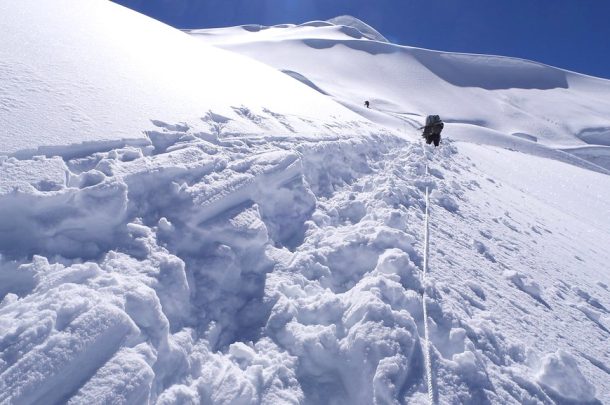
  • Island Peak Headwall
Duration 19 Days
Max Altitude 6189 m
Trip Grade Challenging
Group Size 1 - 10
Meals Breakfast in Kathmandu, and Breakfast, Lunch, Dinner during the trek
Accommodation 3* Hotel in Kathmandu, Best available Teahouse During the Trek, 2 Night Tent Camping

Island Peak Climbing Highlights

  • Enjoy a 30-minute scenic flight from Kathmandu to Lukla Tenzing Hillary Airport with High Route Adventure.
  • Trek through famous Sherpa villages like Phakding, Namche Bazaar, Tengboche, and Dingboche while enjoying the warm hospitality at a cozy tea house.
  • Stand at iconic Everest Base Camp(5,364 meters) and the vintage sunrise viewpoint of Kala Patthar(5,545 m).
  • Set up camp at Island Peak Base, with glaciers and majestic peaks all around.
  • Learn to use mountaineering gear such as crampons, ropes, and ice axes on snow and ice from our expert climbing guide.
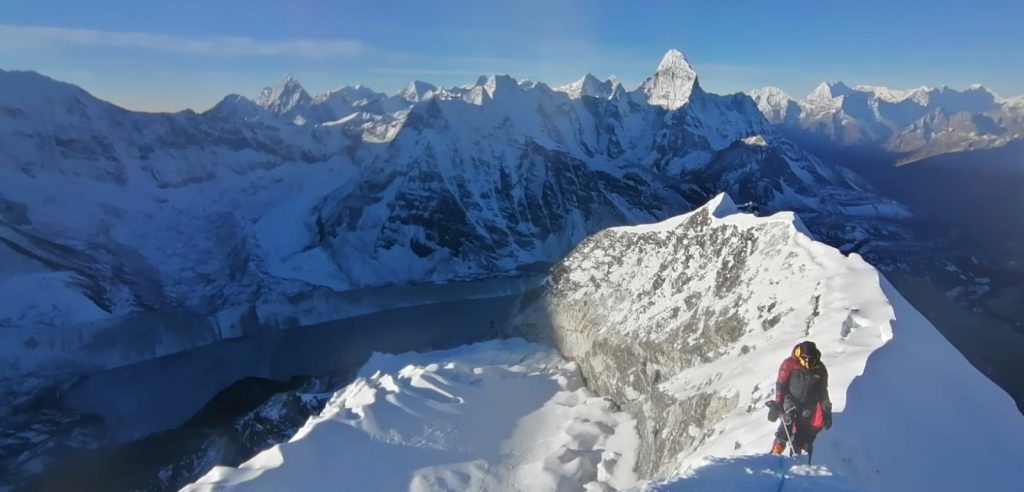
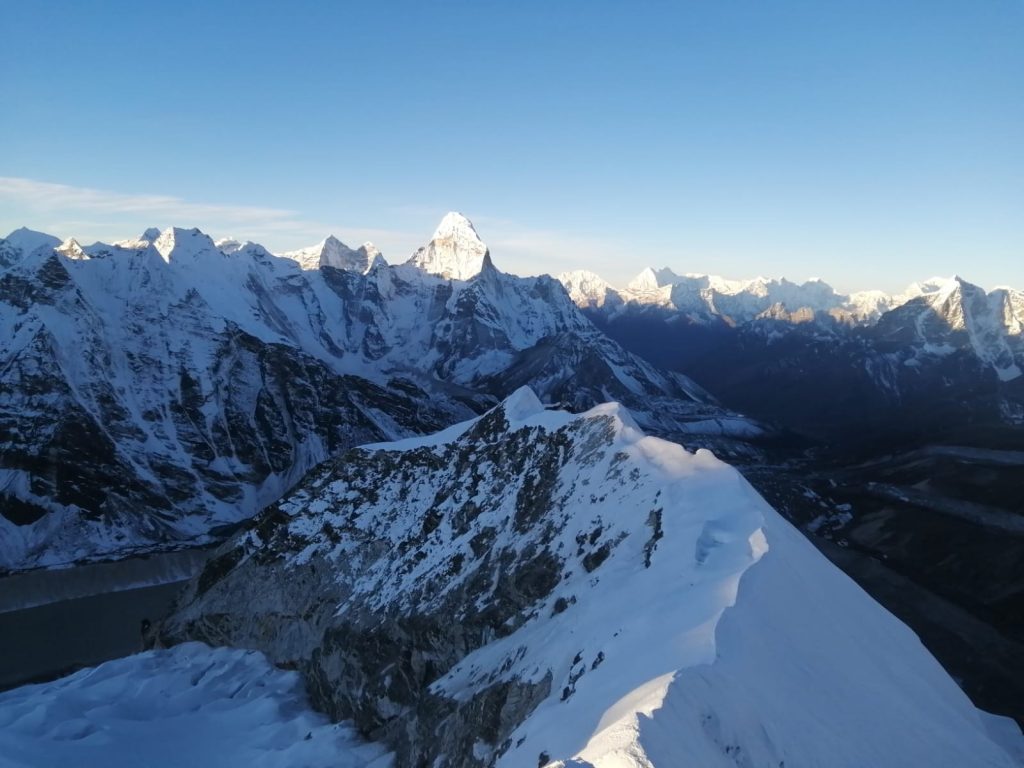
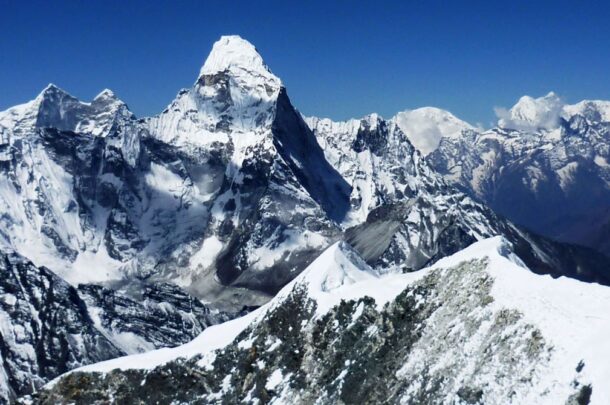
  • Witness panoramic 360-degree views of Everest, Lhotse, Makalu, and Ama Dablam and other jaw-dropping snow-capped peaks from the summit.
  • Explore flora and fauna during a trek inside the Sagarmatha National Park, a UNESCO World Heritage Site, where you can spot Himalayan tahr, musk deer, snow leopard (rare), red panda, Himalayan black bear, etc.
  • Complete Island Peak climbing with EBC journey, guided with full support and safety measures.

Island Peak Climbing Overview

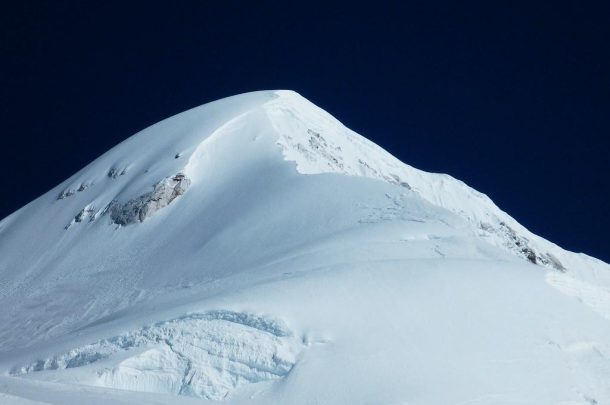
High Route Adventure presents you with a 19-day Island Peak Climbing Package with a visit to the iconic Everest Base Camp and Kala Patthar. This carefully designed Island Peak itinerary led by our expert team takes you to the summit elevation of 6,189 meters (20,305 feet). Island Peak, also known as Imja Tse, is one of the most visited and famous trekking peaks in the Everest Region.

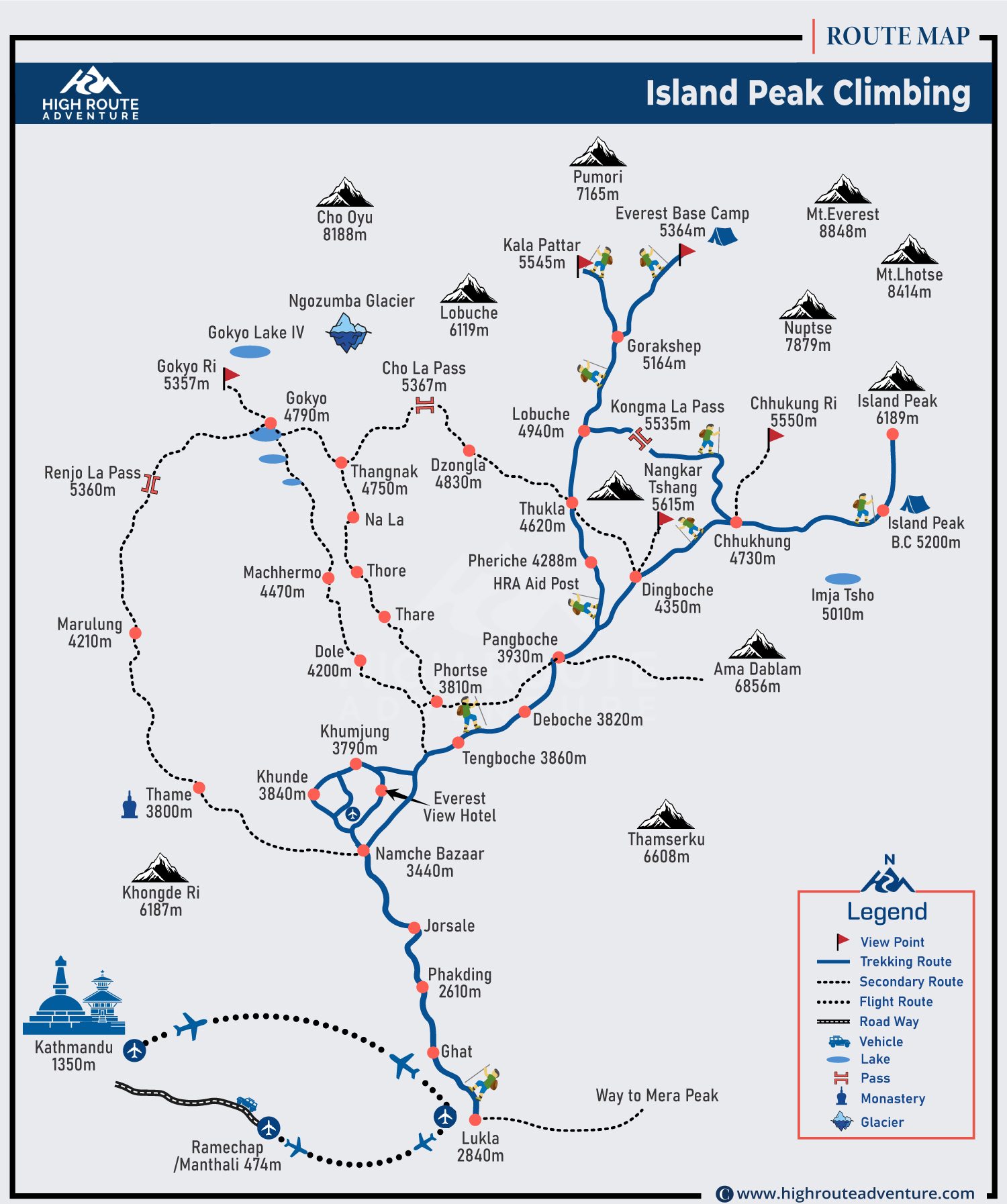
You will start your Island Peak climbing journey with our licensed guide from Kathmandu by taking an exciting mountain flight to Lukla airport. From here, you will start your trek by following the Dudh Koshi River to Phakding, passing through green forests filled with rhododendrons, fir, and magnolia trees. The trail continues through small villages such as Thulo Ghamela, Bengkar, and Monjo, then reaches Jorsalle and enters Sagarmatha National Park.

You will then reach the picturesque Sherpa town of Namche Bazaar, where you take a day off for acclimatization before setting off to Tengboche Village. You visit the sacred Dawa Choling Monastery in Tengboche. Then the trek continues through the villages of Pheriche, Lobuche, and Gorakshep. From there, you walk along the sides of the Khumbu and Lhotse glaciers. Finally, you reach Everest Base Camp at 5,364 meters. Here, you can enjoy the unforgettable beauty of the Himalayas.

Now it’s time to hike Kalapatthar for a sunrise view and enjoy a close view of Mt. Everest. Then you will return to Lobuche. From here, you will leave the classic Everest Base Camp route and cross the challenging Kongma La Pass at 5,535 meters to reach Chhukung.

Then, from Chukkung, you will head to Island Peak base camp and take a day to rest, acclimatize, and practice climbing skills. Your main climbing adventure starts after leaving Chukkung. You will climb the majestic Island Peak at 6,189 meters, navigating ice and snow for a true Himalayan experience. Then you will return safely from the summit of Imja Peak through Pangboche, Namche, and Lukla.

Who Can Join Island Peak(Imja Tse) Climbing?

Island Peak summit ridge rope
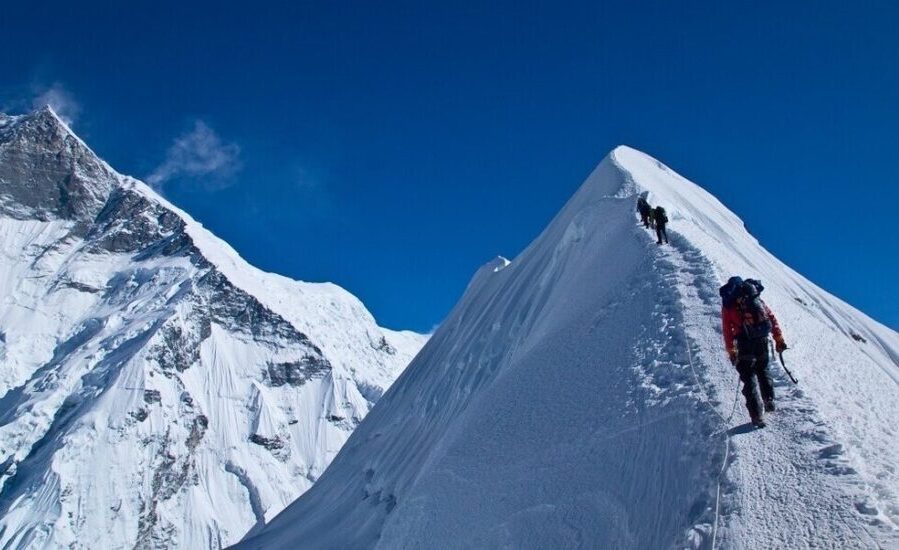
Island Peak fixed rope section

Here are some guest requirements to participate in this adventure:

  • Difficulty and Experience: Island Peak Climbing is a challenging trek that ascends to 6,189m, so previous high-altitude trekking experience is highly recommended. The climb includes steep ascents on snow and ice with crampons and ropes.
  • Physical Fitness Requirement: A high level of fitness is required, as you will be trekking 5-7 hours on average daily before the summit climb. Endurance training should be done before the trip. The summit climb takes 10-12 hours round-trip from base camp.
  • Technical Skills Required: Island Peak is a beginner-friendly trekking peak so basic mountaineering skills will suffice. Also, you will learn basic climbing skills, such as using harnesses, crampons, and ice axes, during training before the summit.
  • Best Season: The trip is best done in April-May or October-November to avoid monsoon rains and severe cold. But the weather at those times can still be unpredictable with storms and snow.
  • Camping Conditions: You must be comfortable with basic camping during the trek and prepared for very basic conditions at the high camps on the mountain. Sleeping in tents at freezing temperatures is required.
  • Remote Location and Safety: Island Peak is in a remote region, so you should not expect advanced medical facilities. Have proper travel insurance in case of emergencies or altitude sickness.
  • Experience Level: Before attempting the summit, no previous mountaineering experience is required, but you should be very confident in your physical fitness, stamina, and technical skills.
  • Medical Fitness: Participants must have overall good health conditions with no serious health issues such as heart disease, severe asthma, uncontrolled high blood pressure, or other chronic illnesses that could be affected by high altitude.

What Makes This Island Peak Climbing Special?

Island Peak Headwall

The Incredible Sense of Achievement

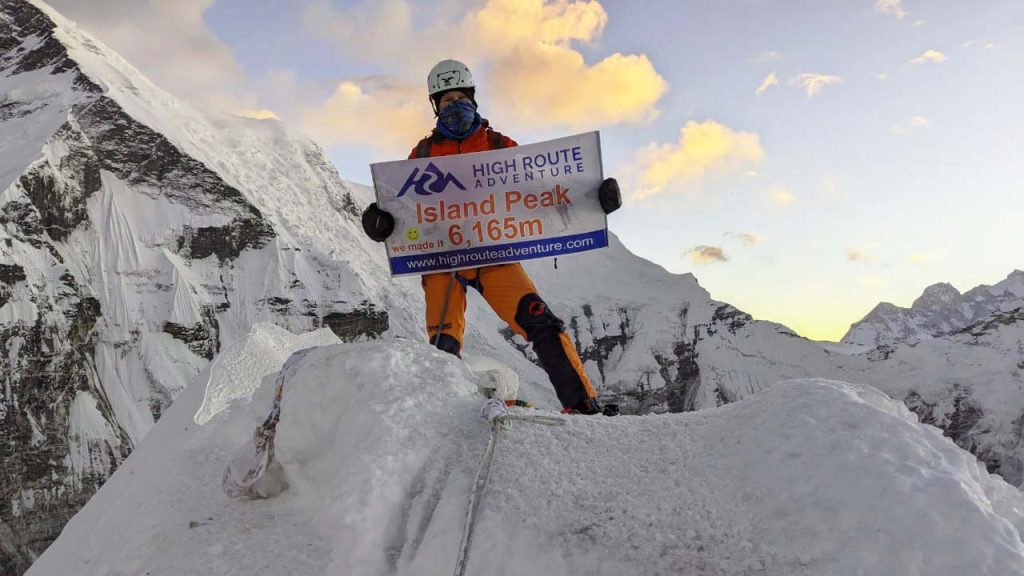
The sense of accomplishment in summiting a 6,000+ meter Himalayan peak after a challenging climb is an amazing feeling. Standing atop the Imja Tse summit with views of the high mountains is hugely rewarding.

Scenic Trek Through the Everest Region

Trekking through the beautiful Everest region for days before the climb is scenic with views of mountains like Lhotse, Nuptse, and Ama Dablam. The culture of Sherpa villages, as seen in places like Namche Bazaar, is fascinating to experience.

Learn Valuable Mountaineering Skills

Acquiring new mountaineering abilities, such as using ice axes, ropes, harnesses, and crampons, is enjoyable and enhances your outdoor passion. These are excellent skills for your next climbing expedition like challenging Manaslu Expedition.

Stunning Alpine Landscapes

Island Peak(Imja Tse) is an adventurous trek through stunning landscapes, with views of glaciers, craggy ridges, and snow-capped peaks. The Alpine climbing environment is breathtaking if you love nature.

Physical and Mental Fitness Challenge

Training and getting in your best physical fitness before the trip is a great goal to work towards. Seeing your endurance improve is motivating.

A Major Yet Accessible Mountaineering Achievement

Climbing Island Peak is considered a major mountaineering achievement, but it is still accessible to adventurers with proper training and guidance. It’s a great introduction to serious climbing.

Lifelong Memories and Personal Growth

Returning home with priceless memories, photos, and stories of climbing a Himalayan peak. You gain confidence in yourself and your abilities. It’s an amazing personal accomplishment.

Spectacular Glacier Views

Magnificent vistas of the Khumbu Icefall and other glaciers, such as the Khumbu and Lhotse, can be seen from vantage points along the trail. The icefalls are spectacular to witness in person.

Sherpa Culture and Traditions

Traditional Sherpa settlements, such as Namche Bazaar, offer insight into the lives of these mountain people. Sherpa people culture, traditions, and hospitality are fascinating to experience.

Biodiversity of Sagarmatha National Park

The trail passes through Sagarmatha National Park, allowing you to spot unique flora such as rhododendrons and wildlife such as Himalayan Thar and musk deer. The Everest region’s biodiversity is incredible.

Why Choose High Route Adventure for Island Peak Climbing

Island Peak Climbing - 19 Days | Imja Tse Peak | Cost
Island peak summit

There are a lot of agency in Nepal that operates the Island Peak Climbing, but let’s know why High Route Adventure is different from the others:

Experience – The Edge That Matters:

High Route adventure has 10 + years of high‑altitude expertise in the Nepalese Himalaya. We have completed hundreds of summits of Island Peak (Imja Tse) and neighboring peaks. Our experienced, licensed trekking guide has led several international climbing teams, research groups, and even private groups.

Safety – Our Top Priority:

Our experienced Sherpa guides are fully trained, hold a Nepalese government license, and have extensive knowledge of route conditions, weather forecasts, and avalanche danger. There will be a 24/7 emergency response, including an emergency evacuation plan with helicopter partners in Kathmandu and Lukla.

Professional Guides & Support Staff:

The Guide we will provide you with during the Imja Tse Peak Climbing will be a local Sherpa Guide. They are born in this region and they know the Khumbu glacier, icefall routes, and hidden crevasse patterns very well. Also, our other supportive staff, such as porters, logistics support, drivers, and cooks, help you reach the summit conveniently.

All‑Inclusive, Transparent Packages:

All required permits for Island Peak Climbing, including Guide, porter, food, accommodation, logistics, ground transportation, and hotel transfer, will be included in the Island Peak Climbing Package. Also, all our prices are displayed on the website in USD, and there are no hidden costs.

Tailor‑Made Itineraries:

Every climber has their own interests, walking pace and travel dates. To meet our clients’ expectations, we offer a customised Island Peak Climbing itinerary. The flexible itinerary plan helps to match fitness levels, time constraints, and adventure goals.

Local Partnerships & Sustainable Practices:

During the climb, we don’t allow our clients to engage in any activities that would detract from the beauty of Island Peak. So you need to follow the “Leave No Trace Policy” strictly when you make us your travel partner. Also, after each trek, we donate a portion of the cost to support schools, clean‑water projects, and women’s cooperatives in the Khumbu region.

Proven Success Rate:

To date, we have a 100% success rate for clients who have trusted us with their Island Peak climbing. Our well-designed itinerary plan and expert team are the main reasons for this success.

Post-Climb Support And Certificate After Completion:

Before you attempt to reach the summit of Island Peak, we organize a special programme at the base camp to train you. You will learn the basic mountaineering skills from the expert climber. And after you complete the climbing, you will receive an official Island Peak Summit Certificate as recognition of your accomplishment.

Additional Support:

We provide free sleeping bag, down jacket, and duffle bag for our clients. It will help to keep you warm at high altitude and make carrying your personal belongings more comfortable and convenient during the trek and climb.

Best Time For Island Peak Climbing

Island Peak Climbing in Autumn
Island Peak Climbing in October

Island Peak (Imja Tse) is a classic “trek-and-climb,” meaning it can be done in all major climbing seasons in Nepal. However, due to stable weather and moderate daytime temperatures for trekking, spring and autumn are the most popular.

Island Peak Climbing in Spring(March – May):

During the spring, the daytime temperature remains around 5‑10 °C, and nighttime remains -5 °C or lower. There will be snowpack at the high altitude, but not overly deep. The Lukla flight operates regularly, and the chance of cancellation is low. You can enjoy the best views of beautiful mountain peaks and the surrounding landscape thanks to clear skies. Also, the wildflower bloom and the colourful rhododendrons covering the forest trail are what people love to travel for in this season. 

Island Peak climbing in Autumn(September – November):

During the autumn, the daytime temperature remains around 5‑12 °C, and nighttime remains –2 °C to –10 °C. During this time, snow is compacted from the monsoon, providing a stable footing; crevasses are well‑defined. The trail is in good condition, and trekkers can enjoy crisp, dry trails. Most climbers love to climb Island Peak in autumn for the excellent snow and ice conditions, spectacular sunrises, breathtaking scenery, and fewer crowds than in spring.

Island Peak Climbing in Winter(December – February):

It is possible to climb Island Peak in winter. Still, due to deep, hard snow, increased avalanche potential, and thick ice layers, we recommend winter trekking only for expert climbers. Also, during this time, the Lukla flight cancellation rate remains high, and harsh cold, a higher altitude sickness risk, and limited rescue options make it more challenging than the peak climbing season.

Island Peak Climbing in Monsoon(June – August):

Island Peak climbing in the monsoon is very risky due to heavy rainfall, high risk of mudslides and avalanches, and poor visibility. Avoid attempting Island Peak during the monsoon season, and always check the weather before your climb.

Imja Tse – Island Peak Climbing Cost For 2026/2027

Our 19-day Island Peak Climbing Package price starts from USD 2780. We offer a special discount to group travellers. Only climbers can join the Island Peak Climbing group, but to do so, you need to contact our tour operator to match your departure date. Also, if you want to upgrade your hotel room, book a room at a tea house in a lower region, or have a private trip, you can add the additional cost to customize your experience.

Let’s see the cost of the Island Peak Climbing according to the group size.

No of PeoplePrice Per Person( In USD)
1( Solo)$ 2780 USD
2 – 6$ 2385 USD
7+$ 2235 USD

Useful Links for Island Peak Climbing

Itinerary

  • Day 01: Arrival in Kathmandu (1,300m/4,265ft)

    Upon landing at Tribhuvan International Airport, you will be welcomed by representatives from our office, who will guide you directly to the hotel. After freshening up from the day's journey, you will be introduced to the rest of the staff, including your guide for the trip. After a short briefing, we conclude all activities scheduled for the day, and you are free to head down into the local area to enjoy a pleasant evening.

    Altitude: 1,350m/4,429ft
    Meals: Breakfast
    Accommodation: Hotel
  • Day 02: Kathmandu Sightseeing and Trip Preparation

    Today, you stay back in the capital city, preparing for your long journey ahead. In due course, we will gather all the necessary permits for the trip, and any additional equipment you might need on your journey can be bought today. Time permitting, a short tour of the capital city can be arranged to explore the cultural beauty of the valley, as reflected in the UNESCO World Heritage Sites.

    Altitude: 1,350m/4,429ft
    Meals: Breakfast
    Accommodation: Hotel
  • Day 03: Fly to Lukla (2,800m), trek to Phakding (2,651m).

    An early start to the day, we begin our Himalayan adventure heading toward the picturesque town of Lukla. High above the lush green valleys, the 40-minute flight from Kathmandu takes us closer to the majestic Himalayas before giving us a proper introduction to the thrilling Lukla airstrip. Reaching Lukla, we take a brief rest before beginning our journey tothe hamlet of Phakding. The trek follows the banks of the Dudh Koshi River, heading past the vibrant Koshi Gaun and Ghat before ascending to Phakding. Overnight in Phakding.

    Altitude: 2,610m/8,563ft
    Meals: Breakfast/Lunch/Dinner
    Accommodation: Teahouse
  • Day 04: Trek to Namche Bazaar (3,440m).

    Following the banks of the Dudh Koshi River once again, we exit Phakding before following a trail through the lush green forests to reach Thulo Ghamela. On the pleasant hilly trail, the journey takes us past the vibrant hamlets of Bengkar and Monjo to reach Jorsalle, which also marks our entry into the stunning Sagarmatha National Park. The final stretch of the journey takes us past the snow-capped summit of Kusum Kanguru (6367m) and on to the Sherpa settlement of Namche for the night.

    Altitude: 3,440m/11,286ft
    Meals: Breakfast/Lunch/Dinner
    Accommodation: Teahouse
  • Day 05: Acclimatization day in Namche Bazaar.

    On the first of our acclimatization days, we take some time off in Namche to make sure we are well prepared for the next stretch of the journey. As the Gateway to Everest, the Himalayan town of Namche is always filled with trekkers and locals heading in and out of the region. For our acclimatization hike, we make our way to the hamlets of Khumjung and Khunde, relishing the display of Sherpa culture and way of life. The journey also offers picturesque Himalayan views and gives us the chance to visit the Yeti Skull Monastery, said to house the skull of a real Yeti. Overnight in Namche.

    Altitude: 3,440m/11,286ft
    Meals: Breakfast/Lunch/Dinner
    Accommodation: Teahouse
  • Day 06: Trek to Tengboche (3,860m).

    Back on the trail once again, we exit the town of Namche following the hilly trail leading tothe village of Tengboche. Past Namche, the trail ascends to reach Sanasa and Lawi Schyasa before meeting the Dudh Koshi River. Crossing the river on a suspension bridge, we reach Phungi Thenga, beyond which the trail gently ascends to Tengboche. The quaint hamlet hosts the famed Dawa Choling Monastery and is well known for celebrating the Mani Rimdu Festival in November. Overnight in Tengboche.

    Altitude: 3880m/12,730ft
    Meals: Breakfast/Lunch/Dinner
    Accommodation: Teahouse
  • Day 07: Trek to Pheriche.

    One of the shorter days of the trek, today we make our way over to the hamlet of Pheriche for the night. As the mountains keep us company, we make our way out of Tengboche, heading to the small settlement of Dingboche (4,410m). On the classic Everest Base Camp trail, we continue our journey north, meeting up with the Imja River at Milingo. Reaching the village of Pangboche, we take a brief rest before beginning one final ascent past the hamlets of Shomare and Worshyo to reach Pheriche.

    Altitude: 4,200m/13,779ft
    Meals: Breakfast/Lunch/Dinner
    Accommodation: Teahouse
  • Day 08: Trek to Lobuche (4,910m)

    Exiting Pheriche, we begin our ascent to Dughla along a ragged trail amid alpine hills. High up in the Himalayas, we trek with the majestic views of snow-laden summits of Ama Dablam (6812m), Lingtren (6812m), Lhotse (8,516m), and Nuptse (7,861m) on the horizon. The final stretch of the journey is a gradual ascent through uninhabited lands to Lobuche, where we settle for the night.

    Altitude: 4,930m/16,175ft
    Meals: Breakfast/Lunch/Dinner
    Accommodation: Teahouse
  • Day 09: Trek to Everest Base Camp (5,364m), return to Gorak Shep (5,164m).

    One of the more thrilling days of our journey, today we make our way to the famed Everest Base Camp (5364m). Exiting Lobuche, the trail leads to Gorakshep, then ascends through the lateral moraines of the Khumbu Glacier, with the awe-inspiring Himalayas keeping us company. Navigating past the icy rocky trail, we reach the monumental grounds built in homage to fallen mountaineers. After reaching the base camp of Mt. Everest (8848m), we take some time to live the thrilling experience and marvel at the stunning Himalayan panorama. We then head back to Gorakshep for the overnight stay.

    Altitude: 5,163m/16,939ft
    Meals: Breakfast/Lunch/Dinner
    Accommodation: Teahouse
  • Day 10: Hike to Kala Patthar (5,545m), descend to Lobuche (6,119 m).

    Today, we start early so we can make our way to the Kalapatthar viewpoint (5545m) to enjoy a scenic Himalayan sunrise. The ascending journey takes us to Kalapatthar just in time to witness the mesmerizing beauty of the Himalayas. Spread across the horizon are the snowy summits of Ama Dablam (6812m), Lingtren (6749m), Lhotse (8516m), Changtse (7543m), Nuptse (7861m), Cho Oyu (8201m), and the majestic Mt. Everest (8848m). After spending some time gazing at the mind-blowing Himalayan panorama, we begin our descent back to Gorakshep before setting off to Lobuche. Overnight in Lobuche.

    Altitude: 4,930m/16,175ft
    Meals: Breakfast/Lunch/Dinner
    Accommodation: Teahouse
  • Day 11: Trek to Chhukung (4,730m) via Kongma La Pass (5,535m)

    One of the more challenging days of our journey, today we make our way to the hamlet of Chhukung, crossing Kongma La Pass (5535m) en route. From Lobuche, the trail gradually ascends through the rocky Himalayan landscape stretching to meet the majestic Himalayan summits on the horizon. Alongside mesmerizing views of the Everest Range, we navigate a well-marked route, ascending steeply towards the summit of Kongma La (5535m). Traversing the glacial moraines of the Khumbu Glacier, we reach the summit to enjoy a stunning Himalayan panorama spread out before us. After a brief stop at the summit, we begin our descending journey to the small settlement of Chhukung for the night.

    Altitude: 4730m/15,518ft
    Meals: Breakfast/Lunch/Dinner
    Accommodation: Teahouse
  • Day 12: Trek to Island Peak Base Camp (5,200m).

    Leaving Chhukung early, we begin our ascending journey to Island Peak Base Camp (5200m). The trail is fairly steep as we head further south, then turns east to reach the moraines of the Lhotse Glacier. The journey then winds through rugged Himalayan landscapes, crisscrossing the Imja and Lhotse glacier moraines, before reaching Island Peak Base Camp (5200m). Overnight at Island Peak Base Camp.

    Altitude: 5200m/17316ft
    Meals: Breakfast/Lunch/Dinner
    Accommodation: Tent camp
  • Day 13: Pre-climb training on Island Peak Base Camp(5,200m).

    Today, we take the day off trekking at Island Peak Base Camp to indulge in some pre-climb training for a successful summit on Island Peak (6189m). For our practice, we use the south-western face of Island Peak (6189m) heading up to a considerable altitude. We will also map out all the routes for our journey tomorrow and become familiar with the equipment needed for a trouble-free summit. Overnight at the base camp.

    Altitude: 5200m/17316ft
    Meals: Breakfast/Lunch/Dinner
    Accommodation: Tent camp
  • Day 14: Summit Island Peak (6,189m), return to Chhukung

    Today is the day we conquer the gorgeous Island Peak (6189m) and add one more chapter to our book of adventures. Navigating several boulders, we make our way to the summit of the majestic mountain, enjoying a scenic Himalayan sunrise en route. As the trail gets steeper and more difficult, we use rope points to tackle challenging ascents through the mountain crevasses. Reaching the summit of Island Peak (6189m), we take in the mesmerizing Himalayan panorama comprising the entire Everest Himalayan Range before dropping back down to Chhukung for the night.

    Altitude: 4730m/15,518ft
    Meals: Breakfast/Lunch/Dinner
    Accommodation: Teahouse
  • Day 15: Trek to Pangboche

    With the Himalayas to our backs, we begin our descending journey heading back to the hamlet of Pangboche. Unlike the ascending routes, we find the descending route rather familiar and easier as we make our way through the old settlements of Worshyo and Shomare to reach the Sherpa village of Pangboche. Located on the banks of the Imja River, Pangboche is a perfect place to relish our Himalayan journey.

    Altitude: 3,985m/13,283ft
    Meals: Breakfast/Lunch/Dinner
    Accommodation: Teahouse
  • Day 16: Trek to Monjo

    Back on the classic Everest trail, we continue our descending journey heading to Monjo for the night. Leaving Pangboche, the trail follows the Imja River to the hamlet of Milingo before dropping down to Deboche. Upon reaching Tengboche, we again enter lush green forests, passing Phungi Thenga, Lawi Schyasa, and Sanasa, to reach the vibrant town of Namche. Taking a brief rest at Namche, we head south past Jorsalle to reach Monjo.

    Altitude: 2,780m/9,265ft
    Meals: Breakfast/Lunch/Dinner
    Accommodation: Teahouse
  • Day 17: Trek to Lukla

    Bidding farewell to Sagarmatha National Park, we leave Monjo and follow the banks of the Dudh Koshi River to the town of Lukla. The trail takes us back to the villages of Bengkar and Thulo Ghamela, beyond which lies the hamlet of Phakding. Retracing our steps through the lush green forests of rhododendron and magnolia, we continue our descent past Ghat and Koshi Gaun before ascending to Lukla for the night.

    Altitude: 2,800m/9,333ft
    Meals: Breakfast/Lunch/Dinner
    Accommodation: Teahouse
  • Day 18: Fly to Kathmandu (1,300m).

    Today, we relive the thrill of Lukla airstrip as we set off on our flight back to the capital city. Bidding goodbye to the majestic Himalayas, the 40-minute flight brings us back to the hustle and bustle of Kathmandu.

    Touching down at Tribhuvan International Airport, we head straight to the hotel, wrapping up all the scheduled activities for the trip. For the rest of the day, you are free to explore the local area or relax at the hotel, recuperating from your journey.

    Altitude: 1,350m/4,429ft
    Meals: Breakfast/Dinner
    Accommodation: Hotel
  • Day 19: Final Departure from Kathmandu

    Our representatives will drop you back at Tribhuvan International Airport a few hours before your scheduled flight back home. We hope you had a lovely time with us, and we look forward to seeing you again.

    Meals: Breakfast

Build Your Own Adventure!

Collaborate with our specialists to create a unique itinerary.

Add on Option
  • 4 Star Hotels in Kathmandu: USD 60 per night
  • 5  Star luxury Hotels in Kathmandu: USD 180 per night
  • Luxury room upgrade at tea house: USD 300 for whole trip

Inclusion

What's included ?

Airport Pick-up & Drop Services:

  • International Airport arrival pick-up
  • International Airport drop-off on your final departure day
  • Domestic Airport drop-off from the hotel
  • Domestic Airport pick-up & transfer to the hotel
  • Kathmandu to Rameshhap to Kathmandu drive by sharing transportation (In case of Lukla flight based in Ramechhap)

Accommodation Services:

  • Three Nights 3-star hotel in Kathmandu on BB Plan
  • Thirteen nights' best available teahouse accommodation during the trek
  • Two-night tent Camp

Trekking Permit:

  • Sagarmatha National Park Permit
  • Local Government Entry Permit
  • Climbing Permit

Domestic Flights:

  • Kathmandu to Lukla flight ticket
  • Lukla to Kathmandu flight ticket
  • Ramechhap to Lukla to Ramechhap flight ticket (In case of Lukla flight based in Ramechhap)

Food Services:

  • Breakfast: Local & continental choice in Kathmandu & during the Trek
  • Lunch during the trek
  • Dinner during the trek
  • Welcome & farewell dinner in Kathmandu at the best restaurant.

Guide & Porter Services:

  • English-speaking government-licensed Tour, Trekking and Climbing Guide
  • Local Sherpa Porter for carrying Luggage (up to 25 kg Max)
  • All Meals for the guide & porter
  • Insurances for guide & porter
  • Well-paid salary as per Government rates
  • A first-aid kit box carried by the team leader

Other Services:

  • Down jacket and sleeping bag (Returned after trip completion)
  • Kathmandu Sightseeing with Private Transportation
  • The HRA Brand Duffle Bag for the Trip, Company T-shirt, and Baseball Cap
  • Oximeter - To determine your normal oxygen range
  • Everest Base Camp Trekking map
  • All government and local taxes

Complimentary Includes

  • One hour free Special Ayurvedic massage at the end of the Trek
  • High Route Adventure’s Appreciation Certificate after the successful Trek
  • Fresh fruit after dinner during the Trek

What's not included ?

  • Nepalese visa fee
  • Excess baggage charge
  • Extra night accommodation in Kathmandu because of early arrival, late departure, early return from mountain (due to any reason) than the scheduled itinerary
  • Lunch and evening meals in Kathmandu
  • International flights
  • Travel and rescue insurance
  • Entrance fee during the tour in Kathmandu
  • Personal expenses (phone calls, laundry, bar bills, battery recharge, extra porters, bottle or boiled water, shower, etc.)
  • Tips for guide, porter, and driver

Important Information About Island Peak Climbing

Nepal Visa And Required Document

Island Peak (Imja Tse) lies in the Khumbu region, the same protected area that houses Everest. Because the mountain sits inside a strictly regulated trekking‑and‑climbing zone, the Nepalese government requires every foreigner to have the correct visa and the appropriate climbing permits before setting foot on the trail. Skipping any of these steps can result in:

  • Being denied entry at Tribhuvan International Airport (Kathmandu)
  • Fines or legal trouble inside the National Parks
  • Delays that may jeopardize your acclimatization schedule

Note: You can obtain the Nepal Visa from your home country or upon arrival at Tribhuvan International Airport (TIA). Climbing permits can be obtained only through a registered trekking agency, such as High Route Adventure.

Which Visa Do You Need?

For this 19-day Island Peak climb, a days tourist visa( on the mountain plus travel time), a single‑entry Tourist Visa is sufficient. We request a 30-day Nepal tourist visa.
30 Days Tourist Visa Cost: USD 50

Document required for the visa and Permit

  • Original Passport with at least 6 months of validity.
  • Fill the form and pay the Nepal Visa fee.

Getting Local Sim( Ncell, NTC)

If you’re heading to Nepal for Island Peak Climbing, the first thing you’ll need is a working SIM (Ncell or NTC) for communication or mobile internet. Both Ncell and NTC work fine in the Everest region so that you can choose either one. 

Where can I obtain the SIM in Nepal?

  • Airport (Tribhuvan International Airport)
  • Ncell/Nepal Telecom (NTC) Stores
  • Authorized Retailers (e.g., Mero Mobile, Sasto Mobile)

How to Get the Sim?

  • Fill the form.
  • Provide a passport copy and a passport-sized photograph.
  • Pay fees( Around NPR 100)
  • For data( Approx. Cost 7 GB for Rs. 299, 42 GB for Rs. 599)

Required Permit for Island Peak Climbing

All climbers must obtain a permit for Island Peak Climbing. The client can obtain local permits, but the climbing permit can be obtained only through a registered trekking agency in Nepal. To make your journey hassle-free, High Route Adventure will arrange all the permits for you, and the cost is also included in our package.

Let’s see which permits are required and how much they cost, for general information.

  1. Island Peak Climbing Permit (NMA): The main permit, with fees varying by season ($250-$70).
  2. Sagarmatha National Park Entry Permit: Approx. $30 (NPR 3,000).
  3. Khumbu Pasang Lhamu Rural Municipality Permit: Local fee, approx. $30 (NPR 3,000).
  4. Garbage Deposit: A $500 refundable deposit is required for the peak.

Note: Travellers must carry this permit at all times and show it whenever officials ask on trekking routes. Also, they need to strictly follow the rules of Sagarmathna National Park to avoid hefty fines and legal consequences.

Travel And Health Insurance: Why It’s Most Important For Island Peak

Island Peak Climbing is a challenging, adventurous journey with several risks involved. To maintain risk-free peace of mind, it is mandatory to have health and travel insurance. Your insurance helps to cover medical and evacuation costs in case of an emergency. Without proper coverage, emergency rescue and treatment can be very expensive and may delay immediate assistance.

So make sure it covers these things:

  • High-altitude trekking and climbing (up to 6,189 m)
  • Emergency helicopter evacuation
  • Medical treatment and hospitalization
  • Search and rescue operations
  • Trip cancellation or interruption
  • Accidental injury coverage
  • Repatriation expenses

Note: All our clients must provide proof of travel insurance to us before attempting the summit of Island Peak (Imja Tse).

Island Peak Package Booking, Payment and Cancellation

Booking: To reserve your seat with us, you can make a booking from a website or by directly contacting us through email or whatsapp.

Payment: To confirm the reservation, per company policy, you should make a non-refundable payment of 20% of the total trip cost. We accept different payment options such as:

  • Bank transfer
  • Online payment (Credit/Debit/Master Card)
  • Mobile payment services
  • Cash payment (upon arrival)

Cancellation: After you make an advance payment of 20% for the booking, it will not be refunded under any circumstances, per the company policy. The remaining amount will be refunded to you. Before booking, make sure to check our terms and conditions. 

Notes

Island Peak Climbing Difficulty

Island Peak Climbing is graded as moderate to challenging in terms of difficulty level. Reaching the summit at 6,189 m is a challenging task, but it is achievable when you do proper preparation before heading for the trip.

Here are the main challenging factors that you should focus on so that they will help to plan, prepare, and successfully reach the summit: 

Altitude: 

The top-most challenging factor for the Island Peak climbing is altitude. At high altitude, the air is thin, which can lead to altitude sickness (AMS). When climbers develop altitude sickness, they may experience headache, nausea, dizziness, fatigue, and difficulty breathing. So they need to return without reaching the summit. So always follow the acclimatisation plan and follow AMS preventive measures.

Technical Terrain:

For several days before reaching the Island Peak base camp, you will trek in uphill and downhill terrain. From base camp, you will walk through glacier paths, rocky ridges, and snow-covered slopes. To avoid injury and slippery surfaces, walk carefully, especially near the summit.

Physical Endurance:

During the trekking days, you will walk for an average of 5-7 hours, but during the summit day from the Island Peak Base Camp, you will walk for 9 to 10 hours. Walking continuously for a long day and long hours during summit day is quite exhausting. So, a high level of endurance, good cardio & leg strength is required to participate in this Island Peak climb. 

Weather Exposure:

Another thing that makes the simple hard is unpredictable weather. Due to the changing weather, you need to deal with strong winds, freezing temperatures, heavy rainfall, and even avalanches at times. So climbers must prepare for sudden weather changes and check the forecast before heading out and during the trip.

Physical Fitness Training for Island Peak Climbing

Week Focus Key Activities
1‑2 Baseline fitness - 3–4 cardio sessions (run, bike, or swim) – 45 min each

- Full-body strength circuit (squats, lunges, pull-ups, core) – 2×/week

3‑4 Endurance + hill work - Long hikes (10–15 km) with a 15–20 kg pack

- One “brick” day per week (e.g., 2 h bike + 2 h hike)

5‑6 Alpine skills - Weekend ice-axe and crampon drills on local snowfields

- Rope basics: knots, belays, and self-rescue techniques

7‑8 Altitude simulation - Spend 2–3 nights above 2,500 m (e.g., Rocky Mountains, Sierra Nevada)

- Practice “sleep low, hike high” principle

9‑10 Peak‑specific conditioning - 2-day back-to-back hikes with 20–25 kg pack (30 km total)

- 3-hour stair/step-mill session at 15–20 % incline

11‑12 Taper + logistics - Reduce training volume by 30 % while maintaining intensity

- Final gear check, passport/visa, insurance, and communications plan

Pro tip: Keep a training journal. Keep a training journal. Track heart rate (HR), Oxygen level, perceived exertion, sleep patterns, and energy levels.

Accommodation on Island Peak Climbing: What to Expect

Regarding accommodation during Island Peak Climbing, there are three phases. First, during the stay in Kathmandu, second, during the trekking days, and third, at the tent while making the ascent to the Island Peak Summit. 

At Kathmandu:

Staying in Kathmandu can be luxurious, as you have many hotel options. For this package, we will arrange 3-star hotel accommodations for our guests, with quality service and amenities. However, if you want, you can upgrade your stay to ato a 4- or 5-star5-star hotel at an additional cost. Here are the facilities you can get while staying in the hotels in Kathmandu:

  • Comfortable beds with clean linens
  • Private bathrooms with hot water
  • Wifi and internet access
  • In-house restaurant and room service
  • 24-hour front desk and security
  • Laundry service(for 4- or 5-star hotels)
  • Air conditioning or heating (depending on hotel)
  • TV and entertainment options in rooms
  • Tea/coffee making facilities
  • Luggage storage
  • Airport transfer assistance (available in some hotels)
  • Fitness center or gym (for 4- or 5-star hotels)
  • Spa and wellness services (for upgraded hotels)

At the tea house:

As for the trekking days, teahouses are the only options available for your stay during the Island Peak Climbing. Local people run these teahouses and provide basic facilities for travelers, including places to rest, meals, and a place to recover after long days of trekking and climbing. Staying in a teahouse is an integral part of trekking in Nepal. Here are the facilities you can get while staying in the tea house:

  • Simple rooms with beds or mattresses and blankets
  • Shared or private bathrooms
  • Basic meals such as dal bhat, noodles, soup, and tea/coffee
  • Common dining area for meals and socializing
  • Electricity, Wi-Fi, and hot shower(limited at higher altitudes)
  • Charging facilities for phones and devices (may have a small fee)
  • Drinking water (boiled or filtered; bottled water may be available for purchase)

At the tent:

As you get closer to Island Peak, there are no lodges. So, our team built the camping tent at Island Peak Base Camp. As for the meals, our cooking guide will take over preparing the nutrition required for the climb. Here are the facilities you can get while staying in the tent:

  • Spacious camping tents with sleeping mats
  • Warm sleeping bags
  • Dining tent
  • Meals prepared by the dedicated Chef
  • Hot drinks like tea, coffee, and soup
  • Portable toilet facilities

Food On Island Peak Climbing: What To Expect

During the trek and climb, High Route Adventure will provide our client with three meals. You can choose from a variety of meals at the tea house, but at the camp, the menu will be limited. There will be vegetarian and non-vegetarian meal options. Most of the food items will be Nepali dishes with a few international options. Alcohol, snacks and drinks are not included in the package, so you should manage the cost on your own.

Let’s see what the items you can expect during the Island Peak Climbing are:

Breakfast Options:

  • Porridge
  • Eggs (boiled, fried, or scrambled)
  • Pancakes
  • Toast with butter or jam
  • Tea, coffee, or hot chocolate

Lunch Options:

  • Rice or noodles with vegetables or meat
  • Soups (vegetable or chicken)
  • Sandwiches
  • Local Nepali dishes (Dal Bhat, momo, etc.)

Dinner Options:

  • Dal Bhat (lentil soup with rice) with curry and vegetables
  • Pasta or noodles with sauces
  • Other local specialties

Snacks (not included in package, self-arranged):

  • Energy bars
  • Chocolate
  • Dried fruits
  • Nuts

Altitude Sickness and Acclimatization Tips

Climbing Island Peak requires proper acclimatization to prevent altitude sickness, a common but preventable issue among trekkers. The itinerary is designed for a slow, steady ascent, allowing your body to adapt gradually. 

You'll spend time acclimatizing in Namche Bazaar, exploring its surroundings while adjusting to the thin air. At Chuukung and Island Peak Base Camp, you'll climb ridges for stunning peak views and have plenty of rest days for recovery before the summit. 

During these days, focus on eating, drinking, reading, relaxing, and light strolls. Our well-trained, experienced guides prioritize your safety, having completed extensive wilderness first aid training. 

If severely affected by altitude sickness, immediate descent is necessary, and your trek leader has the authority to decide whether to continue or descend based on the team's condition.

The early signs of altitude sickness(AMS) are:

  • Headache
  • Nausea or vomiting
  • Dizziness or lightheadedness
  • Fatigue 
  • Loss of appetite 
  • Difficulty sleeping 
  • Shortness of breath 

Note: If these early AMS symptoms are not addressed early, they can progress to HACE (High-Altitude Cerebral Edema) or HAPE (High-Altitude Pulmonary Edema), which are advanced, life-threatening forms of altitude sickness. These conditions can be deadly if not treated immediately, so early recognition and proper care are crucial.

How to prevent altitude sickness during Island Peak Climbing

  • Take Acetazolamide (Diamox) before ascent, and consult a doctor for a prescription.
  • Avoid alcohol during the trip.
  • Follow the " climb high and sleep low acclimatisation rules.
  • Don't do heavy exercise at high altitude.
  • Drink plenty of water to stay hydrated.
  • Limit high‑fat, heavy meals at high altitude and choose fresh, nutritious meals instead.
  • Walk at your own pace and never move too quickly, as it can trigger altitude sickness.

When to Descend – The Non‑Negotiable Rule

  • Persistent headache plus nausea, dizziness, or vomiting for > 24 h
  • Ataxia (loss of coordination), confusion, or disorientation
  • Shortness of breath at rest, rapid breathing, coughing, or pink frothy sputum
  • SpO₂ < 85 % despite rest and oxygen

Lukla Flight Delays & Cancellations: Tips for Island Peak Climbers

Getting to the Himalayan region can sometimes become a hassle due to its geographic location. The weather can be uncertain at any moment. As a result, there are frequent flight delays on the route between Kathmandu and Lukla.

However, flight delays/cancellations can be accommodated with extra days beyond the planned itinerary. Remember that flight delays and cancellations are the airlines' responsibility, not ours.
For this reason, it is highly recommended to schedule 2 extra days to avoid issues with international return flights. On the other hand, we can arrange a helicopter ride in case of delays. But, this comes with a cost of around USD 500-1000 per person, depending on demand.

If the trip goes without any delays, we can arrange additional city tours or side trips to accommodate the extra days.

Reminder: Island Peak Climbing has fixed departure dates from Kathmandu. In case of a change in the plan, we can arrange specific date requests. Otherwise, we can schedule a date that works for you. Please notify us before booking.

Island Peak Climb: Flexible Itinerary & Weather Alerts

Unpredictable weather is common in the Everest region. In addition to flight delays, unforeseen circumstances such as inaccessibility, lodging issues, strikes, and trail conditions can occur. These factors can significantly affect the trip itinerary.

The Island Peak Climbing Itinerary mentioned above is a general guideline. Due to unforeseen circumstances, itinerary changes may be necessarymodifications tomay. At such times, our experienced guides have the authority to make itinerary adjustments.

Our guides make this decision after consulting with the group. Consequently, the group's interests can lead to detours onto other trails during the journey.

FAQs of Island Peak Climbing

  • How hard is it to climb Island Peak Climbing?

    Well, any mountains and lesser peaks below 8, 000 m or 7000 m around the Himalayas range can be hard and tough, technical and altitude wise. Island Peak, one of the trekking peaks with many successful ratings to climb and a popular peak among trekkers and adventurers. The grade as per French and Swiss Alpine Climbing Classification Systems would be PD + which means a straight-forward climb with some technical sections to negotiate. It is not a hard peak to climb, besides a few technical to face, where our expert climbing guide will make the climb safe and possible.
  • What kind of physical fitness is required for Island Peak Climbing?

    Climbers with a moderate level of fitness, healthy physical condition, and good medical health can take part in Island Peak Climbing. This trip is suitable for beginner mountaineers who have previous high-altitude trekking experience. Prior exposure to elevations above 4,000–5,000 meters is highly recommended. However, this expedition is not suitable for first-time trekkers due to its technical sections, including glacier travel, fixed-rope climbing, and the steep headwall near the summit.
  • Do I need travel insurance to climb to Island peak?

    Travel insurance is mandatory for Island Peak climbing, and you must submit proof of travel insurance when you join the trip with us. Your travel insurance must cover high-altitude risks, flight delays, trip cancellation, emergency medical evacuation by helicopter, and medical expenses whenever required.
  • In how many days we can complete the Island Peak Climbing?

    You can complete Island Peak Climbing in approximately 16–19 days. The exact duration depends on your trekking experience, the itinerary you choose, the travel season, and any side trips you include.
  • How to book Island Peak Climbing Package and how to make a payment?

    To book the package with us, you can book directly through our website by clicking on the “Book Now” option, or you can also book via email or WhatsApp. To confirm your booking, you need to make a payment of 20% of the total package cost, which is listed on our website.
  • What will happen if one gets sick during Island Peak Climbing?

    It depends on the seriousness of the illness. In a critical situation, our guide will provide immediate assistance and contact our office in Kathmandu for support. We will arrange a helicopter rescue and transfer you to an advanced hospital in Kathmandu for further treatment.
  • When is the best time for the Island Peak(Imja Tse) Climbing?

    The most suitable time for Island Peak Climbing is October and May, during the autumn and spring seasons. The climb is also possible in winter, but climbers must be well-prepared for extremely cold and freezing temperatures at high altitude. We do not recommend climbing Island Peak during the summer monsoon season due to temperature fluctuations, heavy rainfall, and the risk of floods and landslides at lower altitudes.
  • Is there a Base Camp and High Camp?

    Yes. The Imja Tse Peak Summit includes: Island Peak Base Camp (~5,100 m) and High Camp (~5,500–5,600 m) before the headwall and summit ridge.
  • How is the headwall near the summit climbed?

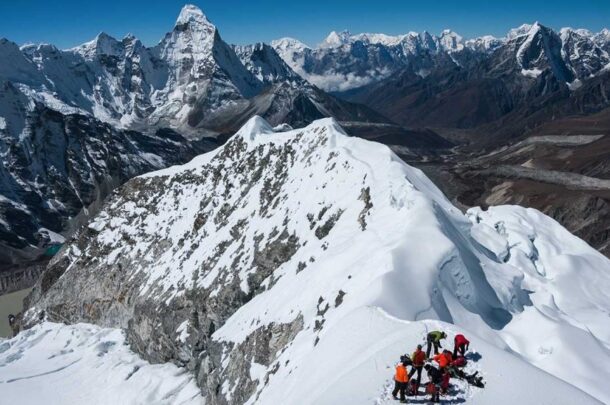
    The headwall is a steep snow/ice slope climbed using fixed ropes, crampons, ice axes, and ascenders (jumars). It is the most technical part of the climb.
  • Do I need prior mountaineering experience for Island Peak Climbing?

    Having prior mountaineering experience can be helpful, but it is not usually required.
  • What are the main routes to summit Island Peak?

    Everest Base Camp (EBC) Trail → Namche Bazaar → Tengboche → Dingboche → Chhukung → Island Peak Base Camp (5,200m / 17,061 ft) → Rocky and glaciated terrain with steep crevasses → 300m headwall climb to the summit.
  • Can I climb Island Peak without a guide?

    No, climbing Island Peak without a guide is not allowed. According to Nepal government regulations, all climbers must obtain a climbing permit, which is issued only if accompanied by a licensed guide.
  • What permits are required for Island Peak climbing?

    For Island Peak Climbing you will need; Nepal Mountaineering Association (NMA) permit ($70–$250+), a Sagarmatha National Park Entry Permit (NPR 3,000), and the Khumbu Pasang Lhamu Rural Municipality Permit (NPR 3,000).
  • Can I rent climbing equipment in Nepal for Island Peak?

    Yes, there are a few shops in Kathmandu, in the Thamel area, where you can rent climbing and trekking gear, including poles, down jackets, and sleeping bags. They mostly sell North Face brand items, as well as products from Chinese companies at affordable prices. If you need any assistance, you can contact them as well.
  • How can I avoid altitude sickness on Island Peak Climbing?

    To avoid altitude sickness during Island Peak climbing, we suggest that you drink enough water, take altitude sickness medication, walk slowly, monitor your health, check your oxygen levels, and follow the acclimatization plan.
  • How much does it cost for Island Peak Climbing Package?

    The Island Peak Climbing cost around USD 2500 - 3500 per person depending upon the group size, travel season, itinerary days and level of service you prefer during the trek.
  • How remote is Island Peak base camp?

    Since you will follow the world-famous Everest Base Camp route, it is not as remote as other trekking destinations in Nepal. Although at high altitude, you will still experience some sense of remoteness.
  • What are the main risks of Island Peak climbing?

    The main risks of Island Peak climbing include high altitude and the possibility of altitude sickness, sudden changes in weather, extreme cold, and technical challenges such as crevasses and steep ice walls. Other risks involve physical exhaustion, potential equipment failure, and the difficulty of conducting rescue operations in remote, high-altitude areas.
  • Can weather affect my Island Peak Summit?

    Yes, for your safety, our trekking guide will operate the Island Peak climbing or trekking expedition only under safe weather conditions.
  • What is the avalanche risk on Island Peak Climbing?

    The chances of avalanche risk on Island Peak is comparatively low compared to other trekking peaks in Nepal. Although it is low still we need to be careful during the trek.
  • How safe is Island Peak Climbing for solo climbers?

    Solo Climbing is banned in Nepal for trekking peaks and places inside the National Park and conservation area.
  • Is Island Peak Climbing Possible in winter?

    Yes, it is possible to do the Island Peak in winter but climber must prepare for the cold freezing temperature and heavy snowfall at high altitude.

Customer Reviews

  • Island Peak Climbing - 19 Days | Imja Tse Peak | Cost

    I recently summited the Island Peak in Nepal with High Route Adventure. Thanks to Mr. Prakash Kapri and Pemba Lama who made the summit attempt a great success. And I have to say, it has been an incredible experience.

    👍 Kudos to the team at High Route. Their planning and execution of the adventure to the Island Peak was outstanding.

    Explorer
  • Bhumi was a great guide. Looked after us when we got stuck in Lukla for several days. Would travel with him again and recommend him to others.

    Lucy M

Related Packages

You may like these packages too !
pikey peak trek
Trekking in Nepal

Pikey Peak Trek

Mera & Island Peak climbing via Amphu Labtsa Pass
Climbing

Mera & Island Peak Climbing via Amphu Labtsa Pass

Himlung Himal
Climbing

Himlung Himal Expedition

Annapurna sunrise & Everest view trek
Trekking in Nepal

Everest Annapurna Short Trek

Phoksundo Lake
Trekking in Nepal

Shey Phoksundo Lake Trek

Annapurna Base Camp Trek
Trekking in Nepal

Annapurna Base Camp Trek

Our Partners

We are associated with

High Route Adventure TripAvisor Award 2025 High Route Adventure TripAvisor Award 2025