Tent Peak Climbing - 11 Days

Trip Facts
Duration 11 Days
Max Altitude 5,663 meters (18,575 feet)
Trip Grade Moderate
Best Season Mar-May & Sep-Nov
Meals Breakfast, Lunch And Dinner
Accommodation Hotel/Teahouse/Tent
Highlights

Tent Peak Climbing Highlights

  • Reach the summit of Tent Peak (Tharpu Chuli) at 5,663 meters.
  • Combine the Annapurna Base Camp Trek with a Himalayan peak climb.
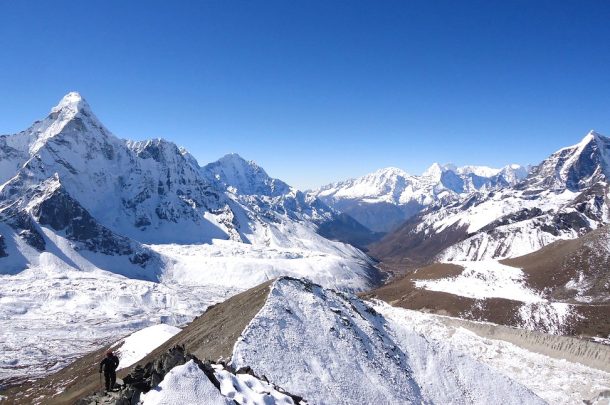
  • Enjoy close views of Annapurna I, Annapurna South, Machhapuchhre, Hiunchuli, and Gangapurna.
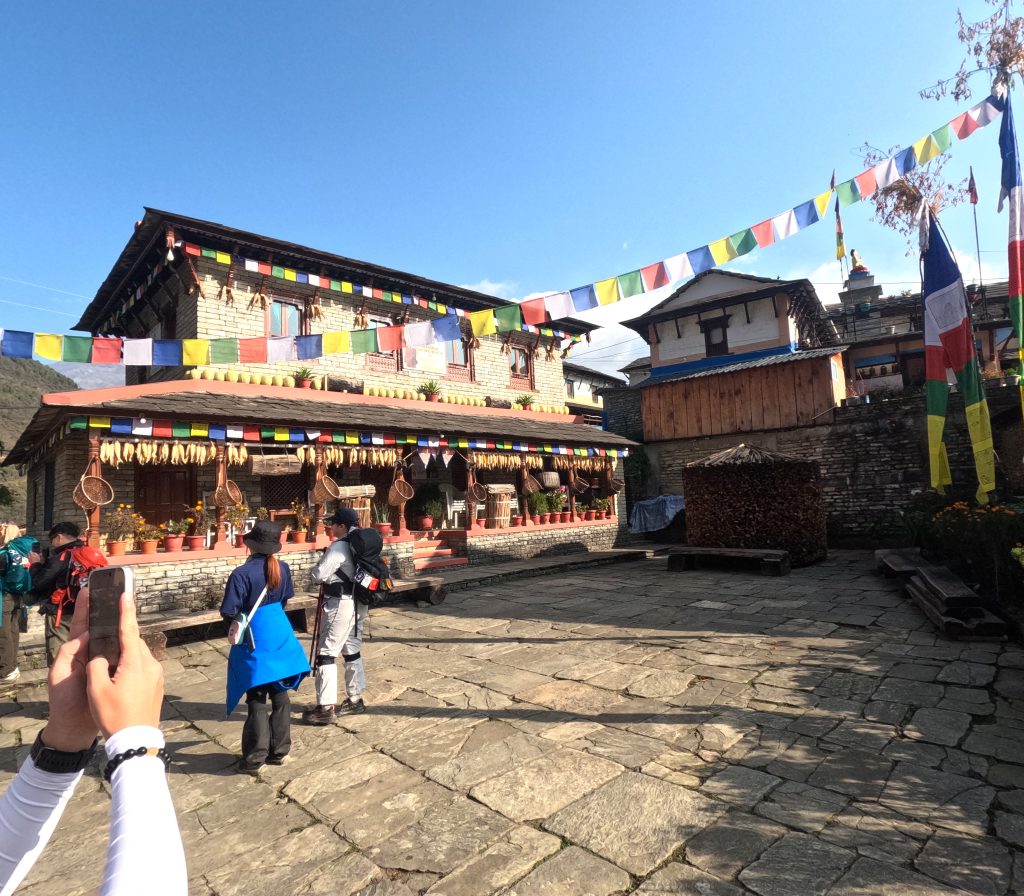
  • Walk through Ghandruk, Chhomrong, and other traditional mountain villages.
  • Trek through bamboo and rhododendron forests along the Modi Khola Valley.
  • See Himalayan birds, plants, and wildlife along the route.
  • Explore the Annapurna Conservation Area and its changing mountain landscapes.
  • Experience local traditions and everyday life in the villages.
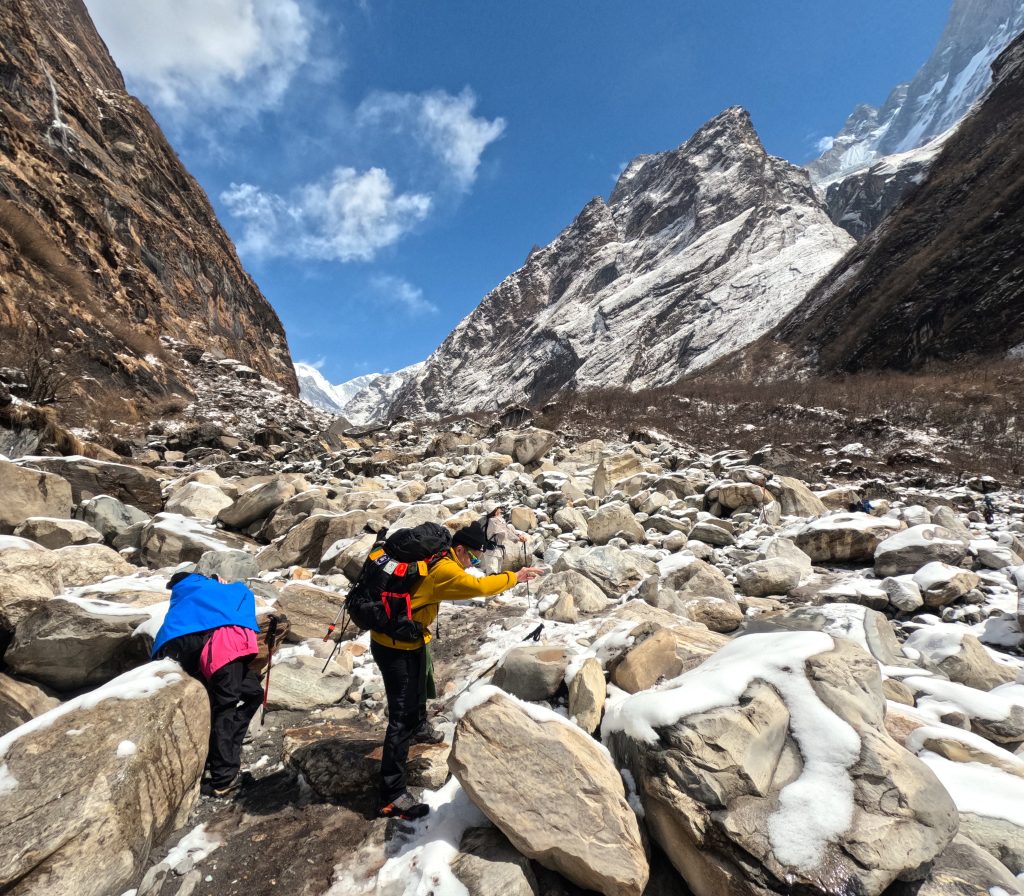
  • Experience the change from a regular trekking trail to rocky, snowy mountain terrain.
  • Take a first step into mountaineering with a climb above 5,000 meters.
Overview

Tent Peak Climbing Overview

The Tent Peak Climbing is an exciting trekking and peak-climbing adventure in Nepal’s Annapurna region. Tent Peak, also known as Tharpu Chuli, stands at an elevation of 5,663 meters. From the summit of Tent Peak, climbers are rewarded with breathtaking views of the surrounding Himalayan peaks and stunning mountain landscapes.

On this 11 day journey you will cover around 70 km, with most days involving 5 to 7 hours of walking. However, summit day takes longer and demands more effort.

Your journey starts in Kathmandu with a 25-minute scenic flight from Tribhuvan International Airport (TIA) to Pokhara International Airport. From Pokhara, you take private transportation to Birethanti, where your trekking journey begins. The trail then follows through Ghandruk, Chhomrong, and the Modi Khola Valley before reaching Annapurna Base Camp at 4,130 meters. The lower section of the route passes through stone trails, terraced fields, forests, and traditional Gurung villages. As you gain altitude, the trees become fewer and the landscape gradually turns more rugged and rocky.

From the sanctuary, you get close views of Annapurna I, Annapurna South, Machhapuchhre, Hiunchuli and Gangapurna. The route also gives you a chance to see local traditions, prayer flags, village shrines and everyday life in the Annapurna region.

After ABC, the trip changes from trekking to climbing. You head toward Tent Peak Base Camp and High Camp before making the summit attempt. After the climb, you return through the Annapurna trail and eventually reach Pokhara, where you can relax and enjoy some wonderful time in the city. The next day, you return to Kathmandu by tourist bus or flight and conclude our journey.

What to expect on the Tent Peak Climbing?

A typical day starts with breakfast at the teahouse before you head out with your guide. You walk for a few hours and stop for lunch along the trail. There is no need to rush. You can take a short break, fill your water bottle or stop for a photo when you need one. By late afternoon, you reach the next teahouse or camp and have time to rest before dinner.

The trail also has plenty of small moments that you may remember later. You might see children smiling as they walk home from school, hear birds in the forest or pass goats and mules carrying supplies. In the villages, you can smell dal bhat or noodles cooking before you even reach the teahouse. After a long day, sitting with a cup of hot tea feels just as good as the mountain views.

The routine changes once you reach the climbing section. Days start earlier and become more focused on the mountain. You check your climbing gear, eat simple meals and follow the guide’s instructions before moving higher. Summit day starts before sunrise and can be long, so the evening before is mostly about eating, resting and getting ready.

Why choose Tent Peak?

If you find the regular Annapurna Base Camp trek a little limiting, here are a few reasons to choose for the Tent Peak Climb:

  • ABC and a summit in single trip: Trek through the Annapurna Sanctuary before continuing toward the 5,663-meter summit of Tent Peak.
  • A first step into peak climbing: Learn the basics of using crampons, an ice axe, ropes, and other climbing equipment before the summit attempt.
  • A real Himalayan summit: Tent Peak is not simply a viewpoint. You need to climb through high-altitude terrain and complete a proper summit push.
  • A change in terrain: The trail starts with forests, villages, and stone paths before becoming more rocky, snowy, and alpine above ABC.
  • Close mountain views: Tent Peak sits within the Annapurna Sanctuary, with Annapurna I, Annapurna South, Machhapuchhre, and Hiunchuli around the route.

Why Choose High Route Adventure For Tent Peak Climbing?

With High Route Adventure, you get a guide who knows that every trekker walks differently. Our guides do not rush you to the next stop. They keep the walking comfortable and give you time for water, short breaks and mountain views. Along the way, they also share small details about the villages, local traditions and Gurung culture. If your trek falls during a festival, they can help you understand what is happening and why it matters to the local people.

The same local support continues when the trail gets higher. Our guide helps you prepare for the move from ABC to Tent Peak Base Camp and High Camp. They check your climbing equipment, explain what to expect on summit day and keep an eye on how you are handling the altitude. If you are tired or something does not feel right, you can speak openly with the guide and adjust the plan when needed.

We also take care of the practical work behind the trip. Permits, transport, accommodation, meals, camping and climbing arrangements are handled by our team. You can focus on the trail and the climb without worrying about each small arrangement. From sharing a cup of tea in a mountain village to helping you prepare for the summit, we aim to make the Tent Peak Climb feel well supported from beginning to end.

Tent Peak Climbing Cost for 2027/28?

The cost of the Tent Peak Climb 2026/27 depends on the number of people joining the package. We offer different rates for solo trekkers and groups. 

Group SizePrice Per person
1 person$
2 – 4 people$
5 – 12 people$

Itinerary

Tent Peak Climbing Itinerary

Duration: Flight - 25 minutes, Drive - 1.5 hours, Trek - 3 to 4 hours
Distance: Flight - 146 km, Drive - 41.7 km, Trek - 11 km

The Tent Peak climb begins with a short flight from Kathmandu to Pokhara. Then, you drive to Birethanti, the starting point of the trek toward Ghandruk. The road passes through green hills, river valleys, terraced fields & small villages.

From Birethanti, the trail climbs through stone steps, terraced farmland, forests, and scattered villages. You cross suspension bridges & follow sections of the Modi Khola valley before the route becomes steeper toward Ghandruk.

After around 5 to 6 hours of walking, you reach Ghandruk at 2,012 meters. It is a large Gurung village with traditional houses and mountain views. You can see Annapurna South, Hiunchuli and Machhapuchhre from here.

⛰ Altitude 2012 meters
🍽 Meals Dinner
🏨 Stay Teahouse
Duration: 6 to 7 hours
Distance: 9 to 11 km

After breakfast in Ghandruk, you set off for Chhomrong village. The route passes through forest, small settlements and plenty of stone steps. There are uphill sections as well as descents, so the walk keeps changing.
As you reach Chhomrong, the views of Annapurna South & Machhapuchhre become more prominent. It is an important stop on the Annapurna Sanctuary route with teahouses spread along the hillside.

⛰ Altitude 2185 meters
🍽 Meals Breakfast | Lunch | Dinner
🏨 Stay Teahouse
Duration: 6 to 7 hours
Distance: 12 to 13 km

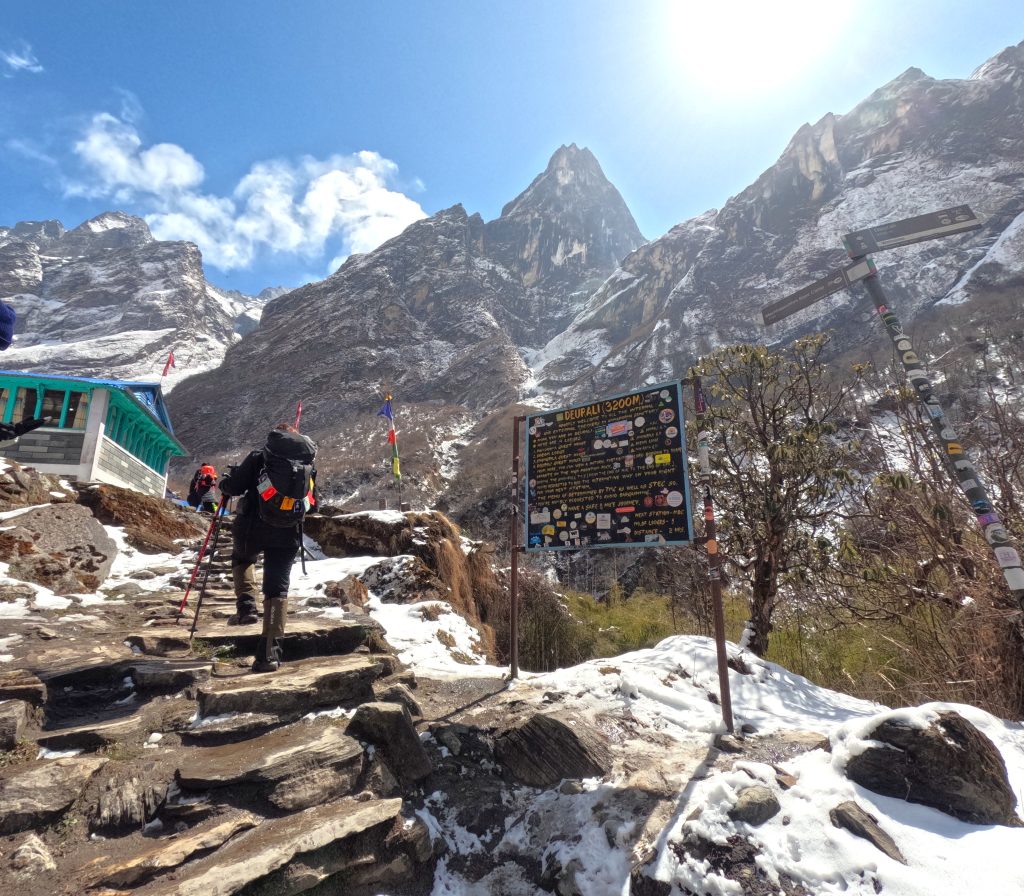
After leaving Chhomrong, you descend a long set of stone steps toward the Chhomrong Khola. After crossing the suspension bridge, the trail climbs again toward Sinuwa before entering dense bamboo & rhododendron forests.

The trail passes through Bamboo and Dovan, heading deeper into the Annapurna Sanctuary along the Modi Khola. The surroundings become quieter and cooler as you gain altitude. After around 6 to 7 hours of walking, you reach Himalaya at 2,970 meters.

⛰ Altitude 2970 meters
🍽 Meals Breakfast | Lunch | Dinner
🏨 Stay Teahouse
Duration: 5 to 6 hours
Distance: 11 to 11.5 km

From Himalaya, the trail continues toward Hinku Cave, a large rock overhang where trekkers once took shelter. Beyond Hinku Cave, the forest becomes thinner and the valley opens into rocky alpine terrain.

You continue toward Machhapuchhre Base Camp at 3,700 meters, where Machhapuchhre rises sharply above the valley. From MBC, the trail enters the Annapurna Sanctuary, surrounded by high mountain walls and glacial terrain. After another uphill section, you reach Annapurna Base Camp at 4,130 meters.

⛰ Altitude 4130 meters
🍽 Meals Breakfast | Lunch | Dinner
🏨 Stay Teahouse

Today is for acclimatization and climbing preparation rather than covering a long distance. You spend the day around Annapurna Base Camp and give your body time to adjust before moving higher.

The climbing team introduces you to crampons, an ice axe, a harness and climbing ropes. You learn how to use the equipment and practice basic rope techniques with the climbing team.

The rest of the day is for checking your gear, getting some rest and preparing for the climb ahead.

Note: Wake up early around 4:00 to 5:00 AM to watch the beautiful sunrise over the Annapurna Himalayas from Annapurna Base Camp.

⛰ Altitude 4130 meters
🍽 Meals Breakfast | Lunch | Dinner
🏨 Stay Teahouse
Duration: 4 to 5 hours
Distance: 6 to 7 km

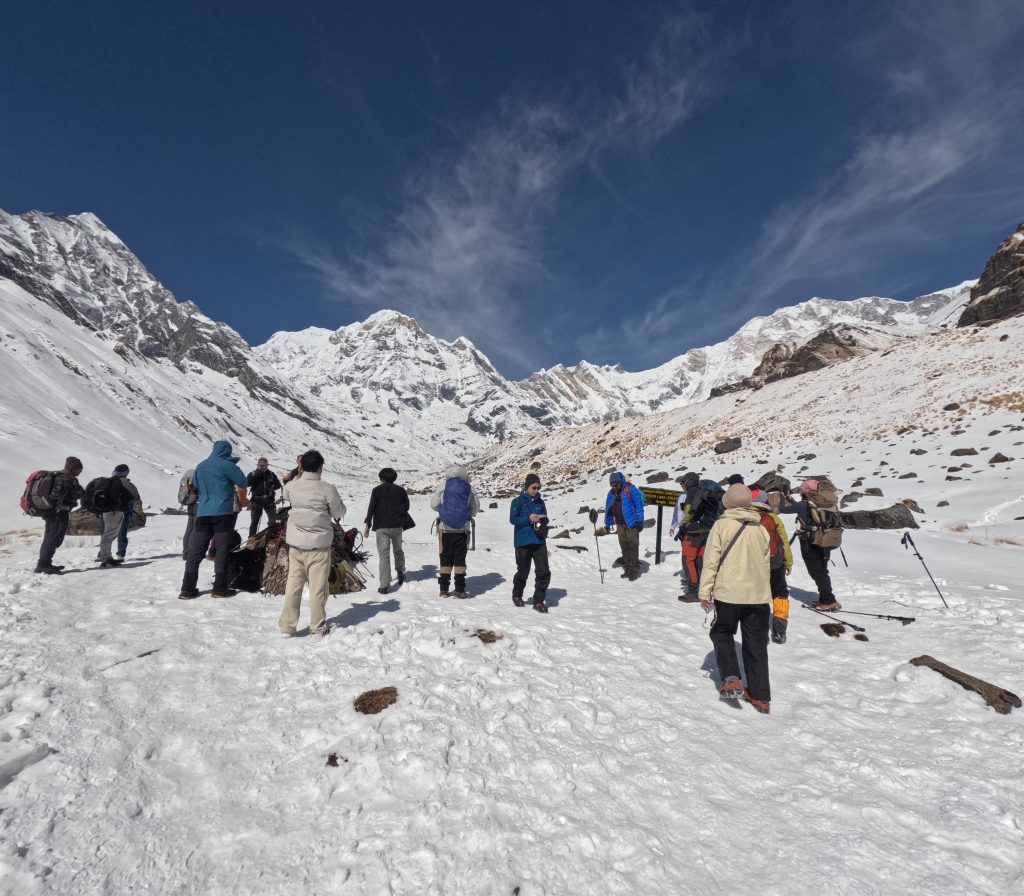
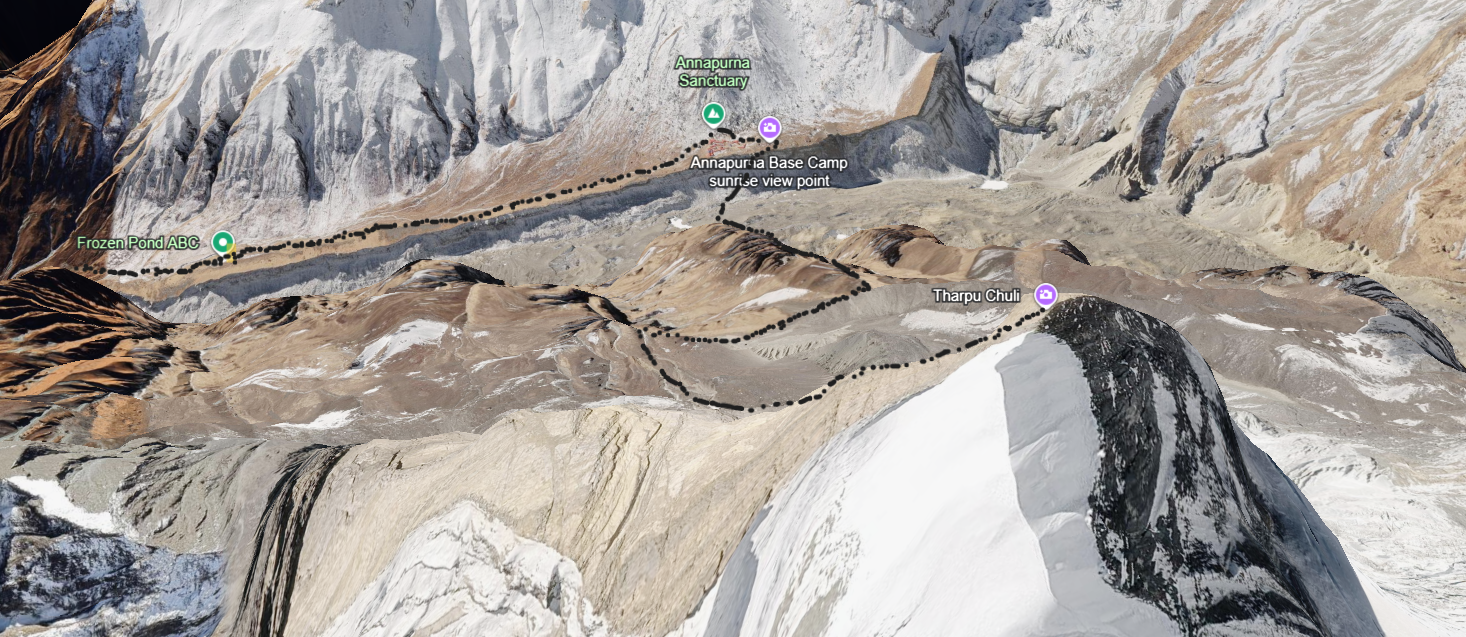
After breakfast, you leave ABC and take the trail toward Tent Peak Base Camp. The route leaves the main ABC trail and becomes more rocky. You will walk across loose gravel, rocky moraines and a few snow patches. 

The trail follows the high-altitude terrain around the Annapurna sanctuary, with Annapurna I, Annapurna South, and Hiunchuli still visible around you. The walk takes around 4 to 5 hours. After reaching Tent Peak Base Camp, you settle into camp, rest, and prepare for the steeper climb to High Camp the next day.

⛰ Altitude 4450 meter
🍽 Meals Breakfast | Lunch | Dinner
🏨 Stay Tent
Duration: 4 to 5 hours
Distance: 2 to 3 km

Today you climb from Tent Peak Base Camp to High Camp at 5,200 meters. The distance is short, but the terrain becomes steeper, with rocky ridges, moraine slopes, and sections of snow and ice. At this altitude, even a short climb can feel tiring because of the thinner air.

The climb takes around 3 to 4 hours, depending on trail and weather conditions. Once you reach High Camp, the team checks your crampons, ice axe, harness, ropes, and other climbing gear. You also get time to rest and prepare mentally for the summit attempt the following day.

⛰ Altitude 5200 meters
🍽 Meals Breakfast | Lunch | Dinner
🏨 Stay Tent
Duration: 10 to 11 hours
Distance: 10 to 11 km

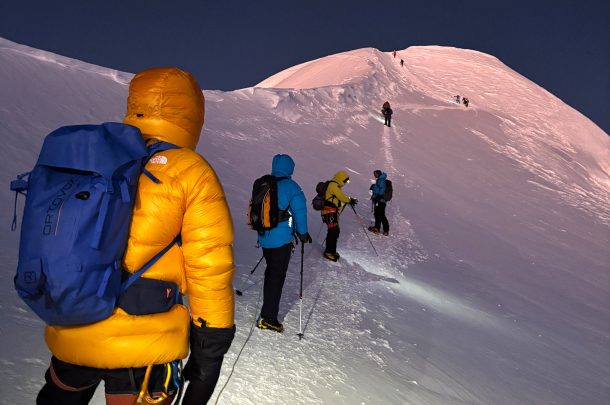
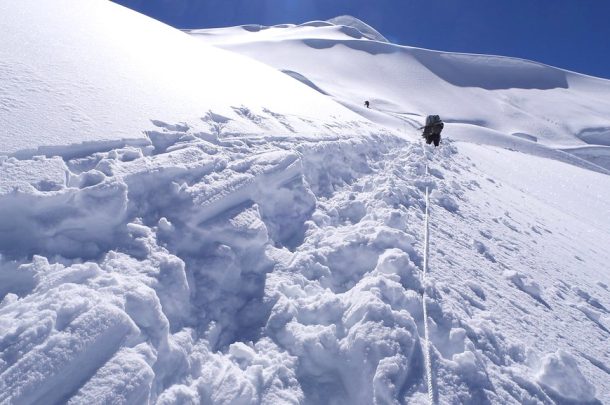
This is the main day of the Tent Peak Climb. You leave High Camp early and begin the summit push toward Tent Peak at 5,663 meters. The climb takes you across steep alpine terrain, with snow and ice sections depending on current conditions.

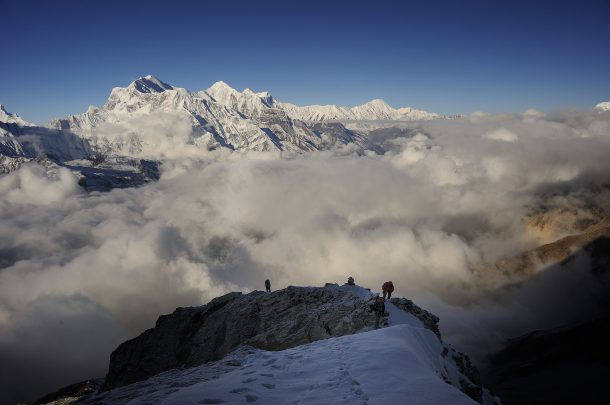
Reaching the summit gives you wide views across the Annapurna Sanctuary which includes Annapurna I, Annapurna South, Machhapuchhre, Hiunchuli & other surrounding peaks. After spending some time at the top, descend carefully toward Tent Peak Base Camp & continue back to ABC. The descent is long so the day requires good stamina even after reaching the summit.

⛰ Altitude 4130 meter
🍽 Meals Breakfast | Lunch | Dinner
🏨 Stay Teahouse
Duration: 7 to 8 hours
Distance: 16 to 16.5 km

The trail from ABC takes you downhill through the rocky parts of the sanctuary. The trail descends through rocky sections before returning to greener forests and lower elevations. You pass through Machhapuchhre Base Camp, Himalaya, Dovan & reach Bamboo. The walk takes around 6 hours, with long downhill sections and stone steps along the way.

⛰ Altitude 2300 meter
🍽 Meals Breakfast | Lunch | Dinner
🏨 Stay Teahouse
Duration: Trek - 7 hours, Drive - 2 to 3 hours
Distance: Trek - 11 to 12 km, Drive - 49 km

Once you reach Jhinu Danda, you can take a break at the natural hot springs. It is a good place to relax after the long days of trekking and climbing. After the break, you continue toward Sewai, where your vehicle will pick you up and drive you to Pokhara. Once you reach Pokhara, you can check into your hotel and take the rest of the day to relax.

⛰ Altitude 822 meter
🍽 Meals Breakfast | Lunch | Dinner
🏨 Stay Hotel

Today, you return to Kathmandu from Pokhara by flight or road.  The flight is the quicker option, while the drive gives you more time to see the hills, rivers, and settlements along the route. Once you reach Kathmandu, the 11-day Tent Peak Climb comes to an end.

Note: We arrange the tourist bus from Pokhara to Kathmandu. If you prefer to fly from Pokhara to Kathmandu, the flight fare is not included in the package and you will need to pay the additional cost.

⛰ Altitude 1400 meter

Build Your Own Adventure!

Collaborate with our specialists to create a unique itinerary.

Tent Peak Climbing Booking, Payment and Cancellation Policy
  1. Booking Deposit: A 20% advance payment is required to confirm your Tent Peak Climb. This helps us secure the trekking and climbing arrangements, accommodation, transportation, and other services included in your package.
  2. Remaining Payment: You can pay the remaining balance before the trek or after arriving in Nepal, based on the payment terms agreed during booking.
  3. Payment Methods: We accept bank transfers, credit/debit cards, online payment platforms, and cash for payments made in Nepal.
  4. Information Required: When booking, please send your preferred travel date, group size, passport copy, and any special requests. This helps us prepare the required permits and trip arrangements.
  5. Trip Confirmation: Once your booking is confirmed, we send the final itinerary, packing list, trip details, and other pre-trek information you need before departure.
  6. Cancellation and Refunds: Cancellation, refund, and rescheduling conditions follow our Terms and Conditions. Please check them before making your booking.
Cost Detail

Inclusion

What's included ?

  • Airport pickup and drop-off by private vehicle.
  • Transportation between Kathmandu, Pokhara, and the trekking starting/ending points as per the itinerary.
  • Licensed, English-speaking trekking and climbing guide.
  • Experienced climbing guide and climbing support team for the Tent Peak section.
  • Tent Peak climbing permit and other necessary climbing permits.
  • Teahouse accommodation
  • Tent accommodation at Tent Peak Base Camp and High Camp
  • Camping equipment, including tents, mattresses, and kitchen/camp equipment.
  • Sleeping bag and down jacket for the high-altitude section
  • Breakfast, lunch, and dinner during the trek and climbing section.
  • Camp-cooked meals at Tent Peak Base Camp and High Camp.
  • Porters to carry your main luggage
  • Government taxes and service charges.
  • First-aid kit carried by the guide.

What's not included ?

  • International flights to and from Nepal.
  • Nepal visa fees.
  • Travel and rescue insurance, including helicopter evacuation costs.
  • Personal expenses such as drinks, snacks, bottled water, and extra meals.
  • Wi-Fi, charging, hot showers, and other personal services at teahouses.
  • Personal trekking and climbing equipment such as trekking boots, clothing, gloves, headlamp, sunglasses, and trekking poles.
  • Personal climbing gear if you prefer to bring or rent your own equipment.
  • Extra accommodation or meals in Kathmandu or Pokhara outside the planned itinerary.
  • Tips for guides, porters, drivers, and climbing staff.
  • Costs arising from itinerary changes due to bad weather, natural disasters, flight delays, illness, or other unforeseen circumstances.
  • Emergency evacuation or rescue expenses.
  • Any services or expenses not specifically mentioned under Includes.
Things to Know

Notes

Most difficult section of the Tent Peak Climb

Tent Peak has a PD (Peu Difficile) alpine climbing grade. The walk to Annapurna Base Camp is mostly a trekking section. The harder part starts after ABC, especially once the route reaches the higher camps.

  • ABC to Tent Peak Base Camp: This takes around 5 to 6 hours. The route reaches about 4,450 meters, with loose gravel, rocky moraines, and occasional snow. The uneven ground can make the walk tiring at this altitude.
  • Tent Peak Base Camp to High Camp: It takes around 3 to 4 hours to reach High Camp at 5,200 meters. The climb gets steeper around the rocky ridges and moraine slopes. Snow and ice may also appear along the way.
  • High Camp to Summit: The summit push takes around 7 to 9 hours and reaches 5,663 meters. This is the hardest day of the climb. Steep sections, snow, ice, and the altitude all add to the effort.
  • Return from the Summit: The descent to ABC comes after a long day at high altitude. Several more hours of walking are still ahead, and loose ground can make the return tiring.

Fitness level required and Preparation

Tent Peak requires a good level of fitness because the climb combines long trekking days with a demanding summit day. You should be able to walk for several hours on uneven ground without struggling. 

The biggest physical demand comes on summit day. You need enough endurance to climb from High Camp to the summit and then descend all the way back toward Annapurna Base Camp. The altitude also makes the effort harder, so being comfortable with high-altitude trekking, steep terrain, ice, snow & long climbing days is important.

You should ideally have:

  • Previous experience with high-altitude trekking
  • Good endurance for 5 to 7 hours of walking
  • Strong legs for steep climbs & long descents
  • Experience walking on rocky, uneven, and loose terrain
  • Enough stamina for the High Camp to summit push and descent
  • The ability to stay physically active for several consecutive days
  • Basic comfort with climbing equipment such as crampons, fixed ropes, ice axe & harness

Best time for Tent Peak Climbing

Spring and autumn are the best seasons for Tent Peak Climbing. Spring brings warmer days, longer daylight hours and rhododendrons in bloom along the lower trail. Autumn has clearer skies after the monsoon, drier trails, and better mountain visibility.

The summit weather window matters once you reach High Camp. Wind, snowfall, cloud cover, & visibility can change quickly above 5,000 meters. The summit attempt starts early in the morning, giving the climbing team enough daylight for the ascent & descent. The exact start time depends on the weather and route conditions.

Winter (December to February) has colder temperatures and more snow around the higher camps. During the monsoon (June to August), the trails can be wet, and mountain views are often less clear. 

Food and Meals: What To Expect

You get teahouse meals on the trekking route and camp-cooked food during the peak climbing section. At higher altitudes, meals are simpler and focus on carbohydrates and enough calories to keep you fueled through long days of trekking and climbing. 

Breakfast at teahouses includes porridge, eggs, pancakes, Tibetan bread, chapati, muesli, tea, or coffee. Lunch and dinner usually include dal bhat, fried rice, noodles, thukpa, momo, pasta, potatoes, and vegetable dishes. Dal bhat is especially useful on long trekking days as it is a filling meal made with rice, lentils, and vegetables.

After ABC, the climbing crew prepares meals at Tent Peak Base Camp and High Camp. Food is simple and filling, with options like rice, noodles, potatoes and hot soup. Hot drinks help you stay warm and hydrated. On summit day, meals are light and easy to eat during the climb. 

Accommodation: Teahouse and Tent

  • Teahouse lodging: Until ABC, you stay in local teahouses with a reserved room. Rooms are generally twin-sharing and come with beds, mattresses, pillows and blankets. Bathrooms are usually shared. Teahouses also have dining areas where you can have your meals and spend time before and after the day's walk.
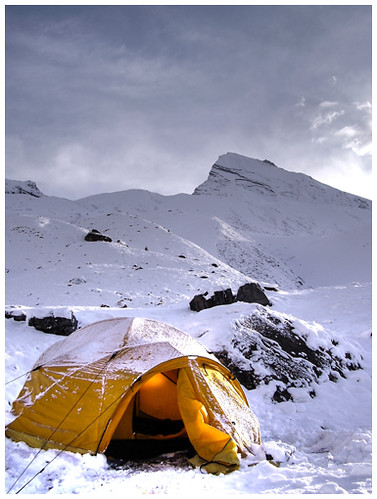
  • Tented Camp Accommodation: After leaving ABC, the climbing team sets up the camps at Tent Peak Base Camp and High Camp. You sleep in a tent with a sleeping bag and camping mattress. The facilities are basic with the camp mainly providing a place to sleep, eat, and prepare for the climb. 

Altitude Sickness and Acclimatization Tips

The risk of altitude sickness remains high during Tent Peak Climbing, especially above 3,000 meters. It happens when your body does not adjust properly to the lower oxygen levels at high altitudes. Headache, nausea, dizziness, tiredness and loss of appetite are common signs. If it is neglected than it can turn into HACE and HAPE which are advance form of altitude sickness.

Here is how to prevent during the climbing journey:

  • Walk slowly: Do not rush on high altitude. Give your body time to adjust.
  • Stay hydrated: Drink water regularly throughout the day. Avoid too much caffeine and alcohol.
  • Eat properly: Have regular meals even when you do not feel very hungry. Your body needs enough food at altitude.
  • Sleep well: Use the acclimatization day to rest and get enough sleep before moving higher.
  • Avoid unnecessary exertion: Keep the acclimatization walk easy. Do not turn it into a hard hike.
  • Watch for symptoms: Tell your guide if you develop a headache, nausea, dizziness or unusual tiredness.
  • Do not ascend with worsening symptoms: If symptoms get worse, stop climbing and follow your guide's advice.
  • Descend when necessary: Serious altitude sickness does not improve by simply resting at the same altitude. Descent may be necessary.
  • Follow your guide's instructions: Your climbing guide can assess your condition and decide whether it is safe to continue.

Trip Extension

If you have extra time after the Tent Peak Climb, you can extend your stay in Pokhara or Kathmandu. From Pokhara, you can add a short sightseeing trip or try activities such as paragliding.

You can also continue with another trek in the Annapurna region, such as the Mardi Himal Trek, Annapurna Circuit Trek, or Khopra Ridge Trek. If you prefer a shorter trip, we can also arrange day tours around Nepal. 

Travel Tips for the Tent Peak Climb

These tips can help you prepare for trekking in Nepal especially when your route includes high-altitude trekking and peak climbing. 
  • Break in your climbing boots before the trip so you don’t have to deal with blisters on the summit section.
  • Keep your gloves, socks and spare layers dry as wet clothing is a serious problem in cold conditions.
  • Bring a headlamp and extra batteries for the early start on summit day.
  • Always apply sun protection and lip balm, even when the sky is overcast. At higher altitude, UV levels are increased;
  • At High Camp, keep your water bottle inside your jacket or sleeping bag to keep the water from freezing overnight.
  • Eat and drink regularly while climbing, even if altitude reduces your appetite or thirst.
  • Before you begin to traverse the moraine section, pack away loose items that might fall out and get damaged.
  • On fixed-rope sections, obey the instructions of the climbing team and do not rush the terrain if it gets steep or exposed.
  • Pack light on your summit day and bring only what you really need for the climb.
  • Don’t consider High Camp your finish line. Conserve energy for the summit ascent and the descent back toward Annapurna Base Camp. 

Equipment

Here is the comprensive packing list for the Tent Peak Climbing:
Clothing

  • Base-layer thermal top and bottom
  • Trekking T-shirts and shirts
  • Fleece jacket
  • Down jacket
  • Waterproof/windproof jacket and trousers
  • Trekking trousers
  • Warm trekking pants
  • Underwear and extra socks
  • Warm hat/beanie and sun hat
  • Buff or neck gaiter
  • Inner and insulated gloves

Footwear

  • Broken-in trekking boots
  • Camp shoes or sandals

Climbing Gear

  • Mountaineering boots: 1 pair of plastic-shell boots with high-altitude liners
  • Crampons: 1 pair of steel crampons (no aluminum)
  • Climbing harness: 1 alpine climbing harness
  • Mountaineering axe: 1 ice axe with leash, properly sized for your height
  • Ascender: 1 ascender, right- or left-handed as appropriate
  • Belay device: 1 belay device, such as Black Diamond ATC or ATC Guide
  • Locking carabiners: 2 D-shaped locking carabiners
  • Non-locking carabiners: 2 non-locking carabiners
  • Gaiters: 1 pair of expedition-style gaiters that fit over your mountaineering boots
  • Climbing helmet: 1 helmet (mandatory)
  • Neck gaiter/Buff: 1 scarf, neck gaiter, or Buff (highly recommended)
  • Ski goggles: 1 pair (optional)

Sleeping & Camping

  • Sleeping bag suitable for high altitude
  • Sleeping bag liner
  • Headlamp with spare batteries
  • Trekking poles
  • Sleeping mat, if required

Backpack & Bags

  • 40–50 L trekking backpack
  • Small daypack
  • Waterproof backpack cover
  • Duffel bag( provide by High Route Adventure)
  • Dry bags or waterproof packing bags

Personal & Health Items

  • Sunglasses/goggles
  • Sunscreen and lip balm
  • Water bottles or hydration bladder
  • Water purification tablets/filter
  • Personal first-aid and medicines
  • Toiletries and quick-dry towel
  • Hand sanitizer
  • Personal hygiene products

Electronics & Documents

  • Passport and copies
  • Travel insurance documents
  • Phone and charger
  • Power bank
  • Universal adapter
  • Camera, if needed
FAQs

FAQs of Tent Peak Climbing

  • Is there a mobile network on the Tent Peak climbing route?

    Mobile coverage is available in villages such as Ghandruk, Chhomrong, and Sinuwa. The signal gets weaker as you move higher, and you should not expect regular service around Tent Peak Base Camp and High Camp.
  • Is Wi-Fi available on the Tent Peak climbing route?

    Wi-Fi is available at Annapurna Base Camp, but there is no Wi-Fi above ABC once you move into the Tent Peak climbing section.
  • Are there ATMs available?

    There are no ATM facilities along the trekking trail, so you should carry enough Nepali rupees before starting the trek. You may need cash for drinks, snacks, charging, Wi-Fi, and hot showers along the route.
  • How is communication and emergency rescue handled

    Our guide handles communication during the climbing section and stays in contact with the support team when needed. If an emergency occurs, the guide assesses the situation and decides what action to take. Depending on the situation, this may mean descending to a lower camp or arranging a helicopter rescue. Rescue flights depend on weather and flying conditions. It is important to follow the guide's instructions if an emergency occurs.
  • How can I trek responsibly during the Tent Peak climb?

    The Tent Peak route passes through villages, forests, and the Annapurna Sanctuary. Keep the trail clean and carry your rubbish until you find a proper disposal point. Avoid single-use plastic where possible and refill your water bottle instead. Respect local customs and ask before taking photos of people or religious sites. Stay on the marked trail and do not disturb plants or wildlife. Your small choices help keep the route clean and respectful for the people who live there.
  • Who will be part of the trekking team for the Tent Peak climb?

    When you book the Tent Peak Climb with us, a licensed English-speaking guide will lead you on the trek and support you during the climb. The climbing team also helps with equipment and camp setup at the higher camps. For groups that need extra support, we can arrange additional guides and porters. Porters help carry your main luggage while you walk with a lighter daypack. The team also keeps an eye on your condition as you gain altitude and helps when the trail gets more demanding.
  • What happens if the summit attempt is cancelled due to weather?

    If the summit attempt is cancelled due to bad weather, we will wait for a safe weather window before making another attempt. Since mountain weather can change quickly, we recommend adding 1–2 buffer days to your itinerary as contingency days for the summit attempt.
  • Is climbing training provided?

    Yes, our licensed climbing guide will provide training at Annapurna Base Camp on how to use climbing equipment and basic climbing techniques before you continue to the Tent Peak climbing section.
  • Is travel insurance required?

    Yes, travel insurance with high-altitude trekking and climbing coverage is required to obtain the climbing permit from the Nepal Mountaineering Association (NMA). The permit application can only be approved after you provide proof of valid insurance. Your policy should cover emergency medical treatment and helicopter evacuation at high altitude.

Related Packages

You may like these packages too !
Chat via WhatsApp +977 9851058664

Our Partners

We are associated with

High Route Adventure TripAvisor Award 2025 High Route Adventure TripAvisor Award 2025