
Why Can No One Climb Mount Kailash (Kailash Parvat)?
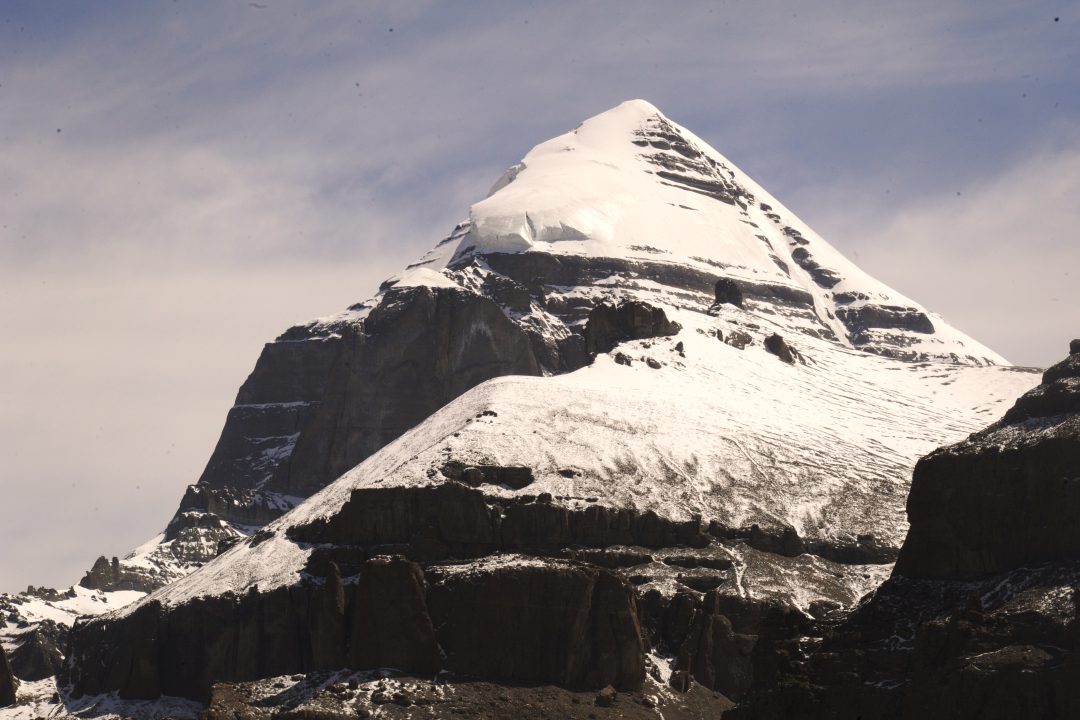
Table of Contents
Introduction: The Peak That Nobody Climbs
Every year, hundreds of mountaineers reach the summit of Everest, and climbers also line up for K2, Annapurna, and Kangchenjunga. Some of these peaks are far more dangerous than others, yet people continue to attempt them.
Then there is Mount Kailash.
Mount Kailash, also known as Kailash Parvat, rises from the remote western Tibetan plateau. It stands at 6,638 meters (21,778 feet), which is significantly lower than Everest, which reaches 8,849 meters. By height alone, Kailash should pose a modest challenge for an expert team.
However, no one has ever reached its summit – at least, no one has done so in recorded modern history.
This is the intriguing puzzle of the mountain. It is neither the tallest peak in the Himalayas nor the deadliest; it is simply the mountain that people have collectively chosen to leave alone.
So, why is it that no one can climb Mount Kailash? The answer is not a single reason, but rather a combination of three factors.
- Profound religious sanctity. Four major faiths hold the mountain sacred.
- Strict government regulations. Climbing it is not permitted today.
- Eerie legends and natural hazards. Stories and harsh conditions add to its mystique.
In this guide, we explore each reason in depth. We also look at the legends, the science, and the sacred pilgrimage that replaces the climb. By the end, you may see this unclimbed mountain very differently.
Mount Kailash at a Glance
Before we dive into details, here are some basic facts about this sacred mountain in Tibet:
- Local Names: Kailash Parvat (Sanskrit), Gang Rinpoche (Tibetan), Gang Tise
- Location: Ngari Prefecture, Tibet Autonomous Region, China
- Height: 6,638 meters (21,778 feet)
- Mountain Range: The Gangdise Mountains, part of the Transhimalaya
- Nearby Lakes: Lake Manasarovar and Rakshastal
- Famous Pilgrimage: The 52-kilometer Kailash Kora
- Climbing Status: Climbing is not permitted, and the mountain has never been officially summited
Mount Kailash is located near the sources of four major rivers: the Indus, Sutlej, Brahmaputra, and Karnali. This geographical significance plays a crucial role in the spiritual beliefs surrounding the mountain. We will explore this further shortly.
The Religious Significance: A Mountain at the Center of the World
To understand why Mount Kailash remains unclimbed, one must first grasp its significance to believers. For millions, it is more than just a mountain; it is the center of creation.
Mount Kailash as the Axis Mundi
Many ancient traditions refer to an Axis Mundi, a cosmic pillar that connects heaven and Earth. It symbolizes the point where the divine enters the human world. In Asian spiritual thought, Mount Kailash serves as that pillar. Numerous texts link it to the mythical Mount Meru, regarded as the cosmic mountain at the center of the universe.
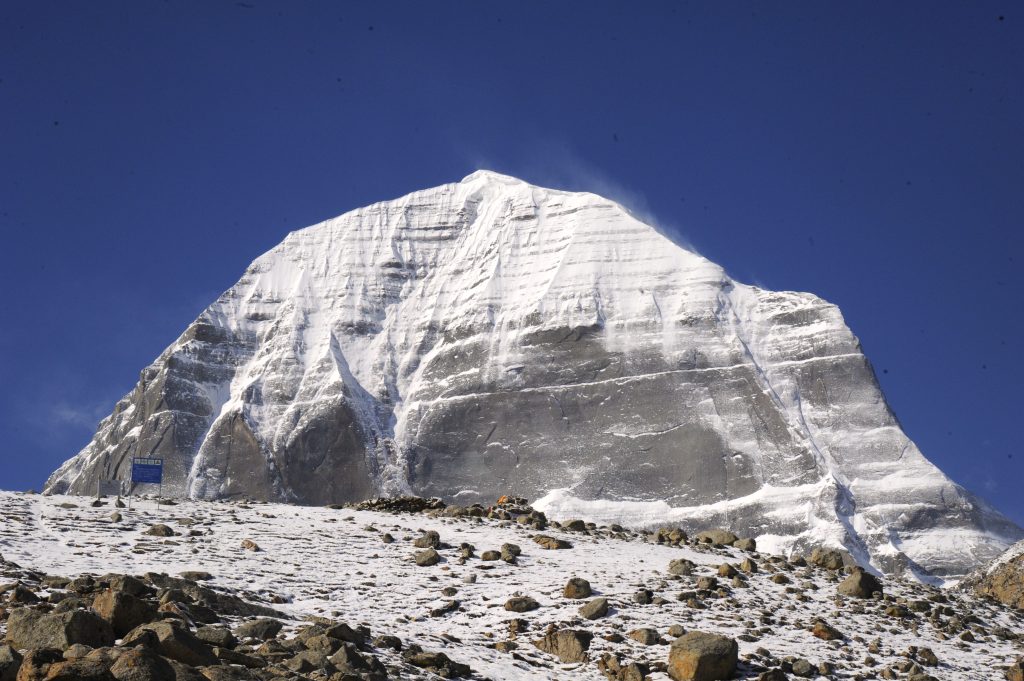
The mountain’s striking, symmetrical form rises like a vast pyramid, with four distinct faces, each pointing toward a cardinal direction. This almost intentional geometry enhances its spiritual power, and pilgrims often describe the mountain as feeling alive.
Hinduism: The Eternal Abode of Lord Shiva
For Hindus, Kailash is the home of Lord Shiva, the great ascetic and the destroyer and transformer in the Hindu trinity. It is said that he sits in deep meditation at the summit, while his consort, Goddess Parvati, resides beside him, along with their sons, Ganesha and Kartikeya.
The name “Kailash Parvat” even incorporates Parvati’s name, as “Parvat” means mountain and “Parvati” means daughter of the mountain. Hindu scriptures, such as the Puranas, describe Kailash with immense reverence, stating that Shiva resides there with his attendants and that the sacred Ganga flows from his matted hair.
Climbing the mountain would hold significant implications for a devout Hindu, akin to intruding upon Shiva’s home or trampling through a temple’s inner sanctum. Such an act is inconceivable.
Buddhism: The Home of Demchok
Tibetan Buddhists refer to the mountain as Gang Rinpoche, meaning “Precious Jewel of Snow.” They associate it with Demchok, also known as Chakrasamvara, a powerful meditation deity representing supreme bliss and the union of wisdom and compassion.
According to Buddhist tradition, Demchok and his consort, Dorje Phagmo, reside at the heart of the mountain. Some accounts also mention the presence of five hundred Buddhist saints there. The mountain features prominently in the story of Milarepa, Tibet’s most revered yogi and poet. Tradition holds that he engaged in a magical contest with a Bon master named Naro Bonchung, with control of the mountain as the prize.
Milarepa reportedly won by reaching the summit at dawn, allegedly flying on the first rays of the sun. However, instead of claiming the peak for himself, he left it as a sacred space for all pilgrims, illustrating a profound lesson: even Buddhism’s greatest yogi did not seek to possess the mountain.
Jainism: The Place of Liberation
Jains refer to the mountain as Ashtapada and believe that Rishabhanatha, the first Tirthankara, attained liberation there. The concept of liberation, or moksha, represents the ultimate goal of Jain life, signifying freedom from the cycle of birth and death. Any site associated with a Tirthankara achieving this state is regarded as profoundly holy. Jains view Ashtapada as one of their most sacred sites, with many aspiring to see it at least once in their lifetime.
Bon and Tibetan Folklore: A Spiritual Powerhouse
Bon, Tibet’s ancient pre-Buddhist faith, names the mountain Tise. Followers of Bon regard it as the seat of their founder, Tonpa Shenrab. They view the mountain as the “heart of the world,” believing it contains nine layers of swastika-like patterns, a symbol of eternity and strength in Bon tradition.
One notable distinction among Bon practitioners is that they walk around the mountain counterclockwise, contrasting with Hindus, Buddhists, and Jains, who circumambulate in a clockwise direction. This divergence reflects centuries of separate belief systems.
Tibetan folklore enriches the mountain’s narrative further, with tales suggesting that it serves as a crystal-like throne for the gods or that its southern face features a natural staircase to heaven. Legends speak of lingering spirits, guardians, and demons associated with this sacred site.
Key Takeaway: Climbing to the Summit is Seen as Desecration
Four traditions share a common belief: the summit of Mount Kailash is sacred and belongs to the divine. For these believers, climbing the mountain is not an activity or a sport; it is considered a serious offense. It would be akin to placing a flag on an altar, which is profoundly hurtful to those who hold these beliefs.
This underscores the core issue: the mountain remains untouched because millions of people have chosen to respect its sanctity.
The Official Ban: Laws, Regulations, and Global Outcry
Religious beliefs alone may not deter a determined climber, but they have significantly influenced laws and policies surrounding climbing Mount Kailash. Today, the mountain is protected both practically and legally.
The Government’s Stance on Climbing Kailash
Mount Kailash is located in the Tibet Autonomous Region of China. Chinese authorities do not issue permits for climbing it, and sources consistently report that a ban has been in effect since the 1980s or 1990s, although exact dates vary.
Source: Wikipedia – Mount Kailash
The reality is straightforward: no legitimate expedition can obtain permission to climb Kailash today. Unauthorized attempts to ascend the mountain could result in serious consequences, including fines, detention, and deportation.
Moreover, authorities closely regulate travel in western Tibet. Foreign visitors must secure a Tibet Travel Permit and typically must travel with an approved tour operator. Checkpoints along the roads are common.
Thus, the legal barrier is significant; it is not merely a tradition..
Historical Attempts and Near Misses
The mountain’s history of attempts is thin. Most of it comes from half-remembered accounts. Here are the best-known stories.
Early British interest. In the early twentieth century, British explorers mapped the region. Some mountaineers eyed the peak. Reports mention attempts by parties such as that of Hugh Ruttledge in the 1920s. They turned back, deterred by the terrain and the mountain’s face.
Reinhold Messner’s refusal. In the mid-1980s, China reportedly offered the legendary Italian climber permission. Messner is the first person to climb all fourteen 8,000-meter peaks. He declined. He later said that climbing would mean “conquering the soul of people.” He chose respect over fame. Source: Wikipedia – Mount Kailash
The 2001 Spanish expedition. This is the most famous case. A Spanish team reportedly received permission to attempt the peak—news spread. Religious groups, human-rights activists, and travelers protested around the world. The pressure was intense. The expedition was canceled. Source: Tibet.net – Mount Kailash Is Sacred, Not for Sport
Accounts differ on some details. Some sources mention British climbers as well. The strongest, most repeated story, however, is the Spanish one. It remains a landmark moment.
How the World’s Faith Communities Protected the Mountain
The 2001 episode is significant. It shows what happens when many voices join together.
Hindu organizations spoke out. Buddhist leaders spoke out. Jain groups and Tibetan communities did too. Many ordinary travelers also signed petitions.
Together they made a simple point. Some places carry meaning that no summit can match. International attention made the issue impossible to ignore.
Since then, no major expedition has tried to get permission. The mountain has remained quiet.
The Takeaway: A Door That Stays Closed
Imagine a modern climber today who wanted to try. They would face a wall of obstacles.
- No official permit would be granted.
- Local checkpoints would block the approach.
- Local pilgrims might object.
- Global condemnation would follow.
For all practical purposes, the door is closed. And most mountaineers seem content to leave it that way.
Physical and Technical Challenges: Nature’s Own Defense
Suppose the ban did not exist. Could a skilled team climb Kailash? Experts say the climb would be extremely hard. Nature has built its own defenses.
A Unique and Difficult Shape
Kailash is famous for its near-perfect pyramid form. It looks almost like a giant dome of black rock topped with snow.
This elegant shape hides real difficulty.
- Steep faces. Much of the mountain rises at sharp angles. Some sections are close to vertical.
- Loose rock and scree. The mountain is built from layered conglomerate and sandstone. Parts of it are crumbly. Loose stones slide easily underfoot.
- Ice and glaze. Ice coats many sections of rock. This makes handholds unreliable.
- Few natural routes. Many ridges are narrow, broken, and exposed.
The southern face is famous for deep vertical grooves. They look like a giant ladder. Climbers who study the face note how hard it would be to protect.
Compare this with a snow-covered peak such as Everest. Everest has long, established routes. Teams use fixed ropes and camps. Kailash has none of this. The mountain is untested.
Weather Extremes
Western Tibet is a harsh place. The Kailash region sits on a high, dry plateau. Weather there can change quickly.
Climbers might face:
- Sudden blizzards, even in summer
- Fierce, steady winds on exposed ridges
- Heavy snowfall that hides routes
- Sharp temperature drops after sundown
- Whiteout conditions with little visibility
Pilgrims on the Kora also report fast weather swings. A sunny morning can become a freezing afternoon. If this happens on the trail, imagine it on a steep wall.
High Altitude Risks
Altitude is another serious enemy. The base of Kailash already sits at roughly 4,700 meters. That is higher than most peaks in the European Alps.
At this height, the air holds much less oxygen. The body struggles to adapt.
Common dangers include:
- Acute mountain sickness (AMS): Headache, nausea, and dizziness
- High-altitude pulmonary edema (HAPE): Fluid in the lungs, which can be fatal
- High-altitude cerebral edema (HACE): Brain swelling, also potentially fatal
- Hypothermia and frostbite: Common in extreme cold
Even healthy pilgrims suffer on the Kora. The highest pass on the route stands at about 5,600 meters. Many people need rest and medicine. Some need evacuation.
An Honest Note on Difficulty
We should be fair here. Kailash is not the hardest mountain on Earth. Experts say its technical level would challenge but not exceed the best climbers. Several lower peaks have proven far deadlier.
So nature alone is not the full answer. It is one layer of protection. The deepest reason remains respect.
The Unexplained Mysteries and Legends of Mount Kailash
Every sacred place gathers stories. Kailash has more than most. These tales fuel curiosity across the internet.
Please read them with care. Most of these stories have no scientific proof. They are legends, spiritual accounts, or personal reports. Still, they add to the allure of this unclimbed mountain.
The Aging Mystery and the Siberian Climbers
The best-known legend involves aging. It claims that people who try to climb Kailash age rapidly. Some are said to die within a year.
The most repeated version goes like this. A group of Russian or Siberian climbers once tried to climb the mountain. They saw strange things on the way. Soon after, they began to age quickly. Within months, some allegedly died, having grown old beyond their years.
Another version says a lone climber went up and came back with white hair. He was said to have aged decades in days.
Here is the truth. No credible record, medical report, or named source supports this tale. It appears mostly in blogs, forums, and viral posts. Its details change with each retelling.
Why does it persist? Perhaps because it fits a larger idea. People feel that the mountain punishes those who disrespect it. The story is more a moral fable than a historical fact.
The Axis Mundi and Compass Anomalies
Some writers say compasses fail near Kailash. They claim needles spin or point the wrong way. They also say GPS devices behave strangely.
A few things are worth noting.
- Magnetic compasses can behave oddly near certain rock formations.
- Mountainous terrain and iron-rich stone can disturb readings.
- Cold can also affect electronics and batteries.
- Many pilgrims report no problem with their devices at all.
So there may be small, natural effects. But no solid study proves a unique magnetic anomaly at Kailash.
The rapid weather shifts are real, though. They are common in high mountain regions. Pilgrims often feel that the mountain “has moods.” Science explains the cause as altitude, wind, and the terrain.
Time Distortion: Fast Hair and Nail Growth
Another popular story claims time runs faster near Kailash. Visitors say their hair and nails grow much faster. They claim a few days there equal weeks elsewhere.
Some writers even suggest the mountain is a “time portal.”
Again, there is no scientific evidence. Careful reasoning offers a simpler view.
- Pilgrims are tired and stressed, so their sense of time changes.
- The setting is quiet and vast, which can alter perception.
- High altitude can disturb sleep and thinking.
- Strong expectations can shape personal memories.
None of this makes the experience less meaningful. Many pilgrims describe deep peace and a feeling of timelessness. It may simply be the effect of a powerful place on the human mind.
The Other Strange Claims
Online lore adds many more claims. These include:
- A “pyramid” theory. Some say Kailash is an artificial pyramid. Geologists reject this. Its layers are plain natural rock.
- Yeti sightings. Local stories mention snow beings near the peak. No proof exists.
- Sounds and lights. Some pilgrims describe unusual sounds, like drums or thunder. Echoes and wind may explain them.
- The mirror mountain. Some travelers speak of seeing shapes in the rock. Examples include Shiva’s face or a giant swastika. Human minds are skilled at finding patterns.
We share these stories because they are part of the culture. But we mark them clearly as lore.
Why Legends Matter Even Without Proof
Legends do something important. They help communities protect a place.
If a mountain is said to punish climbers, fewer people try. The story becomes a kind of shield. It works alongside faith and law.
In this sense, the mystery does real work. It keeps curiosity respectful. It reminds us that the peak is more than rock and ice.
The Alternative to Climbing: The Sacred Kora
Here is the good news. You cannot climb Mount Kailash. But you can still visit it. You can also walk around it in a deeply moving pilgrimage.
What Is the Kailash Kora (Parikrama)?
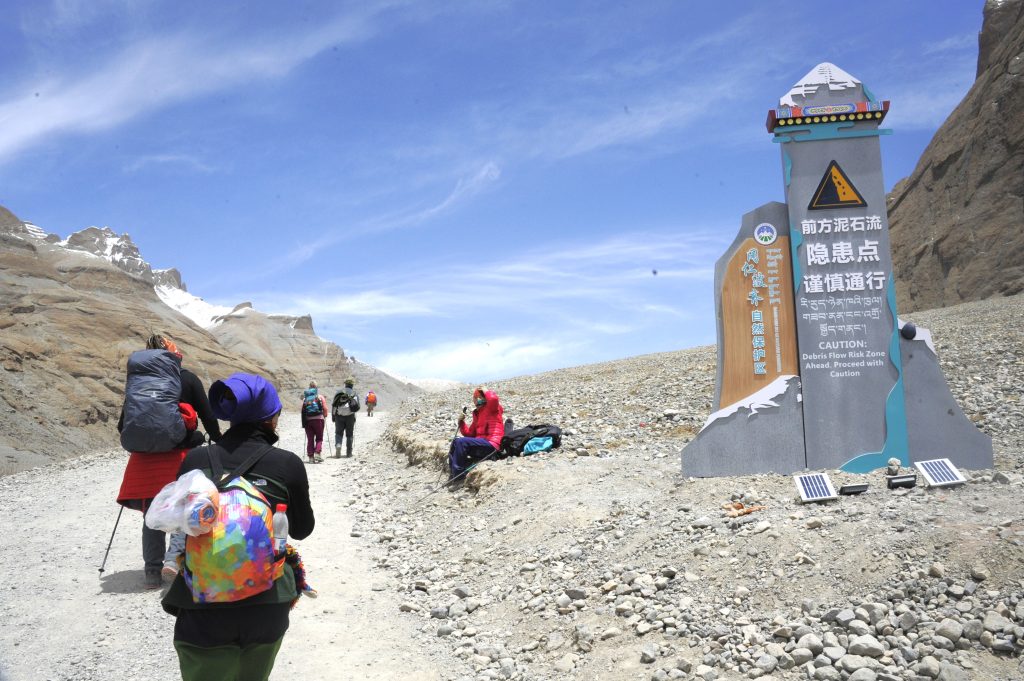
The Kailash Kora is a circular walk around the base of the mountain. The Tibetan word for this is Kora. In Sanskrit and Hindi, the walk is called parikrama.
It is a 52-kilometer trek. Most people complete it in about three days. Some do it in two. The route is at a very high altitude.
Thousands of pilgrims walk it each year. They include Hindus, Buddhists, Jains, and Bon followers. Many travelers with no religious ties also join.
The Spiritual Meaning of the Walk
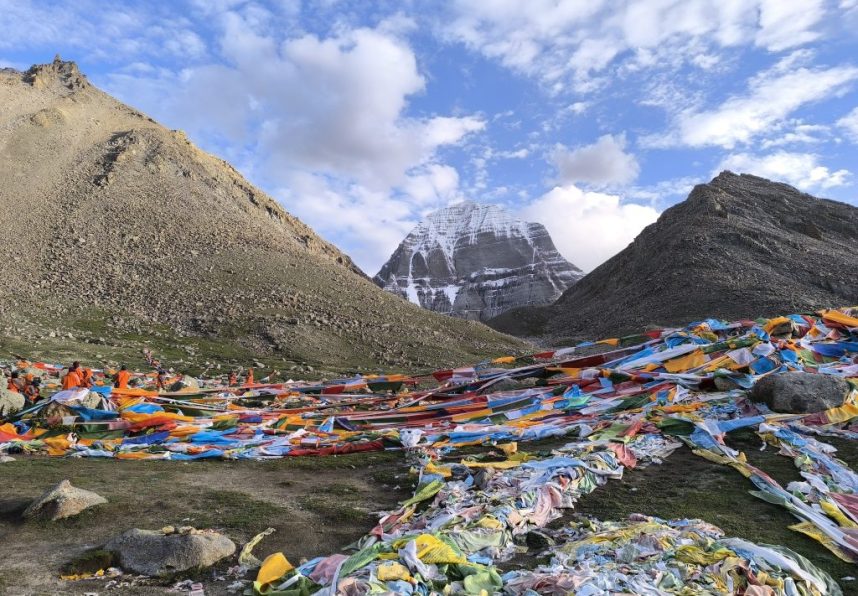
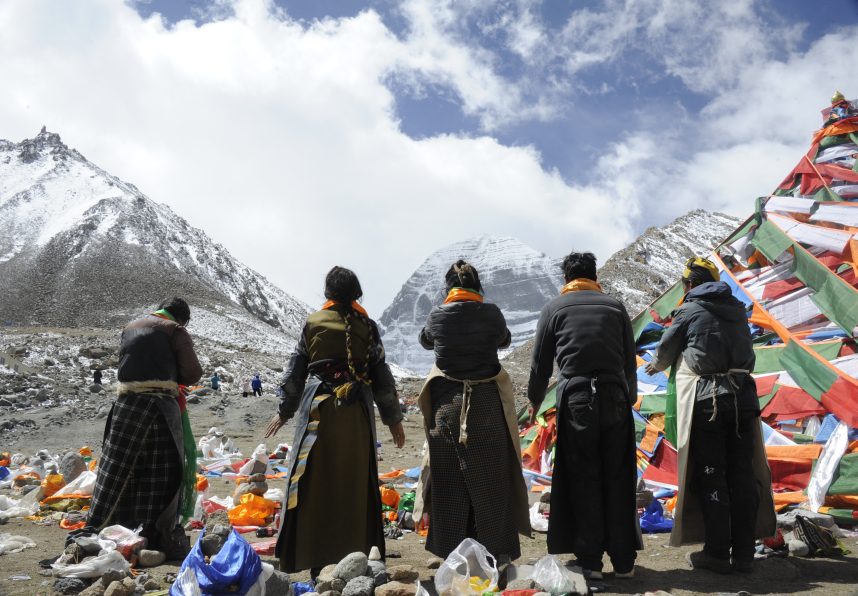
Walking around a sacred object is an ancient practice. It is a physical form of prayer. Pilgrims keep the holy mountain on their right, walking clockwise. Bon followers walk the other way.
Beliefs about the Kora are powerful.
- One circuit is said to wash away the sins of a lifetime.
- Completing 108 circuits is said to lead to enlightenment.
- Some devotees complete a kora by full-body prostrations. This can take weeks.
That last practice is astonishing. Pilgrims lie face down, stand, and repeat. They cover the entire 52 kilometers this way. It shows the depth of faith the mountain inspires.
A Typical Three-Day Route
Plans vary, but a common itinerary looks like this.
Day 1: Darchen to Dirapuk (about 20 kilometers). The trek begins at the small town of Darchen. It follows the western valley. Pilgrims pass prayer flags and cairns. They camp or stay near Dirapuk, facing the north face of the mountain. Many say this view is unforgettable.
Day 2: Dirapuk to Zutulpuk (about 22 kilometers). This is the hardest day. The trail climbs to the Dolma La pass, at about 5,600 meters. The pass is marked by thousands of prayer flags. Pilgrims often leave items there as symbolic offerings. The descent is steep and tiring.
Day 3: Zutulpuk to Darchen (about 10 kilometers). The final day is shorter and gentler. The path follows a river valley back to the start. Pilgrims often feel a mix of relief and joy.
Key Stops Along the Route
- Yama Dwar: The “Gateway of Death,” where the trek starts. Pilgrims often walk around it as a rite of renewal.
- Dirapuk Monastery: A resting place beneath the north face.
- Dolma La Pass: The highest point of the route.
- Gaurikund: A small lake near the pass, linked to Parvati.
- Zutulpuk Monastery: Tied to the legend of Milarepa.
Related Journeys: Lake Manasarovar
Many pilgrims also visit Lake Manasarovar. It lies close to Kailash. Hindus and Buddhists see it as one of the holiest lakes on Earth. A dip in its waters is believed to cleanse the spirit.
For Indian pilgrims, the Kailash Mansarovar Yatra is a well-known journey. It combines the lake and the Kora. It has been run by the Indian government for decades, with pauses at times. Check current arrangements before you plan, as rules can change.
Practical Tips for Planning a Kailash Visit
If you are thinking about the trip, here are some helpful basics.
- Check permits early. You will need Chinese visas and a Tibet Travel Permit. A licensed operator usually arranges these.
- Pick the right season. The best months are generally May to September. Winters are extremely cold, and routes may close.
- Acclimatize slowly. Spend time at lower altitudes first. Do not rush the ascent.
- Get a medical check. Talk to a doctor about altitude medicine and your health.
- Train your body. Long walks, stair work, and cardio help a great deal.
- Pack layers. Bring thermal wear, a windproof jacket, and strong boots.
- Carry essentials. Include sun protection, water purification, and a first aid kit.
- Respect local customs. Walk the right way. Do not touch sacred stones or offerings. Do not litter.
- Travel responsibly. The area is fragile. Leave no trace.
Remember that conditions change. Always check the latest rules from official sources and trusted tour operators.
Why Respect Might Be the Real Summit
Think about what climbing means in the modern age. It often means conquest. It means being first, being highest, being famous.
Kailash challenges that idea.
Here is a mountain that is physically within reach of skilled climbers. Yet people choose to leave it alone. This choice carries a quiet message. Some achievements are better left unclaimed.
There is a modern parallel. Several sacred peaks around the world have limits on climbing. In New Zealand, Aoraki and other sites are treated with deep cultural care. In Australia, Uluru is now closed to climbers out of respect for its Anangu custodians. These choices show a growing awareness. A place can matter more as a symbol than as a trophy.
Mount Kailash is perhaps the most powerful example. Its protection comes from people, not only from rules. It rests on shared belief across many cultures.
Frequently Asked Questions About Mount Kailash
Has anyone ever climbed Mount Kailash?
- No climb has been officially recorded in modern times. Some legends say Milarepa reached the summit by spiritual power. These are religious accounts, not mountaineering records.
Why is Mount Kailash unclimbed?
- Religious sanctity, government restrictions, and difficult terrain all play a part. Respect from many faiths is the strongest reason.
Is it illegal to climb Mount Kailash?
- Climbing is not permitted, and no permits are issued. Attempting it without permission would risk serious legal trouble.
How high is Mount Kailash?
- Mount Kailash stands at 6,638 meters, or 21,778 feet, above sea level.
Is Mount Kailash taller than Everest?
- No. Everest is 8,848.86 meters, much taller. Kailash is known for its meaning, not its height.
How long is the Kailash Kora?
- The Kailash Kora is about 52 kilometers long. Most pilgrims finish it in two to three days.
Is the aging legend true?
- There is no credible evidence for it. It is a popular legend with no verified source.
Who can visit Mount Kailash?
- Pilgrims and travelers from many countries can visit with the right permits. Rules change, so check official sources before booking.
Conclusion: A Monument to Faith and Mystery
Let us return to our original question. Why can no one climb Mount Kailash?
The answer has three parts.
First, religion. Hindus, Buddhists, Jains, and Bon followers all hold the mountain sacred. To them, a summit climb would be desecration.
Second, law. Authorities do not allow climbing. Global protests, especially in 2001, strengthened this stance.
Third, nature. Steep faces, loose rock, harsh weather, and thin air make the peak a serious challenge.
On top of these, the mountain carries legends. Stories of rapid aging, strange compasses, and bending time add a layer of wonder. Most are unproven. But they show how deeply the mountain moves human imagination.
Perhaps some places on Earth are meant to be honored from a distance. They are not mere challenges to overcome. Kailash does not ask us to prove our strength. It asks us to show humility.
It stands as a monument to faith and mystery. And it reminds us that not every summit needs a footprint.
-
Flash Flood Sweeps Away Dozens of Homes in Gorkha, Nepal
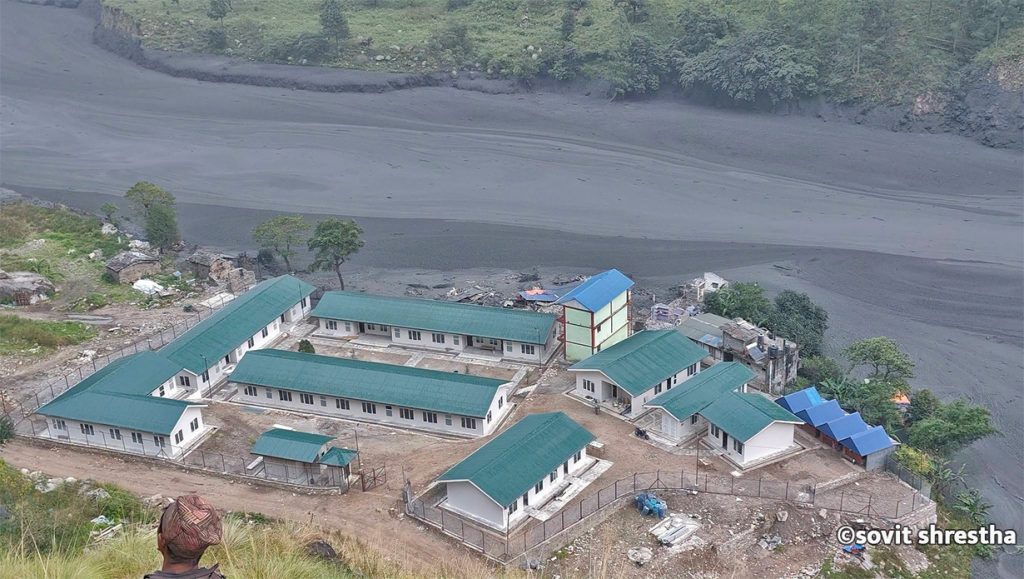
KATHMANDU, Nepal — A sudden and severe flash flood tore through the Budhi Gandaki River basin in Gorkha district on Sunday morning, washing away approximately 35 houses and triggering widespread destruction in the mountainous Manaslu and Tsum Valley regions. According to local authorities and disaster management officials, no human casualties have been reported thus far, though…
-
Swayambhunath Temple, Kathmandu
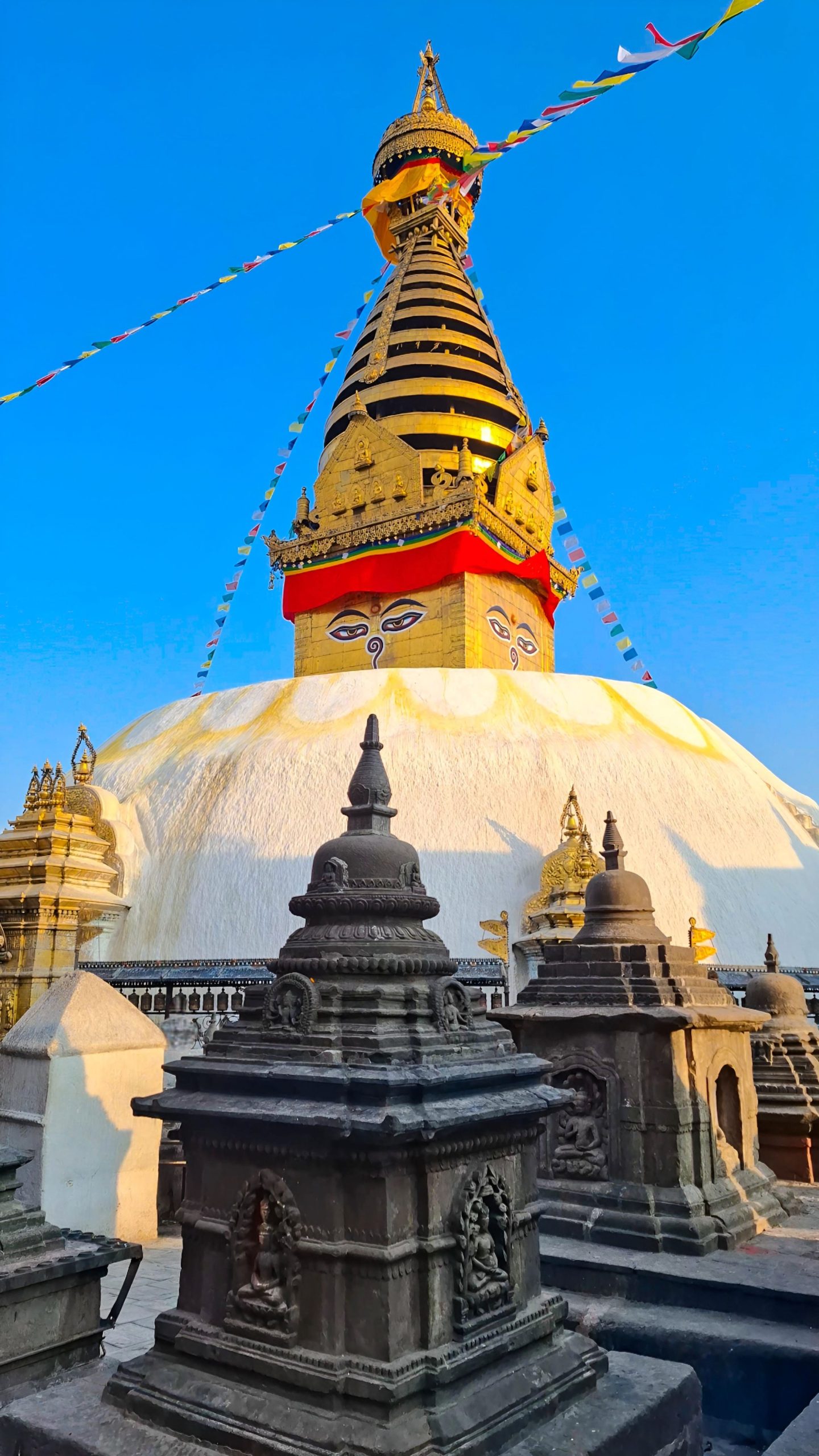
Imagine standing above the chaos of Kathmandu. Honking horns fade below you. A gleaming white dome rises ahead. Two enormous painted eyes gaze calmly in every direction. Prayer flags flutter in the Himalayan breeze. This is Swayambhunath, one of the most extraordinary places in Nepal. Visitors know it as the “Monkey Temple” because hundreds of…
-

North Goa vs South Goa: Which Is Better for Your Holiday?
Amongst the places that are highly popular in terms of beaches, weather, culture, and ambiance in India is Goa, which is known to possess some of the most beautiful beaches in India. The idea of Goa being famous for its beaches, which can be used by tourists for entertainment in North Goa while South Goa…