Notes
What are the most Difficult Sections of the ABC trek with Helicopter Return?
The Annapurna Base Camp Trek with Helicopter Return is a moderate trek, but there are a few sections that trekkers find a bit difficult. The difficulty comes from long uphill climbs, thousands of stone steps, and the increase in altitude as you approach the base camp.
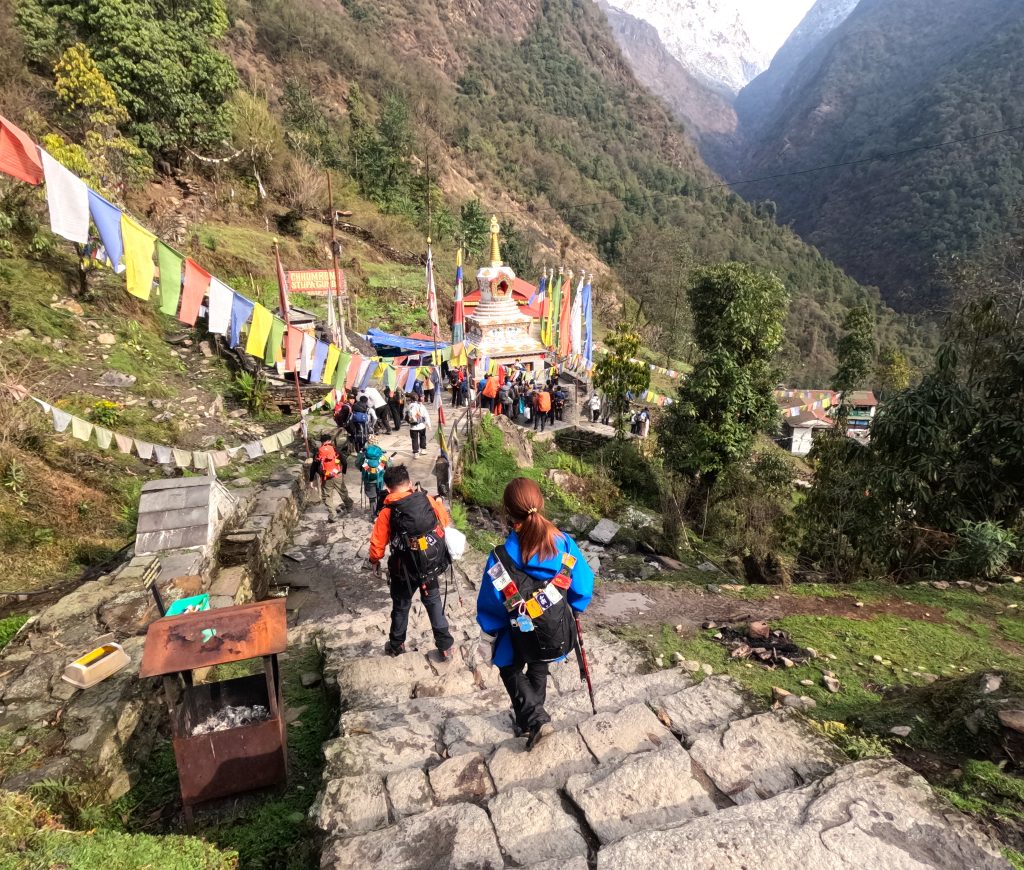
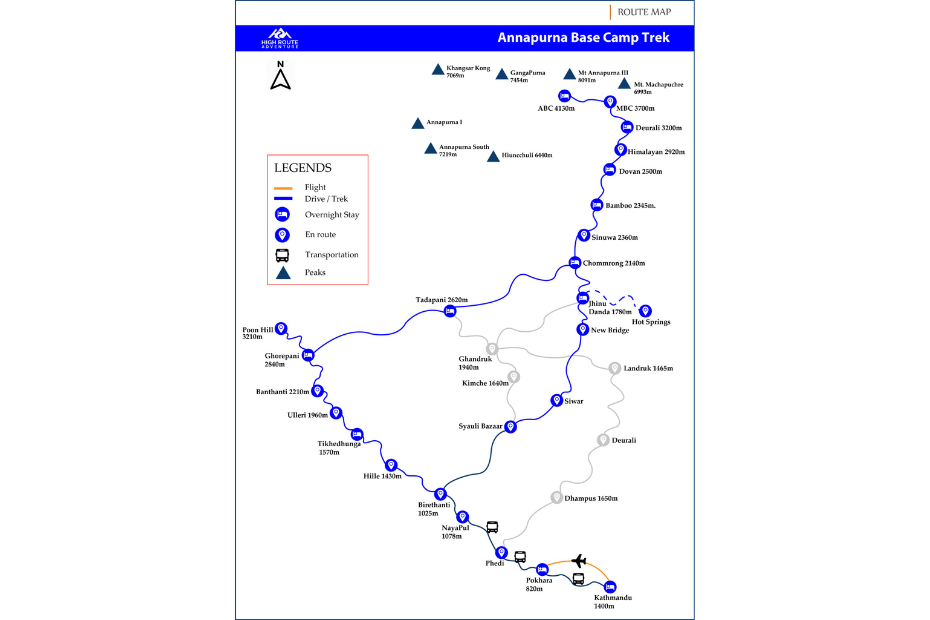
- Chhomrong to Sinuwa: This is one of the first challenging sections of the trek. After descending to the Chhomrong Khola, you climb a long series of steep stone steps to Sinuwa. Many trekkers find this section tiring because of the continuous ascent.
- Dovan to Deurali: The trail gradually climbs through the Modi Khola valley. Although the gradient is not as steep, the higher altitude & longer walking hours can make this section feel more demanding than the lower trail.
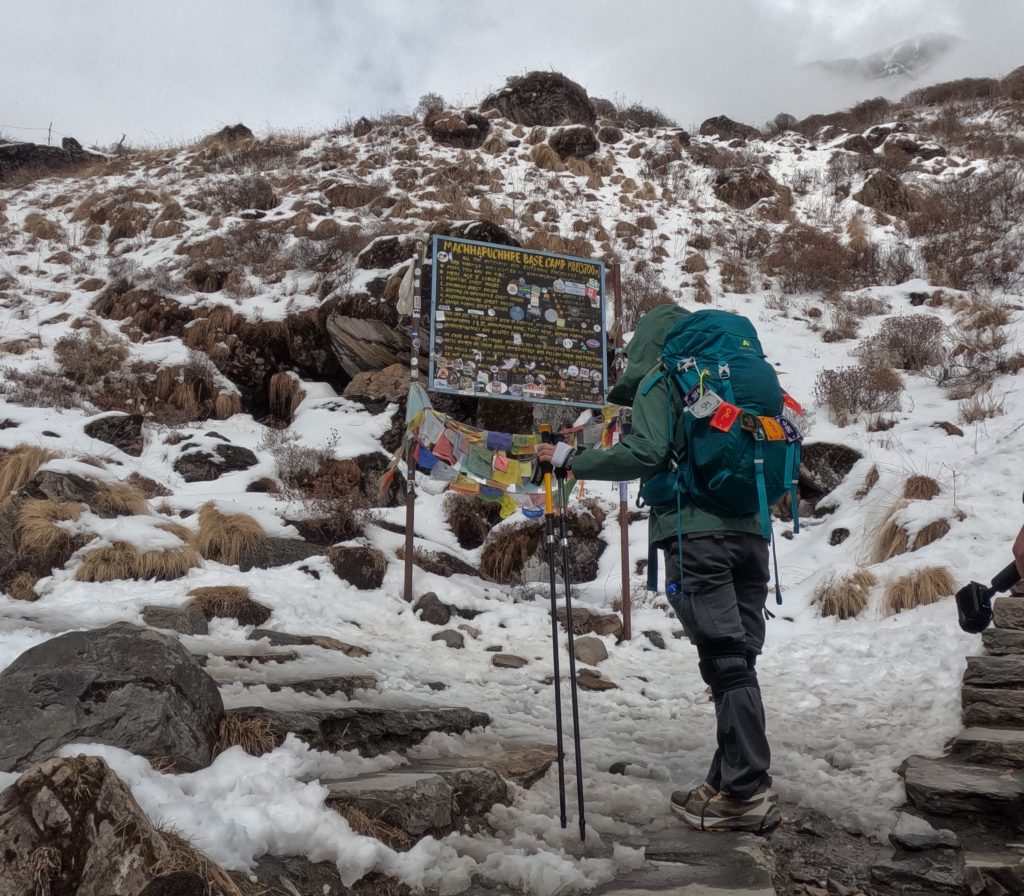
- Machhapuchhre Base Camp to Annapurna Base Camp: This is the highest section of the trek and is often the most difficult. The climb is gradual, but the thinner air above 3,700 meters makes walking slower & more tiring.
Fitness Level Required :
The trek requires a good level of physical fitness. The trail includes long uphill sections, thousands of stone steps, and walking at an altitude above 3,000 meters where the air becomes thinner & breathing can feel more difficult.
You should be comfortable walking for around 5 to 7 hours a day with a small backpack. The trek to the base camp requires good stamina, especially on the climb from Chhomrong toward Machhapuchhre Base Camp and Annapurna Base Camp.
A suitable fitness level for this trek includes:
- Regular walking, hiking, or outdoor activities before the trek.
- Ability to walk uphill for several hours without major difficulty.
- Basic cardiovascular fitness for long trekking days.
- Enough leg strength to handle steep stone steps & uneven trails.
- Ability to carry a daypack with personal items.
Related: Training Tips for Annapurna Base Camp Trek
Who is this trek suitable for?
This trek is suitable for travelers who want to experience one of Nepal’s popular trekking routes but have limited time. It is a good option for first-time trekkers, families, and groups of friends who have good physical fitness and can manage 5 to 7 hours of walking per day.
Helicopter Return Details
The main highlight of this package is the helicopter return from Annapurna Base Camp, which makes it shorter than the standard ABC trek. From Annapurna Base Camp, you will be flying by helicopter directly back to Pokhara & avoid the long walk back down the same trail.
This flight usually departs from ABC to Pokhara Airport (Pokhara International Airport) and takes about 20 to 30 minutes relying on weather conditions & flight traffic. The helicopter flies over the Annapurna Sanctuary, Modi Khola valley, forests, villages & mountain ridges you crossed on your trek.
Helicopter type and seating options
In the Annapurna region, helicopters are often used, like the Airbus H125 (AS350 B3e) and other similar helicopters capable of high-altitude operations, run by Nepal-based helicopter companies. These helicopters are good for mountain flying, working well in high-altitude areas. The
The helicopter return has two main options:
-
- Shared Helicopter Flight: This is the most preferred option for trekkers as it reduces the cost per person. Helicopters normally carry multiple passengers subject to weight limits & weather conditions.
-
- Private Helicopter Hire: Private charter is more flexible with the time of departure and a private flight. It's suitable for families, couples or travellers who need more privacy.
Best Time for Annapurna Base Camp Trek with Helicopter Return
The best time for the ABC Trek with Helicopter Return is spring and autumn. These seasons have more stable weather, clearer skies, & better mountain visibility, which is important for both trekking and helicopter flights from the base camp.
Spring Season (March to May):
Spring is one of the most popular times for the ABC trek. The lower sections of the trail have blooming rhododendron forests and the higher sections offer views of snow-covered mountain peaks. Daytime temperatures in lower areas are usually around 15°C to 20°C, while temperatures near the Base Camp can drop below 0°C during early mornings & nights.
The weather is generally pleasant, but the route becomes busy, especially from April to May. Teahouses can fill quickly, and the trail may have more trekkers around popular stops like Chhomrong, Machhapuchhre Base Camp, and Annapurna Base Camp.
Autumn Season (September to November):
Autumn is considered the most reliable season for this trek. After the monsoon, the skies become clearer, and the mountain views are usually at their best. Temperatures in lower villages range from around 10°C to 20°C, while Annapurna Base Camp remains cold with temperatures often below freezing at night.
This season attracts many trekkers because of the clear weather & excellent visibility. Since the Annapurna Base Camp route is one of Nepal's most popular trekking trails, busy periods are common during October to early November.
Winter (December to February) and Monsoon(June to August):
Winter is colder, especially above 3,000 meters. Snowfall around Machhapuchhre Base Camp and Annapurna Base Camp can make the trail more difficult, and helicopter flights may face delays due to poor weather. Monsoon brings heavy rainfall, cloudy skies, & slippery trails in the lower sections. Landslides & muddy paths can affect travel conditions, and clouds often hide mountain views.
Related: Best Time for the Annapurna Base Camp Trek
Permits Required
Before starting the ABC Trek with Helicopter Return, trekkers must obtain two required permits. These permits are needed to enter the trekking area legally and are checked at different checkpoints along the route.
- Annapurna Conservation Area Permit (ACAP): This permit is required to enter the Annapurna Conservation Area. It helps support conservation work, trail maintenance, and local communities within the protected area.
- Trekkers' Information Management System (TIMS) Card: The TIMS Card records your trekking details and helps local authorities keep track of trekkers during the journey.
Related: Annapurna Base Camp Trek Permit
Accommodation: What to expect
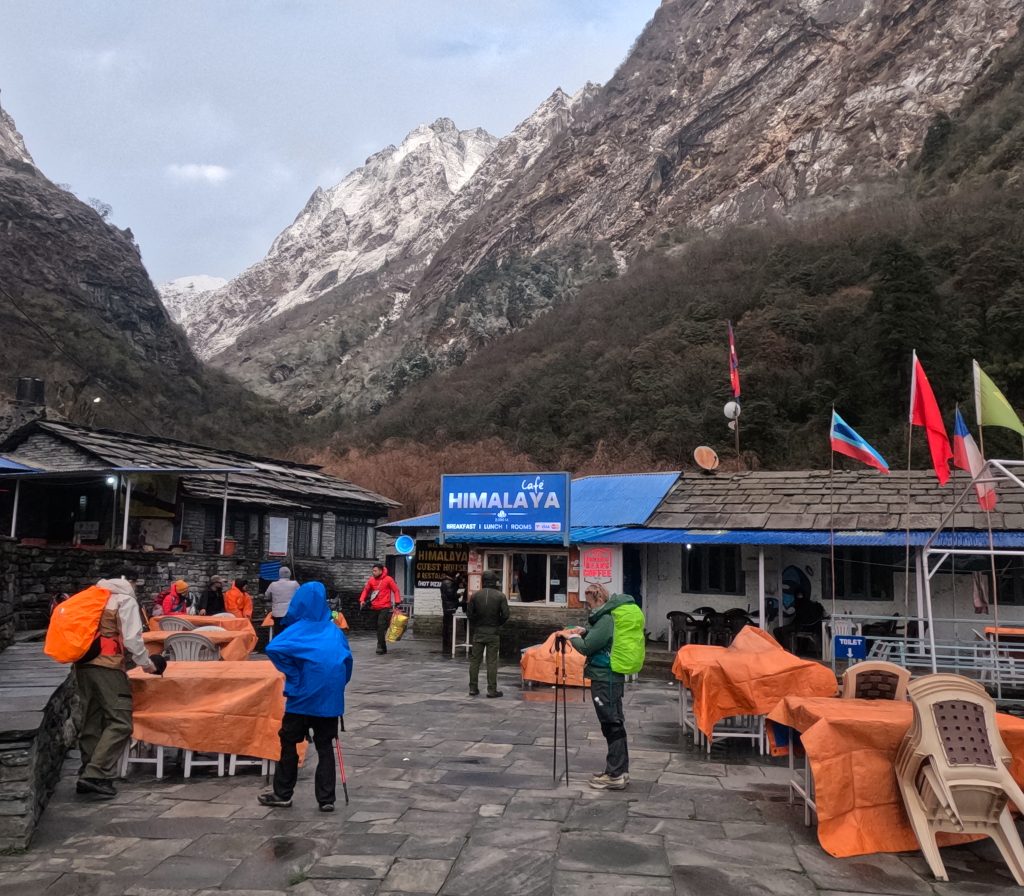
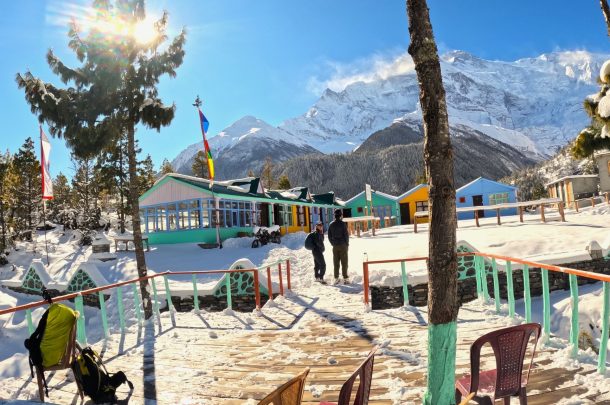
During the Trek, you will stay in local teahouses along the trekking route. At lower villages such as Chhomrong and Sinuwa, teahouses usually have better facilities. Rooms are commonly available with twin beds, mattresses, blankets & pillows. Few of the lodges have attached bathrooms, but shared bathrooms are more common. Hot showers, Wi-Fi, and charging facilities are available in many places for an additional cost, usually around NPR 200 to 400 per service.
As you move higher toward Deurali, Machhapuchhre Base Camp, and Annapurna Base Camp, the facilities become more basic. Rooms are mostly shared with common bathrooms, and services become limited because of the remote location and high altitude. At these stops, trekkers mainly stay for rest, meals, & a good night's sleep.
The helicopter return takes place after reaching the base camp, so you do not need to spend extra nights on the trail while descending. After landing in Pokhara, you can return to a hotel with more comfortable facilities.
Food on ABC Helicopter Return Trek
During the Annapurna Base Camp Trek with Helicopter Return, High Route Adventure provides three meals a day during the trekking period: breakfast, lunch, and dinner. Meals are served at local teahouses along the route.
- Breakfast usually includes options like porridge, oats, eggs, Tibetan bread, chapati, toast with jam or honey, pancakes, and tea or coffee. A warm breakfast helps you start the day before heading toward higher sections of the trail.
- For lunch and dinner, Dal Bhat is the most common meal on the route. It includes rice, lentil soup, vegetables, & curry. Other options available at teahouses include noodles, pasta, fried rice, momo, soups, potatoes, and other simple local dishes.
As you climb higher, food choices become more limited because supplies are transported by porters and local carriers. Prices also increase at places like Machhapuchhre Base Camp and Annapurna Base Camp due to the difficulty of bringing food to these areas.
We also recommend carrying small snacks such as chocolate bars, energy bars, dry fruits, & nuts. These are useful during long walking sections when you need quick energy between meals.
Read in details: Food and accommodation on Annapurna Base Camp Trek
Altitude Sickness during Annapurna Base Camp Trek with Heli return
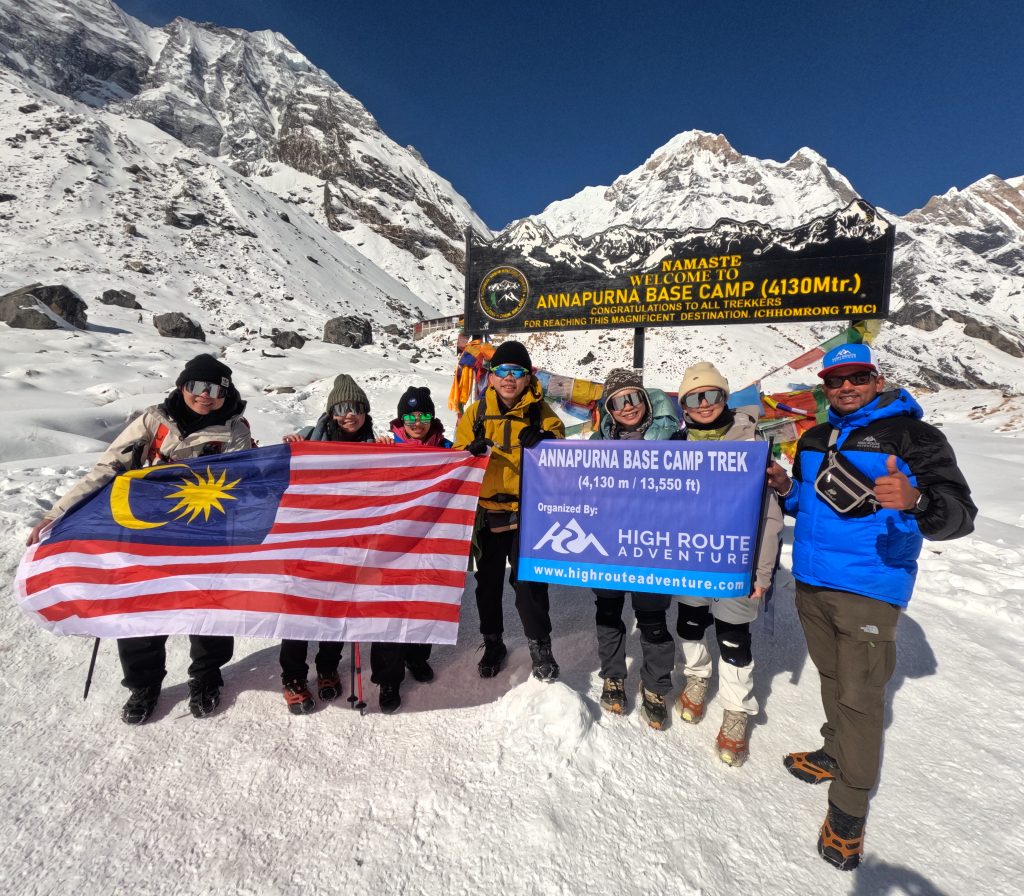
Although the Annapurna Base Camp Trek with Helicopter Return is shorter than the usual ABC trek, you still reach 4,130 meters, where the lower oxygen level can affect some trekkers. Altitude sickness can happen to anyone, regardless of age or fitness, especially if the body does not adjust well to the increase in elevation.
Common early symptoms:
Mild symptoms include headache, dizziness, nausea, loss of appetite, unusual tiredness, shortness of breath, and difficulty sleeping. These symptoms often begin after reaching higher elevations.
How to reduce the risk:
Drink plenty of water throughout the trek, eat regular meals, avoid alcohol & smoking, and maintain a comfortable walking pace instead of rushing. Getting enough rest each night also helps your body adjust to the altitude.
What to do if symptoms get worse:
Do not ignore severe symptoms such as persistent vomiting, difficulty walking, or breathing problems while resting. Inform your guide immediately. The safest treatment for serious altitude sickness is to descend to a lower elevation and seek medical attention if necessary.
Guide and Porter Support during the trek
Our Annapurna Base Camp Trek with Helicopter Return package includes a licensed trekking guide and porter. Your guide leads the trek, manages daily arrangements, assists with communication at teahouses, monitors your condition as you gain altitude, and helps coordinate the heli return.
Your porter carries the main trekking bag, allowing you to walk with only a daypack containing your personal essentials. This makes the long uphill sections from Chhomrong to Annapurna Base Camp more comfortable and helps reduce physical fatigue during the trek.
Our guides are familiar with the Annapurna Base Camp route, local weather conditions, and trail logistics. They can also assist in unexpected situations such as sudden weather changes, minor injuries, or altitude-related symptoms, ensuring you receive timely support throughout the journey.
Communication & Emergency Rescue during ABC with Helicopter Return
Mobile network coverage is available in many parts of the Annapurna Base Camp route, but it becomes weaker as you move higher. Areas like Chhomrong and lower villages usually have better connectivity, while sections near Deurali, Machhapuchhre Base Camp, & Annapurna Base Camp may have limited or no signal. Every teahouse provides Wi-Fi for an additional cost, but the connection can be slow.
For emergencies, helicopter rescue is the main option in the Annapurna region, especially for altitude-related problems, injuries, or serious health conditions. The rescue process depends on weather conditions and accessibility. Having travel insurance that covers high-altitude trekking and helicopter evacuation is strongly recommended before starting the trek.
During the trek, our guide stays with you and monitors your condition, trail conditions, & weather situation. If any serious issue occurs, we coordinate with the necessary local support teams & arrange the required assistance.
Travel insurance for ABC Trek with Helicopter Return
We highly recommend travel insurance for the Annapurna Base Camp Trek with Helicopter Return. Your policy must cover high altitude trekking at 4,130 meters, as your trek ends at ABC.
Before you book your trip, make sure your insurance includes emergency helicopter evacuation, medical treatment, hospitalization and trip delays or cancellations due to weather. This package includes a scheduled helicopter flight back to Pokhara, but emergency rescue flights are separate and should be covered by your insurance policy.
Weather conditions in the mountains can change rapidly, and helicopter flights can be delayed due to poor visibility or high winds. If your travel plans change due to weather or a medical emergency, a good insurance policy can cover unexpected expenses.
Bring a copy of your insurance policy along with emergency contact details with you to Nepal. If you're not sure whether your policy covers trekking above 4,000 metres, contact your insurance provider before you travel.
Travelers who do not have insurance before arriving in Nepal can also purchase a suitable policy locally. Our team can assist you with the necessary information and guidance if you need help arranging travel insurance for your trek.
Travel Safety Tips for ABC Trek with Helicopter Return
- Carry a warm layer in your daypack because temperatures can drop quickly after Deurali.
- Keep your passport, medications, and other valuables with you instead of packing them in your main luggage.
- Keep a rain jacket or poncho easily accessible, as mountain weather can change quickly.
- Bring energy snacks such as chocolate, nuts, or energy bars for the longer uphill sections.
- Start early toward Annapurna Base Camp to enjoy clearer mountain views.
- Charge your phone, camera, and power bank whenever electricity is available, as charging becomes limited and more expensive at higher elevations.
- Carry enough Nepali rupees for personal expenses such as hot showers, Wi-Fi, charging, drinks, and snacks. Around NPR 3,000 to 5,000 is usually enough.
- Walk at a steady pace after Machhapuchhre Base Camp, as the higher altitude can make the final climb feel more demanding.
- Carry a reusable water bottle to reduce plastic waste inside the Annapurna Conservation Area.
- Respect local communities and follow conservation rules throughout the trek.