The Tsho Rolpa Trek is a remote trekking destination in the Rolwaling Valley of Dolakha district in northeastern Nepal. The highest point of this trek is Tsho Rolpa Lake, which stands at 4,580 meters and is one of the largest glacial lakes in Nepal. The trek is known for its rugged landscapes, traditional Sherpa villages and peaceful mountain trails. Throughout the journey, trekkers will be rewarded with stunning views of Himalayan peaks such as Gaurishankar and Melungtse.
The journey starts with a drive from Kathmandu to Chhetchhet, where the trek begins. From there, the trail climbs uphill to Simigaon before continuing through Dongang & Beding to Na Village. You walk through pine and rhododendron forests, cross streams and pass villages where you can see local people going about their daily lives. Children heading to school, yaks grazing near the houses and Buddhist monasteries along the trail offer a glimpse into life in the Rolwaling Valley. You can also see Mani stones and prayer flags in these villages.
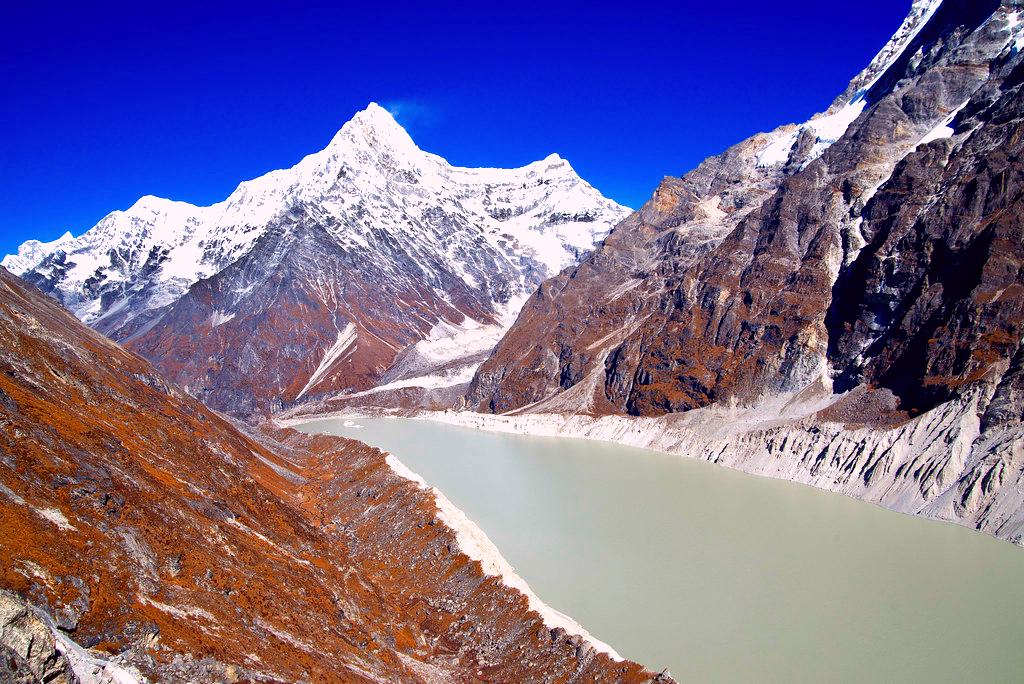
From Na Village, the trail leads to Tsho Rolpa Lake, where you can see the glacial waters surrounded by rocky slopes and towering Himalayan peaks. Gaurishankar and other mountains of the Rolwaling range add to the view. After visiting the lake, you return through Beding and Simigaon to Chhetchhet, then drive back to Kathmandu.
Tsho Rolpa is a remote high-altitude trek, so having an experienced team makes a real difference. Here is what you can expect from High Route Adventure:
The journey starts with a long drive from Kathmandu through Kavre and Dolakha. The road heads through the hills along the Bhote Koshi River with terraced fields, small villages and local markets along the way. After reaching Chhetchhet, you cross the Tama Koshi River and start the trek towards Simigaon. The trail climbs through forest and stone steps before reaching Simigaon, a Sherpa village set on the hillside with terraced fields & views towards Gaurishankar.
The trail leaves Simigaon and heads deeper into the Rolwaling Valley through forested slopes and beautiful settlements. You will cross small streams and walk through quieter sections of forest. The trail gets rockier as you move towards Dongang, where a few local lodges serve as a resting and overnight stop for trekkers.
The walk from Dongang takes you further into the Rolwaling Valley. Along the trail, you will come across small settlements such as Thangdingma, a usual lunch stop for trekkers. After lunch, the trail continues towards Nyamare Village and then on to Beding, the main village of the valley. An old Buddhist Gompa lies in the village and is worth visiting while you are there.
The trail from Beding to Na Village is easier underfoot than some of the steeper sections earlier in the trek. It follows the right side of the Rolwaling River with a gradual climb into the open valley. As you leave the forest behind, the valley becomes wider, with yak pastures and large rocky cliffs around you.
Along the way, you will see Mani stones and prayer flags. Look up towards the cliffs for the sacred painting of Guru Rinpoche on a large boulder. You also get closer views of Gaurishankar, Chobutse, and other peaks of the Rolwaling range. Na Village is surrounded by stone walls that help protect the houses and livestock from strong winds and wild animals.
Today you hike from Na Village to Tsho Rolpa Lake at 4,580 meters, one of the largest glacial lakes in Nepal. The lake sits in a wide alpine valley surrounded by Gaurishankar, Dorje Lakpa, and other peaks of the Rolwaling range. After spending some time by the lake, retrace the trail to Na Village and continue down to Beding for the night.
After breakfast, you will leave Beding and take the same trail back towards Simigaon. The route has plenty of downhill sections, but you will still have some climbs along the way, so it is not simply an easy descent. You pass through Thangdingma and Dongang before continuing through the forest towards Simigaon.
You trek from Simigaon down to Chhetchhet, where your vehicle will be waiting. From Chhetchhet, you drive back to Kathmandu, marking the end of your Tsho Rolpa Trek.
The Tsho Rolpa Trek is considered moderately difficulty in terms of difficulty level. You should consider these factors before starting the trek:
Proper preparation helps you handle the long walking days and high altitude on the Tsho Rolpa Trek. Here are some things to prepare before starting:
The best seasons to experience the Tsho Rolpa Trek are spring and autumn. During these seasons, you will get the best views of Gaurishankar, Dorje Lakpa, and the surrounding Himalayan peaks. Take a look at these seasonal descriptions.
As winter ends, the temperature gradually becomes warmer, and the landscape turns green. Rhododendrons bloom across the forests, adding color to the trail. The mild weather and drier trails make the trek easier to walk.
After the monsoon, the skies become clearer and the temperature stays moderate. It is neither too hot nor too cold for walking, making autumn a comfortable time for the trek. You can enjoy clear views of the mountains. If your trek falls during the festival period, experience Nepal's biggest festivals, Dashain and Tihar in the villages along the route.
Accommodation on the Tsho Rolpa Trek is in small, locally run teahouses and lodges. Rooms are simple, usually with twin or multi-bed arrangements, wooden beds, foam mattresses, pillows, and warm blankets or quilts. Bathrooms are mostly shared. The dining room is usually the main common area & few of the teahouses use a stove for warmth. The facilities are more basic around Beding and Na Village, where the number of teahouses is limited.
Dal bhat is the staple meal on the Tsho Rolpa Trek. It is a traditional combination of rice and lentil soup, usually served with vegetables, curry, and pickle. You will also find noodles, soups, momos, and potatoes at the teahouses along the route. Breakfast is usually simple, with options such as eggs, toast, porridge, or Tibetan bread, served with tea or coffee.
You can buy bottled or boiled water at the teahouses, or refill your bottle with treated water. Carrying snacks such as nuts, chocolate, dried fruit, or energy bars is useful for eating between meals and during longer walking sections. Drinking water, tea, coffee, bottled drinks, and personal snacks are not included in the package, so you will need to pay for these separately.
Tsho Rolpa Trek passes through the Gaurishankar Conservation Area, so trekkers need to obtain the Gaurishankar Conservation Area Permit (GCAP) and TIMS card. Having these permits is mandatory before starting the trek, and High Route Adventure will arrange all the required permits for you. You need to show the permits at the Simigaon check post, so keep them with you during the trek.
To apply for the permits, you need to provide a scanned copy of your passport and a passport-size photograph with a white background.
Altitude sickness is one of the main things you need to take seriously on the Tsho Rolpa Trek. The trail climbs to 4,580 meters at Tsho Rolpa Lake, and you spend the night at Na Village at around 4,180 meters. The risk becomes higher as you climb above 3,000 meters, so do not ignore how you feel at higher elevations.
The early symptoms of altitude sickness include headache, dizziness, nausea, tiredness, loss of appetite, and difficulty sleeping. If you notice these symptoms, tell your guide and take a rest. If they do not improve or become worse, you should not continue climbing and may need to descend to a lower altitude. Severe altitude sickness can develop into HACE or HAPE, which are life-threatening conditions and require immediate descent and medical attention.
To reduce the risk of altitude sickness, follow these precautions:
Yes, travel insurance is mandatory for trekking above 3,000 meters in Nepal. Since the Tsho Rolpa Trek takes you up to 4,580 meters, you should have insurance that covers the full trekking altitude. Your policy should include medical treatment, accidents, and emergency helicopter evacuation. If you need help finding suitable insurance from Nepal, we can assist you in purchasing it.
Thermal base layers, trekking T-shirts, fleece jacket, down jacket, waterproof jacket, trekking trousers, thermal leggings, warm socks, gloves, beanie, sun hat.
Waterproof trekking boots, camp shoes, trekking socks.
Backpack, daypack, sleeping bag (-10°C to -15°C), trekking poles, headlamp, water bottles, water purifier, sunglasses, sunscreen, lip balm.
Toiletries, quick-drying towel, toilet paper, wet wipes, hand sanitizer, personal medicines, first-aid kit, blister plasters.
Passport, trekking permits, travel insurance, cash in Nepalese rupees.
Mobile phone, power bank, charging cables, camera (optional).
Energy bars, nuts, dried fruits, electrolyte powder.