Notes
How Difficult is Kanchenjunga south base camp trek?
Kanchenjunga south base camp trek is considered “moderate to challenging”. The difficulty depends on your physical fitness, previous trekking experience, and how well your body adjusts to the altitude.
- Altitude: Altitude is one of the main challenges. You’ll reach 3,870m at Cheram, 4,580m at Ramche, and around 4,730m at Oktang Viewpoint. As you climb higher, you may feel breathless, tired, or develop a headache. Your acclimatization day in Cheram gives your body time to adjust, but it does not remove the risk of altitude sickness.
- Weather and Temperature: The weather can change quickly in the Kanchenjunga region. Lower sections may feel warm during the day, but Cheram and Ramche can be cold, particularly in the early morning and at night. Wind, rain, or snowfall can make walking harder, especially at higher elevations.
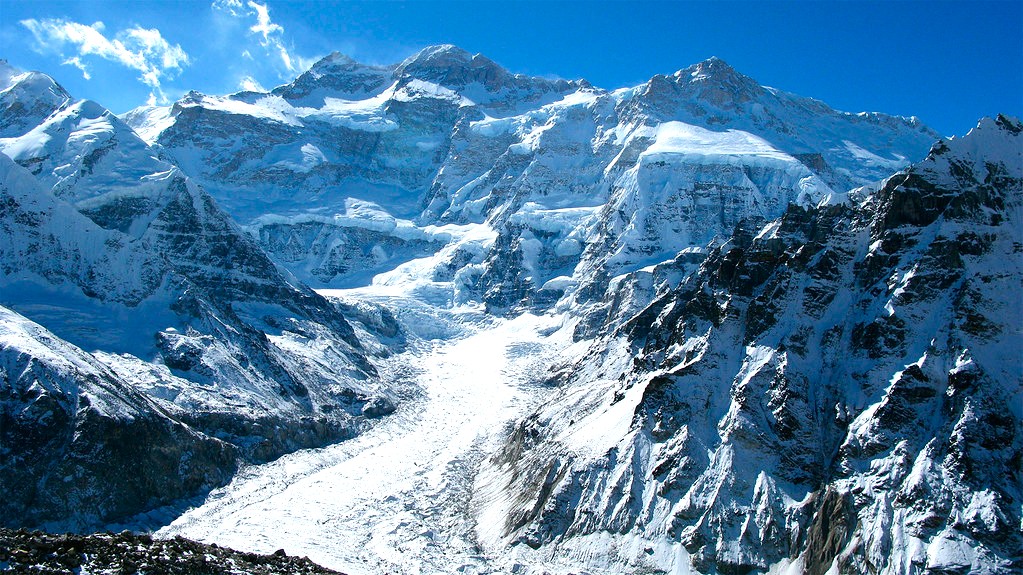
- Terrain: The trail passes through forest, steep hillsides, rocky paths, and river valleys. The route towards Ramche and Oktang becomes rockier, with glacial terrain and fewer sheltered sections. You should be comfortable walking on uneven ground for several hours.
- Walking distance: You need to walk around 5 to 8 hours on many trekking days, depending on the route and trail conditions. The climb from Yamphuding to Tortong is particularly demanding and also the substantial ascent to Cheram the next day. The hike from Ramche to Oktang and back also takes several hours at high altitude.
How to prepare for Kanchenjunga south base camp trek?
You will walk for several hours a day on uneven trails, with steep climbs, rocky sections, and higher altitude above 3,000 meters. So, it is better to prepare your body before the trek rather than start training after you arrive in Nepal.
- Build your fitness: Walk, hike, or climb stairs regularly before the trek. Include longer walks on weekends so your body gets used to several hours of walking.
- Train your legs: Squats, lunges, step ups, and calf raises can help with the uphill and downhill sections.
- Practice with a backpack: Take some training walks with the backpack you plan to carry.
- Prepare for altitude: You cannot fully train your body for high altitude at sea level. Focus on gradual acclimatization during the trek and do not rush higher.
- Get used to long walking days: Try a few hikes of 5 to 7 hours before the trip, especially if you do not normally walk for long periods.
- Prepare mentally: Some sections are remote, accommodation is basic, and food choices become limited. Knowing this beforehand makes the trek easier to manage.
Best Season for Kanchenjunga South Base Camp Trek
The best season for Kanchenjunga South Base Camp Trekking is autumn ( September, October and November) and spring ( March, April and May). In spring, the skies are clear and the temperature is comfortable for walking. You can also see rhododendrons blooming along the trail. In autumn, the weather is clear after the monsoon, so you can get better mountain views and dry trekking conditions. It is also the festival season in Nepal, so you get to experience Dashain, a 15 day and Tihar, a five day celebration.
Permits and Travel Insurance
The required permits for the Kanchenjunga South Base Camp Trek are:
- Kanchenjunga Restricted Area Permit
- Kanchenjunga Conservation Area Permit (KCAP)
- TIMS card
We will process both permits for you once you book the trek. For the permit process, you need to provide a scanned copy of your passport and a passport sized photo.
For travel insurance, make sure your policy covers high altitude trekking and emergency evacuation, as the trek reaches 4,730 meters at Oktang Viewpoint.
Meals and Accomodation for south KBC Trek
You will get three meals a day, breakfast, lunch, and dinner at local teahouses along the trail. The food is simple but filling. Breakfast usually includes tea or coffee with eggs, bread, or porridge. Dal bhat( rice with lentils and vegetables) is the most common meal for lunch and dinner, along with noodles, soup, fried rice, potatoes, and other local dishes. Some teahouses cook meals on a wood stove, so you get a taste of the food prepared in local homes. Drinks, snacks, and personal food are not included in the package.
For accommodation, you will stay in small local teahouses and lodges. There won’t be luxury hotels on the trail. Rooms usually have two beds or mattresses, blankets, and shared toilets. The dining room is often the main common area, and some lodges use a wood stove to keep it warm. Around Ramche, accommodation is even more basic and limited.
Risk of Altitude Sickness during south KBC Trek
From above 2,500 meters, the risk of altitude sickness starts to increase, and this trek reaches up to 4,730 meters at Oktang Viewpoint. You will experience symptoms such as headache, dizziness, tiredness, nausea, or loss of appetite. If you notice any of these symptoms, take them seriously and tell your guide instead of trying to push through them.
Here’s how you can help prevent it:
- First and foremost, walk at your own pace and never rush, especially at higher elevations.
- Drink enough water to keep your body hydrated.
- Avoid alcohol and smoking.
- Eat light and regular meals, especially when you are above 3,000 meters.
- Take proper rest during the trek and use the acclimatization day in Cheram.
- If symptoms get worse, follow your guide’s advice and descend to a lower altitude.
Important Tips for Kanchenjunga South Base Camp Trek
- Carry a basic first aid kit with medicines you normally use, blister treatment, bandages, pain relief, and other personal medication.
- Carry enough Nepalese cash for snacks, drinks, charging, hot showers, and other personal expenses
- Avoid littering and carry your waste until you find a proper disposal area.
- Drink enough water and use water purification tablets or a filter.
- Internet and mobile networks are limited in the higher sections. Do not depend on Wi-Fi or mobile data for communication.
- Carry a power bank because electricity and charging facilities can be limited in some villages.
- Always trek during the best seasons, spring and autumn, for better weather and trail conditions.