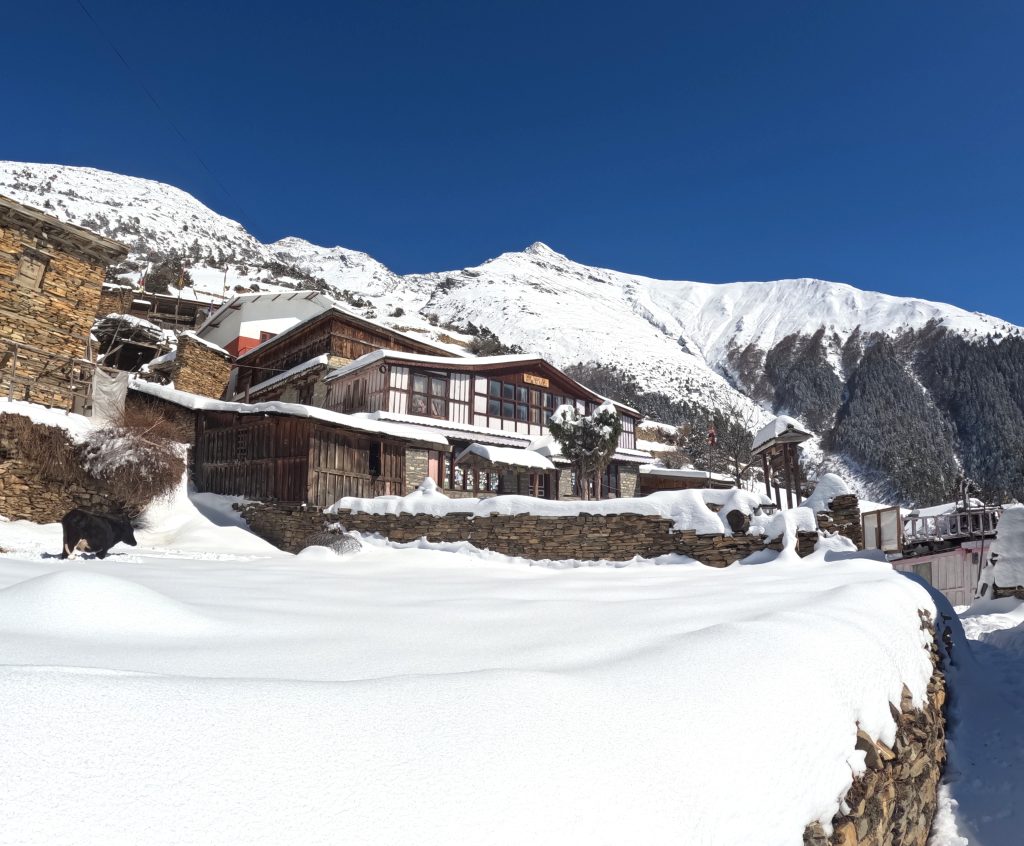
Manang is a high-altitude Himalayan village famous for mountain scenery, traditional culture, and dramatic landscapes. This picturesque village is situated at an altitude of 3,519 meters (11,545 feet) in the upper Marshyangdi Valley. From Kathmandu to Manang, the road distance is approximately 230 to 240 km in distance. Manang trek is a great way to experience the beauty of Manang village in a short period of time.
Your journey starts with a scenic drive from Kathmandu to Chame in a private 4*4 Jeep. From here, your trekking journey starts. The route passes through the lush green forest, traditional village, apple orchards, and rocky valleys, including the ancient Braga Monastery. You will pass through scenic places such as Pisang and Braga before reaching Manang Village.
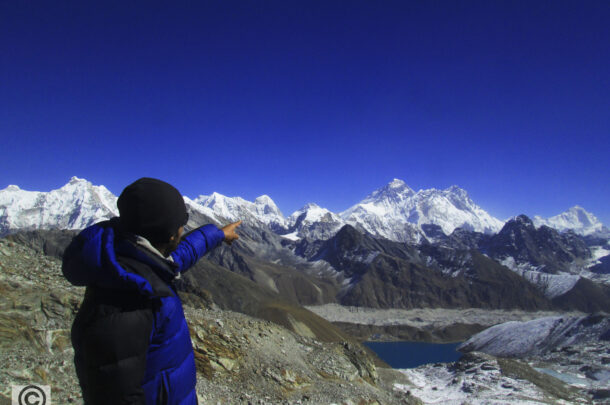
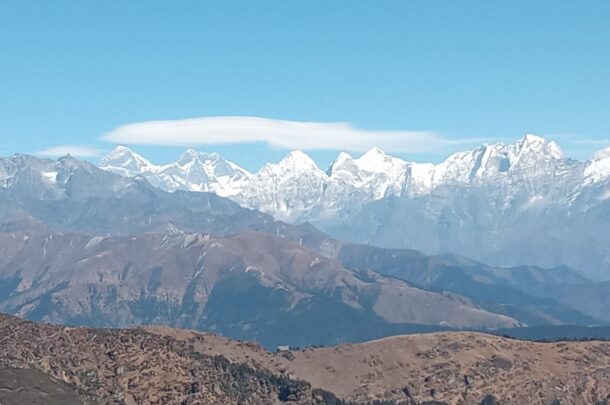
From Manang, it rewards visitors with incredible views of Mt. Dhaulagiri (8,167 m), Mt. Manaslu (8,163 m), Mt. Annapurna (8,091 m), etc. Although the village lies in a remote part of Nepal, there are enough teahouses, restaurants, and cafes with facilities such as Wi-Fi, internet and hot showers.
You will get the opportunity to visit the famous Ice Lake and Milarepa Cave. The warm hospitality, scenery and peaceful atmosphere make it worth visiting. It is a great alternative trek for those who want to skip the challenging Annapurna Circuit trek without crossing Thorong La Pass.
Our gradual itinerary allows you to reach Manang comfortably, and a dedicated rest day in Manang allows you to explore fully before heading back to Kathmandu.
Our 7-day Manang Trek package starts from USD XXX per person. We offer group discounts for larger groups. Contact our tour operator directly for a customized quote.
The driving duration from Kathmandu to Chame in our private Jeep takes around 6 to 8 hours. To reach Chame in the evening, we will start our journey early in the morning, around 7 AM to 8 AM. The drive from Kathmandu to Besisahar is smooth and paved in most sections. But once you leave Besisahar, the road is extremely off-road with narrow, windy and bumpy sections. Our Jeep can handle the off-road sections to make your travel journey smooth. Be prepared to leave early in the morning and carry a snack and a water bottle for this Nepali road trip. Along the way, you can enjoy scenic views of rushing rivers, rolling hills, and terraced rice fields.
On this second day of adventure, we will trek to Pisang village. After breakfast in Chame, we will start our walk enjoying Lamjung Himal. We cross the suspension bridge over the Marsyangdi River before entering a peaceful forest of pine and fir trees. Enjoying the views of surrounding hills and mountains, we continue toward Bhratang. On the way, you can see the impressive Paungda Danda, a huge curved rock face rising dramatically above the Marsyangdi Valley.
Upon reaching Bhratang, you can witness the village is surrounded by apple orchards. From here now the trail turns uphill toward the Dhikur Pokhari. We will stop here for lunch. While having the meal, you can enjoy spectacular views of Annapurna II and Pisang Peak.
From Dhikur Pokhari, the trail separates into the lower Pisang(3,200 meters) and Upper Pisang routes. We follow the scenic Upper Pisang route. Upper Pisang is famous for stone-piled Tibetan-style houses and a local monastery (Gompa). Also, breathtaking views of sunset over Pisang Peak and the Annapurna range can be witnessed from here.
Tonight we spent the night here in Upper Pisang(3,300 m).
After enjoying a hearty breakfast in the teahouse, it's time to leave for Manang Village. Following the steady uphill climb, we cross the traditional stone houses and the Upper Pisang Monastery. Then, passing through the pine trees, we reach a place with a small green lake. Then we cross the small suspension bridge to reach the Ghyaru. From Ghyaru, sweeping views of Annapurna II, III, IV, and Gangapurna will entertain you.
Leaving Ghyaru, we follow the flat traverse along pine forests and long mani walls to reach Ngawal (3,660m). It is a great place to enjoy lunch while enjoying the view of the Annapurna range and a traditional Tibetan-influenced village.
After lunch now it's time to continue our journey. We walk through a downhill trail toward the wide Marsyangdi River Valley. As we descend, the landscape gradually changes from green forests to dry cliffs, rugged slopes, and arid terrain. As we pass through the Humde airport fields, we will arrive at Braga. Here we will explore the ancient Braga Monastery.
Then, after exploration, following the short and flat trail passing through the small chortens and grazing yak pastures, we will reach the Manang village.
Today is acclimatization day in Manang as we are now at an altitude of 3,519 meters (11,545 ft). We will explore the village area without gaining much altitude. It helps to prevent altitude sickness and helps us to adjust our body before heading to high altitude tomorrow.
After breakfast we will explore the Gangapurna lake which is just 20 to 30 minutes walk from your teahouse. Here you can explore the stunning peaceful lake which is surrounded by snow-capped peaks of Gangapurna, Annapurna IV, Khangsar Kang, and Glacier Dom.
Then after this you will return to the teahouse for the lunch. Later you can explore the Manang village on your own. Here you can find restaurants, bars, cafes, Manang Cultural Museum, Chorten de Manang, and Bhojo Buddhist Monastery. You can also visit Manang Viewpoint to take incredible photos and videos.
Later in the evening after a warm dinner you will spend a wonderful night in the comfortable teahouse at Manang.
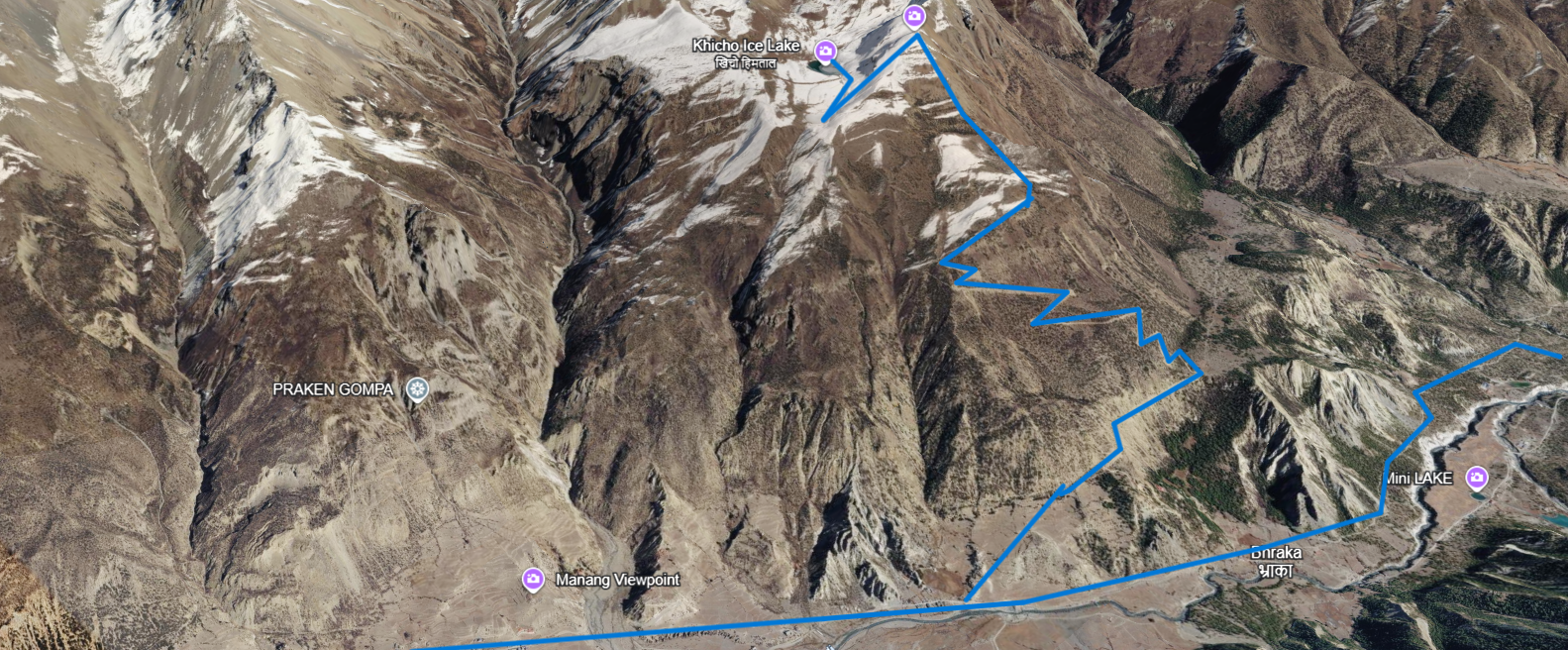
Today, after breakfast, you have two options to visit. You can either visit the famous Manang Ice Lake ( also called Kicho Tal) or Milarepa Cave.
Ice Lake: The journey to Ice Lake takes 8 to 9 hours round trip) from Manang. There is one small teashop along the route, but it may not always be open. So you need to carry a packed lunch from Manang. You need to follow the steep uphill trail to reach the lake. The rapid elevation gain can cause altitude-related problems, so monitor your health conditions during the ascent.
Milarepa Cave: The ancient cave which was the meditation site of Tibetan yogi, poet, and master Guru Milarepa. He spent years here in deep spiritual practice. The hike to Milarepa Cave is around 4 to 5 hours round trip.
Later, after exploration, you will get back to Manang village to spend the night.
From Manang now it's time for you to get back to Besisahar. Depending upon your group size we will arrange either a shared or private vehicle for you. On the way back to Besisahar you can witness Mini Lake, Octopus Waterfall before arriving at Besisahar.
Finally, it's time for you to return to Kathmandu. After breakfast, you will drive through the Dumre-Besisahar and Trishuli corridor to reach Kathmandu.
Collaborate with our specialists to create a unique itinerary.
Manang Trek is graded as moderate in terms of difficulty level. The actual difficulty depends upon your fitness and how well you prepared for the trek. On this short trek, as per our itinerary, the most difficult section is hiking to Manang Ice Lake. Other than that, walking is relatively comfortable with average fitness levels.
Other than this, trekkers should be prepared for uphill and downhill walks in different terrain conditions. The Himalayan weather is unpredictable, so changing weather can make trekking sometimes difficult.
Another main risk is acute mountain sickness(AMS), which can trouble some trekkers due to high altitude effects. AMS can result in headache, dizziness, nausea, tiredness, and loss of appetite. It can be treated by descending to a lower altitude and taking rest, but if we ignore the symptoms, it can turn into HACE and HAPE, which are life-threatening conditions.
Basic fitness preparation will be enough to participate in this trek. We suggest our trekkers do regular walking, hiking, and basic cardiovascular exercises. It helps to build the stamina and strength that demands from this trek.
For high-altitude safety, follow proper acclimatisation. Drink enough water throughout the journey. Trek at your own pace and avoid taking alcohol and any local beverage items.
The most suitable time to visit Manang is during the spring and autumn seasons.
In spring, from March to May, temperatures gradually start to warm. The lower region trail turns into greenery, and in the forest, the colorful rhododendron flowers start to blossom. You can enjoy clear mountain views, and trekking is comfortable during this time.
Another most suitable time for trekking to Manang is during the autumn(September to November). The weather remains perfect for mountain views, with good trail conditions and beautiful lake scenery.
The trek is also possible in summer and winter. However, due to heavy rainfall in monsoon the Road delays or disruptions are possible. In winter, snowfall and freezing temperatures can make the higher sections more challenging and may affect trail conditions.
To visit Manang Village for trekking, we need to obtain permits. Permit fees are used for the protection and conservation of the fragile natural environment. For this trek Annapurna Conservation Area Permit (ACAP) is required. Trekkers need to carry the permit during the trek, as there are several checkpoints where your permit will be checked.
For our trekkers, we arrange the permit for you once you book the trek package with us. To apply for the permit, you need to send us your scanned passport and passport-size photograph.
There are no legal requirements for trekkers to have travel and health insurance for joining this trek. However, the situation can change sometimes, so for self-protection and risk management, we recommend having travel and health insurance. You can arrange the insurance on your own, and we can assist you if you need it here in Nepal.
While purchasing the insurance, make sure your policy includes:
For your safety:
Sustainable Tourism:
Here is the packing list you can follow for this trip. Pack only the essentials. You can leave extra items at your Kathmandu hotel.