Jomsom Muktinath Trek - 5 Days

Trip Facts
Duration 5 Days
Max Altitude 3800 meters
Trip Grade Easy
Best Season spring (March to May) and autumn (late September to November)
Meals Breakfast, Lunch And Dinner
Accommodation Hotel/Tea house
Highlights

Jomsom Muktinath Trek Highlights

  • Enjoy a scenic drive from Kathmandu to Pokhara and stay in a lakeside hotel
  • Experience a scenic flight to Jomsom with stunning aerial views of the Annapurna and Dhaulagiri ranges.
  • Stay in Kagbeni village, famous for Medieval Tibetan Architecture, Ancient Monasteries and the gateway to Upper Mustang.
  • Visit Marpha village, famous for its whitewashed houses and vast apple orchards.
  • Explore the sacred Muktinath temple and engage in traditional rituals.
  • Marvel at the lush greenery of Narchyang Village and the stunning 300-meter-high Narchyang Waterfall.
  • Enjoy adventurous activities in Pokhara, including boating, kayaking, and other water activities.
  • Get back to comfort either by flight/ tourist bus back to Kathmandu.
Overview

Jomsom Muktinath Trek Overview

The Jomsom Muktinath Trek is a scenic journey through lower Mustang in the Annapurna Region of Nepal. The highest point that you will reach on this trek is Muktinath Temple, situated at 3,800 meters. As the trek does not require a restricted-area permit, it is also commonly known as the Lower Mustang Trek.

This trek begins with a scenic drive from Kathmandu to Pokhara, followed by a spectacular mountain flight to Jomsom Airport. Jomsom sits at 2,720 meters and serves as the main gateway to Lower Mustang. The Kali Gandaki Valley creates a striking contrast between green lower valleys and the dry, desert-like landscapes of Mustang.

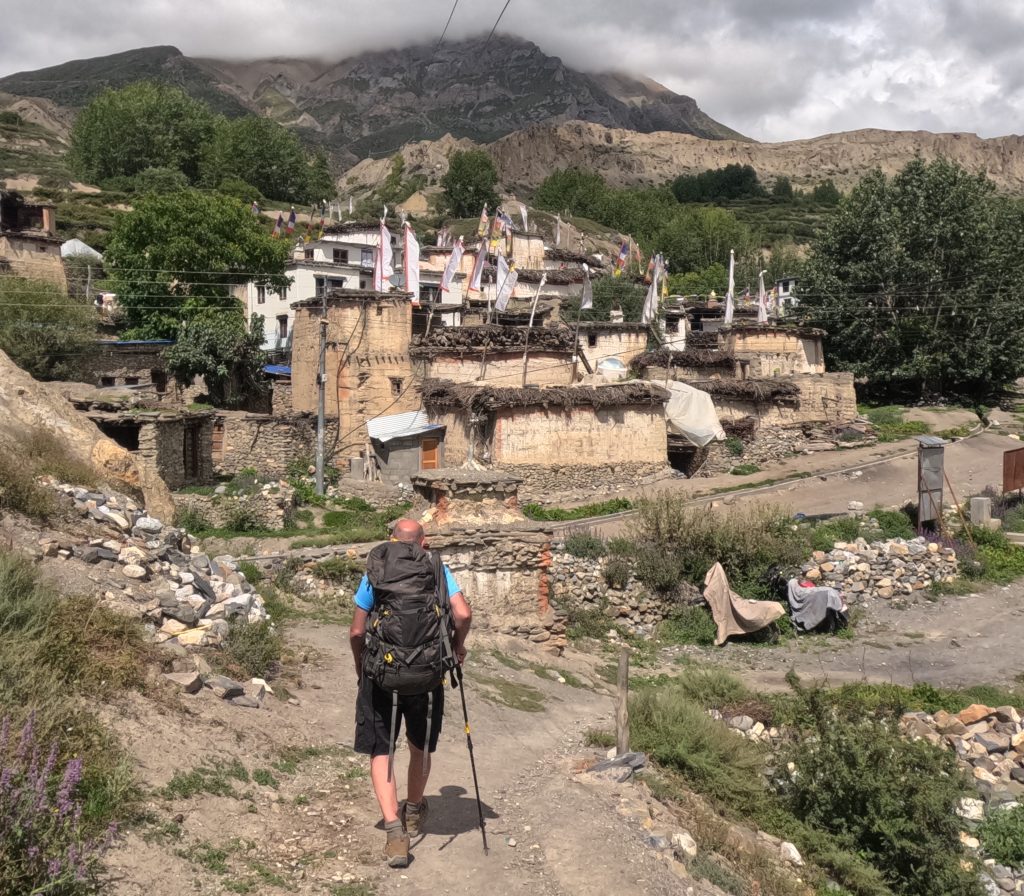
From here, your trekking journey begins. The trek follows the Kali Gandaki Valley through dramatic mountain landscapes, traditional villages, ancient monasteries and desert himalayan landscape.

The route takes you through charming settlements such as Jomsom, Marpha, Tukuche, and Kagbeni before reaching Muktinath. Muktinath Temple is a revered pilgrimage site for both Hindus and Buddhists and is considered one of the great Shakti Peethas in Hindu tradition.

The trek rewards the trekkers with spectacular views of Annapurna, Dhaulagiri, Nilgiri, and Tukuche Peak. Also, the unique culture and hospitality of the Thakali and Mustangi communities make the trek more memorable.

Jomsom sits at 2,720 meters and serves as the main gateway to Lower Mustang. The Kali Gandaki River creates a striking contrast between green lower valleys and the dry, desert-like landscapes of Mustang.

This Jomsom Muktinath trek is easy and suitable for friends, family, and children with reasonable fitness levels. This short and accessible trek is the perfect choice for those who are looking for Himalayan scenery, unique culture, and spiritual heritage.

Jomsom Muktinath Trek Cost for 2027

The final price of the trek depends upon your group size, transportation you choose and service included. Contact us with your preferred travel dates and group size for a personalized quote.

Itinerary

Jomsom Muktinath Trek Itinerary

Duration: 7 to 9 hours
Distance: ~200 km

Kathmandu to Pokhara is around 200 km in distance. On a tourist bus, it takes approximately 7 to 8 hours. We will begin our journey early in the morning so that we can beat the traffic and arrive before the evening. Your bus departs from Gongabu bus station. Our Guide will accompany you to reach the bus station. There will be refreshment stops in the middle of the journey.

Carry a water bottle and some snacks to enjoy the journey while taking in views of the rushing Trishuli River, terraced hillsides, and Himalayan foothills. Your bus will stop at Tourist Bus Park. From here, taking a short 10- to 15-minute taxi ride, you will reach the lakeside and check into the Hotel.

Lakeside is a popular tourist destination in Nepal that is open 24 hours. It features a variety of restaurants, cafes, shops, bars, and hotels.

⛰ Altitude 822 meter
🏨 Stay Hotel
Duration: Flight - 25 minutes, Trek - 3 to 4 hours
Distance: Flight - 69 km, Trek - 10 to 11 km

The Jomsom flight operates early in the morning from 6 AM to 10:00 AM. Depending on your flight schedule, be prepared to leave your Hotel to Pokhara International Airport. With our Guide you will drive to the airport, board a small STOL aircraft, and enjoy a scenic flight to Jomsom. From the flight, you can enjoy aerial views of Annapurna, Dhaulagiri, Nilgiri, and other Himalayan peaks.

Then, from Jomsom, the trekking journey begins, following the Kali Gandaki Valley. We follow the flat riverbeds and pass through Ekle Bhatti, checking our permit before continuing to Kagbeni. Upon arrival, we will check in to the teahouse and spend the night here in Kagbeni.

⛰ Altitude 2820 meter
🍽 Meals Lunch and Dinner
🏨 Stay Teahouse
Duration: 5 to 6 hours
Distance: 11 to 12 km

After breakfast early in the morning, you will explore Kagbeni village. Here you will witness mud-brick houses, a 500-year-old red monastery, and a fortress town. This beautiful village serves as a gateway to the Upper Mustang Trek.

After exploring Kagbeni, we will cross the Kali Gandaki River Valley, enjoying the distant views of Dhaulagiri and Nilgiri. Then further walking, we will reach the Jharkot Village and stop here for lunch. This place is famous for the old fortress-palace (Jharkot Dzong) and quiet monasteries.

After lunch, we will continue walking toward Muktinath Temple. You can bathe under the 108 sacred stone water spouts, which devotees believe can help attain spiritual purification and moksha. You can also visit Jwala Mai Temple near the main shrine and see its famous eternal flame.

As a souvenir from the temple premises, you can buy popular Saligram stones, local Mustang apple products, and Buddhist prayer items. Then you will check in to the teahouse and spend the night here.

⛰ Altitude 3800 meters
🍽 Meals Breakfast | Lunch | DInner
🏨 Stay Teahouse
Duration: 7 to 9 hours
Distance: 170 to 180 km

Early in the morning, we will visit the Muktinath temple(optional spiritual rituals). Then, after breakfast, we will start our driving journey following the dramatic Kali Gandaki Valley. We will stop at Marpha for lunch. This village is famous for clean, narrow cobbled streets and traditional whitewashed stone houses. Then, continue our driving toward Tatopani; you can enjoy the changing landscapes and views of the surrounding mountains.

We will then continue to Beni, where the road becomes smoother as we head toward Pokhara. From Beni, the journey continues through Kushma and along the highway to Pokhara. We will reach Pokhara by evening and check into our Hotel. You can then relax and enjoy the peaceful atmosphere around Phewa Lake.

⛰ Altitude 822 meter
🍽 Meals Breakfast
🏨 Stay Hotel
Duration: 7 to 9 hours
Distance: ~200 km

Now it's time for you to return back to Kathmandu. From your Hotel you will take a short drive to Pokhara Tourist Bus Park to catch the bus. We will follow the Prithvi Highway. There will be refreshment and lunch stops along the way. After passing through Mugling, Malekhu, and Naubise, we will continue toward Kathmandu. Then, after you arrive in Kathmandu, your journey of Jomsom Muktinath trek ends. 

Note: Travelers who wish to return to Pokhara by flight can request us to arrange their flight tickets. The applicable airfare at the time of booking will be charged separately.

⛰ Altitude 1400 meter

Build Your Own Adventure!

Collaborate with our specialists to create a unique itinerary.

Jomsom Muktinath Trek Booking, Payment and Cancellation Policy
  • Booking: You can book directly through our website by clicking on the " Book now" option. For booking confirmation advance payment of 20% of the total trip cost is needed.
  • Payment: We accept Bank Transfer, Credit/Debit Cards, Cash (major currencies), and online payment
  • Cancellation Policy: Please check our Terms and Conditions to know more in detail.
Things to Know

Notes

Jomsom Muktinath Trek Difficulty

Our 5 Day Jomsom Muktinath trek package is an easy and accessible trek in the lower Mustang region of Nepal. Although the trail reaches 3,710 meters at Muktinath, the gradual pace and short treks make it manageable for most trekkers. On trekking days, you need to walk for 3 to 6 hours, which can be done with normal fitness.

Some participants may find the long driving hours tiring. As an alternative, they can choose the flight option also from Jomsom to Pokhara and from Pokhara to Kathmandu. It will reduce the travel time and make the journey more comfortable.

Preparation for Jomsom Muktinath Trek

Only basic preparation is required for this lower Mustang trek in Nepal. Prepare by walking for a few weeks or months so that it will be comfortable for walking during the trek. Purchase quality trekking shoes, and pack essential items such as warm layers, sunscreen, sunglasses, and a water bottle.

The trek reaches 3,710 meters, so altitude sickness is possible. Drink enough water, avoid alcohol, and walk at a comfortable pace. Also be prepared for the changing weather conditions.It’s a good idea to keep some Nepalese currency on hand for personal expenses, such as snacks, tips, and additional meals.

Best Time for Jomsom Muktinath Trek

The most suitable time for the Jomsom Muktinath Trek is in autumn, from September to November. During this time, the sky remains clear to enjoy the magnificent views of the beautiful landscape and distant views of mountain peaks. Day time temperature is pleasant for trekking, while mornings and nights can be slightly cooler. Stable weather and moderate temperature makes the trekking comfortable. Also, during the Jomsom flight, from your window seat you can enjoy a spectacular view of the mountain range.

Another popular time is spring, from March to May. Early mornings usually offer the best mountain views, while clouds can form in the afternoon. Greener valleys, blooming or lower makes the landscape turn colorful and vibrant. Occasional rainfall can occur during this season, so be prepared for the changing weather conditions.

Since this is a short trek, trekking in winter is also possible. If you love snowy landscapes and chilly weather, winter can be a rewarding time to visit Jomsom and Muktinath. If you choose to travel during this time, be prepared for possible flight delays and colder temperatures.

Permits Required for Jomsom Muktinath Trek

We need to obtain the Annapurna Conservation Area Permit (ACAP). The permit fee is included in our trek package, so you do not need to arrange or pay for it separately. To obtain the permit you need to send us:

  • Your scanned passport
  • Passport size photograph

Travel Insurance

Travel Insurance is not mandatory to participate in this trek. However, we strongly recommend getting insurance to protect against unexpected situations. The benefits of having insurance is it helps to cover:

  • Trekking and travel-related risks
  • Medical emergencies
  • Emergency evacuation
  • Trip delays or cancellations
  • Lost or delayed baggage

Special note: We do not sell travel insurance. However, we can recommend insurance providers that offer suitable policies for this trek.

Accommodation on the Jomsom Muktinath Trek

  • Teahouses and Lodges: Jomsom, Kagbeni, and Muktinath have enough teahouses and lodges for comfortable overnight stays.
  • Facilities: The rooms are cozy, with twin beds, foam mattresses, blankets, and shared toilets. If you upgrade your room at an additional cost, you can find a single room with an attached bathroom and Wi-Fi.
  • Heating: Rooms generally do not have heaters. Some teahouses have yak-dung or wood stoves in the communal dining hall during the evenings.

Food on Jomsom Muktinath Trek 

Each teahouse has its own restaurant or dining area where you will have your meals. We will arrange three meals daily: breakfast, lunch, and dinner. For each meal, you can choose one main course from the teahouse menu. Available dishes vary by location and teahouse. Let’s see the common meals you can expect on this trek:

  • Breakfast: Eggs, bread, pancakes, porridge, Tibetan bread, tea, coffee, and seasonal fruits.
  • Lunch and Dinner: Dal bhat, noodles, pasta, fried rice, momo, soups, vegetables, and other local dishes.
  • Drinks: Tea, coffee, hot lemon, hot chocolate, soft drinks, and bottled water are available at teahouses. Hot drinking water is also available for purchase.

Safety Tips 

  • Prevent altitude sickness: Carry reusable water bottles and drink regularly to avoid dehydration. Monitor symptoms of altitude sickness, and if symptoms arise, descend immediately to a lower altitude.
  • Packing essentials: Bring trekking poles, knee support, sunscreen, warm clothes and essentials for trekking.
  • Check the Weather: In Nepal, the weather can change anytime, so always check the weather conditions before leaving for a trip.
  • Carry Cash: In city areas like Kathmandu and Pokhara, there are enough ATM and card payment options. But on trekking trails, ATMs are limited, and most shops and teahouses accept cash. Therefore, carry around NPR 10,000 to 15,000 for personal use.
  • Carry Important Documents: Keep your passport, permits, travel insurance, emergency contacts, and other important documents safe. Carry photocopies or digital backups when possible.

Sustainable Trekking

  • Avoid single-use plastic whenever possible. Use reusable items such as water bottles, bags, and food containers.
  • Don’t throw tissues, wet wipes, food wrappers, or other personal waste on trekking trails. Dispose of all waste only in designated areas.
  • Don’t pick up plants and disturb wildlife inside the Conservation Area.
  • While visiting the monastery, temple or any sacred site, always walk in a clockwise direction.
  • Trek only on designated trails to minimize your impact on the natural environment and protect local vegetation.
  • Support local businesses by purchasing food, drinks, water, and souvenirs to support local families and communities.

Equipment

Here is the quick packing list for your short Jomsom Muktinath Trek:

  • Trekking shoes with good grip
  • Warm layers and a down jacket
  • Waterproof jacket and pants
  • Trekking pants and T-shirts
  • Warm hat, gloves, and socks
  • Sunglasses and sunscreen
  • Trekking poles
  • Reusable water bottle
  • Personal toiletries and toilet paper
  • Personal medications and first-aid kit
  • Power bank and travel adapter
  • Passport, permits, insurance, and cash
  • Small backpack and duffle bag( provided by company )

Note: Pack only the essential items you need for the trek. Make your daypack not more than 7 to 8 kg. You can safely leave any extra or unnecessary belongings at your hotel in Kathmandu.

FAQs

FAQs of Jomsom Muktinath Trek

  • What kind of accommodation can I expect along the Jomsom Muktinath trek?

    Accommodation mainly consists of teahouses and lodges. Rooms are generally basic, typically featuring twin beds with mattresses, pillows, and a blanket. In peak season, sharing rooms might be necessary.
  • Do teahouses have attached bathrooms?

    Most teahouses along the route have shared bathrooms (both squat and Western style). However, lodges in larger towns like Jomsom and Marpha increasingly offer rooms with attached bathrooms for a slightly higher price.
  • Do I need to book accommodation in advance?

    No. You do not need to book the rooms yourself. High Route Adventure will arrange your accommodation throughout the trek. However, if you plan to travel during the autumn season, especially around Dashain and Tihar, we recommend booking your trek package in advance due to higher travel demand.
  • What kind of food is available on the trek?

    The staple food is Dal Bhat (rice, lentil soup, and vegetable curry), which is nutritious, filling, and provides unlimited refills. Other options include noodles, momos, pasta, pancakes, soups, and porridge. Yak cheese and locally grown apples/apple products (pie, cider) are local specialties.
  • Is meat safe to eat during the trek?

    Yes, meat is available and safe to eat during the trek. Vegetarian meals are also widely available at teahouses along the route.
  • Can I get safe drinking water along the trail?

    Bottled water is available, but buying single-use plastic bottles harms the environment. It is better to carry treated tap water or stream water using purification tablets, UV sterilizers, or a life-straw. Boiled water is also available for purchase at teahouses.
  • How do I get to the starting point of the trek?

    The trek traditionally starts from Jomsom. Many trekkers now take a local jeep or bus from Pokhara to Beni or Tatopani to begin walking, or fly from Pokhara to Jomsom.
  • Are flights from Pokhara to Jomsom reliable?

    Flights to and from Jomsom depend heavily on weather conditions. Strong winds in the Kali Gandaki Gorge can cause delays, especially after midday.
  • How do I get back from Muktinath/Jomsom?

    We will provide you private Jeep to return from Muktinath to Pokhara. This service is for group trekkers. If you are solo trekkers, we will arrange a shared Jeep for you.
  • What permits are required for the Jomsom Muktinath Trek?

    You need two main permits:ACAP (Annapurna Conservation Area Permit) and TIMS Card( not mandatory).
  • What documents do I need to bring?

    Bring your valid passport (with at least 6 months validity), multiple passport-sized photographs (for permits and SIM cards).
  • Are there banking and ATM facilities on the trail?

    ATMs are available in Jomsom, but they frequently run out of cash or experience power outages. It is essential to carry sufficient cash (Nepalese Rupees) from Pokhara or Kathmandu before starting the trek.
  • Are there medical facilities along the route?

    Basic health posts are available in major settlements like Jomsom and Kagbeni. For serious medical emergencies, helicopter evacuation is required.
  • Will I have mobile network coverage during the trek?

    Ncell and Nepal Telecom (NT) have decent coverage along most of the Jomsom route, though signals can be weak in narrow gorges and remote areas.
  • Is Wi-Fi available in teahouses?

    Wi-Fi is available in most lodges, though you usually have to pay a small fee (around $2–$4 USD) to use it. The connection can be slow and unreliable due to weather and terrain.
  • What is the weather like on the Jomsom Muktinath Trek?

    The weather is notoriously windy, especially in the afternoons along the Kali Gandaki valley. Mornings are usually clear and sunny. Temperatures drop significantly at night, especially around Muktinath, where it frequently falls below freezing.
  • What kind of clothing and gear should I pack?

    Layering is key. Pack moisture-wicking base layers, an insulating fleece jacket, a windproof/waterproof outer shell, sturdy broken-in trekking boots, thermal trousers, a warm down jacket, a beanie, gloves, and UV-protection sunglasses.
  • Do I need a sleeping bag?

    Yes, teahouse blankets can be thin and inadequate during chilly nights, especially as you approach Muktinath (3,800m). A sleeping bag rated down to -10°C is recommended.
  • Is a guide mandatory for the Jomsom Muktinath trek?

    While independent trekking was once popular, the Nepal Tourism Board strongly encourages (and often regulates) hiring certified guides for safety reasons. Having a guide greatly enhances the experience, handles logistics, and ensures safety in case of altitude sickness or weather changes.
  • Is travel insurance compulsory?

    Although travel insurance is not mandatory we highly recommend you to purchase insurance that covers high-altitude trekking up to 4,000 meters, emergency helicopter evacuation and medical repatriation.
  • Is altitude sickness a risk on this trek?

    The highest point is Muktinath at approximately 3,800 meters (12,467 feet). While this is lower than Everest Base Camp, mild altitude sickness (AMS) can still occur. Staying well-hydrated, ascending gradually, and avoiding alcohol helps prevent it.
  • Can I charge my electronic devices (phone, camera, power bank)?

    Yes, but teahouses generally charge a fee (around $2–$5) to plug devices into their power outlets. Bringing a high-capacity power bank is highly recommended to save on charging costs.
  • What are the toilet facilities like?

    Toilet facilities depend on the location and teahouse. Most teahouses have squat toilets, while some provide basic Western-style toilets. Carry your own toilet paper and hand sanitizer.
  • Are hot showers available?

    Hot showers are available in most lodges, though they are usually gas-powered or solar-heated. Expect to pay a small extra fee (around $2–$4) for a hot shower.
  • What cultural experiences can I expect on this trek?

    The region features a unique blend of Hindu and Tibetan Buddhist cultures. You will pass through Thakali villages famous for their hospitality and cuisine, as well as ancient monasteries, prayer wheels, and mani walls. Muktinath is a sacred pilgrimage site for both Hindus and Buddhists.
  • Are there specific dress codes or customs to follow?

    Dress modestly (cover shoulders and knees, especially when visiting temples or monasteries). Always walk clockwise around Buddhist mani stones and stupas, and ask for permission before taking photographs of locals or inside sacred shrines.
  • How difficult is the Jomsom Muktinath Trek?

    It is classified as an easy trek. While there are some steep ascents and descents, the daily walking hours (5–6 hours) are manageable for anyone with a reasonable level of physical fitness and good stamina.
  • What happens in case of a medical emergency?

    Your guide will coordinate with your trekking agency and insurance company to arrange a rescue. If necessary, a rescue helicopter will be dispatched to airlift you to a hospital in Pokhara or Kathmandu.

Traveler Reviews

What Our Customers Say

Real experiences shared by trekkers and travelers who joined our trips.

Rajesh, India

Our Jomsom Muktinath Trek was one of the most memorable experiences of our Nepal trip. The journey through Lower Mustang offered incredible views of the Himalayas, dramatic landscapes, and traditional mountain villages. Kagbeni, Jhong, and Muktinath were some of the highlights of our journey.

We especially enjoyed walking through the unique landscapes of the Kali Gandaki Valley. The views of the Nilgiri Range and surrounding mountains were beautiful. Visiting Muktinath Temple was also a meaningful experience and added a cultural and spiritual element to our trek.

High Route Adventure arranged our transportation, accommodation, meals, and trekking support. Everything was well organized, and our guide was friendly, knowledgeable, and helpful throughout the journey. The teahouses were comfortable, and the meals provided enough variety during the trek.

We are very happy with our Jomsom Muktinath Trek in Nepal and the service provided by High Route Adventure. The combination of Himalayan scenery, local culture, and Muktinath made this journey special. We would recommend this trek to travelers from India looking for a scenic and culturally rich experience in Nepal.

Singapore, Daniel

The Jomsom Muktinath Trek was an incredible experience. We enjoyed the beautiful landscapes, traditional villages, and spectacular Himalayan views throughout the journey. Kagbeni, Jhong, and Muktinath were among the highlights of our trip.

High Route Adventure organized everything smoothly, including transportation, accommodation, meals, and trekking support. Our guide was professional, friendly, and always ready to help. The entire journey was comfortable, well managed, and truly memorable.

Canada, Michael

We had an amazing experience exploring the Jomsom Muktinath Trek. The changing landscapes, peaceful villages, and unique culture of Lower Mustang made every day special. The trek offered a wonderful combination of nature, culture, and Himalayan scenery.

The High Route Adventure team was professional and supportive throughout the journey. Our guide took good care of us and explained the local culture and places we visited. We would happily recommend their service to other travelers.

Related Packages

You may like these packages too !
Chat via WhatsApp +977 9851058664

Our Partners

We are associated with

High Route Adventure TripAvisor Award 2025 High Route Adventure TripAvisor Award 2025