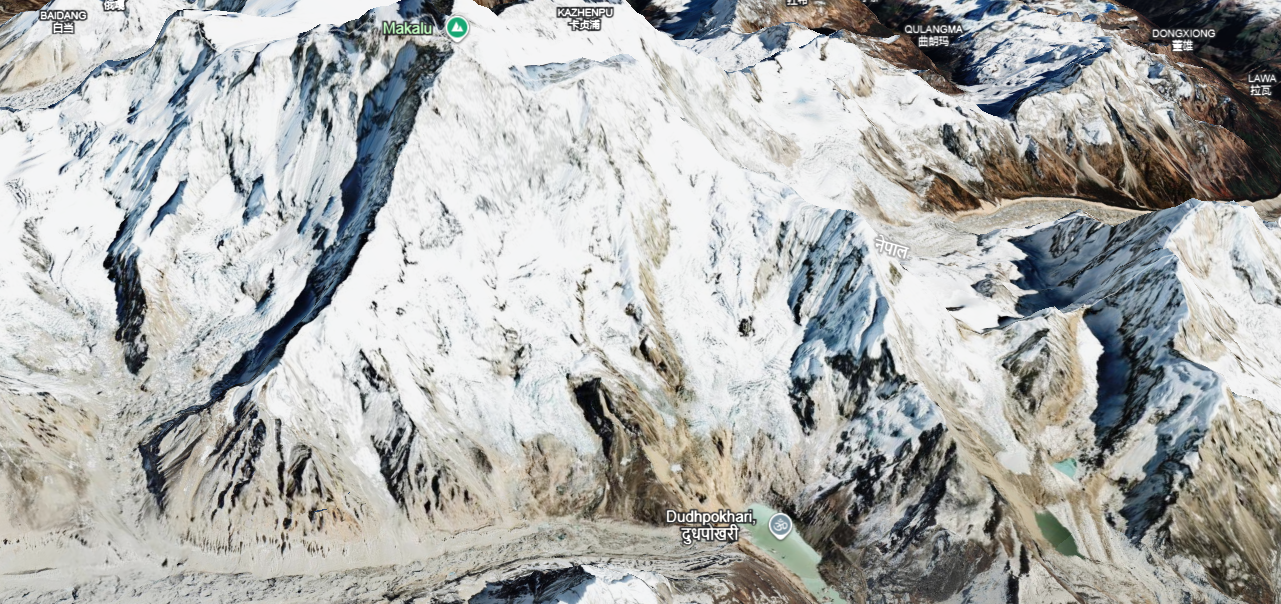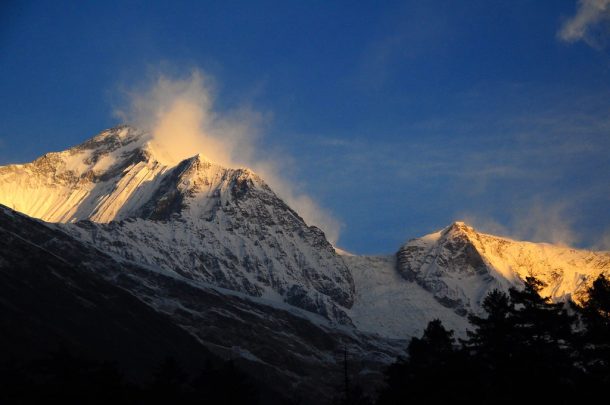
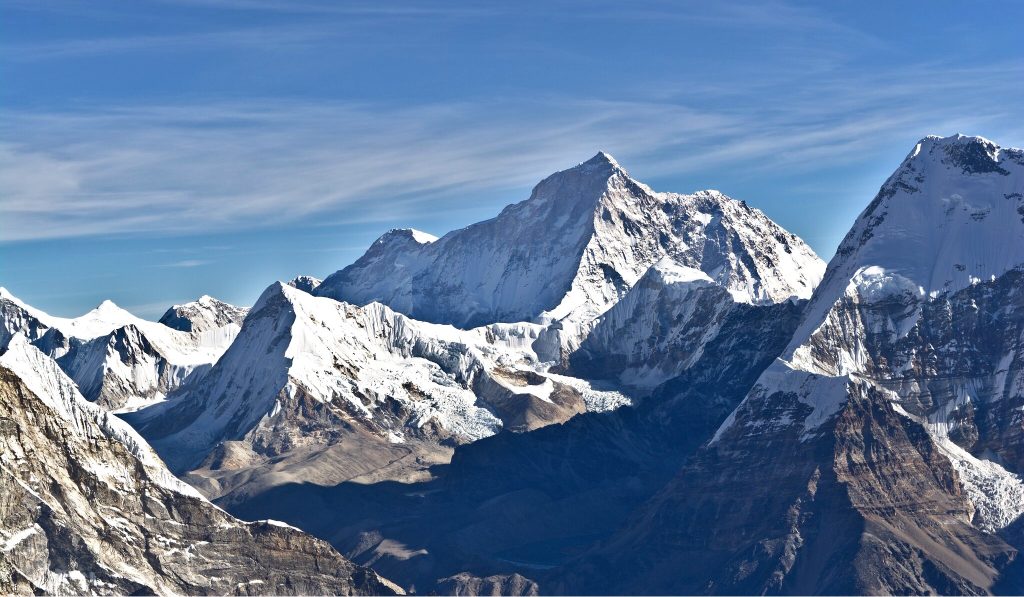
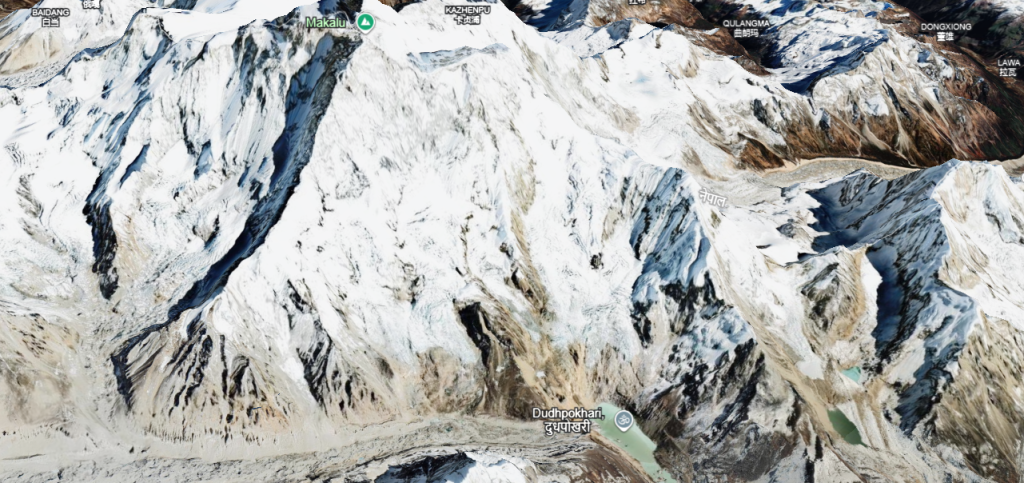
The Mt. Makalu Expedition is a 50-day mountaineering journey to the summit of Mt. Makalu (8,485 m), the fifth-highest mountain in the world. The mountain lies on the Nepal-China border inside Makalu Barun National Park. Known for its steep pyramid shape and technical climbing route, Makalu is one of Nepal’s most challenging 8,000-meter peaks.
The expedition begins in Kathmandu before flying to Tumlingtar and driving to Num. The trekking route passes through villages like Seduwa, Tashigaun, Khongma, Dobate, Yangle Kharka, and Langmale before reaching Makalu Base Camp. Along the way, the scenery changes from forests and river valleys to alpine meadows, rocky moraines, glaciers & high mountain passes.
From Makalu Base Camp, the climbing phase begins. Climbers complete acclimatization rotations between higher camps before waiting for a suitable weather window for the summit attempt. After the climb, the expedition follows the same route back to Num before returning to Kathmandu.
If Mt. Makalu Climbing has been your dream for a while, now is the time to go for it. Book with us and return with more than just photos from the journey. You will remember the people you climbed with, the conversations inside the tents, & the little moments that made the whole journey worth it.
Here are the quick facts about the Makalu climbing. It’ll be easier for you to understand:
| Facts | Details |
| Location | Makalu Barun National Park, Nepal-China Border |
| Mountain Elevation | 8,485meters/27,838ft |
| Mountain Range | Mahalangur Himal, Himalayas |
| Success Rate | Nearly 85% |
| First Successful Ascents | 1955 by a French Expedition led by Jean Franco |
| Best time to Climb | April to May and September to October |
| Difficulty Grade | 4E |
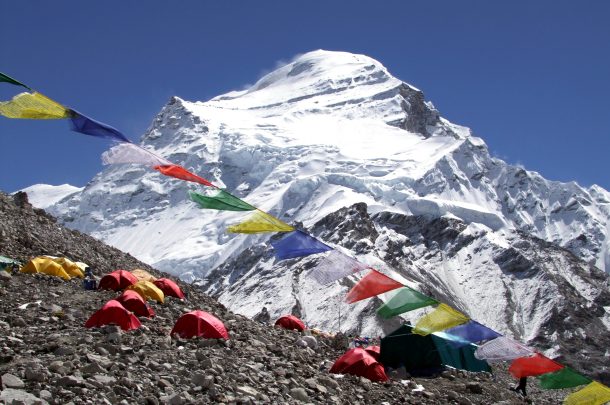
Makalu Base Camp is the main operating camp for the expedition. This is where climbers rest after the trek, complete their final gear checks, attend expedition briefings, and prepare for the climbing rotations. The dining tent, kitchen, communication equipment, medical supplies, and expedition staff are all based here.
Advanced Base Camp marks the beginning of the climbing route. Climbers stay here during acclimatization rotations before moving to the higher camps. It also serves as an important staging point for carrying equipment and supplies further up the mountain.
Camp I is the first high Camp above the glacier. The route to this Camp crosses mixed terrain with snow, ice, and sections of the glacier. Most climbers visit Camp I several times during acclimatization before returning to Base Camp.
Camp II is built higher on the mountain across snowfields and mixed rock and ice. Climbers often spend one or two nights here during their acclimatization rotations before descending again.
Camp III sits in the upper part of the mountain where the air is much thinner. This Camp is mainly used during the final stages of acclimatization and as preparation for the summit push. Climbers normally spend as little time here as possible because of the extreme altitude.
Camp IV is the final Camp before the summit attempt. Climbers leave from here during the summit window, usually late at night or in the early hours of the morning. Supplemental oxygen is commonly used from this stage onward, depending on the expedition plan and each climber’s condition.
Mt. Makalu is one of the least crowded 8,000-meter peaks in Nepal. Only a limited number of climbers attempt it each season, so the mountain feels quieter from the trek to Base Camp all the way to the summit. If you enjoy remote places rather than busy climbing routes, Makalu stands out for that reason alone.
The expedition is long, technical, and physically demanding. The standard Southeast Ridge route includes glaciers, fixed ropes, steep snow slopes, rocky sections, and exposed ridges. Every stage requires patience, good judgment, and previous high-altitude climbing experience, making the summit a meaningful achievement.
The route also passes through Makalu Barun National Park, traditional Rai and Sherpa villages, deep valleys, rivers, forests, and high alpine landscapes before reaching Base Camp. Instead of crowded trails and busy camps, you’ll spend weeks in one of the most remote mountain regions in Nepal, surrounded by some of the highest peaks in the Himalayas.
Along the way, you will see much more than just mountains. The journey passes through villages like Num, Seduwa, Tashigaun, Khongma, Dobate, Yangle Kharka, and Langmale, where Rai and Sherpa communities still follow their traditional way of life.
Stone houses, prayer flags, mani walls, small monasteries, terraced fields, and yak pastures are all part of your journey. You can see locals working in the fields, carrying supplies, or herding livestock along the trails.
The lower part of the expedition is filled with rivers, waterfalls, suspension bridges, and forests of rhododendron, oak, bamboo, and pine inside Makalu Barun National Park.
Wildlife such as Himalayan thar, musk deer, red pandas, Himalayan black bears, and the Himalayan monal also live in this region, although sightings are never guaranteed.
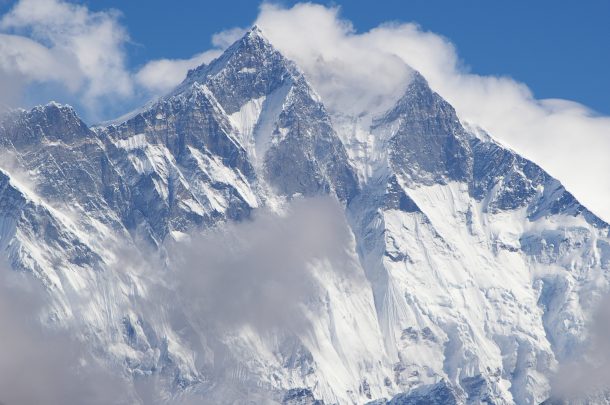
Closer to Makalu Base Camp, the forests start to disappear, which gives way to rocky moraines, the Barun River, the Barun Glacier, and Barun Pokhari. On clear days, peaks like Mt. Makalu, Chamlang, Baruntse, Peak 6, Peak 7, Everest, and Lhotse remain in view from different parts of the route.
Above Base Camp, the surroundings are mostly rock, snow, and ice. Glaciers, crevasses, steep snow slopes, exposed ridges, and fixed rope sections mark the final stretch towards the higher camps and the summit.
One of the first things most people do is calculate the total cost. It gives you a clear idea of the budget before moving ahead.
For the 2026/27 climbing season, the Mt. Makalu Expedition costs USD 20,000 per person.
At High Route Adventure, our Makalu Expedition package covers the major expedition services, including permits, domestic flights, accommodation, meals, Base Camp support, and experienced Sherpa climbing guides. Personal expenses, travel insurance, tips, & a few optional services are usually not included; please check the package details before booking.
[ The actual price depends on group size, guests’ hotel requirements, level of service, oxygen bottles, and climbing season. We also offer exclusive VIP and VVIP packages for the Manaslu Expedition. ]
At High Route Adventure, safety is the priority throughout the expedition. Our experienced Sherpa climbing guides, well-planned acclimatization schedule, and reliable logistics help you prepare for one of Nepal’s most demanding 8,000-meter climbs.
We arrange all the major expedition services, including permits, transportation, Base Camp support, weather updates, communication equipment, and oxygen support as per the package.
We also keep our expedition groups small which allows our guides to give every climber the attention they need throughout the journey.
After you land in Kathmandu, our team will meet you at the airport & escort you to your hotel. The remaining part of your day is yours. So take a rest and roam around the city if you want.
After your refreshment, today is all about the preparation for your climb. The permits are ready, and you receive a short briefing about the journey. The necessary gear is checked. If anything is missing, you can still have time to buy or rent it in Kathmandu.
Actually, your expedition begins today. After breakfast, you will fly to Tumlingtar, which takes about 45 minutes. Look out the window; you mostly see the amazing views of hills, rivers, and small villages below. Once you land, it is another 4 to 5-hour drive to Num. You will pass places like Khandbari, Bhotebas & Chichila on the way.
Today is your first full day on the trail. The walk begins with a long descent to the Arun River where a suspension bridge takes you across to the other side. From there, it is a steady uphill climb through terraced fields, forests, small Rai & Sherpa settlements before reaching Seduwa. This beautiful village is a gateway to the Makalu Barun National Park.
The morning starts with an easy walk across terraced fields before the trail drops to Isuwa Khola. Once the river is behind you, the climb begins. Rhododendron and bamboo forests cover much of the hillside, with only a few scattered houses along the way. Tashigaun is the last permanent village before the higher mountains take over. After today, the surroundings feel much more remote.
The climb keeps going for most of the day, with very few easy sections in between. The path gets rougher as you gain altitude, with rocky sections and uneven stone steps for much of the way. Khongma Danda feels noticeably different from the lower villages. The air is thinner, the temperature drops & the mountains seem much closer than before.
Today is set aside to help your body adjust to the altitude. Instead of staying at the lodge all day, you can walk to a higher point in the morning before returning to Khongma Danda for the night. This helps your body prepare before crossing the high passes over the next few days. It is also a good chance to rest, enjoy the mountain views & get ready for what comes next.
One of the toughest sections of the trek comes today as the route crosses several high passes. The climb takes you over Kongma La, Shipton La, & Keke La, with Shipton La being the highest point of the day. After crossing the ridges, the trail heads down towards Dobate, where rhododendron and pine forests surround the campsite.
You leave the high passes behind, and now the route descends towards the Barun Khola. From the river, you will be walking to the valley more into the Makalu region. The area opens up into wide alpine meadows with towering peaks surrounding Yangle Kharka.
The journey continues further into the upper Barun Valley towards Langmale Kharka. The villages become fewer, the surroundings change into rocky landscapes with streams & mountain views. This section brings you closer to the high-altitude area near Makalu Base Camp.
A rest day at Langmale Kharka helps your body adjust before moving higher. You can do short hikes there and explore nearby ridges & get comfortable with the altitude. The remaining time can be used to rest & check your climbing gear.
The route heads to Makalu Base Camp. Rocky moraines replace most of the trail, with the Barun Glacier running alongside much of the walk. Barun Pokhari comes into view before you arrive at Base Camp beneath the towering face of Mt. Makalu.
A full day at Makalu Base Camp gives your body more time to adjust before the climbing begins. A short hike around the surrounding area is usually part of the day. You have plenty of time to rest & organize your climbing equipment. It is also a good chance to take in the views before moving into higher camps.
The journey continues above Makalu Base Camp towards Advance Base Camp. The route becomes rougher with glacier sections, and a steady climb most of the way. Reaching Advance Base Camp marks the end of the trekking phase & the beginning of the actual climbing expedition.
These days are spent on climbing rotations before the summit push. The first rotation takes you to Camp I, where you will spend a night before returning to Base Camp. The second rotation goes higher to Camp II. In some cases, you carry gear towards Camp III before heading back down. The final rotation reaches Camp III which gives the body more time to adjust to the altitude before returning to Base Camp again. Once the rotations are complete, all that is left is to wait for the right weather window to begin the summit climb.
Once there is good weather, the team climbs through Camp I, Camp II, Camp III, & Camp IV before making the final push to the summit. Because the air starts to get thinner, you need supplemental oxygen during the upper section of the climb.
To reach the summit is only half of the time. After spending a short time on top of Mt. Makalu, the team starts the descent & returns through the higher camps. Everyone aims to get back to Base Camp safely because the climb is only complete once you are off the mountain.
After weeks on the mountain, it's time to leave Makalu Base Camp behind. The route drops back into the Barun Valley, where rocky ground slowly changes into grassy meadows & greener surroundings. You will return to Yangle Kharka for the night.
The return journey continues with a long uphill walk towards Dobate. The trail climbs away from the river & enters forests of rhododendron, fir, bamboo once again. By the end of the day, you are back near the higher ridges that were crossed earlier in the expedition.
The return continues towards Khongma Danda, climbing back through forests of rhododendron & pine after leaving the higher alpine area behind. This is one of the last days where you spend time above the tree line before the trail starts dropping towards the lower villages again.
The route heads downhill to Tashigaun, the last major Sherpa village on this expedition. From there, the walk continues across terraced fields and small settlements before reaching Seduwa, where you spend the night. It feels different being back where trees, farms, & village life slowly return.
The final trekking day starts with a steep descent to the Arun River, crossing a long suspension bridge before the last big climb to Num. The uphill section is tiring, especially after weeks on the mountain. Reaching Num is the end of the trekking part of the expedition.
The trekking part is now behind you. Now, you will drive from Num to Tumlingtar, passing small villages, rivers & winding mountain roads one last time. The rest of the day is for relaxing before your flight back to Kathmandu.
A short morning flight brings you back to Kathmandu. After checking into your hotel, the rest of the day is free. Some people head out to explore the city, while others simply enjoy a proper shower & a comfortable bed after weeks in the mountains.
This is your free day in Kathmandu. You can rest, do shopping, or walk around the city before meeting the team in the evening for a farewell dinner. It is a nice chance to look back on the expedition & celebrate reaching one of the world's highest mountains.
Your Mt. Makalu Expedition comes to an end today. Depending on your flight time, you will be transferred to the airport for your journey home, hopefully with a successful summit & plenty of stories to tell.
Collaborate with our specialists to create a unique itinerary.
A Mt. Makalu Expedition is for someone comfortable trekking at high altitude, using climbing gear like crampons, ropes, and an ice axe. Previous experience on a 7,000-meter or another 8,000-meter peak is strongly recommended before attempting Makalu.
It is a good choice for climbers who want to step beyond trekking peaks & take on one of Nepal's 8,000-meter mountains. Good physical fitness, strong technical climbing skills, and the ability to spend nearly two months in the mountains are all important. There will be long waiting days, difficult weather, & plenty of moments that test your determination.
If that sounds like the kind of challenge you are looking for, Mt. Makalu is one of the most rewarding climbs in Nepal.
A Mt. Makalu Expedition is an extremely strenuous and highly challenging alpine expedition. It has difficult sections from the trekking route all the way to the summit, and the challenges increase as you gain altitude.
All permits required for the Mt. Makalu Expeditions are arranged by High Route Adventure before the expedition begins, so you do not have to arrange them yourself.
The required permits include:
Travel insurance is mandatory for Mt. Makalu Expedition. Before arriving in Nepal, please make sure your insurance policy covers high-altitude mountaineering and emergency situations during the expedition. Your insurance should include:
[ Please check your policy carefully before purchasing, as standard travel insurance usually does not cover high-altitude expeditions like Mt. Makalu. ]
Spring (April to May) and autumn (September to November) are the best seasons for a Mt. Makalu Expedition. During these months, our expedition team waits for a suitable weather window before making the summit push.
These windows usually last only a few days and provide lighter winds, more stable weather, and better visibility at high altitude. Once the weather window opens, the summit climb begins according to the expedition plan.
Summit attempts usually start around midnight or shortly after, with a turnaround time of around 12:00 PM to 1:00 PM to allow enough time for a safe descent.
Accommodation during the trek consists of basic teahouses and lodges in the lower villages. Rooms are simple and usually have twin beds with shared toilet facilities. From Makalu Base Camp onwards, accommodation is provided in expedition tents.
High Route Adventure arranges all camping equipment, dining tents, kitchen tents, and sleeping tents for the expedition. Facilities such as hot showers, charging, and internet are limited in the mountains and may not be available at the higher camps.
During the trek to Makalu Base Camp, meals are served at local teahouses and lodges in villages such as Seduwa, Tashigaun, Khongma, Dobate, and Yangle Kharka. The menu is simple and filling, with options like dal bhat, noodles, fried rice, soup, potatoes, eggs, and tea or coffee.
As the expedition moves higher, food choices become more limited because all supplies have to be carried into the mountains. At Makalu Base Camp and the higher camps, our kitchen staff prepare fresh meals to support the climbing schedule.
Mobile networks work well in the lower Makalu region villages like Seduwa and Tashigaun. As you get closer to Makalu Base Camp, the signal becomes weak and unreliable. Above Base Camp, there is no mobile network or internet service, so communication is not possible during the climbing period.
For money, carry enough Nepalese Rupees (NPR) before leaving Kathmandu because there are no ATMs along the route. You may need extra cash for:
Altitude sickness is one of the biggest risks during Mt. Makalu Expedition. As the climb moves higher, the amount of oxygen in the air drops significantly. Above 8,000 meters, climbers enter the Death Zone, where the human body can no longer properly acclimatize. Common symptoms include severe headache, nausea, dizziness, unusual tiredness, loss of coordination, confusion, and shortness of breath. If ignored, altitude sickness can develop into life-threatening conditions such as High Altitude Pulmonary Edema (HAPE) or High Altitude Cerebral Edema (HACE).
To reduce the risk, the expedition follows a planned acclimatization schedule with rotations between Base Camp and the higher camps before the summit push. Climbers are monitored throughout the expedition by experienced Sherpa guides, and supplemental oxygen is used during the upper stages of the climb according to the expedition plan. If a climber develops serious altitude sickness, the summit attempt is stopped immediately, and the team descends to a lower camp for further treatment and recovery.
Proper acclimatization is one of the most important parts of a successful Mt. Makalu Expedition. Instead of climbing directly to the higher camps, the itinerary includes acclimatization days during the trek and several climbing rotations above Base Camp. This gives your body enough time to adjust to the lower oxygen levels before the summit push.
The first acclimatization day usually takes place at Khongma Danda (3,500 m) before crossing the high passes. After reaching Makalu Base Camp (4,870 m), climbers spend several days resting, training, and preparing for the climbing phase. From there, the expedition follows the climb high, sleep low principle. Climbers move to higher camps, spend time at altitude, then return to Base Camp or a lower camp to recover before the next rotation. This process reduces the risk of altitude sickness and helps prepare the body for climbing above 8,000 meters.
Although Mt. Makalu Expedition takes place in a remote part of the Himalayas, our team remains connected throughout the climb. Satellite phones and radio communication are used between Base Camp and the higher camps to coordinate the expedition and respond quickly if any situation arises.
In the event of an emergency, our guides follow established evacuation procedures. Helicopter rescue is possible from lower sections of the mountain when weather and terrain allow. However, helicopter evacuation is not possible above the Death Zone (8,000 meters). At higher camps, the immediate priority is to stabilize the climber and descend to a lower altitude where further rescue can be arranged if necessary.