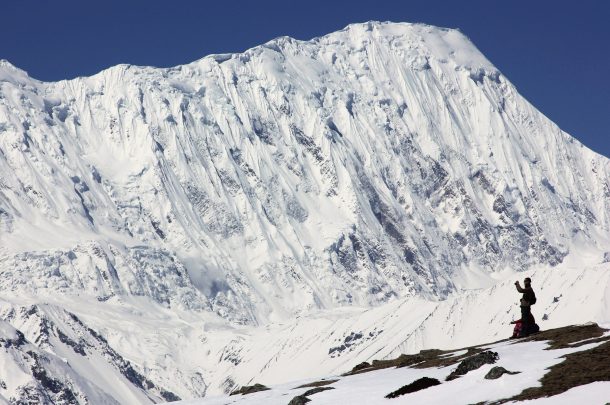
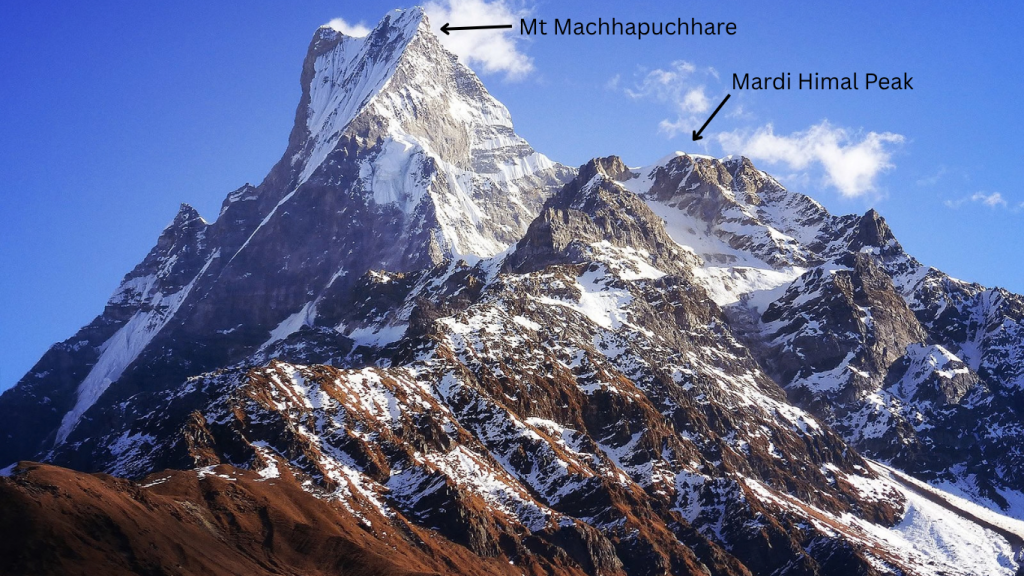
Mardi Himal is a popular trekking peak in Kaski District of the Gandaki Province in Nepal, standing at an altitude of 5,587 meters. It is located about 15 miles north of Pokhara, close to the iconic Machhapuchhre (Fishtail) mountain. Following the Mardi Himal trekking route, your climbing journey starts from Mardi Himal Base Camp( 4,500 meters). To participate in this Himalayan adventure, no previous mountaineering experience is required.
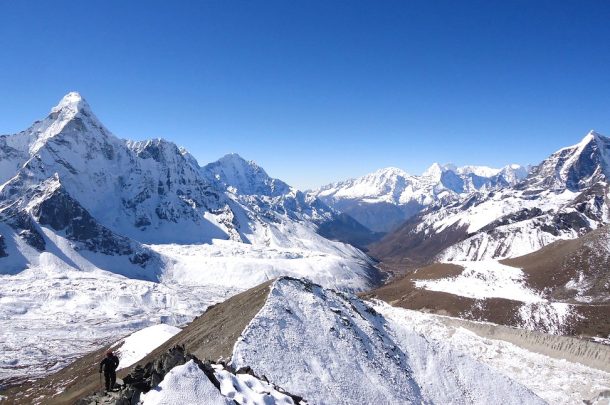
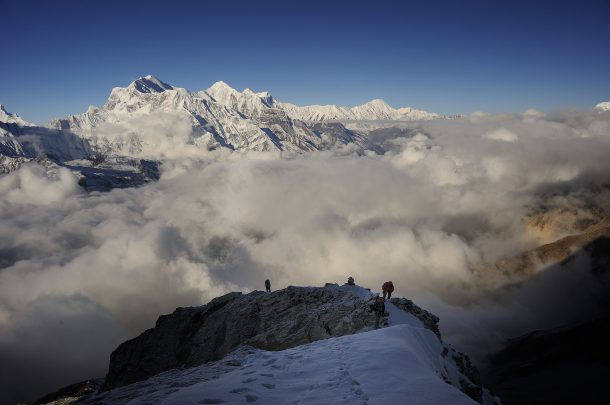
From the summit of Mardi Peak, climbers are rewarded with the Annapurna range, Gangapurna, Mt. Annapurna South, Machhapuchhre, Fang Peak, Him Chuli, Singu Chuli, and many more. It is one of the least visited trekking peaks, so the trekking route is quiet and peaceful. The natural beauty of the surrounding mountains, forests, and landscapes makes the Mardi Himal Peak Climbing experience even more rewarding.
Apart from the mountain views climber also get the opportunity to experience the rich culture, traditions and hospitality of the Thakali, Gurung, and Magar communities. Along the route you can taste the local traditional local foods and authentic Nepali dishes.
Mardi Himal is part of the Annapurna region, which is also home to several other popular Himalayan climbing peaks, including Tent Peak, and Pisang Peak.
Our 8-day Mardi Himal Peak Climbing cost varies with the group size. However, the price becomes more economical when you join a group. For the final price quotation, contact us at +977-9851058664
Early in the morning, after breakfast, we begin our scenic drive from Kathmandu to Pokhara. We leave Kathmandu from Gongabu bus station around 7:00 to 8:00 AM to avoid the busy city traffic. The journey follows the Prithvi Highway, taking us through the winding hills and riverside landscapes of central Nepal.
As we leave Kathmandu, we pass through Naubise and continue along the Prithvi Highway beside the Trishuli River. Along the way, there are several roadside shops and local settlements. We make a short stop around Malekhu for tea and refreshments. Malekhu is also well-known for its local river fish.
We continue our drive toward Mugling, a major highway junction where we stop for lunch. After lunch, we cross the bridge at Mugling and continue through the winding hills toward Damauli. The landscape gradually changes as we approach Pokhara, with green hills, valleys, and local villages lining the route.
On clear days, you may catch your first views of the Annapurna and surrounding Himalayan peaks as we approach the Pokhara Valley. We expect to reach Pokhara in the late afternoon. Upon arrival, check into your hotel and spend the evening relaxing by the peaceful Phewa Lake or exploring the lively Lakeside area.
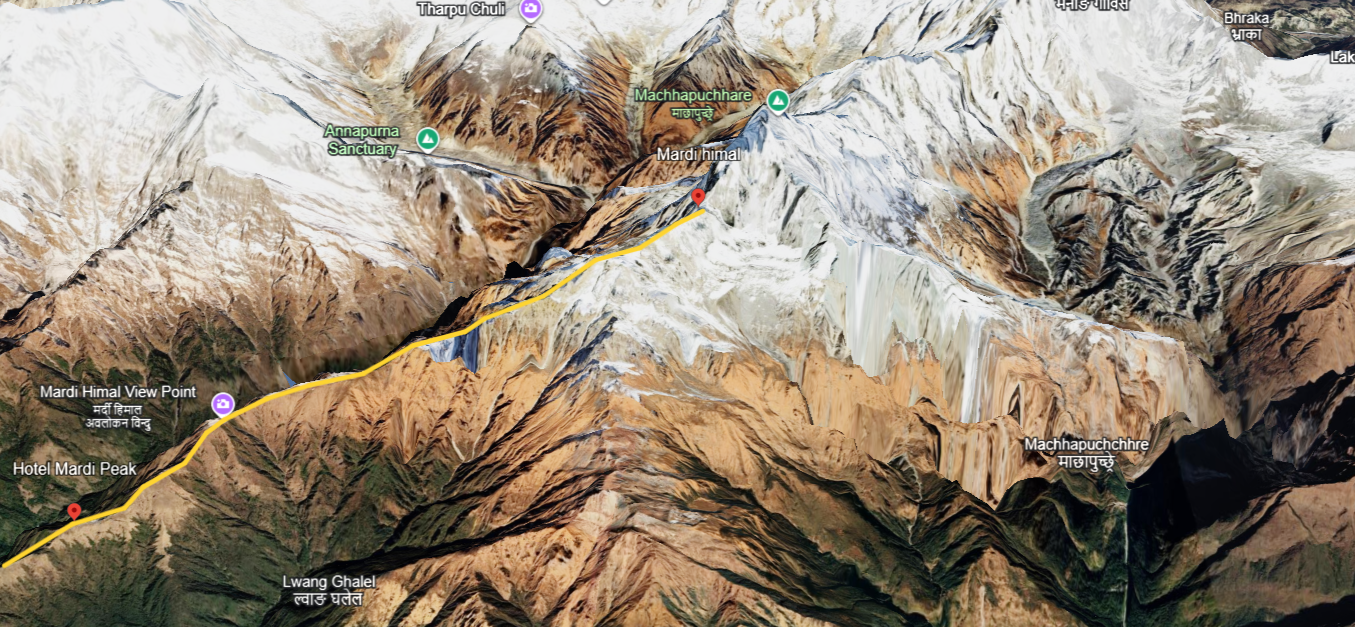
In the early morning, after breakfast, we drive from our hotel in Pokhara to Dhampus. The journey takes approximately one hour, covering about 20 kilometers to Dhampus Phedi. Depending on the road conditions, we may continue driving to Dhampus village, where our trekking adventure begins.
From Dhampus, we start our walk toward Pothana (1,950 meters). The trail gradually ascends through serene surroundings and takes around 1.5 to 2 hours. Once we reach Pothana, we stop at the local checkpoint to register and check our trekking permits.
Next, we continue toward Deurali (2,100 meters) along quiet forest trails. From Deurali, we follow the path marked for Forest Camp, entering a shaded forest. The trail runs along the ridge through dense vegetation, featuring some ups and downs along the way. After a short steep section and a steady climb, we make our way to Forest Camp (2,600 meters).
After arriving at Forest Camp, we check into a basic teahouse, enjoy a warm meal, and rest for the night, surrounded by the tranquil forest.
After breakfast, we leave Forest Camp and begin our ascent through the dense forest. The trail climbs gradually through rhododendron and oak trees for about 1 to 1.5 hours until we reach Rest Camp, a small teahouse where we can take a short break.
From Rest Camp, we continue ascending for another 1.5 to 2 hours towards Low Camp (2,990 m / 9,809 ft). Here, we can enjoy a quick tea or lunch break while taking in the stunning mountain scenery.
As we leave Low Camp, the landscape begins to change; the forest becomes thinner, and the trail opens up onto a wide ridge. We hike for another 2 to 3 hours, passing Badal Danda (3,210 m / 10,531 ft) along the way. With each step we gain elevation, the views of Machhapuchhre (Fishtail), Annapurna South, and the surrounding mountains become increasingly breathtaking.
Finally, we continue along the open ridge until we reach High Camp (3,580 m / 11,745 ft). Upon arriving at High Camp, we check into the teahouse and spend the night here.
We wake up early in the morning and have breakfast before starting our journey from High Camp(11,745 feet). The trail initially follows the open ridge toward the upper viewpoint. As we climb higher, the landscape becomes more rugged, with rocky terrain, alpine meadows, and stunning views of Machhapuchhre (Fishtail), Annapurna South, and Hiunchuli.
We continue along the ridge toward Mardi Himal Base Camp, located at approximately 4,500 meters (14,764 feet). The trail becomes more challenging as we gain altitude, and the weather can be cold and windy. Depending on the season and trail conditions, we may encounter snow and ice along the route.
After about 3 to 4 hours of walking, we reach Mardi Himal Base Camp, which marks the beginning of the climbing segment of our expedition. From Base Camp, you can enjoy impressive views of the surrounding Himalayan peaks and the slopes of Mardi Himal.
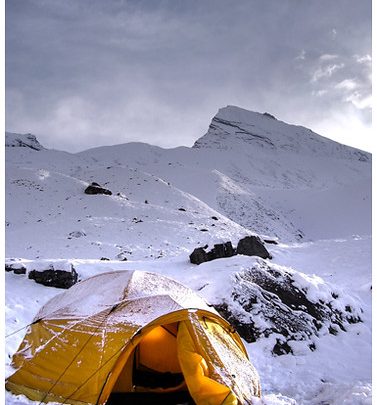
Our climbing team will set up tents at Base Camp, where we will spend the night. We will dedicate the following days to acclimatization and climbing training in preparation for our summit attempt.
Today is dedicated to acclimatization and climbing training at Mardi Himal Base Camp. In the morning, we take a short acclimatization hike around the Base Camp area. This activity keeps us active while allowing our bodies more time to adjust to the altitude.
In the afternoon, our climbing guides conduct hands-on training at Base Camp. You will learn how to use essential climbing equipment, including crampons, an ice axe, a harness, and climbing ropes. The guides will also demonstrate basic rope techniques and safe movements on snow-covered slopes. This training helps familiarize you with the equipment and techniques needed for the upcoming summit attempt.
After our training session, we will return to camp, have dinner, and rest for the night as we prepare for the summit push.
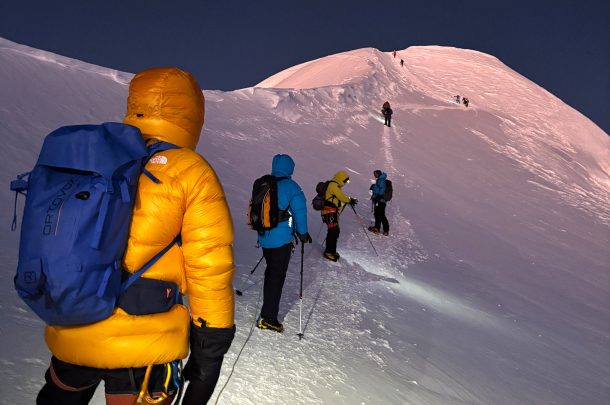
We wake up around 2:00–3:00 AM and prepare for the summit push. After a light breakfast and final equipment check, we begin climbing from Mardi Himal Base Camp (4,500m / 14,764ft) under the guidance of our experienced climbing team.
The trail climbs through rocky and snowy terrain toward the summit. As we gain altitude, the air becomes thinner and the temperature drops. We use crampons, harnesses, ice axe, and ropes where required. Our guides lead the route and provide support throughout the climb.
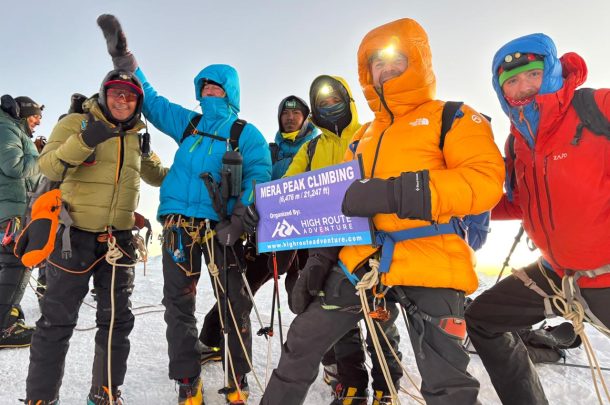
After several hours, we reach the summit of Mardi Himal (5,587m / 18,330ft). We take a short break to enjoy the breathtaking Himalayan panorama and capture memorable photographs before beginning our descent.
We descend carefully back to Base Camp and take a short rest before continuing toward High Camp and Badal Danda (3,210m / 10,531ft). After reaching Badal Danda, we check into a teahouse, enjoy a warm meal, and rest after this rewarding summit day.
After breakfast at Badal Danda (3,250m), we begin our descent toward Siding Village. The trail follows the ridge before gradually entering a beautiful rhododendron and oak forest. We continue downhill through peaceful surroundings, passing grazing areas and small seasonal huts along the way.
After around 3–4 hours of walking, we reach Siding Village (1,700m), a quiet Gurung settlement. We enjoy a local lunch and take a short rest before continuing by jeep.
In the afternoon, we drive from Siding to Lumre along a rough mountain road. From Lumre, we continue on a smoother road toward Pokhara. After around 2–3 hours of driving, we arrive in Pokhara and check into our hotel, marking the end of our Mardi Himal Peak Climbing adventure.
Early in the morning, we wake up and have breakfast at the hotel. We then take a private vehicle to the tourist bus station and board our bus to Kathmandu.
The scenic drive takes around 8–9 hours, following winding roads through the hills and valleys of central Nepal. After arriving at Gongabu Bus Station in Kathmandu, we transfer to our hotel or continue to your next destination.
Early in the morning, we wake up and have breakfast at the hotel. We then take a private vehicle to the tourist bus station and board our bus to Kathmandu.
The scenic drive takes around 8–9 hours, following winding roads through the hills and valleys of central Nepal. After arriving at Gongabu Bus Station in Kathmandu, we transfer to our hotel. This marks the end of our Mardi Himal Peak Climbing adventure.
Collaborate with our specialists to create a unique itinerary.
Difficulty Level: Moderately Difficult (PD to AD, according to the French Alpine climbing grading system)
Here are the key factors that make this peak climbing difficult:
Spring (March to May) and autumn (September to November) are generally the best seasons for Mardi Himal Peak Climbing. In spring, the climbing season begins, and more climbers can be seen on the trekking trails. The weather is generally favorable, with clearer skies and better conditions for the summit push. Day time temperature remains perfect for trekking, and nights are often cold at higher elevations. The stable weather conditions allows the excellent views of Mardi Himal, Machhapuchhre, Annapurna South, Hiunchuli, and the surrounding peaks.
Similarly, autumn is famous for its clear skies, excellent visibility, and spectacular views of the Himalayan peaks. Unlike spring, when clouds can sometimes develop in the afternoon, autumn generally offers more stable and clearer conditions throughout the day. These stable conditions create better opportunities for the successful summit push.
Altitude sickness can affect anyone, even people who are physically fit as you climb above 3,000 meters. Therefore, being aware of the symptoms and responding to them early is important. To prevent from altitude sickness:
Here is a comprehensive packing list for Mardi Himal Peak Climbing:
Trekking T-shirts, long-sleeve shirts, trekking trousers, thermal innerwear, fleece jacket, down jacket, waterproof and windproof jacket, waterproof trousers, warm hat, sun hat, lightweight gloves, warm climbing gloves, woolen socks, trekking socks, gaiters
Trekking shoes, waterproof trekking boots, climbing boots suitable for snow and ice
Climbing harness, climbing helmet, crampons, ice axe, carabiners, ascender, descender, climbing ropes, other essential technical equipment as advised by your climbing guide
Backpack, duffle bag, sleeping bag, trekking poles, headlamp with extra batteries, sunglasses, water bottles or hydration bladder, water purification tablets or filter, power bank
Sunscreen, lip balm, personal toiletries, quick-drying towel, first-aid kit, personal medications, Diamox if prescribed by your doctor, energy bars or snacks, phone, charging cables, universal travel adapter, camera
Passport, passport-size photos, travel insurance documents, Nepalese cash, emergency contact details