

I’ve trekked in the Andes and the Alps, but nothing compares to standing at Everest Base Camp. The helicopter flight back was smooth and offered jaw-dropping views. Highly recommend this combo for time-efficient adventurers

Starting from
per person (in USD)
The Everest Base Camp Trek with Helicopter Return is one of Nepal’s most exciting and smartest ways to experience the Himalayas. You will enjoy the classic Everest Base Camp trek on the way up and return with a breathtaking helicopter flight above the Khumbu Glacier and the Himalayan mountains. Passing through Sherpa villages, walking in the footsteps of legendary Edmund Hillary, you will stand at Everest Base Camp (5,364 meters) and hike to Kala Patthar (5,545m) for the closest, most jaw-dropping panorama of Mt. Everest.
Then, instead of spending 2 more days retracing your steps downhill, you will skip this long, tiring, and exhausting part. The helicopter will lift you from Gorakshep, taking you back down to the Lukla airport within a few hours with a breathtaking aerial view of glaciers, the Khumbu Icefall, and the entire Khumbu valley spread out beneath you.
This 12-day Everest Trek with Helicopter Return combines the physical achievement of trekking with the thrill of a Himalayan helicopter flight. If you have 12 days of vacation, a basic level of fitness, and dream of reaching the base of the world’s highest mountain, this trek is for you.
No matter whether you want to do a solo trek, trek with friends and family, or as a couple, we offer both private and group treks. Our EBC Trek with Helicopter Return itinerary is crafted so you won’t miss a single highlight on the way up. This trek gives you everything the classic 14-day Everest Base Camp Trek offers, minus the long walk back down.
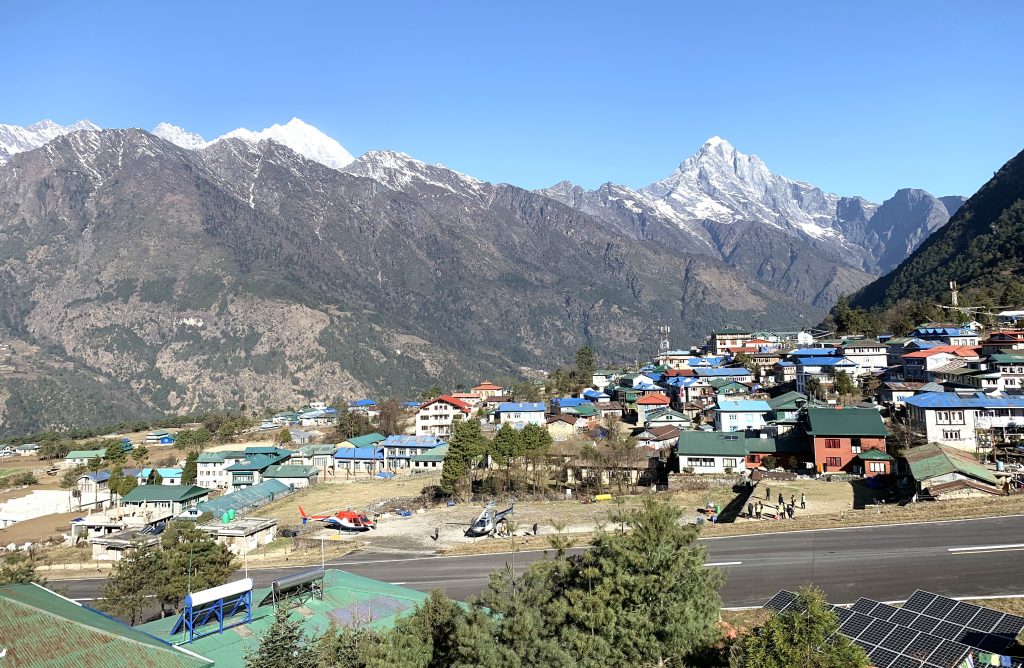
Our 12-day Everest Base Camp trek with helicopter return journey starts with a scenic flight to Lukla Tenzing Hillary Airport. Our driver will pick you up from the hotel doorstep and transfer you to the domestic terminal early in the morning for the Lukla flight. Enjoying the 30-minute scenic flight, you will land at Tenzing-Hillary Airport, situated at an altitude of 2,860 meters. The landing itself is an adventure, perched on a high cliff overlooking the valley below, providing spectacular views right from takeoff.
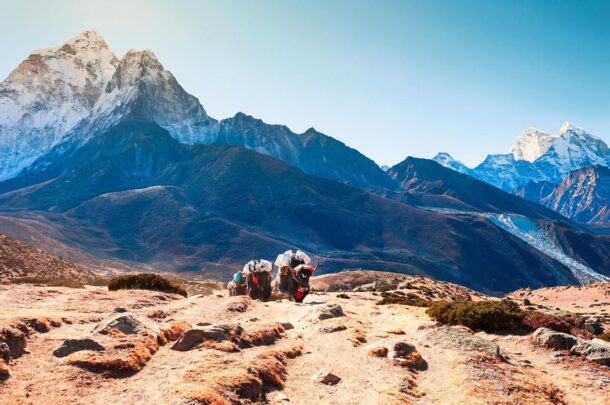
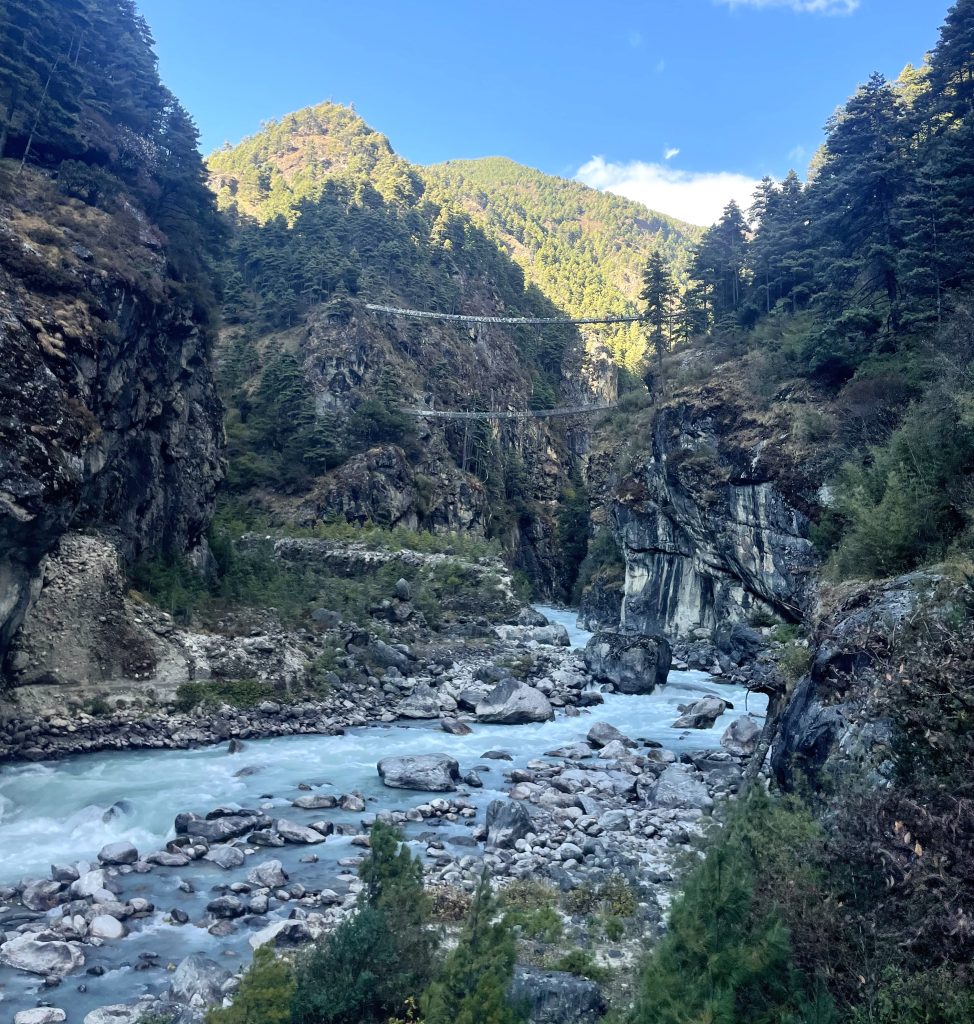
From Lukla, accompanied by your experienced trekking guide and porter, you will start trekking on the Everest Base Camp trails. Passing through traditional Sherpa villages, crossing the iconic Hillary Suspension Bridge over the Dudh Koshi River, and enjoying beautiful mountain scenery, you will enter the heart of Sagarmatha National Park.
Every day you will hike through a stunning Himalayan landscape surrounded by rhododendron forests, glaciers, and alpine valleys. At the end of the day, you will stay in a teahouse to relax and enjoy the warm hospitality of the Sherpa people.
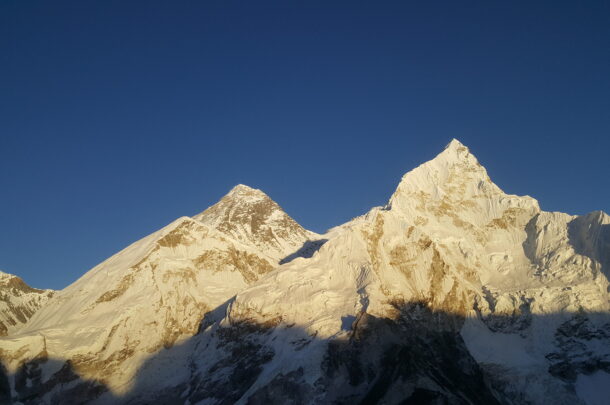
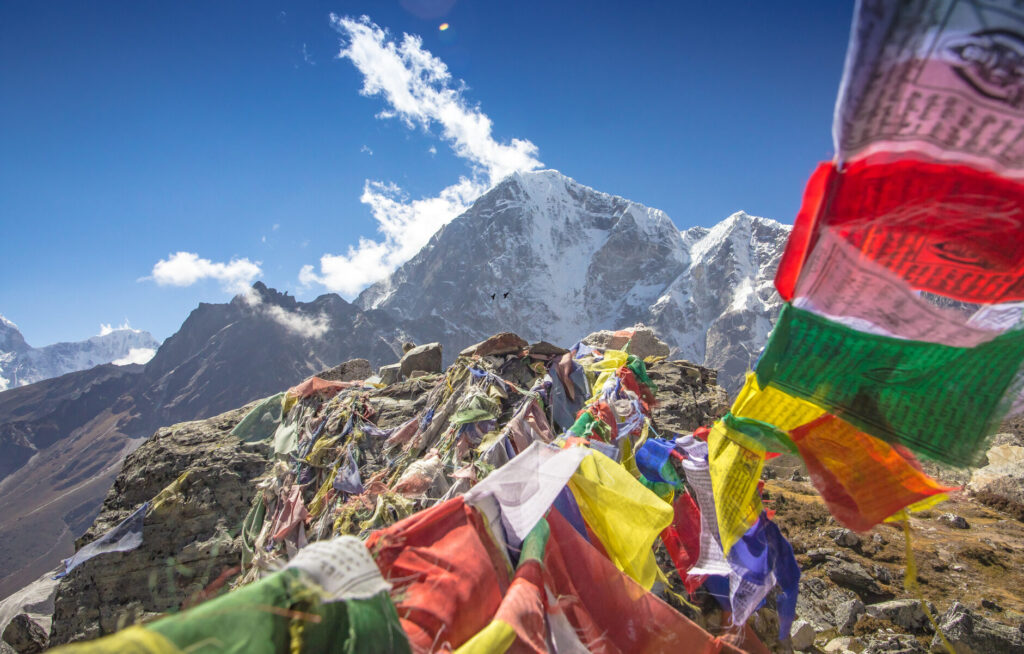
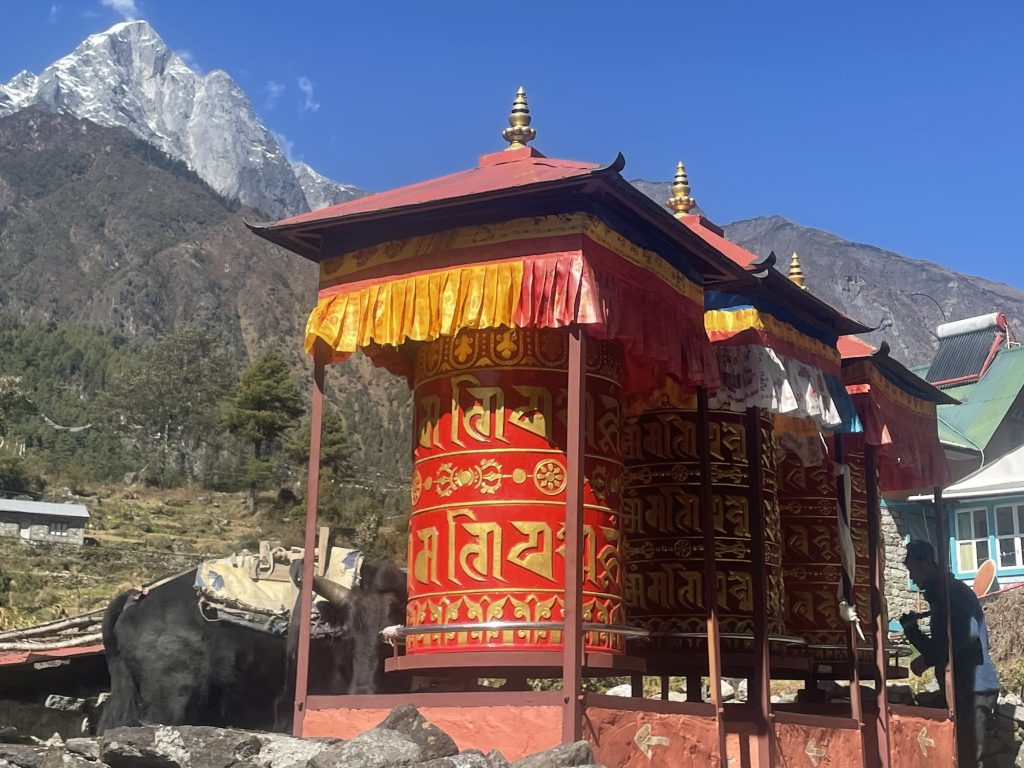
Exploring mani walls, prayer flags, and Buddhist monasteries – including the famous Tengboche Monastery – is a cultural highlight of this trek. The journey also offers panoramic views of Mount Everest and surrounding giants like Ama Dablam (6,812m), Lhotse (8,516m), Nuptse (7,861m), Pumori (7,161m), Thamserku (6,623m), Kangtega (6,782m), Makalu (8,485m), and Cho Oyu (8,188m).
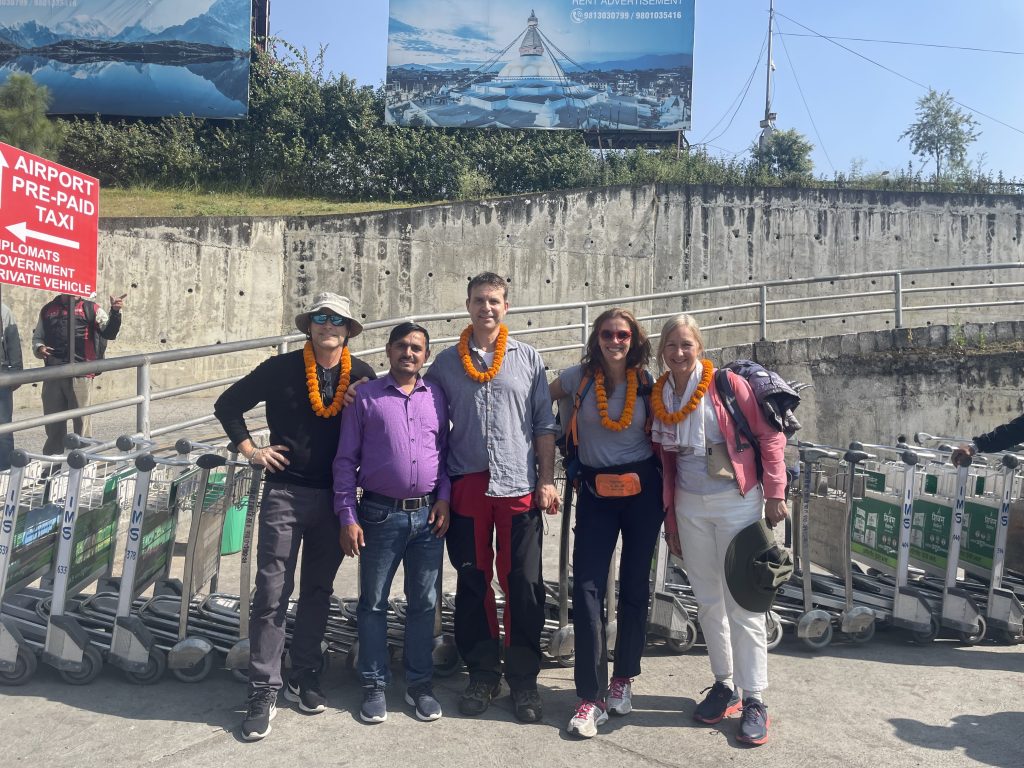
➡ Full-Day Guided Trek: High Route Adventure will provide you with expert local certified guides and porters who know every footstep of the EBC trail, ensuring safety, cultural insight, and a stress-free experience.
➡ Helicopter Return: A 25-minute flight from Gorakshep back to Lukla will save your precious time and energy. This thrilling heli ride also adds a touch of luxury and unforgettable aerial views to your Himalayan adventure.
➡ All-Inclusive: From the Lukla flight and permits to comfortable sleeping arrangements, daily nutritious meals, and a return heli flight ticket — all are covered in the EBC Trek with Heli Return package.
➡ Small-Group Atmosphere: We keep our groups small, so you can enjoy a more personal experience, move at a comfortable pace, and build great connections with your fellow trekkers.
➡ Eco-Responsible Travel: Our team strictly follows sustainable tourism practices and the “Leave No Trace” policy to help protect and preserve the natural beauty of the Everest region.
➡ Comprehensive Support: We provide a 24-hour emergency hotline, insurance assistance, pre-trek fitness coaching, and a dedicated trek manager back in Kathmandu.
➡ 100% Fixed Departure at an Affordable Cost: All costs are clearly listed on our website with no hidden charges — we guarantee fixed departures without compromising on quality.
➡ Additional Benefits: We provide a duffel bag, sleeping bag, and down jacket to make your Everest Base Camp trek comfortable and enjoyable. These items must be returned after the trek is completed.

Namche Bazaar is a vibrant town nestled on a cliffside amphitheater. It offers spectacular mountain views and serves as a cultural hub for the Sherpa community. Historically, it was a key trading center connecting highland and lowland merchants. Known as the “Gateway to Everest,” Namche is a lively town rich in Sherpa culture, art, and tradition.
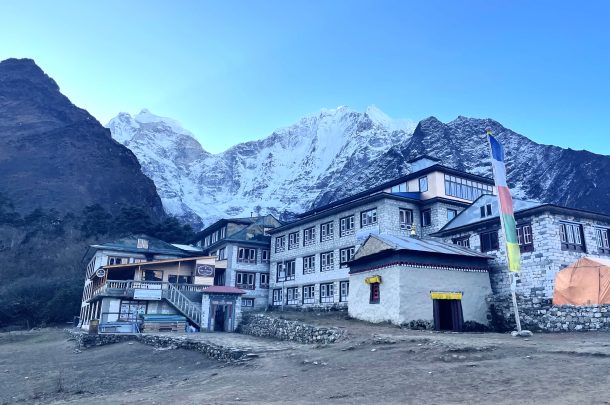
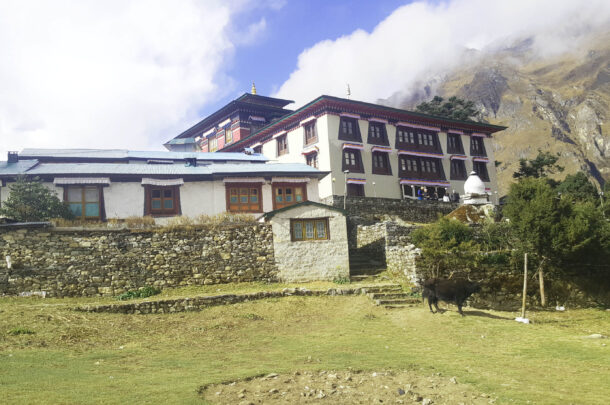
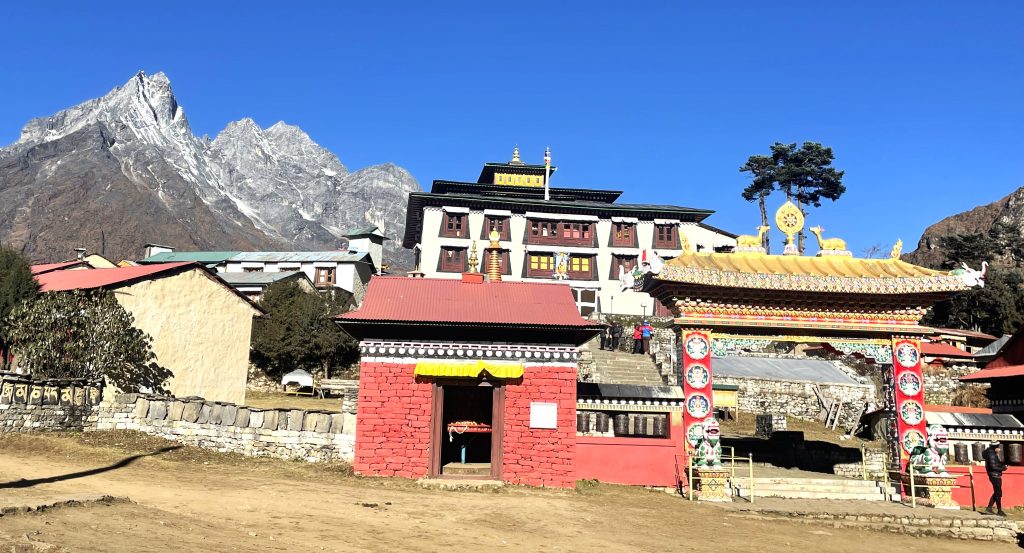
Located in Tengboche village, the Tengboche Monastery is one of the largest Buddhist monasteries in the Everest region. Perched near the meeting point of the Imja Khola and Dudh Koshi Rivers at an altitude of 3,867 meters, it offers breathtaking views of iconic peaks such as Ama Dablam, Lhotse, Nuptse, and Thamserku.
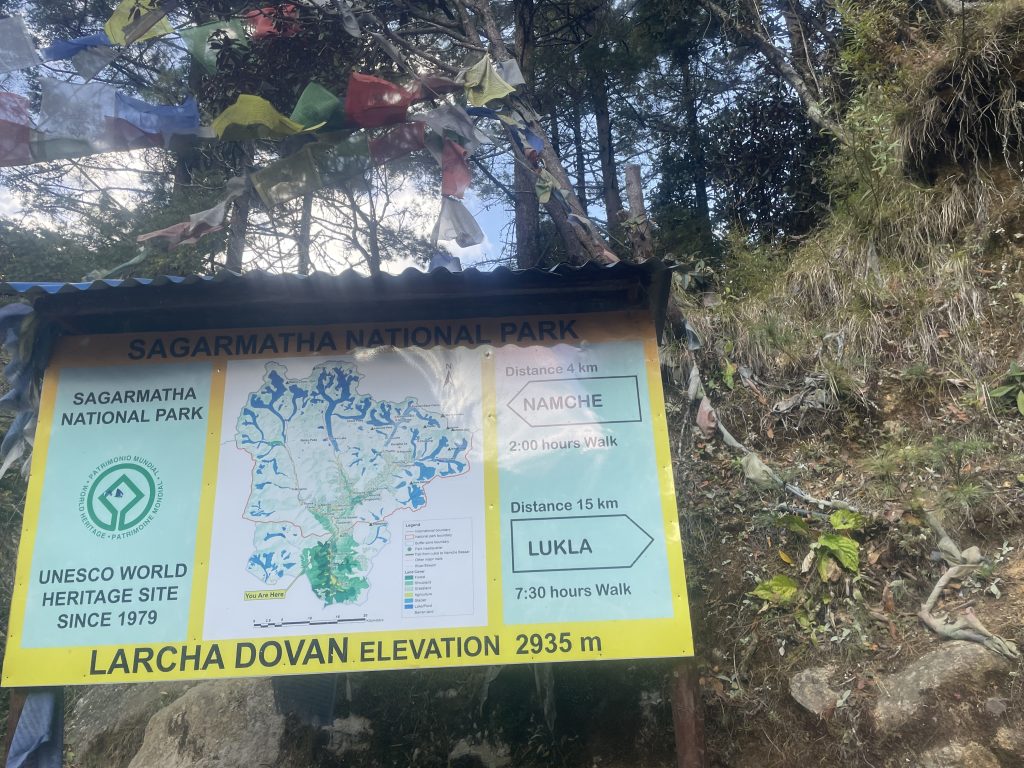
Your trek also takes you through Sagarmatha National Park, a UNESCO World Heritage Site known for its stunning alpine forests, rhododendron groves, and diverse wildlife. It is home to 28 mammal species and over 200 bird species, including over 1,000 floral species. The park’s natural beauty enhances your journey, giving you a glimpse into Nepal’s rich biodiversity alongside the awe-inspiring mountain scenery.
The EBC trek is an excellent chance to immerse yourself in Sherpa culture and understand their mountain lifestyle. The Khumbu region is the ancestral home of the Sherpa people, known for their warm hospitality and unique traditions. You’ll witness their Buddhist practices, colorful festivals, traditional dress, and daily life, enriching your Himalayan experience.
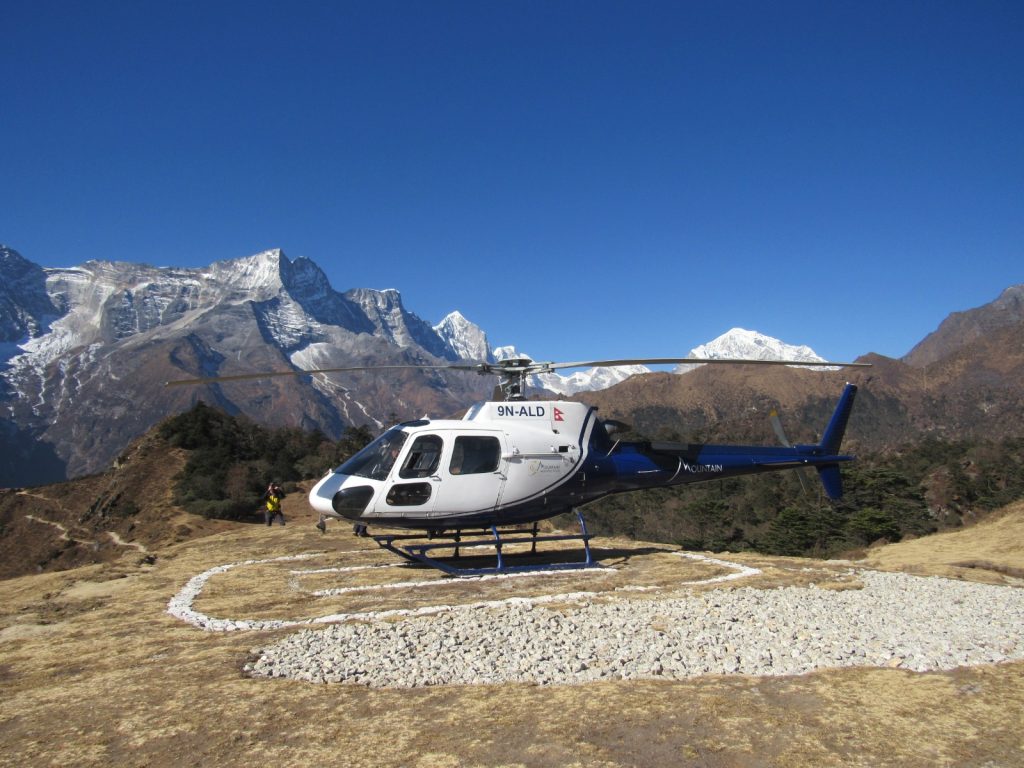
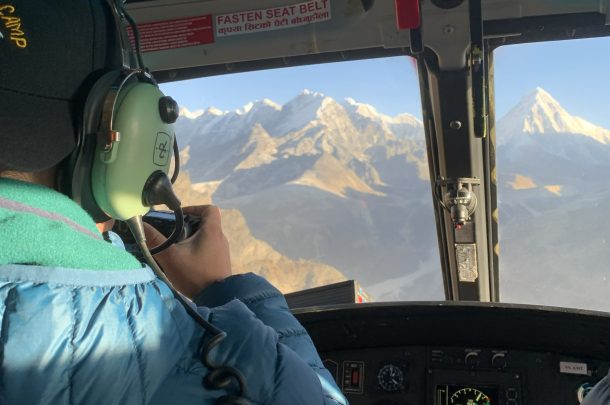
After reaching Everest Base Camp and visiting the famous Kala Patthar viewpoint, you will conclude your journey by taking a helicopter flight back to Lukla. From a helicopter window seat, you will enjoy a rare bird’s-eye view of the mountains, lush valleys, and terraced farms below. This helicopter flight provides an extraordinary perspective of Nepal’s diverse landscape, changing from snowy peaks to green pastures.
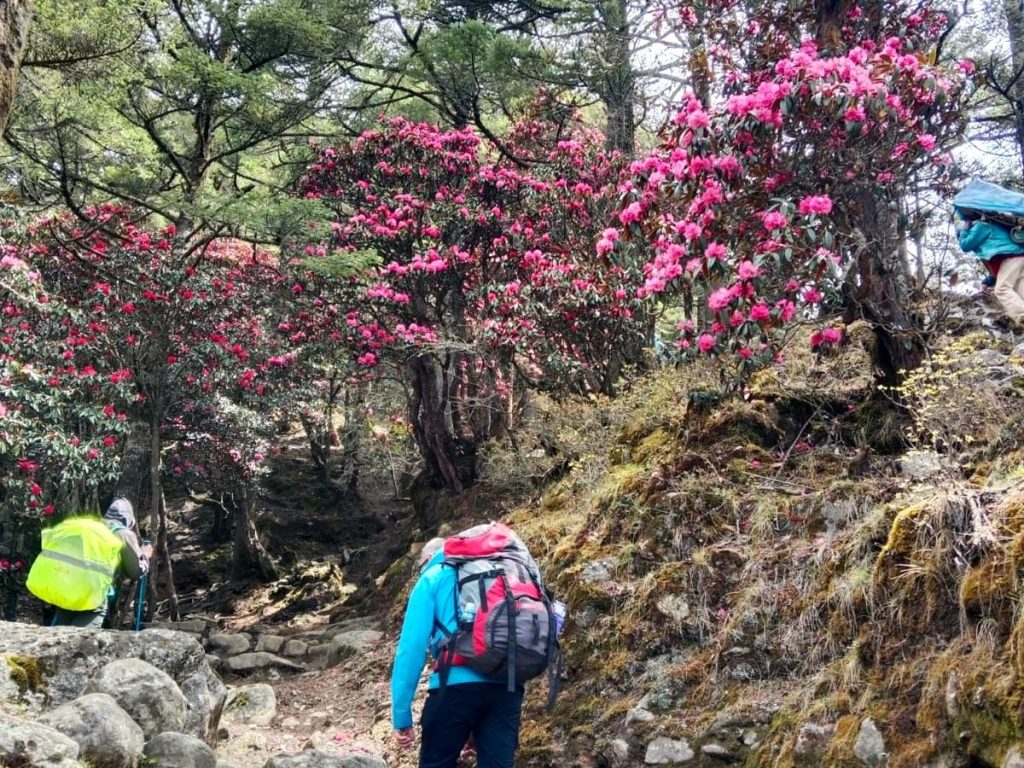
The Everest Base Camp Trek Helicopter Return adventure can be undertaken year-round, depending on your available time and travel preferences. However, the most favorable seasons to visit the Everest region are spring (March to May) and autumn (September to early December), which offer clear skies, comfortable temperatures, and stunning mountain views.
Spring is a top trekking season due to pleasant daytime temperatures and the spectacular bloom of rhododendrons, especially on trails between Namche Bazaar and Tengboche. Mornings and nights can be cold, particularly at higher altitudes, but the clear skies and colorful landscapes make it ideal for trekking. Snowfall can occasionally occur even during this season.
Autumn is the most popular trekking season with crisp air, clear blue skies, and breathtaking views of snow-capped peaks. Although mornings and nights are colder with shorter daylight hours, the weather remains stable. Some snowfall may occur, adding to the scenic beauty of the region.
Winter is the low season with fewer trekkers. While the days are mostly clear, temperatures drop significantly, especially at night. This season is suitable for trekkers seeking solitude and who are well-prepared for cold weather conditions.
Monsoon brings heavy rainfall to the lower Khumbu region, along with the risk of leeches on the lower trails and increased chances of flight delays to and from Lukla. Trails can be muddy, and mountain views are often obscured by clouds. This season is generally not recommended for trekkers seeking clear mountain views, though it remains technically possible for those with flexible schedules.
Our 12-day Everest Base Camp Trek with Helicopter Return starts from USD 1,990 per person. We also offer special group discounts for trekkers traveling together. The larger your group size, the more discount you can enjoy. Below are the Kathmandu to Everest Base Camp Trek with Helicopter Return prices for 2026 and 2027 based on group size.
| Group Size | Price per Person (USD) |
| 1 Person (Solo) | $ 3,429 |
| 2 Person | $ 2,170 |
| 3 – 4 Person | $ 2,065 |
| 5+ Person | 1,990 |
You may arrive in Kathmandu at any time. Upon your arrival, you will be welcomed by one of our representatives. Our representative will help you get a transfer to the hotel. After a quick rest, attend a pre-trek brief and meet your trekking Guide. Get your answers for queries regarding the trek if you have. Check your trekking gear; if you have forgotten any item, you can buy or rent it from a trekking gear shop in Thamel. Tomorrow you will catch an early morning flight to Lukla, so be prepared for the early morning drive. Overnight in Kathmandu.
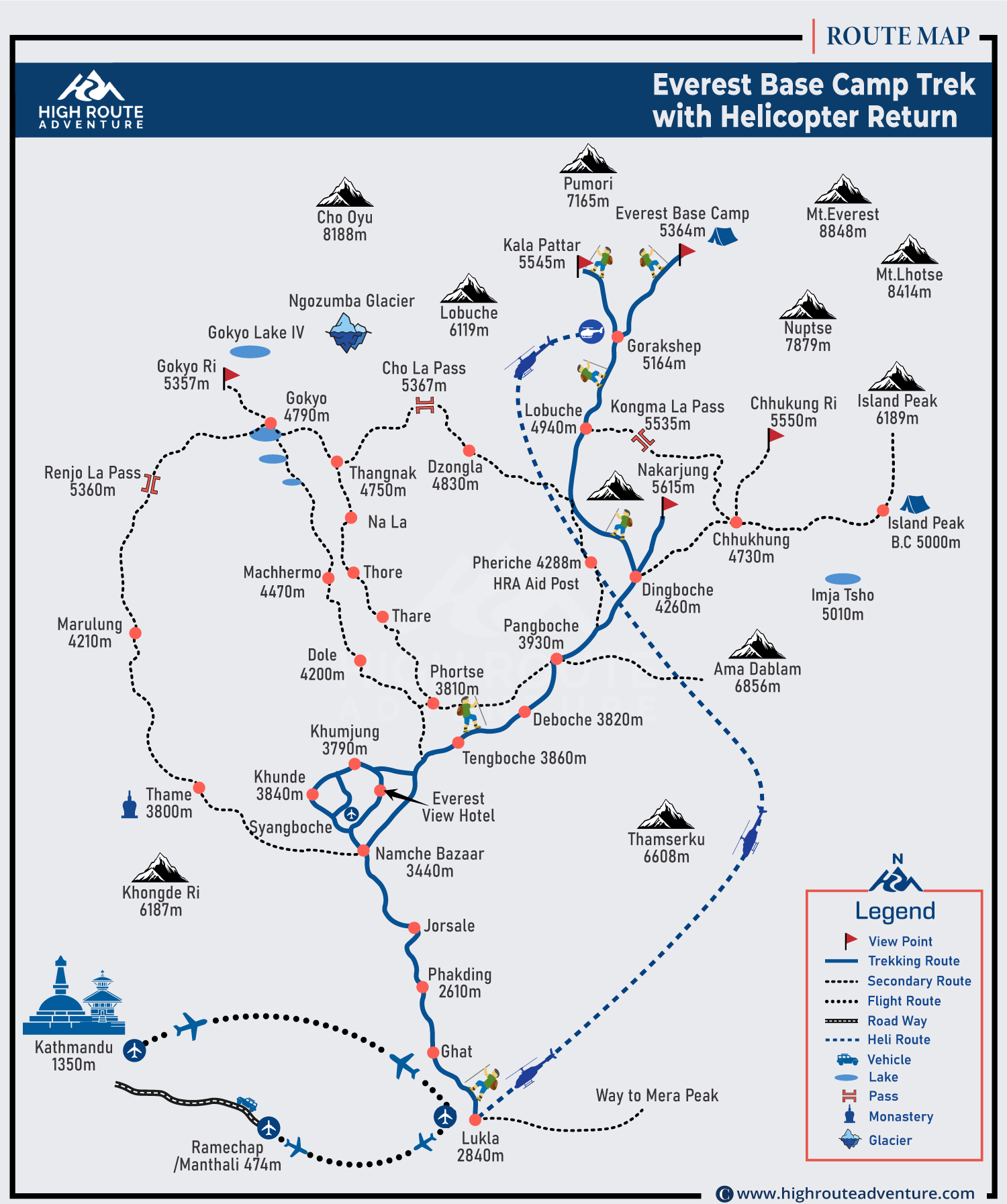
You will be transferred to the airport early in the morning for your Lukla flight. The short flight is quite thrilling as you will get your first views of the mountain peaks. Upon landing at Lukla, you will then have a short trek to Phakding, one of the famous overnight stops for trekkers doing the Everest base camp trek. Overnights stay at the teahouse at Phakding.
Leaving Phakding behind, you will be entering the Sagarmatha National Park at Monjo and then trekking through the park's woodlands and eventual hills towards Namche Bazaar. The trek is relatively flat and easy with occasional up-and-down-hill trekking and crossing of the Dudh Koshi River via suspension bridges at various intervals. The trek is also filled with views of the peaks like the Kusum Kanguru and the Kongdi RI. From Namche, you will get your first proper view of Mount Everest and many of its neighboring peaks. Overnights stay at the guesthouse in Namche.
This day is reserved for acclimatization. Today, you can have a visit to Namche's Everest Photo Gallery as well as the town's Sherpa Culture Museum. If you want, you can also make your way towards the Syangboche Airstrip, which is located above the ridge at Namche. From Syangboche, you can get good views of Ama Dablam, Lhotse, Nuptse, Thamserku, the Kongdi RI, and many others, as well as a snow-globe view of the town itself, which looks quite pretty with colorful tin-roof houses laid out on a terrace on the cliffside. You can also visit the Everest View Hotel, located a few kilometers from the town, which presents breathtaking views of the peaks. The Hotel is also listed in the Guinness Book of World Records as the highest-located Hotel in the world. Overnights stay at the guesthouse in Namche.
Following the Dudh Koshi River, you will leave Namche and trek through the pastures and the pine woods down the valley to come to the raging Imja Khola. The path leads you through many smaller settlements, as you wind your way on the path that rounds several ravines and high ridgelines with the river flowing below. Finally, you will reach Tengboche, home of the Tengboche Monastery, from where breath-taking views of the Ama Dablam peak are seen remarkably, surrounded by rhododendron woodlands and the chirping of Himalayan birds. Overnights stay at the guesthouse at Tengboche.
You will be steadily gaining altitude today. Passing by many small chortens, you will follow the trekking path down the Imja valley towards the Dingboche village, also known as the "summer valley" of the Khumbu. The village has a 1 kilometer-long wall that is built to protect the village crops from the sweeping Himalayan winds that flow down the mountains. It is a beautiful journey filled with alpine woods and Himalayan ambiance. Overnights stay at the guesthouse at Dingboche.
This is another day reserved for acclimatization. You can spend the day relaxing at the village, or you can also choose to hike to Nagarjun hill (also known as Nangkartshang Peak), situated at an altitude of approximately 5,083m meters. A round-trip hike to Nagarjun Hill (Nangkartshang Peak) from Dingboche takes around 3 to 5 hours. It is a steep and challenging acclimatization hike, taking about 2–3 hours to reach the 5,083m summit and 1–2 hours to descend back to Dingboche (4,410m). From this hill, you can enjoy the panoramic view of surrounding peaks like Ama Dablam, Makalu, Lhotse, and Thamserku.
The trekking trail now leaves the foothills and climbs upwards to a more Himalayan landscape where snow covers the terrain. As you leave behind the woodlands, you can notice the chilly environ and its lack of bright green foliage. Instead, the landscape is snowier here and vast fields of snowy plains cover the line of sight as far as the eye can see. The horizon is also decorated with Himalayan views, except this time, the sight isn't obscured by woods. Finally, you will reach Lobuche, a village situated between the mountains named after the village- the Lobuche Peaks. Overnights stay at the guesthouse at Lobuche.
From Lobuche, you will steadily make your way to Gorakshep today, one of the last stops before the base camp. Gorakshep is a sparse village with not many lodges. It was the original site of the Everest base camp before it was moved further up. From Gorakshep, you will follow the Khumbu Glacier moraine towards the base camp, where you can get good views of the Khumbu Icefall and the Khumbu Glacier. The base camp is where the Everest expedition begins. After taking in the views at the base camp, you will then return to Gorakshep. Overnights stay at the guesthouse at Gorakshep.
Today is an exciting day of the trip! Early in the morning, before dawn, you will make your way to Kala Patthar, one of the best vantage points in the region. It presents panoramic views of the entire Mount Everest massif. As the sun rises, you can catch the first glimmer of shimmering tincture of the mountains as they shine under the sun's rays in the crack of dawn. It is a breathtaking sight, indescribable in words. After enjoying your Himalayan sights from Kala Patthar, you will then return to the Gorakshep village. From here, you will take a helicopter ride back to Lukla Airport, enjoying the same Himalayan views you experienced on the ground, but this time from the air. The sweeping Himalayan landscapes of the Khumbu pass beneath you like a moving canvas of paintings. After you land at Lukla airport, you will check in tea house and stay overnight.
Optional Upgrade: A private helicopter can be arranged from Gorakshep directly to Kathmandu to skip the Lukla flight. Additional charges apply. To know more in detail, contact our tour operator directly.
Today you will leave the Everest region and, for the last time, take in the breathtaking Himalayan views as you fly from Lukla back to Kathmandu. Upon arrival, you will be transferred to your hotel to relax and reflect on your unforgettable journey.
Note: If your flight is from Lukla airport to Ramechhap Manthali airport we will arrange the private vehicle for you. The ride duration will be around 4 to 6 hours.
Approximately three hours before your scheduled fight, you will be dropped off at the airport for your departure.
Collaborate with our specialists to create a unique itinerary.
Transportation Service:
Accommodation Services:
Meals & Drinking Water:
Flight Services:
Permit Service:
Guide and Staff Service:
Other Services:
To participate in this 12-day Everest base camp trek with a helicopter return, all our travellers need to obtain a Nepal visa to enter Nepal. You can obtain the visa from your home country or after you land here at Tribhuvan International Airport(TIA). You can take 15 Days short tourist visa if you want, just to explore the Everest Region. If you have an extended vacation and plan to visit other parts of Nepal, such as Pokhara, Lumbini, and Chitwan, we can request to obtain the 30-day tourist visa. The cost of the visa depends on the number of days you spend here in Nepal.
Documents required to obtain the Nepal Tourist Visa
Read more: Nepal Country Information
After arriving at the airport, we recommend purchasing a local SIM card (Ncell or NTC). This will make it easier to communicate with our team and stay in touch with family or friends back home. You can also use this SIM during your Everest Base Camp trek as an alternative to Wi-Fi, as both Ncell and NTC provide good coverage in lower Everest region.
Using a drone inside Sagarmatha National Park during the EBC trek requires a special permit. Flying a drone without this permit is illegal and may result in legal consequences and a hefty fine under Nepal's government regulations. Make sure to obtain all necessary drone permits and carry copies with you if you plan to fly during your EBC trek. The permit typically takes around 1 month to process. If needed, we can handle this permit on your behalf. For more details on cost and the application process, please contact our tour operator directly. Read more: Drone Permit
Carrying the local currency will be a great idea as there is limit ATM facilities in the Everest Region. So before taking a Lukla flight, we recommend you carry around NPR local cash 20,000 for personal use, such as buying snacks, extra expenses like hot showers, charging, tips, etc. You can change your foreign currency at the Tribhuvan International Airport or at the foreign exchange centre in Thamel. Read more: Money Exchange
The overall difficulty level of the Everest Base Camp trek is moderate to hard. However, the actual difficulty depends on how well you prepare in advance before starting your trip. You will be trekking at high altitude in the Everest region for approximately 9 days. The main challenges you might face during the trek include high altitude, physical fatigue from 5–6 hours of daily trekking, and unpredictable weather changes. The maximum altitude you will reach is Kala Patthar, which stands at 5,545 m. While hiking at such high altitude, some trekkers may experience headaches, vomiting, and tiredness. These are early signs of Acute Mountain Sickness (AMS), which can usually be relieved by resting and descending to a lower altitude. If these AMS symptoms are ignored, they can progress to HACE and HAPE, the more advanced and dangerous forms of altitude sickness.
Here are some expert tips to help you prepare for the EBC trek:
Worth reading: A Complete Travel Guide of the Everest Base Camp Trek
During your Everest Base Camp trek, you will enjoy a variety of Nepali dishes along with a few international options at the teahouses. You can choose vegetarian or non-vegetarian meals from the teahouse menu. Three meals — breakfast, lunch, and dinner — will be provided during the trek. If you have any dietary considerations, please let us know at the time of booking. The food provided will be healthy and nutritious. Here are the common meals you can expect from the teahouse menu:
Note: Drinks, snacks, and bakery items are not included in the package - these will be at your own expense.
During the EBC trek, High Route Adventure will arrange the best available teahouses with clean rooms. Rooms typically have twin beds, with bathrooms usually shared among trekkers. Toilets are basic squat-style with running water, but no extra amenities are provided, so it's best to carry essential items like toilet paper and hand sanitizer to maintain good hygiene during the trek. Meals are eaten in a communal dining area, where trekkers gather together. Even though the teahouses are simple, they offer a warm and comfortable place to rest, experience local Sherpa hospitality, and prepare for the next day's trek.
Other facilities such as Wi-Fi, charging, and hot showers are available during the Everest Base Camp trek. However, trekkers need to pay an additional fee to use these services.
Acclimatization is crucial on the Everest Base Camp Trek with Helicopter Return, as this trek takes you to a maximum altitude of 5,545 m at Kala Patthar. Above 3,000 meters, trekkers can experience symptoms of Acute Mountain Sickness (AMS), such as headache, nausea, and fatigue. Mild AMS symptoms are often managed by resting, staying hydrated, avoiding further ascent, and consuming warm fluids such as soup. However, if symptoms worsen or fail to improve with rest, the safest action is to stop ascending immediately and descend to a lower altitude. Seek immediate helicopter evacuation if severe symptoms appear, such as persistent vomiting, difficulty breathing at rest, confusion, loss of coordination, or a worsening headache despite rest and descent. In such cases, a helicopter rescue will be arranged to ensure prompt medical attention and treatment.
To reduce AMS risks:
Staying hydrated is essential, with at least 3-4 liters recommended daily. Safe drinking water is available from:
Permits are mandatory for trekking in the Everest region:
Note: Permit costs and arrangements are fully included in your package. We handle all the paperwork so you don't have to worry about it.
With the right insurance in place, you can relax and enjoy your journey, knowing you're covered for the unexpected. We recommend all our trekkers purchase insurance policy that covers:
Note: High Route Adventure does not sell travel insurance packages, but we can assist you in choosing and purchasing the right insurance coverage for your trek.
The Lukla flight is weather-dependent and operates only during safe weather conditions. Nepal's weather pattern is generally most stable during spring and autumn, with minimal rainfall and clearer skies during these months. Previously, there was a direct flight from Kathmandu to Lukla Airport, but due to heavy traffic and high demand, this route was discontinued. Now, as per the Civil Aviation Authority of Nepal, you need to depart from Ramechhap Manthali Airport to take a Lukla flight. Ramechhap Airport is just a 5–6 hour drive from Kathmandu by private vehicle. If your flight departs from Ramechhap, we will arrange the transportation accordingly. The Lukla flight also has strict luggage restrictions, so when packing, make sure your baggage meets the airline's weight and size limits to avoid any issues.
If your flight is from Ramechhap Airport, check this article: Ramechhap to Lukla Flight Details.
After completing the trek, High Route Adventure will arrange a shared helicopter flight from Gorakshep. A helicopter operating on this route can technically accommodate up to 5 passengers per flight. However, due to the extreme altitude of Gorakshep (5,164 meters) and thin air conditions, strict aviation weight limitations apply. If you're in a group of 2–3, a direct flight from Gorakshep to Lukla is possible; however, for larger groups, helicopters often operate multiple shuttle rotations to transport all trekkers efficiently. This system ensures maximum safety, stable lift performance, and smooth coordination in one of the world's highest and most challenging flying environments.
Helicopter flights in the Everest region are highly dependent on weather conditions. Even after arrangements are confirmed, flights from Gorakshep to Tenzing-Hillary Airport may be delayed, rescheduled, or cancelled due to sudden changes in wind, visibility, or cloud cover at high altitude. Safety is always the top priority, so helicopters operate only during safe weather conditions.
The biggest festival for the Sherpa people is the Mani Rimdu Festival, celebrated every year during the autumn season (October/November) according to the Tibetan lunar calendar. The full ritual cycle spans 19 days — around 16 days of private monastic preparation followed by 3 days of public celebration featuring vibrant masked dances, sacred ceremonies, and traditional rituals performed by Buddhist monks from the Sherpa community. Mani Rimdu is an important cultural and religious celebration held to honor Guru Rinpoche (Padmasambhava), who introduced Buddhism to the Himalayan region, and to symbolize the triumph of Buddhism over the ancient Bon religion.
During the public days, monks perform the Chham masked dances and create detailed sand mandalas that are believed to cleanse negative energies, bless the region, and provide spiritual empowerment (Wang) to local people and visitors. If your travel dates coincide with these three public days, you'll have a rare opportunity to witness the unique spiritual heritage, colorful traditions, and vibrant cultural lifestyle of the Sherpa community. The festival is celebrated at monasteries throughout the region, but the main public celebration takes place at Tengboche Monastery.
From the start of your journey to the end of the trek, you will be fully supported by experienced trekking professionals. We prioritize your safety and aim to provide a memorable and adventurous experience in the Everest region. We will provide you with:
This Everest Base Camp Trek with Helicopter Return packing guide will help you bring everything you need without overloading your bag. Packing smart is key to enjoying the trek!
The weather in the Himalayas can change fast. Layering your clothes is the best way to stay comfortable in warm, cold, windy, or snowy conditions.
Good footwear makes a huge difference on the trail. Make sure your boots are waterproof, high-ankle, and well broken-in before the trek.
Most lodges provide basic bedding, but carrying your own sleeping bag keeps you warm and clean.
Water and facilities can be limited, so bring what you need to stay fresh.
Prepare a basic medical kit to handle common issues on the trek.
Electricity is limited and sometimes costly, so pack only what you need.
Small gear can make trekking easier and more enjoyable.
Keep your essential papers safe and handy.
Starting from
per person (in USD)
Real experiences shared by trekkers and travelers who joined our trips.
I’ve trekked in the Andes and the Alps, but nothing compares to standing at Everest Base Camp. The helicopter flight back was smooth and offered jaw-dropping views. Highly recommend this combo for time-efficient adventurers
Did this trek after knee surgery—was told a full round-trip trek might be tough. The helicopter return was ideal! My guide adjusted the pace perfectly. Nepal’s hospitality and mountain majesty blew me away.
As a solo female trekker, I felt completely safe and well-supported. The teahouses were cozy, the food was delicious, and the helicopter ride back gave me aerial views I never imagined. Worth every rupee!
I was worried about the long descent, but the helicopter return made it so much better. The guides were extremely knowledgeable and kept us safe at high altitude. A once-in-a-lifetime experience in the heart of the Himalayas.
The EBC trek with helicopter return was a dream come true. The views from Kala Patthar were surreal, and flying back over Everest in a helicopter was an adrenaline rush I’ll never forget. Perfect blend of adventure and comfort
Bhumi was a fantastic trekking guide. He made the experience fun and enjoyable. Can’t wait to visit Nepal and hike again!