Short Langtang Valley Trek From Kathmandu - 7 Days

Trip Facts
Duration 7 Days
Max Altitude 4984m
Trip Grade Moderate
Best Season Spring/Autumn Season
Meals Breakfast, Lunch, & Dinner During the Trek
Accommodation Best available Teahouse During the Trek
Highlights

Short Langtang Valley Trek From Kathmandu Highlights

  • Enjoy stunning views of Ganesh Himal and the Trishuli River Valley during the drive from Kathmandu to Syabrubesi.
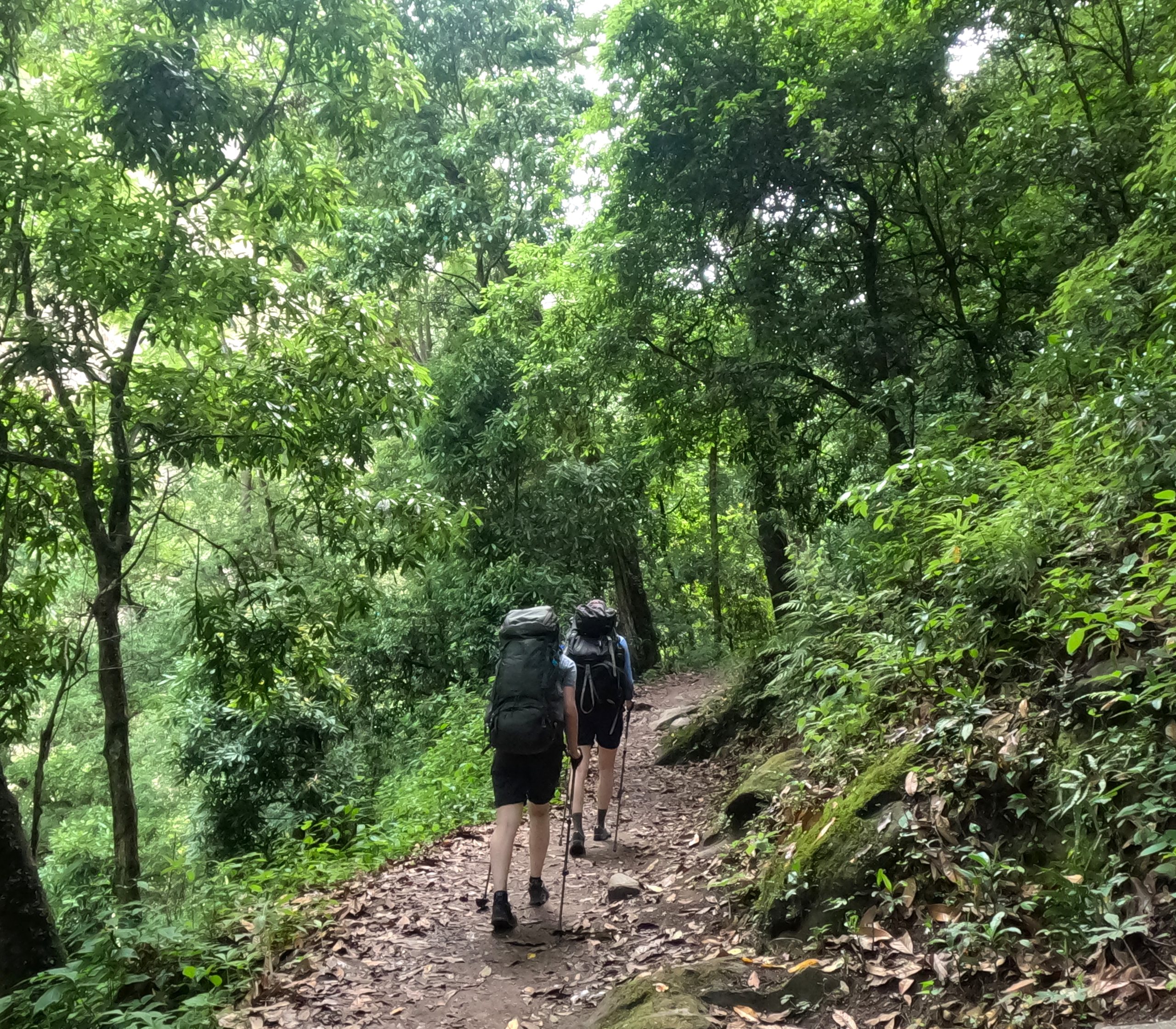
  • Walk through lush forests with a chance to spot wildlife like red pandas.
  • Discover the rebuilt Langtang Village and connect with the Tamang culture.
  • Stay in the beautiful Kyanjin Gompa, which is surrounded by beautiful mountain views.
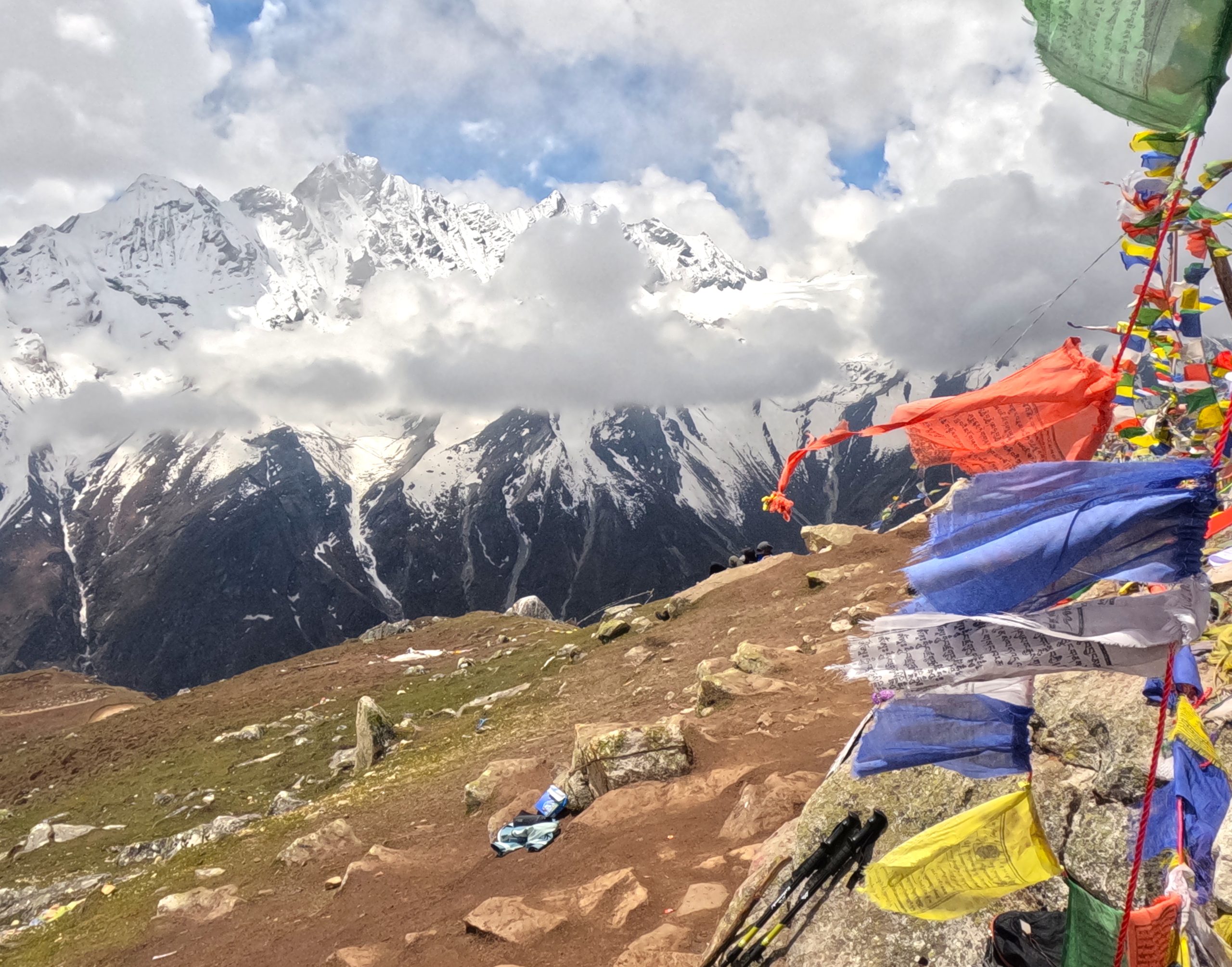
  • Witness the panoramic view of Makalu, Lhotse, Langtang Lirung, and Cho Oyu from Kyanjin Ri
  • Full Guided Trek from Kathamndu with food and accomondation faciltes.
Overview

Short Langtang Valley Trek From Kathmandu Overview

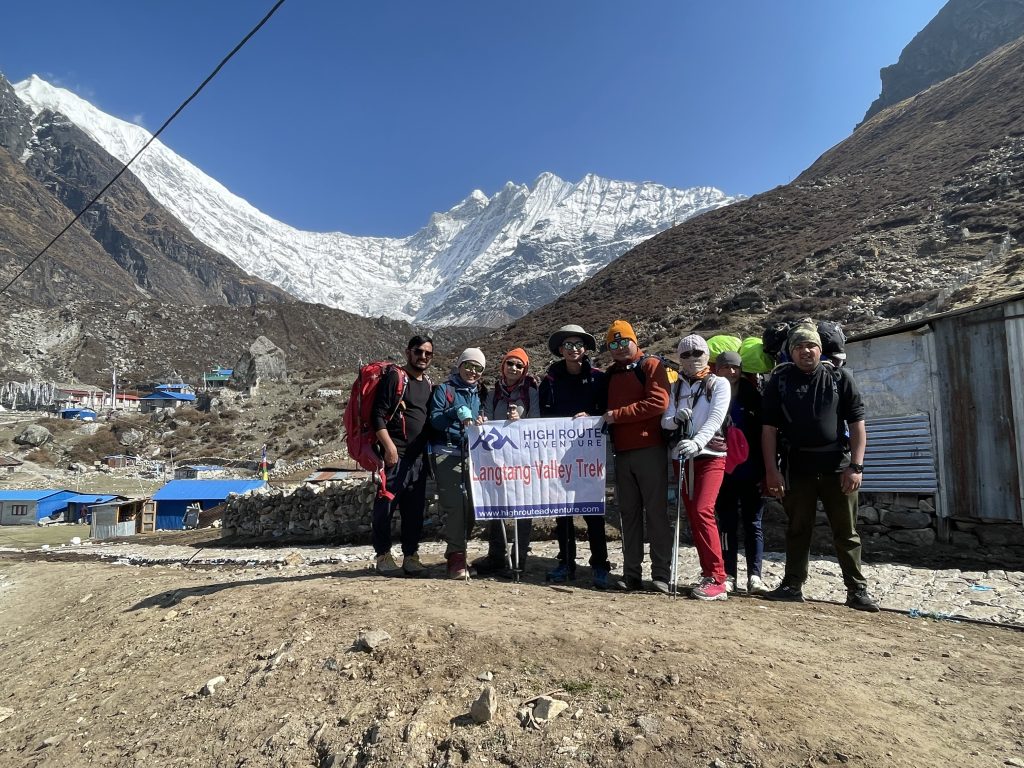
Are you looking for a short and moderate-level trekking destination that can be completed in just a week? If yes, then High Route Adventure presents you with a short Langtang Valley Trek from Kathmandu Package.

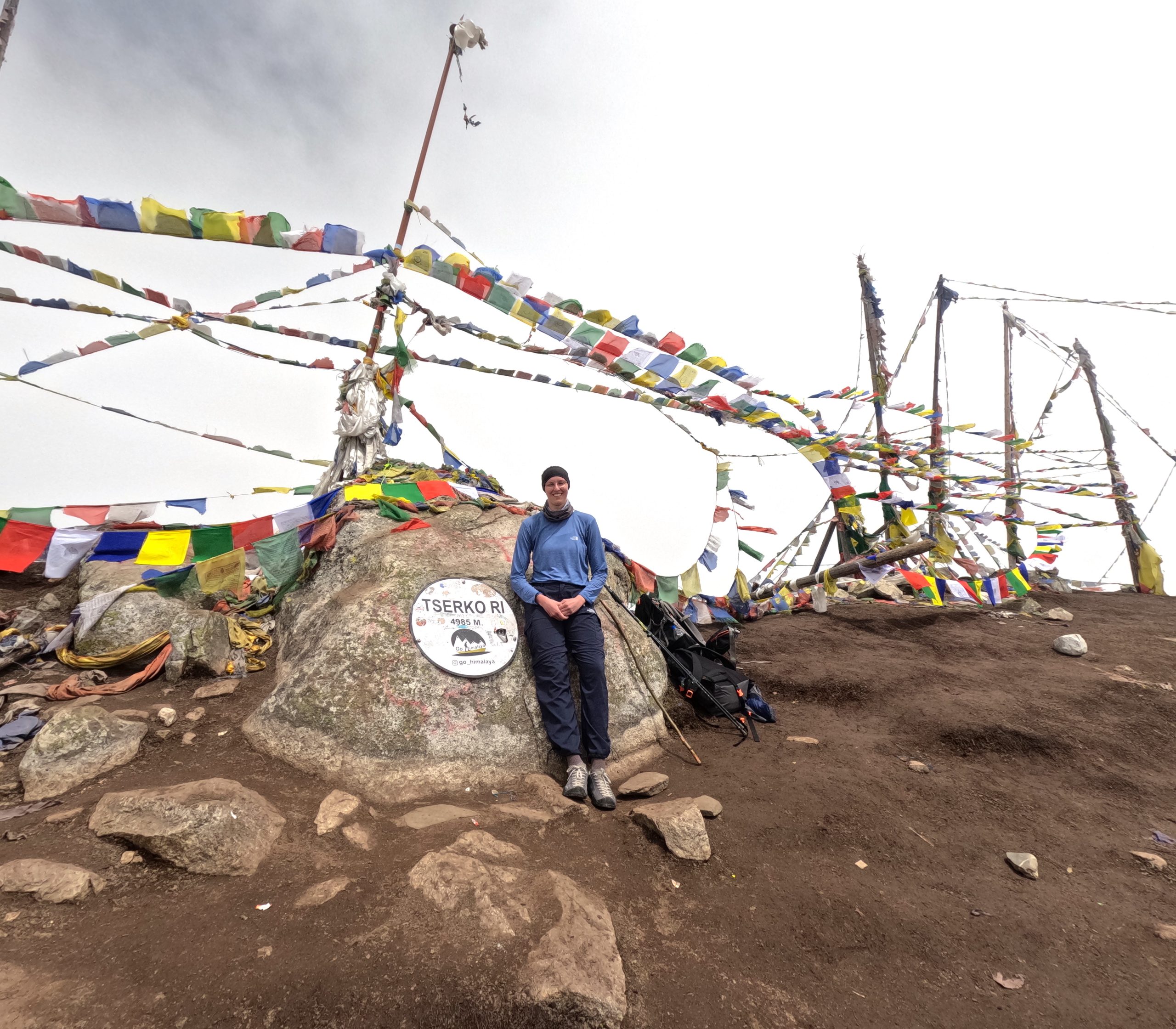
This short Langtang Valley Trek is a scenic 7-day hike offering stunning views of Langtang Lirung, glaciers, and traditional Tamang culture. It starts with an 8-10 hour drive from Kathmandu to Syabrubesi, passing through Langtang National Park towards Kyanjin Gompa. The maximum altitude reached is 4,984 meters at Tserko Ri.

This trek is well-liked by both locals and visitors from other countries because it is only a 122 kilometer drive away. Even though it can be completed in just 7 days, this trek offers trekkers some of the world’s best views of mountain peaks and breathtaking landscapes.

During the trek, you will pass through several villages and stay in a nice and comfy tea house to enjoy the local dishes and warm hospitality. Even though this trek is near Kathmandu, the trail path is peaceful compared to popular trekking destinations like the Everest Base Camp and the Annapurna Base Camp trek. The Langtang Valley trek is less commercialized, but it is worth visiting.

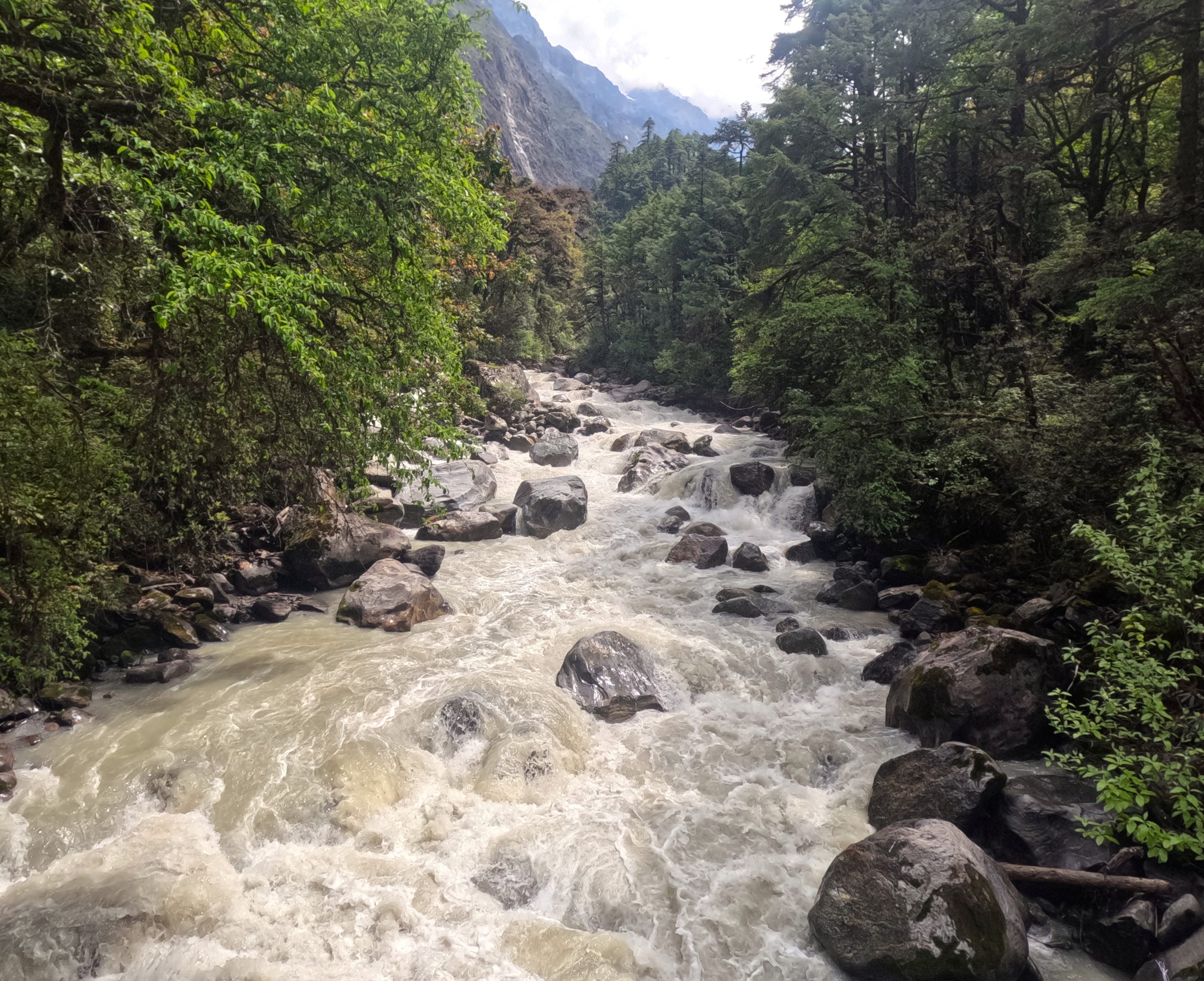
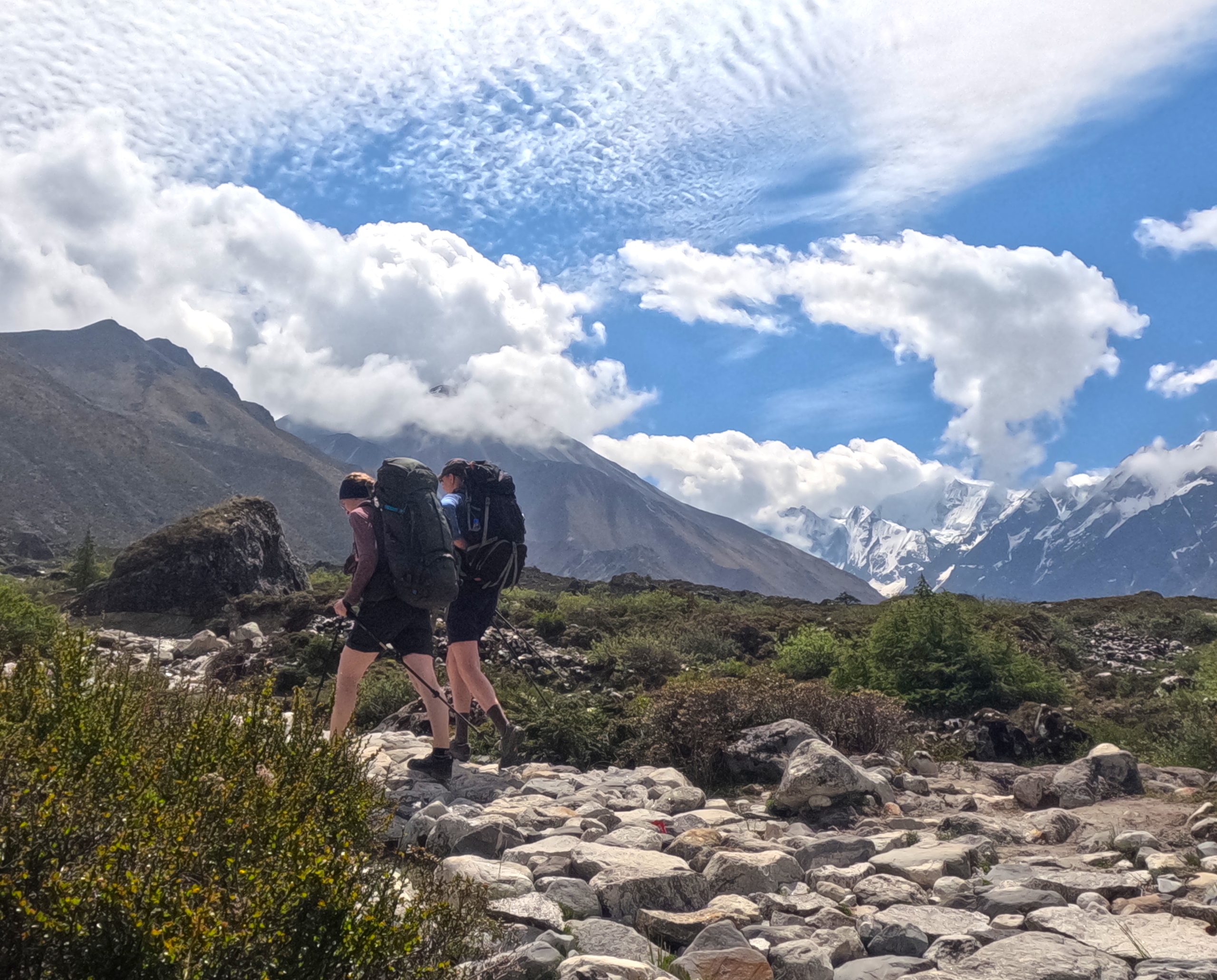
The peaceful trekking trails, 360-degree views of the Langtang Range, eye-catching waterfalls, high Himalayan valleys, Langtang River, glacial, monasteries, and beautiful forested areas will attract anyone who visits here. This place is simply a paradise for trekking lovers and photography enthusiasts.

This Langtang Valley trek lies inside the Langtang National Park, which was established to conserve the various flora and fauna. You will pass through this national park on the trek, where you can see Himalayan tahr, red panda, langur, musk deer, snow leopard, and birds like the snow partridge, Himalayan monal, and white-winged redstart.

Also, exploring Langtang Lirung, Ganesh Himal, Jugal Himal, Dorje Lakpa, and Ganja La Pass from close makes this trip more adventurous and memorable. This trek is suitable for both beginner and experienced trekkers.

If you are looking for a short trekking package in Nepal, then this Langtang Valley Trek from Kathmandu is absolutely for you. In fact it is third most popular trek in Nepal.

Major Attraction of Langtang Valley trek – 7 Days

Kyanjin Gompa

Short Langtang Valley Trek
Kyanjin Gompa Monastery

Apart from being a serene Buddhist monastery, Kyanjin Gompa is also famous for its breathtaking mountain scenery. It is a well-known place among spiritual travellers for cultural stops in the Himalayas. Trekkers can admire breathtaking views from this place and explore local yak cheese factories nearby.

Langtang Village

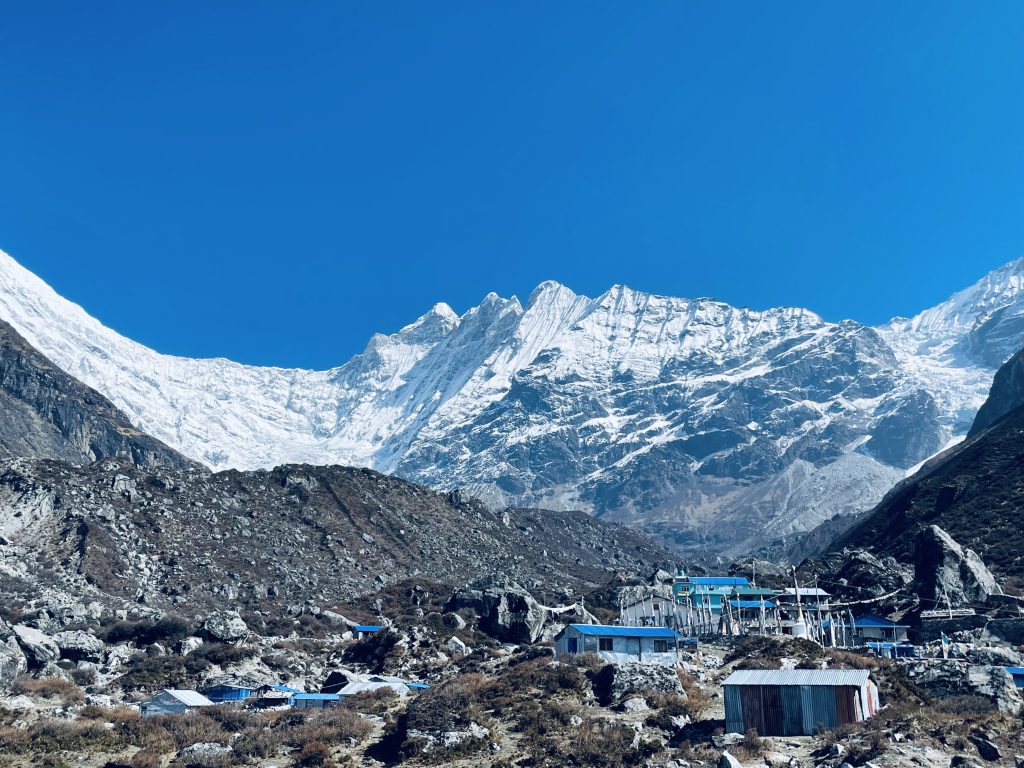
Langtang Village surrounded by Himalayan mountains.
Langtang Village in the Langtang Valley.

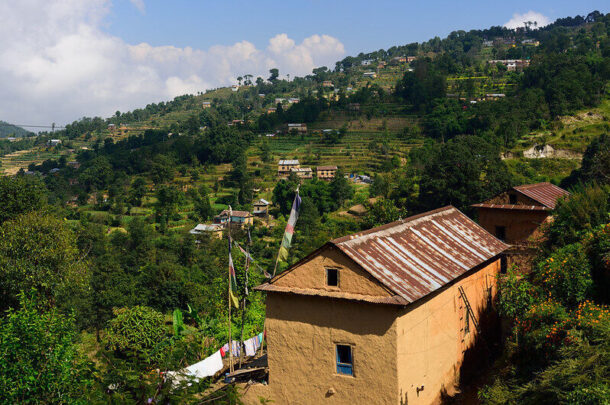
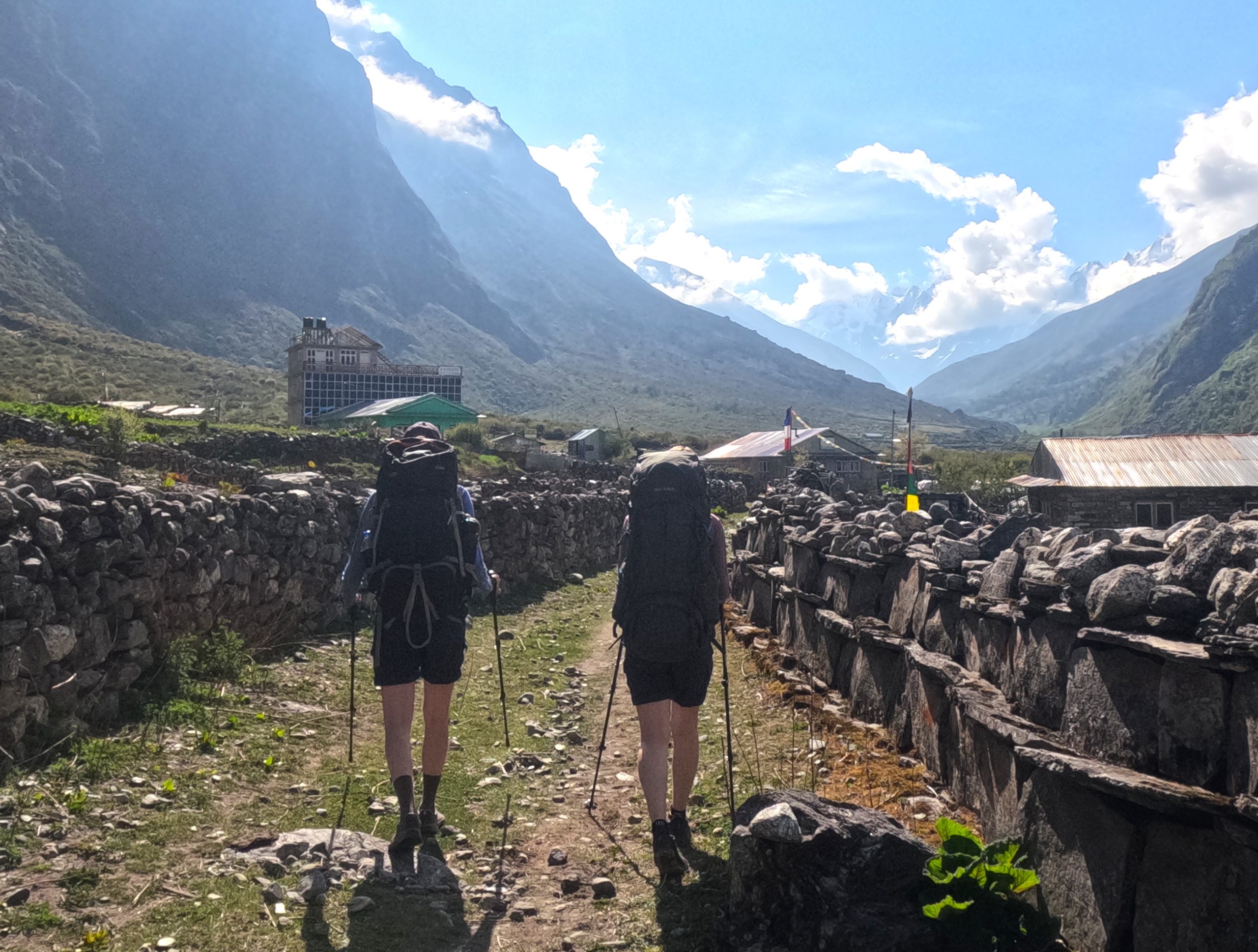
The strength and hospitality of the local Tamang people can be seen throughout the lovely Langtang Village. Trekkers may connect with the region’s past, experience friendly hospitality, and be in awe of the breathtaking mountain views in this village, which was rebuilt following the 2015 earthquake.

Langtang Glacier

The Langtang glacier, formed by the natural phenomenon, is a must-visit place for trekking lovers and photography lovers. Langtang Glacier is located at an elevation of 4100m. In the Langtang Region, there are more than 70 glaciers, so people also call this Langtang Region “the Valley of Glaciers.”

Kyanjin Ri

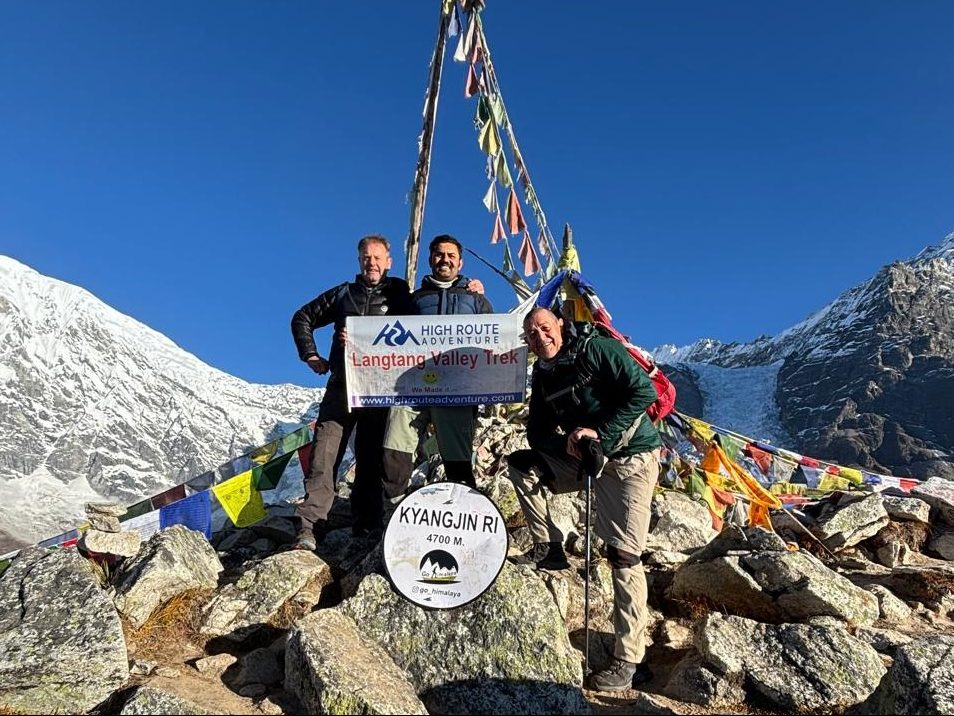
Kyanjin Ri is ideal for adventure lovers who are fond of trekking. The trek is not a straightforward one but is definitely worth it: breathtaking sunrises over snow-capped mountains, vast glaciers, and valleys below. It is a great place to watch both the sunrise and sunset, too, and moments of magic are made in the Himalayas.

Why Choose this Langtang Valley Short Trek With Us

➡️High Route Adventure’s small‑group policy (max 12 trekkers) ensures you’ll have plenty of space to enjoy the journey without feeling crowded.

➡️We work directly with community leaders; they guarantee cultural respect and fair compensation, so you leave a positive impact behind.

➡️Seamless Logistics, Zero Hassle. The result? Zero paperwork, zero surprises, and more time for the trail.

➡️Tailored Difficulty – From Gentle Walks to High‑Altitude Challenges, we customize the Langtang Trek Itinerary that fits your demands and interests.

➡️You can trek with confidence knowing our professionals are watching over you every step of the way.

➡️With climate change pushing the Himalayas into a fragile state, responsible tourism is no longer optional. High Route Adventure follows the “Leave No Trace” ethic.

➡️Logistical ease. All permits, food, accommodation and transfers are managed for you.

Langtang Valley Trek – 2015 Earthquake Impact, Recovery & Current Trekking Conditions

DetailInformation
Date & Time25 April 2015, 11:56 a.m local time (01:41 UTC)
Magnitude7.8 (Mw) – one of the strongest recorded in Nepal
EpicentreNear the village of Barpak, Gorkha District (≈ 80 km NW of Kathmandu)
Peak Ground Acceleration~ 0.9 g in the Langtang region – caused severe landslides and building collapse
Casualties in Langtang~ 80 deaths, many injuries, and the loss of entire families in villages such as Langtang, Kyanjin Gompa, and Tse‑Bong
Infrastructure Damage~Bridges: Many footbridges were damaged or washed away due to floods and landslides.
~Trail -Erosion: Heavy rains and landslides have caused sections of the trail to erode or collapse.
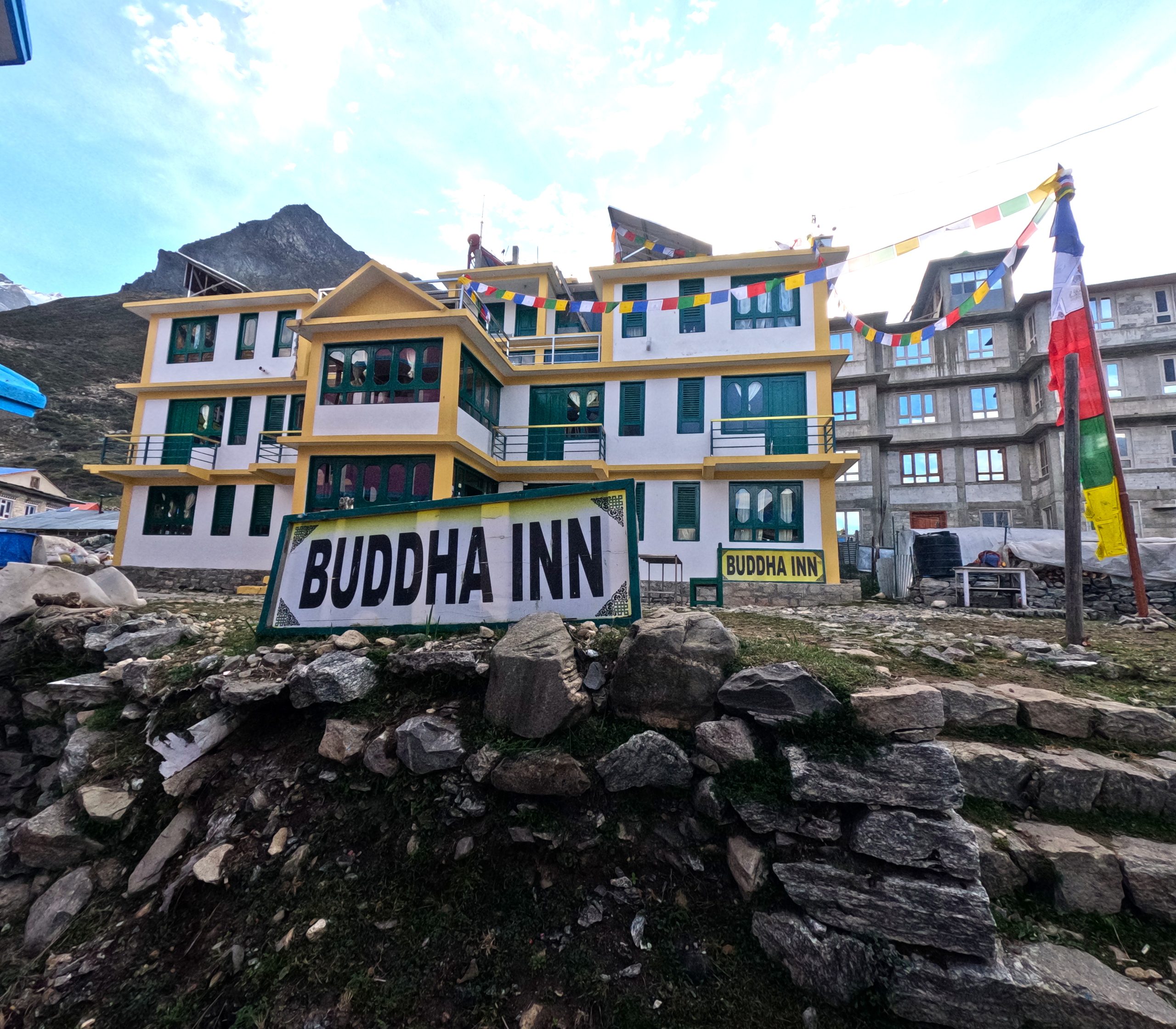
~Tea-Houses and Lodges: Some lodges were destroyed or damaged, affecting accommodation options.
~Water Supply Systems: Piped water systems and springs in some villages were disrupted.
~Electricity Lines: Local electricity networks were damaged, causing intermittent power supply.
~Road Access: Access roads leading to trailheads were partially blocked or washed out.
~Public Buildings: Schools, health posts, and community centers in certain villages were damaged.

Recovery: From Ruins to a Revitalized Trek

  • Village rebuilding: By 2023, ≈ 95 % of teahouses and homestays were reconstructed, many using earthquake‑resistant designs (reinforced timber frames, flexible foundations).
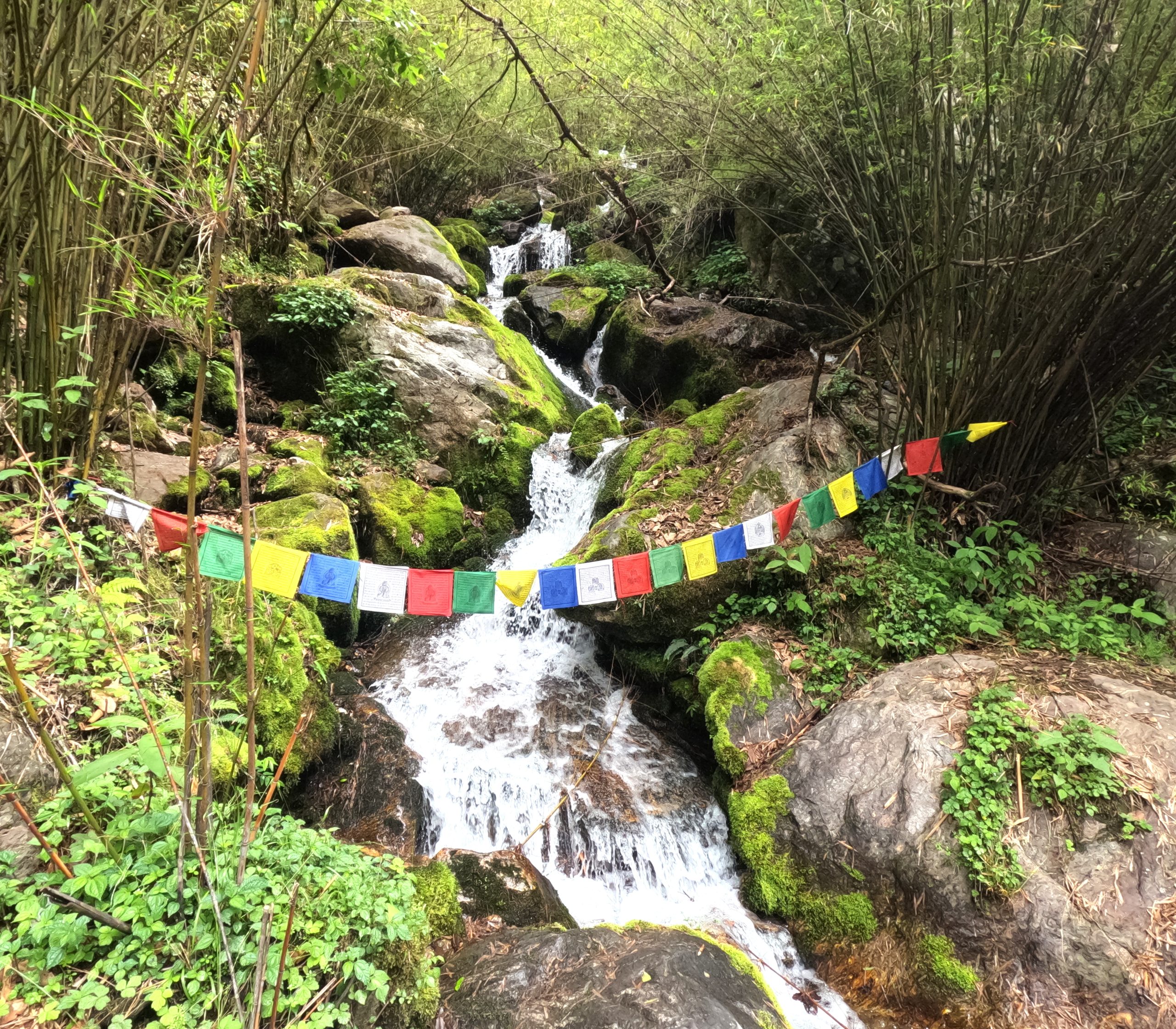
  • Cultural heritage: The iconic Langtang Monastery was restored, preserving its 400‑year‑old murals and prayer wheels.
  • Economic revival: Community tourism cooperatives now manage accommodation bookings, ensuring profits stay within the valley.

Trail & Infrastructure Restoration

  • All the Langtang trekking trails is fully reopened, regularly maintained by the National Parks Department.
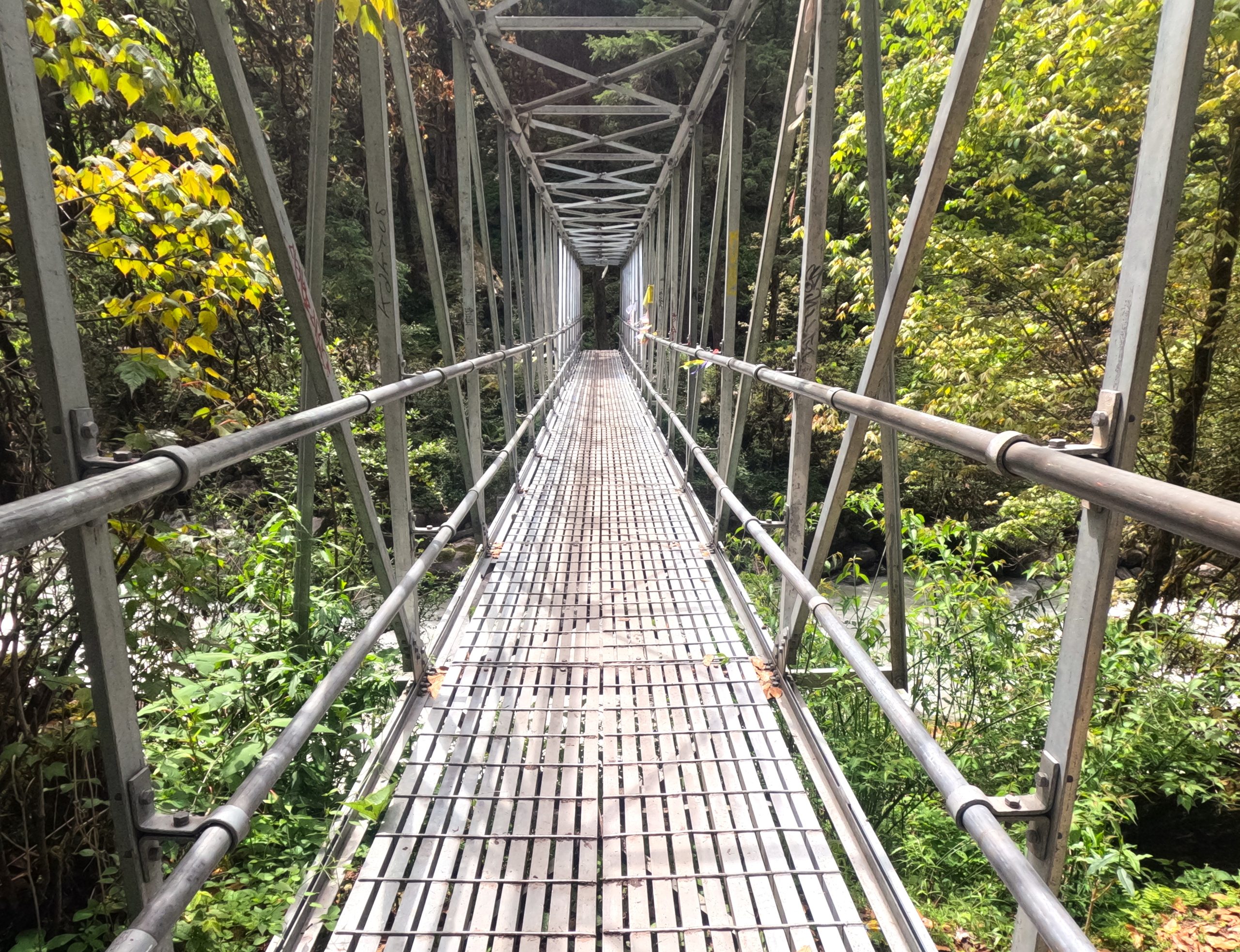
  • Suspension bridge are re‑engineered with steel cables and higher load capacity.
  • 4G mobile network coverage now extends to Kyanjin and Langtang village.

Short Langtang Valley Trek Cost -7 Days

For this 7-day Langtang Valley trek, the package price starts from USD $460 per person. We offer a discount based on the number of people in the group. The more people in a group, the more discounts you can get on the package. 

Let’s see the cost according to the group-wise for 7 Day itineraries:

  • For solo: USD 594
  • For 2 to 4: USD 480 per person
  • For the above 5: USD 460 per person

Special note: We provide local bus service on this 7-day itinerary. If you are interested in the private jeep service from Kathmandu to Syabrubesi, an additional USD 200 fee is required.

Looking for budget tips? Read our complete Langtang Valley Trek Cost guide.

How to Book this short Langtang Valley Trek Package(Step‑by‑Step)

Step 1: Fill out the form by clicking the Book Now button in the package.

Step 2: Pay 20% of the total trip cost to secure the booking.

Note: If you have any questions regarding the booking, payment or things related to the trek, you can contact our tour operator directly. For cancellation, payment, and more information, click here: Terms and Conditions.

Itinerary

Short Langtang Valley Trek From Kathmandu Itinerary

Drive distance: 122 km 

Drive duration: 8 to 10 hours

  • Start a scenic drive from Trishuli Highway and then connect to the Pasang Lhamu Highway as you approach Dhunche
  • Breathtaking views of rivers, terraced paddy fields, and lush green hills.
  • Pass through small towns and villages like Trishuli Bazaar and Dhunche.
  • Enjoy local roadside snacks or tea during tea break.
  • Arrival in Syabrubesi, the gateway to Langtang Valley.

Kathmandu to Syabrubeshi

Travellers Note: The road condition up to Trishuli is good, but after that, it becomes bumpy and gravelly. Additionally, you will need to pass through a 3 km stretch known as Ramche Landslide, near Dhunche. Be prepared for off-road conditions, and keep in mind that weather conditions can affect your travel plans. 

⛰ Altitude 1,450m
🍽 Meals Lunch, Dinner
🏨 Stay Teahouse
Duration: 5 to 6 hours
Distance: approximately 12 km

Morning Start

  • After breakfast in Syabrubesi, the trek begins at approximately 7 a.m.
  • Walk about 3 hours (4-5 km) along a scenic trail to Khanjim.

Lunch Stop: Khanjim (2,235 m)

  • Rest here for lunch and enjoy fresh, locally-grown food.
  • Khanjim is a small village with 5-6 teahouses and around 50-60 local homes.
  • Explore the primary school and local gompas in the village during the break.

Afternoon Trek

  • Continue trekking for 2-3 hours from Khanjim to Sherpagaon.
  • Enjoy breathtaking views of the Langtang Valley and nearby mountains along the way.
  • Avoid crowded trails by taking this alternative route developed by High Route Adventure.

Sherpaghau - Langtang Valley Trek

Travelers note: The trek distance from Syabrubeshi to Sherpaghau is 10-12 km. You need to walk for around 7-8 hours through a remote village. There are limited shops and tea houses along this trekking route. So carry snacks and water with you before you start your trek.

⛰ Altitude 2,500m
🍽 Meals Breakfast, Lunch, Dinner
🏨 Stay Teahouse
Duration: 7-8 hours
Distance: approximately 16 km

Morning Start

  • Begin your trek early after breakfast at Sherpagaon.
  • Walk through serene pine and rhododendron forests as you ascend gradually toward the Langtang Valley.
  • Witness stunning views of the Langtang Himal range, including Langtang Lirung, along the way.

Lunch Stop: Riverside Lodge

  • After trekking approx. 4 hours and covering around 8 km, pause for lunch at Riverside Lodge (approximately 2,700 m).
  • The lodge offers basic, hearty meals, making it a popular stop among trekkers.

Afternoon Trek

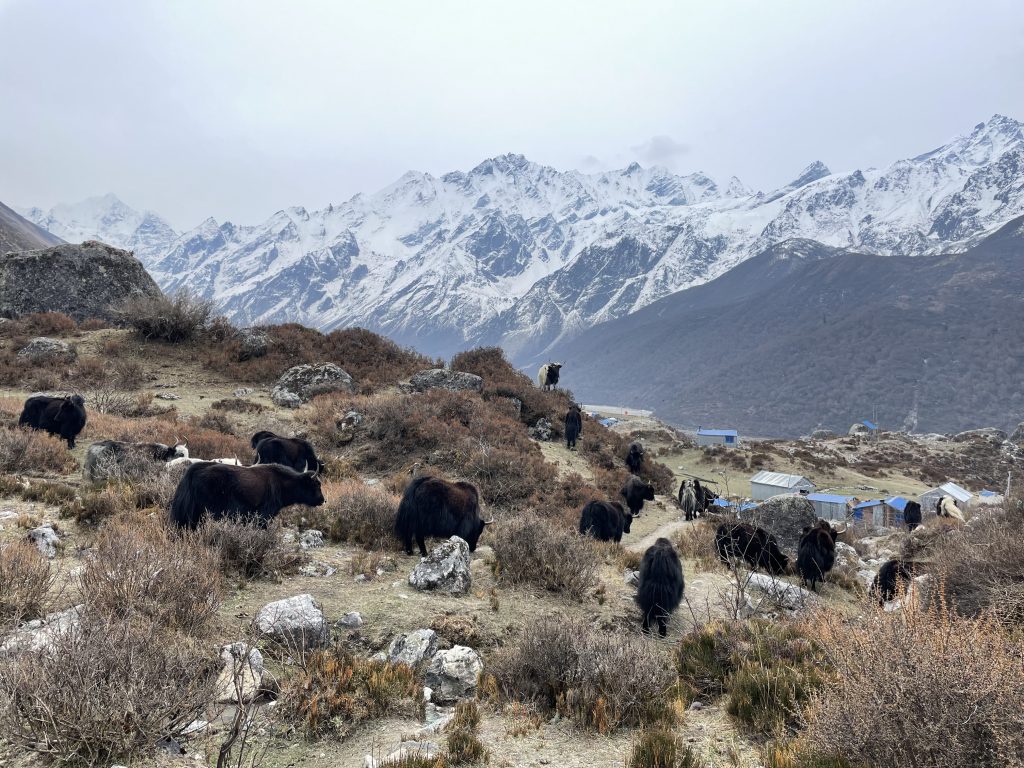
  • Continue trekking through alpine meadows where livestock graze, an iconic scene in the Langtang region.
  • Pass through Ghodatabela (2,972 m), a notable checkpoint for Langtang National Park, and enjoy views of Langtang Lirung, the Langtang River, and its lush jungle.
  • Follow the trail further to Thyangsyapu Village (3,140 m), which has a handful of tea shops offering rest and refreshments. Keep an eye out for Himalayan Thar and vibrant bird species in this area.
  • Trek for another 4 hours before reaching Langtang Village, covering the last stretch of about 7 km.

 Langtang Village

Travellers note: The trek distance from Sherpagaon to Langtang Village Approx. 12-15 km, and today, you will be trekking for 7-8 hours. The trail passes through some uneven and challenging landscapes, so walk carefully. While you are in Thyangsyapu (3,140 m), make sure to keep an eye out for spotting rare wildlife like the Himalayan Thar.

⛰ Altitude 3,430 m
🍽 Meals Breakfast, Lunch, Dinner
🏨 Stay Teahouse
Duration: 6 to 7 hours
Distance: approximately 7 km

Morning Start

  • Begin the trek early from Langtang Village after breakfast.
  • Ascend a steep and challenging trail through temporary shepherd settlements.
  • The trek, though short, can be demanding due to altitude gain and rugged terrain.
  • Arrival at Kyanjin Gompa
  • After approx. 3-4 hours of trekking, reach Kyanjin Gompa, an ancient monastery village more than 500 years old.
  • Explore the famous Mani stone wall, carved with sacred Buddhist scriptures.
  • Rest, and prepare for the Kyanjin Ri hike.

Lunch Stop

  • Have lunch at Kyanjin Gompa, where you can also taste traditional offerings, including locally-made cheese.

Afternoon Hike to Kyanjin Ri

  • Embark on a 3 km hike to Kyanjin Ri Viewpoint (4,773 m). This steep but rewarding trek takes approx. 3 hours uphill and 2 hours downhill.
  • Enjoy breathtaking panoramic views of Langtang Lirung, the Langtang Himalaya ranges, and Langshisa glacier.
  • Mani stone walls, teahouses, and a famous cheese factory are not to be missed.

 Kajin Ghompa

Travellers note: The hike to Kyanjin Ri is challenging due to its steep uphill terrain and windy conditions. Even though it is difficult, you can manage it when you walk slowly and steadily. Today, you will start your trek very early in the morning, around 7 a.m., to complete the journey before dusk.

⛰ Altitude 3,830 m
🍽 Meals Breakfast, Lunch, Dinner
🏨 Stay Teahouse
Duration: 6 to 7 hours
Distance: approximately 22 km

Morning Start

  • Begin the trek early, at around 7 a.m., following a proper breakfast at Kyanjin Gompa.
  • Retrace the same trail back, moving down from Kyanjin Gompa to Langtang Village. Enjoy another chance to explore the unique Tibetan culture and historic sites in the village.

Lunch Stop

  • Stop at Ghodatabela or Riverside Lodge for lunch. These locations offer a refreshing break amidst scenic surroundings with simple yet fulfilling meals.

Afternoon Trek

  • Continue trekking through the lush rhododendron and pine forests, descending further into the valley.
  • Traverse the picturesque hamlets of Thyangsyapu and enjoy panoramic views of the surroundings.
  • Arrival at Lama Hotel
  • Conclude the day’s trek by arriving at the Lama Hotel village. It features about 5-6 teahouses offering comfortable bedding and hot meals.
  • Check into a teahouse for your overnight stay and enjoy a well-earned dinner.

Lama Hotel

Travellers note: The descent is long yet comparatively comfortable since it is mostly gradual. However, the trail includes rocky and uneven sections that require caution.

⛰ Altitude 2,470 m
🍽 Meals Breakfast, Lunch, Dinner
🏨 Stay Teahouse
Duration: 5 to 6 hours
Distance: approximately 11 km

Morning Start

  • Begin the final trekking day with breakfast at the Lama Hotel. Enjoy the serene environment one last time before heading down.
  • Start descending towards Bamboo, following a familiar trail.

Lunch Stop

  • Take a break for lunch at Bamboo Lodge (1,970 m) or Pahare Hotel. This is a good point to rest and recharge before continuing your descent.

Afternoon Trek

  • Continue the trek towards Syabrubesi. The trail offers stunning views of the surrounding mountains and Langtang Valley.
  • Walk through forested areas and quaint villages, enjoying the peace and beauty of the region.
  • Arrival at Syabrubesi
  • Conclude the trek by reaching Syabrubesi, the last point of your Langtang adventure.
  • Check into a teahouse for a comfortable overnight stay. Enjoy a mix of local and international cuisine as part of your final dinner in the region.

Syabrubesi

Travellers note: Today, you will have the option to choose a route to reach Syabrubesi. You can either choose the same path that you initially travelled or through the Lama Hotel.

Trip extension: Those who want to extend their trek from here can do so. You can extend your trek to the short and easy Tamang Heritage Trail, Helambu Trek or Gosaikunda Lake Trek.

⛰ Altitude 1,450m
🍽 Meals Breakfast, Lunch, Dinner
🏨 Stay Teahouse
  • Drive route: Syabrubesi → Dhunche → Trishuli → Kathmandu

Kathmandu

Travellers note: For foreign tourists who want to explore this short Langtang Valley trek, it will take around 10 days to complete, which includes arrival day, Kathmandu exploration and departure day. For more info check here: Langtang Valley Trek 10 Days.

⛰ Altitude 1,400 m
🍽 Meals Breakfast, Lunch
🏨 Stay Teahouse

Build Your Own Adventure!

Collaborate with our specialists to create a unique itinerary.

Prefer to Fly?

Short on time? Explore Langtang Valley by helicopter for a fast, scenic alternative to trekking. [ View →Langtang Helicopter Tour ]

Cost Detail

Inclusion

What's included ?

Accommodation Service

  • Six nights of the best available clean and comfortable teahouse accommodation during the trek

Trekking Permits

  • Local Government Entry Permit (Trek Card)
  • Langtang National Park Permit
  • Trekkers' informational Management Systems Card (TIMS)

Food Services

  • Breakfast (Local and Continental Choice) in Teahouse
  • Lunch (Simple and Light Lunch in Teahouse)
  • Dinner (Veg and Non-Veg Meals from the Local Tea House)
  • Farewell dinner in Kathmandu

Guide & Porter Services

  • English-speaking government-licensed- licensed guide
  • Local Sherpa for carrying Luggage (up to 25 kg Max )
  • All Meals for the guide & porter
  • Insurances for guide & porter
  • Well-paid salary as per Government rates
  • A first-aid kit box carried by the team leader

Transportation & Others

  • Drive from Kathmandu to Syabrubesi to Kathmandu by local Bus(Private Transportation will be arranged upon your request)
  • Down jacket and sleeping bag(to be returned after trek completion)
  • The HRA Brand Duffle Bag for the Trip & Company T-shirt
  • Trekking Maps
  • Trip achievement certificate
  • All local and Government taxes, Administrative charges

Complimentary Includes

  • Oximeter - To determine your normal oxygen range
  • One-hour Special Ayurvedic massage at the end of the Trek
  • Fresh seasonal  fruit after dinner during the trek

What's not included ?

  • Accommodation in Kathmandu
  • All meals  in Kathmandu
  • Nepal visa fee
  • Travel and medical insurance
  • International flights
  • Personal expenses (phone calls, internet, laundry, bar bills, snacks, battery recharge, bottled or boiled water, souvenirs, hot showers, Hot drinks, Extra porter, etc.)
  • Personal trekking gear and equipment
  • Tips for guide, porter, and driver(tipping is expected)
  • Any unseen expenses due to circumstances beyond our control
Dates

Group Departures

Choose from our scheduled group trips below, or contact us to plan a private or family adventure tailored to your schedule.

Things to Know

Nepal Visa Information:

Visa Requirements for most international travelers are easy and straightforward:

  • Visa-on-Arrival: Available at Tribhuvan International Airport (Kathmandu).
  • Required Documents: Valid passport (minimum 6 months validity), 2 recent passport-sized photos, and a completed visa application form.
  • Fee: For 15 Days- USD 30, For 30 Days USD- 50 and For 90 Days- USD 120.

Learn more about: Nepal Country Information Guide

Travel Insurance:

Not mandatory, but highly recommended for safety and to cover potential expenses in case of unexpected incidents. If you are purchasing insurance make sure it covers:

  • Emergency medical evacuation and hospitalization (including altitude-related illnesses).
  • Trip cancellation/interruption due to illness, natural disasters, or political unrest.
  • Lost/delayed luggage and emergency transport.
  • Trekking risk up to 5,000 meters

Note: If you have not purchased travel insurance in your home country, you can also buy it in Kathmandu before your trek. If you need any assistance, please contact our tour operator.

Langtang Trek Safety and Emergency:

  • Trained Guides: The guides we provide during the Langtang Trek are certified, government-licensed, and trained in first aid, high-altitude medicine, and emergency protocols.
  • Emergency Protocols: Evacuation via helicopter to Kathmandu for altitude sickness or critical conditions by cooperating with you insurance company
  • First-Aid Kit: Our team carries a fully equipped first-aid kit to handle minor injuries and emergencies during the trek.
  • Weather Alerts: We check the real time Langtang weather. If the weather turns bad, we adjust the route and schedule to ensure safety.

Communication and Technology On Langtang Valley Trek:

  • Mobile Connectivity: Strong signal in almost all the village. NTC local SIM works best in the Langtang Region.
  • Wifi Connectivity: Works fine in the tea house. No Wifi in the trekking trails, you can use mobile internet by using local SIM.
  • Charging: Since solar power is available in the high-altitude Langtang village, we recommend portable power banks and high-capacity batteries.
  • Socket: 220-240V and Type C, D & M sockets are found in the tea house. It is recommended to carry a universal travel adapter for your devices.

Health and Hygiene:

  • To prevent illness drink only bottle water, hot water or water treated with water purification tablets.
  • Use hand sanitizer after using washroom and before taking a food.
  • Carry toilet paper as they don't provide this facility in the tea house.
  • If you catch altitude sickness inform your trekking guide immediately.
  • Eat only fresh food during the trek.
  • Pack Antibacterial wipes, masks, and personal first-aid kits which are available for purchase in Kathmandu.

Responsible Trekking:

  • Pack It In, Pack It Out: Carry all trash and throw only in the designated areas.
  • Respect Local Culture:Dress modestly and ask permission before taking a picture.
  • Hire Guide and porter: It helps provide job opportunities and directly improves the local economy.
  • Volunteer (Optional): You can also participate in volunteering programs in Langtang, such as teaching in local schools, supporting community projects, or helping with environmental conservation efforts.

Notes

Best Time For Langtang Valley trek

Due to Nepal's diverse topography, you can find distinct seasons that bring a unique atmosphere to the Langtang Region. So, choosing the right time can make your experience far better than you expected. Let's see when to do the Langtang Valley trek so that you can plan for the perfect adventure.

  1. Spring (March-May): The weather is good throughout the spring, with occasional rainfall. The temperature is perfect for travelling, ranging from 10°C to 25°C (50°F to 77°F). The trekking trail remains mostly dry, and you can enjoy breathtaking landscapes and snowy mountain peaks. Additionally, the wildflowers in the trekking trail add to the beauty of the Langtang trek.
  2. Monsoon (June – August): Trekking in the monsoon season is also possible in Nepal. However heavy rainfall can cause difficulty in reaching the trekking destination due to floods and landslides. Also, due to the downpour, it can make the trail path slippery and muddy, adding risk for the trekkers. Additionally, leeches and bugs in the forest and greenery area can trouble the trekkers. Temperatures fluctuate during this time, so they can range from 10°C to 30°C (50°F to 86°F).
  3. Autumn (September – November): One of the most perfect times for the Langtang Valley trek is during the Autumn season. Autumn is considered the best time due to favourable weather and moderate temperatures for trekking conditions. Additionally, a clear view of the sky allows you to enjoy the beautiful view of mountain peaks and majestic landscapes. During this season, the temperature remains 5°C to 20°C (41°F to 68°F).
  4. Winter (December – February): Winter brings very cold temperatures, especially at night in higher areas. It can range from -5°C to 10°C (23°F to 50°F). Occasional snowfall at high altitudes can obstruct the trail, making navigation more difficult. The harsh weather can cause trouble during the trek, so if you want to trek in this season, you need to have good trekking gear and clothing. If you are a beginner, then avoid trekking in the winter season.

For detail Guide Read our blog Best Time for the Langtang Valley Trek 

Langtang Valley Trek Weather & Temperature by Month

The following table provides information on the average temperature and precipitation in different places on the Langtang Valley Trek route:

Month Day / Night Temperature Best For
Mar–May (Spring) 10°C to 20°C / -3°C to 7°C Clear views, blooming rhododendrons
Jun–Aug (Monsoon) 18°C to 23°C / 8°C to 12°C Not recommended - rain, leeches, muddy and slippery trail
Sep–Nov (Autumn) 5°C to 20°C / -10°C to 10°C Best season - clearest skies
Dec–Feb (Winter) 0°C to 5°C / below -10°C Cold, quiet trails, snowfall at high-altitude

Note: Always check the weather forecast before heading out on a trek and, if possible, avoid trekking during the monsoon season.

How Difficult is short Langtang Valley Trek

Various factors add to the difficulty of this short Langtang Valley trek (7 days. The experienced trekker can easily handle these challenges, but for first-time trekkers, they can be moderately difficult. Let’s see what the factors are that you need to face while undertaking this trek:

  • Langtang Distance and Duration: The total distance to cover from Syabrubesi to Kyanjin Gompa and back is 77 km (47.8 miles). During the trek, you need to walk for an average of 6-7 hours. Even though the distance and duration are short, it might be difficult for first-time and beginner trekkers.
  • Altitude of Langtang Region: This short Langtang Valley trek takes you to the maximum height of Kyanjin Ri (4980 m). At such altitudes, some trekkers may experience symptoms of altitude sickness due to low oxygen levels. However, you can skip trekking to Kyanjin Ri and trek only to Kyajin Gompa if you want to avoid high-altitude on this trek.
  • Terrain: The steep ascent and descent, along with trekking through narrow, uneven, rocky terrain, are challenges you need to face. Trekkers need to navigate carefully in such terrain and be aware of their surroundings.
  • Weather and Climate: Another challenge that complicates the Langtang Valley trek is its unpredictable weather. When the weather changes, you can expect a drop in temperature, especially at higher altitudes. Seasonal changes add to the challenge, with monsoons bringing slippery trails and winters bringing snow and freezing temperatures.
  • Physical Fitness: People take it lightly; the Langtang Valley trek is easy before trekking. But when they actually go trekking, they will find how difficult it is to walk at high altitudes without proper physical preparation. So build strong legs and be physically active before heading out on this trek.

Read more: How Difficult Is the Langtang Valley Trek

How To Prepare For this short Langtang Valley Trek

Even though the trek is short and easy compared to other trekking destinations, such as the Everest base camp trek and the Annapurna base camp trek, you still need to prepare for this trek. Here is the comprehensive guide that will help you to prepare for this beautiful trek in the Langtang region.

  • Warm-Up with Routine Exercises: Prepare for the Langtang Valley Trek by doing regular cardio exercises such as jogging, cycling, swimming, brisk walking, or stair climbing to build endurance and strength. Practice hiking on uneven trails whenever possible, and always warm up before training to help your body adapt to the physical demands of trekking in the Himalayas. Check here: Training Tips for Langtang Valley Trek
  • Choose the Best time: Trekking in the Himalayan region is fruitful when trekkers choose the best time. The best time means the weather and temperature favor the trekkers and helps to enjoy the beautiful view of the Langtang region. Weather and temperature at high altitudes can change suddenly, so before heading, we suggest you check the weather forecast.
  • Get Travel Insurance: Even though travel insurance is not mandatory for the short Langtang Valley trek, we highly suggest you have travel insurance for your safety. You never know when the unseen circumstance can happen, so having insurance provides emergency medical assistance when needed.
  • Follow an Acclimatization Plan and Prepare for Altitude Sickness: The short Langtang Valley trek - 7 days will not take you to the high altitude, but still, you need to focus on maintaining good health during the Langtang trek. Trekkers should follow the acclimatization plan to avoid altitude sickness. While walking at high altitude, climb slowly and allow your body to adjust to the high altitude. Stay hydrated during the trek and monitor your health conditions, and if symptoms of altitude sickness occur, immediately descend to a lower altitude.
  • Learn a Few Basic Nepali Phrases for a More Interesting Journey: The Langtang Valley Trek Journey becomes more memorable when you engage with local people. Learning a few phrases such as "Namaste" (hello) or "Dhanyabad" (thank you) can help you connect with locals and show respect for their culture.

Read more: How Do I Prepare for Langtang Valley Trek?

Food On Langtang Valley: What to Expect

Food On Langtang Trek

During the Langtang Valley trek, for 7 days, High Route Adventure will arrange three healthy meals for you. Breakfast and lunch will be provided in the tea house where you will stay, and for lunch, you will eat in the middle of the journey. You can choose the food from the menu that is provided to you by the tea house.

You can find a wide variety of Nepali food and a few Indian and international food items. Don’t forget to try local Nepali Dal Bhat, Momo, Chowmein, Dhindo, Sel Roti, Thukpa, Yak cheese, Nepali Curd and butter tea.

Water and drinks are also available at the tea house, but you need to pay on your own. Water bottles will cost you $1 to $2, and soft drinks will cost you $2 to $5, depending upon the location and altitude.

Read more: Food and Accommodation in Langtang Valley Trek

Permits That You Need For Langtang Valley Trek - 7 days?

For the Langtang Valley Trek, you will need two permits: a TIMS Card(Trekking Information Management System) and a Langtang National Park Entry Permit. You can obtain this permit from the Nepal Tourism Board in Kathmandu(Pradarshani Marg) or at the checkpoint in Dhunche.

The cost of the permits needed for the Langtang Valley Trek is as follows:

Permit Type Fee
Langtang National Park (Nepali) NPR 100
Langtang National Park (Foreign Nationals) NPR 3,000
TIMS Card NPR 2,000

Note: This permit will be arranged by the High Route Adventure. To issue these permits, we need the following documents from you:

  • Scanned Passport copy
  • pp-size photograph

Read more: How to Obtain Permits for the Langtang Valley Trek?

Accommodation in Langtang Valley: What to Expect

During the trek, High Route Adventure will provide you with accommodation in the lodge or tea house that is available on the trekking routes. This tea house is similar to the Guest house but small in size. You will find small rooms with twin beds, which are often shared among the trekkers. The plywood partitions the rooms, and there will be no facilities of AC or heating floor.

You can find an attached bathroom, especially at the lower altitudes, but at higher altitudes, there will be shared bathrooms. You can take a hot shower by paying an extra cost of $1 to $2.

On this short Langtang Valley trek - 7 days, you need to manage the hotel while you are staying in Kathmandu. You can find a variety of accommodations in Kathmandu as per your budget. Here is our recommendation.

Budget Hotels Mid-Range Hotels Luxury Hotels
Hotel Horizon Kathmandu Guest House Hyatt Regency
Kathmandu Garden House Hotel Moonlight Dwarika's Hotel
Hotel Silver Home Hotel Arts Kathmandu Marriott Kathmandu
Hotel Bright Star Hotel Holy Himalaya Hotel Yak & Yeti
Elbrus Home Hotel Manang Radisson Hotel
Hotel Family Home Hotel Mulberry Soaltee Kathmandu

Note: Accommodation in Kathmandu is not included in the package cost and can be booked as per your preference and budget from the options above. Our team can also assist with booking if needed.

Langtang Valley trek - 7 days Cost for Nepalese

Langtang Valley Trek has been one of the most famous destinations for the Nepalese people as well, due to its proximity to Kathmandu and easy trek. Every year, huge numbers of local Nepalese people visit this destination to witness the remote mountain villages, lush forests, glacial landscape,s and stunning mountain peaks. If you haven’t visited this amazing palace, and if you are planning then contact us for a special discount. 

For Nepali trekkers, the Langtang Valley trek - 7 days will cost you around NPR 25,000 - 30,000 for 7 Days Langtang Valley Trek, which includes trekking guide, permits, lodging, food, and transportation.

How to Reach The Langtang Valley Trek

The starting point of the Langtang Valley trek - 7 days is Syabrubeshi, which is around 122 kilometers from Kathmandu city. There are several ways to reach the Syabrubesi from Kathmandu: by taking a local bus, express bus, or private jeep. It takes a whole day to reach Syabrbeshi from Kathmandu, so it's pretty annoying. So you need to ride for 8-9 hours on a bus or private jeep to reach Syabrubesi. 

Kathmandu To Syabrubesi Route Options

  • Route 1: Kathmandu to Syabrubesi via Galchi(express and local bus)
  • Route 2: Kathmandu to Syabrubesi via Kakani(local bus and private jeep)
  • Route 3: Kathmandu to Syabrubesi via Tokha(local jeep and private jeep)

For detail information check here: Kathmandu to Syabrubesi Transportation

Langtang Valley trek - 7 days, With or Without a Guide?

When trekking inside a Langtang National Park or conservation area, trekkers must hire a guide with them. Since the Langtang Valley trek also lies inside the Langtang National Park, it is compulsory to hire a trekking guide.

We have seen tourists trekking without a trekking guide due to a lack of awareness, budget constraints, or attempts to bypass the rules. Even though this trek is short and easy, we should not underestimate the challenges and risks that can arise when we trek solo.

So, for a safe journey and to have a safe trekking experience, we suggest all the trekkers hire a guide. Hiring the Guide will cost you around USD 25-30 per person. When you book the Langtang Trek Package from the tour operator, normally, they will provide you guide and porter service. So always trek with the assistance of a reputable trekking agency and take a guide with you.

Map

Langtang Valley Trek Map

The Langtang Valley Trek map showcases a stunning route through the Himalayas, featuring diverse altitudes from 1,500 m to 5,000 m, and covering distances filled with awe-inspiring Himalayan views. This trek offers an unforgettable cultural experience, passing through vibrant Tamang villages, ancient monasteries, and breathtaking landscapes.

Equipment

What To Pack For Langtang Valley Trek - 7 days

For this short and sweet Langtang Valley trek, trekkers should pack light and carry only essential things. Making your backpack light makes it easier to walk on steep ascents. Let’s see what the essential items that you need to pack for this Langtang Valley trek - 7 days:

  • Backpack(30-40l): To keep your essential items such as snacks and documents.
  • Clothing Items: Trekking Shirt, trekking Trouser, high-quality fleece jacket, waterproof jacket, Breathable Underwear, Socks
  • Footwears: 1 Pair of good quality trekking shoes, hiking shoes, slipper
  • Head Wears: Cap/hat, Buff/Neck Gaiter
  • Hand Wear: Gloves
  • Sleeping bag(optional): You can even rent from the rental shop in Thamel
  • Important Accessories: Trekking poles, toiletries items, reusable water bottle, water purification tablet, charger, powerbank, personal medicine, sunscreen.

For detail packing list check here: Packing list for trekking  in Nepal.

FAQs

FAQs of Short Langtang Valley Trek From Kathmandu

  • Is there a flight option to reach Langtang Valley Trek?

    No, there is no direct flight option to reach the starting point of the trek, so trekkers should take road transportation, which is easily available from Kathmandu.
  • Is this Langtang Valley trek suitable for small children?

    We don’t suggest this Langtang Valley trek for the small children. Instead of the Langtang trek, small children can join the Ghorepani Poon hill trek or a short and easy trek in Nepal.
  • I am a beginner trekker. Can I join the Langtang Valley trek - 7 days?

    Yes, beginner trekkers can also join this short Langtang Valley trek for 7 Days, but beginner trekkers should have a moderate level of physical fitness.
  • Can we do this Langtang Valley trek - 7 days with friends and family?

    Yes, this short Langtang Valley trek - 7 days can be a perfect option to do with friends and family. But remember that all the participants who join this trek must be able to walk for around 6-7 hours during the trek.
  • Can solo trekkers join the group?

    Yes, High Route Adventure allows solo trekkers to join the group for the Langtang Valley trek for 7 days.
  • Am I a woman? Can I join this trek?

    In Nepal, women are safe to travel. So, if you are a woman, you can join this trek without worrying about anything.
  • What kind of food can I expect during the Langtang Valley trek - 7 days?

    We will arrange a three meal meal for you in the tea house during the Langtang trekking. For lunch your trekking guide will take you to the available tea house in the middle of the journey.
  • What kind of accommodation is available during the Langtang Valley trek - 7 days?

    High Route Adventure will provide you with the best accommodation for this trip. You will stay in teahouses during the trek. These tea houses offer shared rooms with twin beds, amenities like warm blankets, pillows, bed sheets, and washroom facilities.
  • Can I get a single room?

    Yes, for the Langtang Valley Trek of 7 days, we can provide you with a single room with an attached bathroom at an extra cost. For more info on single room contact to our tour operator.
  • What kind of toilet facilities are available during the Langtang Valley trek?

    You get the toilet facilities where you stay during the trek. Toilets here are mostly squat types. There will be only running water inside the toilets and no amenities will be provided. Toilets are often shared among the trekkers.
  • Do you provide drinking water for the Langtang Valley trek - 7 days?

    Tea House provides you with drinking water during the Langtang Valley trek, but you need to pay a small amount for that. You can also buy water bottles from local shops or refill water from the tea house.
  • What are the permits that we need for the Langtang Valley trek - 7 days?

    You need two permits for this trek: a Langtang National Park Permit and a TIMS Card. When you book a route adventure, we will arrange all these permits for you. Also, you don’t need to pay any cost for this permit.
  • Can we customize the Langtang Valley trek - 7 days?

    Yes, it is possible to customize the Langtang Valley Trek - 7 days to suit your preferences and requirements. For this you need to contact our tour operator so that our tour operator will guide you to make a customized itinerary.
  • Where can I throw waste during the Langtang Valley trek?

    To protect the beauty of the Langtang region, everyone must dispose of waste only in designated areas. You can find dustbins in the local tea houses. Follow the "Leave No Trace" policy and try to minimize the impact on the environment by avoiding plastic products during the trek.
  • What are the major attractions of the Langtang Valley trek - 7 days?

    The major attractions of the Langtang Valley Trek - 7 days include a visit to Kyanjin Gompa, a beautiful village surrounded by towering snow-capped mountains, exploration of the Langtang Glacier and mountain range, enjoying stays in tea houses, and experiencing stunning landscapes, rich Tamang culture, and breathtaking Himalayan views.
  • Is travel insurance necessary for this short Langtang Valley trek - 7 days?

    We High Route Adventurers will not ask for your proof of travel insurance. Still, there are several benefits of having travel insurance, such as coverage for medical emergencies or evacuation in case of altitude sickness or injuries, protection against trip cancellations or delays, and compensation for lost or damaged belongings.
  • Where can I charge my electric device during the trek?

    You can charge your electronic device in the teahouse at an extra cost of around $1-2.
  • Can I see wildlife during this Langtang Valley trek?

    Yes, when you pass through the Langtang National Park you might spot red pandas, Himalayan Thar, langur monkeys, and various species of birds.
  • What are the chances of altitude sickness during the Langtang Valley trek?

    The highest point that you will reach on this short Langtang Valley trek for 7 Days is Kajin Ri, which is situated at an altitude of 4773 m. While hiking at such altitude some trekkers might feel symptoms of altitude sickness.
  • How can I prevent altitude sickness?

    To prevent altitude sickness during the trek, you need to follow an acclimatization plan, drink enough water, avoid alcohol and smoking during the trek and eat healthy food.
  • What are the symptoms of altitude sickness?

    The early symptoms of altitude sickness(AMS) that trekkers can experience are headaches, nausea, dizziness, fatigue, shortness of breath, loss of appetite, and difficulty sleeping.
  • What are the things that I need to pack for this short Langtang Valley trek - 7 days?

    You can carry comfortable trekking clothes, trekking shoes and essential items like toiletries, personal medicine, electronic devices and first aid for this short Langtang Valley trek - 7 days.
  • When is the best time for the Langtang Valley trek?

    The best time to do the Langtang Valley trek is when the weather is favourable, and the temperature supports trekking. This kind of weather and temperature is found during spring (March to May) and autumn (September to November). Trekkers can enjoy great views of mountain peaks and breathtaking landscapes during this time.
  • Is it possible to do this trek in the winter season?

    Trekking in the winter is possible, but harsh weather in winter results in heavy snowfall and freezing temperatures, especially at high altitudes. If you are an experienced trekker, then only plan to do this trek in winter. If you are a beginner and trekking for the first time then trek only during the Spring and autumn season.
  • What is the condition of Langtang Valley before and after the earthquake?

    After the devastating earthquake in 2015, the Langtang Valley suffered extensive damage, with many villages, trails, and infrastructure being destroyed. But now, the region has been undergoing reconstruction and recovery efforts. With rebuilt lodges, trails, and facilities now trekkers can enjoy this beautiful trek.
  • How difficult is the Kyanjin Ri trek?

    Langtang short trek is also called the Kayanjin trek. Hike to Kyanjin Ri, which is situated at the altitude of 4,773 m from Kyanjin Gompa, is considered the most difficult part of the trek due to the steep and uphill climb. Although it is difficult, it is completely manageable with proper acclimatization and walking steadily.
  • Are there good hotels in Syabrubesi?

    Yes, there are enough hotels for trekkers to stay in before heading for the trekking in the Langtang Region. You can find the hotel from low to high according to your budget here.
  • Can we combine Tamang Heritage and Langtang Valley trek?

    Yes it is possible to combine the tamange heritage and Langtang Valley trek if you wish. For the itinerary and cost you need to contact our tour operator.
  • What are the key features of the Langtang trail, and what can trekkers expect?

    The Langtang trail offers stunning Himalayan views, diverse landscapes, and a chance to experience the rich culture of local Tamang and Tibetan communities. It’s a moderately challenging trek with varied terrain, perfect for nature lovers and adventure seekers.
  •  Do I need to bring a trekking pole?

    Highly recommended for balance on uneven, snowy, or steep sections; many agencies provide them if you do not have your own.
  • What are the main hazards?

    Altitude sickness (AMS, HAPE, HACE). Sudden weather changes (snow, wind). Steep, icy sections on passes. Wildlife encounters (snow leopards rarely sighted). Falls on loose scree.
  • Are there medical facilities along the route?

    Small clinics in the main villages (Langang‑Bazar, Tashi‑Gul) provide basic care. For serious conditions, evacuation is done via helicopter (weather permitting) to the advance hospital in Kathmandu.
  •  Is alcohol allowed on the trek?

    Yes, but most tea houses limit consumption to one or two drinks per night. Drinking at altitude is discouraged because it can worsen dehydration and altitude sickness.
  • Are there any cultural restrictions?

    When entering monasteries or local homes, remove shoes, dress modestly (shoulders and knees covered), and seek permission before photographing people.
  • What currency is used?

    Local currency - Nepalese Rupee. Most tea houses accept cash only; bring enough for tips and small purchases.
  • How much weight can I carry?

    Guidelines suggest ≤ 20 % of body weight (≈ 12 kg for a 60 kg person). Use a supportive backpack with a waist belt.
  • Do I need a personal oxygen bottle?

    No for a normal trek; only high‑altitude climbers (> 6,000 m) use supplemental oxygen. However, portable oxygen canisters are sold in villages for severe AMS; discuss with your guide.
  • Is the trek “crowded” during peak season?

    Moderately busy on the lower sections (tea houses), but the higher passes remain sparsely populated (1–3 groups per day).
  • Can I trek with a pet?

    No. Pets are not permitted inside the protected area or tea houses for health‑ and wildlife‑conservation reasons.
  • What language will I hear most often?

    Local dialects (e.g., Sherpa, Tibetan, or Nepali) and English (used by guides and most tourism staff). Learning a few basic greetings is appreciated.
  • What should I do if I feel sick during the trek?

    Rest at the nearest shelter. Hydrate and eat light carbs. Inform your guide; they will assess the need for descent or medical attention. Never ignore severe symptoms (e.g., severe headache, vomiting, confusion).
Traveler Reviews

What Our Customers Say

Real experiences shared by trekkers and travelers who joined our trips.
Sophie, France

Saw red pandas (briefly!), Himalayan monals, and herds of yaks. The forests are alive with birdsong. Spring trekkers: rhododendrons are in full bloom—pink and red everywhere! We spotted prayer flags fluttering through misty pines—pure magic. Bring binoculars!

David, New Zealand

Trekking through Langtang felt deeply emotional. So much has been rebuilt since the 2015 earthquake. Locals shared stories of resilience. Visiting the memorial near Langtang Village brought tears. This trek isn’t just scenic—it’s a tribute to human strength.

Anita, Germany

Be honest with yourself about your fitness. The altitude gain from Syabrubesi to Lama Hotel (2,470m to 2,700m) felt tougher than expected. I struggled on Day 2. Training beforehand (cardio and leg workouts) would have helped. Still, I’m proud I finished and loved the landscapes.

Mike & Lily, Canada

We booked a private 7-day trek with a local agency for $600, including permits, guide, porter, and meals. Compared to the $1,800 we spent on Annapurna, this felt like a steal. Lodges are basic but clean. Tip: Bring snacks and chocolates—prices go up the higher you climb

Elena, Spain

I’ve trekked in Nepal before (Everest Base Camp), and Langtang was a refreshing change. Fewer trekkers, no traffic, just pure mountain silence. I meditated at Langshisha Glacier for an hour—no one else in sight. If you’re looking for peace, this is your destination.

Charlotte, Australia

My trek was in November—clear skies for the first 5 days, then heavy snow on Day 6! We had to adjust our return route. Our guide handled it perfectly, but pack layers and waterproof gear. The view from Kyanjin Ri (4,773 m) on a clear day? Absolutely worth every shiver.

Aarav, India

Langtang is where culture meets nature. The Tamang people were incredibly welcoming. I loved attending a local prayer ceremony in Ghoda Tabela. The homestays offered warm beds and delicious dal bhat. This trek feels more ‘real’ than Annapurna or Everest trails—fewer crowds, more heart.

Related Packages

You may like these packages too !
Short Annapurna Base Camp Trek in Nepal
Trekking in Nepal

Short Annapurna Base Camp Trek

Everest Three Passes Trek - 19 Days
Trekking in Nepal

Everest Three Passes Trek

Tamang Heritage trek
Trekking in Nepal

Tamang Heritage Trek

Langtang Gosaikunda Helambu Trek
Trekking in Nepal

Langtang Gosaikunda Helambu Trek

3 Day Ghorepani Poon Hill trek Package
Short Treks, Trekking in Nepal

Ghorepani Poon Hill Trek from Pokhara

Dhampus sarangkot trek
Short Treks

Dhampus Sarangkot Trek

Chat via WhatsApp +977 9851058664

Our Partners

We are associated with

High Route Adventure TripAvisor Award 2025 High Route Adventure TripAvisor Award 2025