
The Sleeping Beauty of Everest: The Story of Francys Arsentiev
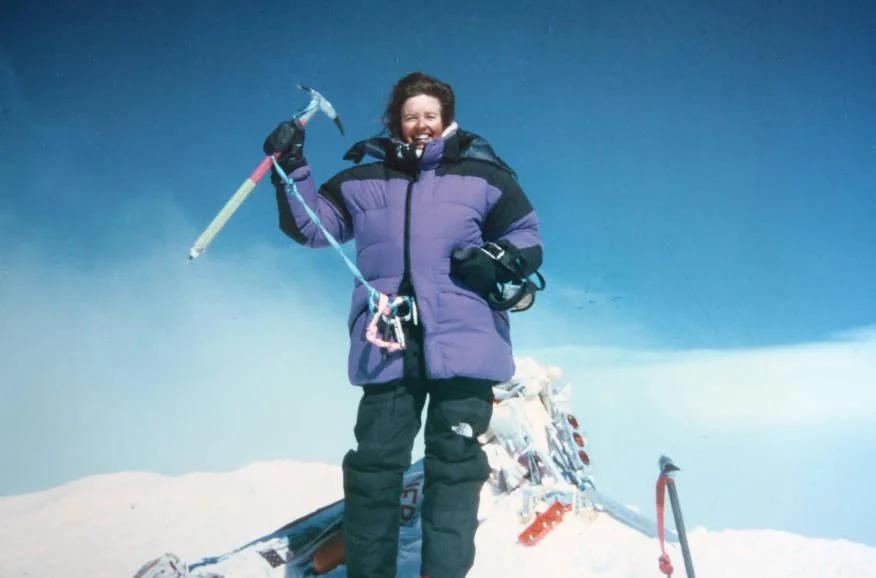
Mount Everest, 8,848 metres. May 1998.
Everest does not ask for permission. It does not care about your training, your experience, your sponsors, or your dreams. It does not care about the years you spent preparing, the money you borrowed, the people waiting for you at home. It takes what it wants — and what it wants, more often than not, is everything.
At 8,500 metres, the air is so thin that every breath delivers less than a third of the oxygen your body needs to survive. Your brain slows. Your blood thickens. Your muscles stop listening to your mind. And yet, every year, hundreds of people climb into that invisible killing zone and keep going — upward, always upward — because the summit is close and the dream is louder than the fear.
Some of them never come back down. They are still there. Frozen in place. Permanent. A body on Everest does not decay the way it does in the world below — it simply stays, preserved by the cold, slowly becoming part of the mountain itself. Climbers know their names. Green Boots. David Sharp. Hannelore Schmatz. Shriya Shah-Klorfine. Landmarks now, not people. Each one a story that ended too high and too far from home.
But there is one story that does not fit neatly alongside the others.It is not simply a story of ambition that went too far. Not just a cautionary tale about the cost of chasing the impossible. It is something older and stranger and far more human than that. It is a love story — set at the edge of the atmosphere, written in frostbite and frozen tears, on the coldest stage on Earth.
His name was Sergey Arsentiev. Hers was Francys. He was a Soviet-trained climber of extraordinary strength, the kind of man who looked at routes others refused and saw a challenge worth taking. She was an American woman who loved the mountains the way some people love a religion — completely, without reservation, without an exit strategy. Together, they were more than two climbers sharing a rope. They were a team. A partnership forged at altitude, tested on every peak they ever touched, and ultimately sealed on the highest mountain in the world.
On May 22, 1998, Francys Arsentiev became the first American woman in history to stand on the summit of Everest without a single breath of bottled oxygen. She reached the top of the world on nothing but her own body, her own will, and the quiet certainty that she and Sergey had trained for this moment their entire lives together.
She never made it back down. And Sergey — the strongest man she had ever known — went back up into the dark to find her.
This is their story. Not a warning. Not a headline. A love story, reckless and real and faithful to the very last breath — told by a mountain that keeps its secrets and never gives back what it takes.
Table of Contents
I. A Love Story at the Roof of the World
It began in 1991, when the Soviet Union collapsed.
For decades, the best climbers from Russia and the Soviet republics had been shut off from the great Himalayan peaks. They had conquered their own mountains — the Pamirs, the Tian Shan, the Caucasus — but Everest, Cho Oyu, Makalu: those were out of reach. When the borders opened, they flooded in. Tough, disciplined climbers trained in the hardest school in the world, suddenly free to test themselves against the highest mountains on Earth.
One of them was Sergey Arsentiev.
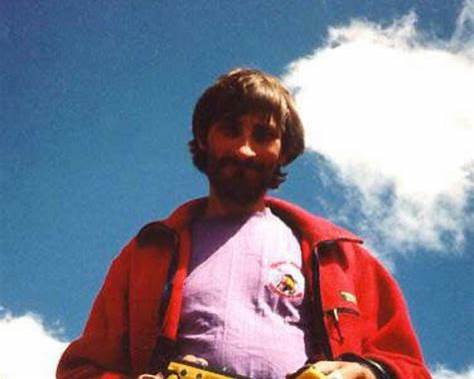
Sergey was already a legend among his peers. He climbed routes that other experienced mountaineers refused to look at. He was calculating, steady, and extraordinarily strong. In the new world of the post-Soviet Himalayas, he was exactly the kind of climber who stood out.
At the base camp of Cho Oyu, he met Francys de Stefano.
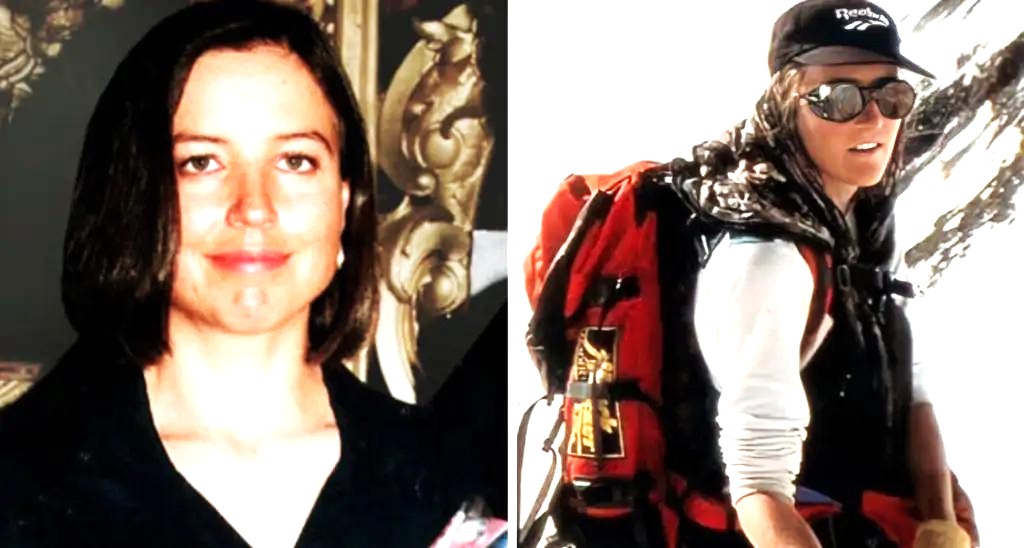
Francys was not a tourist. She was not someone who had come to the mountains for a photo against a snowy backdrop. She had been climbing seriously for years, and she had come to Cho Oyu to summit it. When Sergey invited her to join an expedition to the Pamirs, she said yes without a second thought.
In the mountains, people reveal themselves faster than anywhere else. There are no masks up there. No pretending. You are exactly who you are. And who Francys and Sergey were, it turned out, was exactly what the other one needed.
In 1992, they married.
From that point on, their life was one long expedition. The Pamirs. The Tian Shan. The Caucasus. The Himalayas. They climbed the first unnamed peak in the Pamirs and called it the Peak of Goodwill — fitting, for a Russian-American couple in the early days after the Cold War. Francys became the first American woman to ski down the frozen slopes of Mount Elbrus, Europe’s highest peak. The climbing world started to notice this couple who seemed to believe that borders — between countries, between what was possible and impossible — simply did not apply to them.
But every ascent was just a rehearsal. Everything was pointing toward one mountain. One goal. One dream that would take everything they had — and, in the end, take everything else too.
II. The Impossible Goal
Everest does not forgive shortcuts.
Most climbers who attempt it use supplemental oxygen — portable tanks that feed extra air through a mask, giving the body a fighting chance against the extreme altitude. Without oxygen, your lungs receive only one third of the air they would at sea level. Your blood thickens. Your brain slows. Your muscles stop responding. Your body begins, quietly and systematically, to shut itself down.
The statistics are not comforting. Roughly one in six climbers who attempt Everest without supplemental oxygen does not come back.
Sergey and Francys knew this. They were not naive. They had both spent enough time in the mountains to understand what the death zone does to a human body. They had seen it. They had climbed past it. They knew the odds.
And they chose to go anyway.
Francys’s goal was specific: to become the first American woman ever to summit Everest without bottled oxygen. No woman from the United States had done it. It was a record that mattered, a story that sponsors would pay for, a headline that would justify the years of preparation and the enormous financial cost. Climbing Everest costs tens of thousands of dollars. Permits alone are staggering. They had no sponsor backing their attempt — they refinanced their own house to fund it.
This was not recklessness. This was commitment. This was two people who had spent their adult lives building toward a single moment, and who had decided that the moment was now.
In 1998, they arrived at Everest Base Camp and looked up at 8,848 metres of rock, ice, and sky. The roof of the world. The place where their dream lived — and where, before long, so would their bodies.
III. The Race Against Time
Proper acclimatisation on Everest takes weeks.
You climb slowly. You go up a little, then come back down. You let your body produce more red blood cells, let your lungs adapt, let your brain learn to function in air that barely sustains life. Skip this process, and the consequences come quickly: pounding headaches, nausea, fluid filling the lungs, swelling of the brain. Confusion. Wrong decisions. Death.
Sergey and Francys knew all of this. But they had a problem: time.
On Everest, there is a narrow weather window — a brief period, sometimes just a few days, when the winds drop enough to allow a safe summit attempt. Miss the window and you wait another year. The window does not negotiate. It does not extend itself for people who need more time. It opens, and then it closes.
Their acclimatisation was rushed. Not recklessly, not carelessly — but faster than their bodies needed, faster than was truly safe. They climbed, descended, climbed higher, descended again. Their bodies adapted, but not completely. Not enough.
On May 19, Sergey and Francys reached their high camp at 8,200 metres — already deep inside the death zone. The plan was simple: leave at 1 AM, summit before dawn, descend in daylight. Standard practice for high-altitude climbing.
But at 1 AM, their headlamps failed.
At minus 30 degrees Celsius, batteries die almost instantly. The cold drains them in minutes. Francys had brought two pairs — they both failed, one after another, until they were standing in total darkness at 8,200 metres, one wrong step away from a fall that nothing could stop. Sergey made the call: they would go back. Another night in the death zone. Another night without oxygen.
This was already dangerous. The human body does not recover at 8,000 metres — it only loses ground. Every hour up there, you get weaker. Every night costs something you cannot get back.
On May 21, a fellow climber named Anatoly Moshnikov descended to their camp. He had been guiding a French client, a man named Romain Gilles, and had summited successfully. When he saw Sergey and Francys, he understood immediately how much they had lost in those two nights. He begged them to go down with him.
They refused.
What could he say to them? The summit was right there. A few hundred metres. They had spent years getting to this point. They had refinanced their house. There was nothing below that mattered more than what was above. Moshnikov left. He did what he could, which was nothing.
On the night of May 22, after three nights in the death zone and still without oxygen, Sergey and Francys stepped out of their tent for the third time — and started climbing toward the summit.
IV. They Made It
By mid-morning, they had been spotted moving slowly past the First Step. By 2 PM, they were above the Second Step, at nearly 8,700 metres. Around them, other teams were moving too — an Uzbek team that had left camp at 8 AM, fresh and strong, with full oxygen tanks.
One of the Uzbek climbers, Rustam Rajapov, caught up with them near 8,800 metres. What he saw frightened him. Francys was barely moving. She would take a few steps, sit down, rest, then force herself to take a few more. Her face was blank with exhaustion. Her body had almost nothing left. Two nights in the death zone without oxygen had consumed her reserves completely.
Rajapov pushed on to the summit, reached it at 4:40 PM, stayed only minutes, and began his descent. On the way down, he met them again and tried to reason with them. “Go down now,” he said. “You won’t make the descent before dark.”
Sergey shook his head. They had a cache, he said. Between the First and Second Steps. A tent, oxygen, warm clothes. They would make it to the cache and wait out the night there. Rajapov even turned around and climbed back up with them for fifty metres — an extraordinary effort for someone who had just summited — trying to change their minds. But Sergey was firm. We have everything we need.
Rajapov believed him. He had to. He was at his own limit.
When Rajapov reached the cache on his descent, he found it. Half an empty backpack. A half-empty oxygen bottle. A flashlight. A flask. No tent. No sleeping bag. No warm clothes. Nothing that would keep two people alive through an Everest night.
But Sergey and Francys were already far above. Already beyond reach.
At 6:30 PM on May 22, 1998, Sergey and Francys Arsentiev stood on the summit of Everest. After four nights in the death zone. Without a single breath of bottled oxygen. Francys had done it. She was the first American woman in history to summit Everest without supplemental oxygen.
For a brief moment, there was joy. An embrace, maybe. Tears that would have frozen instantly in the cold. The view that only a handful of humans have ever seen.
Then the sun began to set. And they had to go down.
V. The Descent
The descent from Everest’s summit is where most people die.
Going up, every cell in your body is focused on one thing: climb. Going down, everything is different. Your fuel is gone. Your concentration is gone. The technical difficulty of the route — which you managed going up on adrenaline and ambition — is exactly the same going down, but now you have nothing left with which to manage it.
Sergey and Francys descended in the dark. Their headlamps cut thin beams into the black. Every step was a gamble. At 8,600 metres, they reached the spot where their cache should have been. They found what Rajapov had already discovered: almost nothing. They spent their fourth night above 8,000 metres, without a tent, without sleeping bags, in temperatures below minus 30 degrees.
No tent. No oxygen. No food. No water.
A human being is simply not built for this.
Dawn came — grey, dim, cold. They tried to stand and their legs buckled. Their muscles would not respond. Their coordination was gone. But somehow, slowly, they managed to rise. And they began to descend.
Somewhere on that slope, they lost each other.
Maybe one moved a little faster. Maybe one stopped to rest and the other kept walking. Maybe the fog closed in and cut visibility to nothing. Maybe their minds, starved of oxygen for five days, simply stopped tracking where the other person was. You keep your eyes on your feet. You focus on each step. And then you look up — and there is no one beside you.
Sergey descended to camp. He had no strength left. Five nights in the death zone without oxygen. He had reached the absolute limit of what a human body can survive — and he had gone past it. But he made it to the tents.
Francys did not.
VI. Sleeping Beauty
At around 8,500 metres, on a steep icy slope, Francys stood leaning against a rock. Both hands resting on the stone. Head bowed. Eyes open but seeing nothing. Pupils blown wide by hypoxia and cold. Skin the colour of milk. White, waxy, the colour of deep frostbite.
The Uzbek team found her first. Five climbers — Oleg Grigoryev, Andrey Fyodorov, Svetlana Baskakova, Marat Usaev, and Sergey Sokolov — heading for the summit. They stopped when they saw the figure. Moved closer. Realised it was a woman. Realised she was alive.
They called base camp on the radio. A doctor gave instructions: circulation tablets, oxygen at full flow — four litres per minute. They placed the mask over her face. She kept tearing it off. Her hands moved on their own, as if the mask was suffocating her, though it was the only thing keeping her alive. They rubbed her fingers, massaged her arms, tried to give her hot tea. She couldn’t swallow. The liquid ran down her chin and froze on her jacket.
Her legs would not work at all. When they tried to lift her, her knees gave way. She collapsed. She could not hold her own weight.
They had ten oxygen bottles for five climbers — just enough for their own climb and descent. Two of them gave her their bottles. Now they were without oxygen themselves at 8,500 metres. An altitude where humans are not meant to exist.
Grigoryev made the decision that no climber ever wants to make. He and Fyodorov would stay with Francys and try to bring her down — even a little. The others would continue to the summit. At 1 PM, Fyodorov climbed upward without oxygen, his tank and mask left with Francys. It was, he knew, very close to suicide. But he went.
Grigoryev stayed with Francys for as long as he could. He sat beside her, held her, pulled her hood up, connected his last oxygen bottle. An hour passed. Two hours. The sun moved across the sky. The temperature dropped. His own fingers went numb. His own breath grew laboured. He was at his limit.
At 2 PM, he made the hardest decision of his life. He fastened Francys to the fixed rope so she wouldn’t slip. He adjusted her mittens, her hat, her hood. He did everything he could. And then he left. He started descending, leaving her alive — breathing, still breathing — but with no way forward.
On his way down, in the gathering dark, he saw a light moving upward. Toward him. He froze. Who could be climbing at night? After a day like this?
The figure came closer. Ten metres. Five. And Grigoryev raised his headlamp and saw the face.
Sergey Arsentiev.
The same Sergey who had descended that morning. Who should have been in a tent at 8,200 metres, in what passed for warmth and safety. Instead, he had a backpack on his shoulders and an oxygen tank strapped to it. He had turned around. He was climbing back up. Into the night. Toward his wife.
“Is she alive?” Sergey asked. His voice was hoarse and exhausted, but steady.
“Yes,” Grigoryev said. “I just left her.”
Sergey nodded. Said nothing more. And kept climbing. Past Grigoryev. Upward. Into the dark.
Grigoryev watched the light grow smaller, fainter, and then disappear into the night.
This was Sergey’s fifth night above 8,000 metres. His body had gone far beyond what medicine says is survivable. His heart, his lungs, his brain — all of them running on nothing. And he climbed. Because up there, his wife was waiting. The woman he loved. Dying. And he could not leave her.
No one ever saw Sergey Arsentiev again.
VII. The Decision
The next morning, a South African team appeared on the ridge.
Ian Woodall, Cathy O’Dowd, and four Sherpas. Six people, fresh oxygen, eyes fixed on the summit. They had spent months and tens of thousands of dollars preparing for this day. The weather was perfect. The route was clear. The summit was close.
At 8,450 metres, they found Francys.
She was sitting against a rock, tied to the fixed rope, head tilted to one side. The oxygen mask dangled loose beside her. Her hands were bare. Her fingers white and waxy. Her skin the colour of porcelain.
Cathy O’Dowd was the first to reach her. She knelt down, looked into Francys’s face — and saw open eyes. Huge, dark, unfocused pupils. Staring but not seeing.
“Help me,” Francys whispered. Barely audible. Her lips barely moved.
Cathy froze. She looked at this woman — long dark hair, about the same age, another climber, another dreamer — and felt something shift inside her. For a moment, she saw herself.
“Don’t leave me,” Francys murmured again and again.
The team moved into action. One Sherpa opened a thermos and tried to give her tea. It ran down her chin and froze. Cathy rubbed her hands — hard, cold, like stone, not frostbite anymore but necrosis, the tissue already dying. They checked the oxygen tank. Empty. The mask had been torn off again and again in delirium. They had spare tanks but no spare masks — her Russian-made mask used a different fitting, incompatible with their gear.
Three Uzbek climbers arrived on their way up. Cathy asked if they could help carry her down. The lead climber shook his head quietly. “We tried yesterday,” he said. “We left her oxygen. She is too far gone. There is nothing more we can do.”
And there, at 8,450 metres, the decision formed without words.
Carrying Francys down was impossible. At that altitude, another person’s weight is a death sentence. You could drag a person fifty metres, maybe a hundred. After that, your heart gives out. And there were nine climbers who wanted to live. Who had families. Who had made their own promises to come home.
“I’ll come back,” Cathy told Francys. Her voice cracked. “I promise. I’ll bring help. I’ll come back.”
But she knew it was a lie. There would be no help. No one was coming back.
The South African team turned around. They gave up their summit. They gave up the dream they had spent months and a fortune chasing. They descended in silence.
Cathy O’Dowd cried the entire way down. Her tears froze on her face. The Sherpa ahead kept telling her not to look back. Just move. Just walk. But she turned around once — just once — and saw Francys up there. Small. Alone. Tied to a rope. A tiny figure against the endless white slope and the deep blue sky.
That was the last time anyone saw Francys Arsentiev alive.
VIII. The Legacy
Francys’s body remained on the Northeast Ridge for nine years.
Every climbing season, teams passed her. Some froze in shock. Some took photographs. Some looked away and did not speak of it. But no one who passed her forgot her. She sat there through storms and sunshine, through seasons of ice and thaw, a permanent and unsettling presence on the route to the summit. Some people said she looked peaceful. Others said she looked like she was watching the climbers go by.
They called her Sleeping Beauty.
In 2007, Ian Woodall returned to Everest. He had never stopped thinking about her — about the morning he had found her and the choice that was made. He came back with a small team, and they moved Francys’s body off the climbing route, carrying her to a place where she would not be seen by passing climbers. Where she could rest, undisturbed, on the mountain that had taken her. It was the most he could offer. The most anyone could.
No one knows exactly what happened to Sergey. Whether he reached Francys in those final hours. Whether he sat beside her as she slipped away. Whether he held her hand. Whether they were together at the end. The mountain kept that secret, as it keeps all its secrets. There are only guesses and no answers, and the silence of an altitude where words do not carry far.
IX. The Ethics of Everest
The story of Francys and Sergey Arsentiev forces an uncomfortable question: could anyone have saved her?
The honest answer is almost certainly no.
Above 8,000 metres — what climbers call the death zone — the human body cannot survive indefinitely. There is not enough oxygen to sustain life. Every minute you spend up there, your brain and body are being slowly destroyed. Rescue, in the conventional sense, is impossible. Helicopters cannot operate at that altitude. There are no paramedics, no emergency rooms, no cavalry coming over the ridge. There is only what the people around you can carry, and what they can risk.
Francys’s situation — five days at altitude without oxygen, with frostbite spreading through her hands and legs, unable to walk or swallow — was beyond rescue. Even at sea level, with every medical intervention available, the damage to her body would have been catastrophic. At 8,500 metres, carrying her down was not a difficult choice or a brave choice or a cowardly choice. It was simply impossible.
But the story raises other questions that are harder to answer.
Why were Francys and Sergey on the mountain in the condition they were in? Why did they spend five nights in the death zone, when every experienced climber and every piece of mountaineering wisdom said to turn back? Part of the answer is passion — the deep, consuming love for the mountains that had defined their lives. Part of it is obsession — the inability to abandon a dream when you are that close, when you have given that much.
And part of it, honestly, is the pressure that surrounds Everest.
In 1998, the commercialisation of the world’s highest mountain was already well advanced. The mountain had become a destination not just for the world’s elite climbers but for wealthy adventurers willing to pay for the experience of saying they had stood on top of the world. This brought guides, logistics, infrastructure — and expectations. Sponsors wanted results. Records were currency. The story of the first American woman to summit without oxygen was worth something. Worth enough, perhaps, to keep going when the rational decision would have been to stop.
Francys and Sergey were not commercial clients. They were serious, experienced mountaineers who understood exactly what they were attempting. But the weight of expectation — financial, personal, psychological — may have made it harder to turn back when turning back was the right thing to do. In the mountains, the line between courage and recklessness is thin. It is made thinner still by ambition, by love, by the proximity of a dream.
X. What Her Story Teaches Us
There is a version of Francys Arsentiev’s story that treats her as a cautionary tale. A warning about going too high, pushing too far, wanting too much. That version is not wrong — but it is incomplete.
Because Francys also did what almost no one in history had done. She reached 8,848 metres without a single breath from a tank. She made it to the top of the world on her own lungs and her own will and her own strength. The fact that she did not come back does not erase what she achieved. The mountain took her life. It did not take her record.
And Sergey — what do we make of Sergey? The man who descended to safety and then turned around. Who climbed back up into the night, into the cold, into death, because his wife was up there alone and he could not leave her. That is not a cautionary tale. That is a love story. One of the most extreme love stories in the history of human beings.
Their story teaches us something about the nature of dreams — how they can sustain us and destroy us in equal measure. How the thing that drives us to the summit can be the same thing that keeps us there too long. How passion and obsession are often the same feeling, wearing different clothes depending on whether you come back or not.
It teaches us something about the mountains too. That they do not care. That they are not cruel or kind. That they are simply there — indifferent, enormous, and utterly without mercy. That the deal they offer is always the same: you can come up, but you may not come down. And every climber who signs that deal does so knowing exactly what it says.
Conclusion
Francys Arsentiev did not die a failure.
She died having done something extraordinary. Having stood at the highest point on Earth, without artificial help, with only her own body and her own soul to carry her there. She died surrounded, in her final hours, by people who tried to save her — who gave up their own oxygen, their own summit dreams, their own sense of safety to sit beside her in the cold.
And somewhere above her, her husband was climbing. Climbing back up. In the dark. Toward her.
The mountain keeps both of them now. Sergey never found, Francys moved at last to a quieter slope. They stayed where they always said they wanted to be — high up, together, where the sky meets the earth.
We call her Sleeping Beauty. But that name, with its fairy-tale softness, does not quite capture who she was. She was a climber. She was a wife. She was a woman who chose the hardest possible version of her dream and went after it with everything she had.
The mountain did not take her. She gave herself to it. Willingly, knowingly, with eyes open — those open eyes that Cathy O’Dowd saw that morning, that would not close, that seemed to be watching long after they could no longer see.
In the end, that is what remains. Not the tragedy. Not the cold arithmetic of who could have done what and when. Not the photographs or the nicknames or the moral debates.
What remains is a woman at 8,500 metres, still breathing when she should not have been breathing, still holding on when there was nothing left to hold onto, still whispering the only two words that still meant something:
Save me.
And a man, somewhere above her in the dark, still climbing.
Francys Arsentiev, 1958–1998. Summit of Everest, 22 May 1998, 18:30. Sergey Arsentiev, 1958–1998. Last seen climbing toward his wife. Resting on Everest.