
The 2 PM Rule on Everest – What Every Expedition Should Follow
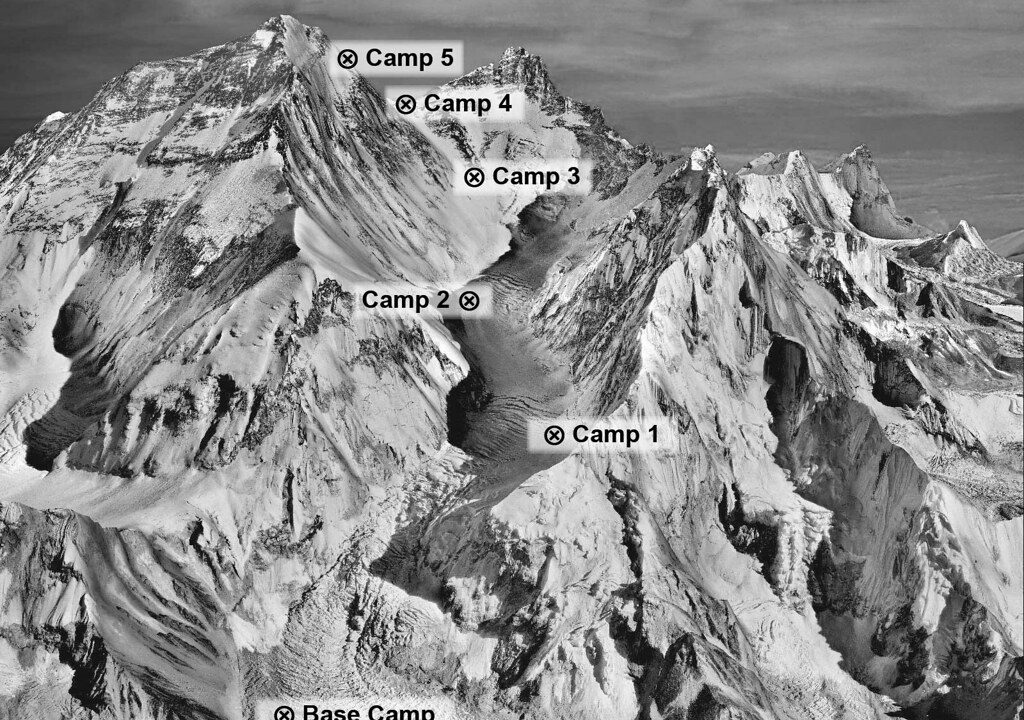
Table of Contents
Introduction
High on the slopes of the Everest death zone, Sherpa recalled a chilling moment: “ Everything was going perfectly till noon, the sky was clear, the wind was normal. But by 2 PM, the Everest rhythm changed, the wind came like a roar, and suddenly our team started racing just to stay alive.” That kind of sudden shift in Mt. Everest climbers realise the importance of the most important unwritten laws – the 2 PM rule.
This rule is not something that is written in a book. It came from the experience of the climbers who went to the summit of Everest. It is a safety guideline that must be followed by the mountaineers to stay alive during the Expedition. According to the 2 PM rule, no climber should continue toward the summit or remain in the summit zone after 2 PM; instead, they must turn back and begin their descent, regardless of how close they are to the top.
This rule matters because it shows the harsh reality of Mt Everest. Weather deteriorates rapidly in the afternoon—strong winds intensify, temperatures drop sharply, and climbers become increasingly fatigued.
Many accidents and fatalities have occurred when climbers ignored this cutoff time, turning a successful summit into a life-threatening situation.
In this piece, you’ll learn where the 2 PM rule comes from, the science behind it, how it’s enforced on expeditions today, and what practical lessons it offers to anyone drawn to the world’s highest peak.
Must read: Everest Climbing Rules Update: Proof of Previous 7,000m+ Summits Required
The Historical Roots of the 2 PM rule
Early Expeditions (1950s–70s):
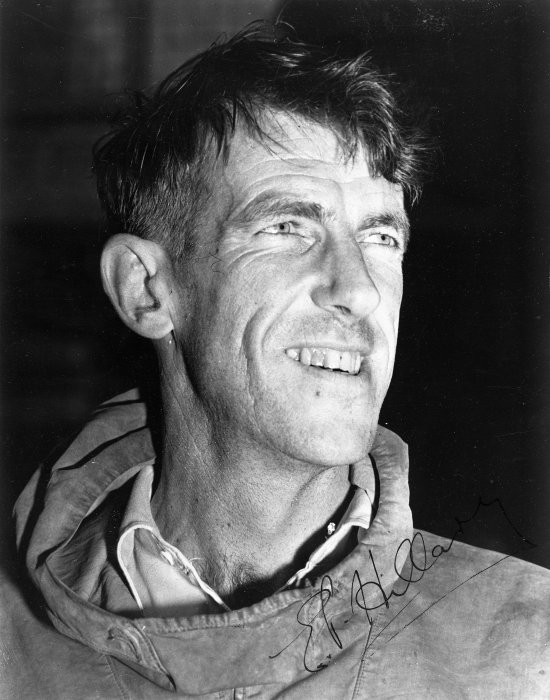
The origins of the PM rules can be traced back to the earliest summit attempts on Mount Everest, particularly during the landmark 1953 British Everest Expedition led by John Hunt.
In diaries and expedition logs from climbers like Edmund Hillary and Tenzing Norgay, there are repeated references to how quickly conditions worsened after midday.
Although it is not an official rule, early climbers noticed this pattern on Mount Everest. Early in the morning, they observe that the morning remains calm, and the wind is normal. But by afternoon, the weather became dangerous, with strong winds, more clouds, and much colder temperatures.
Because of this, climbers started their summit attempts very early—often before sunrise—so they could come back down before the weather got worse. By the 1960s and 70s, this idea was widely understood and followed, eventually leading to what we now call the 2 PM rule.
Related article: The Hillary Step: Everest’s Legendary Obstacle and Its Changing Legacy
The 1996 Everest Disaster: A Turning Point
The importance of the 2 PM rule became widely recognized after the 1996 Mount Everest disaster, one of the deadliest tragedies in Everest’s history. On 10 May 1996, multiple commercial expeditions, including those led by renowned guides Rob Hall and Scott Fischer, attempted the summit on the same day. Heavy congestion near the Hillary Step delayed many climbers well beyond their planned turnaround times, with some reaching the summit as late as mid-afternoon.
Later that day, a powerful storm struck the upper mountain with hurricane-force winds, whiteout conditions, and extreme cold. Eight climbers lost their lives over the following 24 hours. The tragedy, later documented in Jon Krakauer’s bestselling book Into Thin Air, became one of the clearest examples of why turnaround times must be respected. Several climbers continued toward the summit despite passing their planned turnaround time because they were only a short distance from the top.
Following the 1996 disaster, expedition leaders, commercial operators, and the Nepal Mountaineering Association (NMA) began enforcing strict turnaround times as a fundamental safety practice rather than a flexible guideline.
Formalization by the Nepal Mountaineering Association (NMA):
By the 1990s and early 2000s, commercial expeditions increased, and Everest saw heavier traffic. So to control the traffic they started new rules and measures to control the traffic. Also the guides which are trained by the Nepal Mountaineering Association (NMA) brief about Everest 2 PM rule to the expedition leaders to ensure climbers understand that summit success is secondary to safe return. Guides and expedition companies became increasingly responsible for enforcing turnaround times, especially after high-profile disasters highlighted the consequences of ignoring them.
The Sherpa Perspective:
For Sherpas, who are doing the Mt Everest Expedition, the Everest 2 PM rule is not a new rule for them. Their entire generation lives and experiences the Everest region. They understand what happens in the high-altitude “death zone” and have long relied on this knowledge to guide climbers safely. They can read the mountain’s rhythms: wind patterns, snow conditions, and the subtle signs of incoming storms.
Today, many experienced Sherpas are the biggest supporters of the 2 Pm rule. They follow this rule while they lead the team who are heading for the Everest summit.

The Science Behind the Cutoff Time
Meteorological Patterns on the Himalaya:
Mount Everest’s summit sits at 8,848.86 meters (29,031.7 feet), high enough that even small delays in the “Death Zone” above 8,000 meters can quickly become life-threatening. During the Everest summit, the route from the Everest base camp(17,598 feet) to Camp III(23,625feet) is not fully exposed. But from Camp IV ( 26,085feet), you will pass through the Everest Hillary step to the summit, which is exposed.
Early in the morning, the temperature remains cool while keeping the snow firm and the winds light. But once the sun rises, the slow rise in the temperature causes temperature swings that make the air unstable. By early afternoon, these changes create strong rising air currents that clash with colder upper layers, sometimes intensified by the Jet Stream. Seasonal monsoon patterns can push these high winds lower, producing sudden turbulence.
The result is that clouds, wind, and storms increase sharply after midday, turning what might be a manageable climb into a life-threatening situation in just a few minutes.
Human Physiology at Extreme Altitude:
At an altitude above 8,000 meters – the so-called Death Zone – the human body is already operating at its limit. It is because the air contains only about one-third of the oxygen found at sea level.
As the day progresses, several physiological stressors intensify:
- Energy depletion: Climbers burn thousands of calories during summit pushes, and by afternoon, reserves are critically low.
- Dehydration: Dry air and heavy breathing accelerate fluid loss, impairing decision-making and physical coordination.
- Cognitive decline: Hypoxia (low oxygen) worsens over time, increasing the risk of poor judgment—one of the most dangerous factors in high-altitude climbing.
This combination increases the risk of serious problems like low oxygen (Hypoxia), frostbite, and collapse from exhaustion. In short, even if the weather stays calm (which is rare), the body becomes much weaker and less able to handle the descent after 2 PM.
Objective Hazards that Intensify After 2 PM:
The dangers on Everest don’t stay the same—they get worse as the day goes on.
- Avalanches: Afternoon warmth weakens snow layers, increasing the chance of collapse. This was tragically evident during the 2015 Mount Everest Avalanche, where unstable conditions contributed to the catastrophic loss of life.
- Crevasse exposure: As snow bridges soften, hidden crevasses become more dangerous during descent.
- Whiteouts: Wind-driven snow can rapidly reduce visibility to near zero, disorienting climbers and obscuring routes.
Another example is the Everest traffic jam, which occurred on May 22, 2019. Around 320 people were heading for the summit push on this day. At the bottleneck near the summit, the delay to reach the summit made the climber exhausted and forced to descend in darkness and extreme cold. Sadly, 10-11 climbers died on the mountain.
By this example, we can learn that the 2 PM rule is not random—it is based on the science of weather, human limits, and the growing dangers on Everest in the afternoon.
Worth reading: How many people died in Mount Everest
How the Rule Is Applied in Practice
The “Turn-Back” Policy for Climbers:
On Mount Everest, this 2 PM rule is enforced during the summit day. Climbers leave Camp IV (South Col, ~7,900-8,000m) around midnight (10:00 Pm to 1:00 am). This makes them able to reach the summit of Everest early in the morning and get enough time to return before 2 PM. The practical guideline is simple but non-negotiable: if a climber has not reached the summit in time to safely descend and be well below the South Col by 2 PM, they must turn back immediately. In many expeditions, this translates into even earlier personal turnaround times (e.g., 11 am or noon), depending on conditions.
To support this, teams rely on structured communication:
- Guide leaders instruct their team on the Walkie-Talkie.
- Expedition leaders monitor the climber’s progress and oxygen supply continuously.
- Pre-agreed turnaround times are individualized for each climber’s pace and condition
Climbers need to follow all the instructions set by the Guide strictly to maintain safety during the expedition.
Checkout: Tragedy That Never Left: Tsewang Paljor (Green Boots) and the 1996 Everest Disaster
Permit Conditions & Enforcement:
To enforce the 2 PM rule on Everest, the Department of Tourism Nepal mandates hiring a licensed climbing guide with them. The Nepal Mountaineering Association (NMA) only issues the climbing permit if you have a licensed guide with you. This licensed Guide will lead the expedition team, and all the members should strictly follow the rules and regulations set by this Guide. Licensed guides are trained to maintain the safety, share weather intelligence, and encourage strict compliance.
In reality, the enforcement of the 2 PM rule is a mix of policy and culture:
- Legally, expedition leaders can be held responsible for unsafe decisions.
- Practically, Sherpa guides often have the final say on the mountain.
- Socially, ignoring the rule is increasingly seen as reckless within the climbing community.
Real-World Examples:
There are many examples of the Everest Expedition that became successful because of the respected turnaround times. Teams that summit early—often between 5 am and 9 am—and begin descending well before afternoon weather shifts tend to have significantly higher safety margins. These climbs rarely make headlines, but they represent the majority of well-executed Everest ascents.
By contrast, some of the most dangerous situations have arisen when the rule was ignored. During the crowded 2019 season, often referred to as a “summit rush,” long queues formed near the summit. Climbers who reached the top late in the day were forced into exhausting descents under worsening conditions—leading to multiple emergencies and deaths.
These cases highlight a hard truth of Everest: the summit is only halfway. The 2 Pm rule exists not to limit ambition, but to ensure climbers have enough time, strength, and daylight to make it back down alive.
Why the 2 PM Rule Saves Lives (and Sometimes Doesn’t)
he record on Everest makes the case for the 2 PM rule clearly:
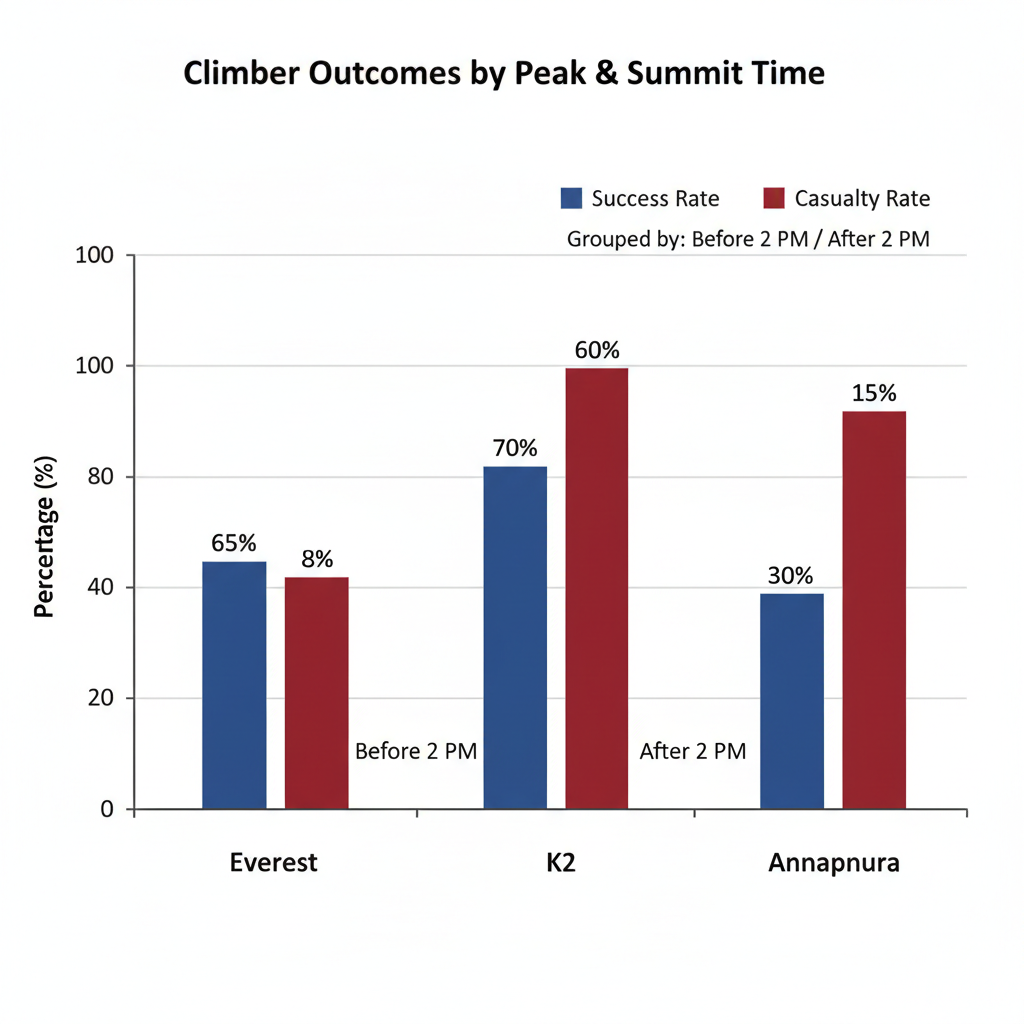
- More than 300 climbers have died attempting Everest since climbing began on the mountain in 1922, and the majority of deaths occur during descent rather than the ascent itself.
- The 1996 disaster killed 8 climbers in a single storm, several of whom summited after the safe turnaround window.
- The 2019 “traffic jam” season saw roughly 10–11 deaths, largely linked to bottleneck delays that pushed climbers past safe turnaround times.
- Teams that summit early — typically between 5 AM and 9 AM — and begin descending before early afternoon consistently show the lowest fatality rates of any summit-day pattern.
These numbers are the underlying reason the 2 PM rule exists: not as an arbitrary cutoff, but as a response to a well-documented pattern of what goes wrong after it.
Limitations & Exceptions
If the situation gets worse at the high altitude of Everest, the rescue operation can be challenging due to strong winds and extreme weather. Helicopter evacuation will be available only in the lower Everest region, so climbers above Camp IV must rely mainly on their team and their own skills to stay safe.

Practical Tips for Climbers: Staying on the Right Side of the Rule
Pre-Expedition Planning:
The success of Mount Everest is decided long before the summit day. The 2 PM rule only works if you follow these things:
- Maintain strong physical, mental and psychological.
- Successful summit in the Training Peak of Nepal, such as Mera Peak (6,476m, the highest beginner peak), Island Peak (6,189m, popular) and Lobuche East (6,119m, technical).
- Hiring Experienced Sherpa guides and a support team
- Choosing the right weather
- Careful planning and staying in discipline, teamwork, and knowing when to turn back.
Find out: How much it cost to climb Mount Everest
On-Mountain Execution:
Even the best plan can fail without disciplined execution. On summit day, time management becomes survival.
Effective teams focus on:
- Pacing strategies: maintaining a steady on fixed ropes rather than sprint-and-rest cycles that burn energy
- Structured breaks: short, timed stops to avoid cooling down too much
- Nutrition and hydration: small, frequent intake to sustain energy in the thin air
Technology now plays a growing role. Many climbers use GPS watches or altimeters with alarms set for critical turnaround times—essentially a digital enforcement of the 2 PM rule.
But the most important “tool” remains human judgment: experienced guides constantly assess whether the current pace will allow a safe descent before conditions deteriorate.
Detailed guide: Everest Gear – Complete Guide to Mountaineering & High-Altitude Equipment
Decision-Making Framework:
The summit push is where discipline is most tested. A clear “Go/No-Go” framework helps remove emotion from the decision.
A typical checklist includes:
- Are weather conditions still within forecast limits?
- Is the climber on schedule to summit early (ideally before late morning)?
- Are oxygen supplies sufficient for ascent and descent?
- Is the climber mentally sharp (no signs of Hypoxia)?
- Is the turnaround time (latest 2 PM) still realistically achievable?
If any answer is “no,” the correct decision is to turn back.
Communication is equally critical. Constant radio updates between climbers, Sherpa guides, and base camp ensure that decisions are shared, not isolated. On Everest, communication has been a factor in past tragedies—teams that stay coordinated are far more likely to stay safe.
Post-Summit Recovery:
Whether a climber summits or turns back early, the descent is where the real danger lies.
Smart teams treat an early turnaround not as failure, but as a strategic retreat:
- Descend via fixed, known routes rather than improvising shortcuts
- Maintain focus through the “easy” sections, where fatigue often leads to mistakes
- Continue hydrating and fueling, even when appetite drops
After returning to lower camps, attention shifts to recovery. Climbers must monitor for altitude-related conditions such as Altitude Sickness, which can still worsen even after descent.
Ultimately, the best climbers understand a simple truth: the mountain will always be there—but only if you are too.
Frequently Asked Questions (FAQ)
Q1. Is the 2 PM rule mandatory for every climber?
→Yes. Expedition itineraries are built so climbers summit in the early morning and return to camp before 2 PM, and guides enforce this turnaround as a non-negotiable safety rule.
Q2. Does the rule apply to both the South and North routes?
→Yes, the principle applies on both the South Col route in Nepal and the North Ridge route in Tibet, though the exact turnaround time can vary by route length, terrain, and team strategy.
Q3. What if a climber reaches the summit after 2 Pm?
→It is considered high-risk. Descending after 2 PM means facing worsening weather, stronger winds, and dropping temperatures with less energy and daylight to manage them.
Q4. How accurate are the weather forecasts that dictate the window?
→Modern satellite‑based models (e.g., ECMWF) give >80 % accuracy for 24‑hour forecasts at high altitude, but not perfect.
Q5. Can the rule be adjusted for elite, well‑acclimatized climbers?
No. Physiological limits apply to all humans at the “death zone.” Even the most seasoned climbers experience the same rapid decline in performance after midday.
Q6. Is the 2 PM rule a legal law or a guideline?
→It is a safety guideline rather than a formal law, though it is strictly enforced in practice by expedition leaders and licensed Sherpa guides.
Q7. How does the rule differ from other 8000‑m peaks?
→This rule applies to every high altitude Peak whether it’s K2, Annapurna or Kangchenjunga.
Discover details of: International Everest Day (May 29): A Tribute to Mountaineering Legends
9. Final Say
While heading for the Mountain the main things that you need to remember are to respect it. Understand its power, follow safety rules like the 2 PM rule, listen to your guides, and prioritize returning safely over reaching the summit. Don’t take any unnecessary decisions that can take your life. Do thorough research before attempting Everest—don’t be fooled by only the success stories. Documentaries and real accounts reveal the harsh reality of climbing the world’s highest peak, including:
- The Dark Side of Everest (1998)
- Everest (2015)
- Everest Dark (2025)
- Dying for Everest (2007)
- I Skied Down Mount Everest (2025)
-
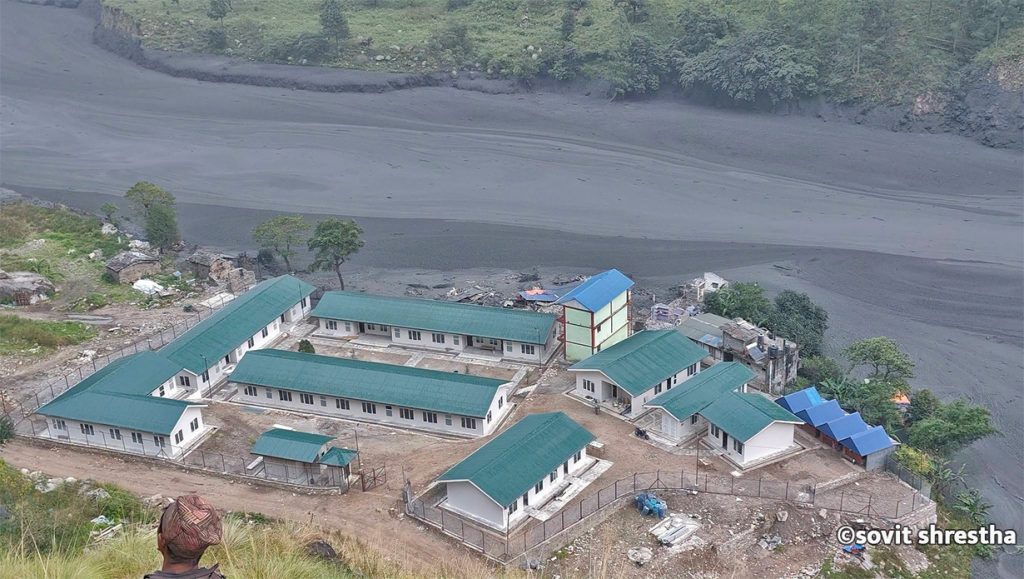
Flash Flood Sweeps Away Dozens of Homes in Gorkha, Nepal
KATHMANDU, Nepal — A sudden and severe flash flood tore through the Budhi Gandaki River basin in Gorkha district on Sunday morning, washing away approximately 35 houses and triggering widespread destruction in the mountainous Manaslu and Tsum Valley regions. According to local authorities and disaster management officials, no human casualties have been reported thus far, though…
-
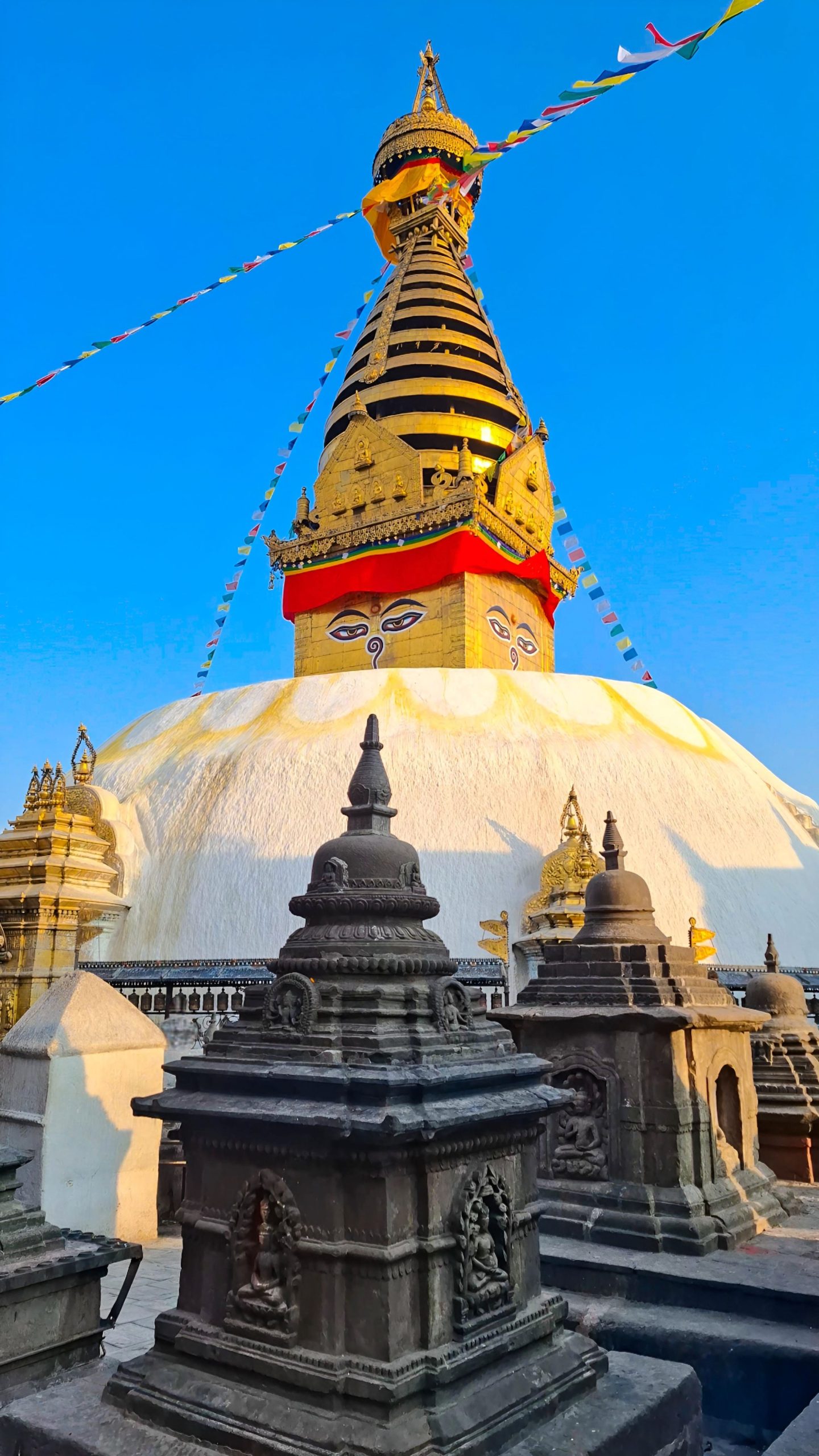
Swayambhunath Temple, Kathmandu
Imagine standing above the chaos of Kathmandu. Honking horns fade below you. A gleaming white dome rises ahead. Two enormous painted eyes gaze calmly in every direction. Prayer flags flutter in the Himalayan breeze. This is Swayambhunath, one of the most extraordinary places in Nepal. Visitors know it as the “Monkey Temple” because hundreds of…
-

North Goa vs South Goa: Which Is Better for Your Holiday?
Amongst the places that are highly popular in terms of beaches, weather, culture, and ambiance in India is Goa, which is known to possess some of the most beautiful beaches in India. The idea of Goa being famous for its beaches, which can be used by tourists for entertainment in North Goa while South Goa…