Mount Kailash: Location, Height, Facts, History, Stories, And More
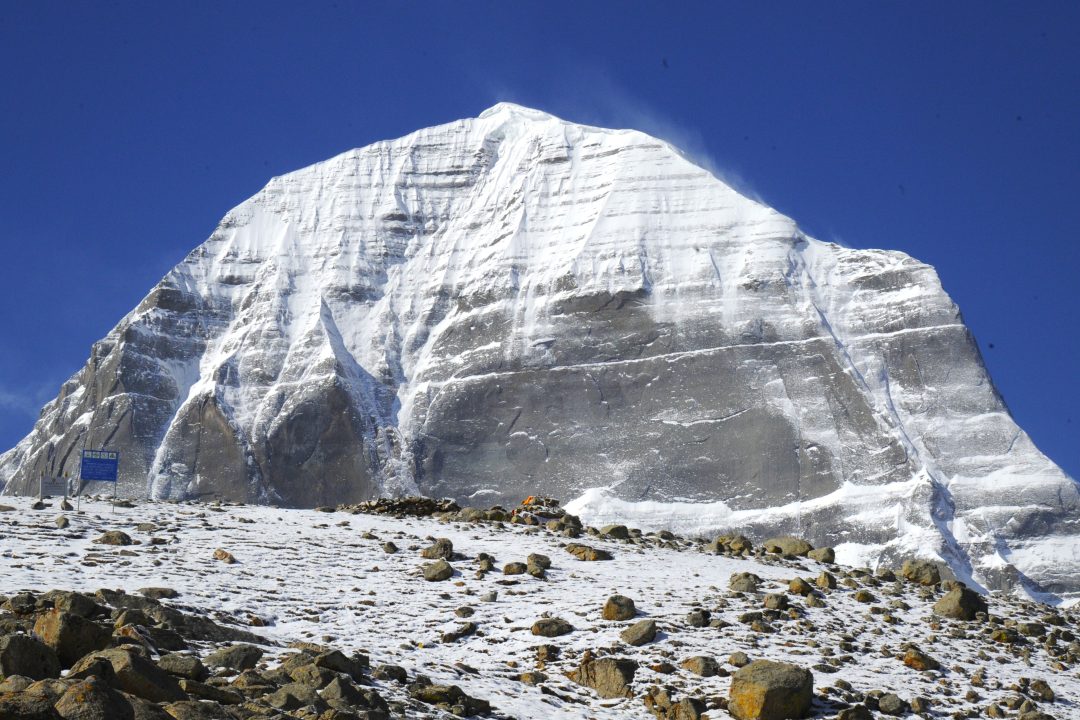
Mount Kailash is the most sacred and most mysterious mountain in the world. Rising to 6,638 meters (21,778 feet) in the remote western Tibetan Plateau, it is the spiritual center of four of the world’s great religions and the source of four of Asia’s mightiest rivers. Kailash Parbat is mythological/spiritual or symbolic reference given to this mountain considering it as a living deity rather than just a physical peak.
Unlike Everest or K2, Kailash has never been climbed — not because it is technically impossible, but because the world has chosen to leave it untouched out of reverence. Its slopes held secrets far older than recorded history, and its summit was considered too sacred for human footsteps. It is a mountain where the enigma and spirituality are more important than the achievements of human beings.
Once legendary climber Reinhold Messner said, “Kailash is the mountain that climbs the soul.”
Whether you are planning a Kailash Mansarovar Yatra, researching the sacred mountain, or simply curious about its geography, this guide covers everything: exact location and coordinates, height facts, the kora circuit, religious significance, nearby lakes, river origins, and how to get there from Nepal or Lhasa.
Table of Contents
Quick Facts – Mount Kailash
| Height: 6,638 m (21,778 ft) Location: Ngari, Tibet, China Coordinates:31.0675°N, 81.3119°E Kora distance: 52 km / 3 days Religions: Hindu, Buddhist, Jain, Bon Climbing status: Prohibited (unclimbed) Best time to visit: May – September Nearest airport: Ngari Gunsa (NGQ) |
Where is Mount Kailash Located?
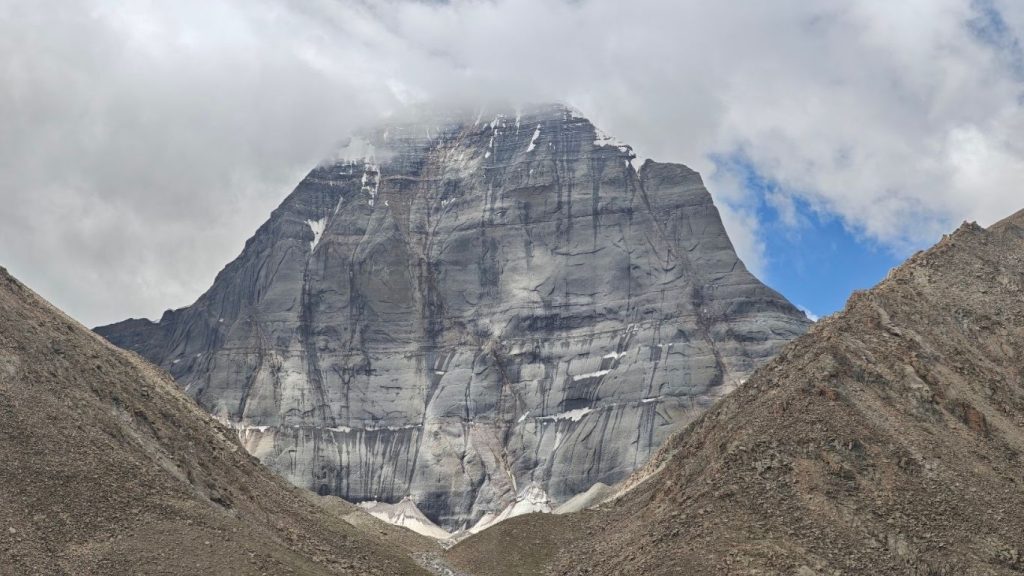
Kailash Parvat located in western Tibet near Lake Mansarovar in the Transhimalaya region
Mount Kailash is located in the Ngari Prefecture of the Tibet Autonomous Region, administered by China. More precisely, it lies within Burang County (also called Purang County), near the western trijunction of China, India, and Nepal.
Exact GPS coordinates: 31.0675° N, 81.3119° E
Geographically, the mountain sits within the Gangdise Shan (Transhimalaya) mountain range, not the main Himalayan chain. It dominates the western Tibetan Plateau, a vast, arid high-altitude landscape at an average elevation of over 4,500 meters.
The nearest landmark is Lake Manasarovar, one of the highest freshwater lakes in the world, situated about 30 km to the south. The lake is considered equally sacred and is an essential part of the Kailash pilgrimage. Just west of Manasarovar lies the darker Lake Rakshastal (the “demon lake”), creating a striking yin-yang symbolism that pilgrims have noted for centuries.
The village of Darchen (4,560 m), the main base camp for the kora, sits at the foot of the mountain’s south face and is the gateway for all pilgrims and trekkers.
Tip for trekkers from Nepal: Kailash is approximately 900 km from Kathmandu by road via the Kyirong border crossing. Most tour operators offer 14–18 day itineraries from Kathmandu. See our How To Plan & Prepare For Kailash Mansarovar Yatra: Complete Guidebook
What is the Height of Mount Kailash?
Mount Kailash stands at exactly 6,638 meters (21,778 feet) above sea level. This measurement is the widely accepted official figure recorded by modern surveys. In 1936, the First Swiss Himalayan Expedition explored the Mount Kailash region, led by geologist Arnold Heim. The team documented the landscape and carried out scientific observations, but they did not attempt to climb the mountain or determine its exact height. Over the following decades, measuring Mount Kailash has remained complex and widely debated due to its remote location, restricted access, and its sacred status.
While Kailash Peak height is not exceptional by Himalayan standards. Everest is over 2,200 meters taller than the Kailash. It has four symmetrical sides that correspond with the cardinal directions, making it shape-wise almost a perfect pyramid. It is usually referred to as a natural architectural marvel by geologists. The Kailash Himalaya is perpetually capped with snow and ice, giving it a pristine, otherworldly appearance even in summer.
Formation: Kailash is more than 30 million years old, and it was created as a result of the tectonic movements of the Himalayas.
Mount Kailash height compared to other famous peaks
| Mountain | Height (meters) | Height (feet) | Status |
| Mount Everest | 8,848.86 meters | 29,031.7 feet | Highest mountain in the world |
| K2 | 8,611 meters | 28,251 feet | 2nd highest mountain in the world |
| Annapurna I | 8,091 meters | 26,545 feet | 10th highest mountain in the world |
| Mount Kailash | 6,638 meters | 21,778 feet | Sacred, unclimbed |
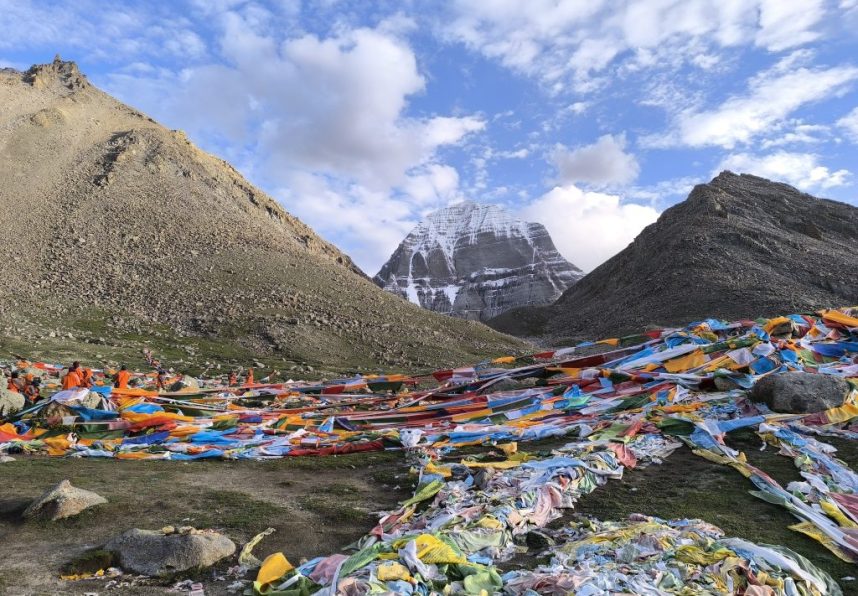
| Dolma La Pass (kora high point) | 5,630 meters | 18,471 feet | Mount Kailash Kora highest point |
| Darchen base camp | 4,560 meters | 14,961 feet | Kailash Kora starting point |
The Mount Kailash Kora: Distance, Route & Duration
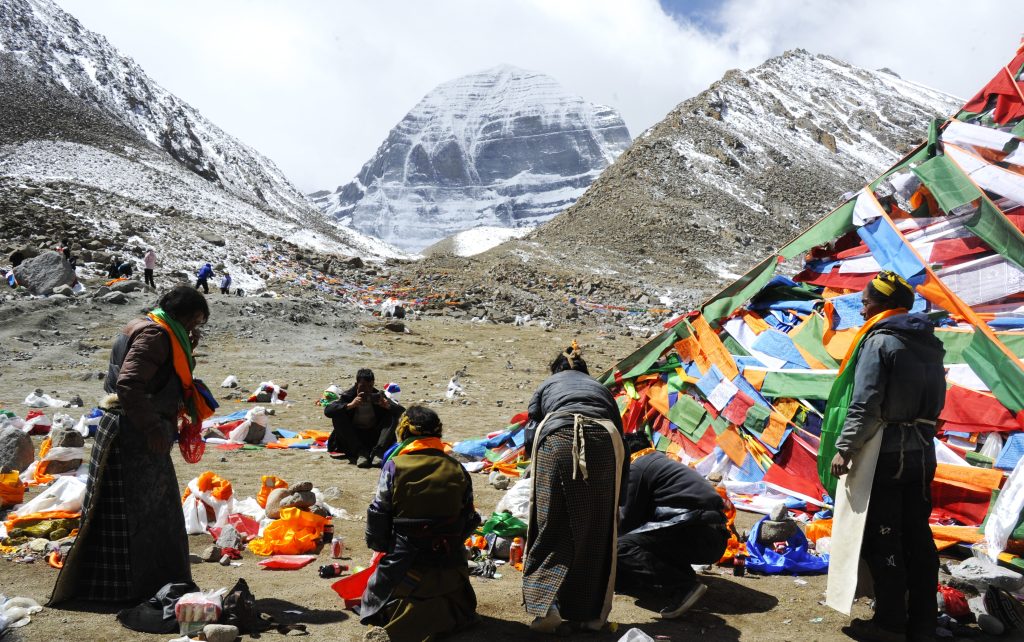
The kora (also called parikrama or circumambulation) is the sacred circuit around the base of Mount Kailash. It is the central religious act at this site, performed by pilgrims of all four faiths. Rather than attempting to climb the mountain, worshippers walk around it as an act of devotion.
Key kora facts:
- Total distance: Approximately 52 km (32 miles)
- Standard duration: 3 days for most trekkers
- Fastest: Devout Tibetan pilgrims sometimes complete it in 1 day
- Highest point: Dolma La Pass at 5,630 m (18,471 ft)
- Starting/ending point: Darchen village (4,560 m)
- Direction: Clockwise for Hindus, Buddhists, and Jains; counterclockwise for Bon followers
Every year, over 10,000 to over 20,000 pilgrims complete the 52-km kora trail around the mountain.
The route passes through dramatic landscapes: the wide open Lha Chu Valley on the west face, the iconic north face view (the most photographed side), Dolma La Pass adorned with prayer flags, and the Lham Chu Valley on the descent east. Completing 108 koras in a lifetime is believed, in Tibetan Buddhism, to guarantee enlightenment.
During the visit to Mount Kailash, it also has three UNESCO World Heritage Sites, which are all located in Lhasa: the Potala Palace, Jokhang Temple, and Norbulingka Palace.
Planning the kora? Read our detailed Mount Kailash Kora trek guide: Kailash Inner Kora & Outer Kora
The 4 Sacred Rivers That Originate Near Mount Kailash
One of the most remarkable geographical facts about Mount Kailash is that it is the source region for four of Asia’s greatest rivers, collectively providing water to billions of people. Ancient Hindu scriptures described Kailash as the center of the universe — modern geography validates why: no other single point on Earth gives rise to this many transcontinental river systems.
| River | Origin direction | Countries it flows through | Length |
| Indus (Sengge Tsangpo) | North / Northwest | Tibet → India → Pakistan | 3,180 km |
| Sutlej (Langqên Tsangpo) | West | Tibet → India | 1,450 km |
| Brahmaputra (Yarlung Tsangpo) | East | Tibet → India → Bangladesh | 2,900 km |
| Karnali / Ghaghara | South | Tibet → Nepal → India | 1,080 km |
In Hindu cosmology, these four rivers flow from the four “mouths” of Mount Meru — the mythical cosmic mountain that Kailash physically represents. The north-flowing horse-mouth (Indus), the west-flowing elephant-mouth (Sutlej), the east-flowing peacock-mouth (Brahmaputra), and the south-flowing lion-mouth (Karnali) mirror this ancient description precisely.
Why is Mount Kailash Sacred? Religious Significance Across 4 Faiths
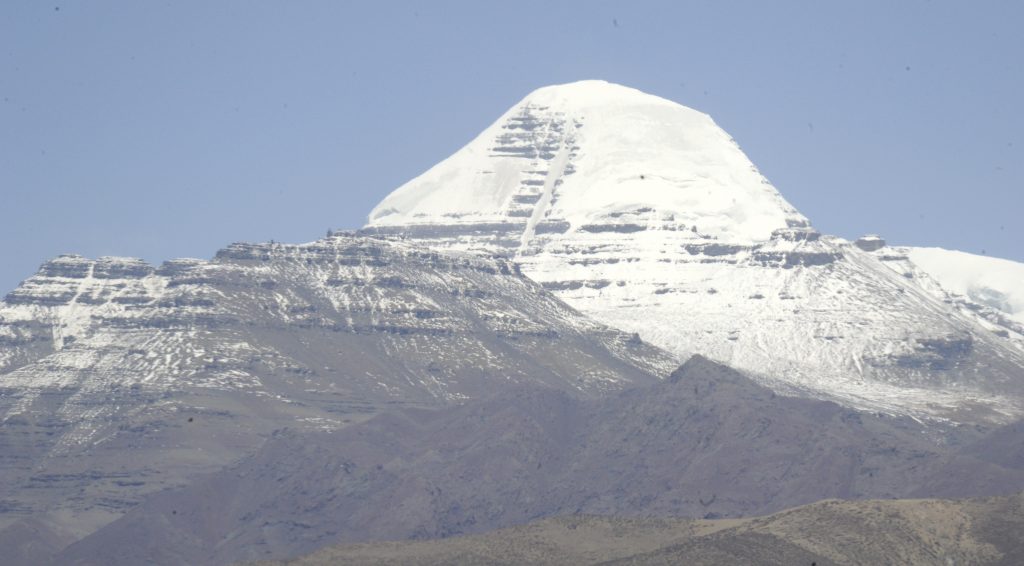
No mountain on Earth is considered sacred by as many people as Mount Kailash. Over 1.5 billion people across four distinct religious traditions regard it as the holiest peak in the world.
Hinduism
In Hinduism, Kailash is the eternal abode of Lord Shiva, the Destroyer and Transformer, and his consort Goddess Parvati. Shiva is believed to meditate here in eternal bliss. The Kailash Mansarovar Yatra is one of the most sacred pilgrimages in the Hindu tradition — completing it is said to wash away the sins of a lifetime.
Tibetan Buddhism
For Tibetan Buddhists, Kailash represents Mount Meru, the axis of the universe. It is the dwelling place of the deity Demchok (Chakrasamvara), who symbolizes supreme bliss. The great Tibetan poet-saint Milarepa is said to be the only human who ever reached the summit — flying there on a sunbeam. Buddhists link it to Demchok, the god of ultimate bliss.
Jainism
In Jainism, the mountain is known as Ashtapada, where the first of the 24 Tirthankaras (spiritual teachers), Rishabhanatha, attained moksha (liberation from the cycle of rebirth). It remains one of Jainism’s most revered pilgrimage destinations. Jains revere it as the site where their first saint attained enlightenment.
Bon (Tibet’s pre-Buddhist religion)
For followers of Bon, Kailash is called Tise and is considered the seat of all spiritual power. According to Bon tradition, the founder Tonpa Shenrab descended from the sky onto Kailash. Bon pilgrims walk the kora counterclockwise — opposite to all other traditions — as a mark of their distinct identity. Followers of Bon see it as the seat of the sky goddess Sipai Gyalmo.
Intresting things to Know: Hindus and Buddhists perform the Kailash Kora in a clockwise direction, while Jains and Bon practitioners walk around the mountain in a counter-clockwise direction, reflecting their different spiritual traditions and beliefs.
Why No Has Climbed Kailash?
Mount Kailash remains one of the very few significant mountains in the world to have no recorded summit ascent — not because it is technically unclimbable, but because the world has chosen to leave it untouched.
For millennia, the mountain’s sanctity across four religions meant that no devotee would desecrate it by climbing it. When modern mountaineering began, the same respect held. In 2001, the Chinese government officially banned all climbing expeditions to Mount Kailash, citing its religious importance. Even Reinhold Messner — who has climbed all 14 peaks above 8,000 meters — was offered permission in the 1980s and declined out of respect.
The prevailing belief: to reach the summit of Kailash would disturb the gods. A long-held belief says that anyone who tries to climb Kailash will disturb the divine balance and face misfortune. This legend explains why no climber has ever reached its summit. The mountain is meant to be circumambulated, not conquered.
Mount Kailash/Kailash Parvat History and Human Stories
Ancient References and Discoveries
Kailash is mentioned in the Rigveda (1500 BCE) as the cosmic mountain, Mount Meru. It was first described by Western adventurers such as Sven Hedin in 1894, and generation after generation has been curious about it. It was given international attention in 1948 by the visit of the Indian Prime Minister Jawaharlal Nehru to it.
Milarepa and the Bon Master
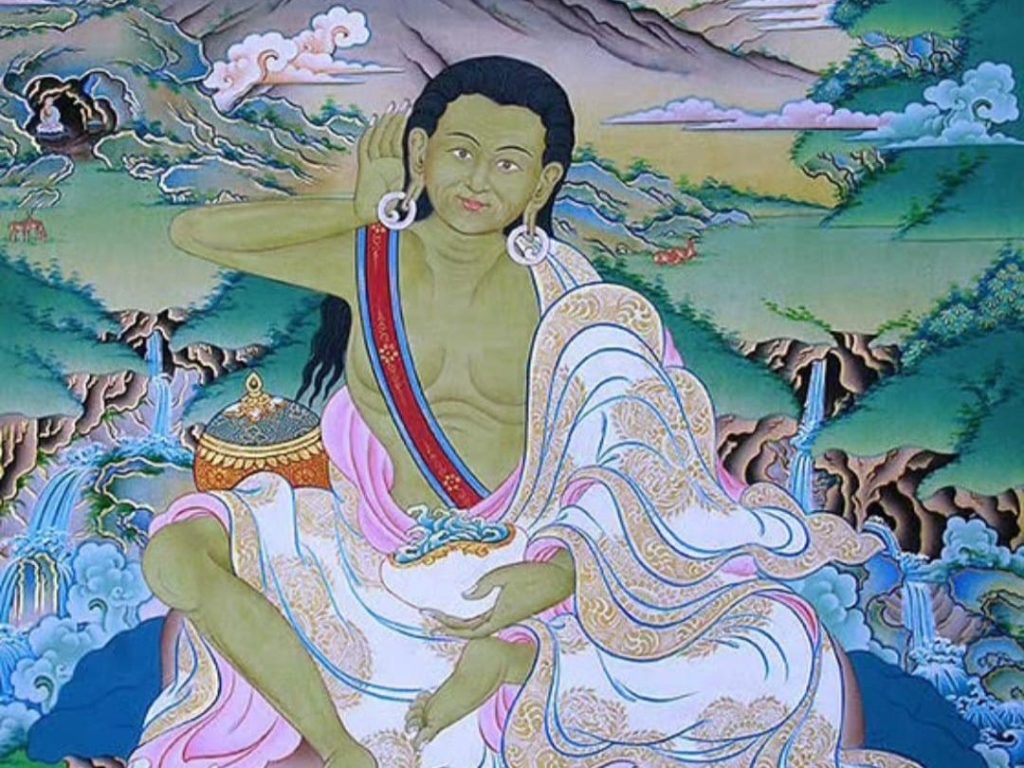
It is a legend that Milarepa, the Buddhist yogi and a Bon master, was racing to the top of Mount Kailash to see who could demonstrate to the world the strength of their faith. That master of the Bon flew by using a drum, yet by using meditation, Milarepa attained first. To show respect, he did not step upon the peak, but merely went around it in the air-light–to get Kailash consecrated to the Buddhists.
Modern-Day Pilgrimages and Case Studies
It is due to their religion that the pilgrims walk the kora clockwise or anticlockwise. It is reported to take three circuits in order to accomplish a lifetime of merit and weeks of complete prostrations.
Over the recent years, over 30,000 permits have been granted per year, and there is growing concern about eco-friendly traveling.
Mt. Kailash Myths and Legends
- Cosmic Axis of the World: According to Hindu and Buddhist myths, Mount Kailash is referred to as Mount Meru, the pillar of the universe that links heaven, earth, and the underworld.
- The Four Faces of Kailash: Fourth, the four sides of the mountain are said to be built of crystal, ruby, gold, and lapis lazuli and are shining with the radiance of the Gods. Both faces are in accordance with the four points of the compass, as an expression of cosmic order.
- Unexplained Energy Fields: Contemporary pilgrims tend to talk about the feeling of an enigmatic energy field around Kailash. Some claim faster hair and nail growth during the journey, suggesting unusual energies in the area.
- Mansarovar and Rakshastal: Lake Mansarovar is believed to have been created by Brahma for spiritual cleansing. At the same time, Rakshastal is linked to demons, representing the eternal balance of good and evil.
- Shiva Face on Kailash: Pilgrims who visit here often say that they can see a resemblance to the face of Lord Shiva on the southern face of Mount Kailash.
- The “Time Warp” Vortex: Locals believe that time flows differently around Mount Kailash, with some saying it feels as if time moves faster in the region.
- West Face: Many devotees believe the west side of Mount Kailash looks like a calm human face, often linked to Lord Shiva in a deep meditation state. Some say it becomes more visible in certain light or images.
- South Face: The south side is connected with the fierce form of Lord Shiva, known as Aghora. A long vertical line from top to bottom is seen by many as Shiva’s spine or the “third eye,” adding to its sacred meaning.
How to Get to Mount Kailash: From Nepal
Route 1: From Kathmandu, Nepal (most popular for international visitors)
- Kathmandu → Rasuwagadhi border crossing (by bus)
- Kyirong → Saga → Lake Mansarovar→ Darchen (by drive )
- Total journey: 14-16 Days
- Required documents and permit: Chinese group visa, Tibet Travel Permit, Alien Travel Permit, Military Permit (for Ngari region)
- Cost: Estimated USD 2400 – 3,000 per person
Route 2: From Lhasa, Tibet
- Kathmandu → Lhasa( Lhasa Gonggar International Airport)
- Lhasa → Shigatse → Saga → Darchen (by drive )
- Total journey: 12- 14 Days
- Required documents and permit: Chinese group visa, Tibet Travel Permit, Alien Travel Permit, Military Permit (for Ngari region)
- Cost: Estimated USD 3,00 – 3,500 per person
Route 3: From Simikot Hilsa Helicopter Route(fastest)
- Kathmandu → Nepalgunj →Simikot → Helicopter flight to Hilsa→ Purang/Taklakot
- Purang/Taklakot →Lake Mansarovar→Darchen (by drive )
- Total journey: 12 Days
- Cost: Estimated USD 3,500 – 4,500 per person
Ready to plan your Kailash journey? Check in details about the Kailash Mansarovar Yatra Routes From Nepal
Best Time to Visit Mount Kailash
| Season | Months | Conditions | Recommended? |
| Spring | Winter | Warming up, some snow on passes; Saga Dawa festival (May) | ✅ Excellent |
| Summer (peak) | June – August | Best weather, all passes open, clearest views | ✅ Best time |
| Early autumn | September | Stable weather, fewer crowds | ✅ Very good |
| Late autumn | October – November | Cold nights, some trail closures begin | ⚠️ For experienced trekkers |
| Winter | Dec – March | Extreme cold (-20°C or lower), most passes closed | ❌ Not recommended |
Best Time: The most favorable months to visit Mount Kailash are May to October, when the climate is not as hot as during the rest of the year, and also, the kora trail is not blocked. The seasons of June to September are clear with less traffic in May and colder in October. The winters are too severe, and traveling is almost impossible.
Festival Time: The Saga Dawa Festival (full moon of the 4th Tibetan lunar month, usually May or June) is the most auspicious time to visit. Thousands of pilgrims converge at Kailash, completing the kora in prayer and celebration. It is a transformative experience — though accommodation in Darchen fills up rapidly, so book well in advance.
Restricted and Protected Status
Mount Kailash is not open for climbing or scientific summit expeditions. Foreign passport holders must obtain a Chinese visa and Tibet travel permits to visit the region for the Kailash Kora. The Chinese visa process can be complex and usually requires advance arrangement. Solo travel to Mount Kailash is not allowed, and travelers must be accompanied by a licensed guide through a registered travel agency.
Things to do and don’t while visiting Mount Kailash for the Kailash Mansarovar Yatra:
| Do ✅Walk the kora clockwiseHindus, Buddhists & Jains circumambulate clockwise. Only Bon followers go counterclockwise. ✅Remove shoes before entering monasteriesAlso remove hats and leather items at monastery entrances. ✅Maintain silence near the mountainKailash is considered a living deity. Speak softly, avoid shouting or loud music. ✅Observe and respect local ritualsPilgrims prostrate the full 52 km. Do not interrupt, mock, or photograph without consent. ✅Pass prayer wheels and mani stones on the leftAlways keep sacred objects on your right side as you move. ✅Bring or offer prayer flags at Dolma La PassThis is the sacred high point (5,630 m). Tying prayer flags here is auspicious. |
| Don’t ❎Attempt to climb Mount KailashClimbing is strictly prohibited by Chinese authorities and considered deeply sacrilegious by all four religions. ❎Photograph pilgrims prostrating without permissionProstration is an intensely personal spiritual act. Always ask before pointing a camera. ❎Consume alcohol or meat near sacred sitesEspecially avoid this near Lake Manasarovar, monasteries, and on the kora itself. ❎Touch religious statues or sacred objectsNever touch deities, altar items, or inside mani stone cairns. ❎Argue, quarrel, or use negative speechThe kora is a space of spiritual purity. Conflicts are considered very inauspicious. ❎Disturb prayer stones or cairnsMani stones are consecrated. ❎Do not move, remove, or step on them. |
Mt. Kailash/Kailash Parvat Cultural Preservation Efforts
Kailash is also well-preserved by the Tibetan cultural bureau, which employs innovative technologies, such as drone surveillance, to stop unauthorized ascents. Authorities and local communities work together to limit environmental impact by controlling visitor numbers, managing waste, and protecting fragile high-altitude ecosystems. Pilgrims are encouraged to follow eco-friendly practices such as avoiding plastic use and respecting sacred sites like Lake Mansarovar and Rakshastal.
In addition, traditional beliefs and local customs are respected throughout the region, ensuring that the spiritual value of Kailash Parvat remains untouched for future generations.
Frequently Asked Questions About Mount Kailash
What is the height of Mount Kailash?
- Mount Kailash is 6,638 meters (21,778 feet) above sea level. It is not the tallest mountain in Tibet but is by far the most sacred, revered across four world religions.
Where is Mount Kailash located?
- Mount Kailash is in Ngari Prefecture, Tibet Autonomous Region, China. Exact coordinates: 31.0675°N, 81.3119°E. It lies within Burang County near the trijunction of China, India, and Nepal.
Why has Mount Kailash never been climbed?
- Climbing Mount Kailash is prohibited by Chinese authorities (since 2001) and deeply disrespectful to the billions of Hindus, Buddhists, Jains, and Bon followers who consider it sacred. No mountaineering expedition has ever made a serious attempt.
What are the 4 rivers near Mount Kailash?
- The four rivers originating near Kailash are the Indus, the Sutlej, the Brahmaputra, and the Karnali (Ghaghara). Together they water much of South and Central Asia.
How long is the Mount Kailash Kora?
- The kora is approximately 52 km (32 miles) long and typically takes 3 days. The highest point is Dolma La Pass at 5,630 m. It begins and ends at Darchen village.
What permits are needed for Mount Kailash?
- Foreign visitors need a Tibet Travel Permit, an Alien Travel Permit, and a Military Permit (specific to the Ngari region). All permits must be arranged through a registered Tibet travel agency — individual travel is not permitted. Read in details: Tibet Permit and Visa Guide
What is Lake Manasarovar?
- Lake Manasarovar is a sacred freshwater lake located about 30 km south of Mount Kailash at an altitude of 4,556 m (14,950 ft). It is one of the highest freshwater lakes in the world and is considered as sacred as Kailash itself. Pilgrims bathe in its waters for purification.
Can I visit Mount Kailash from Nepal?
- Yes — visiting Kailash from Nepal is the most popular route for international pilgrims. You cross into Tibet via the Kyirong border and drive through Saga and Paryang to Darchen. High Route Adventure offers complete Kailash Yatra packages from Kathmandu.
How much does it cost to visit Mount Kailash?
- You can find the package starting from USD 22,00 to around USD 6000. The exact cost depends upon several factors, like tour agency service, itinerary, transportation, food, accommodation, and travel season. For more details check here: Kailash tour cost
Final Say
Mount Kailash is not a mountain; it is a symbol of belief, nature, and mystery. It is unclimbed, and it is standing at 6,638 meters in western Tibet, but it is highly revered by millions of people all around the globe.
Visiting Tibet is something you dream of, so it is important that your trip is responsible, conscious, and environmentally friendly. Although you may not be in a position to visit Kailash, all you have to do is hear about it, and it will help you feel the awe.
-
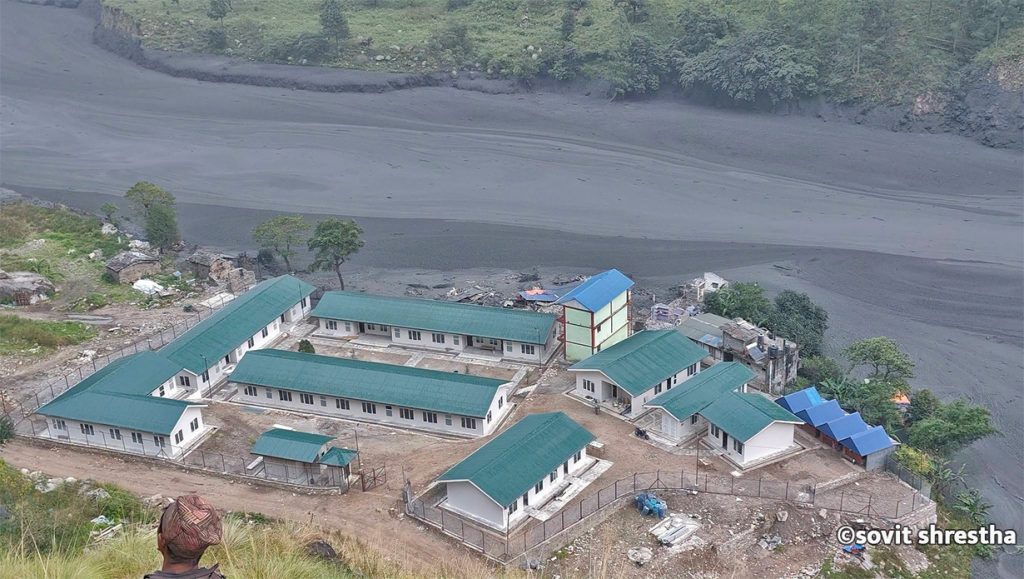
Flash Flood Sweeps Away Dozens of Homes in Gorkha, Nepal
KATHMANDU, Nepal — A sudden and severe flash flood tore through the Budhi Gandaki River basin in Gorkha district on Sunday morning, washing away approximately 35 houses and triggering widespread destruction in the mountainous Manaslu and Tsum Valley regions. According to local authorities and disaster management officials, no human casualties have been reported thus far, though…
-
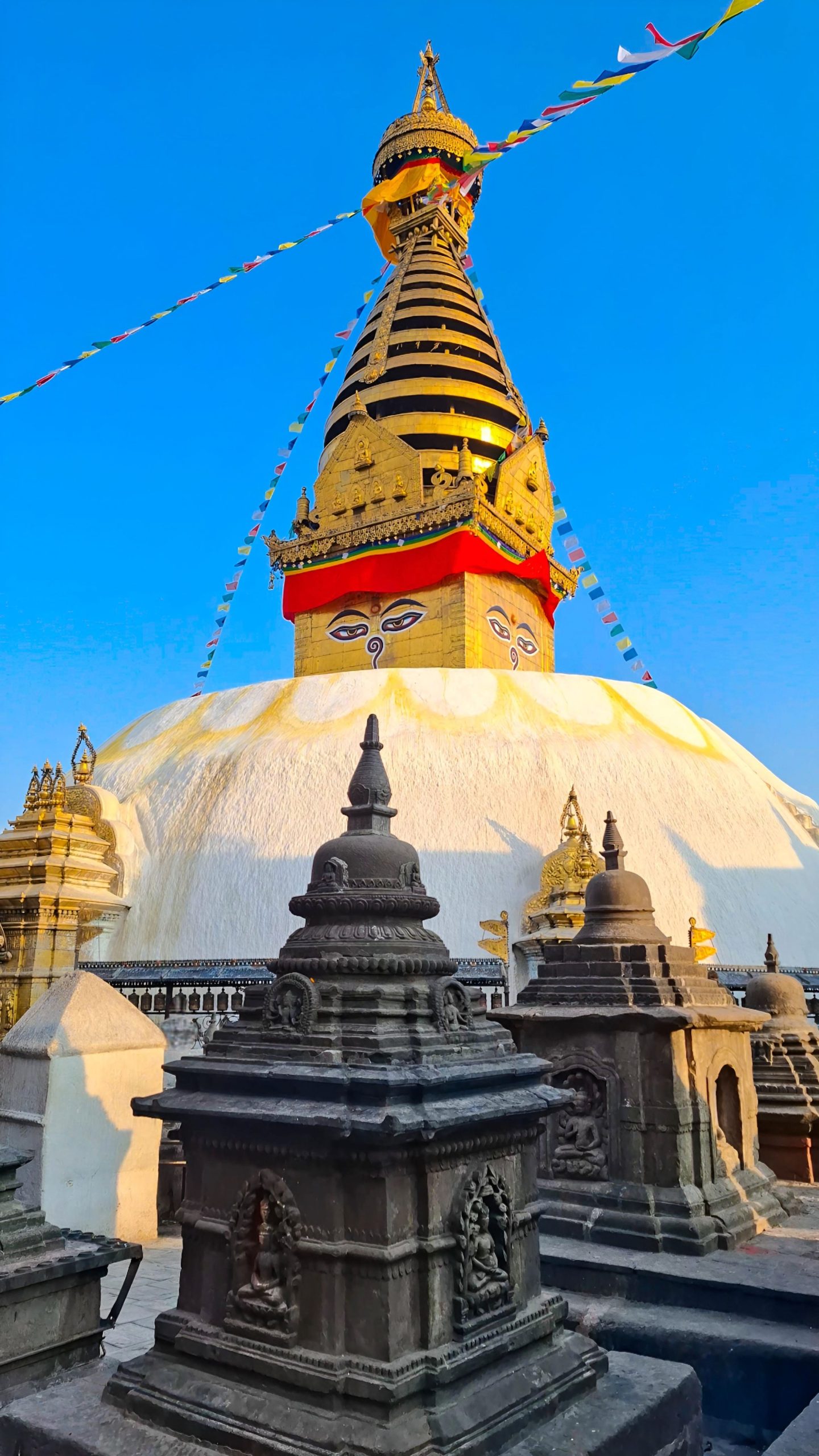
Swayambhunath Temple, Kathmandu
Imagine standing above the chaos of Kathmandu. Honking horns fade below you. A gleaming white dome rises ahead. Two enormous painted eyes gaze calmly in every direction. Prayer flags flutter in the Himalayan breeze. This is Swayambhunath, one of the most extraordinary places in Nepal. Visitors know it as the “Monkey Temple” because hundreds of…
-

North Goa vs South Goa: Which Is Better for Your Holiday?
Amongst the places that are highly popular in terms of beaches, weather, culture, and ambiance in India is Goa, which is known to possess some of the most beautiful beaches in India. The idea of Goa being famous for its beaches, which can be used by tourists for entertainment in North Goa while South Goa…