Why Upper Mustang Trek Is Nepal’s Most Mysterious and Rewarding Adventure
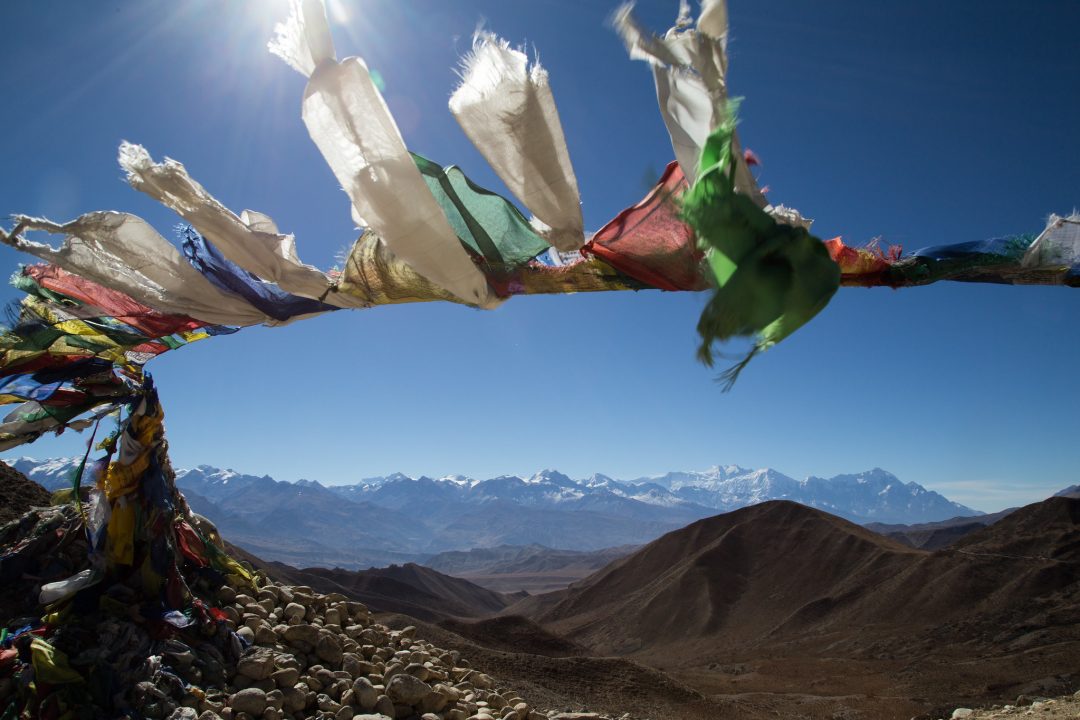
Table of Contents
Introduction
High within the rain shadow of the Himalayas, there is a place where time is frozen. Upper Mustang was called the last forbidden kingdom of Nepal since it remained sealed to foreigners until 1992. It is a land where the ancient culture of Tibet has survived to this day, and old fortresses guard the lower desert valleys.
It is not just another mountain trek. Upper Mustang provides something which is quite rare: an element of genuine mystery and history. Unlike other popular trekking areas, only around limited people are allowed to visit each year. Due to this limited access for tourists, it helps to protect the unique landscape and ancient culture that have existed here for over a thousand years.
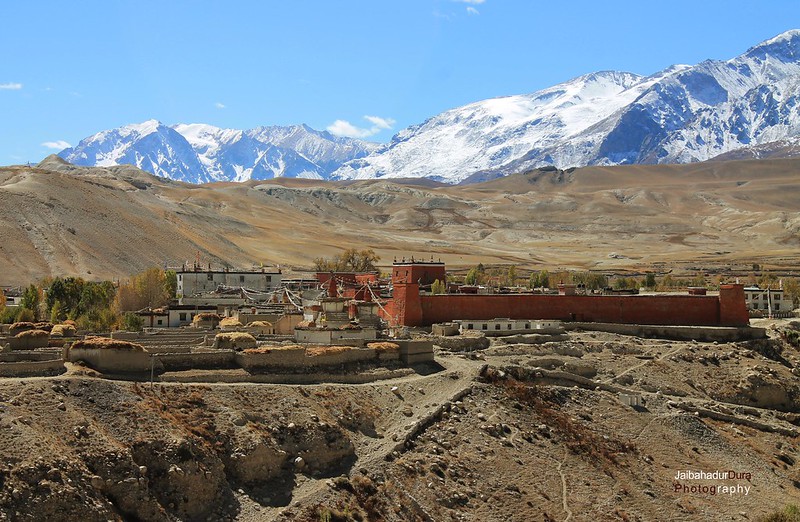
The journey will take you into deep, wind-shaped canyons, past old monasteries older than many European churches. And into Lo Manthang — the last walled city that is still alive today. Even though the monarchy has ended, the royal family still lives here, traditional festivals continue as they have for centuries, and daily life moves at a peaceful, old-world pace.
Travelling to the Upper Mustang is something extra special. It will make you feel like you are travelling in a living museum where every place and stone here will tell you a story.

A Kingdom Preserved in Time
The Last Independent Himalayan Realm
Isolation of the Upper Mustang was not accidental; it was a method to survive. After Tibet fell to Chinese domination in the 1950s, this peripheral kingdom was the only one where pure Tibetan Buddhist culture did not die. Ame Pal led the establishment of the Kingdom of Lo in 1380, which remained independent for a long duration due to creative alliances and inaccessible positions until after the unification of Nepal as a country.
Though Lower Mustang was annexed by Nepal in 1951, it remained closed until 1992. The Nepalese government kept the area inaccessible to the world for some 40 years due to its cultural significance and its close proximity to the Tibetan border. This was to save and guard the culture and the traditions that were distinct.
Jigme Dorje Palbar Bista is the living King of Mustang, the description of the 25th monarch of his family. After losing political positions when Nepal turned into a republic in 2008, he remains a significant cultural figure. His palace at Lo Manthang is a focus of community life.
Culture Untouched by Modern Influence
The Upper Mustang has preserved vastly what is lost in Tibet. The population is nominal; about 6,000 people, who speak the old Tibetan language Loke and cultivate Buddhism in forms older than most of the modern forms. The monasteries house valuable manuscripts and artifacts, which, according to the experts, are one of the most precious origins of Tibetan culture in the world.
The life of every day is modeled after centuries-old traditions. Barley is grown by farmers even today, where there is the use of wooden ploughs and ancient irrigation. Women make woolen cloth with skills passed on to them by their forefathers. Children study old songs and stories as well as new lessons in school.
This culture is not just preserved like in a museum—it is alive and active. The record of families is traceable to 20 generations. Goddesses are worshipped in sacred places, and conventional medicine is now practised along with modern healing. The society of Upper Mustang encompasses the knowledge of the past with the modern-day issues.
Ancient Mysteries and Sacred Legends
Upper Mustang’s spiritual landscape holds countless mysteries. Guru Rinpoche, the eighth-century saint who brought Buddhism to Tibet, meditated in caves throughout the region. These sites, many accessible only by treacherous cliff paths, contain treasures hidden for over a millennium.
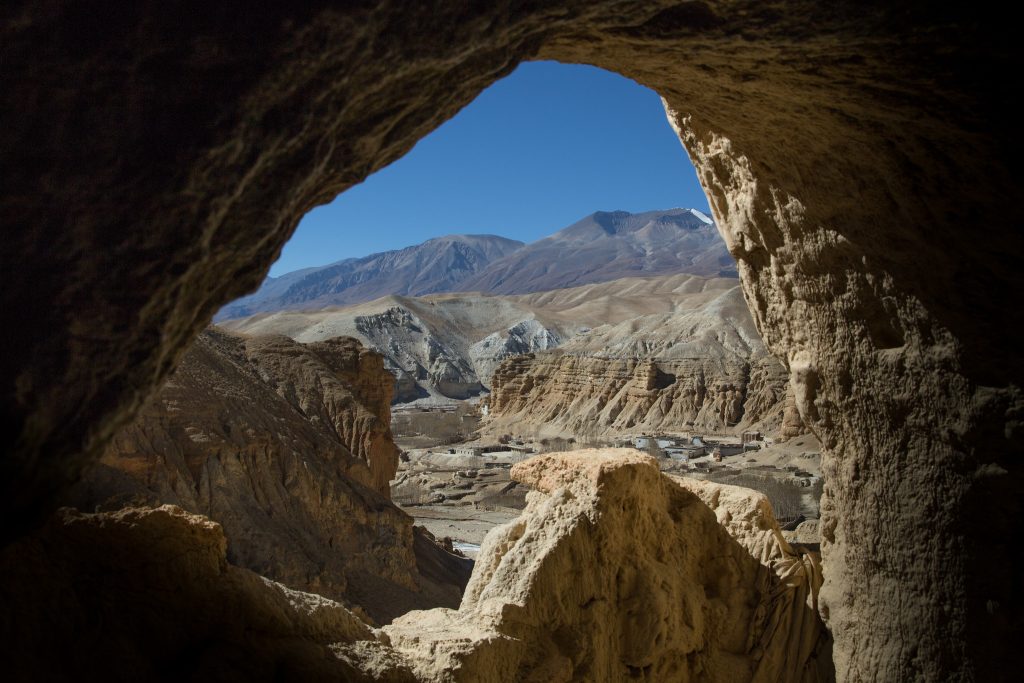
The Chosser Cave complex represents one of the world’s archaeological wonders. This massive system carved into limestone cliffs contains over 10,000 caves arranged in multiple levels. Archaeological evidence suggests continuous occupation for 3,000 years, making it humanity’s longest-inhabited cave system.
Local legends speak of hidden valleys where enlightened masters still reside, of secret texts buried in cliff faces, and of protective deities who guard the kingdom’s spiritual treasures. Whether myth or reality, these stories reflect a worldview where the sacred and mundane interweave seamlessly.
The Reward of Witnessing Living History
Authentic Cultural Immersion
Upper Mustang provides unique cultural insights that are not found anywhere else. Lo Manthang’s annual three-day Tiji celebrations make the ancient town streets holy grounds of sacred performance dramas. Mask actors for three days consecutively act out tales of good versus evil, with all sections of society present with prayer as well as with festivities.
Treks to Lo Gekar Gompa, the oldest local monastery, will allow you to do just that—get to know monks who have kept traditions alive for more than 1,000 years. Morning prayers warm halls whose murals antecede those of the times of the Renaissance. The older lamas present you with profound philosophic thoughts that were created centuries prior.
Homestays as an accommodation offer one an opportunity to witness traditional societies accept modern times. Eating with people, witnessing craftsmanship being created, and assisting in farming form connections that go beyond culture.
Architectural Marvels Frozen in Time
Lo Manthang is the only surviving walled Tibetan city in the world. The 15th-century mud walls are home to a civilization that still exists as centuries past did. The four-storey royal palace without one nail displays advanced engineering to adapt to mountain terrain.
Thubchen Gompa is home to some of the best spiritual art in the Himalayas. The 15th-century murals by active 15th-century painters who were simultaneously working at Lhasa’s Potala Palace line its walls with vibrantly detailed scenes from Buddhism. The monastery still maintains one of the very few surviving three-dimensional mandalas to be found around the globe.
Traditional Mustangi homes demonstrate how human beings lived under desert climatic conditions for centuries. Flat roofs conserve limited wood and provide living quarters for drying out plants. Gorgeous wooden windows give breathtaking views of mountains and keep homes stable under forceful blasts of air. Courtyard homes make small warm spots where families can grow gardens despite the dry terrain.
The Privilege of Exclusive Access
Upper Mustang’s high permit costs—$500 for the first 10 days—serve an essential purpose beyond revenue generation. The fees keep the eco-sustainable number of visitors while ensuring such benefits go to local communities, not foreign agencies.
Exclusive offers have great cultural exchange potential. With limited tourists to compete for attention, village residents can spend time with visitors longer than usual. Visitation to the monastery becomes educational rather than a short photo opportunity. Interactions with villages form real friendships.
This right carries with it responsibility. Everyone who visits Upper Mustang is a cultural ambassador who informs the world of this special place to international publics. The process involves respecting, being tolerant of, and having a real desire to learn rather than looking at.

Final Say
To know the mystery and see the beauty of the Upper Mustang, you must visit it by yourself. No photo or word is enough to describe the Upper Mustang. Take a walk in this special, hidden part of Nepal and make lifetime memories.
For Booking the Mustang Package contact us via:
Email: info@highrouteadventure.com
Phone/Whatsapp: +977-9851058664
Frequently Asked Questions (FAQs) About Upper Mustang
1. Where is Upper Mustang located?
Upper Mustang lies in northern Nepal, close to the Tibetan border. The Mustang journey starts in Pokhara, then heads to Jomsom, and continues to Kagbeni, in the lower Mustang Region. Then, from Kagbeni through the trek for several days, you will reach Upper Mustang. Upper Mustang sits in the rain shadow of the Himalayas and is part of the Mustang District in Gandaki Province.
2. Why is Upper Mustang called the “Last Forbidden Kingdom”?
Upper Mustang was closed to foreign visitors until 1992 to preserve its unique Tibetan Buddhist culture and strategic border location. The ancient Kingdom of Lo maintained its distinct identity for centuries, earning it the title “Last Forbidden Kingdom.”
3. Do I need a special permit to visit Upper Mustang?
Yes. Upper Mustang is a restricted area. Therefore, all trekkers must obtain a Restricted Area Permit (RAP), which costs USD 50 per day, and can be obtained only through a registered agency such as High Route Adventure. Also, as per government rules, solo trekking is banned, and you need to have atleast 2 people in a group, excluding the guide.
4. What is the best time to visit Upper Mustang?
Upper Mustang can be done in Spring, Autumn, and the early months of Winter, but not during the monsoon season. For the best views, scenery, and comfortable trekking conditions, we recommend you do it from May to October.
5. How difficult is the Upper Mustang trek?
The trek is considered moderate in difficulty. While there are no extreme climbs, the high altitude (up to 3,840 meters at Lo Manthang) and dry, windy terrain require good physical fitness and proper acclimatization.
6. What makes Lo Manthang special?
Lo Manthang is the last surviving walled Tibetan city. It features ancient monasteries, a royal palace, and traditional mud-brick houses that preserve centuries-old Himalayan culture.
7. Is Upper Mustang culturally different from the rest of Nepal?
Yes. The people of Upper Mustang follow Tibetan Buddhism, speak the Loke language (a Tibetan dialect), and maintain traditions that are deeply rooted in ancient Tibetan culture.
8. What are the major attractions in Upper Mustang?
Key highlights include:
- Lo Manthang
- Chosser Cave
- Lo Gekar Monastery
- Tiji Festival
- Ancient sky caves and dramatic desert landscapes
9. How do I reach Upper Mustang?
Most travelers fly or drive to Pokhara, then take a flight to Jomsom. The trek begins from Jomsom and gradually ascends toward Lo Manthang.
10. Are accommodations and food available during the trek?
Yes. Teahouses and homestays are available along the route. They offer basic but comfortable lodging and traditional meals such as dal bhat, noodles, soups, and Tibetan bread.
11. Is altitude sickness a concern in Upper Mustang?
Yes, altitude sickness can occur since most of the region lies above 3,000 meters. Proper acclimatization, hydration, and gradual ascent are essential.
12. Is Upper Mustang suitable for beginners?
While beginners with good fitness can complete the trek, prior moderate-altitude trekking experience is recommended for a more comfortable journey.
Posted on