
15 Nepalese Food That You Must Try in Nepal
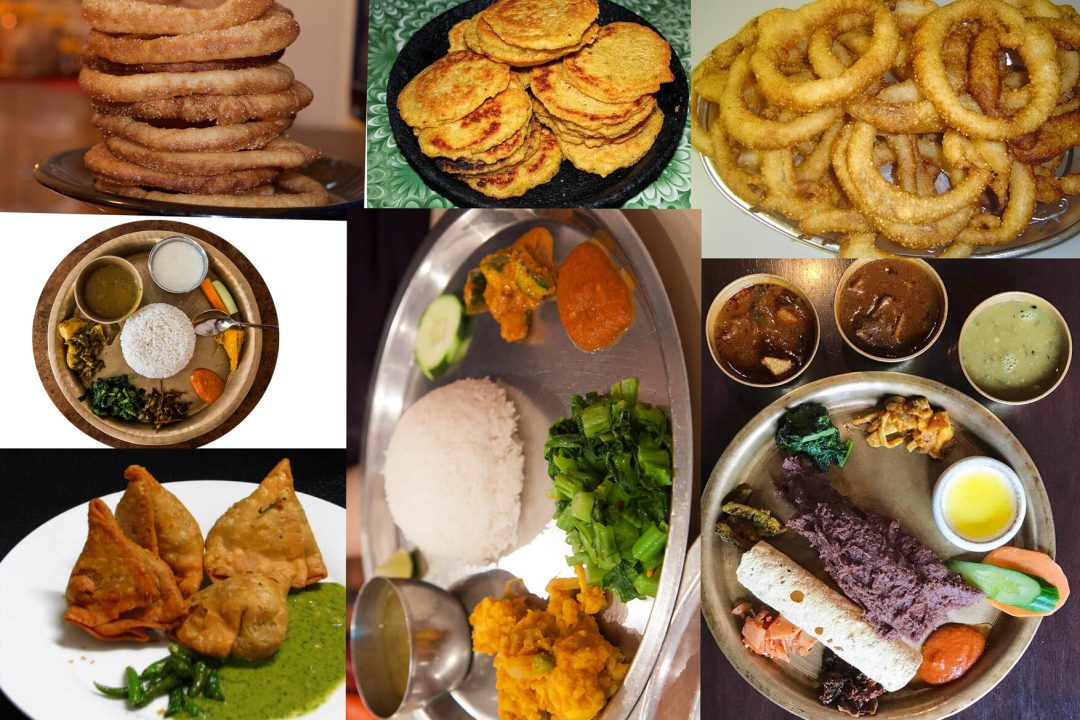
‘Different variation Nepalese food one must taste and try while visiting Nepal’
Every country on this planet have their own taste of food as per the climate and surrounding environment. Where in Nepal is basically the same as in the rest of the world, as per the climate and terrain.
Nepalese Foods are of great variation as per the way people settled in various types of landscapes and climates. Most foods are attached to age-old traditional heritage and cultures that they follow according to their religions, Hinduism and Buddhism.
The most popular and basic meal of all Nepali is Dal Bhat, boiled rice with lentil soup. Added with seasonal vegetables and fresh homemade spicy sauce, as well as any types of soups. Besides rice as the main course meal, Ghundruk is the pride and heritage item of dry vegetables, which can be made into a soup or pickle, a favorite among all Nepalese people, especially around high hills and valleys. Foods come in great variation according to tribal communities, from the low, warm Terai belt, hills, to a cooler mountainous region.
Where every tribe has its own eating habits and tastes of foods according to the region in which they live. The lavish, rich food items are enjoyed in celebrations, parties, weddings, and special occasions, as well as in festival times.
Let’s see the list of 15 Nepalese Food That You Must Try in Nepal.
Table of Contents
DAL BHAT (Steamed or boiled rice served with lentil soup and mild curries)

Dal Bhat, a national food of Nepal, where every household basic and fulfilling meals of all Nepalese. Dal Bhat is served as a main course meal, a boiled or steamed rice of different variations. Bhat means cooked rice ready to consume, and Dal, a lentil soup, can be of different types. Smaller beans, from red, yellow, green or black, which are high in protein, are added with cooked seasonal vegetables. Vegetables cooked as mild curry served with various types of pickles, sweet, sour, or hot, including homemade hot tomato sauce.
Wherever you travel in Nepal, you will never miss Dal Bhat, which can be quite different in terms of serving, from simple to moderate to lavish, as per the standard of restaurants and places of travel. In most places, Dal Bhat is served with mild vegetable curries, as seasonal wise, with different types of pickles and hot sauce, along with some fresh salads, common is sliced cucumber, radish, carrots, lemon, and fresh green chilies. Along with Dal Bhat, one can request meat curries, especially chicken, buffalo (buffalo meat). Only a few places in restaurants serve pork curries, including wild boar meat.
MOMO (Stuffed Dumplings)

Momo is another favorite food of Nepalese people, especially in towns, big villages, and cities. Although the name Momo is of Tibetan origin, actually a Chinese food that originated from Guangzhou. China. One of the favorite foods is a main meal or a snack. It is popular in Nepal, Tibet, and Bhutan, as well as in the northern Himalayan areas of India.
Momo is similar to the Chinese call Baozi and Jiaoz, both are dumplings that are stuffed with pork, beef, shrimp, vegetables, or even tofu. It is commonly found in most parts of Asian countries. In Nepal, various types of Momo from Big Momo without fillings, just like a hot small steamed loaf.
The Momo can be fried or steamed, served with soup like wanton, the most favorite and popular dish in Nepal, as it is the fastest food to order in restaurants or around small roadside food stalls. In Nepal, the most common Momo is stuffed with minced buffalo or chicken, as well as vegetable momo. Momo is consumed with a hot or mild sauce of different variations.
DHEDADO (Thick Local Grain Flour Porridge)
Dhedado, very filling food to consume, cooked similar to porridge with various types of grain flour. From wheat, barley, corn, or millets flour mixed with water and cooked into a thick paste-like porridge. Popular food among hill and mountain folks, as rice does not grow above 2,000 m. So most mountain people depend upon the crops that they can harvest at high altitude.
The only crops grown around high hills and mountainous regions are wheat, buckwheat, barley, millet, and corn in mid-hills.
The right and perfect food as given by nature, very filling meals, Dhedado cooked with available crops. The most common Dhedado is cooked from buckwheat, millet, or cornflour. Mostly, the farmers and cattle herders or shepherds enjoy the meal Dhedado, which is a very filling and stuffed food.
Most Dhedado served as a main course meal, served hot on a plate with soup of lentil or meat. Includes hot spice sauce and pickles to go with Dhedado.
In cities and towns around Nepal, especially in Kathmandu, Pokhara, and Chitwan, some restaurants serve Dhedado richly. That is with the best meat or vegetable soups, various sauces, and fresh salads and curries also.
THAKALI SET KHANA / FOOD
At present, in bigger towns and cities, Thakali Set Khana / Food is available around Thakali or in a few restaurants. In Thakali meals, the main course can be a set Dal-Bhat with different vegetable and meat curries. Along with homemade sauce and pickles, hot, mild, or sour to blend according to your taste. A lavish and rich Thakali Set Khana of Dal Bhat or Dhedado as per your choice from the menu.
The Thakali people are from the Kaligandaki region of Lower Mustang areas, especially from Jomsom, Marpha, Tukuche, Kalapani, Lete and Ghasa villages.
The Thakali is one of the affluent tribes of Nepal, due to its location on the main Trans Himalaya Salt Trade Route of Nepal and Tibet. Since the early days, bartering and trading across the border in Tibet have involved serving meals for travelers.
GUNDRUK (Dried Vegetables)
Gundruk, a dried vegetable soup, served as a Himalayan soup for foreign visitors in many restaurants in Kathmandu, Pokhara, and Chitwan. Gundruk is a typical Nepalese dried vegetable from various edible plants, such as spinach, the leaf of cauliflower, radish, etc. Gundruk originated in the bygone days; the history is unknown the favorite among Nepalese, especially with the hill tribes.
The leaf of vegetables or spinach is mashed and dried till it shrinks into black or brown colors. Stored for many days or months till it’s ready to consume, Gundruk is also an identity of true Nepalese. The dried vegetable is soaked in clean water, and then cooked and boiled, adding various spices for flavor to taste.
Ghundruk, apart from making it into soup form, can be prepared as a pickle by adding hot powdered spices, garlic, and ginger. Including hot fresh green chili or powder with salt to taste, and add a few drops of raw mustard oil.
A national food item of all Nepalese, wherever you travel around Nepal, especially in the hilly region.
CHOILA (Grilled Marinated Meats)
Choila, a Newari tribe’s special treat served as snacks and side food along with main course meals. Either boiled or beaten dry rice is the main basic food among the Newari community, the main tribes of Kathmandu valley.
Newari people are rich in cultures, very religious and devoted to worship, various Hindu Gods and Goddesses. Follows Buddhism religion and culture, also of an age-old heritage, a blend of both Hindu and Buddhism.
Newari people enjoy foods, drinks, and merriments, celebrating many festivals, big or small, where various types of food are prepared.
Choila is a meat pickle, tender buff/buffalo meat chopped into small pieces, cooked in a hot charcoal fire. The lightly burned meat pieces are marinated with various spices to taste and are ready to serve along with other meals.
CHATAMARI (Rice or Lentil Flour Crepe with Toppings)
Chatamari is a small pancake made of grain flour from wheat, barley, lentil or chickpeas, etc. Also known as Newari mini pizza among young folks, baked in a heavy pan as a pancake or crepe. When it’s cooked and ready topped with sliced meats and poached eggs, a favorite Newari dish. Served as snacks or as extra with the main course, especially available among the Newari communities. Around Kathmandu, Patan / Lalitpur, Bhaktapur, and in Pokhara in authentic Newari restaurants.
THUKPA (Noodle with veg or meat soups)
Thukpa was originally a Tibetan and Chinese dish known as Mein Tao (Noodle soup), popular as a main course or snack food. Boiled Noodles of various sizes and products dipped in either vegetable or meat soups, added with some spicy for flavor. Famous in Nepal, especially around high hills and mountainous regions, where temperatures are much cooler.
Thukpa, like pasta, is served in a hot soup, adding seasonal vegetables like cabbage, lettuce, spinach, onions, and fresh tomatoes. Includes sliced thin meat chunks; one can order with eggs on the hot, delicious Thukpa with a choice of spices.
SEL ROTI (Sweetened Deep Fried Thin Doughnuts from Rice Flour)

Sel Roti, a famous and popular Nepalese doughnuts all over the country, from the hills to the mountainous regions. Sel Roti is also a national bread/food, wherever you travel around Nepal. Will come across small tea shops to bigger wayside restaurants selling Sel Roti, a type of doughnut but thinner in size.
The taste and flavor are quite different from normal doughnuts. Sell Roti is a favorite dough/bread among all Nepalese. Sel Roti, specially made from rice flour, the miniature or smaller chunks can be seen on the outer layer.
It is battered with water to make a thick paste-like broth; sugar and some spices can be added. Like cardamom, cinnamon powder is used to make the bread rich in flavor and tasty; normally, it is plain with a touch of sugar. When the batter is ready, a special thick iron pan is required, which remains hot and warm much longer. Edible oil or fresh cow/buffalo milk ghee is added to the thick, hot pan.
As it gets hot, the batter requires special skill and technique needed to make the circular-shaped Sel Roti. Within a minute gets ready to serve as snacks or with main course meals. The bread is consumed as it is plain or with curries or hot homemade pickles. Sel Roti is a traditional food of all Nepalese, specially prepared to celebrate in festivals, special occasions, and for commercial purposes.
CHAAKU (Sweet Jaggery Candy)
Chaaku is a sweet Jaggery made into a candy, popular among the Newari tribe community, around the cities of Kathmandu valley. Made from Gur or molasses-jaggery, a lump of unrefined brown sugar made from palm sap. The thick paste of Gur or molasses is cooked, needs to be stirred much longer, and then cooled.
After making them into the desired shapes, one can add a few dry fruits like cashews or any smaller nuts. Chaaku is sold in wayside sweet shops in Kathmandu, Patan-Lalitpur and Bhaktapur cities, around the Newar community’s areas. A most popular and special treat during the festival time of Magh Sankranti, an occasion celebrated all around Nepal.
On the day of eating underground roots vegetables, like Yam, sweet potato, etc, the festival is held on the first day of Magh. The 10th month of the year, according to the Nepalese Lunar calendar, is around the Gregorian calendar 15 or 16th January.
BARA WO (Small size Pancake made from Lentil beans flour)
A famous, popular small meal or snacks among the Newari of Kathmandu valley, and beyond, where a group of the Newar tribe exists. Bara Wo is prepared from the flour of various types of lentil grains, such as brown, black, green, or yellow.
Normally, black or green lentil flour is used to make a paste or a batter, adding a few spices or salt. When the batter is ready cooked and baked in a heavy metal pan, similar to how a pancake is baked. The size of Bara Wo is normally smaller, served as it is, or one can have it with curries, soup, or pickles.
Mostly available around small tea shops run by Newar people around the narrow streets and lanes of Kathmandu, Patan, or Bhaktapur.
AALU TAMA (Potatoes and Bamboo Shoots Soup)
Aalu Tama is a soup cooked and prepared with potatoes and bamboo shoots; it can be hot and spicy or mild. A favorite of all Nepalese, not an everyday course, but consumed once in a while. This is why it makes it so special when you have it sometimes, especially in colder months. The hill people of Nepal enjoy it more due to the availability of young bamboo shoots, where the climate is favorable.
Aalu Tama is cooked as a soup, and adding spices to make the flavor tasty makes the aroma strong. Before it is served with the main course of Dal-Bhat or with beaten rice cereals or any types of loaves of bread, Alu Tama is available around local smaller restaurants in all major cities and towns, and in hotel restaurants, one can request. It is best hot and spicy for all occasions, from main meals or dinner, and can be served as a pre-dinner soup course.
CHURPI (Harden Cheese Cubes)
Churpi is also called Dhurkha in Kathmandu, but known as Churpi in all parts of Nepal and around the Himalaya countries. It comes from the mountainous region of Nepal Himalaya, as well as being popular in North East India, Bhutan, and Sikkim.
Churpi is a product from Yak milk; at present, one can find made from goat milk in some areas of Nepal. From the processing area of the high Himalayas region, it is made into big blocks, but is later cut into smaller cubes. So that people can chew easily, a favorite chewable item of most Nepalese, Tibetans, as well as in some Himalaya countries.
Churpi is sold in many smaller shops and stores that sell candy or other sweets. For some people, it is a pastime to chew it for a longer time till it gets moist and softens. Eventually, it is consumed or enjoys its milky flavor after chewing for a few minutes.
Most Nepali has a habit of chewing something like beetle nuts, for hill and mountain folks, an alternative is Churpi. It is not a solid food or snack, it is just a habit, something to chewable. In the western countries, it’s candies or chewing/bubble gums, in the Himalayan countries, it is Churpi made into smaller cube shapes.
LHAPHING (Starchy Pasta/Noodles)
Lhaphing is a spicy and cold starchy pasta or noodles, made from a smaller bean known as yellow mung. A Tibetan dish, a slippery texture served with a soya sauce gravy, is popular among the Tibetan-origin community in Nepal.
Lhaphing, a popular Tibetan street dish, is often taken as a whole meal, depending upon the size ordered. Lhaphing originated from China in Sichuan province, which is called Liang Fen in Chinese, as a cold food.
Around Nepal, it was introduced in the past decade, and is getting popular among youngsters due to its hot spicy flavor. In China and Tibet more street food, and in Kathmandu started from the Bouddhanath area, also called Little Tibet.
JUJU DHAU (King Curd / Yogurt)
Juju Dhau, a product of curd or Yogurt, in Nepal is known as Dahi, normally dairy-based, which is made by curdling milk with edible acid substances like the juice of lemon or vinegar. Whereas Yogurt is fermented milk with the help of bacteria, it seems very similar, and the texture is quite different.
Juju Dhau is known as King Curd, also prepared as fine Yogurt, the most famous product of Bhaktapur city. A famous city and former kingdom during the Malla regime in the medieval era. Renowned for the best curd of the country, the Juju Dhau is the king of all curds. Bhaktapur produces Juju Dhau, a name in the Newar language for king curd, which comes in various standards and qualities.
All curds are available on a clay pottery bowl, the top creamy curd with a yellowish color, topped with nuts. Visitors can buy small clay cups in most stores and shops in the street markets of Bhaktapur. Juju Dhau is available in Kathmandu and the adjoining city of Lalitpur / Patan, and it is also safe and helps with indigestion.
Juju Dhau, with choices sweetened or plain, which you can request as you walk around the streets of Bhaktapur city. Most restaurants, while having Nepali meals, serve Juju Dhau as desserts, with a variation called Shikarna. A curd/yogurt sweetened with cinnamon flavor with smaller nuts.
FAQs About Nepalese Food
1. What is the staple food of Nepal?
Dal Bhat, a combination of steamed rice and lentil soup served with vegetables, pickles, and sometimes meat, is the everyday staple across Nepal.
2. Are Nepalese foods spicy?
Many dishes include mild to moderately spicy flavors, with options to add homemade hot sauces, chili, or pickles according to taste.
3. What are some must-try snacks in Nepal?
Popular snacks include Momo (dumplings), Sel Roti (sweet rice doughnuts), Bara (lentil pancakes), and Chaaku (jaggery candy).
4. Are there regional variations in Nepalese food?
Yes, food varies by region: Terai offers warm and hearty dishes, hills focus on grains and dried vegetables like Gundruk, and the mountains have high-altitude staples like Dhedado and Churpi.
5. Can tourists try traditional Nepalese desserts?
Absolutely! Juju Dhau (king curd from Bhaktapur) and Chaaku (sweet jaggery candy) are famous traditional desserts enjoyed by locals and visitors alike.
Final Say
Nepalese cuisine is a rich mix of flavors, traditions, and regional specialties, offering something unique in every meal. From the staple Dal Bhat to street snacks like Momo and sweet treats like Juju Dhau, every bite tells a story of Nepal’s culture and heritage.
If you want to explore authentic Nepalese foods while traveling in Nepal, HighRoute Adventure organizes food tours along with cultural experiences across the country.
Contact for more details:
📧 Email: info@highrouteadventure.com
📞 Phone/WhatsApp: +977-9851058664