Trekking in Nepal – A Complete Travel Guide
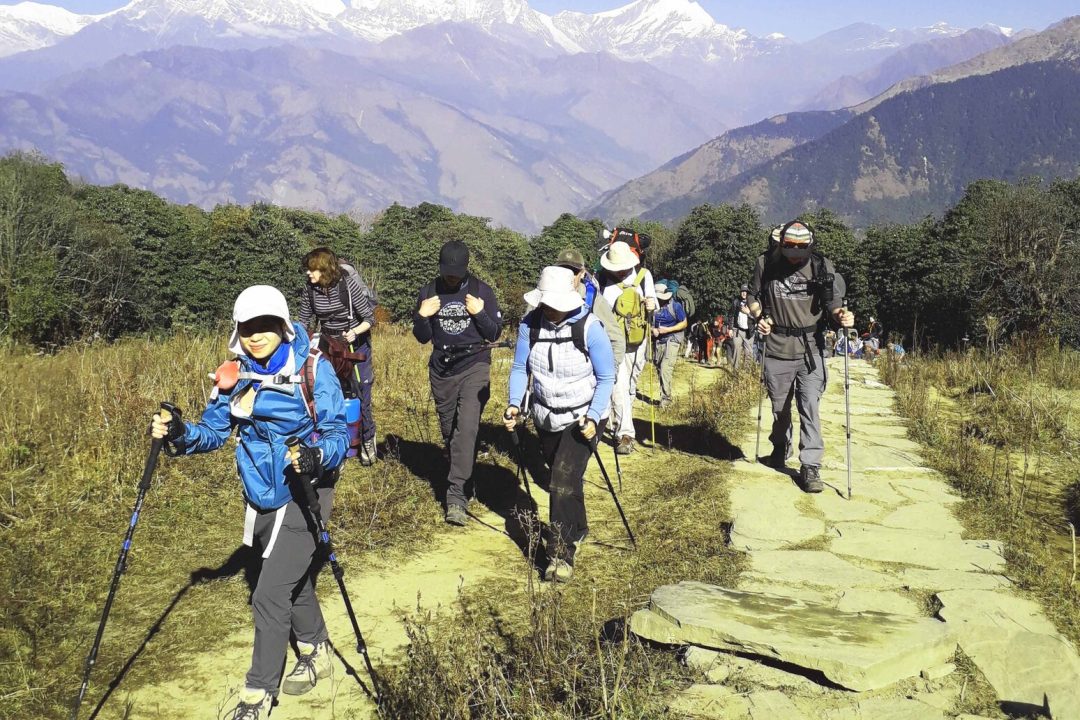
Nepal is a country of incredible biodiversity covering an area of 147, 181 sq. km. Located between Tibet/China towards the north and India in the south, east, and west of the country. Where the great Himalayan chain of peaks forms a boundary between Nepal and Tibet/China, Trekking in Nepal offers a unique way to experience this remarkable geographical setting.
A fantastic country to visit, where elevation rises from 60 m in the low areas of the Terai belt to the world’s highest point and summit of Mt. Everest at 8,848. 86 m, making Nepal a unique country. The significant change of climate from sub-tropical to cooler green hills, and ending in the Arctic zone of ice and glaciers. A dramatic variation all within 150 km distance, as well as differences in landscapes and vegetation across various cultures of Nepalese, is what makes trekking in Nepal so special.
A land of 02 % of the world’s flowering plants, and 08 % of birds with more than 857 different species. Including the world’s 04 % mammals, 500 species of butterflies, 600 native plant families with 319 species of orchids. Truly a country of natural wonder with the world’s 8th-highest peaks, and an array of hundreds of towering peaks often seen while trekking in Nepal.
Nepal is a premier country for various adventures due to its high Himalayan Mountain range, green rolling hills, and scenic valleys. The main flow of tourism is for trekking in Nepal and mountaineering, as well as exploration of hidden pockets of the Himalayas.
Table of Contents
How to Reach Nepal?

Nepal can be reached via air or by land, and at present the country has three international airports. The main arrival point by air is Kathmandu at Tribhuvan International Airport, with flights operated by various international airlines—this is the most common entry point for visitors planning trekking in Nepal.
From the eastern USA and Europe, travellers usually fly via the Middle East through Dubai, Qatar, or Abu Dhabi, or via New Delhi for connecting flights to Kathmandu. Visitors from the western USA, Japan, Australia, and other Asian countries also use these routes when coming for trekking in Nepal.
Flights are available through hubs such as Hong Kong, Singapore, Kuala Lumpur, Bangkok, Dhaka, New Delhi, and from China via Tibet to reach Kathmandu. These connections make travel convenient for international trekkers.
Nepal can also be reached overland from India through several southern border entry points open to foreigners. In the southwest, entries include Sunauli near Bhairahawa and Mahendranagar, while Kakarbhitta serves as the main entry point in the southeast.
Travellers from mainland China can enter Nepal via Lhasa in Tibet, either by air or overland. The main border crossing is at Kyirong–Rasuwagadhi, from where travellers continue by road to Kathmandu, a popular route for adventure travellers.
How to Get a Nepalese Visa?
Visa for Nepal entry can be obtained in advance from Nepalese Embassies or Consulates in your home country, including throughout the USA, major countries in Europe and Asia, and a few in Africa (handled via Dubai or the UAE).
If you don’t have time to get a visa beforehand, you can get a visa on arrival at Tribhuvan International Airport in Kathmandu for international flights. Visitors arriving overland from India or China via Tibet can also obtain a visa at the main immigration check posts. You will need two passport-size photos and cash payment in accepted foreign currencies such as US Dollars, Canadian Dollars, Singapore Dollars, Australian Dollars, Hong Kong Dollars, Euros, Chinese Yuan, or Swiss Francs.
What Currency Does Nepal Accept?

During your stay in Nepal, it is best to use the local currency, Nepalese Rupees (NPR), which come in bills of Rs. 1, 2, 5, 10, 20, 50, 100, 500, and 1,000. This is especially important while trekking in Nepal for personal expenses, as smaller towns and remote areas may not accept foreign currency.
In cities and larger towns, foreign currencies are accepted in big shops, large stores, restaurants, and hotels. The convertible currencies accepted are those recognized by the State Bank of Nepal (Rastriya Bank of Nepal).
Food & Accommodation in the Himalayas?
Food and accommodation during trekking in Nepal vary depending on whether you are on popular trails or less-visited areas. On well-known routes like Annapurna, Everest, and Langtang, accommodation is widely available in major villages and towns, ranging from budget lodges to standard and luxury hotels, resorts, guest houses, and homestays.
In standard lodges, rooms are generally clean and tidy, with some offering views of snow-capped peaks. Most lodges have common toilets and bathrooms, and only a few in larger villages provide rooms with attached facilities. Above 3,600 m, it is rare to find rooms with attached bathrooms due to harsh weather and frozen plumbing. Common toilets are usually located outside, and dining rooms are warm, heated by pot-bellied stoves.
Food on popular trekking routes is diverse, with menus including Nepalese, Tibetan, Indian, Chinese, and continental dishes. Some lodges even offer Mexican, Italian, Japanese, or Korean food. In higher-altitude villages, meat is scarce, especially in Buddhist areas, and it may not always be fresh. Meals are generally clean and prepared hygienically, often requiring an hour’s notice.
In smaller villages, accommodations are simpler but clean, and food options are limited. Trekkers usually enjoy traditional Nepalese Dal Bhat (rice with lentil soup, vegetables, and pickles), Tibetan or Chinese noodles, pasta, and freshly baked bread or pancakes. These meals are filling, nutritious, and suitable for high-altitude trekking.
Types of Trekking in Nepal
Nepal offers various types of trekking experiences, from tented camping to local lodges and homestay programs, which few countries can match. Most visitors come for trekking and climbing adventures, enjoying the comfort of tea houses and lodges along the trails.
Trekking in Nepal is not only a major attraction but also an important part of the local economy, supporting villages along the routes. As a premier adventure destination, Nepal provides a wide range of accommodations with diverse and exciting food options. Trekkers in the Himalayas can choose from simple budget lodges, standard tourist lodges, inns, or even luxury lodges and resorts on popular trekking routes.
Teahouse/Mountain Lodge Trekking:

Tea houses were introduced in the Nepal Himalayas in the early 1980s to support the growing number of trekkers, especially around popular regions like Annapurna, Everest, and Langtang.
Originally, these were simple accommodations in rural farm villages, offering basic shelter and meals. Over the years, many tea houses have evolved into well-built lodges with spacious rooms, warm dining halls, a variety of food options, and facilities like attached bathrooms, running hot and cold water, and sunny garden areas with views of the mountains.
Today, tea houses and lodges are found not only in Everest, Annapurna, and Langtang but also in more remote trekking regions such as Manaslu, Makalu, and even near Kanchenjunga. However, standards can vary in these distant areas due to their remote locations, making planning important for trekking in Nepal.
Camping Trekking:

Camping trekking is one of the earliest and most traditional ways to explore the Himalayas. Before tea houses and lodges became common, tented camping was the only option for trekkers and adventurers.
Today, camping trekking has mostly disappeared from popular routes like Everest, Annapurna, and Langtang, and is now mainly used in remote corners of the Himalayas. For trekkers heading to isolated regions in Nepal’s Far East or hidden pockets of the mountains, camping is often the only way to reach these off-the-beaten-path destinations.
Camping trekking is common for areas without tea houses or lodges, such as Makalu, Kanchenjunga, Dolpo, or other remote regions. It involves carrying all necessary equipment, food, and supplies for overnight comfort. Typical setups include two-person tents, dining tents sized for the group, separate kitchen tents, and toilet or shower tents on request.
Some companies even provide portable chairs and tables. Meals are prepared by cooks and kitchen staff, with dining lit by hurricane lamps or gas lanterns. Large groups usually include porters or mules to carry all gear, making trekking in Nepal by camping a full adventure experience from start to finish.
Homestay Trekking:
Homestay trekking offers a unique adventure that lets you immerse yourself in local culture and traditions. On these treks, you stay overnight in village huts or cottages, which serve as homestay facilities.
Homestay trekking operates mainly in remote hill and mountain villages, run and managed by local communities. Accommodations are simple, and meals are traditional Nepalese, reflecting the heritage and customs of the area.
These programs began in the last two decades to give visitors a deeper experience of local life. Guests can participate in farm activities, enjoy dinner with local folk dances and songs, and create truly memorable experiences while trekking in Nepal.
Trekking in Nepal with Variation of Routes
Trekking in Nepal offers a variety of routes to explore and enjoy the beauty and charm of the Himalayas. From popular trails to off-the-beaten-path wilderness routes, there are options for every type of adventurer.
On the main trails, trekkers can enjoy comfortable lodges, delicious meals, and rooms with stunning mountain views. For those seeking a more immersive adventure, camping treks allow you to venture into remote areas, far from villages and human settlements, walking through untouched mountain landscapes.
With so many choices, trekking in Nepal gives travelers the freedom to experience both comfort and true wilderness adventure.
Classic Trekking
Classic trekking in Nepal follows the original routes to iconic destinations like Everest Base Camp. One example is the historic trail from Jiri, which was the main route before the Lukla airport was built in the 1970s. Today, most trekkers fly from Kathmandu to Lukla, making the trek shorter, but a few still choose the classic routes for a more authentic experience.
Classic trekking lets adventurers follow the paths of early pioneers and legendary mountaineers. On the way to Everest, you can walk along the same trail used by Tenzing Norgay and Sir Edmund Hillary during their historic 1953 ascent. For travelers seeking history and adventure, trekking in Nepal along these classic trails offers a truly unique experience.
Off The Beaten Path
Off-the-beaten-path trekking in Nepal offers an exciting and immersive adventure away from the main trails. These routes lead you into complete wilderness, surrounded by serene mountains, far from villages and crowds.
This type of trekking is more like an exploration than a regular trail trek. Trekkers carry all camping equipment and food needed for the journey, traveling until they reach the nearest main road. For those seeking true adventure and solitude, trekking in Nepal off the beaten path is an unforgettable experience.
Trekking Combined Helicopter Flight
Another exciting way to experience adventure in the Nepal Himalayas is trekking combined with helicopter flights. After completing the trek, you can enjoy a luxury helicopter ride back to Kathmandu or the nearest city, making the journey easier and faster.
This option is becoming increasingly popular, especially for Everest Base Camp treks, and is perfect for trekkers with limited time in Nepal. Typically, trekkers fly from Kathmandu to Lukla on a small plane, hike to Everest Base Camp, and then return by helicopter from Gorakshep.
A standard Everest Base Camp trek usually takes 11–12 days, but with a helicopter return, the journey can be completed in 8–9 days, covering all the main highlights of the Khumbu and Everest region. This approach allows trekkers to enjoy the adventure with less downhill walking while still experiencing the iconic trails of trekking in Nepal.
Trekking Region in Nepal
Trekking regions in Nepal offer a variety of exotic destinations to suit different interests and holiday durations. The Himalayas provide options ranging from moderate walks of a few days to adventurous treks lasting a week, or challenging expeditions of three weeks or more.
Nepal is one of the world’s best trekking destinations, with popular trails as well as hidden corners of the Himalayas. Trekkers can explore off-the-beaten-path routes, cross high mountain passes, and experience remote wilderness far from human settlements. From the Far Northeast to the remote Western Himalayas, trekking in Nepal lets you discover some of the wildest and most spectacular landscapes on Earth.
Everest Region

The Everest region of Nepal covers the Solu Khumbu district, one of the most popular trekking and adventure destinations. Located in mid-eastern Nepal around the Mahalangur Himalaya range, it is home to the world’s highest peaks, including Mt. Everest, Lhotse, and Cho-Oyu, along with many other mountains above and below 7,000 meters. This region is the main hub for trekking and high-altitude adventures in Khumbu.
The Everest region is famous for treks to Everest Base Camp and climbs to Kala Patthar, a rocky hilltop offering spectacular close-up views of Everest and surrounding giant peaks. Trekkers can also explore Gokyo Valley, its glacial lakes, and climb Gokyo Ri for panoramic views of Everest, Lhotse, Makalu, and Cho-Oyu, as well as Nepal’s longest glacier, Ngozumpa.
For more adventurous travelers, combination treks like Everest Base Camp with Gokyo Valley crossing Cho-La Pass, or treks over the three high passes—Kongma La, Cho La, and Renjo La—offer challenging routes through the Khumbu valleys from east to west. Along the trails, trekkers can also experience local culture and stay in comfortable lodges.
Classic routes, such as the original Jiri to Everest Base Camp trek, explore the lower Solu areas, which are less traveled. Solu offers pleasant hikes like Pikey Hill Trek, providing panoramic Himalayan views including Everest. Other high-altitude treks include Makalu and Barun Valley via Sherpani Col, Rolwaling Valley crossing Tashi Laptsa Pass, and routes from the Arun Valley. Shorter treks like the Everest Panorama to Thyangboche monastery are also popular.
Most treks in the Everest region start and end in Lukla after a flight from Kathmandu. For lower Everest and Solu treks, travelers can fly to Phaplu or travel by road, especially for the Pikey Hill trek.
Trekking in Nepal’s Everest region provides a mix of iconic mountain scenery, high passes, cultural experiences, and adventure for all levels of trekkers.
Annapurna Region

The Annapurna region is one of the most popular and highly rated trekking destinations in Nepal, and arguably in the world. The Annapurna massif is a vast Himalayan range with more than a dozen high peaks, including Annapurna I (8,091 m), the first 8,000-meter peak ever climbed in 1950, three years before Everest was conquered. Other notable peaks include Annapurna II, III, IV, Gangapurna, Hiunchuli, and Machhapuchare (Fishtail).
Located in Nepal’s North Mid-West around the Gandaki Zone, most treks begin and end in Pokhara, offering routes through lush green hills, traditional Gurung villages, and alpine landscapes. The region caters to all types of trekkers—from moderate 3–4 day walks to challenging treks over a week or more.
Popular treks in the southern Annapurna hills include:
- Ghorepani and Poon Hill Trek: A moderate 3–4 day trek with stunning sunrises over Dhaulagiri, Annapurna, Manaslu, and Machhapuchare.
- Annapurna Base Camp (ABC) Trek: A week-long trek through rhododendron forests and Gurung villages, ending at the sanctuary surrounded by 7,000–8,000 m peaks. The highest point is 4,130 m.
- Mardi Himal Base Camp Trek: A quieter trek near ABC, offering spectacular views of Machhapuchare and Mardi Himal.
- Royal Trek and Panchase Hill Trek: Shorter treks in the foothills of Annapurna for scenic views similar to Poon Hill.
The northern Annapurna region features the famous Annapurna Circuit, considered one of the world’s top adventure treks. It traverses dramatic landscapes, from subtropical lowlands to the barren high Himalayas, crosses the high Thorong La Pass, and passes through Buddhist cultures, high valleys, and alpine lakes like Tilicho. The Manang Valley also connects to hidden gems like Nar-Phu Valley, offering remote trekking adventures.
With such diverse routes and landscapes, trekking in Nepal’s Annapurna region combines natural beauty, cultural experiences, and high-altitude adventure for trekkers of all levels
Manaslu Region
The Manaslu region takes trekkers around Mt. Manaslu, the world’s 8th highest peak at 8,163 m, along with its surrounding peaks. Located in far north mid-west Nepal, it lies west of the Annapurna Himalayas and east of the Ganesh Himal massif.
Opened to trekkers in 1991, the Manaslu region is still a restricted area, requiring special permits for foreign visitors due to its proximity to the Tibet/China border. Treks here pass through the scenic Manaslu Valley and cross the high Larke La Pass, offering stunning Himalayan landscapes.
The most popular trek is the Manaslu Circuit, an adventure of just over two weeks. The route starts in the warm lowlands of Gorkha district, follows the Buri Gandaki River upstream, and passes through green hills, traditional villages, and the scenic Manaslu Valley, including Sama Gaon village.
Trekkers also follow the historical Salt Trade Route linking Nepal to Tibet and Manang. For an extended adventure, the Manaslu Circuit can be combined with a trek to Tsum Valley, east of Manaslu, known as the “Valley of Happiness,” tucked behind the Ganesh Himal.
For those seeking less crowded trails and a mix of cultural and natural wonders, trekking in Nepal’s Manaslu region is a truly rewarding experience.
Langtang Region
The Langtang region, located in the central Himalayas, is the closest mountain range to Kathmandu Valley and the city. Just a 5–6 hour drive from Kathmandu, Langtang lies along the route toward the Tibet/China border and offers a variety of trekking experiences—from moderate walks to challenging high-altitude adventures lasting one week to 14 days or more.
Langtang is the third most popular trekking region in Nepal, after Annapurna and Everest. The most famous trek is the Langtang Valley Trek, a moderate one-week walk starting and ending at Syabrubesi and reaching Kyanjin at 3,800 m within the scenic Langtang Valley, located inside Langtang National Park.
Another popular trek leads to Gosainkund, a holy pond at 4,380 m, which can be combined with Langtang Valley and crossing Laurabinaya-La Pass at 4,610 m, descending via scenic Chisapani Hills to Kathmandu’s northeastern rim.
Cultural trekking is also possible via the Tamang Heritage Trail, offering a chance to experience local Tamang culture, ancient Buddhist traditions, and village homestays.
For adventurers seeking more remote challenges, Langtang offers high passes such as Ganja-La (5,200 m) to Helambu and Tilman Col (5,320 m) in the eastern valley, a seldom-explored pass named after British explorer H. W. Tilman. These routes provide true wilderness trekking for experienced adventurers.
With its combination of natural beauty, cultural richness, and high-altitude adventure, trekking in Nepal’s Langtang region is ideal for both moderate and challenging Himalayan experiences.
Makalu Region
The Makalu region offers spectacular trekking adventures in the far eastern Nepal Himalayas, located between Everest and Kanchenjunga. Home to Mt. Makalu (8,463 m), the world’s fifth-highest peak, the region features the scenic Barun and Arun Valleys.
Treks typically start from Tumlingtar after a flight from Kathmandu, followed by a drive through Khandbari and Num village. From Num, the trail passes through lush forests of rhododendron and pine, then climbs to Sherpa villages like Tashi Gaon, continuing to Khoma Danda and over Shipton-La Pass into the Barun Valley.
Barun Valley stretches to Makalu Base Camp (5,364 m / 17,598 ft), set amidst moraine, ice, and snow, with breathtaking views of Makalu, Baruntse, Chamlang, and the east face of Everest (Khangsung Face). Trekkers return the same route, or for the adventurous, cross Sherpani West Col (5,800 m+) toward the Everest region, finishing with a flight from Lukla.
For off-the-beaten-path adventures and high-altitude experiences, trekking in Nepal’s Makalu region is ideal for seasoned trekkers seeking remote Himalayan wilderness.
Kanchenjunga Region
The Kanchenjunga region is located in the far eastern Nepal Himalayas and offers one of the longest and most remote trekking adventures in the country. It leads to both the north and south base camps of Mt. Kanchenjunga (8,586 m / 28,169 ft), the world’s third-highest peak, which straddles the border of Nepal and Sikkim, India. Most trekking and climbing activities are done from the Nepal side.
Kanchenjunga treks typically last more than three weeks, including flights and drives at both ends. The journey passes through enchanting forests of rhododendron and pine, gradually giving way to arid alpine terrain at the base camps.
For extended adventure, trekkers can explore remote villages like Watchung-Gola, follow trails toward the Tibet border, and connect with the Makalu region by crossing the high Lumba-Sumba Pass.
For experienced adventurers seeking off-the-beaten-path Himalayan landscapes, trekking in Nepal’s Kanchenjunga region is a truly extraordinary experience.
Mustang Region
The Mustang region lies in far northwest Nepal, near Dolpo and Manang, and was once a forbidden kingdom. Treks typically start with a flight or drive to Jomsom, the district headquarters. Upper Mustang is a restricted area, requiring special permits to enter the former walled kingdom of Lo-Manthang.
An extension of the Tibetan southwest plateau, Mustang features dry, arid landscapes with windswept valleys, dramatic canyons, eroded cliffs, and sparse vegetation. The trek follows the Kaligandaki River valley, passing through Kagbeni, the gateway to Upper Mustang. Villages reflect strong Tibetan culture, with monasteries, traditional homes, and Buddhist heritage.
Highlights include breathtaking mountain views, crossing high passes, exploring the walled town of Lo-Manthang, and visiting the holy Muktinath Temple. Trekkers return to Jomsom by the same route or via upper trails through villages like Yara, finishing with a flight back to Pokhara.
For those seeking a combination of culture, history, and dramatic arid landscapes, trekking in Nepal’s Mustang region offers a truly unique Himalayan experience.
Dolpo Region
The Dolpo region lies in far northwest Nepal, bordering the Mustang area, and is one of the most remote trekking destinations in the Himalayas. Trekkers can explore Lower and Upper Dolpo, venturing to hidden high-altitude corners, including the famous Shey Gompa (Crystal Monastery), set in a windswept, isolated landscape far from modern civilization.
Dolpo offers a vast wilderness experience, with trails following the historic Trans-Himalayan Salt Trade Route toward the Tibet border. A highlight of the region is Phoksundo Lake near Ringmo village, located within the Shey Phoksundo National Park, Nepal’s largest protected area at 3,555 sq. km.
Reaching Dolpo typically involves flights from Kathmandu via Nepalgunj, in the far southwest. For adventurers seeking off-the-beaten-path landscapes and cultural immersion, trekking in Nepal’s Dolpo region is an extraordinary high-altitude adventure.
Trekking Permits

Trekking permits are required for all treks across the Nepal Himalayas, except for peak climbing or mountaineering expeditions, which have separate climbing permits. Restricted regions require special permits in addition to standard trekking permits.
Trekking permits are issued by travel and trekking agencies when booking your trip. The main permit system is called TIMS (Trekking Information Management System), authorized by TAAN (Trekking Agents Association of Nepal), a semi-government organization.
For the Everest region, especially high Khumbu areas, permits are issued by the local village communities from Lukla onwards. In addition to trekking permits, visitors also need National Park or Conservation Area permits for protected regions.
Obtaining the right permits is essential for a safe and legal trekking in Nepal, ensuring access to the Himalayas while supporting local communities.
Trekking Difficulties
Nepal is a country of towering mountains and rolling hills, with flat land found mainly in the southern Terai belt. From there, the terrain rises through the smaller Churia (Siwalik) hills, the mid-hills, and higher ranges, eventually reaching the Mahabharata range and the mighty Himalayas.
Trekking regions in Nepal typically begin in the mid or high hills and valleys, where uphill trails lead to your destinations in the mountains, and the return journey is mostly downhill. This unique terrain makes trekking in Nepal a challenging yet rewarding adventure, offering stunning views at every step.
Easy Trek in Nepal:
There is no truly “easy” trek in Nepal, but short-distance walks on gentle slopes with gradual ups and downs are considered easy trekking. Popular short easy treks in Nepal include trails like Ghorepani-Poon Hill, Panchase Trek, and Nagarkot–Dhulikhel, which offer stunning mountain views, cultural villages, and a taste of the Himalayas without requiring long or strenuous trekking. These treks are perfect for beginners, families, or travelers with limited time, allowing an enjoyable Himalayan experience with minimal physical strain.
Easy to Moderate Trek in Nepal:
Easy to moderate treks in Nepal start on pleasant, short flat trails and gradually climb to mid or high hills over a few hours. Trekkers reach overnight destinations in the comfort of local lodges and inns. These treks combine gentle flats, short climbs, and downhill sections, making easy to moderate trekking in Nepal ideal for beginners or those seeking a relaxed yet scenic Himalayan experience.
Moderate to Difficult Trek in Nepal:
Moderate to difficult treks in Nepal offer a wide range of destinations with varying levels of challenge, depending on your fitness and preparation. These treks typically start from low, flat farm areas and gradually climb into the hills. The more difficult sections involve long uphill walks, either steep or gradual, leading to high ridges and mountain passes, followed by long downhill descents. Moderate to difficult trekking in Nepal is ideal for adventurous travelers seeking both physical challenge and the reward of spectacular Himalayan scenery.
Difficult to Challenging Trek in Nepal:
Challenging treks in Nepal require trekkers to be well-prepared with good fitness and prior training. These adventures lead to high-altitude terrain, with long, steep uphill climbs and extended walks to overnight stops. The difficulty comes from steep ascents, long descents, and crossing high passes often covered in snow.
Treks may reach altitudes above 4,500–5,000 meters, with walking durations of 6–8 hours or more per day. Some sections can be technical, requiring ropes or additional safety measures. Challenging trekking in Nepal is suited for experienced adventurers seeking demanding, high-altitude Himalayan experiences.
High Altitude Sickness During the Trek
High altitude sickness, also known as Acute Mountain Sickness (AMS), commonly occurs above 3,000 m and sometimes even lower if the body is not properly acclimatized. It is common during high-altitude trekking in the Himalayas.
Symptoms of AMS:
- Mild to severe throbbing headache
- Loss of appetite
- Nausea and vomiting
- Sleeplessness or disturbed sleep
- Fatigue or dizziness
Severe forms of high altitude sickness:
- HACE (High Altitude Cerebral Edema): swelling of the brain
- HAPE (High Altitude Pulmonary Edema): fluid accumulation in the lungs
If symptoms persist or worsen:
- Immediate descent to a lower altitude is critical
- Seek medical attention at the nearest post or hospital
- Helicopter evacuation is often the fastest and safest option
Prevention Tips:
- Walk at a slow and steady pace
- Take rest days to allow acclimatization
- Drink enough water and other safe fluids
- Climb high, sleep low to support acclimatization
- Consider medication like Diamox under medical supervision
Proper acclimatization and cautious trekking can significantly reduce the risk of AMS, allowing trekkers to safely enjoy the breathtaking Nepal Himalayas.
Travel & Medical Insurance to Include Helicopter Rescue
The first priority after booking a trek in the Himalayas is to obtain comprehensive travel and medical insurance, including coverage for helicopter rescue services.
Why Travel & Medical Insurance is Essential:
- Trip delays: Landslides, broken trails, political strikes, or bad weather can cancel or delay domestic flights. Insurance can cover extra costs for extended itineraries.
- Helicopter services: If domestic flights are canceled, some insurance policies cover helicopter transfers to continue or conclude the trek.
- Medical emergencies: In case of serious illness or injury at high altitude, helicopter evacuation ensures rapid transport to the nearest hospital in Kathmandu, Pokhara, or other major cities.
Tip: Always check that your insurance policy explicitly includes high-altitude trekking, helicopter evacuation, and emergency medical coverage for complete protection during Himalayan adventures.
Essential Packing List for Traveling in Nepal
Clothing
- Lightweight T-shirts
- Long-sleeved cotton shirts
- Shorts/skirts (for ladies)
- Cotton trousers/breeches/track pants
- Ultra-fleece trousers
- Warm down jacket (duvet/synthetic)
- Fiber pile jacket/fleece
- Wool balaclava/hat
- Wool mitts/gloves
- Waterproof jacket and trousers
- Sun hat/scarf (silk or nylon)
- Thermal base layers (top & bottom)
- Trekking socks (multiple pairs)
- Sleepwear / light indoor clothes
Footwear
- Good trekking boots (broken-in)
- Runners/sports shoes
- Slippers/sandals
Accessories
- Sunglasses/glacier goggles (UV protection)
- Sunscreen (SPF 20+ or glacier cream)
- Lip balm with SPF
- Water bottle (1-liter metal recommended)
- Headlamp / torch + spare batteries
- Walking sticks / trekking poles
Toiletries & Health
- Toothbrush & toothpaste
- Soap/body wash/shampoo
- Hand sanitizer
- Quick-dry towel
- Personal medications / first aid kit
- Insect repellent
Camping / Optional Gear
- Thermarest / self-inflating mattress
- Sleeping bag (seasonal rating)
- Small knife (Swiss army style)
- Sewing kit
- Notebook/diary & pens
- Small padlock/money belt
Electronics & Photography
- Camera / GoPro
- Spare memory cards & batteries
- Power bank / portable charger
Documents & Money
- Passport & visa
- Trekking permits (TIMS, National Park / Conservation Area permits)
- Cash (Nepalese Rupees) & credit/debit cards
- Travel insurance documents
Extras
- Plastic bags / dry sacks (for waterproofing)
- Snacks/energy bars
- Lightweight backpack for day treks
Independent Trek or Trekking with an Agency
In Nepal, the most popular trekking destinations—Annapurna, Everest, and Langtang regions—offer opportunities for both FIT (Free Independent Trekkers) and trekkers traveling with a reputed trekking agency, accompanied by government-registered guides.
Trekking with an Agency:
Choosing a trekking agency is often the safest and most convenient way to explore the Himalayas. When booking with a registered company based in Kathmandu or Pokhara, the following are arranged:
- Trekking permits (TIMS, national park & conservation area tickets)
- Domestic flights and ground transport
- Experienced government-licensed guides fluent in multiple languages
- Insights on local culture, religion, history, and flora/fauna
- Assistance with all trekking formalities and safety measures
Agency-guided trekking allows travelers to enjoy the adventure without logistical stress, while benefiting from local knowledge and safe guidance.
Independent Trekking / FIT (Free Individual Travelers/ Trekkers):
Independent trekking, or FIT, has a long history in Nepal, dating back to early visitors who explored the Himalayas before the tourism industry developed.
- FIT trekking is popular on mainstream routes like Annapurna, Everest, and Langtang, where trails are well-marked, and lodges are readily available.
- Travelers can stay overnight in local lodges and navigate the routes without a guide.
- For remote or less-traveled areas, hiring a government-licensed guide and porter is strongly recommended. This not only ensures safety but also supports the local economy.
Best Seasons to Trek in Nepal
Nepal’s Himalayan regions can be trekked almost year-round, but the best times depend on weather, trail conditions, and visibility. The trekking experience is most enjoyable during seasons with clear skies, moderate temperatures, and safe trail conditions.
Autumn (September – November) – Best Overall Season:
Weather: Stable and dry, clear skies
Temperature: Moderate; warm in lower regions, cooler at higher altitudes
Advantages: Best mountain views of Everest, Annapurna, Langtang, and other peaks
- Pleasant trekking conditions, not too hot or cold
- Festivals like Dashain and Tihar provide cultural experiences
Recommended For: First-time trekkers, high-altitude treks, photography enthusiasts
Spring (March – May) – Second Best Season:
Weather: Dry, gradually warming temperatures
Highlights:
- Rhododendron forests in full bloom, colorful landscapes
- Clear views of snow-capped peaks
Considerations: Some trails may be crowded in popular regions
Recommended For: Nature lovers, moderate to challenging treks, cultural exploration
Winter (December – February) – Cold but Clear
Weather: Cold, especially at high altitudes; clear skies in lower regions
Challenges:
- Snowfall can block higher passes
- Nights are very cold; requires proper winter gear
Advantages: Fewer trekkers, serene and peaceful trails
Recommended For: Experienced trekkers, lower-altitude treks, budget-conscious travelers
Monsoon / Rainy Season (June – August) – Not Ideal:
Weather: Heavy rainfall, slippery trails, leeches in lower regions
Challenges:
- Risk of landslides and trail blockages
- Reduced visibility; mountain peaks are often hidden
Advantages:
- Lush green landscapes and flowing rivers
- Off-season means fewer trekkers and lower costs
Recommended For: Only very experienced trekkers prepared for rain and difficult trails
Final Say
Let Highroute Adventure plan your perfect trek in Nepal! Whether it’s Everest, Annapurna, Langtang, or off-the-beaten-path trails, we make your journey safe, memorable, and hassle-free.
Contact us today and start your adventure in the Himalayas!
Frequently Asked Questions
What is the best time to go trekking in Nepal?
The best time for trekking in Nepal is during the pre-monsoon (spring) season from March to May and the post-monsoon (autumn) season from late September to November. These periods offer clear skies, stable weather, and excellent mountain views.
Is Nepal a good destination for first-time trekkers?
Yes, Nepal is ideal for beginners with accessible routes like Ghorepani Poon Hill and Langtang Valley. Many agencies offer tailored beginner-friendly packages.
Do I need a visa to travel to Nepal?
Yes, most foreign nationals require a visa to enter Nepal. You can obtain a tourist visa on arrival at Tribhuvan International Airport in Kathmandu or apply online through the Nepal Immigration website.
Is trekking in Nepal safe?
Yes, trekking in Nepal is generally safe with proper planning and experienced guides. Avoid trekking alone in remote areas and stay informed about weather and trail conditions.
Do I need a guide or porter for trekking?
While not mandatory, hiring a guide or porter is highly recommended for safety, navigation, and support. Guides enhance your experience by sharing local knowledge and ensuring you stay on track.
What are the most popular trekking routes in Nepal?
Popular treks include the Everest Base Camp, Annapurna Circuit, Annapurna Base Camp, Langtang Valley, and Manaslu Circuit. These routes offer diverse landscapes, cultural experiences, and stunning mountain views.
How difficult is trekking in Nepal?
Trek difficulty varies from easy (e.g., Poon Hill) to strenuous (e.g., Everest Base Camp). Choose a trek based on your fitness level, experience, and acclimatization needs.
What permits are required for trekking in Nepal?
Most treks require a Trekker’s Information Management System (TIMS) card and specific area permits like the Annapurna Conservation Area Permit (ACAP) or the Everest Region’s Sagarmatha National Park Permit.
How do I get to Nepal?
You can fly into Tribhuvan International Airport in Kathmandu from major international hubs. Several airlines operate direct or connecting flights to Nepal from Asia, the Middle East, and Europe.
What should I pack for a trek in Nepal?
Pack layered clothing, a good-quality sleeping bag, sturdy trekking boots, a daypack, water purification tools, sunscreen, and essential medications. Don’t forget a headlamp and personal toiletries.
Is altitude sickness a risk while trekking?
Yes, altitude sickness is a real risk on high-altitude treks like Everest and Annapurna. Acclimatize properly, ascend slowly, stay hydrated, and descend if symptoms worsen.
How long do treks in Nepal usually last?
Treks can range from 5–7 days (e.g., Ghorepani Poon Hill) to 2–3 weeks (e.g., Everest Base Camp). Duration depends on the route, pace, and acclimatization schedule.
Are there age restrictions for trekking in Nepal?
There are no official age limits, but trekkers should be in good physical condition. Children and seniors should choose easier routes and consult a doctor before high-altitude treks.
Can I trek independently in Nepal?
Yes, independent trekking is allowed in many regions, but it’s safer and more enjoyable with a guide. Some restricted areas require a licensed guide.
What type of accommodation is available on treks?
Most treks offer tea houses or lodges with basic rooms, meals, and shared bathrooms. In remote areas, camping may be necessary.
What food is available during treks?
Tea houses serve local and international dishes like dal bhat (lentil soup with rice), noodles, soups, and pancakes. Food options vary by location and altitude.
Is Wi-Fi available on treks?
Wi-Fi is available in many tea houses, especially on popular routes like Everest and Annapurna, but it may be slow and come with a fee. Connectivity decreases at higher elevations.
Can I charge my electronic devices while trekking?
Yes, most tea houses offer charging facilities for a small fee. Bring a universal adapter and consider a portable power bank for reliability.
What is the maximum altitude on popular treks?
Everest Base Camp reaches 5,364 meters, while Thorong La Pass on the Annapurna Circuit is 5,416 meters. Proper acclimatization is essential at these heights.
How fit do I need to be for trekking in Nepal?
You should have moderate to good fitness, especially for longer or high-altitude treks. Regular cardio and strength training before your trip is recommended.
Are there medical facilities on trekking routes?
Basic health posts and clinics are available in major trekking villages like Namche Bazaar and Manang. For serious conditions, helicopter evacuation may be needed.
Do I need travel insurance for trekking in Nepal?
Yes, comprehensive travel insurance that includes high-altitude coverage, emergency evacuation, and medical expenses is essential for all trekkers.
What currency is used in Nepal?
The official currency is the Nepalese Rupee (NPR). Carry cash for remote areas, as credit cards are rarely accepted on treks.
Can I use credit cards while trekking?
Credit cards are accepted in Kathmandu and major cities but not in remote tea houses. Always carry enough cash for food, lodging, and emergencies.
What is a tea house trek?
A tea house trek involves staying in local lodges (tea houses) that provide meals and accommodation. It’s the most common and comfortable way to trek in Nepal.
How do I prevent altitude sickness?
Ascend slowly, spend nights at lower altitudes when possible, drink plenty of water, and avoid alcohol. Medications like Diamox can help, but consult a doctor first.
Are there shower facilities on treks?
Hot showers are available in many tea houses for a small fee, usually in lower-altitude regions. Facilities become limited above 4,000 meters.
What wildlife might I see while trekking?
In national parks, you may spot monkeys, Himalayan tahr, musk deer, and diverse bird species. Rare sightings include snow leopards and red pandas in remote zones.
Is drinking water safe during treks?
Tap or river water is unsafe. Use bottled water, water purification tablets, or UV filters. Many tea houses sell boiled water to refill bottles.
Can I trek in Nepal during the monsoon season?
Trekking during monsoon (June–August) is possible in rain-shadow areas like Upper Mustang and Dolpo. Popular routes like Everest and Annapurna are less ideal due to landslides and clouds.
What cultural etiquette should I follow while trekking?
Respect local customs: ask before taking photos, dress modestly, walk clockwise around stupas and prayer wheels, and avoid public displays of affection.
How much should I tip my guide and porter?
A tip of 10–15% of the total trek cost is customary. The amount can be divided between the guide and porter based on service quality.
What is the Annapurna Circuit trek known for?
The Annapurna Circuit is famous for its diverse landscapes, from subtropical forests to high-altitude deserts, and crossing the Thorong La Pass at over 5,400 meters.
How do I book a trek in Nepal?
You can book through registered trekking agencies in Kathmandu or online. Ensure the company is licensed and includes permits, guides, and insurance.
Are there solo female trekking options?
Yes, many women trek solo in Nepal safely. Hiring a guide or joining a group adds security and comfort, especially in remote areas.
What should I do in case of an emergency on a trek?
Stay calm, inform your guide or lodge owner, and contact your agency or insurance provider. Helicopter rescue is available but can be expensive without insurance.
Can I combine trekking with other activities in Nepal?
Absolutely. Many travelers combine trekking with jungle safaris in Chitwan, rafting, mountain flights, or cultural tours in Kathmandu and Pokhara.
What languages are spoken on the trekking trails?
Nepali is the national language, but English is widely understood in tourist areas. Local guides often speak both, and many Sherpas have basic English skills.
How do I choose the right trek for me?
Consider your fitness, time, budget, and trekking experience. Shorter teahouse treks are great for beginners; longer, remote treks suit experienced adventurers.
What environmental practices should I follow while trekking?
Carry out all trash, avoid single-use plastics, use designated toilets, and support eco-friendly lodges. Respect wildlife and natural habitats.