Everest Climbing Rules Update: Proof of Previous 7,000m+ Summits Required

Table of Contents
Introduction
In February 2025, the Nepal Ministry of Tourism introduced an important change to Everest climbing permits. Now, every climber must show proof that they have successfully summited at least one mountain higher than 7,000 m (23,000 ft) in Nepal. This rule is aimed at making climbing safer and more sustainable, and to restrict inexperienced climbers.
Overview – What the new rule means and why it matters
What: To obtain the Everest Climbing Permit in Nepal, each climber must submit verified proof (a certificate from the Nepal Government) that they have previously climbed a 7,000 m+ peak in Nepal.
When: This new rule was introduced in April 2025 by the Nepal Mountaineering Association (NMA), but it will now be effective from Spring 2026.
Why:
- Safety: Novice climbers increase the risk of fatalities on Everest due to their lack of high-altitude experience. For this reason, the new rule is an important safety measure.
- Environment: Another main aim of this rule is to address the heavy traffic previously observed.
What is NOT accepted: Social‑media posts, screenshots of summit photos, or informal “group chat” confirmations, even if they appear authentic.
Why this matters and what to do next
In this guide, we will explain in more detail why the Nepal government introduced the 7,000 m rule. Also, regarding the climbing permit, which 7,000m peaks are available, which Everest routes are available, and what other documents do you need to gather for the Everest Expedition?
Background: The Evolution of Everest Regulations

The first official Everest expedition began in 1921 as a British reconnaissance mission, and Tenzing Norgay and Sir Edmund Hillary achieved the first successful summit via the South Col route.
Since then, there have been thousands of successful summits, and over 339 people died till now( February 2026). Over time, permit systems and safety rules have evolved to protect climbers and preserve the mountain.
The death rate in the past was high, but due to the new permits and safety rules, the death rate on Everest has decreased significantly.
High-profile accidents, fatalities and traffic jams in recent years highlighted the need for stricter rules, especially for climbers lacking high-altitude experience.
Everest climbing is regulated by Nepal’s Ministry of Tourism, the Sagarmatha National Park Authority, and international mountaineering organizations, ensuring safety, environmental protection, and proper permit management.
The Everest New Rule Explained
Climbing Everest solo is not allowed. To obtain an Everest climbing permit from the Nepal Mountaineering Association (NMA), you need to go through a licensed trekking agency in Nepal.
Here are the documents that you need for the Everest Climbing to obtain the permit:
- Passport Copy – Valid passport with at least 6 months’ validity.
- Visa Copy – Tourist visa for Nepal.
- Summit Certificates / Logbooks – Nepal Government certificate of previous ascents(7,000 m+ peaks).
- Medical Certificate – Fitness certificate confirming the ability to climb at high altitudes.
- Travel Insurance – Comprehensive coverage including high-altitude trekking and helicopter evacuation.
- Licensed Guide Confirmation – Letter or contract from a licensed trekking/climbing agency in Nepal.
- Passport-sized Photographs – Usually 2–4 recent photos.
- Everest Permit Application Form – Completed form provided by NMA or your trekking agency.
- Deposit / Permit Fee Payment Proof – Receipt of full payment of the Everest permit fee.
Why 7,000 m? The Scientific & Safety Rationale

The mandatory 7,000m climbing experience for the Everest Climbing is based on science, safety and climbing expertise.
Familiar with Nepal Terrain:
Nepal’s geography differs from that of other high-altitude regions around the world. Climbers need to know about mountains, glaciers, routes, rugged terrain, and the physical and environmental challenges they pose. The previous 7,000m climb helps you understand this, which will improve safety and efficiency during the climb.
Physiological Milestones:
Above 5,000 m, the oxygen level drops, so if you have previous experience at 7,000m, you will understand the extremely low oxygen levels (hypoxia) and the higher risk of high-altitude illnesses, such as High-Altitude Cerebral Edema (HACE) and High-Altitude Pulmonary Edema (HAPE). Additionally, it will help the body acclimatize more effectively.
Technical Difficulty:
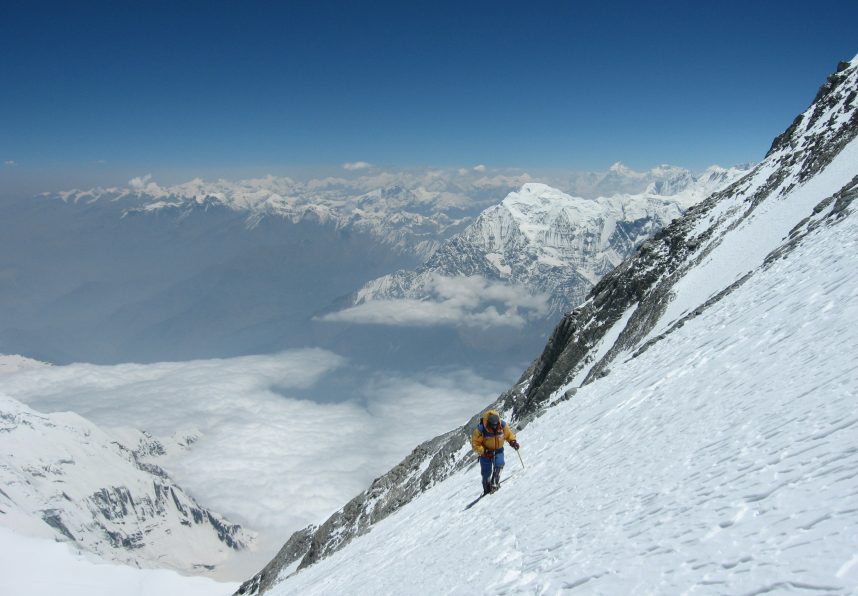
Having previous climbing experience above 7,000m will help you gain basic mountaineering skills. You will also encounter challenging terrain, including crevasses, steep slopes, and exposed ridges. By gaining experience, the Everest Expedition will achieve a higher success rate, with gains in skills, knowledge, and understanding of hazards.
Statistical Evidence:
According to the data, the inexperienced climbers have made multiple errors and bad decisions. Also, the fatality rate compared to those who have successfully climbed at this altitude has increased. By implementing this rule, it is believed that it will reduce risk and fatalities and improve overall safety on Everest.
Impact on Different Stakeholder Groups
The new Everest 7,000 m experience requirement affects multiple groups involved in climbing expeditions.
Commercial Trekking Agencies:
Now the agency should strictly verify that all the climbers meet the new experience criteria. They cannot take anyone who does not meet this rule. Some agencies also offer a training programme for high-altitude peaks above 7,000, which helps make the Everest expedition safer and enhances the agency’s reputation.
Guides & Sherpa Community:
With new rules for Everest, Sherpa guides and other supporting staff now need to focus on building experience before heading for the summit. With this experience, climbers will improve their skills and become more confident before attempting Everest.
Aspiring Climbers:
If you want to summit Everest but don’t have experience on mountains above 7,000 m, you now need to replan, which will impact timelines, costs, and overall preparation strategies.
Tourism & Local Economy:
Even though the number of permits issued will decrease under this new rule, it will enhance Nepal’s reputation for safe, well-managed climbing expeditions. The number of 7,000 expeditions will increase, meaning that, in the long term, Nepal will benefit from tourism and the local economy.
How to Build Your 7,000 m Credential
There are several mountains above 7,000 m that you can climb. You can choose a peak based on your interests and level of mountaineering experience.
Here is the list of the Popular 7,000 m+ Peaks in Nepal
Baruntse (7,129 m) – A beautiful Himalayan peak with mixed terrain, ideal for climbers gaining high-altitude experience.
Himlung Himal (7,126 m) – Considered one of the best first 7,000 m climbs, offering gradual altitude gain and scenic views.
Tilicho Peak (7,134 m) – Located near Tilicho Lake, this peak combines adventure with stunning mountain scenery.
Putha Hiunchuli (7,246 m) – A western Nepal peak with diverse terrain, suitable for climbers seeking a moderate challenge.
Saipal (7,031 m) – A remote peak in Far West Nepal, offering solitude and less-traveled routes.
Api Himal (7,132 m) – An isolated mountain, known for its technical climbs and striking beauty.
Langtang Lirung (7,227 m) – The highest peak in the Langtang region, combining technical climbing with scenic landscapes.
Annapurna II (7,937 m) – Part of the Annapurna massif, providing serious high-altitude experience for advanced climbers.
Annapurna III (7,555 m) – A challenging peak with steep slopes, suitable for experienced mountaineers.
Annapurna IV (7,525 m) – Offers technical climbing and prepares climbers for bigger Himalayan expeditions.
Himalchuli (7,893 m) – A massive peak near Manaslu, known for its imposing presence and moderate technical challenges.
Ngadi Chuli (7,871 m) – Also called Harka Gurung Chuli, it is a less-frequented peak with demanding terrain.
Ganesh I (Yangra, 7,422 m) – Part of the Ganesh Himal range, offering technical climbing experience.
Dhaulagiri II (7,751 m) – The second-highest peak in the Dhaulagiri range, challenging and rewarding for experienced climbers.
Churen Himal (~7,371 m) – A sub-peak of the Dhaulagiri massif, known for its remote routes and climbing prestige.
Gurja Himal (7,193 m) – A rugged and less-traveled peak, perfect for mountaineers seeking adventure away from crowded areas.
Practical Tips for a Successful Everest Permit Application
Step 1: Get Certificate of Successful 7,000 m Peak Submission.
Step 2: Choose the best trekking or expedition company with a proven record of successful Everest expeditions. Book the package which covers your climbing permit, licensed Sherpa guide, porter support, logistics, and other essentials. This will make your journey hassle-free and smooth.
Step 3: Submit all the required documents to the agency:
- Passport copy
- Tourist visa
- Climbing resume and certificates
- Medical certificate
- Travel insurance
- Recent passport-sized photographs
Controversies & Criticisms
Some climbers have criticized the new rule because it requires prior experience at 7,000 m, specifically in Nepal. Those who have successfully summited high-altitude peaks in other countries may feel this rule is unfair, as their international climbing experience does not count toward the Everest permit requirement.
Other points of debate include:
- Elitism and Accessibility: Critics argue the rule could exclude climbers with the skill but limited opportunities in Nepal.
- Experience vs. Skill: Can strong technical climbing ability compensate for a lack of high-altitude exposure?
- Potential Loopholes: Some climbers may seek to circumvent the requirement, raising concerns about enforcement.
Additional Useful Information About Everest Climbing
About Mt Everest: Mount Everest is located in Nepal, and it shares a border with Tibet, China. According to the combined measurement from China and Nepal, the new Everest height is 8848.86 m.
Best Routes & Camps: The Nepal south face route is a popular route for climbing Mt Everest. This route starts from the Everest Base Camp (EBC) trek in Nepal.
2 PM Rule for Everest: The 2 PM rule is a widely followed safety guideline on Everest expeditions. It states that all climbers must turn back from the summit if they have not reached it by 2 PM, regardless of how close they are to the top.
Everest Death Zone: The altitude above 8,000 m on any peak is known as the death zone in mountaineering. For Everest, the Death Zone starts around Camp IV (South Col, 7,920 m / 25,987 ft) and continues to the summit.
Hillary Step: Below the Everest summit, there was a near-vertical 12 m (40 ft) rock face called the Hillary Step, the biggest obstacle, which disappeared after the 2015 earthquake.
The best time for the Everest Expedition is Spring (Late April – May) and Autumn (September – Early October). Climbing Everest during Winter (December – February) is possible but challenging due to harsh weather conditions. The worst time to climb Everest is during June, July, and August.
Everest Expedition Cost: On average, the Everest Expedition costs $50,000-$65,000 USD for a standard package. The luxury Everest Expedition package can cost over USD 1,00,000.
Everest Climbing Permit Fee: The Everest Climbing fee depends on the season.
- Spring Season (Main Season): USD 15,000 per person.
- Autumn Season: USD 7,500 per person.
- Winter/Summer Season: USD 3,750 per person
Travel & Logistics: Your Everest journey starts from Lukla Tenzing Hillary Airport. There is a regular flight from Kathmandu to Lukla airport, but during peak season, flights are transferred from Ramechhap Manthali airport to Lukla.
Famous Celebrities who died on Everest: Rob Hall and Scott Fischer – 1996 Everest disaster, Francys Arsentiev (USA, 1998) – “Sleeping Beauty”
Final Say
The new rule for Everest is a game-changer for those planning an expedition in 2026. Make sure to follow the Government of Nepal’s rules, adhere to safety guidelines, and climb responsibly. High Route Adventure also operates 7000m peak climbing in Nepal, including the Everest Expedition. If you have any inquiries or questions regarding the expedition, make sure to contact us through email or whatsapp. Thanks for reading!!!
FAQs (Optional Sidebar)
Can a climber use experience older than five years?
- Yes, experience with valid proof is eligible for the Everest Expedition.
Do guided ascents count the same as solo climbs?
- Solo Climbing is banned on Everest.
What is the cost differential for permits under the new rule?
- There is no change in the permit cost with this new rule. The standard Everest climbing permit fees remain as follows:
- Spring Season (Main Season): USD 15,000 per person
- Autumn Season: USD 7,500 per person
- Winter/Summer Season: USD 3,750 per person
How to verify a guide’s 7,000 m credentials?
You can ask:
- Guide licensed for mountaineering.
- Ask for official summit certificates or permit copies
- Contact the tour operator to learn more about the experience.