Starting from
per person (in USD)
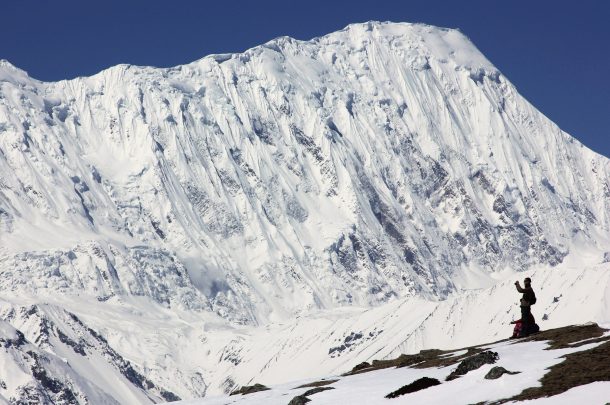
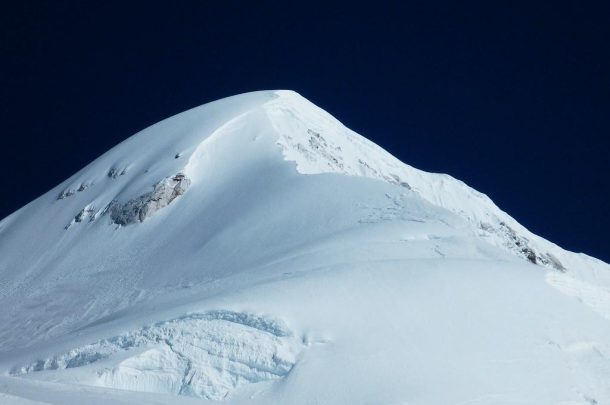
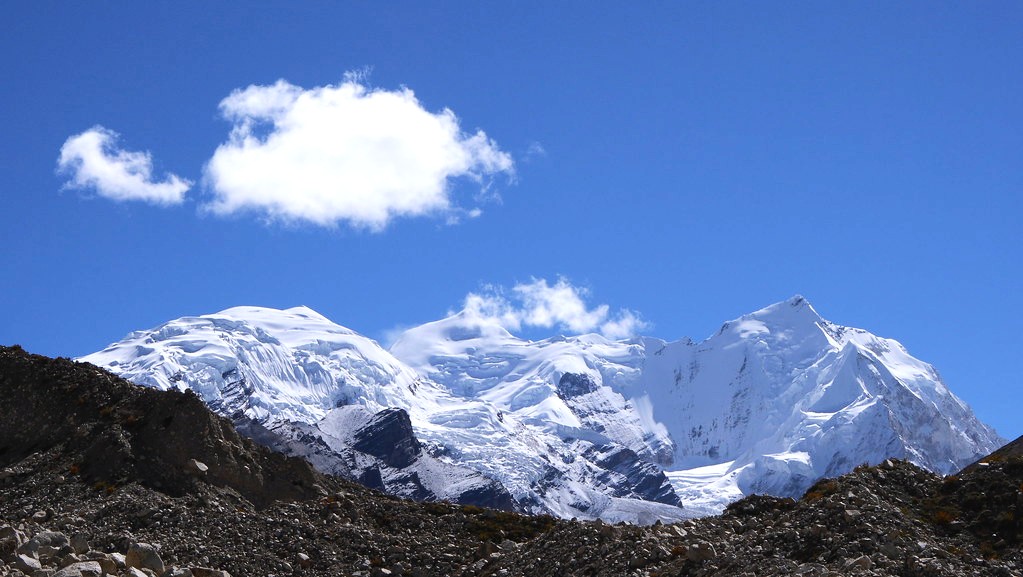
High Route Adventure offers a 25-day, comprehensive, safety-focused Himlung Himal Expedition (7,126m). Our itinerary is specially designed for climbers looking to progress from 6,000m peaks to high-altitude mountaineering.
Our Himlung Himal Expedition is a slow-and-steady approach in the Nar-Phu Region, combining wilderness trekking with expert guides and full team support during the summit of Himlung Peak. This expedition serves as a bridge to the 8,000-meter Peak, offering a technical yet manageable challenge on the classic Northwest Ridge.
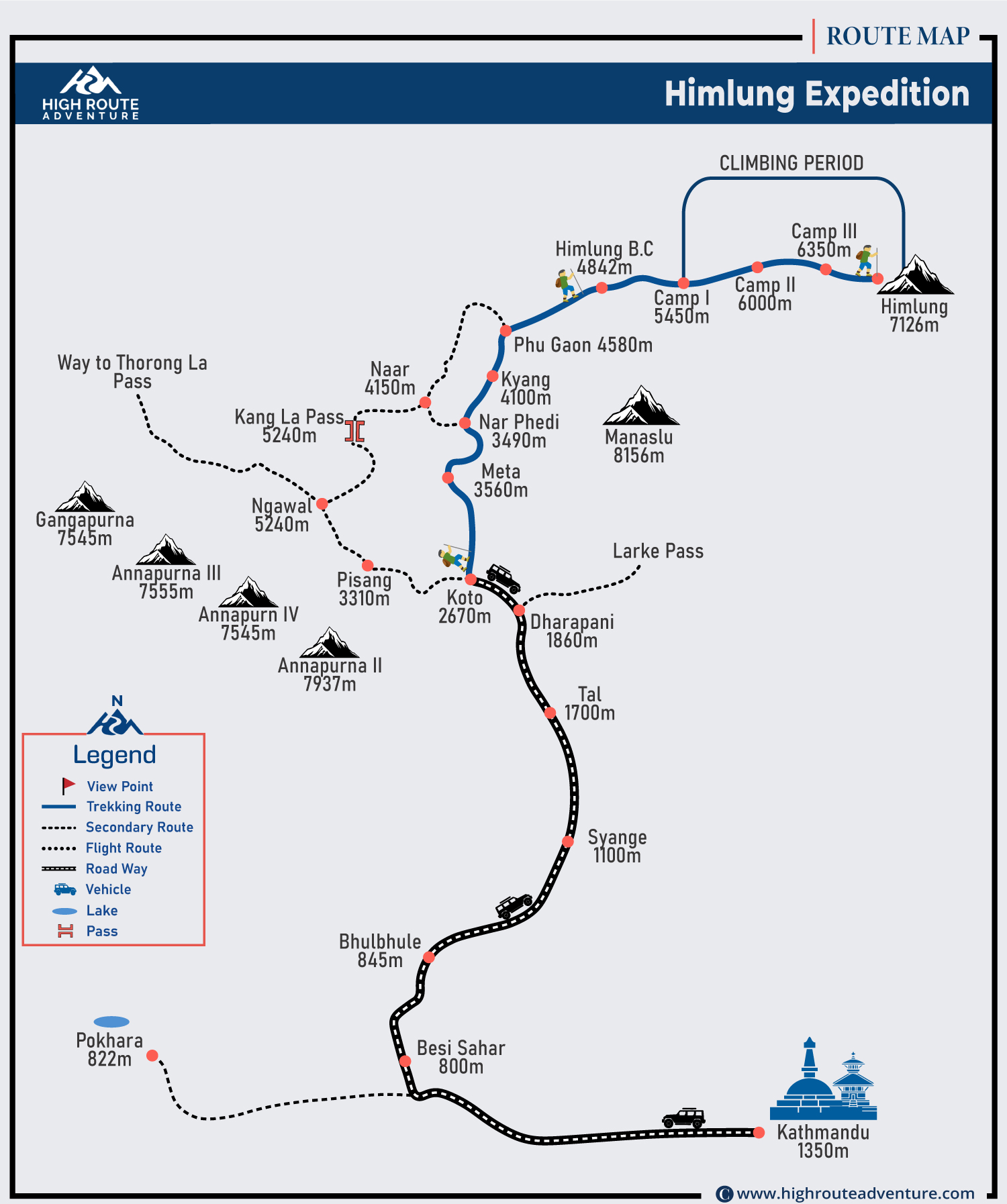
Your journey for the Himlung Himal Expedition begins in Kathmandu with a scenic but rugged drive to Koto. From Koto, you will officially enter the restricted Nar Phu Region, also known as “Lost Valley” or “Hidden Valley”.
While travelling to the Nar and Phu Village, you will be introduced to the ancient Tibetan-influenced culture and traditions. Due to its restricted status, the village here remains largely untouched by modern tourism. The ancient village, traditional homes, farmland, livestock, Buddhist monastery, mountain pass, high-altitude scenery – every step on this trip is full of adventure.
High Route Adventure ensures that you physiologically adapt by helping your body adjust to high altitude. You will have a proper acclimatisation day in Phu Gaon (4,080m) before you kick out for the Himlung Himal Base Camp (4,900 m (16,076 ft).
From the base camp, our expert Sherpa team manages food, accommodation, logistics, and everything you require to reach the top of Himlung Himal. Also, there will be a 1:1 Sherpa-to-climber ratio during the summit push. The plan includes three high camps, and Camp III is set at 6,350m so that the final climb to the summit is shorter and easier to manage.
Your safety will be our top priority. Our team will continuously monitor your health, oxygen levels, heart rate, and overall physical condition throughout the expedition. There will be 24-hour satellite communication during the entire expedition to ensure constant contact with the base camp and emergency support whenever needed. Also, our team focuses on providing our climbers with high-calorie nutrition to combat altitude-induced appetite loss.
Apart from the technical climb, our 25-Day Himlung Himal Expedition Package is all-inclusive. From restricted area permits and ACAP fees to climbing permits, logistics, guides, porters, meals and accommodation, we manage everything for you. Also, our itinerary is flexible, which means you can take advantage of safe and best weather conditions for a successful and enjoyable summit.
By choosing us, you can be assured that you will be led by expert teams who strictly follow safety protocols and provide an incredible experience in the Himalayas of Nepal.
| Category | Details |
| Mountain Name | Himlung Himal |
| Elevation | 7,126 m (23,379 ft) |
| Global Ranking | Among the notable 7,000m peaks in Nepal |
| Location | Manang District, Nar Phu Valley, Peri Himal, Nepal |
| Difficulty Grade | PD to PD+ (Moderate / Non-technical expedition peak) |
| Best Season | Spring (March – May) & Autumn (September – November) |
| Standard Route | Northwest Face (Normal Route) |
| Duration | 25 Days (Kathmandu to Kathmandu) |
| Base Camp Elevation | 4,900 m (16,076 ft) |
| High Camps | Camp I: ~5,450 m • Camp II: ~6,000 m • Camp III: ~6,350 m |
| First Ascent | 1992 (Japanese Expedition led by Akio Koizumi) |
| Climbing Permits | Himlung Himal Permit, Nar Phu Restricted Area Permit, ACAP |
| Nearest Airport | Tribhuvan International Airport |
| Success Rate | High (~70–80% in good weather seasons) |
While people are well-known about Everest, Manaslu, and Annapurna in mountaineering in Nepal, very few know about Himlung Himal. This peak is like a training and preparation peak before you attempt the giant 8,000-meter peak in Nepal. Also, after the new rule for Everest, from April 2025, you must show proof of prior high-altitude experience, including successful ascents of 7,000-meter peaks. In this context, Himlung Himal becomes even more valuable as a stepping stone toward Everest and other 8,000-meter expeditions.
Besides this, let’s see the top reason why you should choose the Himlung Himal Expedition in Nepal:
The main attraction of the Himlung Himal route is its peaceful and untouched natural beauty. Unlike the busy camps on Everest and Manaslu, very few climbers are seen at Himlung base camp, so it is not crowded. You don’t have to wait in long lines at fixed ropes or deal with noise and crowds. You can enjoy the expedition in a peaceful atmosphere with fresh mountain air.
If your target is to summit one of these – Mount Everest (8,848.86m), Kanchenjunga, Lhotse, Makalu, Cho Oyu, Dhaulagiri, Manaslu, and Annapurna I, then Himlung Himal is a great practice mountain. This expedition presents a variety of challenges, such as technical glacier navigation and steep snow and ice slopes. Compared to Island Peak and Mera Peak, choosing Himlung Himal is more beneficial as it is more difficult and demanding.
While approaching Himlung Himal, the journey itself becomes a major highlight. Travelling inside the Nar and Phu villages for foreign citizens in Nar Phu Valley was restricted until 2002. This region is one of Nepal’s most culturally preserved and historically rich areas. The local language, the thousand-year-old monastery, the ancient lifestyle, most of the things that you will see and experience here are pure, raw and authentic. Additionally, travelling here, you will feel a great spiritual sense as this place is free of tobacco, beer, alcohol, and meat.
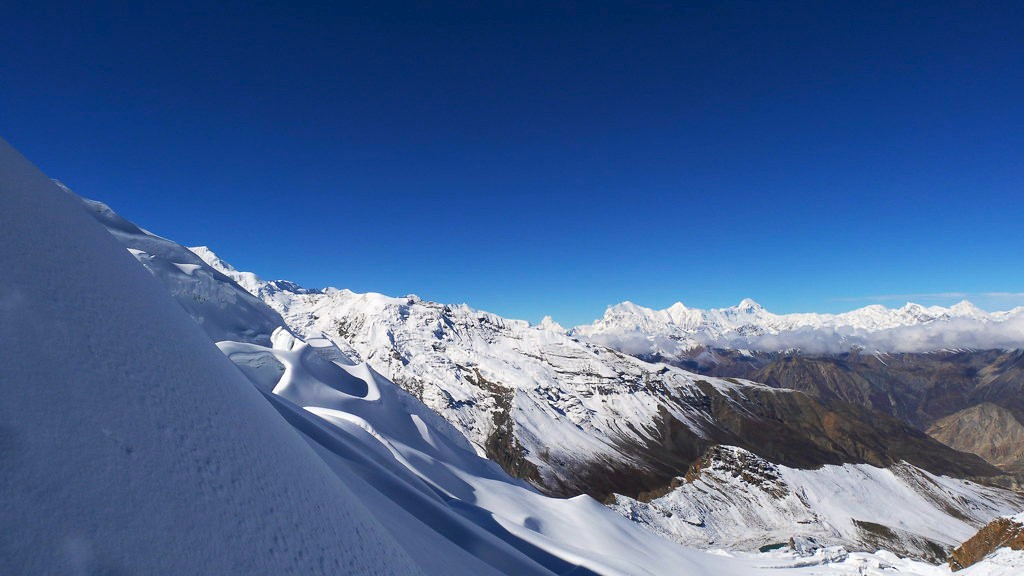
The stunning visual during the summit push is unexplainable. As you reach the summit, you will witness jaw-dropping scenery of Nepal’s famous peaks, including Annapurna II, Manaslu, and the distant peaks of Tibet. The scenery and landscape change from the lower sections to the summit, keeping you engaged throughout. To perform this adventure, you must have solid mountaineering skills with experience working on crampons and rope. Also, high-altitude stamina plays an important role. Although it sounds challenging, it is achievable for motivated climbers like you with the right training and support from High Route Adventure.
While we cannot say 7000m Peak is an easy task, Himlung Himal is certainly a challenging climb. However, compared to other peaks of similar altitude, the success rate of the Himlung Himal is higher. Also, the best part of choosing Himlung Himal is that it has a relatively low avalanche risk compared to other high-altitude peaks. With a professional team, you will definitely stand at the top of 7,126 m to achieve a lifetime mountaineering experience.
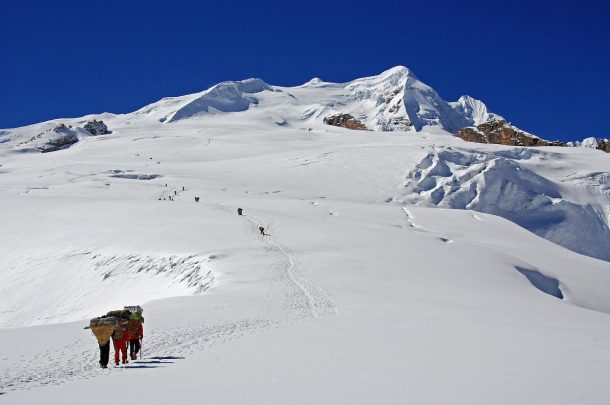
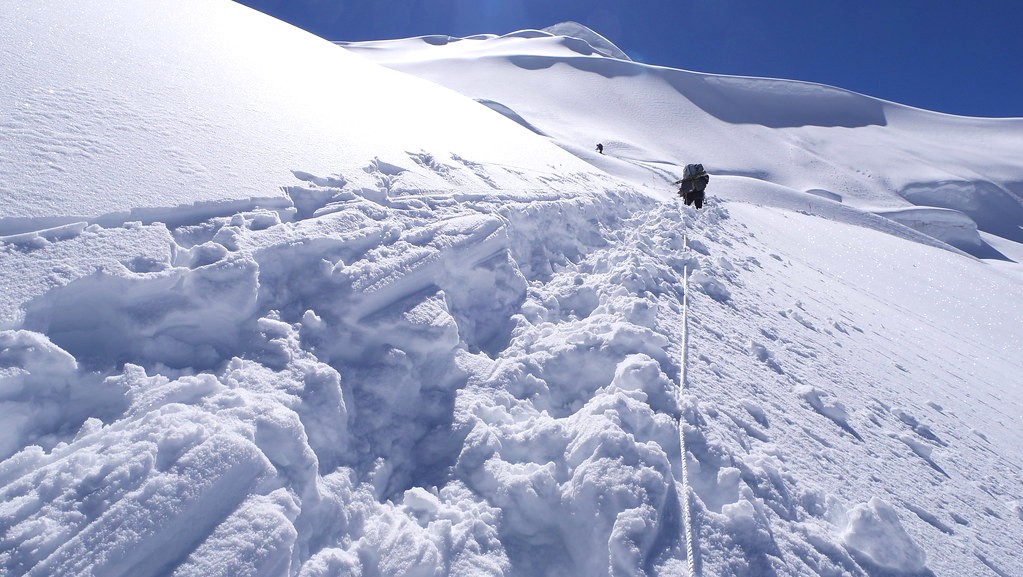
There is only one standard climbing route on Himlung Himal: the Northwest Face. From the Nar Phu Valley, we will approach the Himlung Base Camp and then from Base Camp → Camp I → Camp II → Camp III → Summit. You first follow the Nar Phu Valley trekking route to reach Himlung Base Camp. From there, the climb continues over glaciers, snow slopes, and fixed rope sections toward the higher camps and summit.
For the 25-day Himlung Himal Expedition, our package price starts from USD 7,500. Things like a climbing guide, permit, porter, logistics, meals, accommodation, and ground transportation are all included in the package. If you are in a group, then you can get a special discount on the package.
(Note: International flights, personal climbing gear, travel insurance, and tips are typically excluded.)
The first thing you need for the Himlung Himal Expedition is a climbing permit from the Department of Tourism( DOT). The climbing permit price varies by season. In addition to the climbing permit, you also need to obtain the local and restricted permits. Let’s see in detail:
This is the main permit required to climb the mountain.
Since Himlung lies in the restricted Nar-Phu Valley, this special permit is required.
This permit is required because the route falls within a protected conservation area.
Special Note: The High Route Adventure arranges all these permits. Also, the cost of this permit is included in our package. Since it takes time (around 3-7 days) to obtain the climbing permit, make sure to apply at least 1 week in advance of the departure date.
Planning an expedition is more than booking a flight, packing and heading to explore. For a successful summit, you will invest your time, money, and physical effort. To avoid becoming frustrated during the trip, you must choose a team that will guide and properly take care of you.
At High Route Adventure, we don’t organize the trip; we understand our clients’ interests and carefully balance challenges with safety. Here is the top reason why you should choose us:
The weather in the mountains is unpredictable. The sunny weather can turn into dark, rainy and snowy in a few minutes. So, to analyse the shift in weather patterns, terrain changes and unforeseen obstacles, you need an expert team. Only an expert team with years of experience and real, field-tested decisions can make your journey safe, and you’ll find that in ours.
In the high altitude route, there is no room for shortcuts. When you choose us, we ensure our team follows safety protocols strictly. Your climbing gear, health and physical condition will be checked regularly. Also, a low client-to-guide ratio allows you to better care for clients during expeditions. There will be top-tier communication tools and emergency backup oxygen. Our team knows how to handle emergencies and is certified in wilderness first aid. When you push your physical limits, we provide a safety net so you can focus on the Himlung Himal climb.
High Route Adventure believes that great expeditions are those that respect local culture, place and natural beauty. Since we have a close relationship with the local people, it helps us to manage our logistics more effectively and responsibly. Using local expertise and following international safety standard helps us close the gap between rugged, authentic exploration and the comfort and reliability that modern adventurers expect.
We understand that every person has their own goals, experience, stamina and personal plan during the expedition. So, whether you have an expedition group or want to do a solo with a guide, we can arrange it as per your expectations. We’re not a “one-size-fits-all” agency; we are partners who walk (and climb).
The high altitude places are fragile, so to conserve the natural beauty for future generations, we are committed to “Leave No Trace” principles. We work hard to minimize our impact and support the local economy by hiring local guides and porters with fair wages. We love the mountains as much as you do.
At High Route Adventure, we don’t just take you to the mountains—we take you to the very best version of yourself.
We don’t want you to rely on the guesswork or incomplete information from internet forums for your preparation. So if you have any questions about the trip, want to ask about preparation tips, or want to create a personalized training roadmap, you can have an online Consultation with High Route Adventure.
[Contact here: +977-9851058664 to schedule your 30-minute virtual consultation with our trip counselor.]
Traveller’s note: Our client should sign the terms and conditions of our company and must pay the remaining amount if it is uncleared.
Traveller's note: The road is off-road and long, so make sure to wear comfortable clothes and bring snacks to enjoy along the way.
Traveller's note: The final ascent to the Meta is strenuous. We recommend bringing enough snacks (nuts, chocolate) for this section.
Traveller's note: There is no shade on the open plateaus, so don’t forget to apply sunscreen (SPF 50+) and sunglasses.
Travellers' note: You will be significantly exceeding 4000 meters today. Walk very slowly ("Bistari, bistari"), even if the path appears flat.
Travellers' note: Check your health condition and follow proper acclimatisation on this rest day.
Travelers' note: Stay on your trek early in the morning to avoid the fierce afternoon winds, and pack your lunch.
Travelers' note: Prior experience above 6,000m (e.g., Island Peak or Mera Peak) is highly recommended. Strong fitness, stamina, and leg strength are required for carrying loads at high altitude. Weather can be severe; strong winds, especially in late autumn, may affect or block summit attempts.
Traveller's note: A hot shower is recommended for hygiene and comfort after long days spent at high altitude.
Traveller's note: The paths are partly carved into steep rock faces. Beware of falling rocks.
Travellers' note: Trails can be narrow, rocky, and slippery in places, so walk carefully.
Travellers' note: Due to off-road wear, wear comfortable clothing and a mask for dust protection are recommended.
Traveller's note: This day is kept for the weather issue. You can also skip this day if everything goes as planned.
To participate in the Himlung Himal Climbing in Nepal, all foreign citizens must obtain a Nepal tourist visa. Getting a tourist visa is easy; you can obtain it either from your home country or upon arrival at the Nepal airport. For the visa, it will cost you:
Note: We suggest you obtain the visa for 30 Days and make sure your passport is valid for at least 6 months from your date of entry into Nepal. For more information, you can check directly here on: https://www.immigration.gov.np/en/page/tourist-visa
Standard travel insurance is not sufficient for the Himlung Himal Expedition. Please ensure your policy fully covers high-altitude mountaineering and expedition risks, including:
Step 1: Consultation – Contact our tour operator to discuss your previous high-altitude experience (usually 6,000m+ is required).
Step 2: Deposit – Pay a non-refundable 20% deposit to confirm your booking.
Step 3: Preparation – Receive a detailed gear list and training plan 3–6 months before departure.
Step 4: Final Payment – You must pay the remaining balance before departing from Kathmandu.
Note: We generally recommend that you book the Himlung Himal Expedition Package at least 3-4 months in advance if you are planning to do it during the autumn (October) season. As it is a popular climbing period, early booking helps us secure permits and arrange all logistics in a timely and efficient manner.
Before making a payment, we suggest our clients read all the terms and conditions of our company. For the payment, you can use:
In terms of difficulty level, the Himlung Himal Expedition is graded as PD to PD+ (Moderate / Less-technical expedition peak), making it a moderately technical, entry-level 7,000m peak suitable for experienced high-altitude climbers. Let’s see in detail:
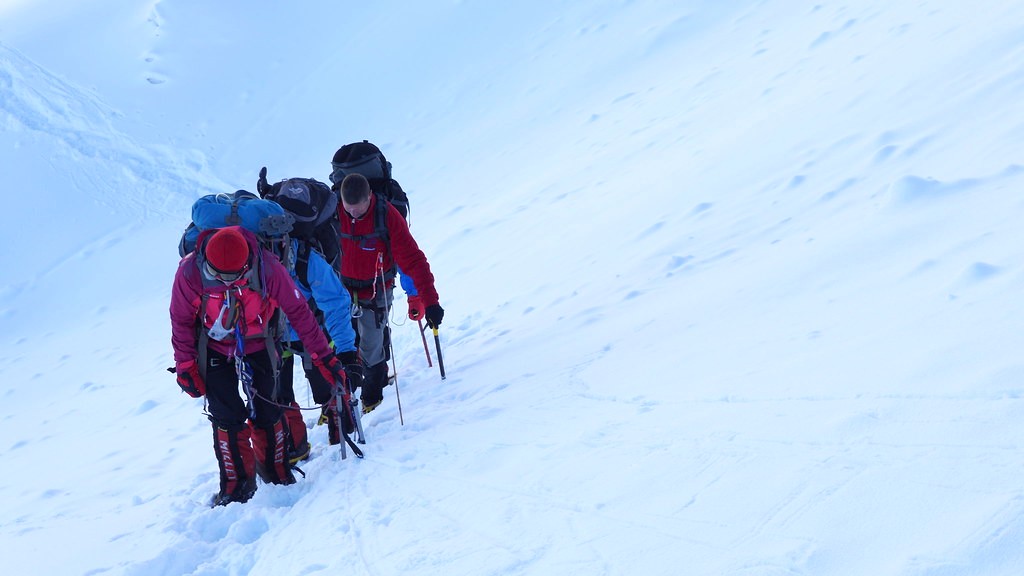
The Himlung Himal route follows moderately steep glacier terrain with average slopes between 30° 35°. Some sections—especially between Camp 2 and Camp 3 and near the summit—reach 45°–50°. Climbers will encounter firm snow, ice, and crevasses, requiring travel on fixed ropes and in rope teams. Basic mountaineering skills are essential, including the safe use of crampons, an ice axe, and a Jumar (ascender).
Himlung Himlal Expedition is physically challenging, as you will spend around 22-23 days trekking and climbing atg at high altitudes. Climbers should be ready for 6-8 hours of walking during the expedition period while carrying a backpack. Also, extreme cold at high altitude, freezing wind and risk of AMS, frostbite, altitude exposure and long stay above 4,000 is full of challenges.
Important Note:
Despite its moderate technicality, Himlung Himal is achievable with the right expedition operator and an experienced climbing guide. Make sure you have basic mountaineering skills and climb a 6000m peak before you attempt this. Also, prepare enough physically for unexpected situations such as sudden weather changes, avalanches, and extreme altitude conditions.
| Section | Starting Point | Target Point | Elevation Gain |
| Kathmandu → Koto (via road) | 1,400 m | 2,600 m | +1,200 m |
| Koto → Meta | 2,600 m | 3,560 m | +960 m |
| Meta → Phu Gaon | 3,560 m | 4,080 m | +520 m |
| Phu Gaon → Base Camp | 4,080 m | 4,900 m | +770 m |
| Section | Approx. Height | Character of Ascent |
| Base Camp (BC) | 4900 m | Main expedition base; acclimatization hub (~2 weeks) |
| Camp 1 | 5,450 m | Moderate climb over moraines and scree slopes |
| Camp 2 | 6,000 m | Glacier travel with technical sections |
| Camp 3 | 6,350 m | Steeper snow slopes; final high camp |
| Summit (Himlung Himal) | 7,126 m | +776 m summit push; most demanding section, then descent to lower camp |
The main things that you need to focus on while preparing for the Himlung Himal Expedition are physical fitness, technical skills, medical readiness, proper gear, and mental resilience. Here is how to do it:
Physical Training (Endurance & Strength): The goal is to maintain strong performance for long hours in low-oxygen conditions.
Technical Skills: Strong mountaineering skills are essential for safe ascent.
Medical Check-up: Health preparation is critical at high altitude.
Gear Preparation: High-quality equipment is essential for survival at 7,000m.
Mental Preparation: Mental strength is often the deciding factor for success.
Checklist – 3 Months Before Departure:
The Himlung Himal Expedition has two main phases: trekking and climbing. Until the Narphu Valley, you will stay in the tea house, and from base camp, you will stay in the tent.
| Feature | Tea house | Climbing |
| Wifi | Available in most of the tea houses but connectivity/speed depends upon the altitude and location. | Generally not available |
| Safe drinking water | Boiled water/ Water bottle( paid) or tap water by using water purification tablets | Boiled water provided by Kitchen staff |
| Charging | Charging station in the communicable dining( Paid) | Solar or Generator |
| Hot shower | Solar/Geaser/hot water bucket( Paid) | Not available |
| Communication | Ncell or NTC ( signal can vary depending upon altitude) | Satellite phones and walkie-talkies (carried by guides for emergencies). |
To have a safe and successful summit of the Himlung Himal, it is important to choose the right timing. Actually, the right time for the Himlung Himal Climbing is during the Autumn (September – November) and Spring (April – May) seasons. Climbing Himlung Himal during the Winter (December–February) and Summer (June–August) is technically possible but rare due to harsh weather conditions.
Choose the Autumn Season if you are looking for:
Choose the Spring season if you are looking for:
Note: For the highest success rate and most stable weather, the best time for climbing is from October 10 to November. Additionally, don’t forget to check the weather forecast before heading out and during the trip.
Here are the common food and drinks menu you can expect while you stay in the tea house during the trek, while approaching Phu Village.
Here is the common food and drink menu you can expect while staying from base camp to high camp during the Himlung Himal summit.
Note: The High Route Adventure arranges all the meals during the trek and climbing. Drinks, beverages and snacks are not included in the package, so keep some cash on hand for them.
High Route Adventure will book a tea house for you when you book the trip with us. This tea house is mainly run by local people from the Nar Phu Region as a local business. Given the remote location, don't expect luxury hotels or restaurants here.
Here is what you can expect during the trek to Phu Village from the tea house room.
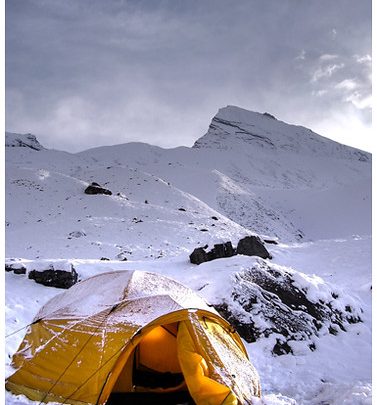
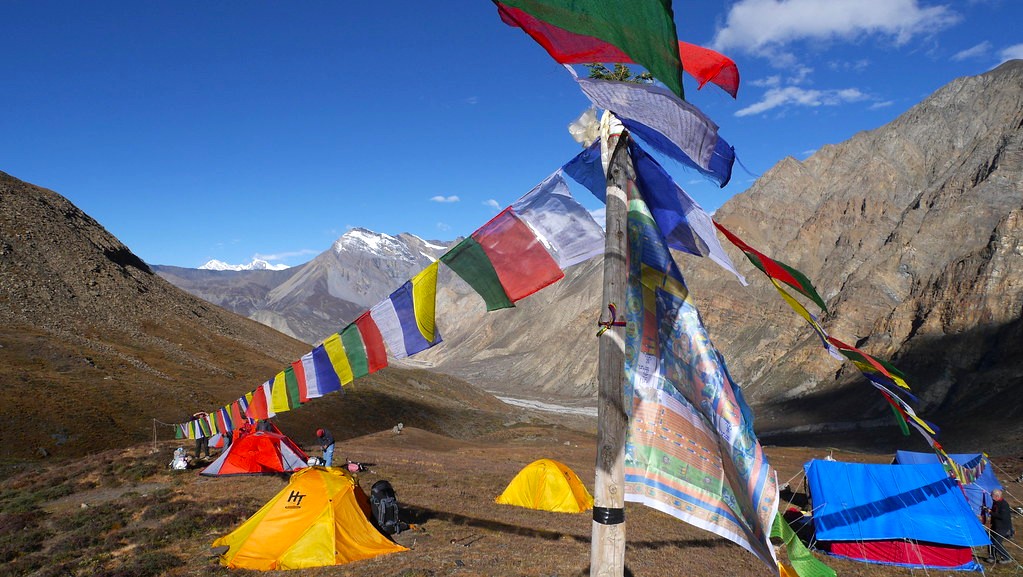
From the base camp of Himlung Himal, you will stay in the tent set up by the High Route Expedition team. Here is what you can expect while staying in the tent/Camp.
For your Himlung Himal Expedition, High Route Adventure provides a professional, trained team for a successful summit. We take care of you from the day of booking to the departure.
Proper gear is essential for safety and success on a high-altitude expedition like Himlung Himal (7,126m). Below is a complete and well-organized equipment list recommended for climbers.
• Expedition backpack (70–80L)
• Daypack (20–30L)
• Duffel bag (waterproof, 100–120L)
• Waterproof pack cover
• Thermal tops (2–3 sets)
• Thermal bottoms (2–3 sets)
• Fleece jacket
• Lightweight down jacket
• Waterproof & windproof shell jacket
• Waterproof shell pants
• Heavy down jacket (800–1000 fill)
• Down pants or insulated pants
• Expedition down suit (recommended)
• Double or triple insulated mountaineering boots (e.g., B2/B3 category)
• Trekking shoes (for lower sections)
• Gaiters (waterproof)
• Warm socks (wool/synthetic – multiple pairs)
• Ice axe
• Crampons (compatible with boots)
• Harness
• Helmet
• Carabiners (locking & non-locking)
• Jumar (ascender)
• Descender (figure-8 or tube device)
• Climbing ropes (provided by expedition team in most cases)
• Insulated summit gloves
• Lightweight inner gloves
• Waterproof shell gloves
• Warm beanie/wool hat
• Balaclava or face mask
• Neck gaiter / buff
• Sleeping bag rated to -30°C or lower
• Sleeping bag liner (for extra warmth)
• Inflatable sleeping mat (optional, if not provided)
• UV-protection sunglasses (Category 4)
• Goggles for wind and snow
• High SPF sunscreen
• Lip balm with SPF
• Toothbrush & toothpaste
• Wet wipes / biodegradable wipes
• Hand sanitizer
• Quick-dry towel
• Toilet paper
• Basic toiletries
• Personal prescribed medicines
• Diamox (after doctor consultation)
• Painkillers & fever medication
• Blister care kit
• Altitude sickness medication (as advised)
• Headlamp with extra batteries
• Power bank (10,000–20,000 mAh)
• Charging cables
• Optional: solar charger
• Energy bars / snacks
• Hydration bottles or bladder
• Lightweight trekking poles
• Camera / GoPro (optional)
• Cash for personal expenses
Some technical climbing equipment (like ropes and fixed anchors) is usually provided by High Route Adventure. However, personal gear must be of high quality and tested before the expedition. Good equipment means better safety, comfort, and performance at high altitude.
Starting from
per person (in USD)