A Complete Guide For Trek to Annapurna Base Camp
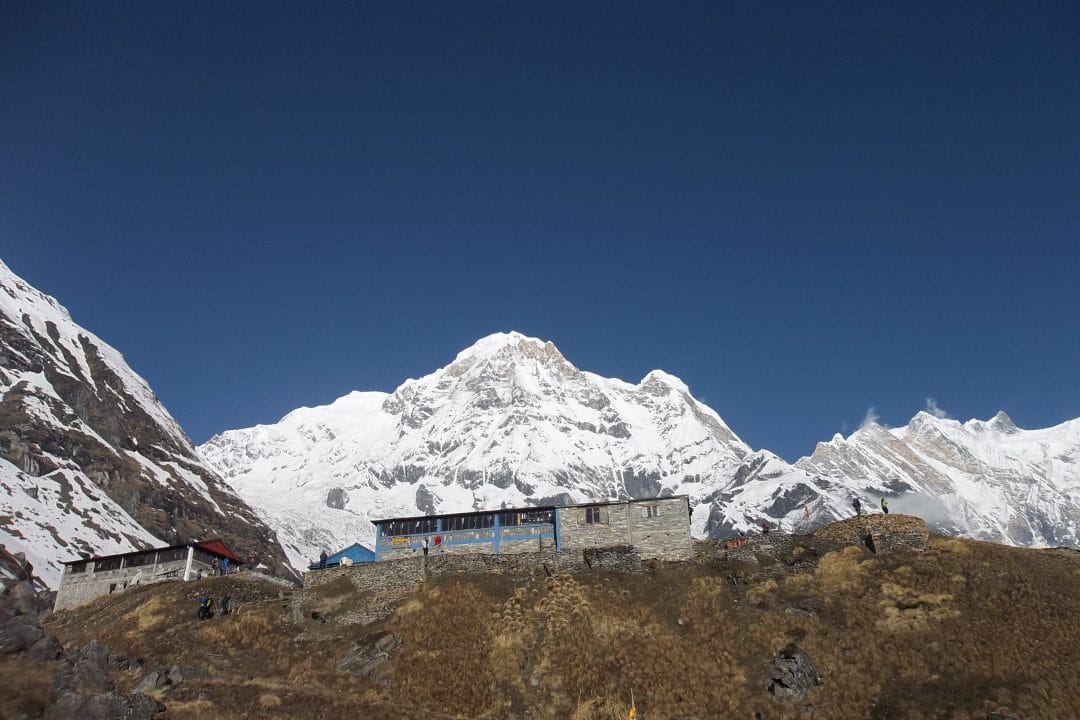
Mt. Annapurna Base Camp (ABC) is one of the most scenic and popular trekking destinations in the Himalayas. This trek can be completed in about a week, or a little longer for those who want to explore more, starting from the beautiful city of Pokhara, the gateway to the Annapurna region.
Pokhara, located in mid-western Nepal’s Kaski district of the Gandaki Zone (Province 4), is a picturesque city surrounded by rolling green hills and the towering Annapurna Himalayan range. The majestic Machhapuchare Himal, famously known as the “Fish Tail,” dominates the skyline and offers stunning views over the entire Annapurna region. On clear days, trekkers and travelers can also enjoy sights of Manaslu Himal from the city.
Pokhara is not only a scenic valley but also a hub for adventure tourism. It serves as the starting point for some of the most famous trekking routes in Nepal, including the Annapurna Base Camp Trek, Dhaulagiri Circuit, and Upper Mustang Trek. The city offers easy access to trekking trails, adventure activities, and cultural experiences.
The Annapurna Base Camp trek from Pokhara begins with a short drive through the lush Pokhara Valley to the foothills of the Annapurna Himalayas. From here, trekkers follow well-marked trails through charming villages, dense forests, and stunning landscapes, ultimately reaching the Annapurna Sanctuary and Base Camp at 4,130 meters (13,550 ft). This trek is perfect for adventure seekers looking for Himalayan panoramas, scenic villages, and a close-up view of Nepal’s towering peaks.
Table of Contents
Mount Annapurna Legendary History:
Mt. Annapurna, the world’s 10th highest peak, rises to 8,091 meters (26,545 feet) and is part of the spectacular Annapurna Himalaya range. This range includes several adjoining peaks: Annapurna I, II, III, IV, along with Annapurna South, Huin-Chuli, Annapurna Fang (Vara Shikar), and the famous Machhapuchare Himal (Fish Tail) with its iconic twin summits.
Annapurna I holds a special place in mountaineering history as the first 8,000-meter peak ever successfully climbed, achieved in 1950 by the French expedition led by Maurice Herzog and L. Lachenal. Despite its allure, Annapurna remains one of the most challenging and technical mountains to climb in the entire Himalaya region.
The name “Annapurna” comes from ancient Sanskrit, meaning “Goddess of Harvest” or “Food / Crops – Enough”: Anna for crops and Purna for enough. The glaciers of the Annapurna range are the source of several rivers that sustain fertile agricultural lands in the region, helping local communities thrive.
The Annapurna Sanctuary—the high-altitude plateau surrounding Annapurna Base Camp—was first explored and mapped in the early 1960s by Colonel Jimmy Edwards, who called it the “Sanctuary of Gods and Mountain Spirits.” Today, this area is a trekker’s paradise, offering breathtaking Himalayan panoramas, rich flora, and a unique cultural experience.
Annapurna Base Camp Trek: Trip Facts
| Location: Annapurna region, Nepal Starting Point: Nayapul or Phedi (near Pokhara) Ending Point: Annapurna Base Camp (4,130 m / 13,550 ft) Highest Point: Annapurna Base Camp – 4,130 m (13,550 ft) Trek Duration: 7–12 days (round trip, depending on pace) Best Season to Trek: Spring (March–May) and Autumn (September–November) Trek Difficulty: Moderate (suitable for fit beginners and experienced trekkers) Distance: Approx. 110–120 km round trip Accommodation: Tea houses / lodges along the trail Scenic Highlights: Annapurna South, Machapuchare (Fishtail), Hiunchuli, forests, waterfalls, rhododendron valleys Permits Required: Annapurna Conservation Area Permit (ACAP) Daily Trekking Time: 5–7 hours on average Notable Villages En Route: Ghorepani, Tadapani, Chhomrong, Dovan, Deurali, Machapuchare Base Camp Altitude Sickness Risk: Moderate – proper acclimatization needed Mode of Travel: Mainly on foot; flights to/from Pokhara if needed |
Annapurna Base Camp Trek: Alternate Routes
The Annapurna Base Camp (ABC) Trek offers multiple routes, allowing trekkers to tailor their journey according to time, fitness level, and interests. While the ultimate destination is the Annapurna Sanctuary and Base Camp, there are several options to experience the beauty of the region.
Route 1: From Ghorepani and Poon Hill:
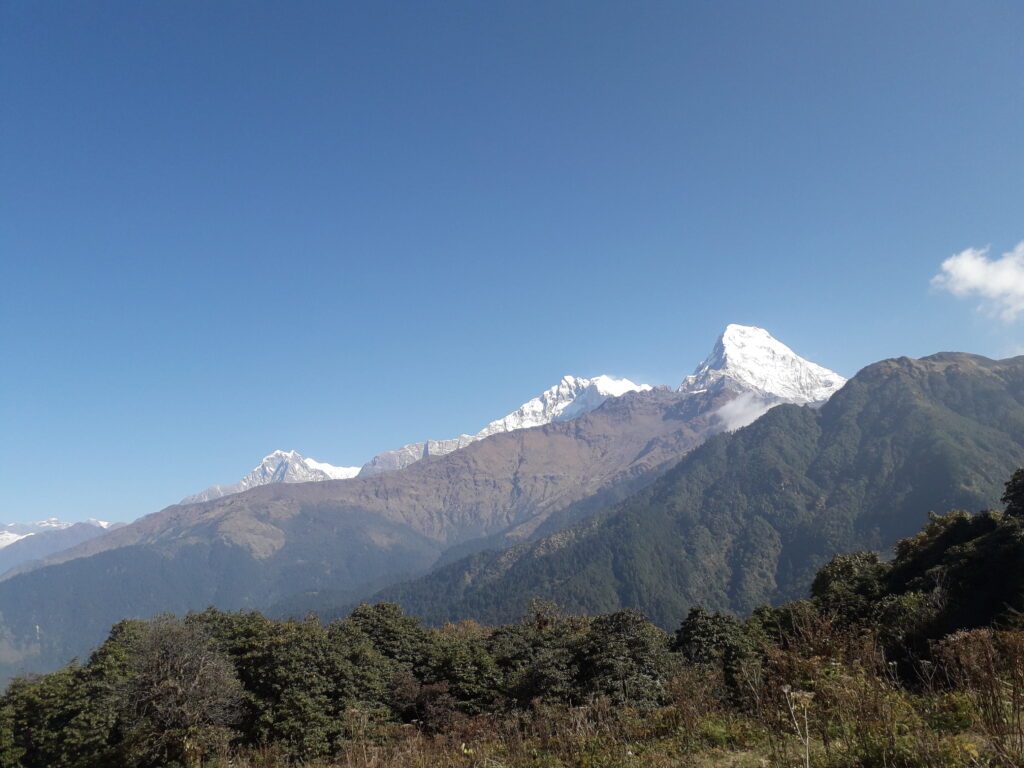
For trekkers with more time, combining Ghorepani and Poon Hill with the Annapurna Base Camp (ABC) Trek is an ideal choice. This route adds more ups and downs, offering a chance to explore scenic southern Annapurna, charming hill villages, and rich local culture before reaching ABC.
The trek starts with a drive from Pokhara to Nayapul, Hille, or Tikhedhunga, and then a climb up stone steps to Ulleri village. From there, the trail winds through rhododendron and pine forests to Ghorepani (2,885 m), a village famed for its lush rhododendron gardens and traditional Himalayan charm.
An early morning hike to Poon Hill (3,210 m) rewards trekkers with 360° panoramic views of Annapurna, Dhaulagiri, Manaslu, and Machhapuchare Himal. After soaking in the sunrise, the trek continues through forests and small settlements like Tadapani, before descending into the Kimrong River valley and reaching Chomrong, the gateway to Annapurna Base Camp.
This route perfectly blends breathtaking Himalayan scenery, cultural experiences, and trekking adventure.

Route 2: From Ghandruk village:

No matter which route you choose—long or short—all trails eventually lead to Chomrong, a large Gurung village and the gateway to Annapurna Base Camp (ABC) and Sanctuary. Chomrong offers comfortable lodges and is a popular overnight stop for trekkers.
The trek usually begins with a short drive from Pokhara and Fewa Lake to Nayapul. From there, the trail passes Bhirethati and Syauli Bazaar, climbing stone steps through farmland to Ghandruk (1,940 m), a prominent Gurung village. Ghandruk is rich in traditional culture, with a museum showcasing Gurung history and customs, and offers lodging and local cuisine for trekkers.
The next morning, the trail climbs above Ghandruk to Kimrong Danda/Ridge, with small lodges along the way, then descends to Kimrong River Valley before gradually climbing to Chomrong village, the main entrance to the Annapurna Sanctuary and Base Camp.
This route combines cultural immersion, scenic villages, and Himalayan trekking adventure in a memorable journey to ABC.
Annapurna Base Camp Trek: Key Stops and Highlights
After Chomrong village, the trek continues through several scenic settlements, offering overnight and lunch stops along the way:
- Sinuwa Danda / Ridge – small lodges and gardens amid rhododendron and pine forests.
- Bamboo – simple lodges surrounded by bamboo groves.
- Dovan / Doban – few lodges along the Modi River gorge, surrounded by thick forest.
- Deurali – last settlement before Machhapuchare Base Camp (MBC).
- Machhapuchare Base Camp (3,760 m) – beneath the North-West face of Fish Tail peak, scenic lodges with panoramic views of Annapurna I, III, South, and Huin-Chuli.
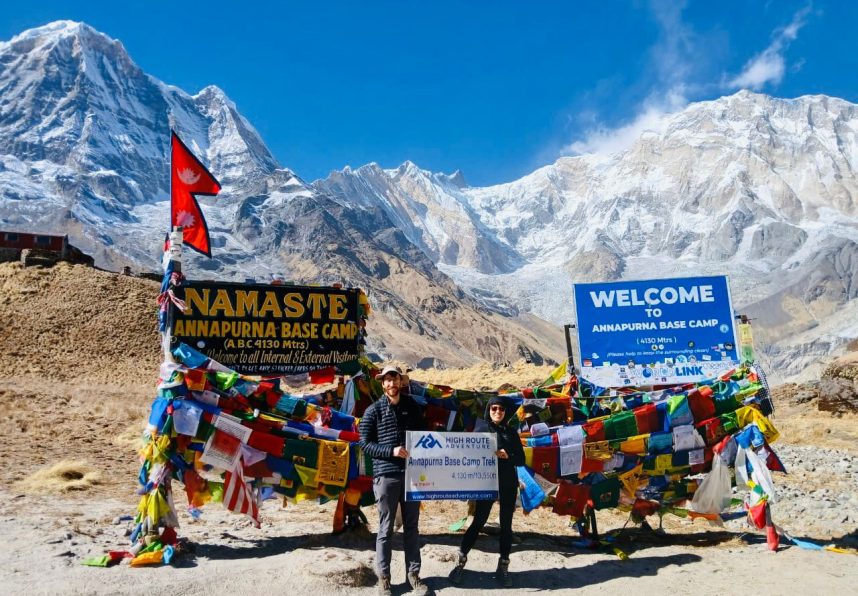
From MBC, the trail enters the Annapurna Sanctuary, a high plateau encircled by towering snow peaks, leading to Annapurna Base Camp (4,130 m / 13,550 ft). The base camp offers cozy lodges with meals and spectacular close-up Himalayan views, making it a once-in-a-lifetime experience.
The return journey follows the same route to Chomrong, from where trekkers can either head directly to Pokhara or take a longer route via Jhinu village, famous for its natural hot springs.
Annapurna Base Camp Necessary Permits:
All trekkers must obtain an Annapurna Conservation Area Permit (ACAP) to enter the region.
- ACAP Fee: NPR 3,000 (~US $30) per person
- SAARC Nationals: NPR 200
Permits can be obtained in Pokhara at the Nepal Tourism Board Service Center near Phewa Lake or arranged easily through local trekking agencies, which handle all paperwork for you.
Read More: How to Obtain Annapurna Base Camp Trek PermitAnnapurna Base Camp Trek Package Cost:
The Annapurna Base Camp Trek package cost can vary depending on several factors, including the time of year, accommodation options, and services provided. Here’s a comprehensive table to help you understand the estimated costs:
| Trek Package Component | Cost (USD) |
|---|---|
| Trekking Permit | $20-$30 |
| Guide and Porter Fees | $25-$40 per day |
| Accommodation (Tea Houses) | $5-$15 per night |
| Food and Beverages | $15-$30 per day |
| Transportation (Kathmandu to Pokhara) | $10-$30 |
| Transportation (Pokhara to Nayapul) | $5-$10 |
| Equipment Rental (if needed) | $5-$10 per day |
| Travel Insurance | $50-$100 per person |
| Miscellaneous Expenses | $200-$300 per person |
Package Options:
| Package Type | Cost (USD) | Inclusions |
|---|---|---|
| Basic Package | $800-$1,200 | – Trekking permit – Guide and porter fees – Accommodation – Tood – Transportation – 3 Star hotel in Kathmandu – Twin bed in tea house |
| Standard Package | $1,200-$1,800 | – Trekking permit – Guide and porter fees – Accommodation – Tood – Transportation – 3 Star hotel in Kathmandu – Twin bed in tea house – Pokhara Flight |
| Premium Package | $1,800-$3,000 | – Trekking permit – Guide and porter fees – Accommodation – Tood – Transportation – 3 Star hotel in Kathmandu – Twin bed in tea house – Pokhara Flight – 5 Start hotel stay in Kathmandu – Single room in tea house |
| Custom Package | $1,000-$2,000 | Tailor-made package to suit individual needs and preferences |
Read more in details: Annapurna Base Camp Trek CostAnnapurna Base Camp Trek Difficulty
Annapurna Base Camp trek is graded as a moderately difficult in terms of difficulty level. Both beginner and first time climber can join this trek but they should maintain proper fitness level. Here are the main challange that you can face during the ABC trek:
Altitude – The Silent Challenge
- Maximum elevation: 4,130 m at the base camp of Annapurna South.
- Why it matters: Even if you’re in good shape, the reduced oxygen can cause headaches, nausea, or worse. The trek’s itinerary is purposely paced to allow gradual ascent, but you still need to respect the altitude.
Length & Daily Mileage
- Typical daily distances: 4–7 km (2.5–4.5 mi) with elevation gains of 500–800 m (1,600–2,600 ft).
- Cumulative effect: Over 7‑10 days the total footfall adds up to ~40 km (25 mi) of uphill and downhill work.
Terrain Variety
- Well‑trodden forest paths in the lower sections (Machapuchare Base Camp area).
- Steep stone steps and switch‑backs as you climb through rhododendron forests.
- Scree fields and moraines near the base camp, where footing can be loose.
- Stream crossings—sometimes via logs or small bridges—add a technical element, especially after rain.
Weather Instability
- Monsoon season (June–September): heavy rain, leeches, slippery trails.
- Winter (December–February): snow and ice on the higher sections, colder nights (down to –10 °C / 14 °F).
- Spring/Autumn: the “sweet spot” with clear skies and comfortable daytime temps (10‑15 °C / 50‑60 °F).
- Micro‑climates: You can experience sunny mornings, foggy afternoons, and sudden downpours on the same day.
Logistics & Altitude Sickness Management
- Tea houses are spaced every 2–3 km, but some are basic (no hot water, limited food).
- Limited medical facilities—you’ll rely on your own knowledge of AMS (Acute Mountain Sickness) and basic first aid.
How To Train Physically For the Annapurna Base Camp Trek
| Activity | Frequency | Goal |
|---|---|---|
| Aerobic base (running, cycling, brisk walking) | 3–4×/week, 30–60 min | Build cardiovascular endurance. |
| Hill repeats or stair climbing | 1–2×/week, 30 min | Simulate ascent/descent and strengthen quads/glutes. |
| Strength training (lunges, squats, core) | 2×/week | Improve stability on uneven ground. |
| Flexibility/yoga | 1–2×/week | Keep muscles limber for long days on the trail. |
Annapurna Base Camp Trek with Guide and Porter:
For safety and a better trekking experience, it is highly recommended to hire a government-registered guide for the Annapurna Base Camp trek. A porter can also help carry heavy bags (up to 20 kg), making the trek more comfortable.
Hiring guides and porters supports local communities and contributes to Nepal’s economy while ensuring a safe and enjoyable adventure.
- Hiring Trekking Guide Cost: USD 30 per day
- Hiring Porter Cost Cost: USD 25 per day
Annapurna Base Camp Trek Transportation Option
There are various transportation options available to reach the Annapurna Base Camp trek.
Getting to Pokhara:
By Plane: The fastest way to reach Pokhara is by taking a domestic flight from Kathmandu’s Tribhuvan International Airport (KTM) to Pokhara Airport (PKR). The flight duration is approximately 25 minutes.
- Foreign citizens: approx. USD 100–120 (one way)
- Indian citizens: approx. INR 2,750–5,200 (one way)
- Nepali citizens: approx. NPR 4,400–6,715 (one way)
By Tourist Bus: The most budget-friendly and reliable option is a tourist bus from Gongabu Bus Station. The journey takes 7–8 hours and costs around NPR 1,200–1,400 per person.
By Hiace: Hiace vans are available outside Gongabu Bus Station. This option is faster than a tourist bus and costs around NPR 600–900 per person.
By Private Vehicle: Travelers can also hire a private vehicle to reach Pokhara. This is the best option for groups or those planning trekking and adventure activities.
Continue reading: Kathmandu to Pokhara TransportationFood On Annapurna Base Camp Trek
The Annapurna Base Camp Trek is dotted with tea houses and lodges, which offer a range of accommodation and dining options. These establishments are usually family-run and serve as a hub for trekkers to rest, eat, and socialize. The food on offer is typically simple, yet delicious, with a focus on traditional Nepalese dishes.
Some popular tea houses and lodges on the trek include:
- Machapuchare Base Camp Lodge: Located at the foot of the majestic Machapuchare mountain, this lodge offers stunning views and a range of Nepalese and international dishes.
- Deurali Lodge: Perched on a hilltop, Deurali Lodge offers breathtaking views of the Annapurna range and a warm, welcoming atmosphere.
- Himalayan Lodge: Located in the heart of the trek, Himalayan Lodge is a popular spot for trekkers to rest and refuel.
Western-Style Cuisine
While traditional Nepalese cuisine is a highlight of the trek, you’ll also find a range of Western-style dishes on offer, particularly in the larger tea houses and lodges. These may include:
- Pasta and pizza: A comforting treat after a long day of trekking.
- Sandwiches and burgers: A range of international-style sandwiches and burgers are available, often made with fresh, locally-sourced ingredients.
- Breakfast options: From omelets to pancakes, you’ll find a range of Western-style breakfast options to start your day.
Tips for Eating on the Trek
- Eat at local tea houses: Not only do local tea houses offer a range of delicious, traditional Nepalese dishes, but they also provide an opportunity to support the local community.
- Try new things: Don’t be afraid to try new dishes and flavors – you might be surprised at how much you enjoy them!
- Stay hydrated: Drink plenty of water throughout the day, and consider bringing a water filter or purification tablets to ensure access to safe drinking water.
- Bring snacks: While the tea houses and lodges offer a range of meals, it’s a good idea to bring some snacks to keep your energy levels up throughout the day.
Accommodation In Annapurna Base Camp Trek
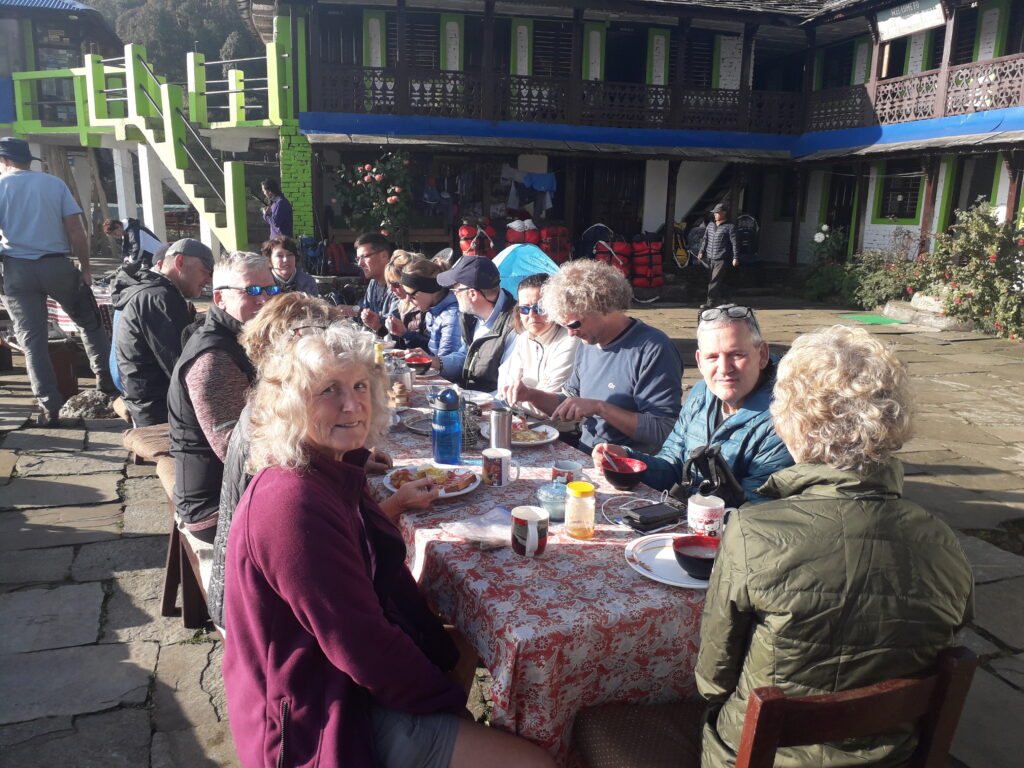
Tea houses—also called lodges or guesthouses—are the most common accommodation on the Annapurna Base Camp trek. These family-run lodges offer basic but cozy rooms, usually with shared facilities, and serve traditional Nepali meals.
At lower elevations, some tea houses provide single rooms with attached bathrooms and higher facilities, while at higher altitudes, amenities become more limited, focusing on comfort and warmth rather than luxury.
Facilities you can expect while staying in the tea house are:
- Rooms: Simple and cozy, usually twin or dormitory style; some lower-altitude lodges offer single rooms.
- Beds & Bedding: Basic beds with blankets; higher-altitude lodges may provide extra blankets.
- Bathrooms: Shared toilets; attached bathrooms available at lower elevations, often with limited hot water.
- Meals: Traditional Nepali food (dal bhat, noodles, soups, momo); some lodges also serve continental dishes.
- Dining Area: Communal eating space, often with scenic views.
- Heating: AC or heater at lower region only
- Electricity & Charging: available for a small fee.
- Wi-Fi / Connectivity: available in all tea house but need to pay small fee.
- Luggage Storage: Carry only what you need for trekking.
- Basic Supplies: Snacks, tea, coffee, and bottled water available for purchase.
Bank And ATM Facilities on Annapurna Base Camp Trek:
Both Pokhara and Kathmandu, the two major cities that serve as the starting and ending points of the ABC trek, have well-developed banking systems. You can find numerous banks, ATMs, and currency exchange centers in these cities, making it easy to manage your finances before and after your trek.
As you ascend higher into the mountains, the availability of banking and ATM facilities decreases significantly. So we recommend you to carry enough cash during the trek. You can exchange your currency either from Kathmandu or Pokhara.
Drinking Water Facilites On Annapurna Base Camp Trek
Trekkers can find safe drinking water during the Annapurna Base Camp Trek. You can buy bottled water from tea houses or local shops, usually in 1–2 liter bottles. The cost is reasonable in the lower regions but becomes more expensive at higher elevations due to transportation costs.
You can also refill your water bottle at tea houses for a small fee. It is not recommended to drink tap or natural source water directly. To ensure your water is safe, you can also use water purification tablets.
Annapurna Base Camp Weather And Temperature
| Month | Weather / Conditions | Avg. Day Temp (°C) | Avg. Night Temp (°C) |
|---|---|---|---|
| January | Cold, clear skies, possible snow | 5°C | -8°C |
| February | Cold, mostly clear | 7°C | -6°C |
| March | Spring, sunny, blooming rhododendrons | 12°C | 0°C |
| April | Warm days, clear skies, flowers | 14°C | 2°C |
| May | Warm, occasional rain | 15°C | 5°C |
| June | Monsoon begins, frequent rain | 13°C | 7°C |
| July | Monsoon, heavy rain, slippery trails | 12°C | 7°C |
| August | Monsoon continues, cloudy/rainy | 12°C | 7°C |
| September | Autumn, clear skies, cooler nights | 14°C | 3°C |
| October | Best trekking season, clear skies | 15°C | 4°C |
| November | Cool, crisp days, clear views | 12°C | -1°C |
| December | Cold, possible snow, clear skies | 7°C | -7°C |
Best Time For Annapurna Base Camp Trekking

The Annapurna Base Camp trek is possible throughout the year, but the experience varies with the seasons:
- Winter (December to February): Trekking is possible, with clear skies and crisp mountain views, but you need to pack warm layer clothing and prepare for snowfall and drop in temperature at high altitude.
- Monsoon (June to early September): Trekking is not recommended due to heavy rainfall, slippery trails, and landslide risks, though lower-altitude sections may still be accessible.
- Spring (March to May): The best time for ABC trekking, with long sunny days, clear mountain views, and blooming wildflowers, including vibrant rhododendrons.
- Autumn (mid-September to November): Also excellent, with clear skies and stunning views, though days are shorter and mornings and nights are colder. There may also be occasional snowfall at higher elevations.
Travel Insurance For Annapurna Base Camp Trek:
It is essential to have travel and medical insurance for ABC trekking in the Himalayas. Insurance should cover:
- Travel delays or disruptions due to landslides, avalanches, roadblocks, or political strikes.
- Medical emergencies, including severe sickness or altitude-related illnesses.
- Emergency evacuation, including helicopter rescue if required.
- Reimbursement for expenses claimed through your insurance policy.
Annapurna Base Camp Trek Packing List
You don’t need to pack much for the Annapurna Base Camp trek, as tea houses provide most facilities. However, it is recommended to carry these basic items to ensure a safe and comfortable trek.
Clothing:
- Trekking shirts & long sleeves
- Trekking pants (convertible)
- Fleece & down jacket
- Waterproof jacket & pants
- Thermal base layers
- Gloves & warm hat
- Sun hat & trekking socks
- Underwear
Footwear:
- Trekking boots
- Camp shoes/sandals
- Gaiters (optional)
Gear:
- Daypack (25–35 L)
- Sleeping bag (-10°C to -15°C)
- Trekking poles
- Headlamp & batteries
- Water bottle / hydration bladder
- Water purification tablets
- Sunglasses & sunscreen
Personal Items:
- Passport/ID & ACAP permit
- Cash (NPR)
- Camera / phone & power bank
- Toiletries & quick-dry towel
- Hand sanitizer & tissues
- Personal meds
Health & Safety:
- First aid kit
- Altitude sickness meds
- Travel & medical insurance
Optional:
- Neck gaiter / buff
- Snacks / energy bars
- Notebook & pen
- Small locks
Altitude And Acclimitization Tips For Annapurna Base Camp Trek
On the trail to Annapurna Base Camp (4,130 m / 13,550 ft), there is a risk of altitude sickness. Therefore, before heading there, it is essential to understand what altitude sickness is and how to prevent it during the trek.
Understanding Altitude Sickness:
Altitude sickness, or Acute Mountain Sickness (AMS), occurs when the body struggles to adapt to lower oxygen levels at high elevations. Symptoms can include:
- Headache and nausea
- Dizziness or fatigue
- Shortness of breath
- Loss of appetite
- Insomnia
Note: If this symptoms occur during the ABC trek and if you neglect it, it can turn in HACE And HAPE which are the advance form of altitude sickness. This HACE and HAPE can even take trekkers life.
Top Acclimatization Tips for ABC Trek:
- Walk slowly and at your own pace.
- Stay hydrated and ascend gradually during the hike.
- Drink 4–6 liters of water daily to prevent dehydration.
- Avoid alcohol and caffeine.
- A common preventive medication for acute mountain sickness (AMS) is Diamox (Acetazolamide).
- Follow the “Sleep Low, Climb High” rule.
Annapurna Base Camp vs Everest Base Camp vs Langtang Valley Trek
- Unique Experience: ABC features the Annapurna Sanctuary, a high plateau surrounded by mountains, offering immersive views of towering peaks, unlike Langtang Valley, which is more of a broad valley trek.
- Terrain & Scenery: All Himalayan treks feature steep climbs and descents, lush mid-hill forests up to 3,000 m, and spectacular snow-capped peaks.
- Altitude & Safety: Annapurna Base Camp (ABC) is safer altitude-wise compared to Everest Base Camp (EBC). ABC offers overnight stays in comfortable lodges, whereas EBC has limited lodging, mostly around Gorak Shep (3–4 hours from base camp).
- Climate & Vegetation: Annapurna is warmer and greener than Everest. Langtang Valley is similar to ABC in gorge walks leading to an open valley, but ABC brings trekkers closer to the surrounding snow peaks.
Conclusion:
If you found this guide helpful, share it with fellow adventure‑seekers, and let us know in the comments what part of the ABC trek you’re most excited (or nervous) about!
Posted on