Highly recommended!!!
As well as a great guide they are also spectacular people who gave us help in every move and need we had during our stay in Nepal!
Fantastic!🤩

Starting from
per person (in USD)
‘City of great fascination blend of Buddhism and Hinduism ancient religious sites’
High Route Adventure presents you with a 1 Day Kathmandu UNESCO World Heritage Sites Tour Package. On this full-day sightseeing tour, you will explore Nepal’s ancient places, temples, sacred sites, and religious and cultural places. You will also have the opportunity to interact with locals, learn about their history and lifestyle, and experience the rich heritage and vibrant traditions of Kathmandu.
Kathmandu is the capital city of Nepal. The Kathmandu Metropolitan City (the city proper) covers an area of approximately 49.45 to 50.67 square kilometers. Also known as the city of temples, it has been a historic and cultural hub for people around the globe. Inside Kathmandu, you can find 4 UNESCO World Heritage Sites and numerous temples, ancient palaces, stupas, and sacred courtyards. Every corner of Kathmandu tells you the story of Nepal’s royal and religious heritage.
Around 1.725 million people live in Kathmandu. It is one of the bustling metropolises where you can find people of all religions, castes, cultures, and vibrant traditions living together in peace and harmony.
Although Kathmandu is a metropolitan and semi-modern city, it still retains its ancient past glory with beautiful works of art and craftsmanship, and masterpieces of architectural monuments.
In Nepal, there are total 10 UNESCO World Heritage sites among them, 2 Natural World Heritage Sites and 8 Cultural World Heritage Sites. Among the 8 Cultural World Heritage sites, 4 are located in Kathmandu. The best part is that each of these heritage sites is situated close to the others, which makes it possible to visit them in a single day. Let’s see the list.
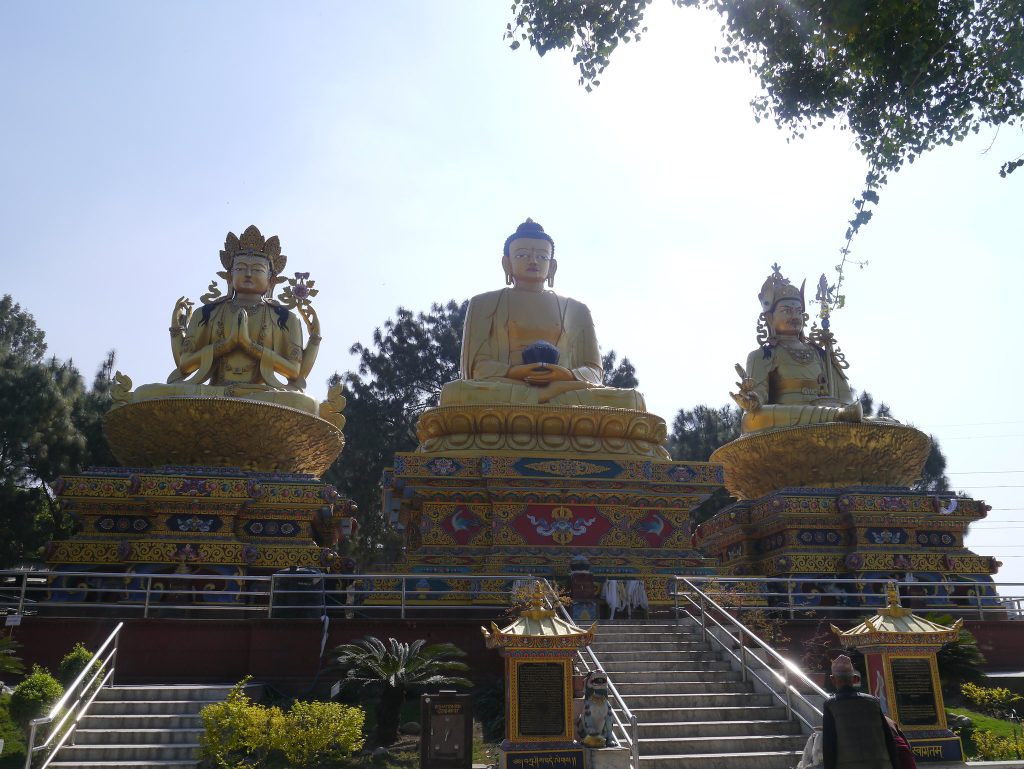
Perched atop a 360‑meter hill, Swayambhunath—fondly called the “Monkey Temple”—is one of the world’s oldest Buddhist stupas, dating back to the 5th century CE. Its iconic white dome crowned with a golden spire, the “eyes of the Buddha,” and the surrounding chorus of chattering macaques create a surreal blend of spirituality and wildlife. Legend holds that the site emerged spontaneously from a lotus, and the massive prayer wheel at its base is said to grant blessings to anyone who turns it clockwise. From the summit, panoramic views sweep over the old city, making Swayambhunath both a pilgrimage spot and a photographer’s playground.
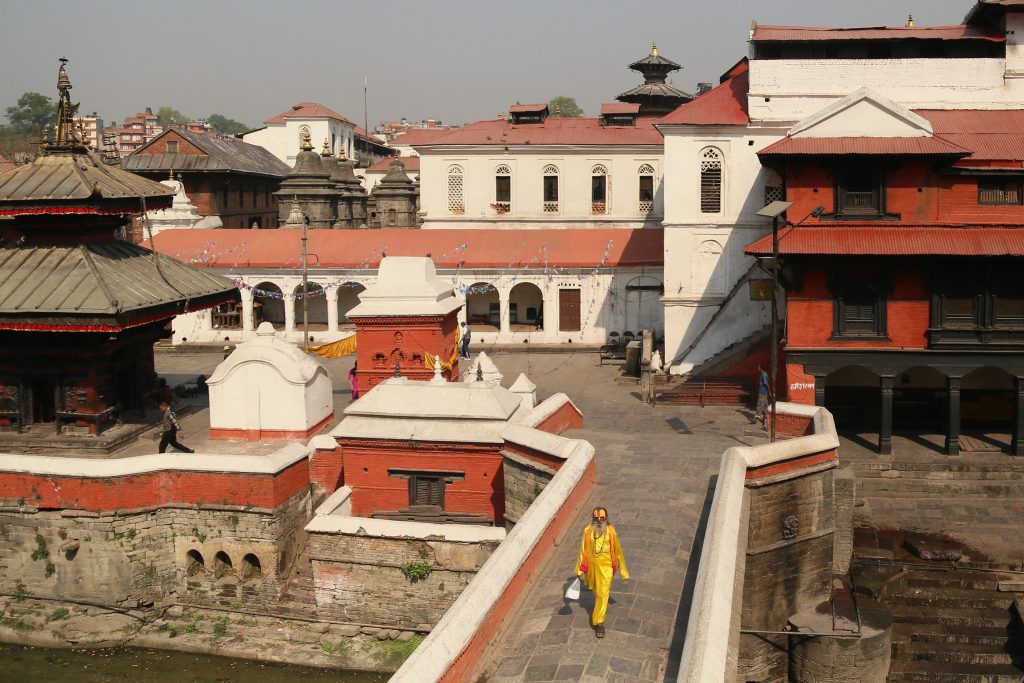
Located on the banks of the Bagmati River, Pashupatinath is Nepal’s most revered Hindu sanctuary and a UNESCO World Heritage site. Dedicated to Lord Shiva in his “Lord of Animals” form, the complex features a towering pagoda‑style main shrine, gilded copper roofs, and a cremation ghats where devotees perform last rites for the departed. The temple’s intricate wood carvings, the rhythmic clang of temple bells, and the daily aarti (prayer ceremony) offer an immersive glimpse into Nepal’s living Hindu traditions. Even non‑Hindus are welcome to wander the outer courtyards and soak in the spiritual atmosphere.
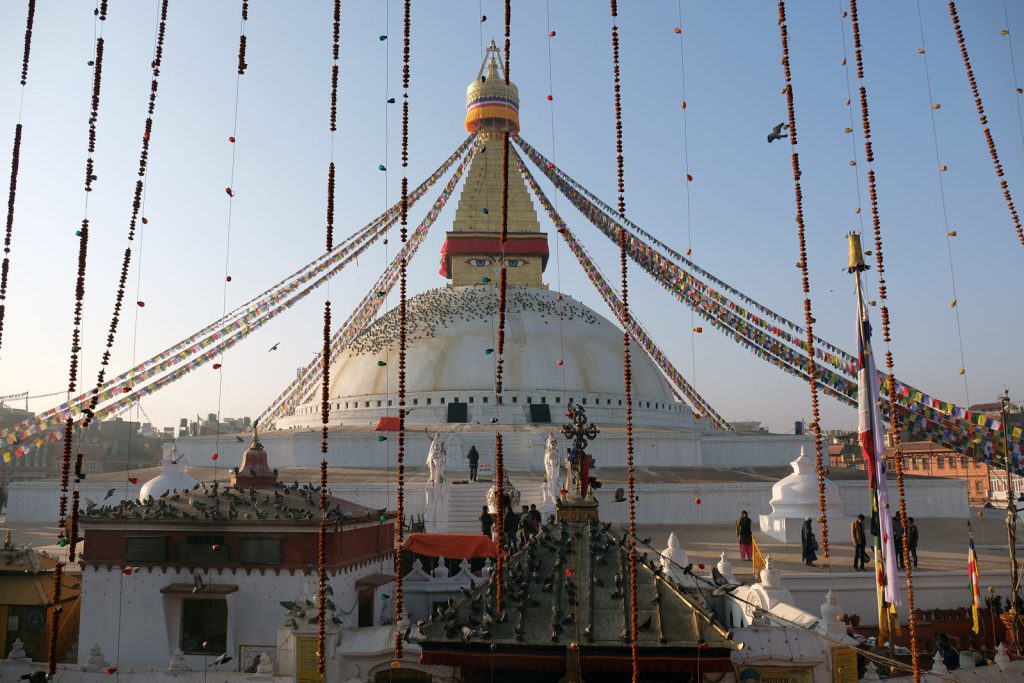
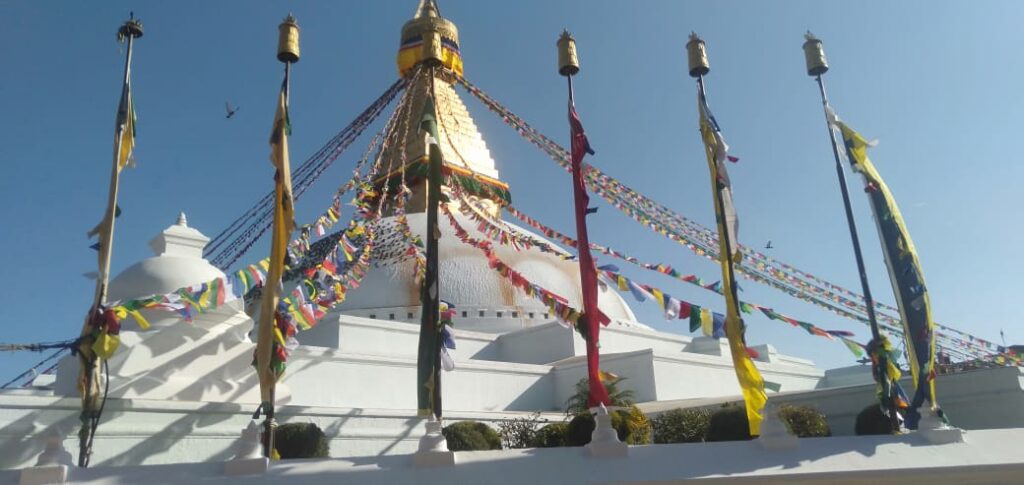
Just a few kilometres from the city centre lies Boudhanath, a massive white dome encircled by a 72-meter-high gilded spire, making it the largest stupa in Nepal and a focal point for the Tibetan diaspora. Pilgrims spin prayer wheels, chant mantras, and circumambulate the stupa while incense smoke curls into the high-altitude air. The surrounding streets buzz with teahouses, monasteries, and souvenir stalls selling prayer flags and thangka paintings. At sunrise or sunset, the golden halo against a clear blue sky creates a mesmerizing tableau that embodies both devotion and communal harmony.
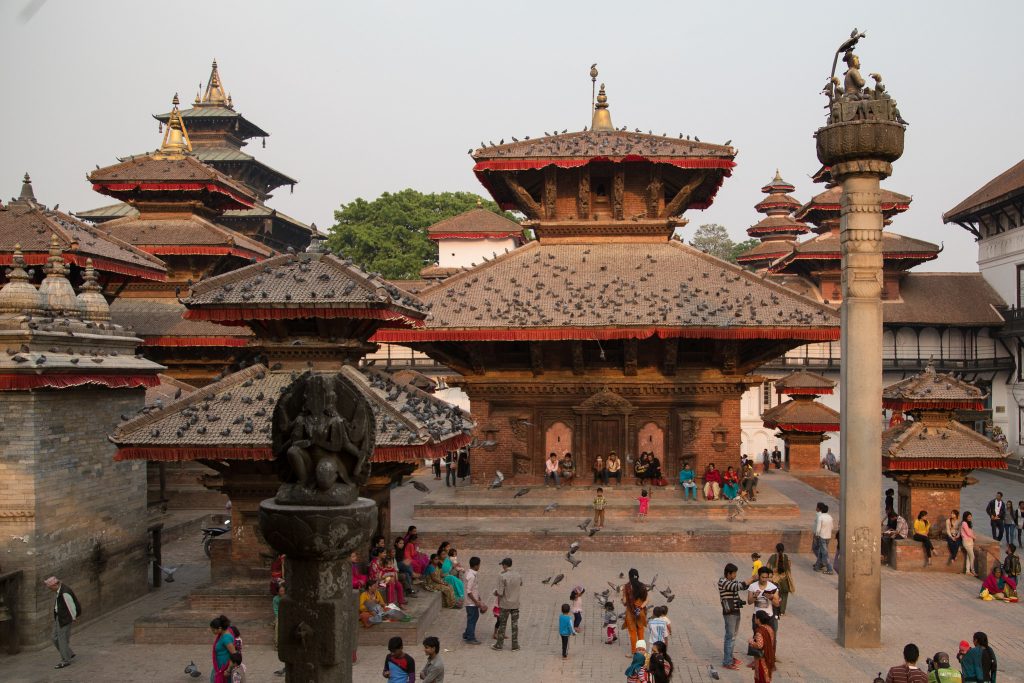
Nestled in the historic Old City, Kathmandu Durbar Square once served as the palace complex of the Malla and Shah dynasties. Though many structures suffered damage in the 2015 earthquake, the square still dazzles with its intricately carved wooden windows, stone statues of deities, and the iconic Kumari Ghar—the residence of the living goddess. Highlights include the Kumari Ghar (home of the Living Goddess), Hanuman Dhoka Palace, Kasthamandap, the Taleju Temple, and Kal Bhairav Statue, each echoing centuries of Newar art, architecture, and courtly rituals. The square pulsates with street performers, local eateries, and vibrant festivals, offering an authentic slice of Kathmandu’s cultural tapestry.
It is possible to visit Kathmandu’s UNESCO Heritage Sites throughout the year. There are four different seasons in Nepal: Spring, Autumn, Winter and Monsoon. In each season, you can expect different landscapes and weather conditions.
In spring (March to May), the weather is pleasant, flowers bloom, and the skies are clear, making it the best time to explore Kathmandu’s UNESCO World Heritage Sites. Also, you can capture beautiful pictures during this time.
The monsoon season (June to August) brings lush green landscapes, though occasional rainfall may affect travel plans. Carrying an umbrella or raincoat and enjoying a hot cup of tea or coffee can make it a delightful experience, especially if you love the charm of rainy weather.
Autumn (September to November) is the best time for outdoor activities in Nepal, including UNESCO World Heritage Sites. Clear skies, mild temperatures, and a festive atmosphere, such as Dashain and Tihar, make it perfect for exploring temples, stupas, and city streets.
In winter (December to February), the weather is cool and dry, the sites are less crowded, and the Himalayan views are crisp, though mornings and evenings can be chilly. Overall, spring and autumn are regarded as the best times to experience Kathmandu’s UNESCO World Heritage Sites in comfort and style.
While visiting Kathmandu UNESCO World Heritage Sites, we suggest our clients follow these things:
Quick tip: Wear comfortable shoes, bring a refillable water bottle, and pack a light jacket—mountain weather can change quickly!
Our Kathmandu UNESCO Heritage Site Tour Price starts from USD 95 USD per person. However, if you do a group booking, we can also provide a special discount. You can also customize the itinerary as per your needs and preferences by contacting our tour operator. If you need any additional service, you can also request it from us. Let’s see the price of the Kathmandu UNESCO Heritage Site Tour according to group size.
No. of Person | Price in USD |
1 – 2 | $ 95 |
3 – 5 | $ 75 |
6 + | $ 65 USD |
To book the Kathmandu UNESCO Heritage Sites Tour with High Route Adventure, you can follow these simple steps.
Step 1: Check the package in detail, and after that, click on the book now button and fill in the required information.
Step 2: Make a payment of 20% to confirm the booking and send us the slip of payment.
Note: If you have any confusion, you can make a direct booking through email or whatsapp also.
To make a payment for booking, we accept:
Cancellation Policy: To know in detail about the cancellation, please check our company’s terms and conditions before booking.
After a hearty breakfast at the hotel restaurant, our city and cultural guide receive you at the hotel lobby or foyer for a short drive to Kathmandu Old Durbar Square. Includes short walk to reach in the heart of Kathmandu city at a place called Hanuman Durbar Square, this area teemed with life where you can enjoy the visit of various interesting sites.
The large square is a historic seat of Malla and Shah Royalty. The square, with old temples and palaces, epitomizes the religious and cultural life of the people.
This is the spot where former Kings of Nepal were crowned. Taleju Temple built by King Mahendra Malla in 1,549 A.D. gigantic figure of Kal Bhairav, the God of Destruction. Basantpur Durbar or Nautalle Durbar (nine-storied), built by King Prithivi Narayan Shah. Coronation Platform (Nasal Chowk).
Hall of Public audience (Gaddi Baithak or Royal Throne), a statue of King Pratap Malla-Big Bell-big Drums and Jaganath Temple.

The temple and residence of Living Goddess; located nearby from Hanuman Dhoka Palace: The building with carved wooden balconies and window screens. It was built by Jaya Prakash Malla, the last Malla King of Kathmandu.
The Kumari Goddess is also known as the virgin Goddess. Chosen from the Newari Buddhist of Sakya caste, a virgin with no marks or injuries can take in the form of Hindu Goddess Kumari. During the puberty period replaced by another Kumari.

Close by standing a large temple Kasthamandap, an interesting to know that name Kathmandu derived from the name of this temple, which means temple made from the wood of a single tree.
This is one of the world's most glories Buddhist stupa, of more than 2,500 years old and s often called the "Monkey Temple". The stupa forms the main structure made of a solid hemisphere of bricks and clay supporting a lofty conical spire capped by a pinnacle of copper gilt. Painted on four sides of the spire are all-seeing eyes of Lord Buddha located 3 k.m. west of Kathmandu city, placed on a hillock about 7 meters above the valley floor. The hill a mosaic of small Stupas and pagodas temples. One can have a great view of Kathmandu city with snow-capped mountains in the north on a clear fine day.

Bouddhanath is located 8 k.m. east of Kathmandu city a colossal ancient stupa; one of the world's biggest and most impressive domes with mystical of all-seeing eyes of Lord Buddha. Built by Lichchhavi King Mana Dev in 5th A.D. It is built on an octagonal base inset with prayer wheels. The area around Bouddhanath also known as Little Tibet, due to a large number of local people with string Tibetan origin and cultures of Buddhism that reside around the busy and colorful market.
Lunch in a nice restaurant with a terrace or balcony before or after the tour, facing views of Bouddhanath Stupa and devotees on pilgrimage.

Situated 5 k.m. east of Kathmandu on the banks of the sacred Bagmati River, the temple of Lord Shiva, it has two-tiered golden roof and silver doors. It is famous for its superb architecture. It is a center of annual pilgrimage on the day of Maha Shivaratri (Birth Anniversary of Lord Shiva).
By 4 p.m. tour ends and completes and drives back to the hotel with a free afternoon and recall the memories of the wonderful and interesting Katmandu Cultural and Heritage Sites Tour.

If you want to spend more time in Nepal after exploration of Kathmandu UNESCO Heritage Sites here is our other tour package:
Starting from
per person (in USD)
Real experiences shared by trekkers and travelers who joined our trips.
Highly recommended!!!
As well as a great guide they are also spectacular people who gave us help in every move and need we had during our stay in Nepal!
Fantastic!🤩
Visited the main attractions in Nepal. Great planning of the itinerary on our behalf! Appreciate the help!

Prakash and the team were amazing in guiding us through the well-planned tour across the 2 days we were in Kathmandu. The itinerary was well planned and they took great care of us too. Thank you for the great hospitality and service!